Cloudy Kitchen

  • recipes
    • Breads
    • Brownies
    • Cakes
    • Choux
    • Cookies
    • Doughnuts
    • Ice Cream
    • Macarons
    • Pies
    • Quickbreads
    • Small Batch Baking
    • More →
  • about
  • contact
  • products
menu icon
go to homepage
  • recipes
  • about
  • contact
  • products
  • calculators
  • subscribe
    • Facebook
    • Instagram
    • Pinterest
    • TikTok
  • search icon
    Homepage link
    • recipes
    • about
    • contact
    • products
    • calculators
    • subscribe
    • Facebook
    • Instagram
    • Pinterest
    • TikTok
  • ×
    Home

    Butter Pecan Ice Cream

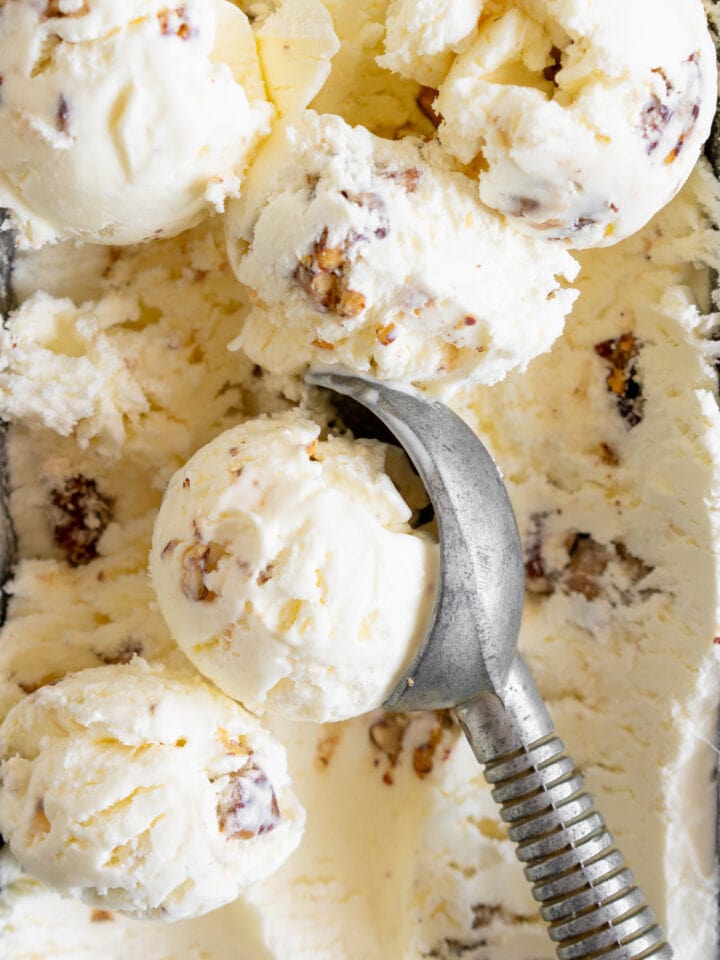
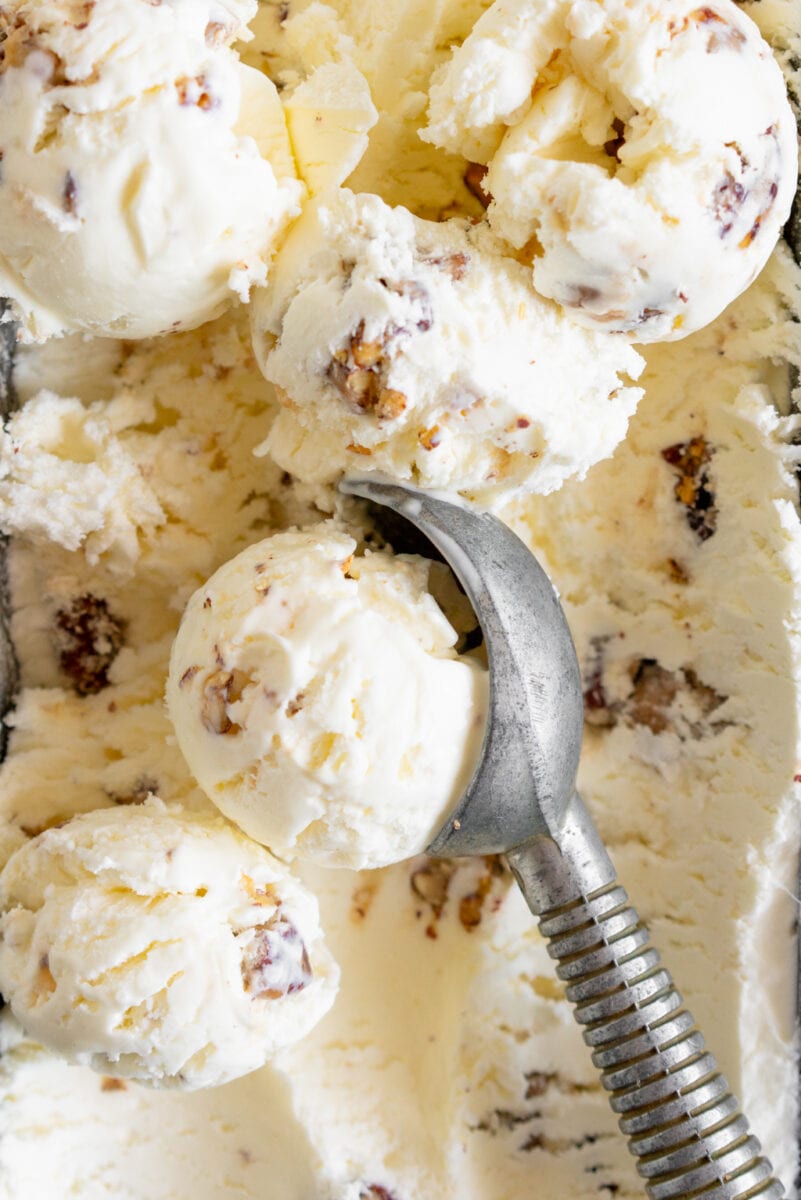
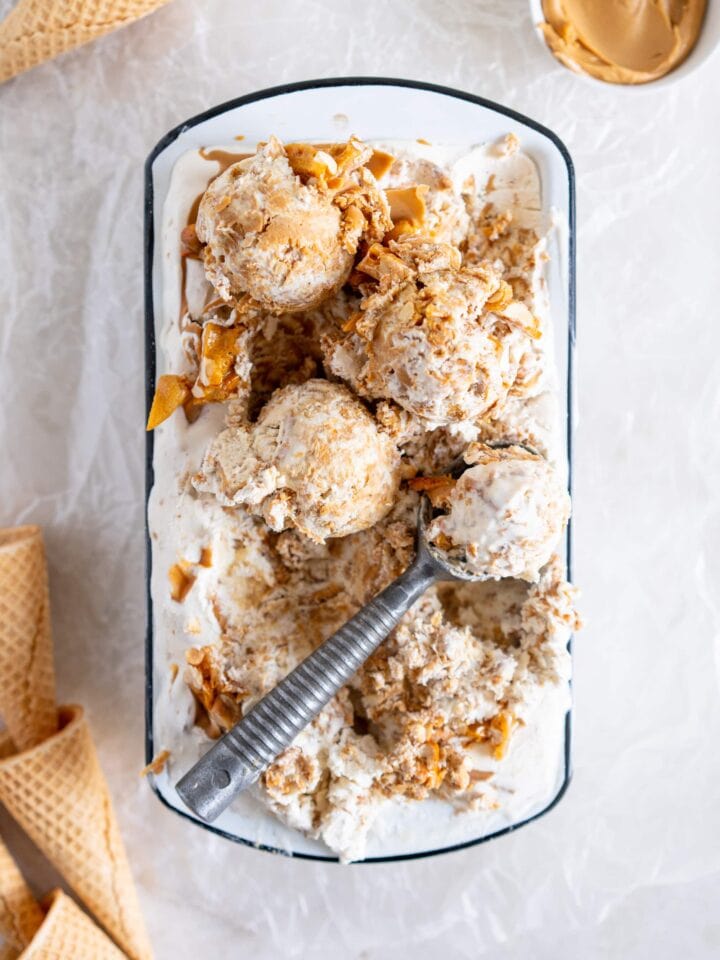
    Easy butter pecan ice cream has a no churn ice cream base and is filled with chunks of candied pecans. Candied pecans are easy to make and are the perfect addition to an easy ice cream recipe to give it fancy finish.

    Table of contents

    • Butter Pecan Ice Cream
    • Easy No Churn Ice Cream
    • How to toast nuts
    • How to make Candied Pecans
    • FAQ for Butter Pecan Ice Cream
    • For more easy ice cream recipes, check out:
    • Recipe For Butter Pecan Ice Cream

    Butter Pecan Ice Cream

    Hi! Just popping in to share the recipe for this super easy butter pecan ice cream with you. I hadn't had butter pecan ice cream until I moved to the states, and the first time I tried it, I was hooked.

    I have a few homemade ice cream recipes here on the site - making your own ice cream at home does take a little bit of work, but it is so fun to do, and means that you can add as many or as few mix-ins of your choice to your homemade ice cream.

    This butter pecan ice cream is a super easy no churn ice cream base, which I filled with chunks of candied pecans. If you haven't made candied pecans before I highly suggest it - they are great on this ice cream, but also can be used to add a delicious crunch to recipes such as my vegan cinnamon rolls.

    Easy No Churn Ice Cream

    I used a no churn ice cream base for this butter pecan ice cream recipe. No churn ice cream is made of whipped heavy cream and sweetened condensed milk, and the cream mixture can be mixed up and put straight into the pan to freeze - no ice cream maker needed. Often ice cream recipes use egg yolks - this is made with just cream and condensed milk so is a great egg free ice cream recipe if you need one!

    If you wanted to do a more traditional style ice cream base for this butter pecan ice cream, you could use a philadelphia style ice cream base, which uses an ice cream maker but is a super simple egg free recipe that will still let the pecan flavour shine through.

    How to toast nuts

    There are a bunch of ways to toast nuts - my preferred method is to do them in the oven. Toasting nuts for any recipe gives an amazing, toasty depth of flavour. Nuts can also be toasted in a pan or a skillet on the stove, but doing it in the oven means that the nuts get fully toasted throughout without burning.

    I make toasted pecans for my candied pecan recipe by toasting them on a baking sheet lined with silicone or parchment paper for about 10 minutes at 350°f / 180°c. Watch them carefully as they can go from toasty to a little too toasty quite fast.

    How to make Candied Pecans

    Candied pecans are super easy to make - It just involves making a quick caramel mixture. I do this all at once in the pan so the nuts get evenly coated. Heres how to candy pecans:

    1. Toast your nuts. This is important as it adds to the caramel flavour of the butter pecan ice cream.
    2. Have a pan ready to go - once these are done you want to remove them from the heat quickly.
    3. Combine sugar, butter, and salt in a saucepan, stir together, then add the toasted pecans.
    4. Cook the mixture, stirring constantly and adjusting the heat as necessary. You want to cook the candied pecan mixture until the sugar melts and coats the nuts.
    5. Once the candied pecans are done, turn out onto the prepared pan and spread out the pecans so that they aren't touching and don't clump together.
    6. Leave to cool before chopping and using.

    Candied pecans are also amazing in salad or chopped up for ice cream topping - so you can make extra and store in an airtight container at room temperature for a later time.

    FAQ for Butter Pecan Ice Cream

    What tools and equipment do you use?
    You can find a full list of the tools and equipment I use on my products page

    Which pan did you use?
    I set my ice cream in a regular sized 9"x5" loaf pan - you can put it in whatever you want as long as the container is freezer safe.

    What is heavy cream?
    Heavy cream is the cream that you would use to make whipped cream.

    For more easy ice cream recipes, check out:

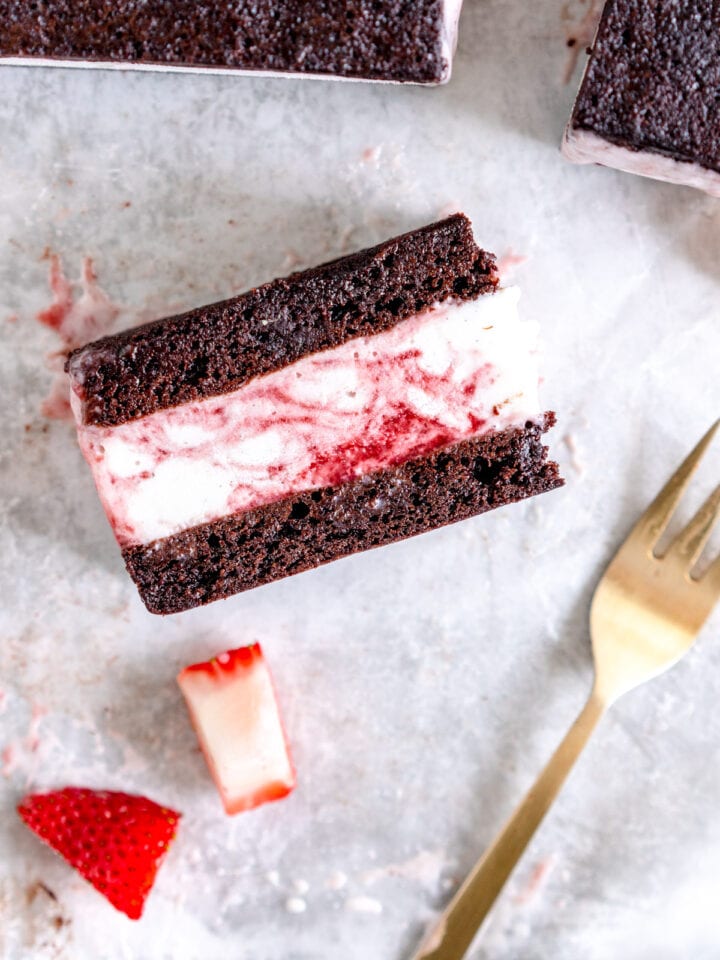
    • brownie ice cream sandwich with strawberry sauce
      The Best Brownie Ice Cream Sandwiches
    • Peanut Butter Ripple Philadelphia Style Ice Cream with Peanut Brittle and Pretzels
    • Strawberry Shortcake Macaron Philadelphia Style Ice Cream
    • Chocolate Choux Ice Cream Sandwiches with Double Chocolate Ice Cream

    ❤️ Made this recipe and love it? ❤️

    I would LOVE for you to leave me a review and star rating below to let me know how you liked it! Also, please make sure to tag me on Instagram!

    Answers to your baking questions

    Over the years, many of you have asked me questions about:

    • baking in grams
    • adjusting oven temperatures
    • what kind of salt to use
    • and many more!

    I've curated and answered them all for your easy reference in this frequently asked questions post!
    Recipe For Butter Pecan Ice Cream

    Filed Under: Ice Cream & Ice Cream Sandwiches Tagged With: Egg Free, Gluten Free

    Rhubarb Pie

    baked rhubarb pie on wire rack

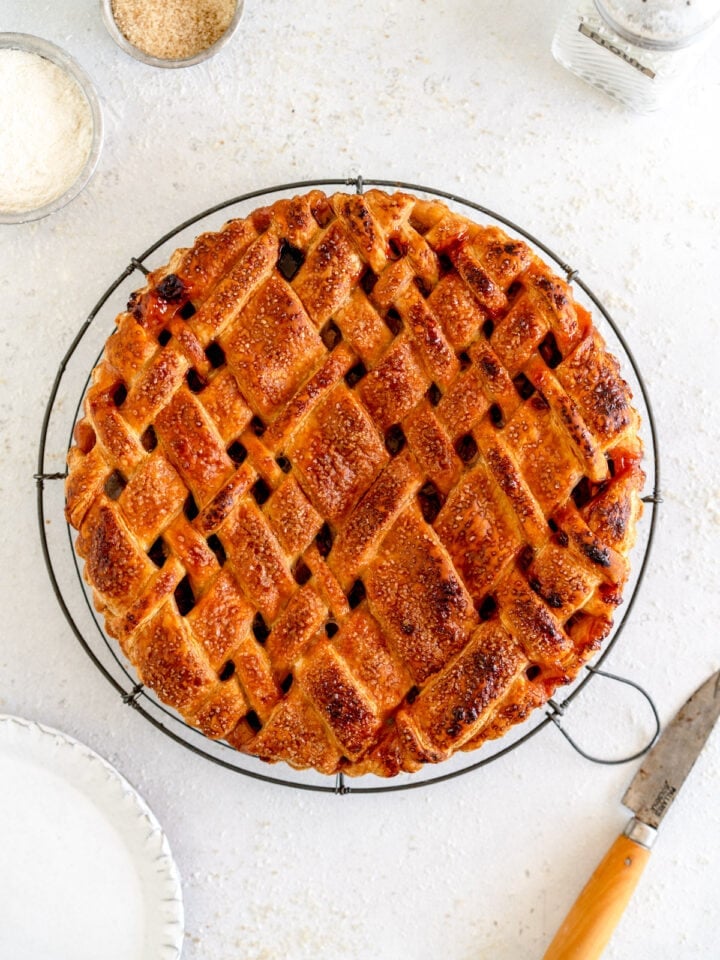
    Fresh Rhubarb Pie is super simple and easy to make, and lets the rhubarb shine through for the perfect spring pie recipe. An easy homemade pie crust is filled with a sweet, tangy rhubarb filling and baked to golden brown perfection.

    rhubarb pie ready to bake

    Table of contents

    • Rhubarb Pie
    • Ingredients in Rhubarb Pie
    • How to prepare rhubarb for baking
    • Easy Homemade Pie Crust
    • Easy lattice topped pie
    • How to tell when a pie is baked.
    • Pie made in a tart pan?!
    • FAQ for Rhubarb Pie
    • For more rhubarb recipes, check out:
    • Recipe For Rhubarb Pie

    Rhubarb Pie

    Hi hi! Just popping in to share the recipe for this super easy homemade rhubarb pie. I have a bunch of rhubarb recipes on my site, and a whole bunch of homemade pie recipes, but don't yet have one that has a straight up rhubarb filling. I often pair rhubarb with fruit - see my strawberry rhubarb pie or my blueberry rhubarb pie, but I love it so much I think that it needs its very own fresh rhubarb pie recipe! This Rhubarb Custard Pie recipe is also super delicious for celebrating all things rhubarb!

    This Rhubarb pie recipe is made in a tart pan with a removable bottom, but you can very easily scale the recipe to be made in a standard pie pan.

    corner shot rhubarb pie
    close up shot of lattice

    Ingredients in Rhubarb Pie

    This rhubarb pie is super simple ingredients wise!

    • Homemade Pie Crust. I use my go-to homemade pie crust recipe. This rhubarb pie recipe uses one batch of the recipe - one crust for the base and one for the top of the pie.
    • Rhubarb. I use fresh rhubarb for this rhubarb pie, I haven't tried it with frozen, but if you do use frozen rhubarb, defrost first and drain any excess liquid.
    • Tapioca Starch. Tapioca starch is similar to corn starch in how it behaves, but is my choice of thickener for a lot of pies as it sets clear. I haven't tried it with cornstarch before but typically you need less cornstarch than tapioca if you are substituting - about half the quantity. Tapioca starch is great to have on hand for pies!
    • Sugar. I use raw sugar, but granulated works great here too!
    • Vanilla. Because the flavours are so simple in this rhubarb pie, a wee bit of vanilla in the filling really shines through.

    How to prepare rhubarb for baking

    If you haven't baked with rhubarb before, this rhubarb pie is a great place to start. Preparation wise, you can treat rhubarb a lot like celery. It can be a little stringy, so I like to use my fingernail to just see if I can lift any fibre from the flat part of the rhubarb stalks by starting at the end and seeing if any lifts off. If you can, pull the stringy stuff off and discard, if not then no worries. I cut the rhubarb into about 1cm (0.4") pieces.

    The leaves of rhubarb are poisonous so you will often see it sold without them. To prepare the rhubarb just chop it into thin slices. This can be done ahead of time if you like.

    To freeze rhubarb just pop it into an airtight bag and freeze. I prefer to freeze it once it is already chopped up.

    rhubarb filling in pie crust

    Easy Homemade Pie Crust

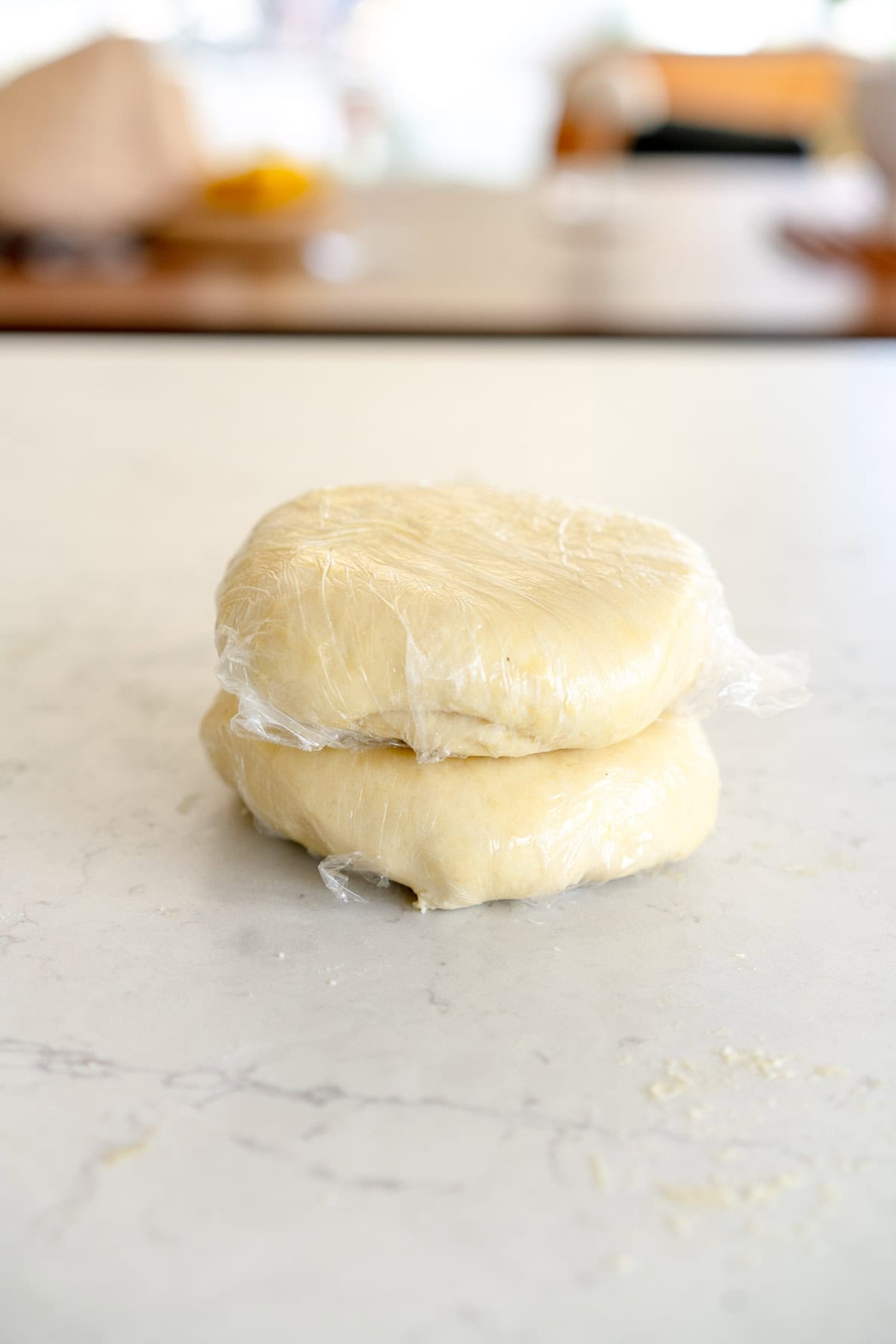
    I use my super easy homemade pie crust for this recipe. When I am making a lattice top pie such as this one, I like to make one portion of the dough slightly larger than the other. The larger portion will be for the top crust, with a little extra dough for the lattice work, and the smaller one for the base of the pie.

    I shape the crust I am using for the top into a rectangle, and the one for the base into a disc. Rolling out pie dough evenly is a lot easier if you start with the dough in the general shape that you are aiming to finish with - so a circle for the base and a rectangle for the lattice top to cut the strips from.

    Check out my ultimate guide on how to make your own homemade pie crust for all my tips and tricks for perfect pie crust!

    side on shot of baked rhubarb pie
    egg washed pie ready to bake

    Easy lattice topped pie

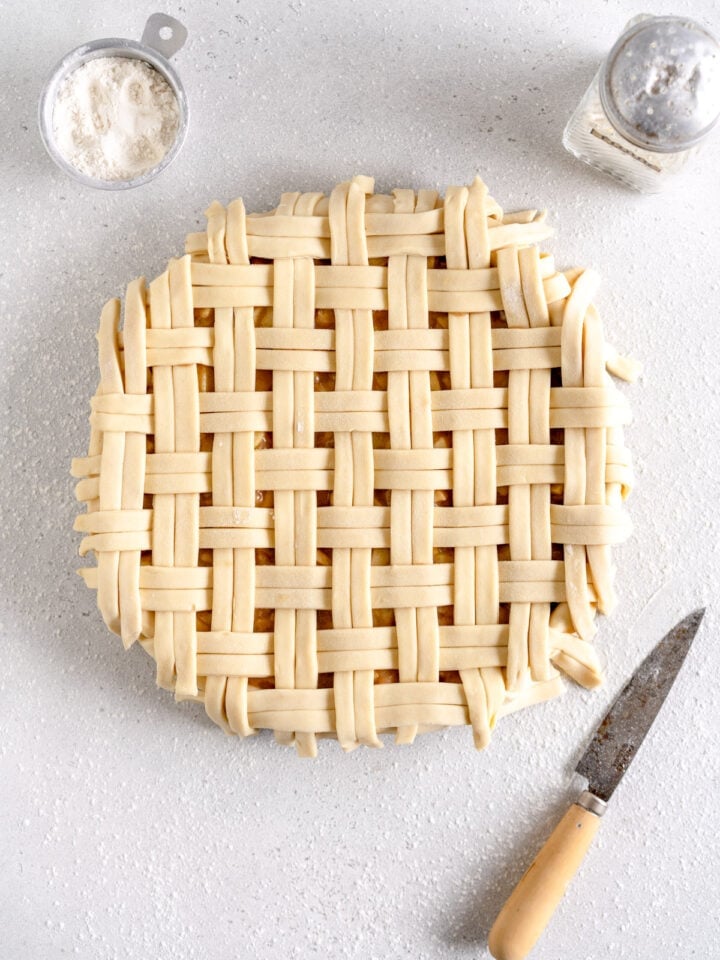
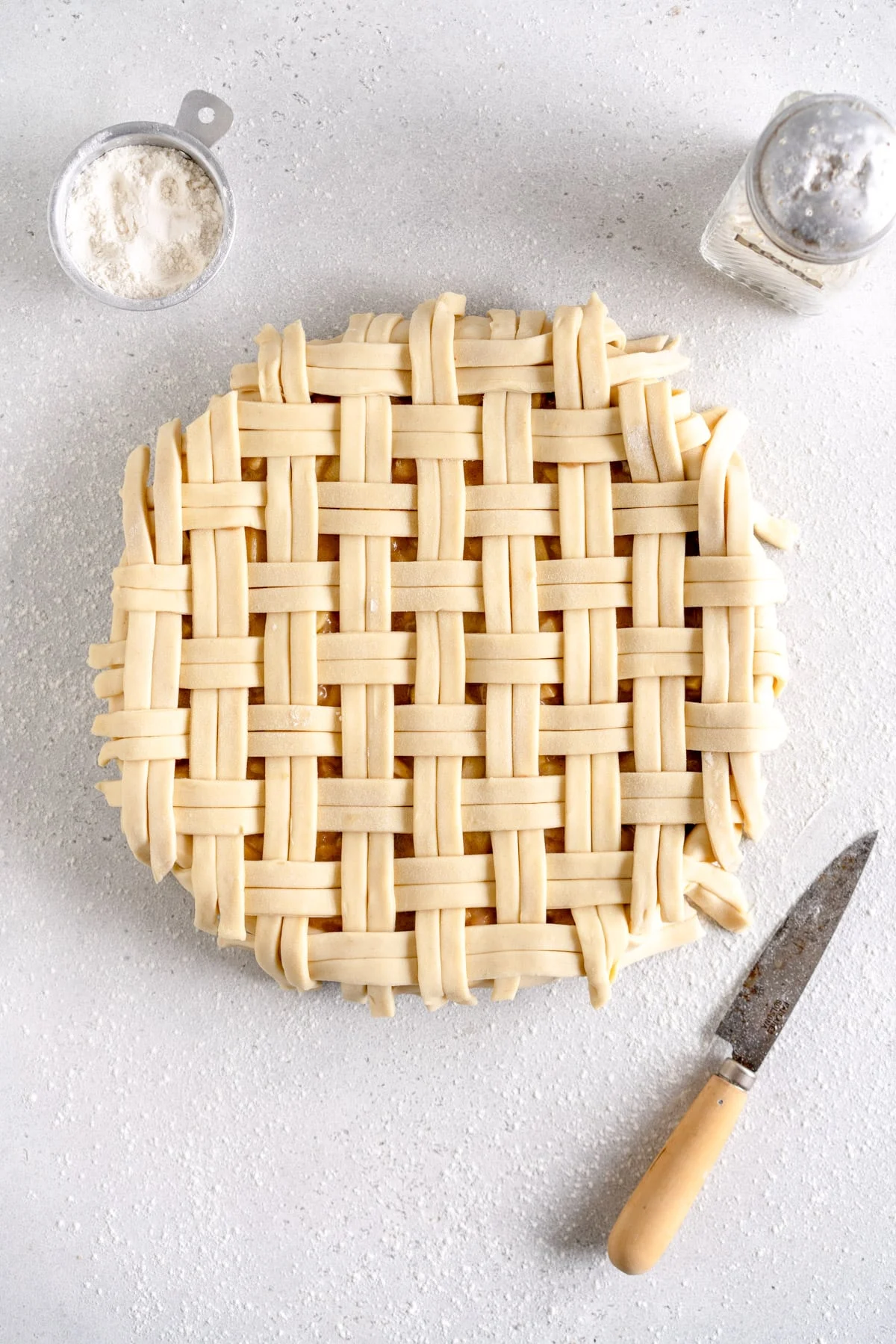
    I finished this rhubarb pie with a simple lattice top, but just cut uneven strips of dough and placed the strips on an angle to give it an angled lattice. Lattice on pies are super simple to do, you just follow the pattern:

    1. Lay out all the vertical strips on the pie filling. Make sure that the spacing is even between them. This will form your foundation.
    2. Lift every second strip up and fold it back - so strips 1,3,5,7 etc.
    3. Place a strip of pie dough down and carefully unfold the strips and place them back down.
    4. Fold back every strip again but starting with the alternate set of strips - so lift up strips 2,4,6,8 etc and fold them back.
    5. Place another strip of pie dough and reset your strips.
    6. Repeat the process, alternating which strips you fold back. I like to start in the middle and work my way down, and then start in the middle and work my way toward the top of the pie.

    Use the longest strips in the middle of the pie. You can use shorter strips as you get closer to the edges of the pie. If you have any strips which have messy parts on them, arrange them so that the mess part is covered by another strip of pie dough (if you like, messy parts on pies are also fine!)

    See the video below for a visual guide on how to lattice a pie.

    slice of rhubarb pie
    egg washed pie

    How to tell when a pie is baked.

    The degree to which you bake a pie is personal preference, but I like mine deeply golden brown. Not only does this provide insurance against a soggy bottomed pie, but the golden brown crust is flavour.

    I found since moving to NZ and getting a new oven that heats from both the top and the bottom, that my top crust is colouring much earlier than it would in a bottom heated oven. My oven has a setting for bottom heat only, which I use to help get a nice crisp bottom crust without baking the top too much.

    If your oven only bakes with top and bottom heat, you can tent the pie with foil once the top is your desired level of done, and keep baking until it is ready to come out.

    The best way to tell that this rhubarb pie is baked is to look at the filling. It should be bubbling out a little through the gaps in the lattice. Look for the middle bubbling too, not just the sides. This indicates the filling has gotten hot enough for it to set and for the starch to do its job.

    rhubarb pie ready to trim

    Pie made in a tart pan?!

    I used a removable bottom tart pan to make this rhubarb pie - rather than a more standard pie pan. I love using a tart pan for a few reasons:

    • It is super easy to get nice clean edges on a tart pan. Instead of trimming like a pie crust, you can just press the pie crust against the sharp edge of the tart pan and it cuts away cleanly.
    • A tart pan gives a great crust to filling ratio. A tart pan is shallower than a pie pan, so you get a thinner layer of filling to go with the flaky lattice pie topping.

    Removing this pie from the pan is super easy. My favourite way to remove a tart from a pan like this is to use a bowl. Turn the bowl upside down, and then press the tart down onto it. The outside ring will drop off, leaving the tart on the base. You can either slide the pie off, or serve on the base.

    If you would like to make this in a pie dish it should work just fine. Just work out the capacity of your pie pan compared to the tart pan and scale accordingly for the filling - it should use about 650g rhubarb, so you will need 40g tapioca starch and 220g sugar for the filling. The crust recipe will stay the same.

    If your pie has leaked filling around the outside a little, it is best to make sure that it is loosened from the pan before cooling so that it does not stick.

    baked rhubarb pie on wire rack

    FAQ for Rhubarb Pie

    What tools and equipment did you use?
    You can see a full list of all the tools I use here

    Are you sure this recipe doesn't need to be blind baked?
    No. If you make sure that you get a good enough bake on your crust, as with most fruit pies, this pie does not need to be blind baked.

    How do you reheat a pie?
    If you make a pie ahead of time, you can reheat in a 350°f / 180°c oven. Just pop it in there for 15-20 minutes. Cover with foil if needed to stop any further browning. You are just looking to reheat the filling slightly and re-crisp the crust a little.

    How do you store pie?
    I store this rhubarb pie lightly covered or in an airtight container at room temperature. It is best on the day it is made but will be fine 1-2 days after making too.

    sliced rhubarb pie

    For more rhubarb recipes, check out:

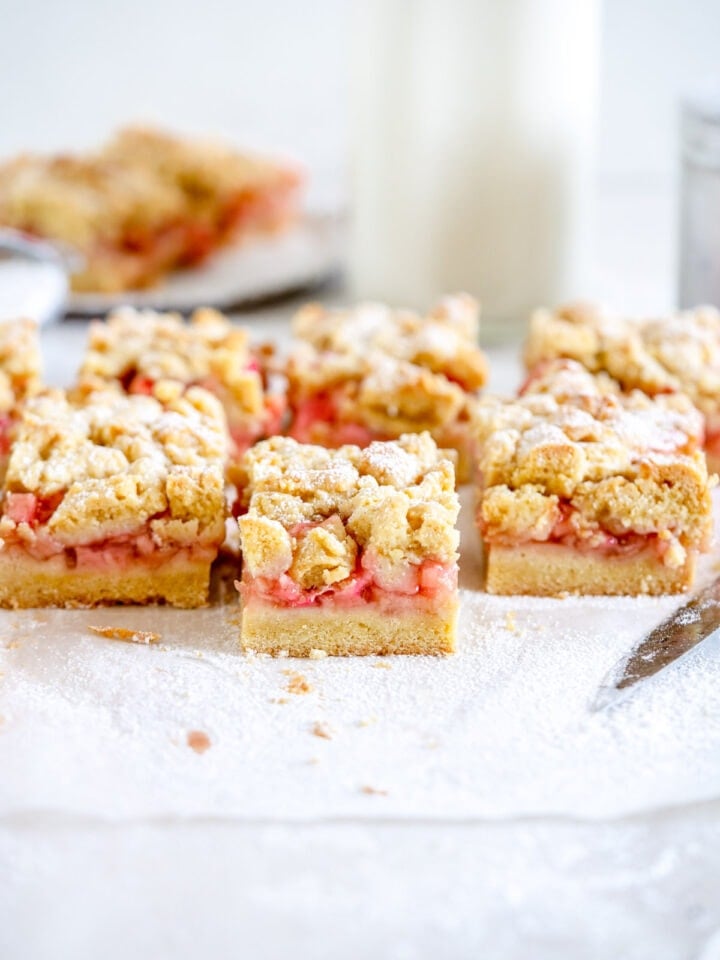
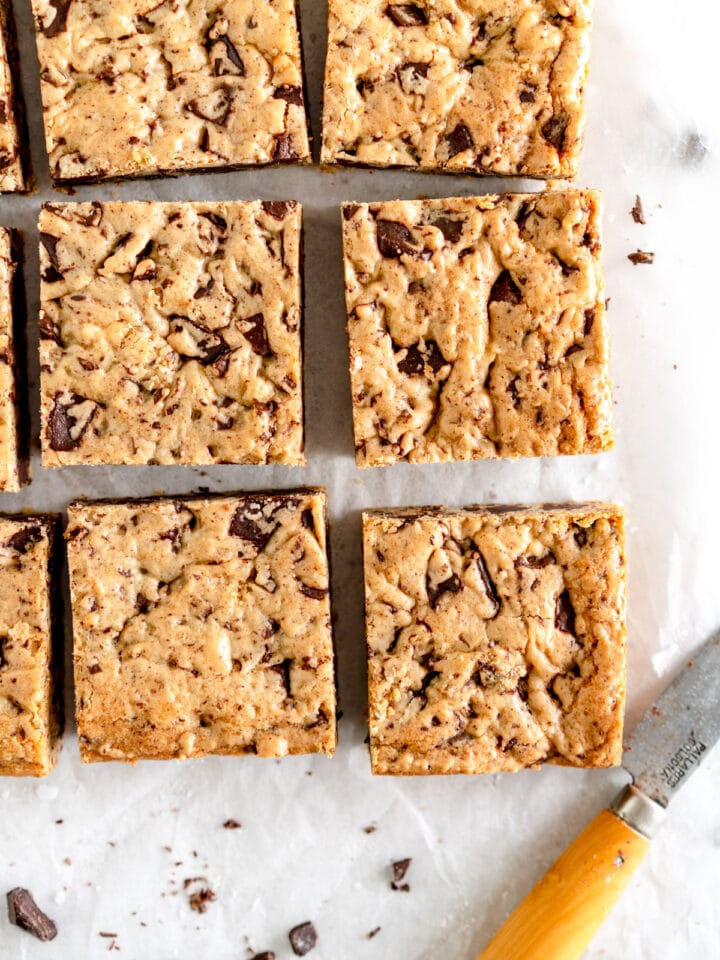
    • side on shot rhubarb bars
      Easy Baked Rhubarb Bars
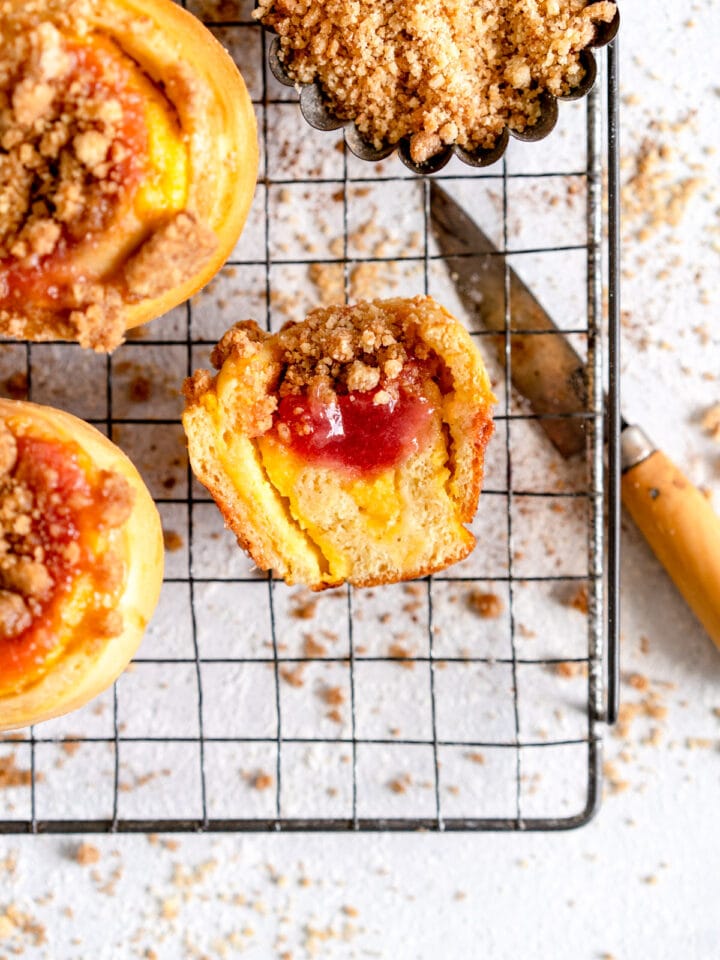
    • cut open shot of rhubarb custard bun
      Rhubarb Custard Buns
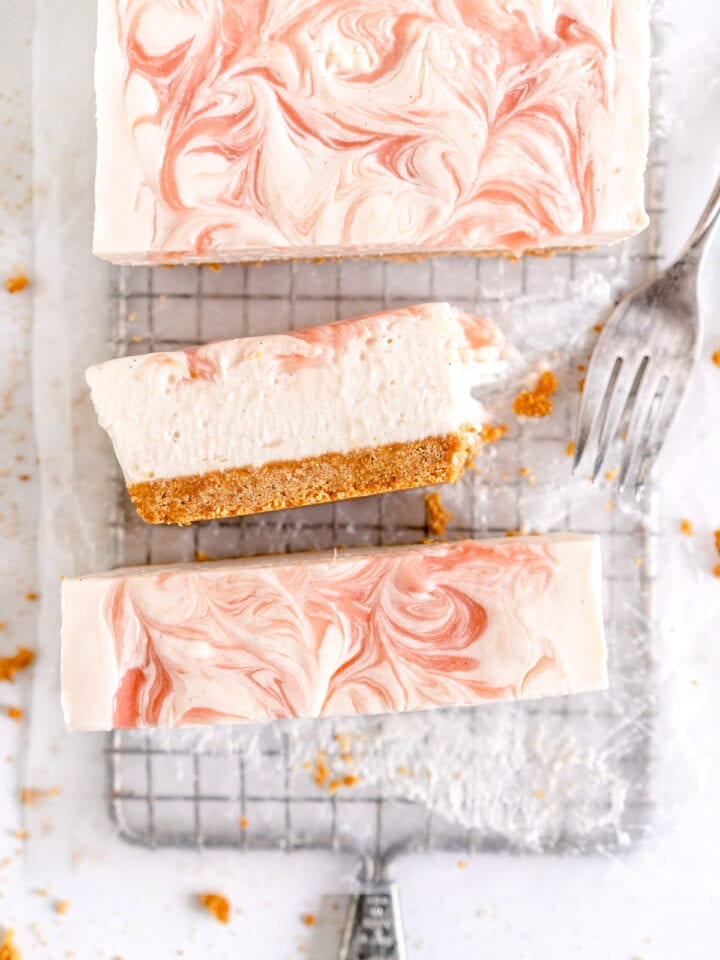
    • rhubarb no bake cheesecake
      Rhubarb Cheesecake
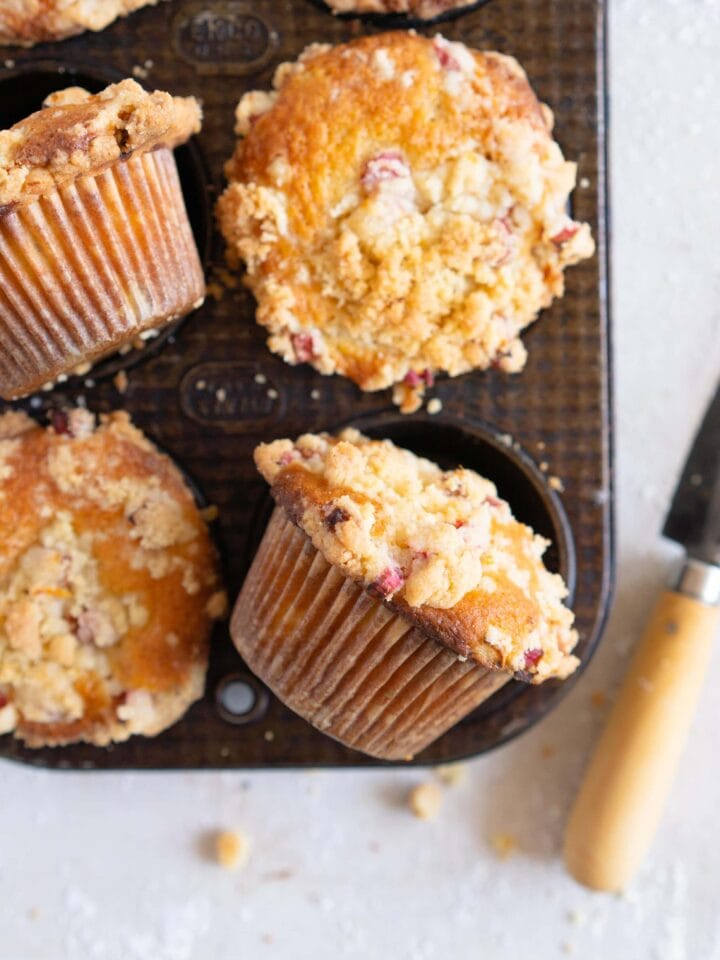
    • Rhubarb Muffins

    ❤️ Made this recipe and love it? ❤️

    I would LOVE for you to leave me a review and star rating below to let me know how you liked it! Also, please make sure to tag me on Instagram!

    Answers to your baking questions

    Over the years, many of you have asked me questions about:

    • baking in grams
    • adjusting oven temperatures
    • what kind of salt to use
    • and many more!

    I've curated and answered them all for your easy reference in this frequently asked questions post!

    Recipe For Rhubarb Pie

    Filed Under: Fruit Pies, Pies

    Brown Butter Chocolate Chip Cookie Bars

    chocolate chip cookie bars on wax paper.

    The secret to these chocolate chip cookie bars is their brown butter base! Studded with chocolate chunks, the cookie bars bake up soft and chewy inside with deliciously crispy edges. This easy dessert bar recipe is quick to make too - there's no need to chill the cookie dough. Simply press the cookie dough into an even layer in a prepared 8" non-stick baking pan, and into the oven they go!

    chocolate chip cookie bars on wax paper.

    Hi hi! Popping in to share the recipe for these chocolate chip cookie bars with you! I have a bunch of bar recipes and chocolate chip cookie recipes on the site already, but bar cookie recipes so far, so it was about time that I fixed that! I make my perfect chocolate chip cookie recipe the most often, but these bars are the perfect quick recipe, especially if you're after a baked dessert bar recipe!

    These chocolate chip cookie bars are super easy to make - they are a bar cookie version of my brown butter chocolate chip cookies. You make a super simple cookie dough, then press it into a baking dish and bake until perfectly golden. The result is these perfect chocolate chip bars - they are soft and chewy, and you still get chocolate chip cookie vibes with a wee bit less effort. These cookie bars make a super easy dessert that is great to make ahead. I'm obsessed. They are the perfect thing to add to your chocolate chip cookie recipe collection.

    side on shot of chocolate chip cookie bars showing chunks

    Why are there two measures of butter in the recipe?

    You will notice that there are two different quantities of butter in the recipe - the initial quantity in the ingredients list, then a 110g measure of brown butter within the body of the recipe.

    Different butters will have different moisture levels, which affects the yield of brown butter. American style butter have a higher water content, so will produce less brown butter when the water is cooked off. European or New Zealand style butter, which is higher in fat than American butter, will have less water that needs cooking off, so you will end up with a higher yield of brown butter.

    The quantity of the butter in these browned butter cookies is important here, so the best way to measure it is by using a scale. You start with an initial quantity of butter - in this case 150g, and then cook it down. You then re-measure the weight of the brown butter, and use 110g of that in your cookie dough. I have accounted for the moisture loss from the initial quantity of brown butter in the recipe.

    I know that making brown butter can be intimidating. Don't be scared, I will hold your hand the whole way through in my post and you'll be nailing it in no time: Brown Butter 101: The Ultimate Guide

    squares of cookie bars on wax paper

    How do you know when bar cookies are done?

    When the chocolate chip bar is baked, the surface will be set and lightly golden brown, and the edges of the cookie bar will be set and slightly firm. I prefer to underbake my cookie bar rather than over bake it, but if you like super crunchy edges you can bake it for a little longer.

    How to line a square pan with parchment paper

    When you are making a bar cookie recipe or something similar that you want to be easily removed from the pan, it helps to use a parchment paper 'sling' to line the pan. To do this I use two pieces of paper, cut to the size of the pan, then clip the extra paper to the sides of the pan to stop flapping.

    If you like you can also lightly butter or grease the pan to help the parchment paper stick.

    stacked chocolate chip cookie bars

    ❤️ Made this recipe and love it? ❤️

    I would LOVE for you to leave me a review and star rating below to let me know how you liked it! Also, please make sure to tag me on Instagram!

    Answers to your baking questions

    Over the years, many of you have asked me questions about:

    • baking in grams
    • adjusting oven temperatures
    • what kind of salt to use
    • and many more!

    I've curated and answered them all for your easy reference in this frequently asked questions post!

    Filed Under: Chocolate Chip Cookies, Cookie Bars, Small Batch Baking

    Brookies

    brownie cookies on sheet pan

    Homemade Brookies are half fudgy brownie and half chocolate chip cookie. This Brookie recipe is quick and easy to make, is made with pantry staples, and is the perfect combination of brownie and cookie!

    brownie cookies on sheet pan

    Hi hi! I am just popping in here to share the recipe for Brookies! I made these a few times over the last few weeks after I developed my brownie recipe, as I wanted to play around with a few variations.

    This brookie recipe is a mash up of my brownie recipe and my malted chocolate chip cookie recipe. It takes a little more effort to make than a regular brownie or chocolate chip cookie recipe, as you have to make both batters and then combine them, but I promise that the effort is so, so worth it. I love a good brownie bar recipe, and this brookie recipe is particularly good.

    These brookies make a super easy make ahead dessert - we often have them plain but they are amazing served slightly warm with a scoop of vanilla ice cream.

    If you love this brookie recipe, check out my cheesecake brownies and my homemade cosmic brownies, along with my fudgy brownie pie, which all use the same base recipe!

    • What is a brookie?
    • How to assemble a brookie
    • How to cut brownies
    • How to line a rectangle pan with parchment paper
    • Frequently Asked Questions
    corner shot of brookies on a rack
    side shot of brownie cookie bars on a wire rack

    What is a brookie?

    A brookie is a combination of brownie and a cookie, or a cookie brownie recipe. You take two batters - a brownie batter and a cookie batter, and blob them into a pan, then pop the whole thing into the oven.

    You need to make the cookie batter and the brownie batter separately for this brookies recipe, which takes a tiny bit longer, but this easy recipe makes a full 9"x13" pan of brookies, which yields 20 brookie bars.

    sliced up brownie cookie bars

    How to make the brownie layer

    I like to make the brownie batter for the brownie cookies bars first, as it sits well while the cookie layer is being made, and gives the brown butter some time to cool. I use a smaller batch of my homemade brownie recipe, which is super easy to make:

    • Melt together the butter and chocolate, then add cocoa and mix well to incorporate.
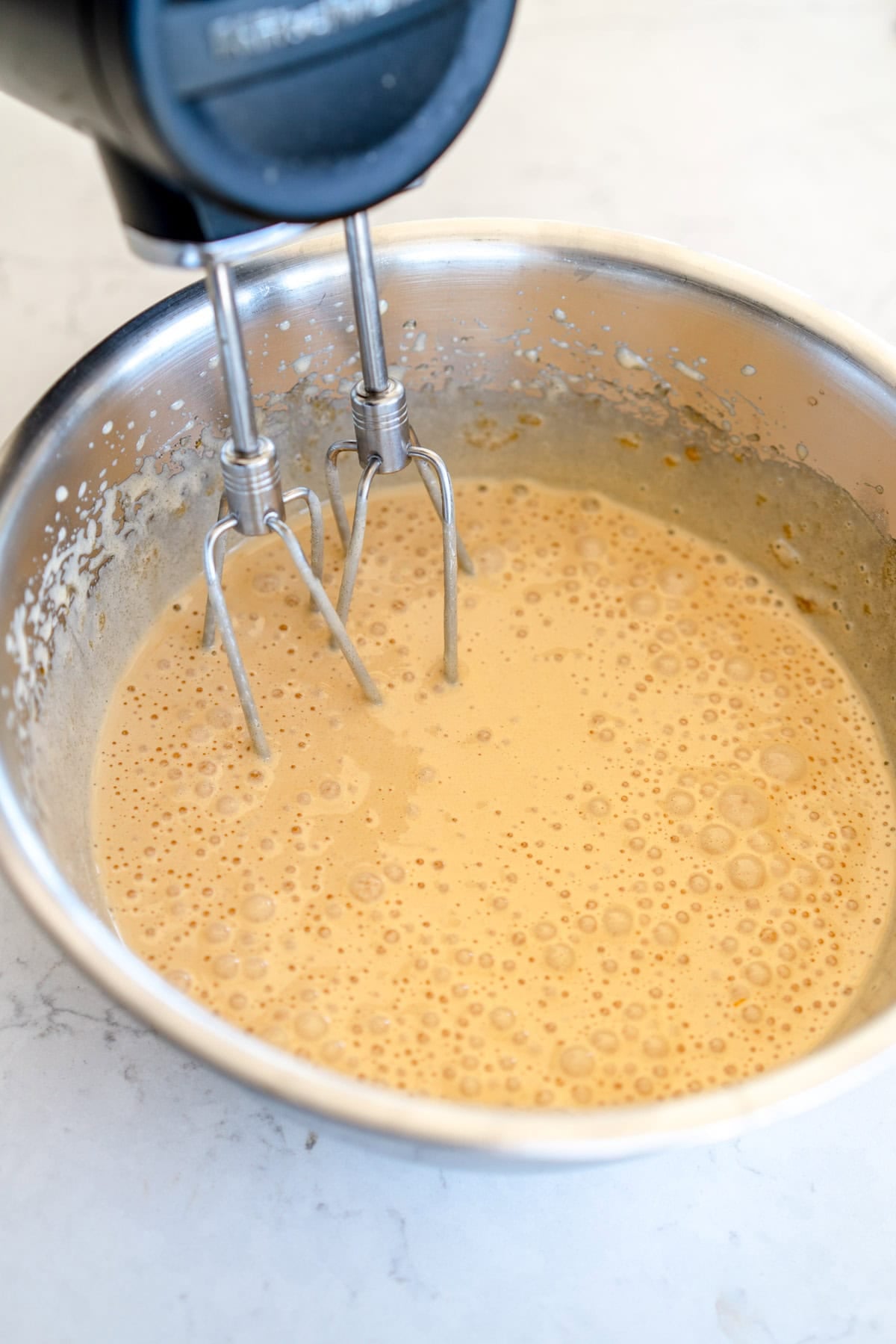
    • Whip together the brown sugar, white sugar, and eggs in a bowl. Whipping this mixture well until it is thick and fluffy is what helps to give a nice shiny top on the top of the brownie. I like to use an electric hand mixer but you can also do this step in a stand mixer.
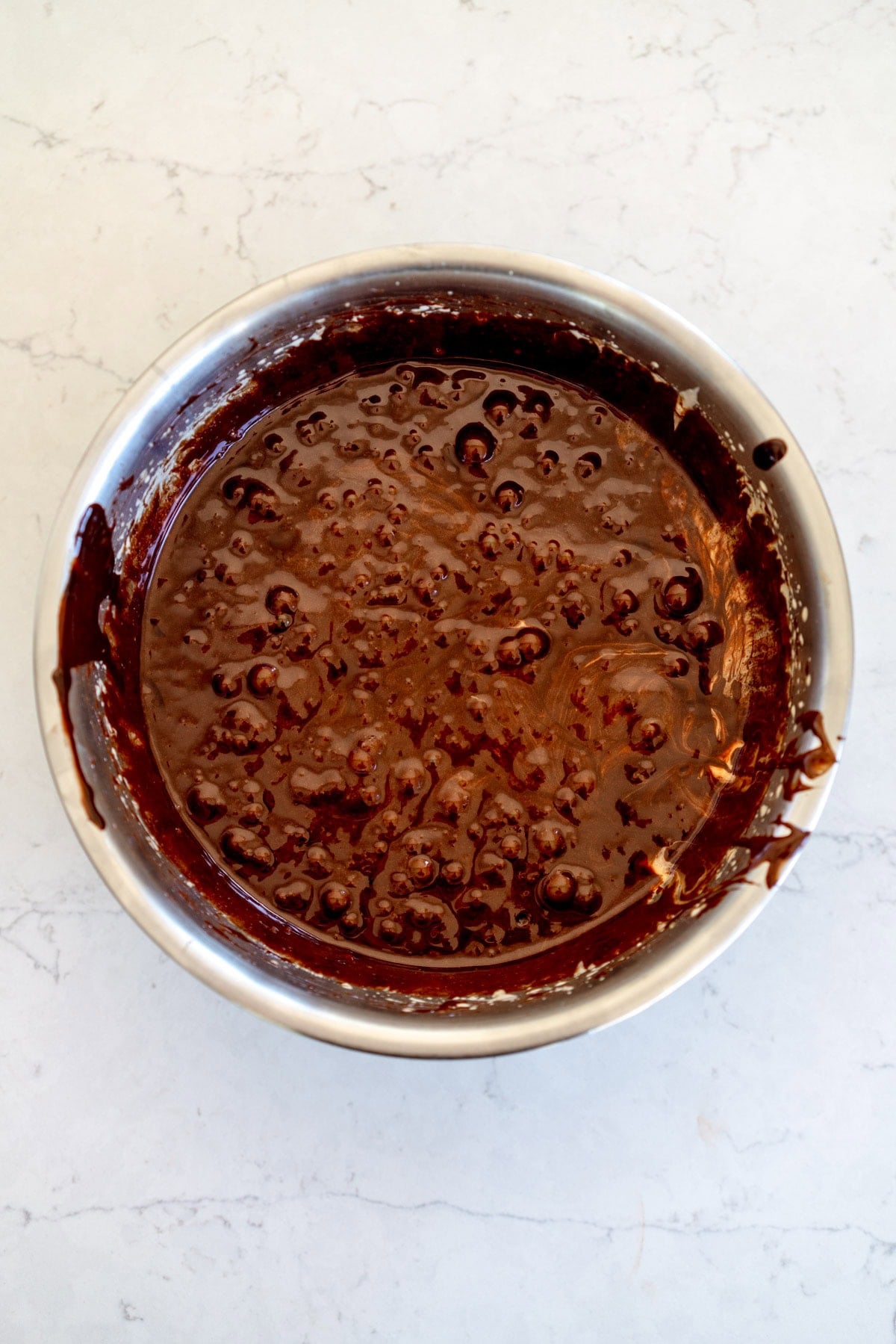
    • Add the cooled chocolate mixture and mix to incorporate.
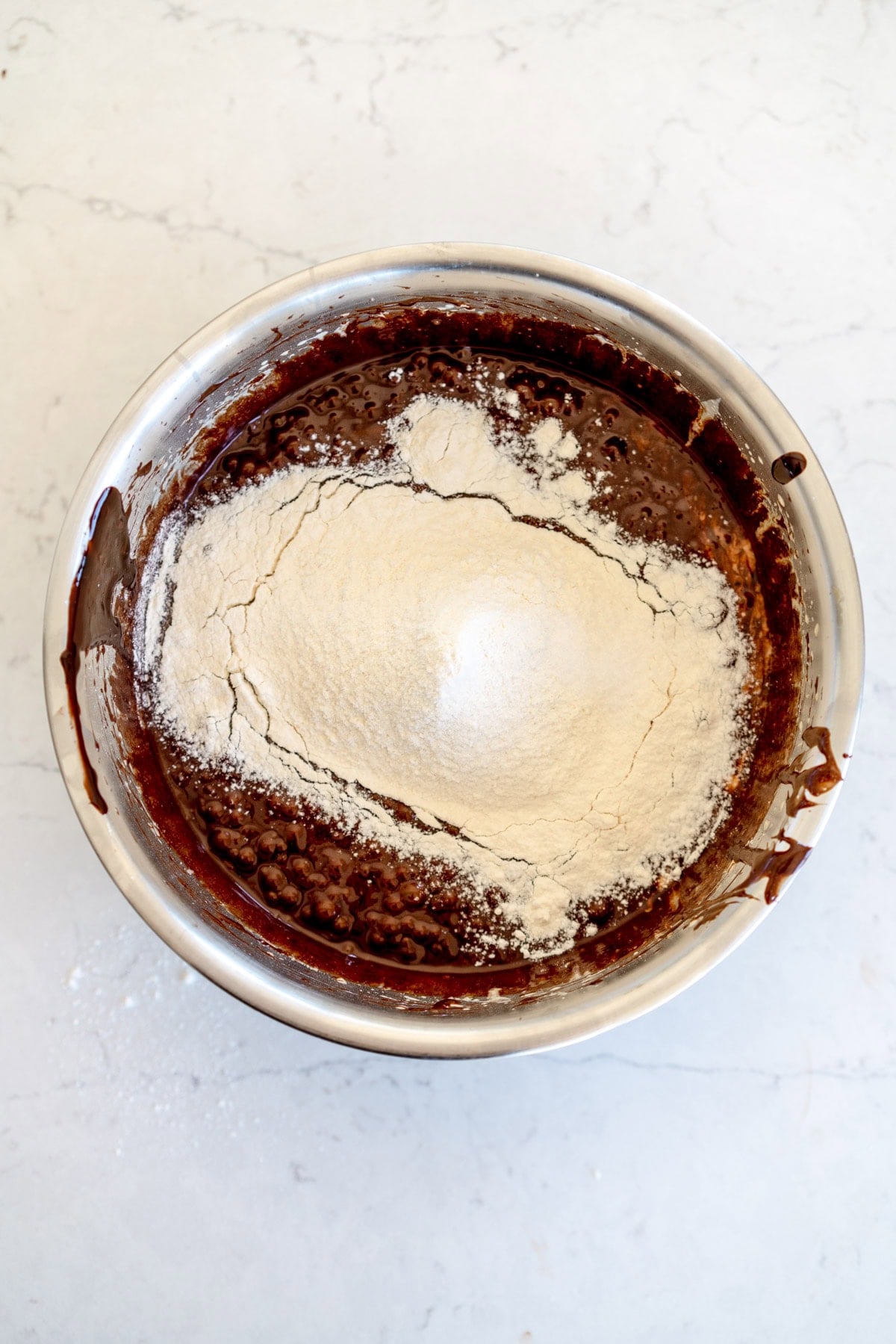
    • Add the flour, vanilla, and salt, and mix until combined. Set the brownie mixture aside while you make the cookie mixture.
    close up image of brownie cookie bars

    How to make the cookie layer

    I used my malted milk cookie recipe for the cookie batter for my brookie recipe, but omitted the malted milk powder (keep it in if you like!) and added a little espresso powder. I chose this recipe as it usually requires a chill time in order to allow the dough to firm up slightly, so the slightly softer cookie batter was great for layering in with the brownie.

    I also used brown butter because I love making recipes using brown butter - I like to brown the butter before I start making the brownie recipe, so by the time I am ready to start the cookie dough layer, the butter has cooled. The cookies are also super easy to make:

    • Brown the butter. This is an optional step - use 95g melted butter if you don't want to do the extra step of browning the butter.
    • Add sugar and eggs to the cooled brown butter and whip until thickened and slightly lightened in colour.
    • Add in the flour, espresso powder, baking powder, baking soda and salt. Mix to only just incorporate. I like stopping once there are still some flour streaks showing - this will incorporate when you add the chocolate.
    • Add the chopped chocolate and mix to combine. The brookies are now ready to assemble!
    pan of brownie cookie bars
    sliced brookies on sheet pan

    How to assemble a brookie

    There are a few ways you can assemble your brookie bars - I like to layer mine up a little, to give a nice mixture of cookie and brownie.

    You could add all the brownie batter and then dot the cookie dough on top, or add the cookie dough in clumps and then cover with brownie batter, but I like to alternate the batters so that you end up with a nice mix. I use two 2 tablespoon cookie scoops, but if you only have one you could just use the one in both batters (they get swirled together anyway)

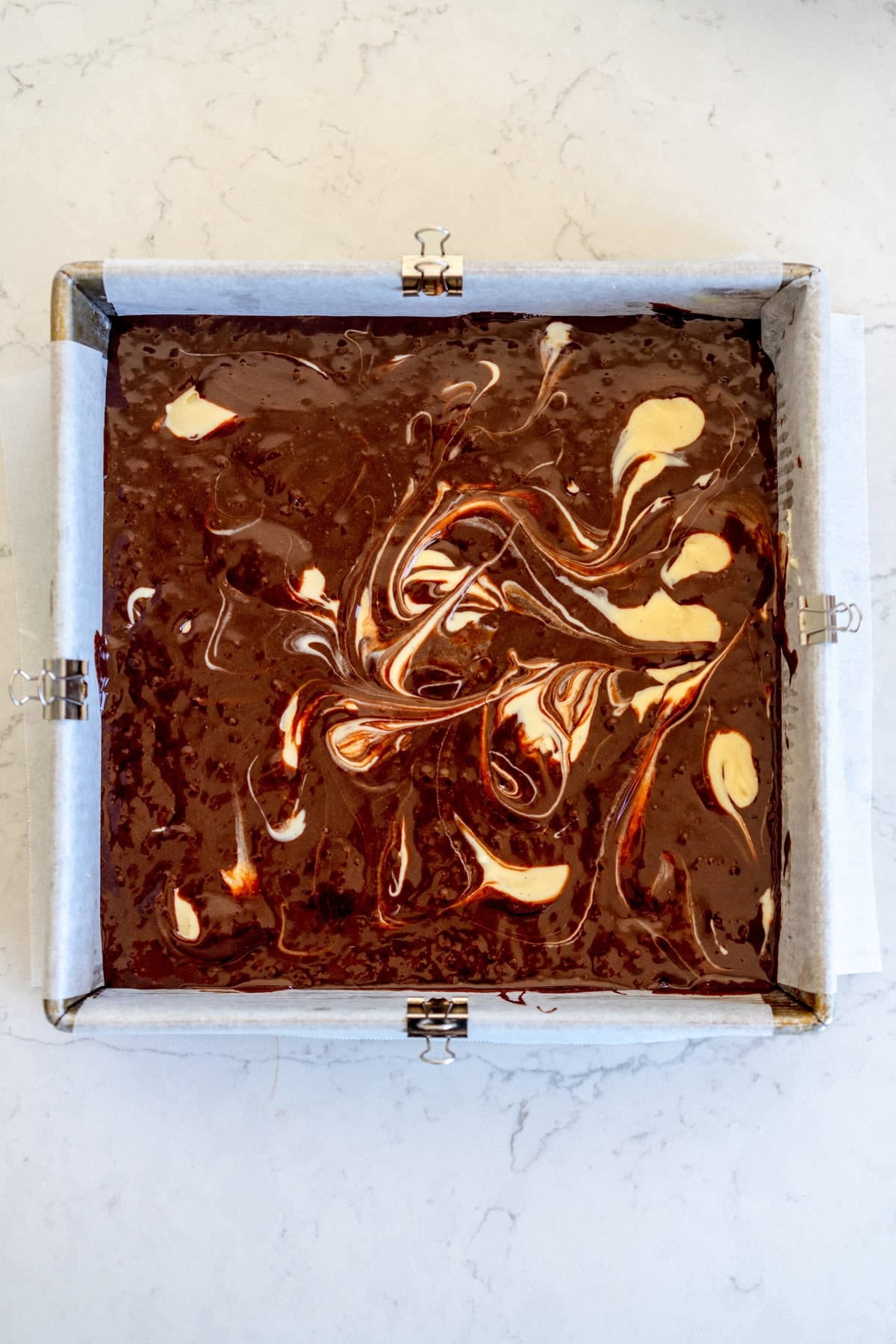
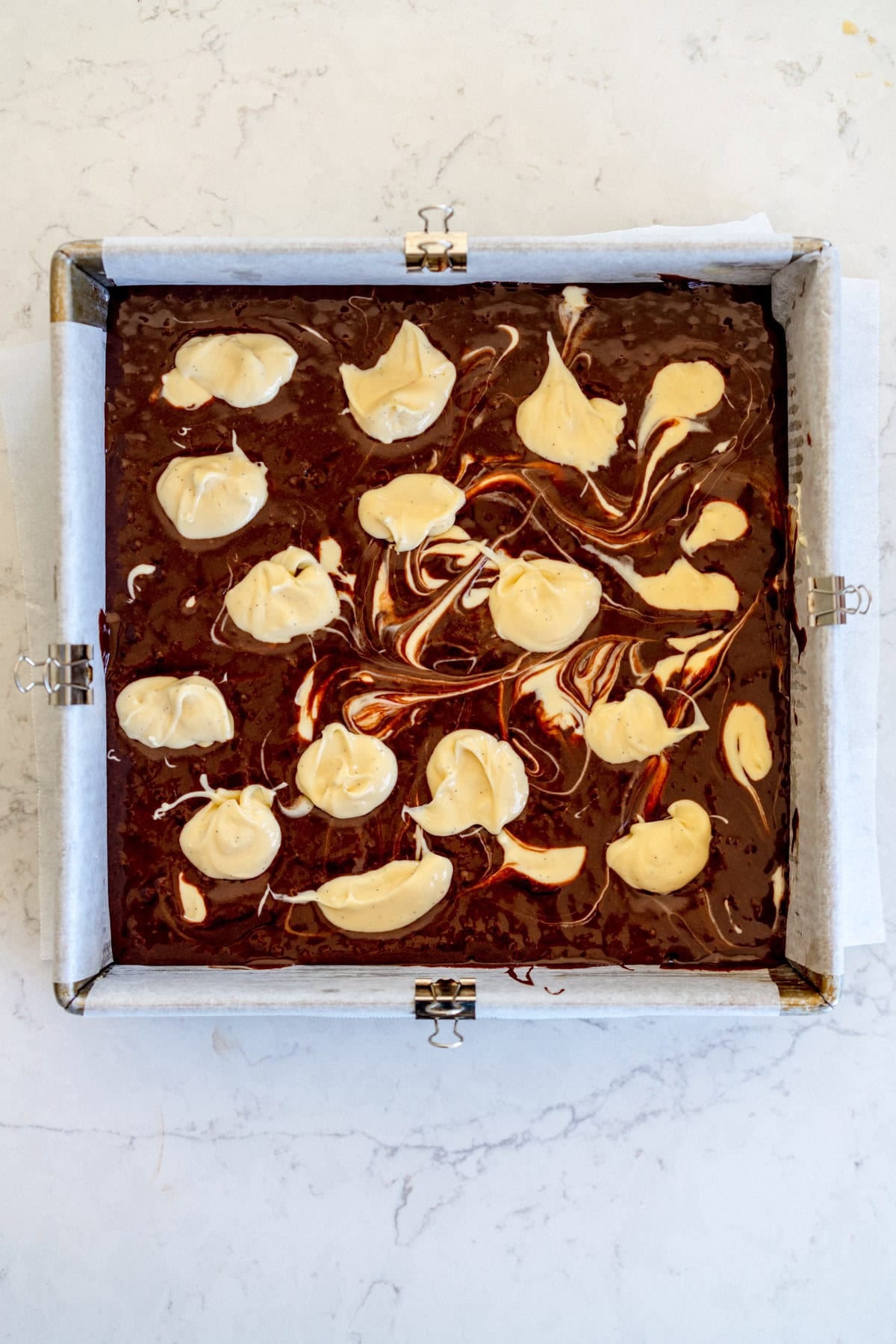
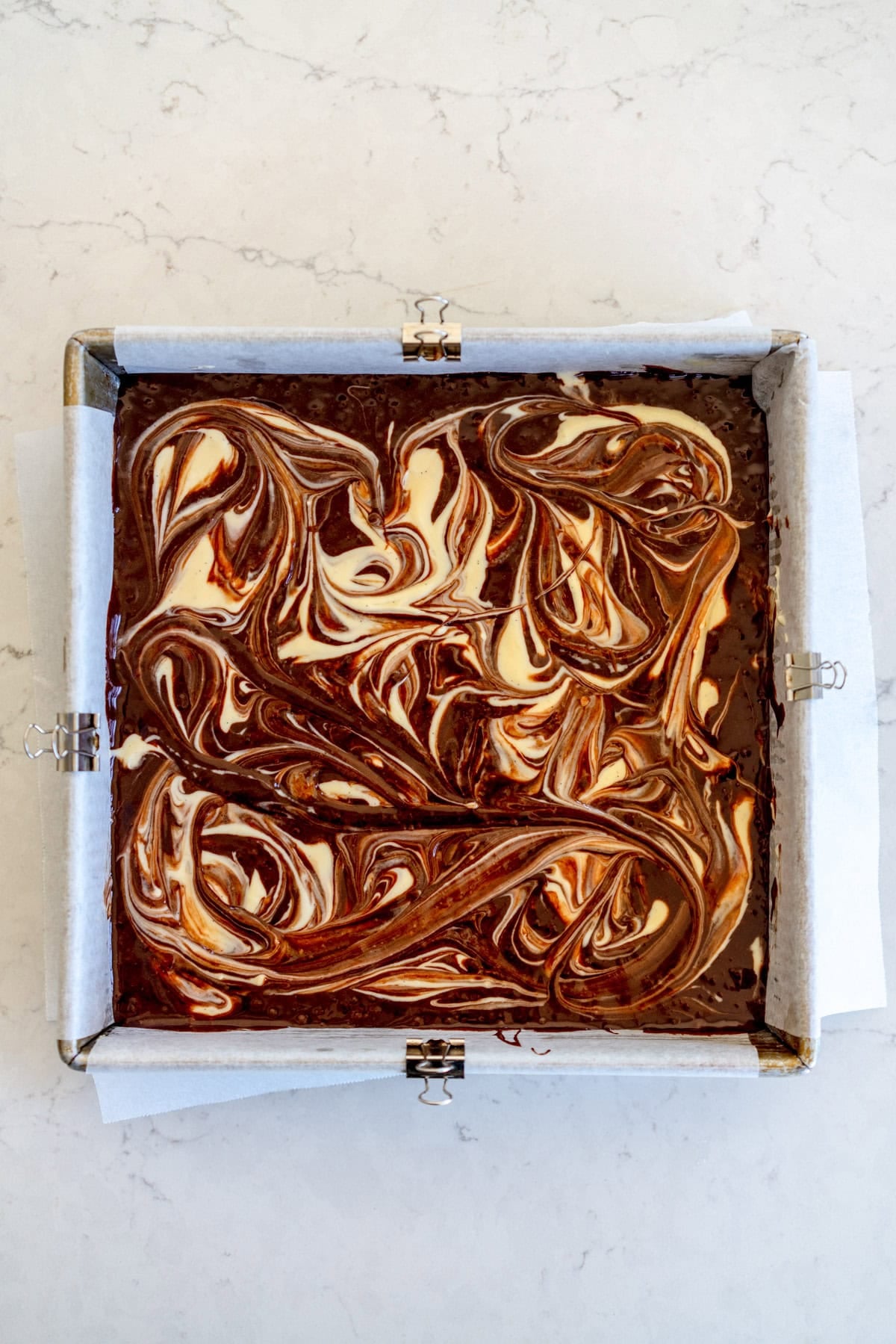
    Start with a few blobs of the cookie dough, arranged around the pan, and flatten them slightly with an offset spatula or a spoon. Add some blobs of brownie batter, then keep alternating - blobs of cookie dough, blobs of brownie batter etc. I like to swirl in the cookie dough a little as it is a little firmer than the brownie batter. Feel free to also vary the sizes of the blobs - if you want some smaller cookie dough pieces in the mixture etc.

    Once all your brownie batter and cookie dough is in the pan, give it a good bang on the counter to help flatten everything out.

    shot showing inside texture of brookie bars

    Why are there two measurements of butter in the cookie recipe?

    When you brown butter, you cook off some of the moisture, so end up with less butter than when you started due to this. The recipe accounts for this moisture loss - so you will start with 125g butter, then use 95g brown butter in the recipe. You may have a tiny bit leftover - pop it onto some toast next time you have a snack.

    The two quantities are not a typo - we are just making an accurate recipe and it is important to weigh the butter both before and after browning to ensure that you have the correct quantity for the recipe.

    stacked up brookies on sheet pan

    How to tell when brookies are done

    I bake my brookie for about 22 minutes. To check for doneness, you are looking for the top of the brownie to be set and shiny, and the edges to look done. If you insert a skewer into the brownie section, it should come out with a few fudgy crumbs attached. It will still be slightly gooey. You want to lean toward under baking slightly than over baking if possible so that the brookie does not dry out.

    Make sure that you leave the brookies to cool completely in the pan before removing and slicing. If you want to speed up this process a little, you can pop the tray into the fridge once most of the heat has gone out of the brownies.

    How to cut brownies

    There are a few wee tricks when it comes to cutting brownies or bars cleanly. Here are my top tips for how to cut brownies / brookies / cookie bars:

    • Chill the brookie slightly. Starting with a slightly chilled brownie or brookie really helps to give you a nice sharp cut. If you haven't chilled it, make sure it is at least properly cooled from the oven. If it is a little under baked, chilling it slightly in the refrigerator before cutting will help.
    • Measure your cuts first. I use two rulers, one on either side of the brookie, to make my measurements before cutting.
    • Use a super sharp knife. I use a 12" chef's knife to cut my brookie bars or brownie bars. Using a long blade means you can do a single cut at once without any overlap.
    • Wipe the knife blade between cuts. Wiping the blade between cuts will give you a nice clean blade to start with each time you make a cut, and help to cut the bars super cleanly.

    How to line a rectangle pan with parchment paper

    The best way to line a rectangle pan with parchment paper is to use a single sheet and cut four slits, in line with the edges of the pan. I lightly grease my pan first to help the parchment stick, then press the parchment paper in, folding in the tabs. This gives you nice clean corners and gives you something to hold onto when removing the brookies from the pan

    corner image of brookies
    sliced up brookies on pan with knife

    Frequently Asked Questions

    What tools and equipment do you use?
    You can see a full list of all the tools I use here. I use a 2 tablespoon cookie scoop to portion out the batters.

    Which pan is best for brookies?
    I made my brookies in a non stick 9"x13" pan, lined with parchment paper. I find that metal pans are best for baking things such as brownies and bars, as opposed to a glass or ceramic baking dish which are poor conductors of heat.

    Can I add malted milk powder to the cookies?
    Yes, if you would like to, you can add 45g malted milk powder to the cookie part of the recipe, as I did in my malted Nutella chocolate chip cookies. Add it in with the flour - it is a flavour enhancer rather than a thickener so can be easily added or removed.

    How do you store brookies?
    I store the brookies in an airtight container at room temperature - they keep for up to four days. You can also store them in the fridge if you prefer to eat your brookies chilled.

    What is a good sub for espresso powder?
    Finely ground instant coffee is a great sub for espresso powder.

    Can this recipe be made ahead of time?
    Yes - if you want to make these brookies ahead of time you can make them and store them in the pan until ready to serve, either at room temperature or in the fridge lightly covered with plastic wrap.

    Can brookies be frozen?
    Yes, this recipe freezes well - freeze in an airtight container once sliced and then remove from the freezer when ready and defrost at room temperature.

    Is Dutch cocoa powder compulsory?
    No - if you don't have dutch cocoa powder you can use regular unsweetened cocoa powder.

    brookies on a wire rack

    For more brownie recipes, check out:

    • close up of Nutella brownies
      Ridiculously Good Nutella Brownies
    • shot of a slice of brownies
      Double Oreo Brownies
    • fudgy brownie bites
      One Pot Chewy Brownie Bites
    • square of tahini brownies
      Super Fudgy Tahini Brownies (Done in 40 minutes!)

    ❤️ Made this recipe and love it? ❤️

    I would LOVE for you to leave me a review and star rating below to let me know how you liked it! Also, please make sure to tag me on Instagram!

    Answers to your baking questions

    Over the years, many of you have asked me questions about:

    • baking in grams
    • adjusting oven temperatures
    • what kind of salt to use
    • and many more!

    I've curated and answered them all for your easy reference in this frequently asked questions post!

    Filed Under: Bars and Slices, Brownies, Chocolate Chip Cookies

    I Finally Found It - My Forever Brownie Recipe

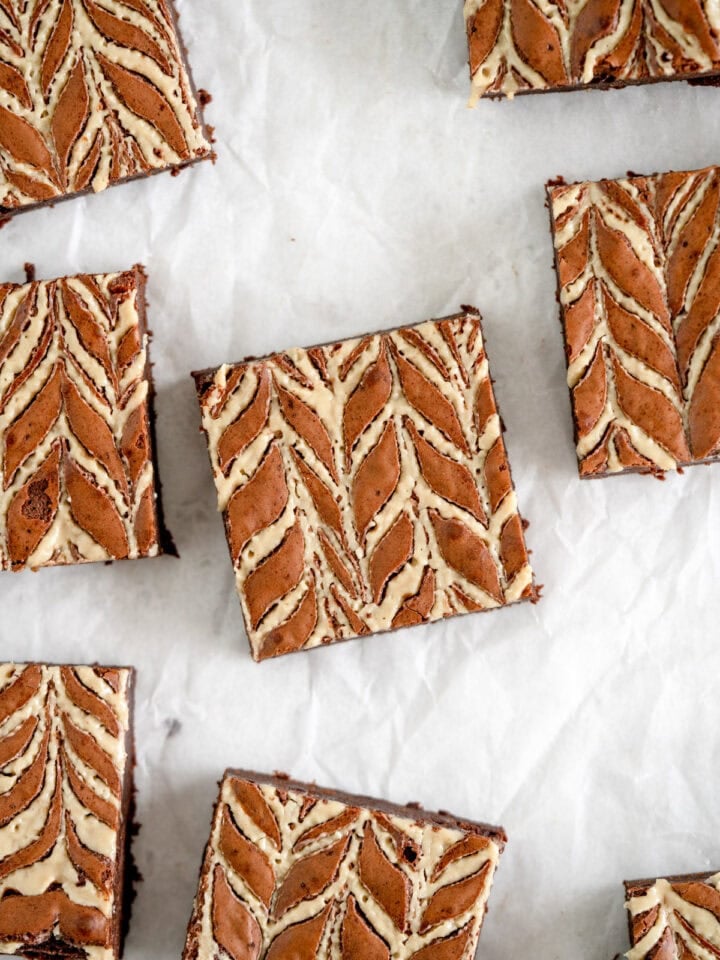
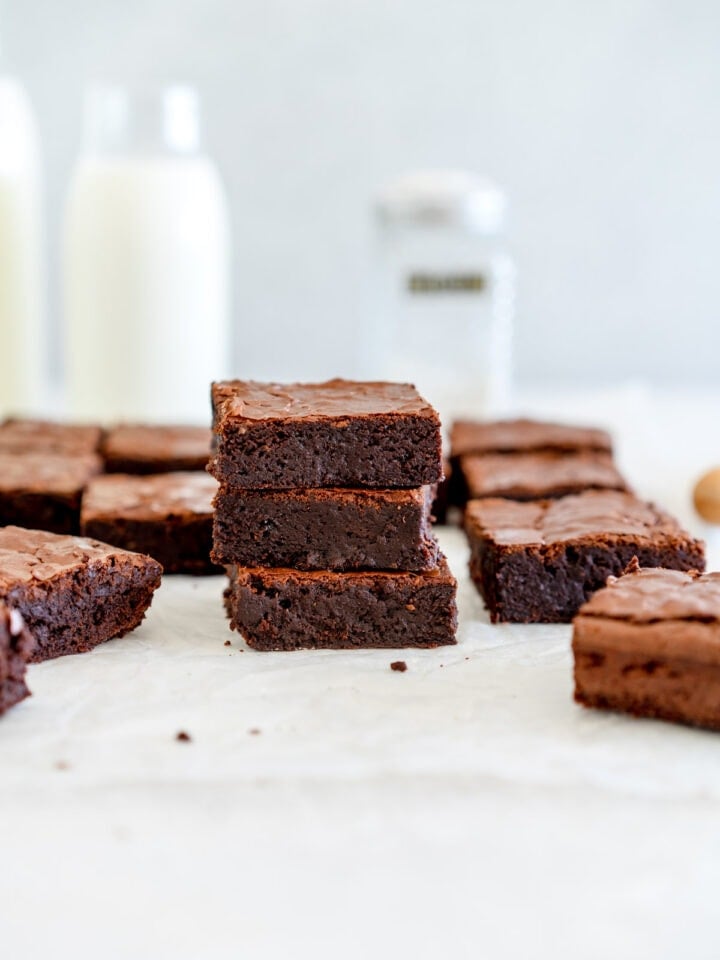
    With over 100 five star reviews, this is, to me, my forever brownie recipe. Made with both cocoa and chocolate, it has fudgy middles and that perfect crinkly top. This brownie recipe is quick and easy, and can be done in an hour. Read this post for all my top tips on the perfect brownie!

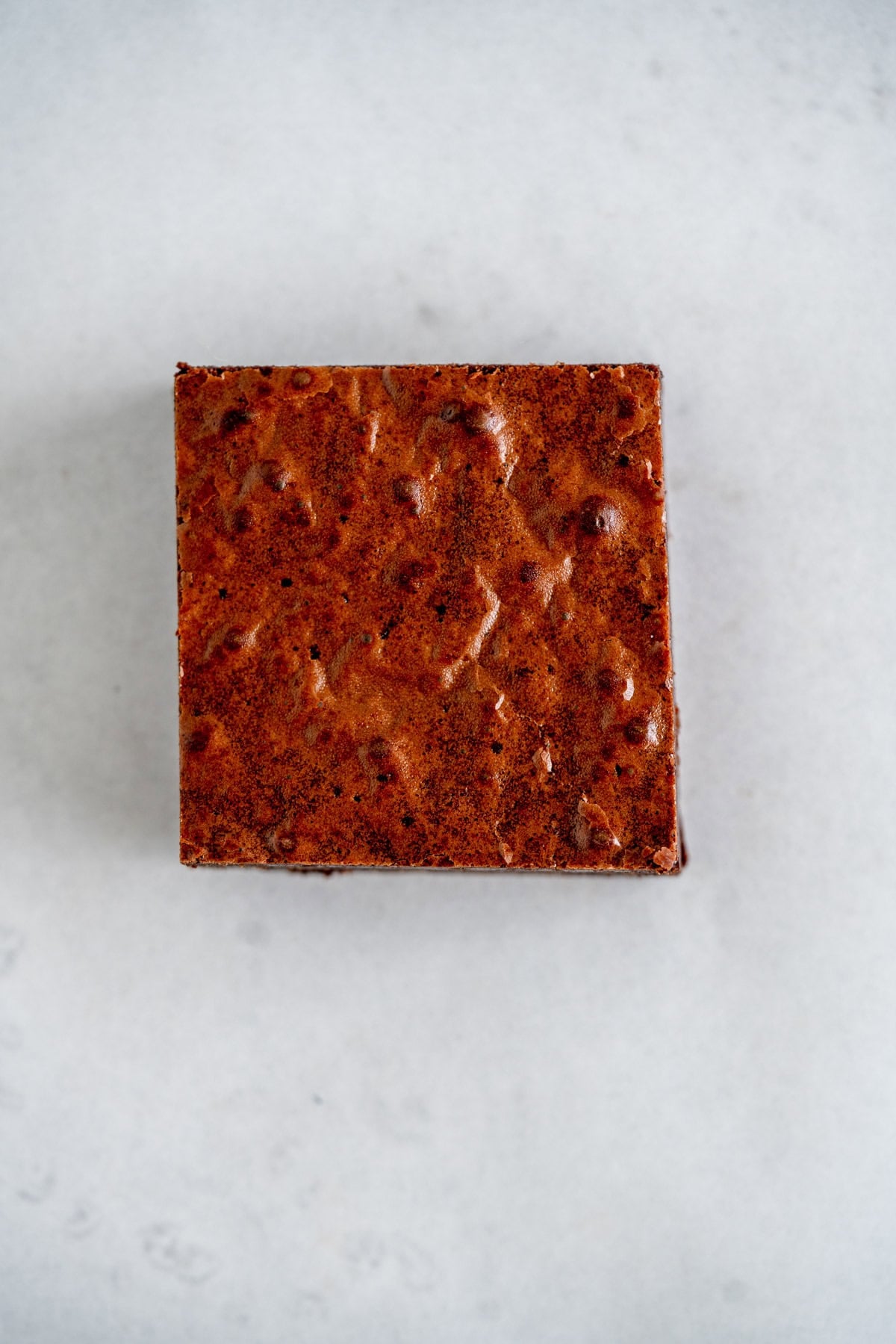
    side on shot of fudgy brownie

    Hi hi! I am just popping in to share this easy homemade brownie recipe with you. I realised recently I only have fun variations on brownie recipes, and recipes which have a brownie base. I didn't have a plain old, easy, back pocket brownie recipe, and that needed to change ASAP. And I promise you, this one is a good one.

    I know that there are a bunch of brownie recipes online, all claiming to be the 'best brownie recipe', and while I don't claim this to be the best brownie recipe, it is certainly my best brownie recipe.

    To me, perfect brownies should be nice and fudgy rather than cakey, only just baked so that the centre is nice and gooey and the outsides are a little chewy, and be a full chocolate explosion. I know some people are partial to a crinkly top on a brownie so I added that in as a factor when developing this recipe. I've got all the top tips and tricks for you to make super easy homemade brownies.

    If you would like a cream cheese brownie version of this recipe, check out my cheesecake brownies recipe!

    close up image of cut brownies

    The secret to a crinkly brownie top

    While I am not particularly bothered by whether a brownie has a crinkly top as long as it is a nice texture and tastes good, I know that it is very important to some people, so I wanted to make sure my brownie recipe has a crinkly top, just in case that is important to you.

    The way to get a good crinkly top, based on my recipe testing, comes from a mixing technique rather than a specific ingredient ratio or combination. Using chocolate in the recipe can help, but the main secret to the the crinkly flaky brownie top comes from whipping the eggs well with the sugar. I have used this technique in cocoa only brownies to get a shiny top too which is how we know that the whipping of the eggs plays a huge part.

    The crinkly top on a brownie comes from dissolving the sugar properly in the egg mixture / in the brownie batter and aerating the egg mixture by whipping the eggs with the sugar for 3-4 minutes. This gets the mixture really light and fluffy, but also gives the sugar a good chance to dissolve in the egg, giving you that super thin, crackly, meringue like topping on top of your brownies.

    Top tip - if you want a crinkly top on your brownie, make sure to whip your egg and sugar mixture until it is thick, light, and fluffy.

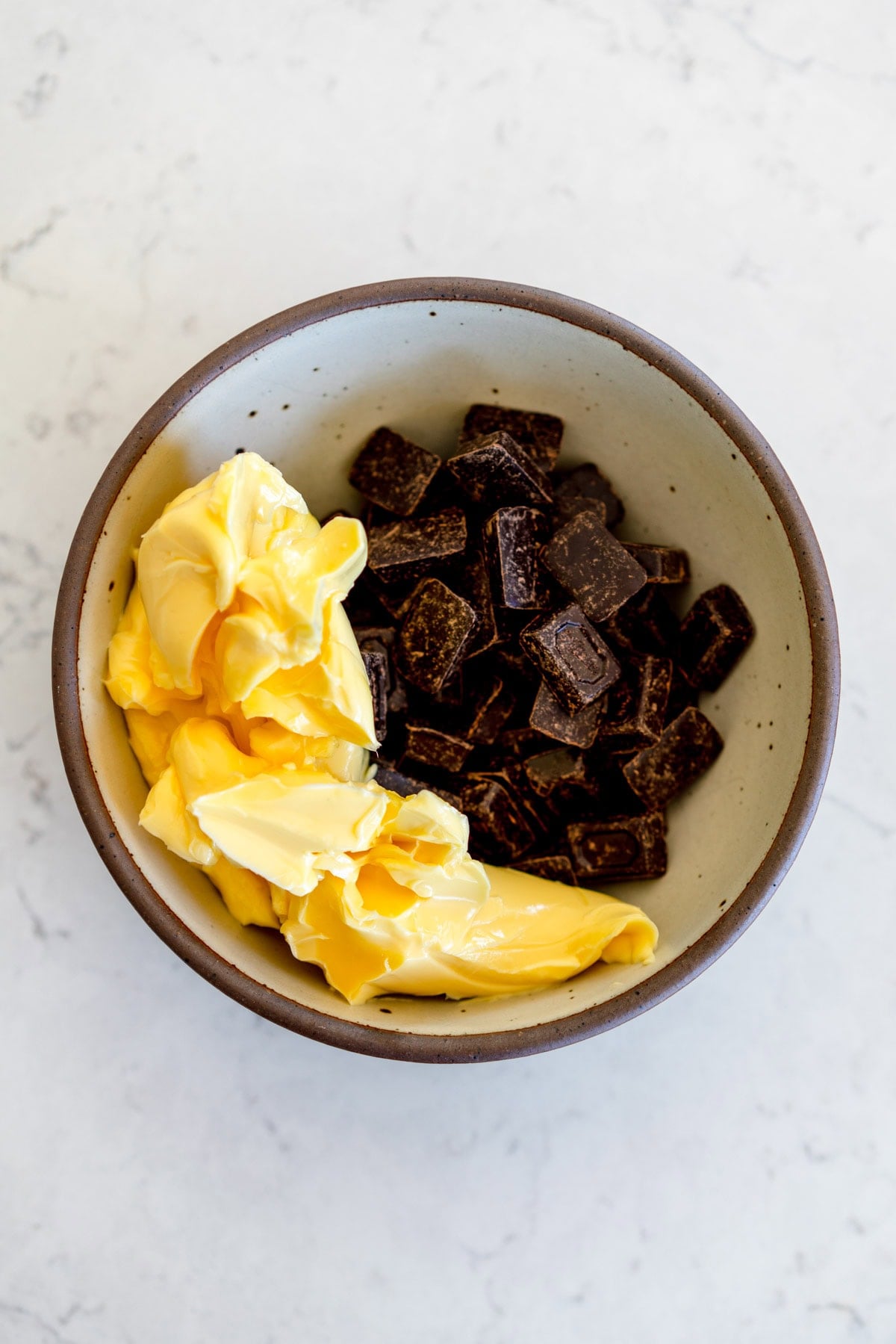
    butter mixture and chocolate for brownies
    Butter and chocolate
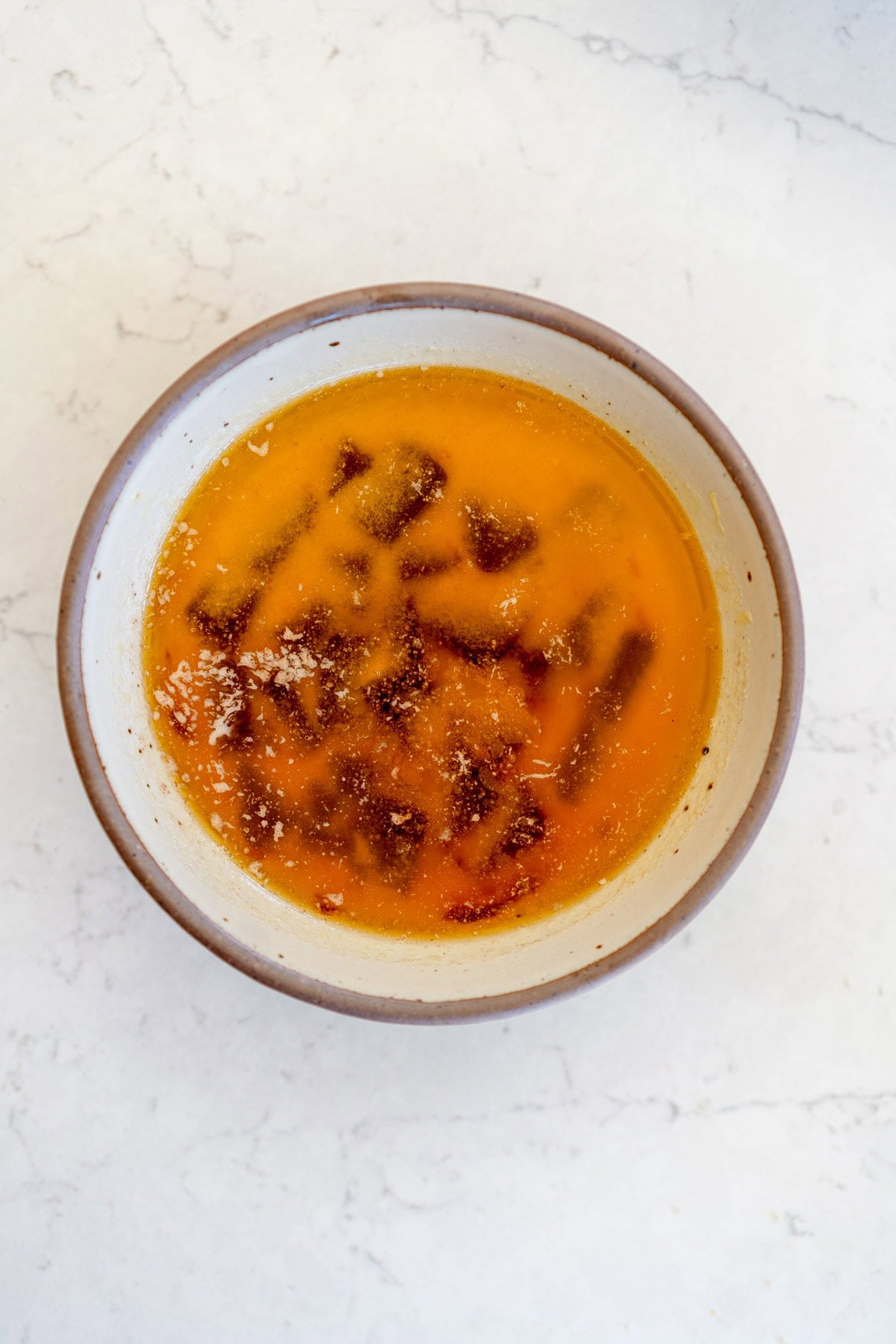
    melted butter and chocolate
    Melt then stir to combine

    Testing - does whipping your mixture really make a difference?

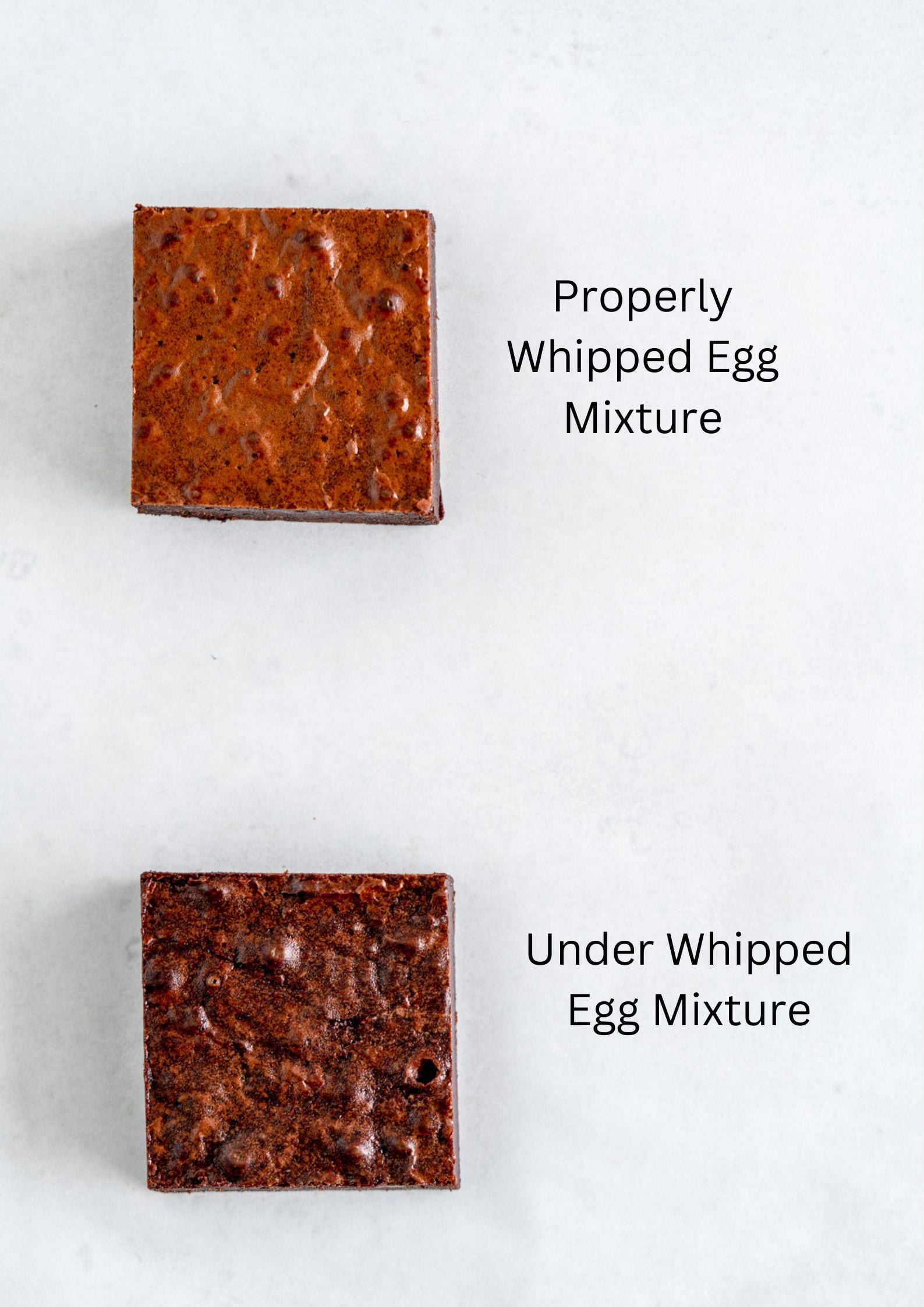
    If you know me, you know I love a little experiment. So I had to do a quick experiment to really prove how important whipping the mixture for brownies is and how it makes a difference to the crinkly top.

    Below you can see two batters - the one on the left I just quickly combined by hand with a whisk, and the one on the right I mixed for the full time as called for in the recipe.

    under whipped egg mixture
    Mixed quickly by hand
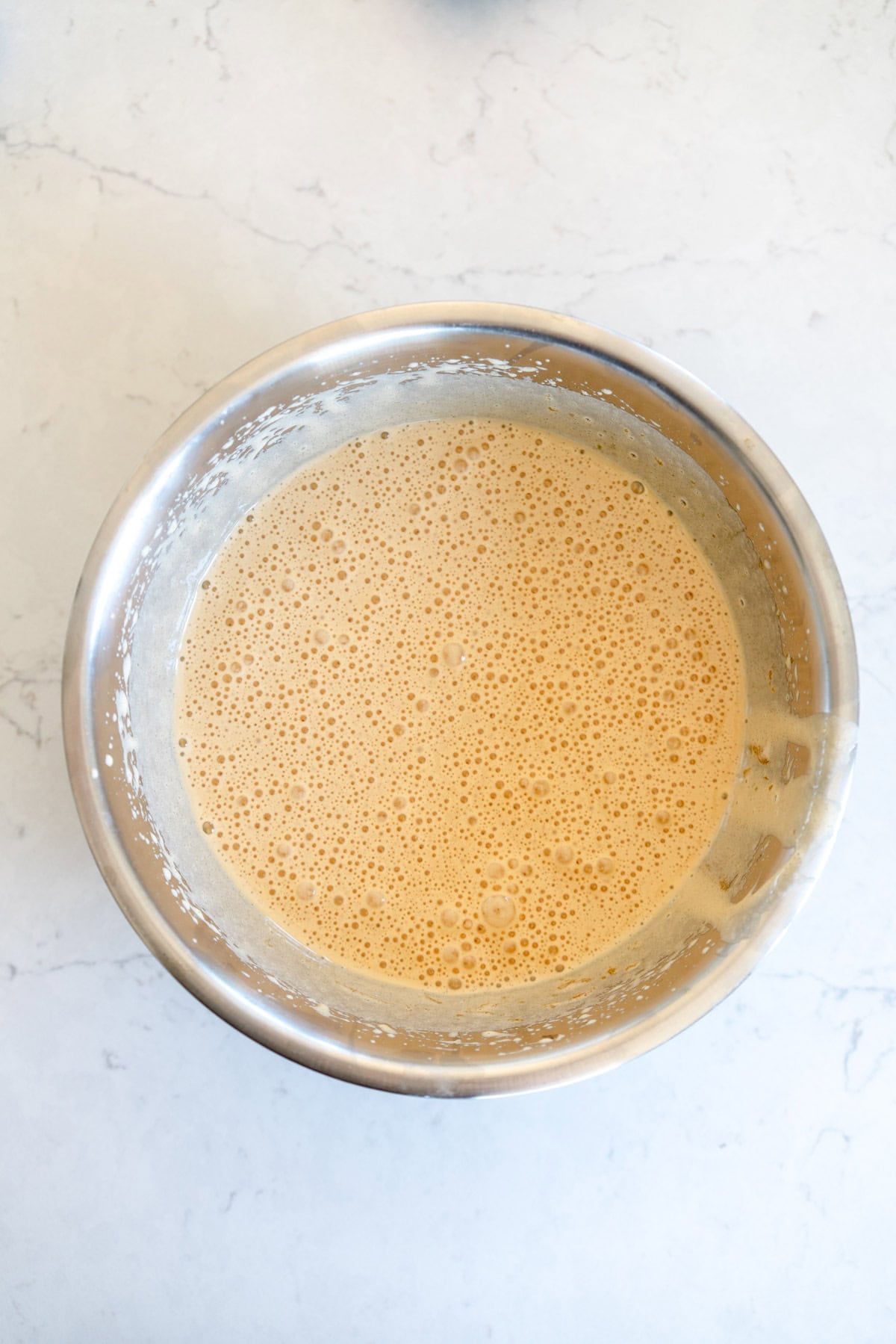
    properly whipped egg mixture
    Properly mixed egg and sugar

    You can see that it really did make a difference - the undermixed batter did not get a nice shiny top on the top of the brownie, which is due to the sugar not being properly dissolved within the mixture to form that nice crackly top on the top of the brownie.

    Note that I used Caster sugar in both of these, which is a little finer than regular granulated sugar (especially in NZ), and if you used a larger grained sugar that could also not dissolve properly and have a similar outcome.

    comparison of brownie pics

    Why is Caster sugar used in brownies?

    Using caster sugar in brownies also helps to get a super crinkly top. Caster sugar has a smaller grain size than granulated sugar, so it dissolves better in the egg mixture, to give that nice crinkly top.

    If you only have granulated sugar on hand it will still work fine particularly if you are in the US. US granulated sugar is typically a lot finer than NZ sugar (from what I have experienced anyway), so will dissolve well in the egg mixture. If you are in NZ and want that crinkly top, caster will work best.

    This is another reason why using a scale is so important, as something as insignificant as the grain size of your sugar can throw off a recipe - one cup of finer grained sugar is going to weigh a lot more than a cup of slightly coarser sugar due to how much more of a fine sugar can fit into a cup measure. Grams for the win.

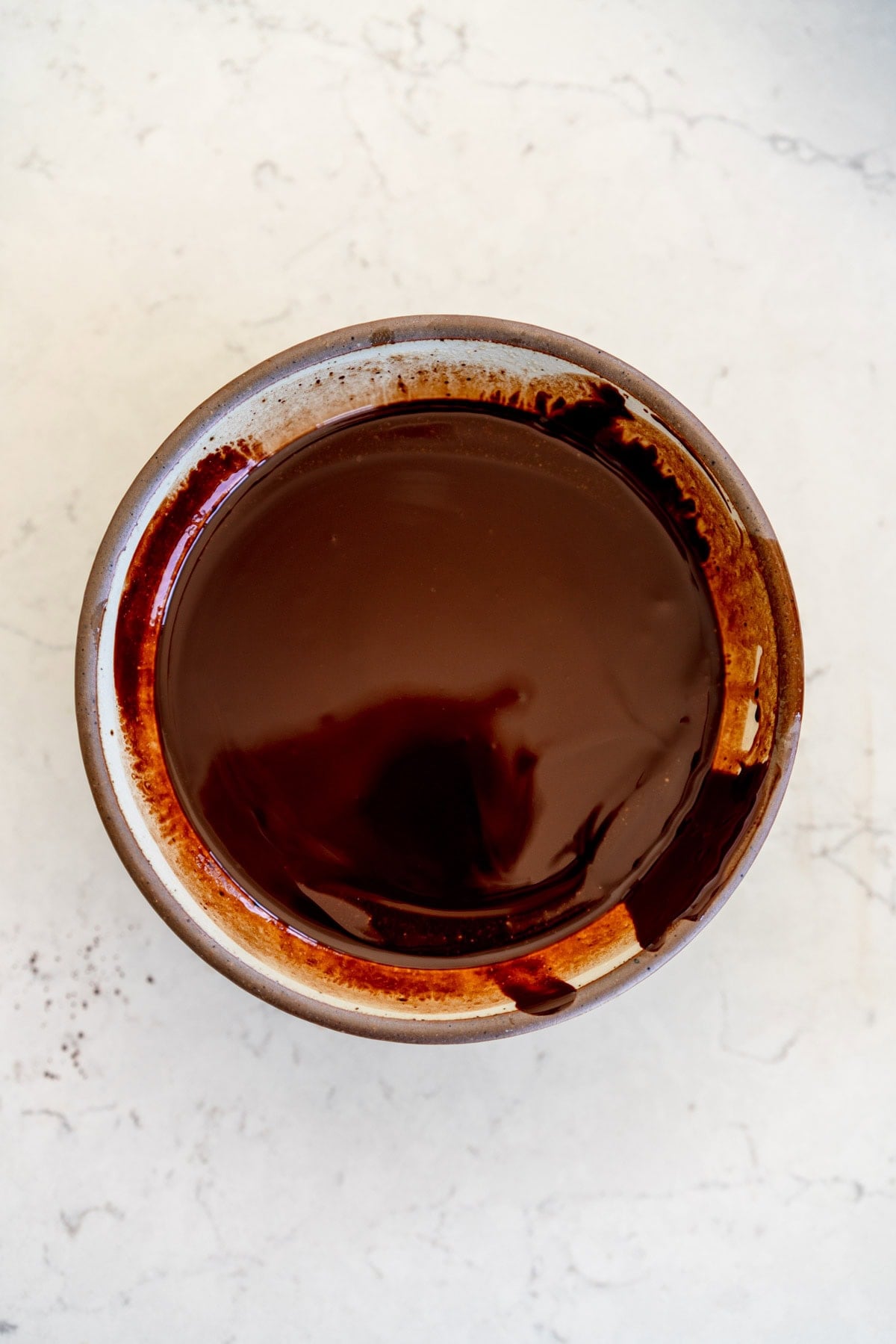
    chocolate mixture for brownies
    Chocolate and butter mixed
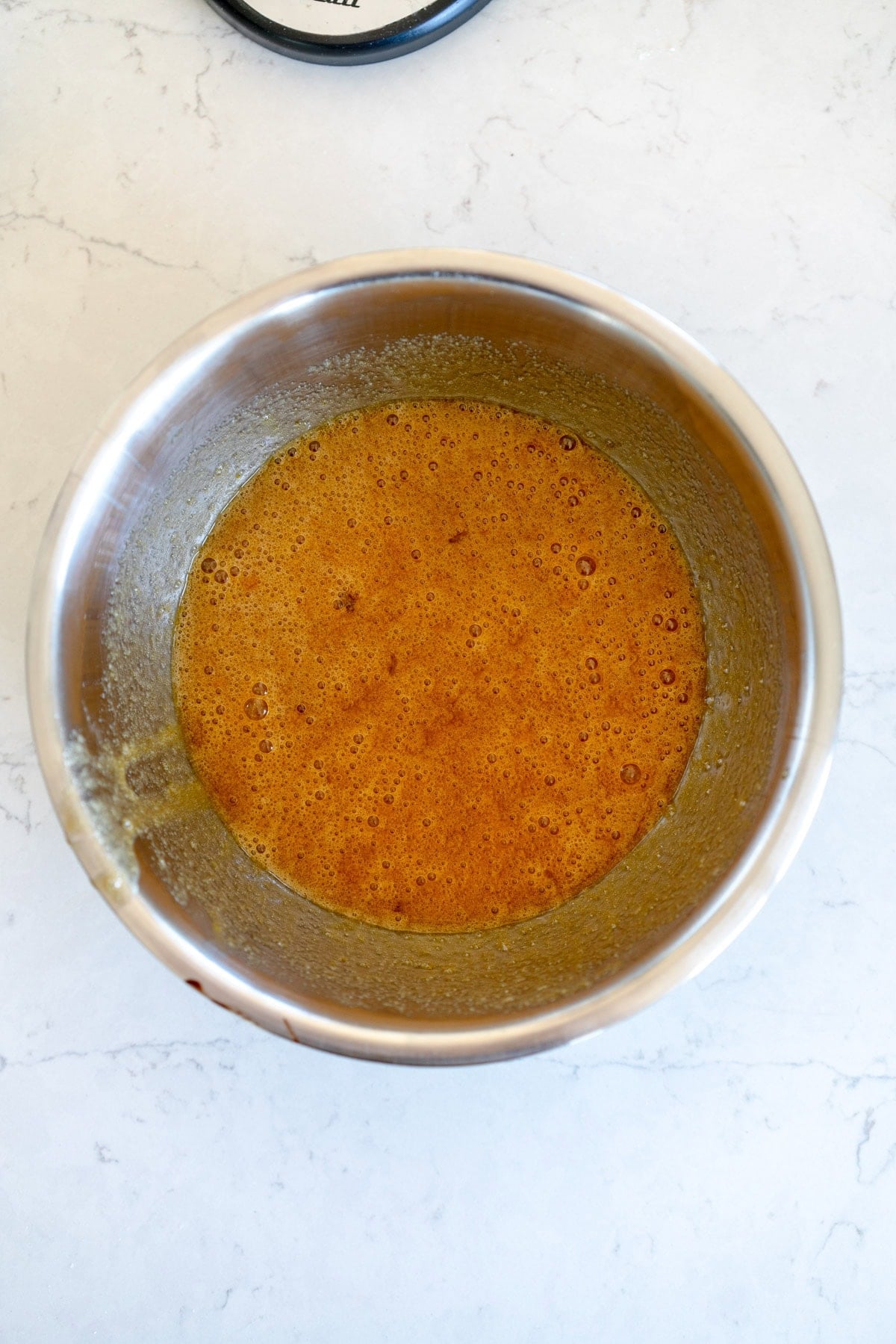
    whipped egg mixture brownies
    Properly whipped egg mixture

    What Chocolate is best for brownies?

    Because the chocolate flavour is so strong and prominent in fudgy brownies, it is important to use a high quality chocolate - something that you like to eat on its own. I used a 72% cocoa solids chocolate. Something around that would work best for these homemade brownies.

    Can Brownies be made without a mixer?

    I made these fudgy brownies using a hand mixer. You don't need to use a stand mixer if you don't want to and can just make these in a bowl, but if you want that nice crinkly top on your brownies you will need to mix with an electric mixer of some sort. If you want to make these with just a whisk that should work well too, but you will need to make sure that the mixture is thick and fluffy before adding the chocolate.

    chocolate mixture added to egg mixture
    Batter before flour
    flour added in to brownie mixture
    Add flour and combine by hand

    How to tell when brownies are done

    If you over bake your brownies they won't be as fudgy. It's not the end of the world, but not over baking them is key to that perfect fudgy brownie. You are better off slightly under baking your brownies than over baking.

    To tell when brownies are done you can look for a few things:

    • The edges of the brownie are slightly firmed up and the surface on the middle of the brownie is set
    • When a knife or toothpick is inserted, it comes back with a few fudgy crumbs attached.

    This particular brownie recipe puffs up a little in the middle when it bakes and the top might crack slightly as it bakes - don't worry, this sinks back down when you take it out of the oven.

    corner shot of sliced brownies
    slice of brownie with frosting on top

    Easy Frosted Brownies

    If you would like to finish off these fudgy brownies with a quick and easy brownie icing, you can wait until the brownies are cool, then make my super easy brownie frosting recipe (aka shitty chocolate icing) to add to the top.

    Make sure your brownies are at least room temperature (I like to chill mine) so that the brownie frosting does not melt when you add it to the brownies.

    Brownies with frosting are a super quick and easy way to fancy up a recipe if you like - making the frosting for brownies takes about five minutes and you can add sprinkles, nuts, whatever you like to the top!

    chocolate frosting on brownie

    How do you store brownies?

    Store brownies in an airtight container either at room temperature or in the fridge, depending on what texture you prefer. Brownies kept in the fridge will be much denser and taste a bit richer than those kept at room temperature.

    Brownies will keep at room temperature for 3-4 days and in the fridge for about five days.

    Can you freeze brownies?

    Yes - these fudgy brownies freeze very well. Once the brownies are cooled and sliced, put into an airtight container lined with parchment paper and freeze in the airtight container.

    To defrost brownies, take out and defrost at room temperature before serving.

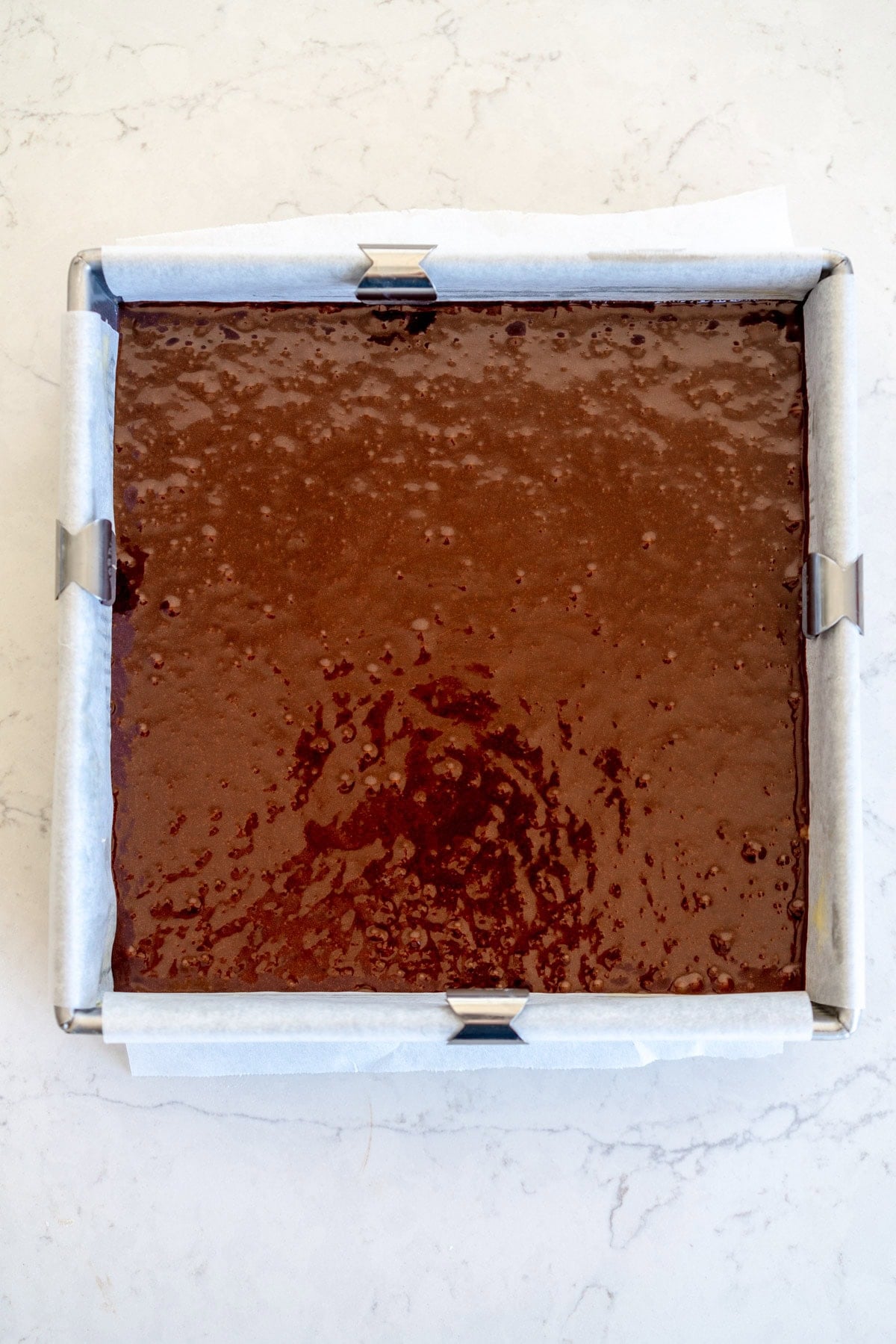
    brownie mixture in pan
    finished baked brownie

    Best Brownie Recipe Tips

    Here are my top tips for making the best brownies:

    • Don't skip the salt. It is important in there to help balance out the sugar and chocolate in the recipe. Use less salt if you are using salted butter.
    • Use good quality chocolate. This will make a huge difference to the taste and texture of your brownie.
    • Try not to over bake your brownie. Check on them after 20 minutes. Mine generally take between 25-27 minutes, but remember that all ovens bake differently.
    • Incorporate your dry ingredients with a spatula. Stirring the flour in by hand reduces the chance of over mixing your brownie.
    • Whip the egg mixture well. If you are after a crinkly top, don't skip this step. It makes a huge difference.
    • Use a metal pan. Glass is a poor conductor of heat.
    close up shot of cut brownies

    ❤️ Made this recipe and love it? ❤️

    I would LOVE for you to leave me a review and star rating below to let me know how you liked it! Also, please make sure to tag me on Instagram!

    Answers to your baking questions

    Over the years, many of you have asked me questions about:

    • baking in grams
    • adjusting oven temperatures
    • what kind of salt to use
    • and many more!

    I've curated and answered them all for your easy reference in this frequently asked questions post!

    Filed Under: Bars and Slices, Base Recipes, Brownies

    Quick DIY Cinnamon Sugar Recipe (Perfect Ratio)

    This 5-minute homemade cinnamon sugar recipe yields the perfect cinnamon sugar ratio every time! My version of cinnamon sugar is made with white granulated sugar and sparkly spicy ground cinnamon. It stores well, and is great for sprinkling on toast, muffins, or for rolling homemade donuts in.

    Homemade Cinnamon Sugar

    Hi hi! Just popping in super quick to share my recipe for homemade cinnamon sugar. Making your own cinnamon sugar at home is great for so many reasons - it is super cheap, means you can make it fresh, and means that you can control the cinnamon sugar ratio for the perfect spice level. I love adding cinnamon to recipes, whether it is the main flavour or a little backup player in the flavour game.

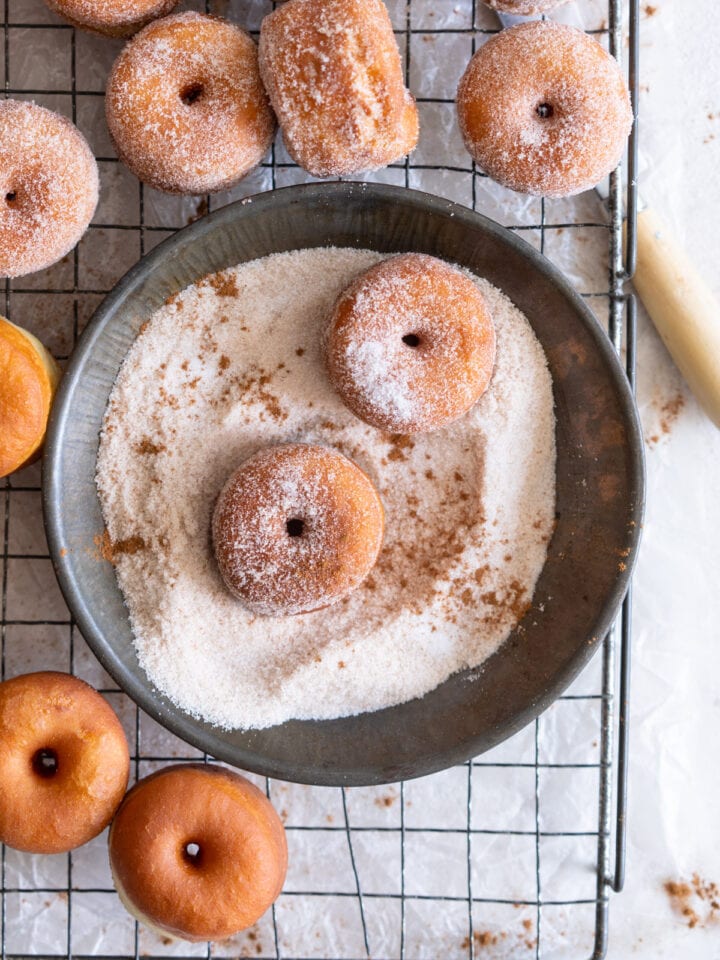
    Cinnamon sugar gives amazing flavor to so many things - I love sprinkling it onto buttered toast or toasted hot cross buns, and it is the perfect finish for classic cinnamon sugar donuts. I like to make a big jar to have on hand to use whenever I need!

    angle shot of cinnamon bun twist

    How to make Cinnamon Sugar

    Homemade cinnamon sugar is so easy to make, it almost feels silly writing a recipe for it, but it is something that I use often, so wanted to give it a permanent home on the blog. Getting the perfect cinnamon sugar ratio makes a huge difference to the overall flavour - if you have made other flavoured sugars in the past you know how this is.

    To make cinnamon sugar you just combine the sugar and cinnamon in a small bowl. Mix until well incorporated with a fork or a small whisk to make sure that there are no lumps, then transfer to an airtight container.

    Homemade cinnamon sugar will keep for at least six months if stored in an airtight container with a tight fitting lid.

    The perfect cinnamon sugar ratio

    The best part about making your own homemade cinnamon sugar is that you can control the quantity of cinnamon to sugar. For me, my ideal cinnamon sugar ratio is 3 Tablespoons of cinnamon per cup of granulated sugar (or for every 200g sugar, add 25g cinnamon). Play around with it and taste as you go. Start with about 2 tablespoons of cinnamon and go from there, and increase to the full 3 tablespoon if you like. You can also increase the cinnamon sugar ratio, adding more cinnamon to taste.

    You can also add other spices - replace some of the cinnamon with some ground cardamom, or add a little nutmeg or cloves. I use a spiced sugar mix for my cruller recipe - you can switch up the spices depending on what you are feeling.

    If you would like to add more depth of flavour to your cinnamon sugar you can also add a little vanilla powder and a pinch of salt. You do you here.

    Ways to use Cinnamon Sugar

    The uses for cinnamon sugar are endless. Here are some of my favourites:

    • Cinnamon Sugar Donuts. I use cinnamon sugar on my mini donuts and my classic cinnamon sugar donuts, as well as my spiced sugar crullers. It's a classic for a good reason - it is just so good.
    • Cinnamon Sugar Toast. Toast your favourite bread, add some good quality salted butter, then top with the cinnamon sugar. Instant delicious breakfast.
    • Sweet Pretzels. Brush baked pretzels with butter, then roll in cinnamon sugar for a delicious sweet variation.
    • Popcorn. A wee sprinkle of cinnamon sugar on buttered popcorn is just so, so good.
    • Add to baking. I often add a sprinkle of cinnamon sugar to the tops of things before they go into the oven - it would be particularly good on things like banana bread or banana muffins. I also love rolling cookies in cinnamon sugar before baking.

    The importance of fresh spices

    This probably isn't something that most people think about, but spices can expire. While they won't be bad for you and are still completely edible, as spices age, they lose their freshness and their potency.

    I suggest grabbing a new box of cinnamon to make your cinnamon sugar if you aren't sure about how old it is, just to ensure that it is nice and fresh and has a nice flavor to make the best cinnamon sugar. I love cinnamon from Burlap and Barrel.

    cruller in sugar

    ❤️ Made this recipe and love it? ❤️

    I would LOVE for you to leave me a review and star rating below to let me know how you liked it! Also, please make sure to tag me on Instagram!

    Answers to your baking questions

    Over the years, many of you have asked me questions about:

    • baking in grams
    • adjusting oven temperatures
    • what kind of salt to use
    • and many more!

    I've curated and answered them all for your easy reference in this frequently asked questions post!

    Filed Under: Base Recipes, Other Sweets Tagged With: Dairy Free, Egg Free, Gluten Free, Vegan

    Rice Bubble Slice

    rice bubble slice on pan with parchment paper

    Rice Bubble Slice is the New Zealand version of Rice Krispie Treats without marshmallow. Made with honey, it is quick and easy to make and tastes super nostalgic.

    rice bubble slice on pan with parchment paper

    Table of contents

    • Rice Bubble Slice - New Zealand Rice Krispie Treats
    • What is Rice Bubble Slice?
    • How to make Rice Bubble Slice
    • How to line a square pan
    • Rice Bubble Slice Troubleshooting
    • FAQ for Rice Bubble Slice
    • For more New Zealand Recipes, check out:
    • Recipe For Honey Rice Bubble Slice

    Rice Bubble Slice - New Zealand Rice Krispie Treats

    Hi hi! Finally sharing the recipe for this Rice Bubble Slice! I shot this last year before we moved home and have needed to get it up as rice bubble slice is the ultimate kid's nostalgia for anyone who grew up in Australia or New Zealand, along with chocolate crackles. I have a bunch of New Zealand recipes on my site - it is so fun to introduce those who aren't familiar to the things that I grew up eating!

    sliced rice bubble slice with knife and pan

    What is Rice Bubble Slice?

    Rice bubble slice is a version of Rice Krispie Treats, but instead of using marshmallow and butter, it is made with honey. Here's what is in it:

    • Rice Bubbles. This is what we call Rice Krispies - the puffed rice cereal.
    • Butter. I use unsalted butter, if you have salted butter then just leave the salt in the recipe out.
    • Honey. This is what helps form the caramel part of the rice bubble slice. If you haven't tried rice bubble slice with honey instead of rice krispies made with marshmallow, now is the time - it is so good. I have made this with both a creamed style honey and a liquid honey and both work great.
    • Sugar. This makes up the caramel portion too. Either caster sugar or regular granulated sugar works great.
    • Vanilla. This wasn't included in the ones I had as a kid, but adding a tiny bit of vanilla bean paste or vanilla extract to your rice bubble slice makes them taste so good!
    • Salt. Always needed to balance out the sweetness of the honey and the sugar. Leave it out if you have used salted butter.
    rice bubble slice in pan ready to cut

    How to make Rice Bubble Slice

    Rice bubble slice is super quick and comes together in less than ten minutes.

    • Measure out your rice bubbles. Having everything ready to go before you start helps a lot - you want to have your rice bubbles measured out and your pan prepared and lined and ready to go.
    • Make the honey caramel. Combine all the ingredients for the caramel except the vanilla in a heavy bottomed pan, and place over medium high heat. Once it has come to a boil, cook for about 2 minutes, stirring constantly with a rubber spatula.
    • Add the rice bubbles. Remove the caramel from the stove, add the salt and vanilla, then pour the hot caramel into the bowl with the rice bubbles and stir until well combined.
    • Transfer into the pan. Once the rice bubbles are evenly coated in the mixture, transfer into your prepared pan and smooth down well. I like to use an offset spatula but you could also use a piece of parchment paper to press it down evenly.
    • Leave to set. The rice bubble slice needs some time to cool - you can either leave it to cool at room temperature or place it in the fridge to speed things up.
    • Cut and store. Cut the rice bubble slice into pieces using a hot knife, then store in an airtight container at room temperature.
    stacked up rice bubble slice

    How to line a square pan

    I use a square nonstick pan to make my rice bubble slice. For recipes that are a little sticky or you want to remove all in one go I prefer to use the sling method, where you take two pieces of parchment and use them to line the pan, leaving some overhang.

    This means that when the time comes to remove whatever is in your pan, you can use the overhang as handles to take it out cleanly. I like to clamp mine down with some metal binder clips to keep everything tidy.

    pan of rice bubble slice

    Rice Bubble Slice Troubleshooting

    My rice bubble slice is too hard.
    This will be because you over cooked the caramel part of the recipe, bringing it to too high of a temperature, so the rice bubble slice is crunchy. Try cooking it for less time. I aim for about 2 minutes once it has come to a boil.

    My rice bubble slice is too soft.
    Again this is the reverse of the problem - the mixture didn't cook enough. It will still be totally edible, just try cooking the mix a little longer!

    side on shot of rice bubble slice

    FAQ for Rice Bubble Slice

    Can Rice Bubble Slice be made Gluten Free?
    Rice bubbles do often have gluten in them - so make sure that you use a gluten free rice bubble, or you can also make this with puffed rice.

    What tools and equipment do you use?
    You can see a full list of all the tools I use here

    Which pan did you use?
    I made my rice bubble slice in a non stick 8" (20cm) square pan. This made a nice thick rice bubble slice - you can make it in a thinner pan if you like.

    Can I make rice bubble slice with brown butter?
    I tried and it didn't go well - it was super greasy and not that nice, so browning the butter is not worth the extra step here.

    What is the difference between Rice Krispies and Rice Bubbles?
    It's the same thing just a different name.

    Can this recipe be doubled?
    Yes - you can scale it as you like. My pan size calculator will be helpful for working out how to scale the recipe.

    Can I add peanut butter / marshmallow / other ingredients
    I haven't tried sorry - you are welcome to but I don't know how it will go.

    How do you store rice krispie treats?
    I store mine in an airtight container at room temperature. They are best eaten in the first 1-2 days that you make them.

    corner pan shot of rice bubble slice

    For more New Zealand Recipes, check out:

    • Anzac Biscuits
    • No-Bake Peppermint Slice
    • Custard Square with Homemade Puff Pastry
    • Tan Square

    ❤️ Made this recipe and love it? ❤️

    I would LOVE for you to leave me a review and star rating below to let me know how you liked it! Also, please make sure to tag me on Instagram!

    Answers to your baking questions

    Over the years, many of you have asked me questions about:

    • baking in grams
    • adjusting oven temperatures
    • what kind of salt to use
    • and many more!

    I've curated and answered them all for your easy reference in this frequently asked questions post!

    Recipe For Honey Rice Bubble Slice

    Filed Under: Holiday Cookies, New Zealand Recipes, No-bake Bars Tagged With: Egg Free

    10 Minute Cream Cheese Frosting for Cinnamon Rolls

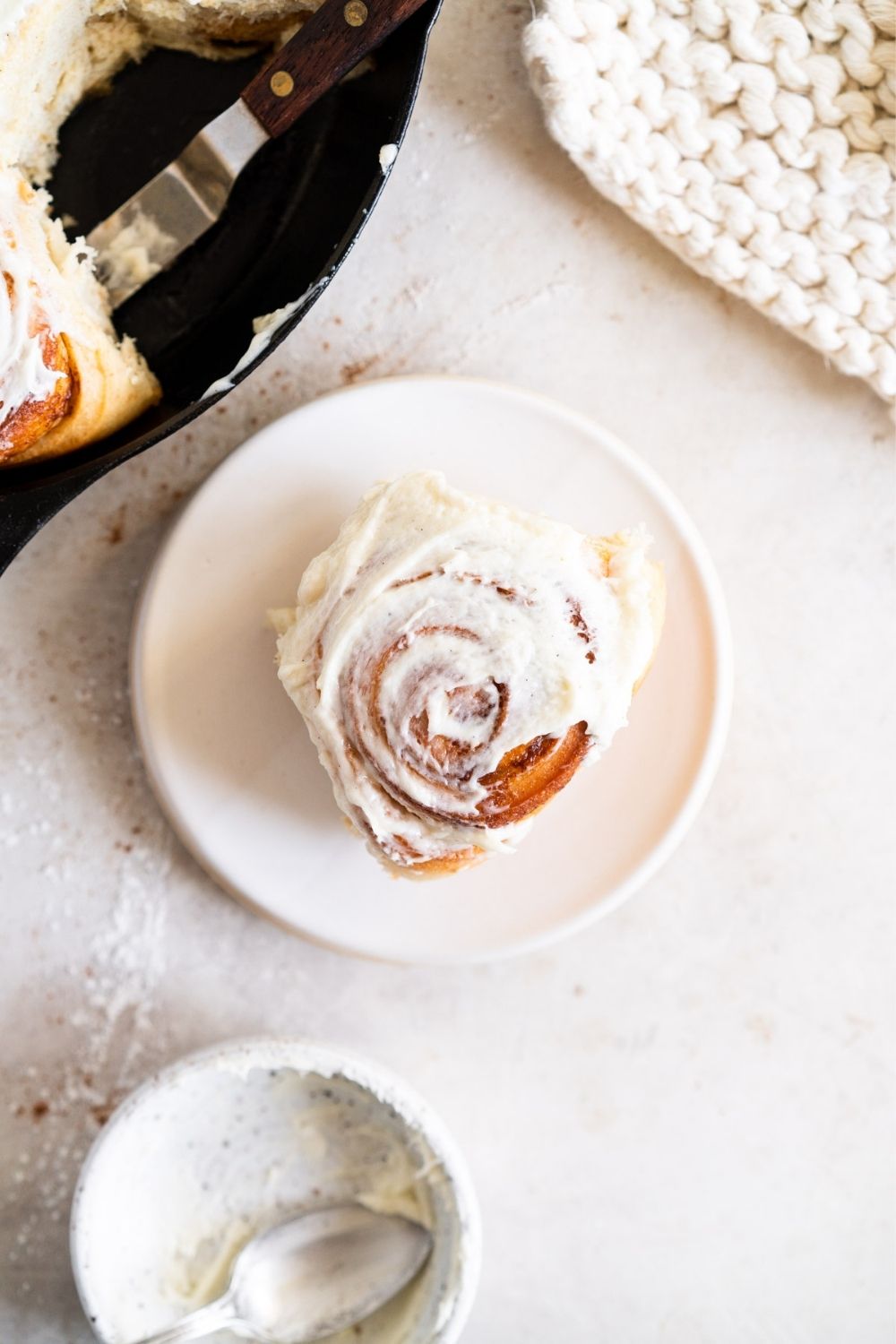
    close up of roll with cream cheese frosting

    This easy cream cheese frosting for cinnamon rolls is quick to make and can be used as a cream cheese icing on any homemade cinnamon roll recipe!

    close up of roll with cream cheese frosting
    Small Batch Cinnamon Rolls

    Hi hi! Just popping in to share my recipe for a cream cheese frosting for cinnamon rolls! This is a super simple homemade cream cheese frosting, that works on any cinnamon roll recipe. The great thing about homemade cinnamon rolls is that you can mix up the filling and frosting as you like. IMO, cream cheese icing is required for the best cinnamon rolls.

    This super quick cinnamon roll icing can easily be made ahead of time so that you have it ready to go as soon as you want to serve your cinnamon rolls. I use it on my apple cinnamon roll recipe and my small batch cinnamon roll recipe. You can also add other flavours - these brown butter cinnamon rolls have a brown butter cream cheese frosting, and these pumpkin cinnamon rolls have a maple coffee cream cheese icing.

    • Ingredients in Cream Cheese Frosting
    • How to make Cinnamon Roll Frosting
    • How to avoid grainy frosting
    • Flavor variations for cream cheese frosting
    • Can Cream Cheese Frosting be made ahead of time?
    apple cinnamon rolls with cream cheese frosting
    Apple Cinnamon Rolls

    Ingredients in Cream Cheese Frosting

    The ingredients list for cinnamon roll icing is super simple. This is my base cream cheese frosting recipe - you can add things as you like!

    • Unsalted Butter. I prefer unsalted butter as it means that you can control the salt level in the cinnamon roll frosting. If you only have salted, just reduce or omit the salt quantity.
    • Cream Cheese. The star of the show. It is important to use full fat cream cheese, as it is needed for the stability of the frosting.
    • Powdered Sugar. Also called icing sugar, this provides both structure and sweetness for your cinnamon rolls.
    • Vanilla extract or vanilla bean paste. This is optional but adds delicious vanilla flavor and if you use paste, will add in vanilla bean specks.
    • Heavy Whipping Cream. I use heavy whipping cream (the one you use to make whipped cream) to help my cream cheese frosting smooth out and become a spreadable texture. Hold back on this if you like a really thick cream cheese frosting.
    • Salt. I always add even just a tiny pinch of salt to my frosting recipes to help offset the sweetness of the powdered sugar.
    brown butter cinnamon rolls
    Brown Butter Cinnamon Rolls with Brown Butter Cream Cheese Frosting

    How to make Cinnamon Roll Frosting

    Making cream cheese icing for cinnamon rolls is super easy - you can make it with either an electric hand mixer in a mixing bowl, or using a stand mixer fitted with the paddle attachment.

    1. Combine the butter and cream cheese. This step helps to prevent any cream cheese lumps and makes sure the mixture is well combined.
    2. Add powdered sugar, salt and vanilla and mix to incorporate. Mix for 1-2 minutes until completely combined.
    3. Add heavy cream and whip for a further 1-2 minutes until light and fluffy.
    4. Either use your cinnamon roll icing immediately or store until ready to use.

    Why is it important to have room temperature cream cheese?

    You will see in the instructions of cinnamon roll frosting recipes to use room temperature cream cheese. This is important to ensure that you do not have any lumps in your cream cheese frosting. It is difficult to whip cream cheese when it is cold, and it may form tiny lumps if it is not warm enough.

    Mixing the butter with the cream cheese in the first part of the recipe helps to avoid this, but here is how to fix lumpy cream cheese frosting: keep whipping. Mix the butter and cream cheese until completely smooth and there are no lumps. If you are still having a hard time, you can remove a tiny bit of the butter mixture and warm it, then add it back in to the frosting to help bring the overall temperature up.

    cut up cinnamon rolls with maple coffee frosting
    Sourdough Cinnamon Rolls, Pumpkin Cinnamon Rolls

    How to avoid grainy frosting

    The heavy whipping cream will help you to avoid grainy cinnamon roll icing. The extra whipping at the end of the recipe helps to dissolve the granules of powdered sugar slightly, giving you a smooth frosting that is perfect for spreading on your homemade cinnamon buns. If you find it is still a little grainy, keep whipping.

    Flavor variations for cream cheese frosting

    • Maple Cream Cheese Frosting. This goes well on any cinnamon rolls - add 2-3 tablespoons of maple syrup to your frosting and leave out the heavy cream in the mixture.
    • Coffee Cream Cheese Frosting. To make coffee cream cheese frosting, whip 1-2 teaspoon of espresso powder or very fine instant coffee into your frosting.
    • Brown Butter Cinnamon Roll Frosting. You can brown butter and cool it, and use it for the base of your cream cheese frosting. I use this recipe on my brown butter cinnamon rolls.

    Can Cream Cheese Frosting be made ahead of time?

    Cream cheese frosting can be made ahead of time - you just need to re whip it before serving. To store your frosting, either transfer to a small bowl and cover with plastic wrap, or place in an airtight container. It will keep in the fridge for up to a week. Briefly re whip before using.

    Carrot Cake Cinnamon Rolls with cream cheese frosting
    Carrot Cake Cinnamon Rolls

    ❤️ Made this recipe and love it? ❤️

    I would LOVE for you to leave me a review and star rating below to let me know how you liked it! Also, please make sure to tag me on Instagram!

    Answers to your baking questions

    Over the years, many of you have asked me questions about:

    • baking in grams
    • adjusting oven temperatures
    • what kind of salt to use
    • and many more!

    I've curated and answered them all for your easy reference in this frequently asked questions post!
    Filed Under: Base Recipes Tagged With: Egg Free, Gluten Free

    Chewy Pretzel Buns

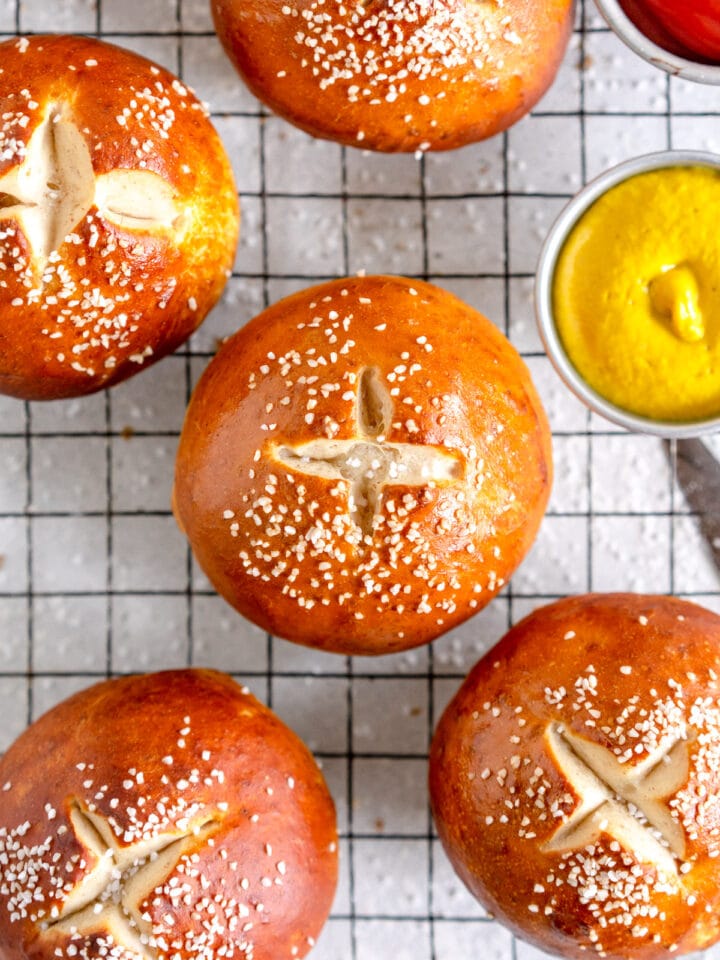
    baked bread roll with ketchup and mustard

    Easy Soft Pretzel Buns are quick to make and perfectly chewy. These pretzel rolls are amazing as is, or make the perfect pretzel burger bun. Follow this easy soft pretzel recipe to make your own homemade buns!

    pretzel bun on wire cooling rack

    Table of contents

    • Homemade Pretzel Buns
    • How to make pretzel dough - one dough, many shapes
    • How to make Pretzel Buns: Step by Step
    • Parchment Paper vs Silpat for baking
    • Baking Soda vs Baked Baking Soda vs Lye
    • How to score pretzel buns
    • What is a good substitute for Pretzel Salt?
    • How to freeze bread
    • Can Pretzel buns be made ahead of time?
    • What is the windowpane test?
    • How to store pretzel buns
    • FAQ for Pretzel Buns
    • For more related recipes, check out:
    • Recipe For Pretzel Buns

    Homemade Pretzel Buns

    Hi hi! Just popping in to share the recipe for these easy homemade pretzel buns! Soft pretzel rolls are a super fun variation on a bun - I love using them for burgers and sliders or sandwiches.

    This pretzel bun recipe is a riff on a few of the other pretzel recipes on my site - it is a smaller batch of my soft pretzel recipe (which I also used to make pretzel bites and stuffed pretzels), with a couple of other tweaks made.

    These can be prepared ahead of time or made all in one day - there are a bunch of tips and tricks in the recipe and post to help you make your very own homemade pretzel buns!

    side shot of pretzel bun with salt on a wire cooling rack
    inside shot of cut pretzel bun

    How to make pretzel dough - one dough, many shapes

    This pretzel dough recipe is super simple - it all comes together in your stand mixer (or you can make the dough by hand if you're after a workout). It is a great base recipe - I use the same dough for my pizza pretzels. If you wanted a few buns and a few pretzels you can vary the shapes you make from the dough after dividing.

    How to make Pretzel Buns: Step by Step

    These homemade pretzel rolls are super easy to make - the recipe yields 6 buns, but it can very easily be doubled (you could make some buns and turn some into soft pretzels or pizza pretzels). There are a couple of steps, but the workload can be broken up over time.

    • Prepare baked baking soda. Baked baking soda is used for the water bath portion of the recipe. You can do this as far ahead as you like - store extra in an airtight jar in the pantry for next time.
    • Make the dough. You can do this ahead of time and do the first rise in the fridge overnight if you like. The dough is quite stiff, but this gives a lovely chewy pretzel.
    • Shape Pretzel Buns. Divide the dough into six (or however many you would like) pieces, and shape into tight dough balls.
    • Second rise. The second rise for pretzel buns happens uncovered, at room temperature. Rising the rolls uncovered allows them to form a skin, which helps them to hold up in the water bath and not lose shape.
    • Chill. Once the rolls have risen, briefly chill them. Again, this helps with holding shape in the water bath.
    • Pretzel water bath. The pretzel buns get a water bath in a solution made from water and baked baking soda - this gives them that signature pretzel taste.
    • Egg wash and score. Once the pretzel buns have had their bath, give them an egg wash, then score the dough balls either with a razor blade or kitchen scissors, and finish with pretzel salt.
    • Bake. Bake the pretzel buns until they are deeply golden brown, then leave to cool slightly and enjoy!
    baked pretzel bun ready to serve

    Parchment Paper vs Silpat for baking

    I use Silpat mats (silicone mats) when I am making pretzel buns as it stops them from sticking. I came across this when I was testing my soft pretzels. After the pretzels came out of the water bath, if I put them directly onto the parchment, they were sticking super, super badly.

    There are two ways around this - either drain the pretzel buns for a few minutes on a wire rack after dipping to drain excess water and then transfer to parchment paper which has been sprayed with cooking spray. Or, you can line the baking sheets with silpats or silicone baking sheets rather than baking paper.

    I found baking on silicone to be the easiest option - once the buns come out of the dip they are a little delicate, so moving them from the rack to the baking sheet can be a little stressful. It works though! A few silpats or silicone baking mats are a great investment!

    Baking Soda vs Baked Baking Soda vs Lye

    Some pretzel recipes will have you use lye to soak the pretzels in. Giving the pretzels a wee bath in lye (sodium hydroxide) helps to speed up the Maillard reaction, which gives the pretzels that lovely brown colour and chew. However, lye is caustic (alkaline) and scary, so I used something a little less alkaline but still very effective - baked baking soda. Baking soda (sodium bicarbonate) is moderately alkaline, but baking it produces sodium carbonate, which is slightly more alkaline, so therefore perfect for dipping your pretzels without having to worry about the safety risk of using Lye. Yay chemistry!

    To make baked baking soda: Line a sheet pan with foil, and spread 1 cup of baking soda evenly over it. Bake at 250˚f / 121˚c for one hour, then transfer to an airtight container. This will be enough for four batches of pretzels - you use ¼ cup at a time.

    cut pretzel bun
    pretzel bun with salt on a wire rack

    How to score pretzel buns

    You can either score your pretzel buns with a razor blade and make an 'x' cut, or you can use a pair of sharp kitchen scissors (which is what I used to score my rolls). The neatest way is to do this in three cuts - one vertical, then the horizontal snips are done separately, either side of the vertical cut.

    This helps the roll to open up nicely and keeps all of the cuts nice and clean!

    What is a good substitute for Pretzel Salt?

    Pretzel salt is a coarse salt - it is opaque (which I think comes from having some air in it), so it gives a textural crunch without being as salty as something like rock salt. You can use a coarse salt such as Kosher salt or a flaky salt if you can't find pretzel salt

    How to freeze bread

    Like other bread, these pretzel buns will freeze well. To freeze bread, I wait for it to cool completely, then either wrap it well in plastic wrap, or place into an airtight bag or container. Freeze until solid then store in the container in the freezer. To defrost frozen bread, remove and either defrost at room temperature or in the fridge overnight. Bread that has been frozen often benefits from being toasted or refreshed in the oven to make sure it is nice and fresh!

    If you want to freeze pretzel buns, leave off the salt so that when the buns defrost they do not go soggy - salt pulls moisture out of the air.

    baked bun with salt on top on a wire rack

    Can Pretzel buns be made ahead of time?

    I usually do the pretzel process all in one day, but pretzel dough can be made ahead of time and the first rise done overnight in the fridge. You may need to leave the dough to stand for 10 minutes or so after removing it from the fridge so that it is easy to work with, and the pretzel buns may need some additional time to rise if you start with cold dough.

    What is the windowpane test?

    The windowpane test is a test to see how well developed a dough is through testing the gluten formation. Well developed dough has a good gluten structure within it, so it is nice and stretchy, or elastic. To perform the windowpane test: rip off a little piece of dough, then stretch it out and hold it up to the light. If it forms a membrane you can see light (or your fingers if you hold them under the dough) through, then you know that the dough is adequately developed. If it is not, keep kneading.

    shaped pretzel bun ready to rise
    scored bun with salt on the top ready to bake

    How to store pretzel buns

    Store pretzel buns in an airtight container at room temperature. If you are not planning on eating them all in one day, I suggest leaving the salt finish off of some of the buns. As they sit in the container the salt can make them a little soggy.

    Briefly microwaving or toasting pretzel buns will help to refresh them the day after baking if they need a little bit of a spruce up.

    FAQ for Pretzel Buns

    Can Pretzel Rolls be made into hot dog buns?
    Yes, you will just need to shape them differently to make pretzel hot dog buns - divide into 6 and shape into sausages rather than rolls. The baking time and process should be the same.

    Can Pretzels be made Gluten Free?
    I haven't attempted to make this recipe gluten free - I would suggest looking for a speciality gluten free pretzel recipe.

    Can I use active dry yeast in the place of the instant yeast?
    Yes, you will just have to activate it first in the lukewarm milk with a tiny pinch of sugar. Leave to sit for 10 minutes or so until foamy. You can use the same quantity.

    What can I use instead of beer?
    If you don't want to use beer (it is just there for flavour) you can use water.

    What is bread flour?
    Bread flour is flour with a higher percentage of protein. If you are in NZ or the UK it is 'high grade flour' or 'strong flour'

    Is the milk powder in the recipe compulsory?
    No - it is just there to lend softness to the dough. You can leave it out if you like. I used whole milk powder but if you can only find skim, that will be fine too.

    Can I substitute the rye flour?
    Yes, the rye flour gives texture and a little taste to the pretzel dough, but if you do not have any on hand, you could substitute with a little whole wheat (wholemeal) flour, or just add 30g more bread flour.

    What tools and equipment do you use?
    You can see a full list of all the tools I use here

    baked pretzel bun with salt on silicone mat

    For more related recipes, check out:

    • Super Soft Burger Buns
    • Garlic Butter Dinner Rolls
    • Small Batch Dinner Rolls

    ❤️ Made this recipe and love it? ❤️

    I would LOVE for you to leave me a review and star rating below to let me know how you liked it! Also, please make sure to tag me on Instagram!

    Answers to your baking questions

    Over the years, many of you have asked me questions about:

    • baking in grams
    • adjusting oven temperatures
    • what kind of salt to use
    • and many more!

    I've curated and answered them all for your easy reference in this frequently asked questions post!
    Recipe For Pretzel Buns

    Filed Under: Breads, Buns and Rolls, Small Batch Baking Tagged With: Egg Free

    Brown Butter Chocolate Chip Cookies

    cookie on sheet pan with parchment paper

    My Brown Butter Chocolate Chip Cookies come together in the time it takes to preheat the oven. Chewy on the inside and crispy on the edges, brown butter chocolate chip cookies have massive chocolate puddles, and these no mixer, no chill time cookies will become your new favorite - these are the most popular recipe on my site for a good reason!

    brown butter chocolate chip cookie

    Hi hi! Just popping in to share the recipe for these brown butter chocolate chip cookies! These are a thin and chewy version of my favourite small batch chocolate chip cookies. These brown butter cookies are crisp around the edges and still chewy in the middle - I love them so, so much.

    I made these a ton of times during the recipe testing process to really nail down the recipe so that they are totally foolproof for you - I will hold your hand the whole way. If you wanted to turn these into a cookie bar, my chocolate chip cookie bars are exactly that!

    brown butter and sugar for cookies
    No mixer needed
    whisked together mixture
    Whisk it all together
    add in flour to mix
    Add in the flour
    mix in flour
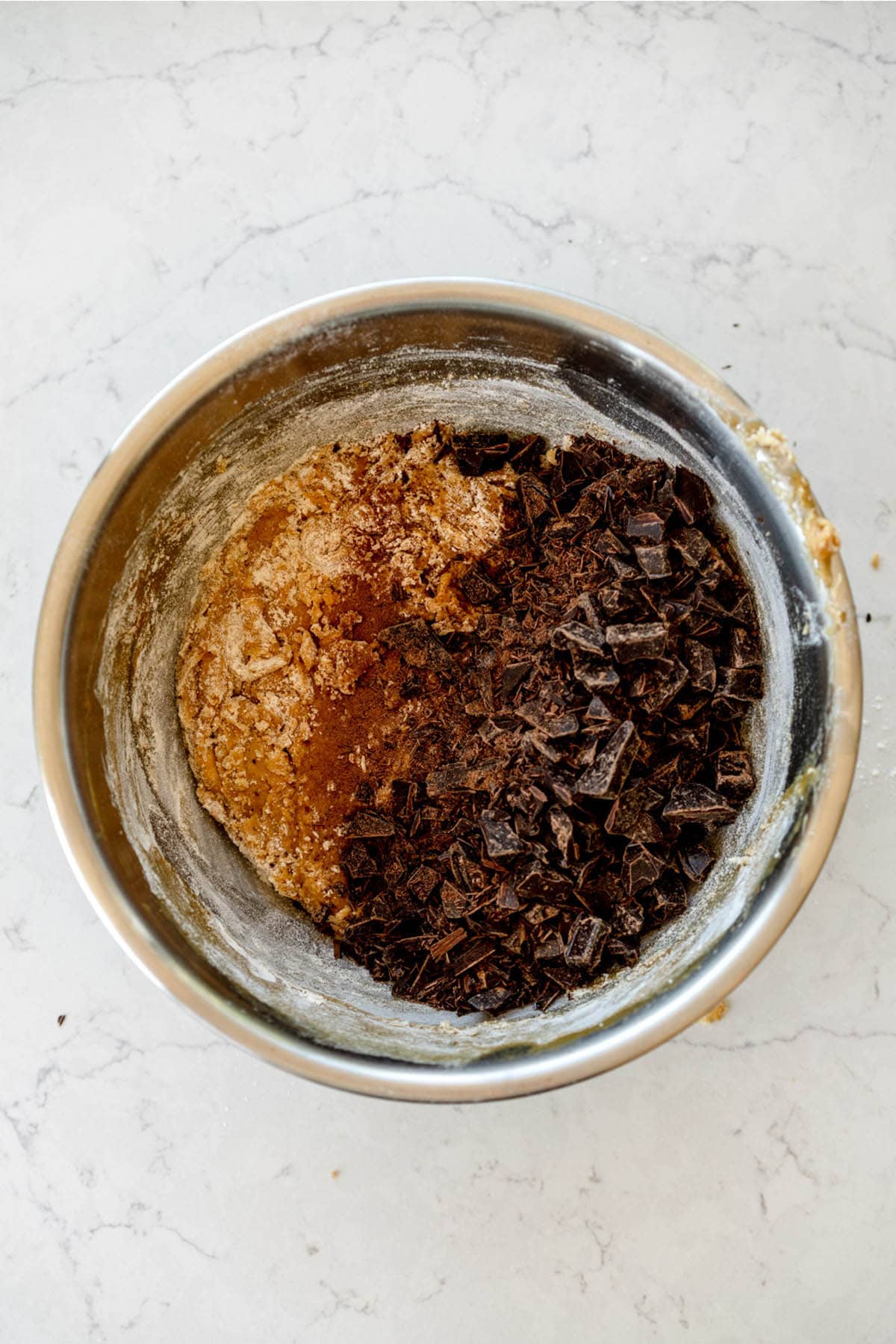
    At this stage, add chocolate

    The most Underrated ingredient: Brown Butter.

    Brown butter is butter that has been heated to a point where the moisture evaporates and the milk solids brown. It has a delicious toasty flavour, which adds an amazing depth to brown butter chocolate chip cookies. Browning butter for recipes is a super simple trick to adding flavour to recipes - I love it in cookies, a streusel topping, cinnamon rolls, or a brown butter salted caramel.

    My top tip to remember when browning butter is to go slowly. I have made a ton of brown butter in my time and it can catch quickly and you don't want to burn the milk solids, just toast them until nicely brown.

    I know that making brown butter can be intimidating. Don't be scared, I will hold your hand the whole way through in my post and you'll be nailing it in no time: Brown Butter 101: The Ultimate Guide

    stacked chocolate chip cooies

    Community Review

    “I made these today and am already looking for an occasion to make them again. They're simple to pull together with an added bonus of not having to remember to soften butter first. The browned butter makes these stand out in a sea of chocolate chip cookies. If you're on the fence, bake these! You won't regret it.”

    —Libby
    Read more reviews »
    ball of cookie dough on sheet pan

    The recipe testing process for changing a cookie's texture

    These brown butter chocolate chip cookies are more on the 'thin and crispy' side than other chocolate chip cookie recipes on my site. They aren't super thin, but they have that perfect chewy chocolate chip cookie soft centre, and get that crispy edge. If you would like them more on the crispy side, you can increase the bake time to give you crispy chocolate chip cookies.

    Here's what I usually change when I am looking to make a cookie recipe thinner:

    • Increase the quantity of butter in the recipe. This means the cookies will spread more in the oven.
    • Reduce or remove the chill time. While some cookies call for a long chill time, I wanted a recipe that was super easy to make and did not need a chill time. This meant finding a delicate balance between dough that spread in the oven but not too much.
    • Bump up the chocolate quantity. This doesn't have a huge impact on how much a cookie spreads, but more chocolate chunks in the cookie certainly help it to spread a little more.
    • Play around with the ratio of brown to white sugar. Cookies which have a higher ratio of brown sugar to white tend to be a little thicker, while those with more white sugar spread and are a little more chewy. Sugar and butter ratios are what I will usually play around with first when trying to change the texture or spread of a chocolate chip cookie.
    add chocolate to mix
    Add chocolate
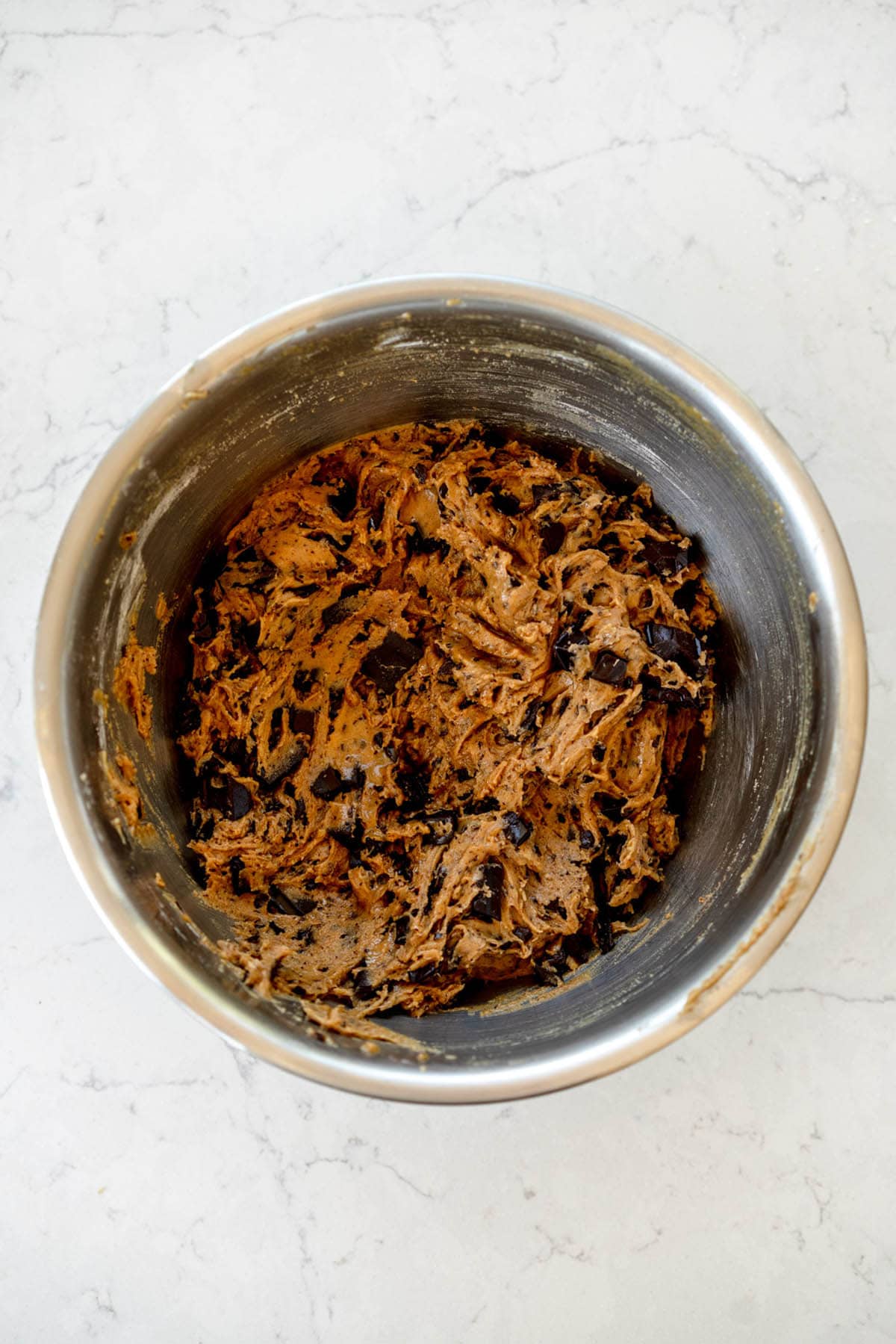
    mixed cookie dough
    Mix to combine

    The best chocolate to use for chocolate chip cookies

    I almost always use chopped chocolate in my chocolate chip cookies. There are a few reasons for this:

    • Sizing - Cutting up chocolate into chunks gives you a great range of size in your chocolate. This means you get a good distribution throughout
    • Melty Pockets of chocolate - Chocolate chips often have a stabiliser in them which means they don't melt. This makes them great for things like muffins, but I much prefer using chopped chocolate for cookies because the chocolate melts, and you get pockets of chocolate throughout.
    • Quality - if you use chopped chocolate, you can use whatever quality you like. It's also a great way to mix up the types of chocolate you use too - I like doing a mix of dark and then sometimes a fun flavour
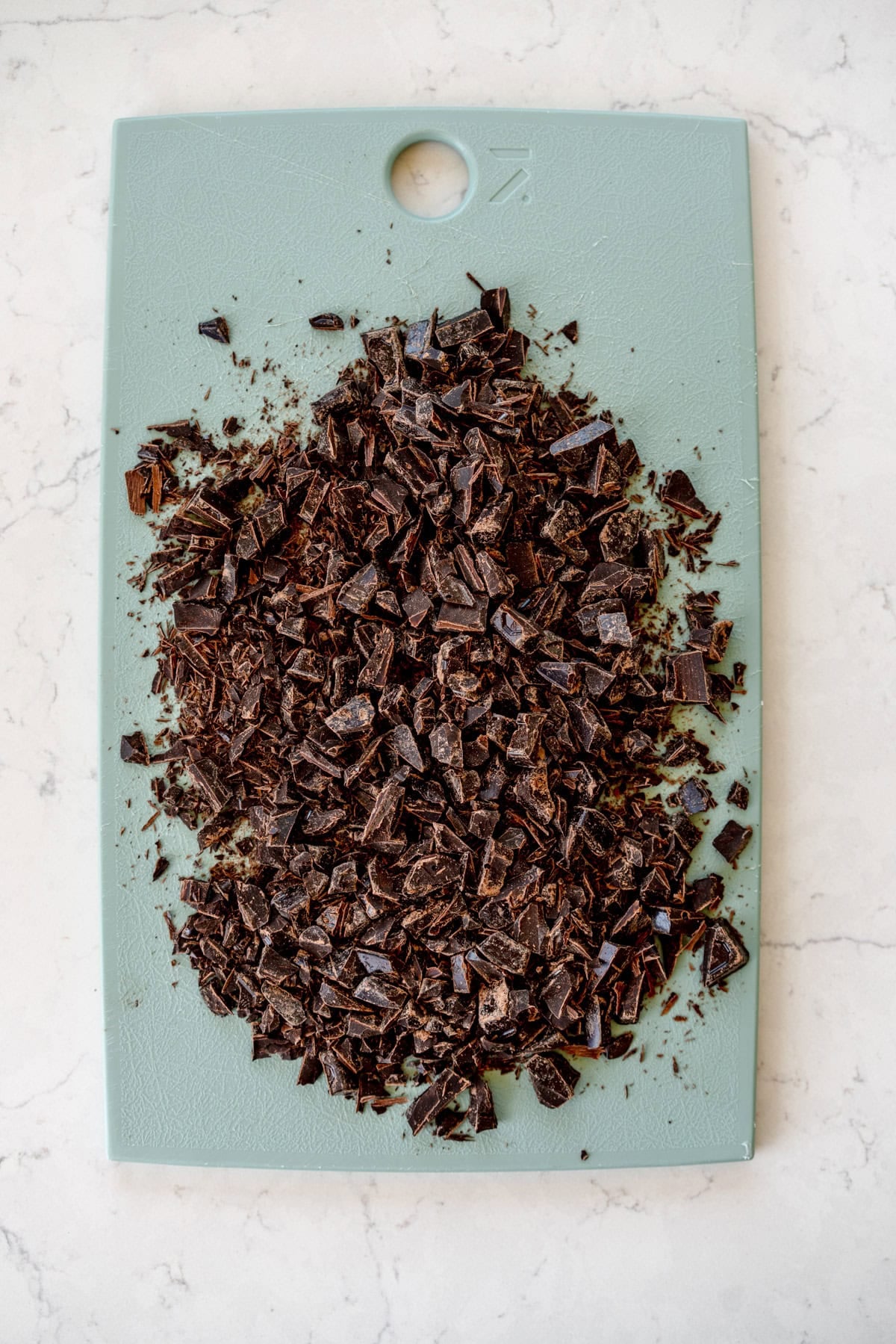
    • Chocolate Dust - This is a name I made up, but the dust is what's left from chopping chocolate. It all goes into the bowl and you get tiny chocolate specks all throughout the cookies.
    • Melty Chocolate Puddles - Chopped chocolate means you can press extra chocolate onto the top of the cookies to get big chocolate puddles!
    chopped chocolate for cookies
    Chopped Chocolate
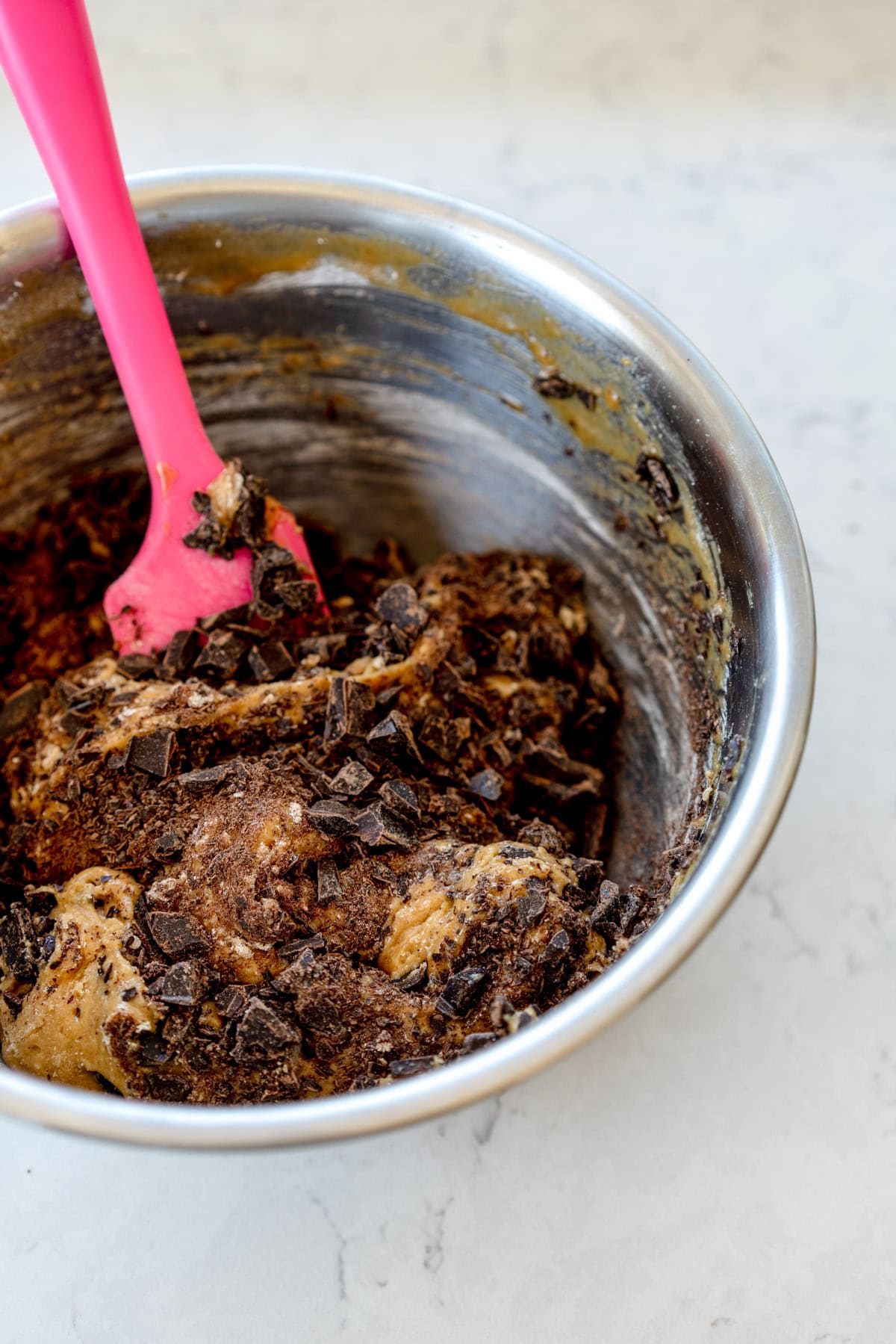
    cookie dough in bowl
    Gives melty pockets!

    How to make a freezer stash: Freezing cookie dough

    Yes- because it is a no chill chocolate chip cookie recipe, if you freeze the dough it will bake up a little thicker, but this is fine as long as you are aware of this. You can also freeze the baked cookies if you like - however this recipe only yields 12 cookies, so even in our household of two they don't last that long!

    For all my tips and tricks on freezing chocolate chip cookie dough and baking from frozen, check out my post: How to freeze cookie dough

    stacked corner chocolate chip cookie

    ❤️ Made this recipe and love it? ❤️

    I would LOVE for you to leave me a review and star rating below to let me know how you liked it! Also, please make sure to tag me on Instagram!

    Answers to your baking questions

    Over the years, many of you have asked me questions about:

    • baking in grams
    • adjusting oven temperatures
    • what kind of salt to use
    • and many more!

    I've curated and answered them all for your easy reference in this frequently asked questions post!

    Filed Under: Chocolate Chip Cookies, Cookies, Small Batch Baking

    All Butter Pie Crust: A Beginner's Guide

    Think you can't bake the most buttery, flaky pie crust home? Think again, because yes you can! Learn how to make the most perfectly flaky and tender all-butter pie crust in your own kitchen using a series of simple, easy folds, a technique called lamination. It's my secret for an ultra-flaky pie crust that's easy to work with, doesn't crumble, or leak. Made without vegetable shortening, my homemade pie crust has been tested, and perfected over many, many months. It's foolproof!

    Hi hi! I am just popping in to share this ultimate guide to making your own homemade all-butter pie crust! Making pie dough from scratch can be a little intimidating.

    But I promise with this guide as a resource and a couple of steps, we will have you making your own perfect pie crust in no time at all. Having one pie crust recipe is such a huge time saver. You can make it ahead of time, pop it into the freezer for later, and tick it off your list. 

    This is the entire inside of my brain on pie crust in one post, so buckle up - it may take a wee while to read but I promise that it is worth your time.

    This is a bit of a resource, so I have broken down the post into the following sections - feel free to click on the sections which will jump you around the post.

    • What you will learn
    • Why I really rate this pie crust recipe
    • Important ingredients and why I use them
    • All butter pie crust vs shortening pie crust
    • Making pie by hand vs using a food processor
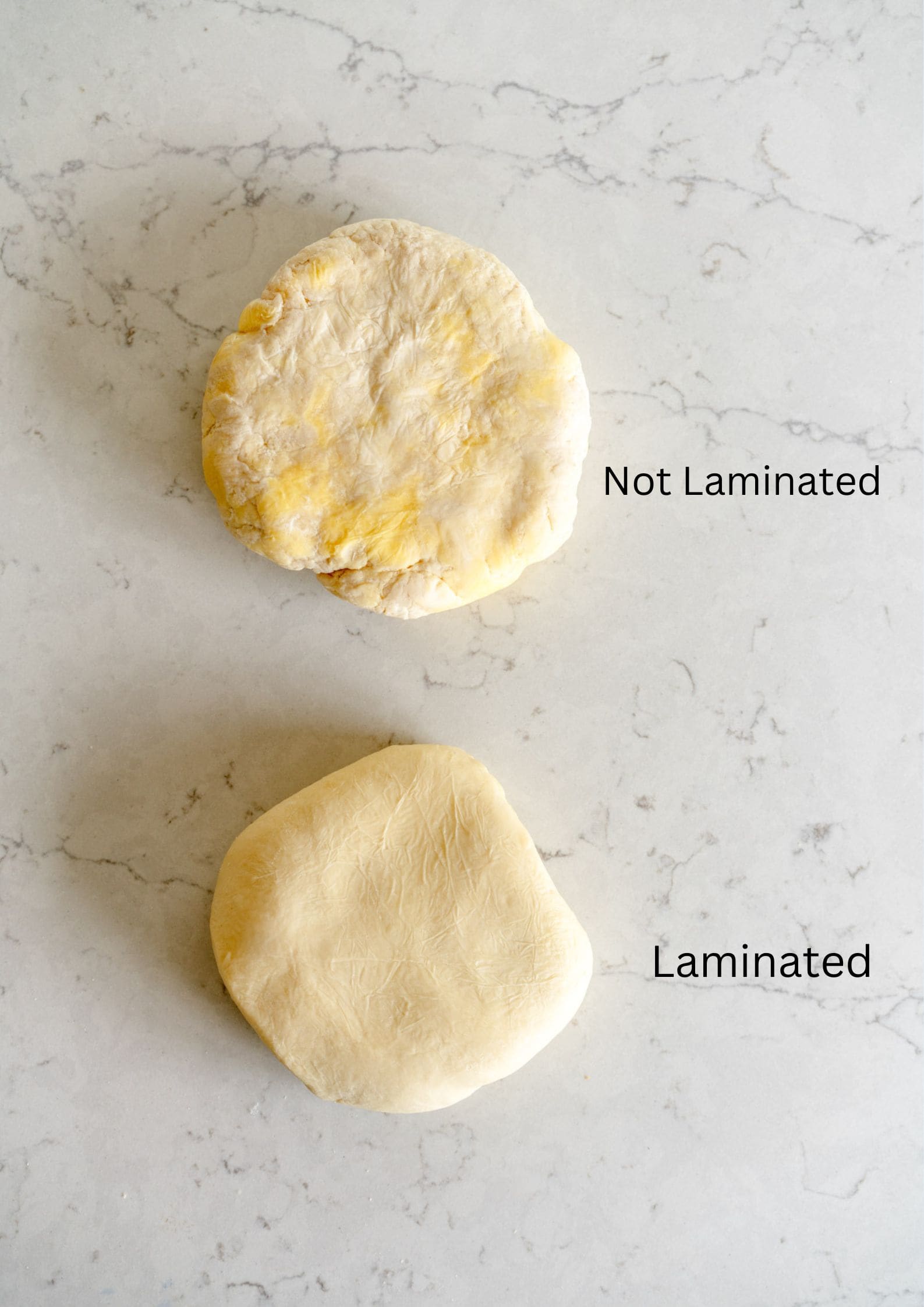
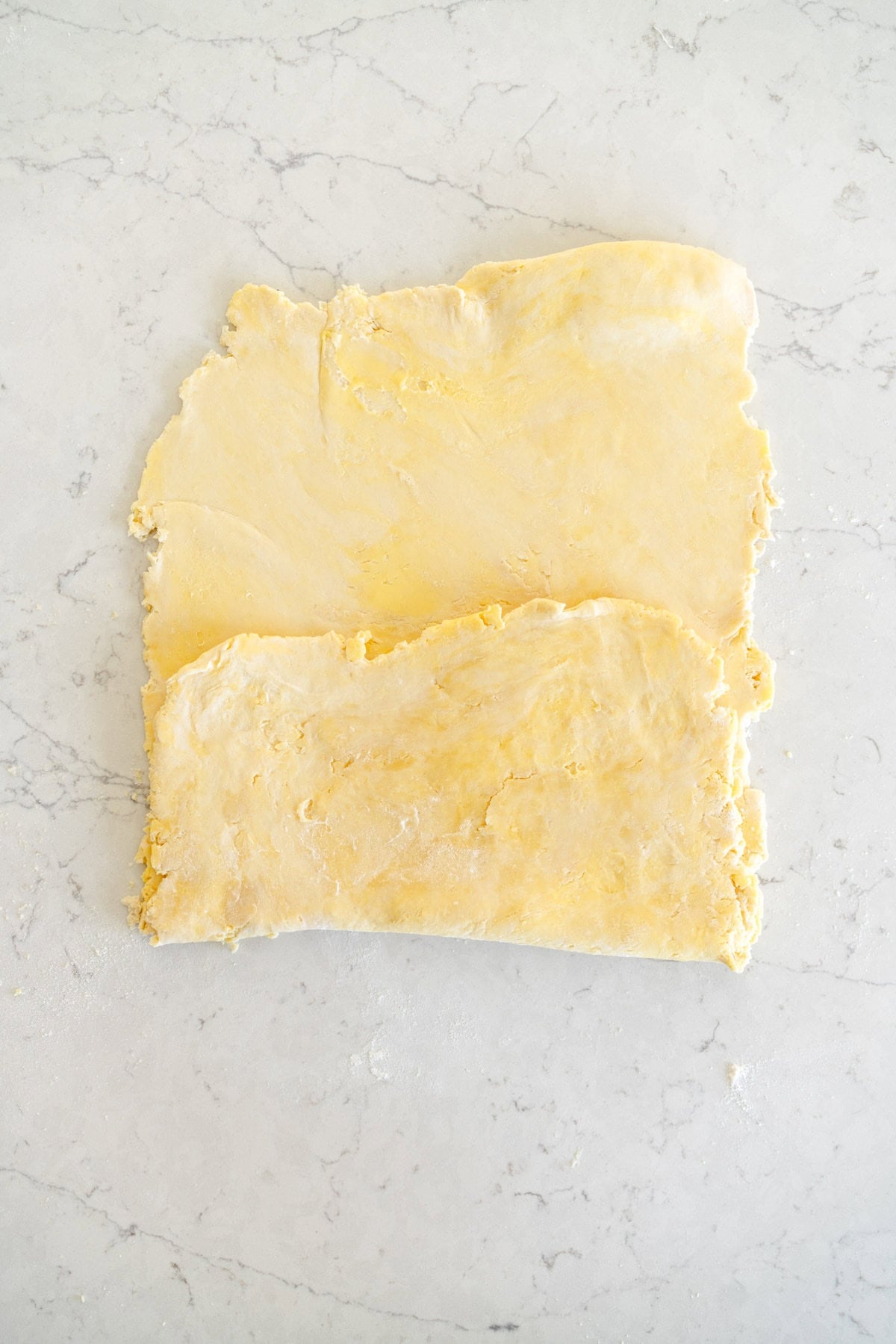
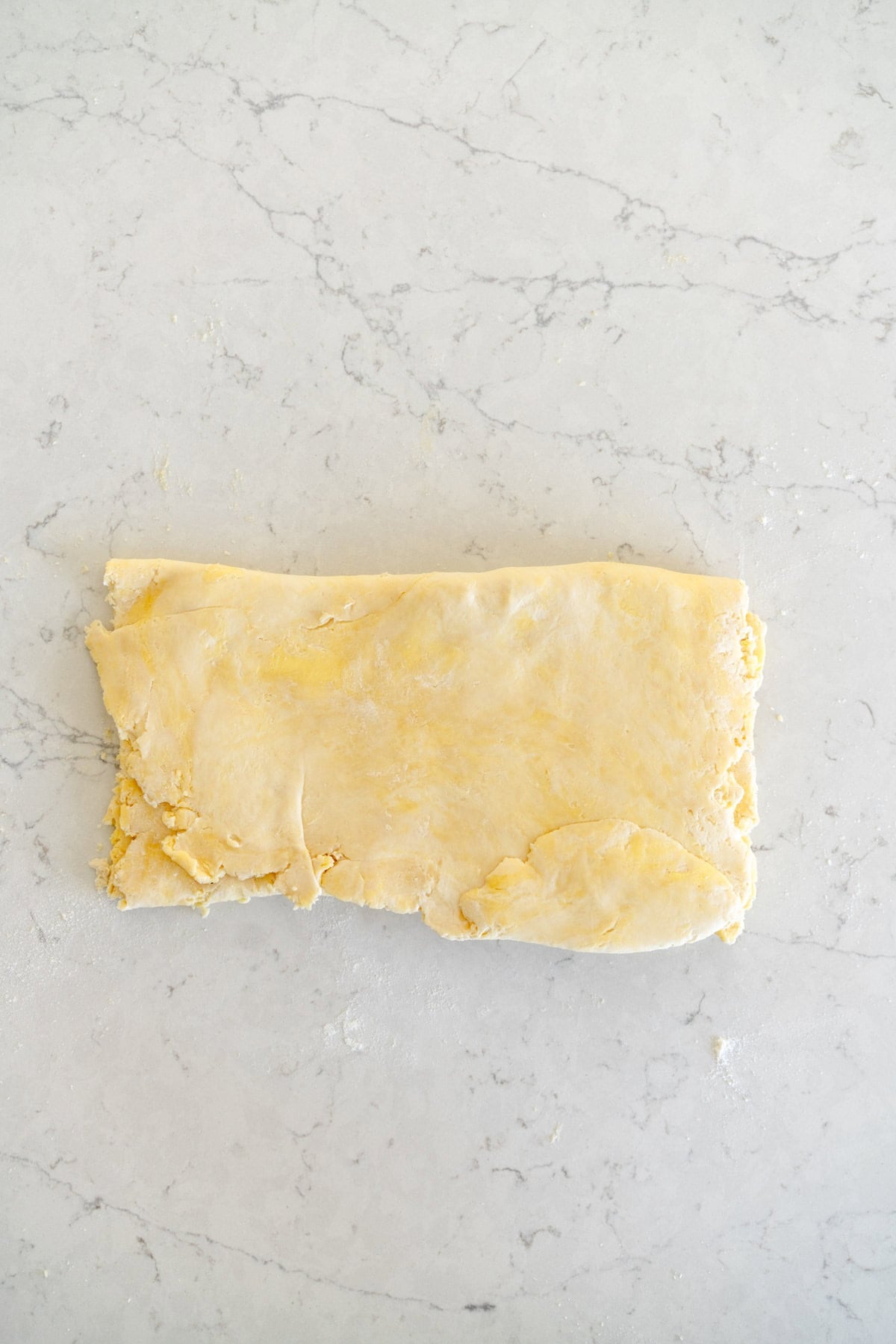
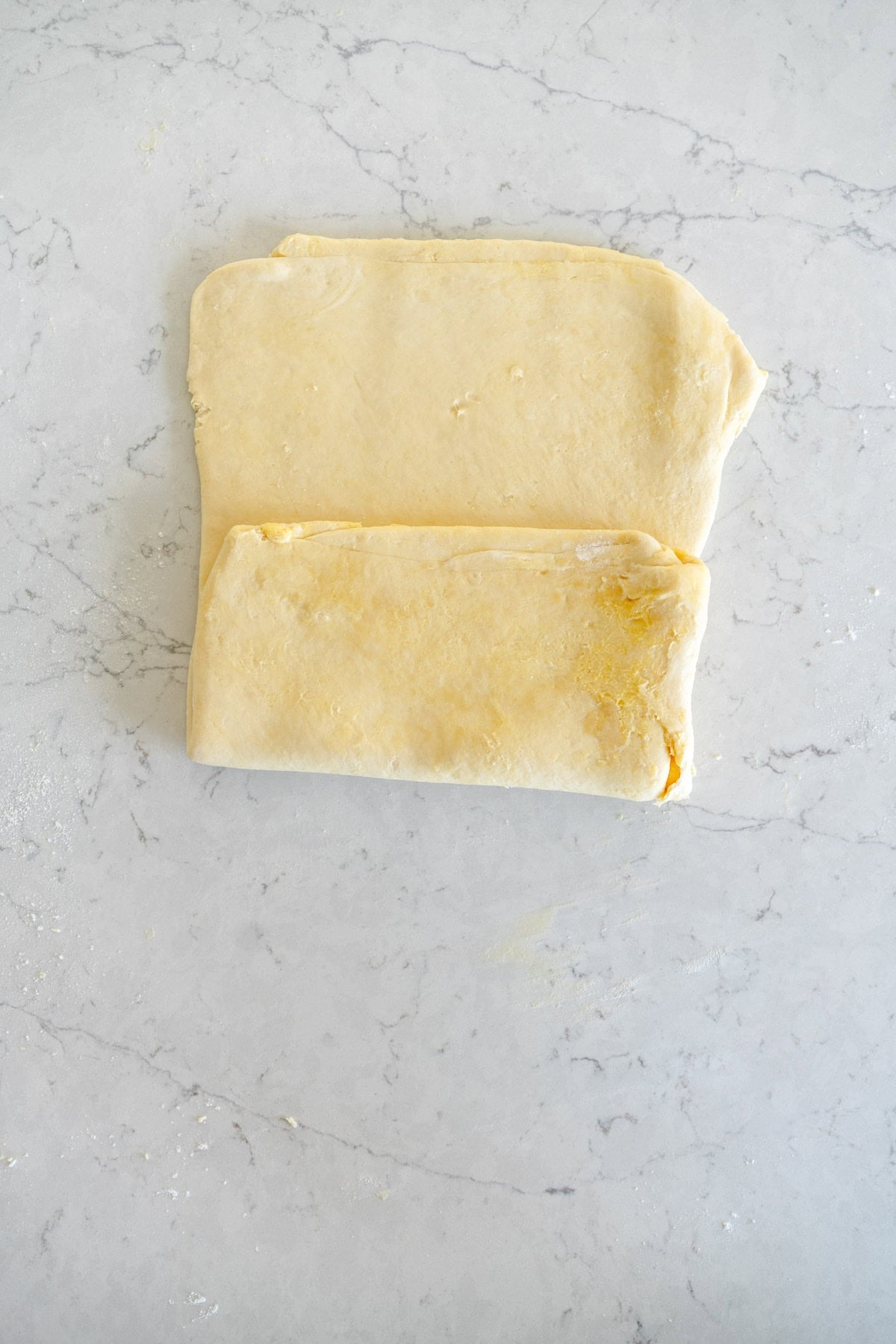
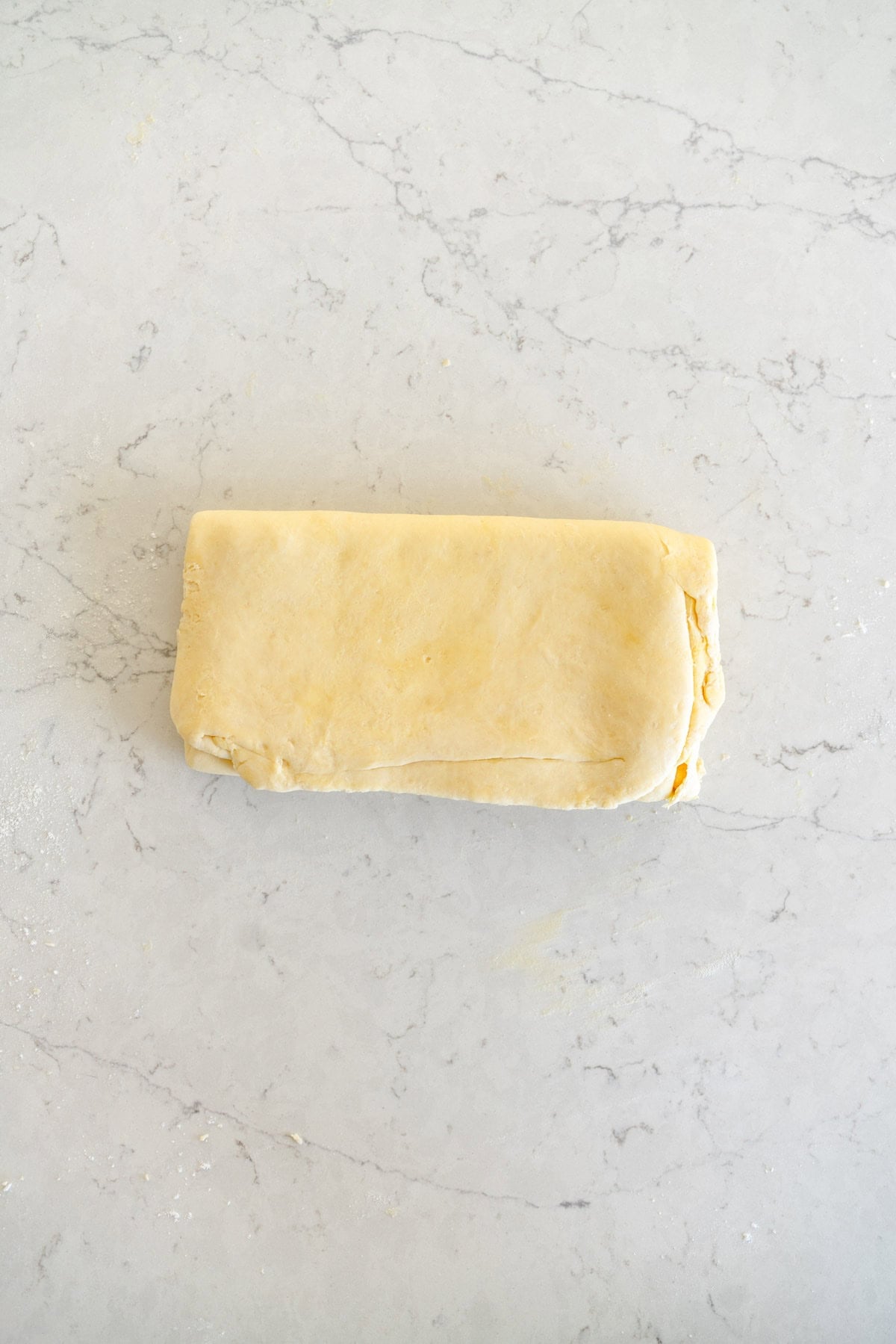
    • The secret to a flaky pie crust: Laminated pie dough
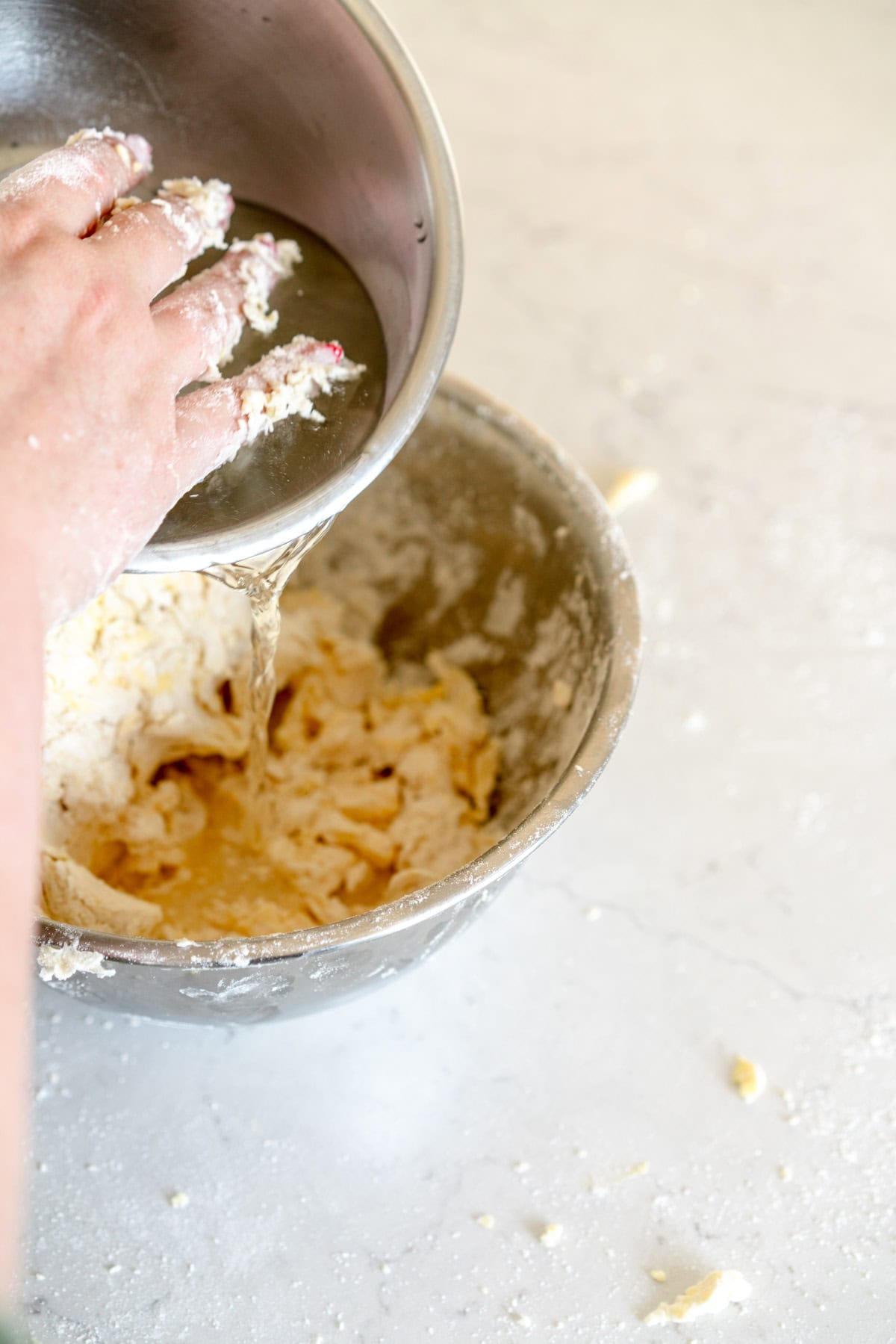
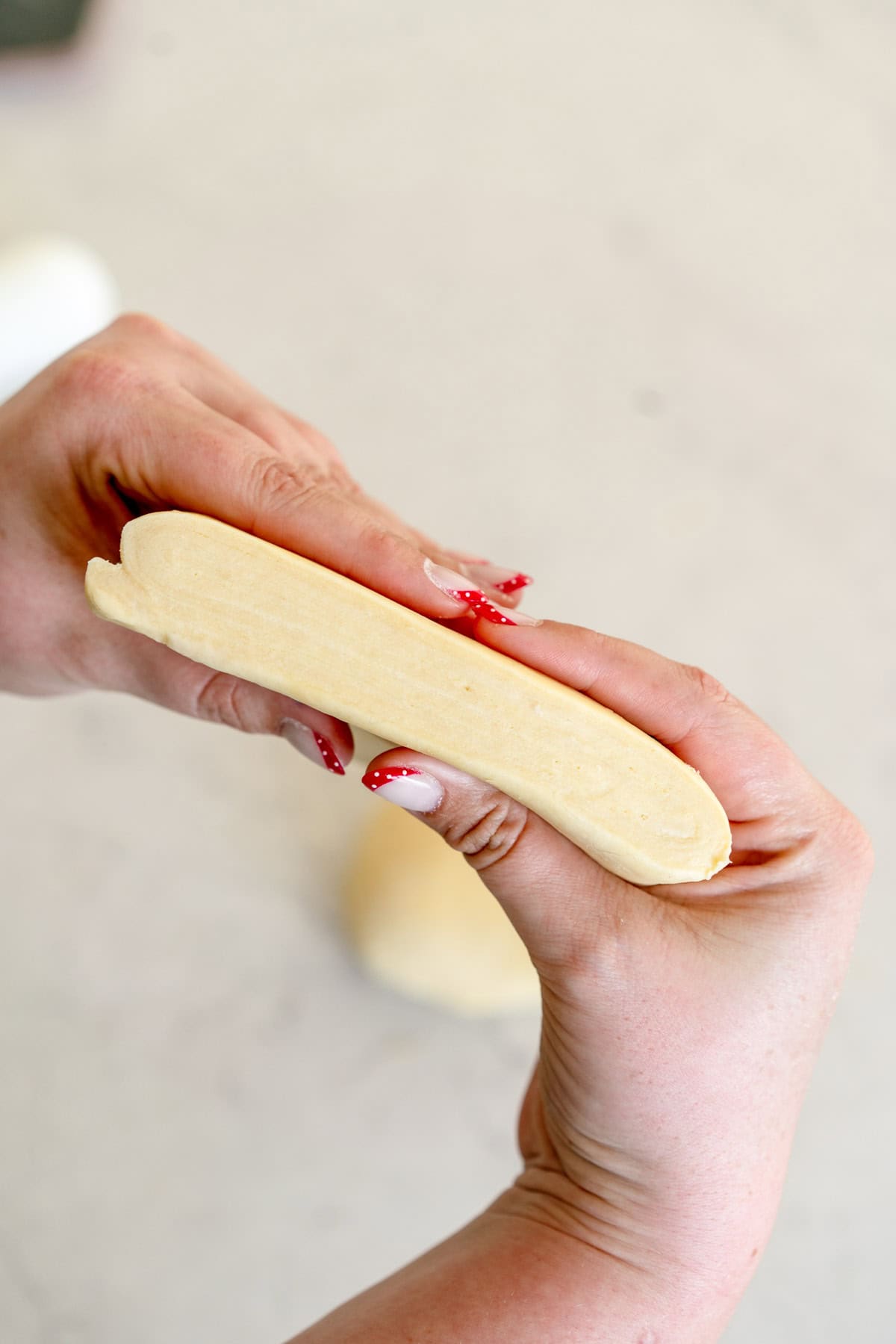
    • Step-by-step instructions for all butter pie crust
    • I screwed my pie crust up so you don't have to

    If you have made pie crust before and it has flopped - this is the post for you. I’ve got you - and will hold your hand every step of the way, including touching on as many troubleshooting steps and possible pinch points as I possibly can to help you along the way. 

    Homemade pie crust is super easy to make once you get the hang of it. It is great to make in bulk and store ahead so that you have frozen pie dough ready to go whenever you need.

    Pie dough that is easy to work with is a dream. It just takes a couple of sneaky extra steps to give you a super smooth, homogenous but flaky pie crust.

    It settles well into the pie pan, and gives a lovely sturdy bottom crust. This is the go to method that I have been using for years and the recipe that I use to make detailed lattices. It works great for blind baking, par baking, and for baking sturdy double crust pies.

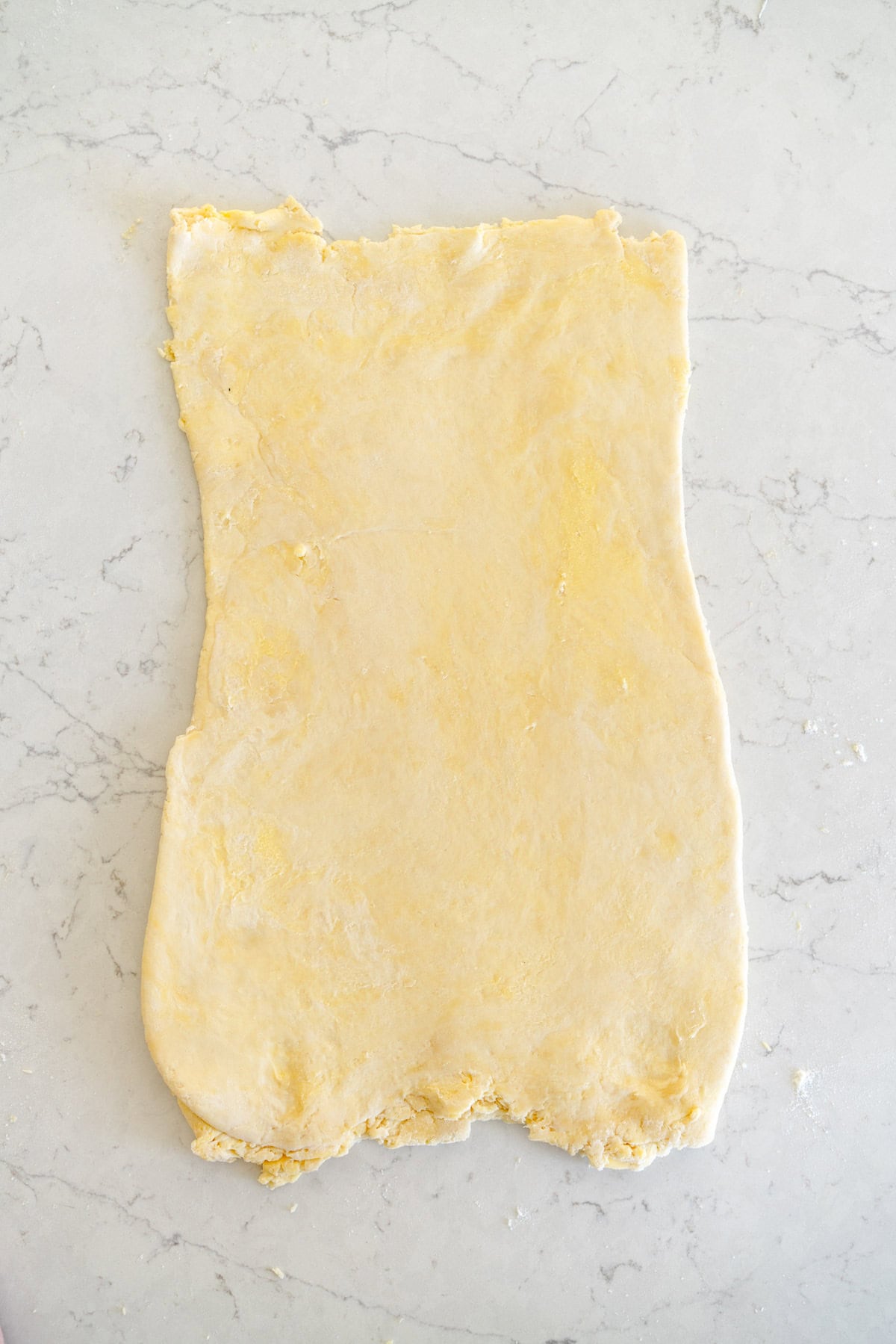
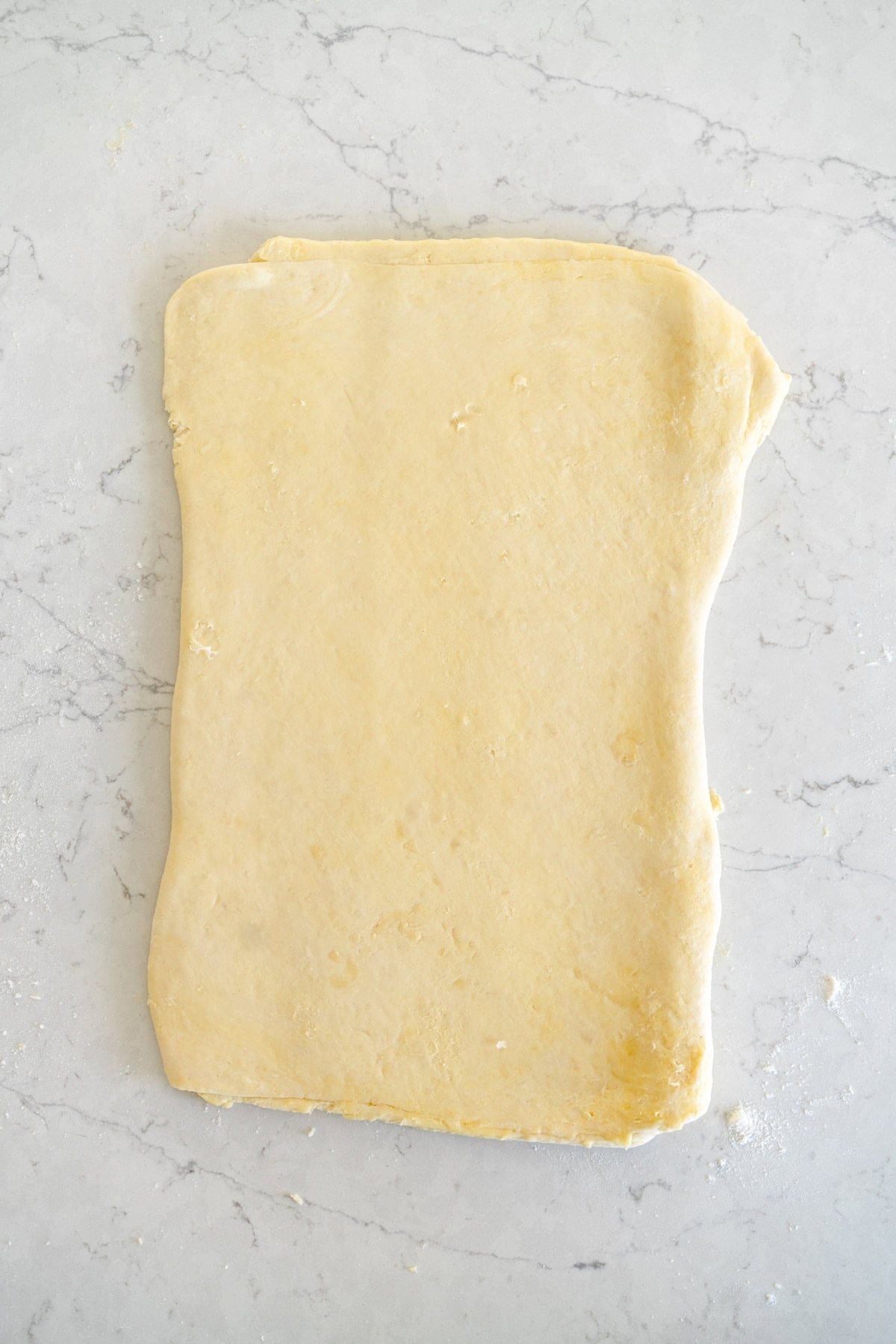
    My sneaky step is a series of quick folds to the pie crust once it has been in the fridge resting for about an hour. This is a five minute step, but I promise that it makes such a huge world of difference and gives you pie crust that is super easy to work with and bakes up beautifully and flaky. 

    pie crust ready to bake
    pie crust with weights

    What You Will Learn

    In this pie crust tutorial, we will cover allll of the basics that I have learnt / taught myself over the years of being a baking blogger, with step-by-step instructions.

    I will cover ingredients that I use, how to mix the pie crust, how to perform the laminations, and how to store and freeze your pie crust for making ahead and using at a later date. 

    While it may seem like a lot of information, you are welcome to pick and choose what you need and what suits you! If you have questions please feel free to leave them in the comments section below and I will get back to you as soon as I can. 

    Making pie crust from scratch does take a little bit of practice, but I promise you that with practice comes confidence and you’ll be whipping up pies in no time at all!

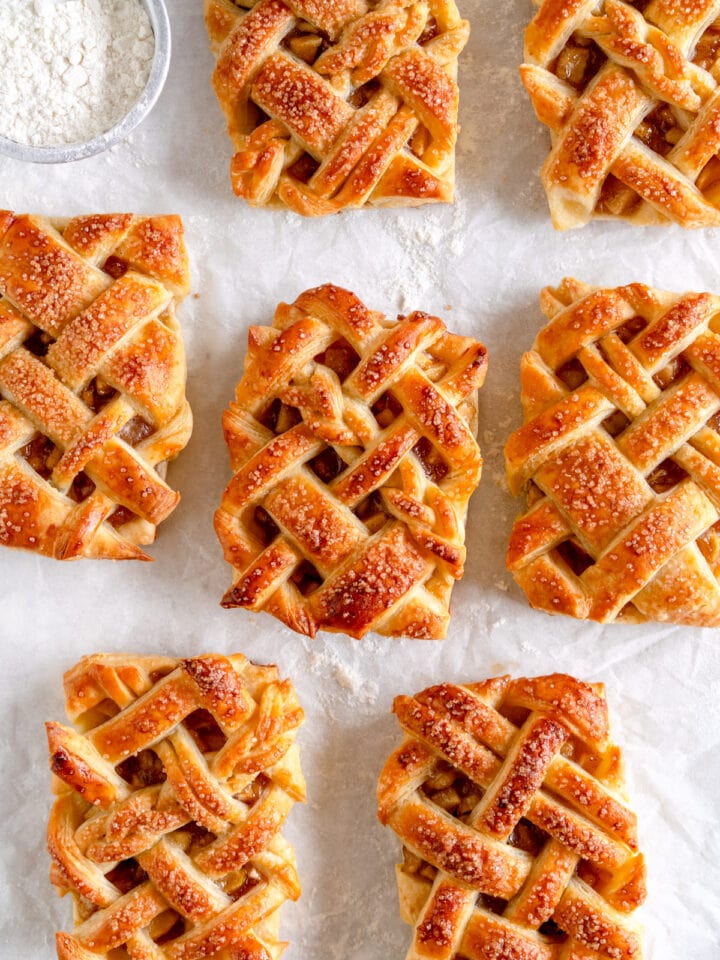
    Apple Hand Pies - the lamination in my recipe makes for a crust that is great for detail work.

    Why I Really Rate this Pie Crust Recipe

    I'm from New Zealand and when we say we 'rate' something - it means that we love it. I have been there- you are super excited to make pie, but get stuck on the most crucial part - a good crust.

    I have made this all-butter pie crust hundreds of times, and I promise you, we can make it work for you.

    There are a few steps but they are all super manageable and you can break up the workload, and you will be a super confident pie crust maker in no time! Here’s why I love this crust and I think you will too: 

    • Easy to make with no fancy equipment. This crust comes together with no fancy equipment, I just use my hands to make it. 
    • Super consistent. A huge benefit of weighing ingredients is that you can weigh the amount of water that you put into the pie crust, meaning you can make large quantities of the crust and have it all be the same consistency, so whether you’re using it from fresh or taking it from the freezer, you know it will work for you. 
    • Great to make ahead. I often make a bunch of pie crust all at once, and then store it in the freezer. Well wrapped it stores for up to 3 months and handles the same regardless of whether it is fresh or has been frozen. 
    • Super easy to work with and won't fall apart on you. I know that a lot of people get intimidated by pie crust - rolling it out, using it to make lattices or single crusts. The lamination step that I include in my recipe gives you a super homogenous dough that is still flaky and light, and really easy to work with - it works particularly well for things like lattices as it holds together so well. 
    • Minimal leakage in the oven. A big issue that people can have with their pie crust is that it leaks butter in the oven. This is usually because the crust hasn’t been properly mixed and the butter chunks are too large, meaning that the butter seeps out in the oven. The lamination helps to prevent this. It can also come from the butter chunks being too big and the pie crust also being too wet, meaning that it all flops in the oven and you end up with a pie crust that is both shrunken and has leaked butter. 
    • Blind Bakes like a dream. I love using this pie crust recipe for blind baking - it makes the process super easy and streamlined.

    If you are after information on blind baking a pie crust, check out my post: How to blind bake pie crust for all my tips and tricks!

    Blueberry Crostata - again, laminated dough makes a great lattice.

    Important Ingredients and Why I Use Them

    Pie crust doesn’t have that many ingredients, so it is important that you use ones that are of good quality.

    This is where you splurge on the good butter - an all butter pie crust really sings with butter flavour. 

    • Butter. It’s not an all butter pie crust without all butter. No shortening here. I have made pie crust all around the world with all sorts of butters and they all work, but a good quality butter (one that people accuse you of being mustard, IYKYK), is good here. Make sure it is super cold though before you start working - butters with higher percentages of butterfat do get softer quicker and stay softer so you want them to be nice and cold. 
    • Flour. I use All-purpose flour (also called plain flour) for my pie crust. Gluten is a dirty word when it comes to making pie crust, so you want to use a lower protein content flour rather than something which develops more gluten like a bread flour / high grade flour. 
    • Salt. Just a wee bit - if you are using salted butter, you can leave it out. 
    • Apple Cider Vinegar. Adding vinegar to your pie dough helps prevent gluten formation and keep it tender. Some recipes will also use vodka. This is a totally optional addition, and you are welcome to use all water here if you like.
    • Ice water. It is really important to keep everything nice and cold when you are making pie crust. Ice cold water helps with that.
    Brownie Pie - I par-baked this pie crust - see the flakiness on the side?! Magic.

    No Sugar In Your Pie Crust?!

    If you have made my pie crust in the past you will notice that in the updated version, there is no sugar. I haven’t used sugar in my pie crust in years even though it is written in the recipe.

    The reason why? I’m lazy. I often can’t be bothered getting it out of the cupboard, so I don’t. And the pie crust is great without it and I actually love how savoury it is, and also means I can grab a disc of dough from the freezer and use it for either a sweet or savoury pie.

    side shot of lemon meringue pie
    Silky Lemon Meringue Pie - again this is a par-baked crust. Mega flaky.

    All-butter pie crust vs Shortening Pie Crust

    I make my pie crust using only butter as the source of fat. Other pie recipes may use shortening, or lard, or a mix of butter and shortening. I much prefer butter as it has an amazing flavor, and is something that I always have in the house.

    I prefer to use unsalted butter for my pie crust recipe. It means that I can control the amount of salt in the recipe. If you only have salted butter this is fine too, just hold back on the added salt in your mixture.

    Stacked up pie crust
    Pie Crust ready for the second chill

    Pie Crust by hand vs food processor

    It is super common to make pie crust in the food processor. This method works great, and if you do it this way, go for it!

    When you make the dough in the food processor you use the machine to pulse the butter into the flour, which serves the same purpose as shingling it in with your hands. However, I prefer to make it by hand for a few reasons:

    • Much easier to get the moisture content right. When you are making pie crust by hand, you can see exactly how it is reacting to the water added, particularly toward the end of the process where you sprinkle in the water a tablespoon at a time. It is quite easy to accidentally over hydrate a pie dough made in the food processor, as you can't see or feel it coming together as well.
    • You run the risk of over working the dough. Again, it is harder to see what is happening when you make pie crust in the food processor, so it is much easier to over work the crust by mistake, resulting in a tough crust.
    • Cleaning the food processor sucks. That's all I have to say on that.
    adding water to pie crust
    Hold back the ice cubes when adding the water

    Pie making equipment

    The thing I love about making pie crust from scratch is that it requires limited equipment - a digital scale is a must obviously, but aside from that you don't need many things!

    • Mixing Bowl. I prefer something on the larger side so that nothing flicks out while I am working.
    • Pastry Blender or pastry cutter. This is a totally optional tool. I know that some people love to use it, but I do my pie crust by hand. Either works here, the purpose of the blender or using your hands is to incorporate the butter into the flour.
    • Plastic wrap. This isn't equipment as such, but it is important to have on hand to wrap the pie crust to prevent it from drying out. I have tried ziploc bags and other wrapping materials and nothing works quite as well.
    • Rolling Pin. A pie making essential - my favourite rolling pin for making pie is a french style rolling pin.
    laminations in pie crust
    Beautiful laminations in the pie crust from the folding process = flaky pie dough!

    The secret to a flaky pie crust - laminated pie dough.

    I use a little tip that my baking bestie Erin Mcdowell taught me - to laminate my pie dough after making it but before rolling it out for use. What this does it pops a few layers within the pie dough. This makes it homogenous and easy to work with but also still nice and flaky.The lamination is what makes my pie crust recipe really easy to work with. Lamination basically means giving the dough a series of folds, the same way that you would for a puff pastry. 

    I do my folds all in one go, after the pie dough has been mixed and rested in the fridge for about an hour. I do three rounds, then shape the dough into discs or the shape that you need.

    Dough after first lamination
    Dough before second lamination
    Final Laminaton
    Dough before third lamination

    Laminating the pie crust is not kneading it - you are adding in layers. It makes the butter pieces smaller and in layers within the pie crust so that when it hits the hot oven, the butter will create steam, which in the tiny little layers, makes flakes in your pie crust. As I mentioned earlier, the pie crust is much less likely to leak butter in the oven as you don’t have large pieces of butter within the dough. 

    While laminating your pie crust is an optional step, I really recommend it, especially if you are new to pie crust. You can see in the image below the difference between the two crusts - the top one has not been laminated and still has large butter chunks, while the bottom one has had a series of laminations / folds performed, and is much more homogenous.

    laminated vs not laminated pie crust
    Non laminated dough vs laminated - see how much more homogenous it becomes

    Step-by-step Instructions for all butter pie crust:

    This may seem like a lot of steps but I promise you that once you get the hang of it you will be making homemade pie crust like a pro! Here are my top tips:

    • Plan ahead. Pie crust works best if you are able to make it ahead of time so that it can rest overnight. The minimum rest period that it needs is 2 hours, but you will get best results if you are able to leave it to rest overnight.
    • Keep everything cold. Make sure you have cold butter, and ice cold water. This helps to stop the butter from melting and means your dough is nice and easy to work with.
    • Don't work it too much. Gluten is a bad word when it comes to making homemade pie crust. You don't want to develop too much gluten in the crust by over working it. Be gentle when mixing your liquid in. The laminations is adding folds to the dough rather than kneading it - like rough puff pastry.

    Step 1: Cut your butter

    You want to make sure that everything is kept super cold. If you are cutting up lots of butter, cut it and then pop it back into the fridge until you are ready to use. I like to cut mine into cubes - you can see in the image how large I cut them. 

    cut butter for pie
    The size that I cut my butter into

    Step 2: Prepare your dry and wet ingredients

    Weigh your flour and salt into the bowl, and fluff together to combine. Mix the ice, water, and apple cider vinegar together in a bowl or measuring jug. Note that you will have a little more liquid than you will use in the pie crust - if you are worried about wasting vinegar you can make up less of the mixture if you need to. If you are doubling the pie crust recipe, you may only need to make up one batch of the liquid.

    flour with butter added
    Add butter chunks to flour and toss to incorporate

    Step 3: Incorporate the butter

    Add the butter to the flour bowl and toss it to combine so that each piece is covered in butter. Now you are going to use your fingers to incorporate the butter into the flour - you want to use your thumb and finger to squish the butter between them so that it flattens out into shingle shapes. I like to start with all the pieces of butter over one side of the bowl and as I flatten them, place them on the other side so I know which pieces have been done. 

    I find it necessary to only give each piece of butter one squish, but if you feel like it needs more, by all means go ahead.

    butter pressed into flour
    Shingle butter in with your thumb and finger

    Step 4: Add in the liquid

    Now you are going to add in the water / apple cider mixture. I like to start with 120g of liquid (do not add the ice). Pour it into the bowl and then do a tossing motion with your hands to incorporate the water. See how the pie crust is feeling and if it still needs more liquid (mine almost always does), add more water in. If there are any particularly dry patches you can hold the more hydrated pie crust to the side and add the water directly to the dry patches. 

    adding water to pie crust
    Start with 120g water
    mixing in water to pie crust
    Fold in liquid

    Keep tossing the mix with your hands, squeezing gently to bring the crust together. At no point do you want to knead the dough too much, as you do not want to develop gluten which can make your pie crust tough. Squeezing and pressing together is ok but you don’t want to knead it like you do bread. 

    You are looking for a dough that holds together well, but is not too wet. Remember it is going to rest in the fridge where the flour will hydrate. You can see in the images that the dough is not completely wet, but holds together well.

    dry patch in pie crust
    Wet patch below more hydrated mix
    Mixing Pie Crust
    Still too dry - add more water

    Step 5: Bring the dough together

    Turn the dough out onto a work surface (no need to flour), and gently press it together with your hands. I like to shape mine into a flat rectangle at this stage as it makes rolling out the dough for lamination a little easier. Wrap the dough in plastic wrap and rest in the fridge for an hour before doing the laminations. This gives the dough some time to relax and for the flour in the recipe to hydrate. 

    bring pie crust together on counter
    Bring together on the counter
    wrapped pie crust
    Wrap in plastic wrap for the first chill

    Step 6: Laminate the pie crust

    Now you are going to perform three sets of laminations (it’s just a fancy name for folding, don’t let it intimidate you!), essentially rolling out the dough into a rectangle, folding it up, then doing it two more times. I like to use a lightly floured surface, which especially helps if your pie dough is a little over hydrated or has some sticky spots. 

    Here is how you perform each fold:

    1. Roll the dough out into a rough rectangle shape (it doesn’t have to be perfect). I aim for about 35x25cm (about 14x10 inches). 

    roll out dough
    Roll out dough
    rectangle of dough
    Aim for a rough rectangle

    2. Brush off any excess flour. Fold the bottom third of the pie crust up, then fold the top third down over it - this is called a ‘letter fold’. 

    step 1 - letter fold
    Fold the bottom up
    Step 2 - letter fold
    Fold the top down over it

    3. Turn the dough 90° so that the short side is facing you. 

    Repeat this process two more times until you have done three folds of the dough. If at any point it feels like the dough is warming up too much, you can wrap it and pop it back in the fridge for 10-15 minutes but I find that as long as I start working with the dough as soon as it is out of the fridge, I can do the folds all in one go. 

    final lamination
    Second fold - letter fold
    fully laminated dough
    Second fold complete

    Step 7: Divide up the dough

    My Pie Crust recipe makes enough for two single crusts or one double crust pie, so once you have done the final fold you can divide the dough in two and shape each into a disc. To do this, I turn it over and fold the edges in, then turn it back over and flatten with my hand slightly to make a disc.

    dividing up pie crust
    Divide up the dough into two
    Shape into a disc

    Step 8: Chill the dough

    This is a super important step. You  must chill your dough for a minimum of two hours, but I prefer to do overnight if I can. This lets the gluten fully relax, as well as making sure that the dough is fully hydrated. If you are making dough to freeze, I like to chill it first then transfer to the freezer.

    discs of pie crust
    Laminated dough ready to be chilled

    How long does pie crust last in the refrigerator?

    I like to make my homemade pie dough ahead of time - ideally the night before, but this can be done up to three days ahead of time if you are storing your pie crust in the fridge. Make sure that it is well wrapped, and use it straight from the fridge to keep everything nice and cold and to ensure that your pie crust is easy to work with.

    Sometimes if you have left pie crust in the fridge for too long it will start to oxidise and turn grey - this is how to tell if pie crust is off. If you are unsure when you are going to use it, your best bet is to throw it in the freezer and bring out to thaw when needed.

    How to freeze pie crust

    The great thing about making homemade pie crust is that it is easy to make a whole bunch at once, and then freeze it until you are ready to use it. Pie crust will keep in the freezer for up to 3 months. I like to wrap it well in plastic wrap once it has been shaped into a disk, then add a layer of aluminum foil on the outside just to help with freezer smell.

    To thaw pie crust, remove from the freezer and place into the fridge overnight until it has thawed. It is now ready to use the exact same way you would use a fresh pie crust from the fridge.

    Can I freeze the pie crust in the pan?

    I don't recommend doing this - things get weird and dried out. You are much better to just freeze the dough as discs, well wrapped, then proceed as usual.

    How to scale a pie dough recipe

    If I am making multiple batches of pie crust, I often do it all in one go. However there is a limit when scaling the recipe. You don't want to do too much at one time or you run the risk of over working your pie dough. The recipe below makes enough for a basic double crust pie, or two single crust pies. I divide the dough and shape it into a disc and store like that. I like to scale the recipe around how many discs of dough it will yield.

    The most I recommend scaling this pie crust recipe by is a double batch, which will yield 4 single pie crusts. If you do any more, I would work in batches. Usually I do one batch of this pie crust recipe at a time if I can. Then I make multiples of it depending on how much I need.

    This recipe makes enough pie crust for two single crust pies, or a basic double crust pie with a basic lattice. If you are making a pie where you want a more detailed top crust, I suggest making a 1.5 batch of this recipe to ensure you have enough. Any leftover pie crust can be wrapped in plastic and kept in the fridge or freezer for another time.

    sliced chocolate pie
    side shot peanut butter whipped cream on chocolate pie
    Chocolate Cream Pie - this pie has a fully blind baked crust and a set filling.

    I screwed up my pie crust so you don't have to

    Let's trouble shoot together.

    While this pie crust guide should set you up for success, there are a few things that can go wrong when you are making pie crust. Here are the most common ones. Firstly here is an image showing pie crust that is too wet, too dry, and just right.

    hydrated pie crust

    Pie Crust is over hydrated:

    The dough will be sticky and hard to roll out. Remember that when the dough is resting in the fridge the flour will hydrate, so you don't want it to be too wet just after mixing. Start with the amount of water suggested in the recipe as a starting point and then add more from there carefully.

    How to fix it:

    You can fix over hydrated pie crust by dusting lightly with flour when you are doing the lamination steps. I find it easier to fix an over hydrated pie crust than an under hydrated one!

    over hydrated pie crust
    Dough too wet - over hydrated.
    over hydrated pie crust rolled out
    Dough will smear when you roll it out.

    Pie Crust is Under Hydrated:

    You know your pie crust is under hydrated when you have big dry chunks and it is hard to bring the dough together. Pie Crust that is under hydrated will be really hard to roll out, and will not have relaxed enough to make an easy to work with pie dough. Add a little more water when you are mixing - if needed, sprinkle some water on the dry parts at the bottom of the bowl and incorporate them in.

    How to fix it:

    Unfortunately it is not as easy to fix an under hydrated pie crust. You can try flicking a little water on it during the lamination steps, but often it will be hard to work with and really hard to roll out as the dough has not relaxed enough so will 'snap back' on you a lot.

    pie crust too dry
    Pie crust too dry - too much loose flour
    pie crust too dry rolled out
    Dough cracks when you roll it out

    Large Butter Chunks in Pie Crust

    If you have large butter chunks in your dough, it is not going to roll out evenly and will seem like that it is lumpy.

    How to fix it:

    Make sure that when you are incorporating the butter, it gets mixed in enough so that all the pieces of butter have been shingled. Large pieces of butter mean they won't full incorporate into the dough, and may leak out in the oven or make lattice work difficult.

    Pie Crust is leaking butter in the oven:

    This often happens if the butter chunks were too big in your pie crust. When you do the lamination step, it should leave you with homogenous dough. Sometimes you can see leakage of butter from the crust around the edge of your pie dish. A little leakage is fine, but if you find that you are getting pools of butter, it is likely that you have not incorporated the butter well enough.

    How to fix it:

    Make sure that you do your laminations / folds in your pie crust. This makes it much more homogenous and gets rid of the large butter lumps, flattening them and making the crust much easier to work with and much less likely to leak.

    Pie Dough is cracking when you go to roll it out:

    This could be because it is too cool, or your dough is under hydrated. I like to press on the dough with my rolling pin a few times to help even it out before I start to roll. Forming the dough into a disc before it goes into the fridge and tucking the edges under means you get a nice clean edge on it too.

      Basic Apple Pie - again this all butter crust is great for an intricate lattice.

      Commonly asked questions

      • What tools and equipment do you use?
        You can see a full list of all the tools I use here
      • Is Pie Crust the same thing as pie dough?
        Yes! I use the words interchangeably but as far as I am aware, they are the same thing
      • Can you make pie crust gluten free?
        Not with this recipe. But there are a bunch of gluten free specific pie crust recipes out there, so I would try one of those rather than trying to adapt this.
      Blueberry Crostata - one of my favourite lattices to do.

      ❤️ Made this recipe and love it? ❤️

      I would LOVE for you to leave me a review and star rating below to let me know how you liked it! Also, please make sure to tag me on Instagram!

      Answers to your baking questions

      Over the years, many of you have asked me questions about:

      • baking in grams
      • adjusting oven temperatures
      • what kind of salt to use
      • and many more!

      I've curated and answered them all for your easy reference in this frequently asked questions post!
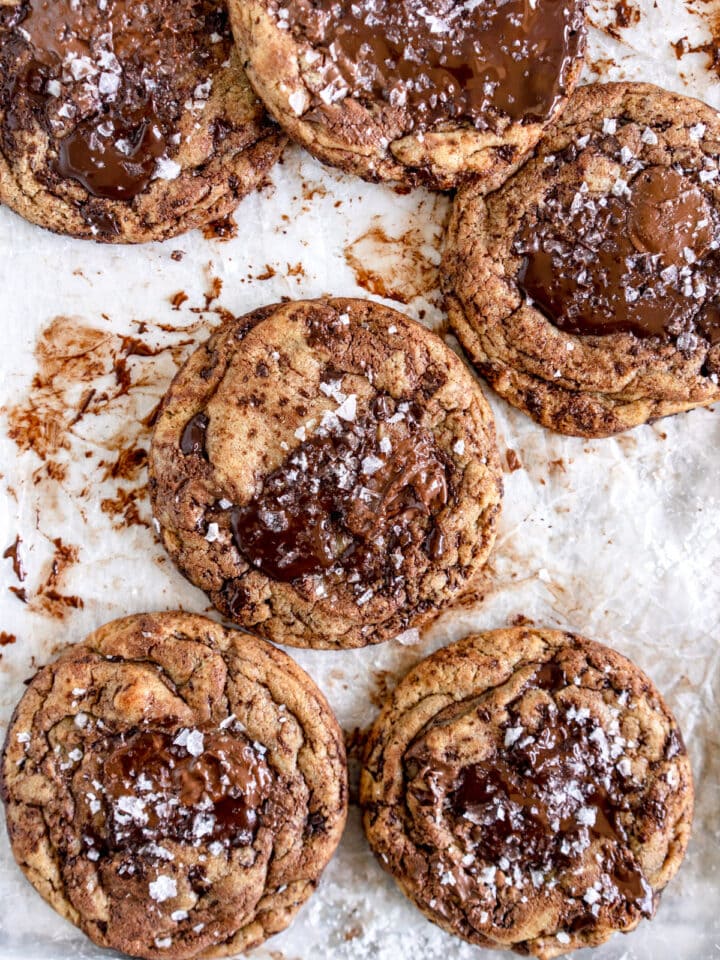
      Filed Under: Baking Tips, Base Recipes, Pies

      Louise Cake

      side on shot of louise cake

      Louise Cake is a classic New Zealand Baking recipe, with a buttery shortbread base, a layer of raspberry jam, and a coconut Swiss meringue topping.

      side on shot of louise cake

      Louise Cake - a traditional New Zealand Baking Recipe.

      Hi hi! I am just popping in here to share the updated recipe for my Louise Cake! Louise cake is a classic New Zealand Baking Recipe, and one that was my Grandad's favourite and one I remember baking with my Grandma from a super young age. I figured it was about time to give my recipe a refresh - the original was posted here in 2017!

      What is Louise Cake?

      Louise cake is a super delicious homemade slice (or bar) recipe, made up of a buttery vanilla shortbread base, a layer of raspberry jam, then a coconut meringue topping. The whole thing gets assembled before it is baked, which makes things super easy, although there are a few components to it. You really can't beat baked from scratch.

      This recipe comes from my Grandma's recipe book, however in my research I found that a lot of Louise cake recipes are super, super similar - I am sure they all come from a similar source!

      top down image of louise cake

      Components of Louise Cake

      There are three components to Louise Cake - the butter biscuit base, a raspberry jam middle layer, and the meringue topping. The original recipe used three eggs and three yolks, with the yolks going into the base and the whites into the topping, but I bumped up the meringue quantity to have five whites in the topping to increase the base to meringue ratio.

      This leaves you with two left over egg yolks, but I have a whole bunch of recipes that are a good way to use up egg yolks if you are looking for ideas - these cookies are especially good.

      • Shortbread base. This is a super simple buttery shortbread base, which is cakey and chewy from the egg yolks. It comes together super quickly and the batter is pressed into a lined pan. I keep mine super plain but you can play around with whatever you like - it would be super delicious with some lemon zest added into the louise cake base.
      • Raspberry Jam. I use Raspberry jam here as this is what is 'traditional', but you are welcome to use whatever you like here - another berry flavour or a homemade jam would be delicious as the middle layer of your Louise Cake.
      • Coconut Meringue Topping. I love adding coconut to desserts, and this meringue layer is no different. It is a thick layer of coconut swiss meringue, spread over the base and jam layers before the whole thing goes into the oven.
      crumbled shortbread base
      smooth shortbread base

      How to make Swiss Meringue

      The original recipe for Louise Cake uses a French meringue, which involves whipping sugar and egg whites together until thick and glossy, then adding in the coconut and spreading over the Louise Cake base.

      I prefer a thicker meringue, so bumped the meringue up to use five egg whites. However when I tried this with a French meringue, it was way too eggy. So I switched to my old faithful, Swiss meringue. Swiss meringue is made by cooking together sugar and egg whites over a double boiler. This dissolves the sugar, and heats the whites, bringing them to a food safe temperature, which means Swiss meringue can be used in things that aren't going to be baked, and is perfect for torching.

      Swiss meringue is super stable, so it is a great base for a pavlova or a buttercream, and also works perfectly on the top of this Louise cake.

      • Make sure the bowl and equipment are very clean. Meringue works best when there is no fat at all in the bowl - I like to give the bowl and beaters a little wipe with a cut lemon to help remove any grease.
      • Cook together egg whites and sugar. I do this over a makeshift double boiler with a metal bowl. Whisk constantly until the mixture registers 160°f / 70°c on a thermometer. Alternatively you can check to see if it is ready by rubbing some of the mixture between your fingers. You want to make sure you can't feel any grains of sugar. It is going into the oven so heating it to the exact temperature needed isn't as important here.
      • Remove from the stove. Do this carefully - the edges of the bowl will be hot and you don't want to drop hot egg white syrup all over your kitchen (trust me).
      • Whip the Swiss meringue. You can either do this with a hand mixer, which will take about 5 minutes, or you can use a stand mixer. Whip the egg whites until stiff peaks are just starting to form. This gives the mixture some time to cool down, although it is fine if it is still a little warm going onto the Louise cake. We aren't relying on the meringue for structure like we would a pavlova, where whipping it correctly is important.

      Can the meringue topping be made thinner?

      Yes, if you would still like a thinner meringue layer you are welcome to scale back the quantities to use three egg whites rather than five. The process and bake time will be exactly the same. You will just need to scale the sugar back to 170g.

      The original topping recipe was super similar to this but a French meringue method - whip three egg whites until foamy, then add 185g sugar and beat until a stiff meringue forms. Fold through 100g coconut and proceed as written.

      close up shot louise cake with coconut meringue

      Desiccated vs Shredded Coconut

      My original Louise Cake recipe used desiccated coconut, which is very finely shredded coconut. I use it quite a lot in baking - in Anzac Biscuits, Chocolate Crackle, and Peppermint Slice. Is it much finer in texture than shredded coconut, also called 'long thread' coconut.

      I tested the recipe with both kinds of coconut and much prefer the shredded / more coarse version. However, if you only have desiccated on hand, that will work just fine. Just use the same amount by weight as the recipe calls for (this is why we love grams!)

      coconut swiss meringue topping

      Using binder clips in baking

      I use binder clips on the sides of my baking pans, to secure the parchment to the sides of the pan. This stops the parchment from flapping around, and keeps things nice and clean.

      Provided your binder clips are metal, they are fine to go in the oven. Just make sure that whatever you are baking doesn't rise too much so that they get baked in. The Swiss meringue on this Louise cake rises a little. It will just touches the clips, but will sink back down once out of the oven.

      side shot coconut meringue
      jam on shortbread base

      Frequently Asked Questions for Louise Cake

      What pan did you use?
      I used a 9" pan, which I double lined with parchment paper to form a 'sling' over the sides to make removing the baked louise cake easy.

      How to do you store Louise Cake?
      Store Louise cake in an airtight container at room temperature. It stores for up to 3 days.

      Can Louise Cake be made ahead?
      Louise cake is best eaten on the day it is made because of the meringue topping, but is still great a day or two after making. It doesn't keep super well so wouldn't be ideal to make ahead.

      Do I have to use Caster sugar?
      I used caster sugar in the initial tests of the recipe, as I needed it to dissolve well in the French meringue. However, because you are now cooking the egg whites together with the sugar which dissolves the sugar, you can use granulated sugar if that is all you have!

      What is All-purpose Flour?
      All-purpose flour is often also called plain flour or standard flour in other countries.

      image of louise cake on paper

      For more New Zealand Recipes, check out:

      • Tan Square
      • Iced Buns
      • Squiggle Slice

      ❤️ Made this recipe and love it? ❤️

      I would LOVE for you to leave me a review and star rating below to let me know how you liked it! Also, please make sure to tag me on Instagram!

      Answers to your baking questions

      Over the years, many of you have asked me questions about:

      • baking in grams
      • adjusting oven temperatures
      • what kind of salt to use
      • and many more!

      I've curated and answered them all for your easy reference in this frequently asked questions post!
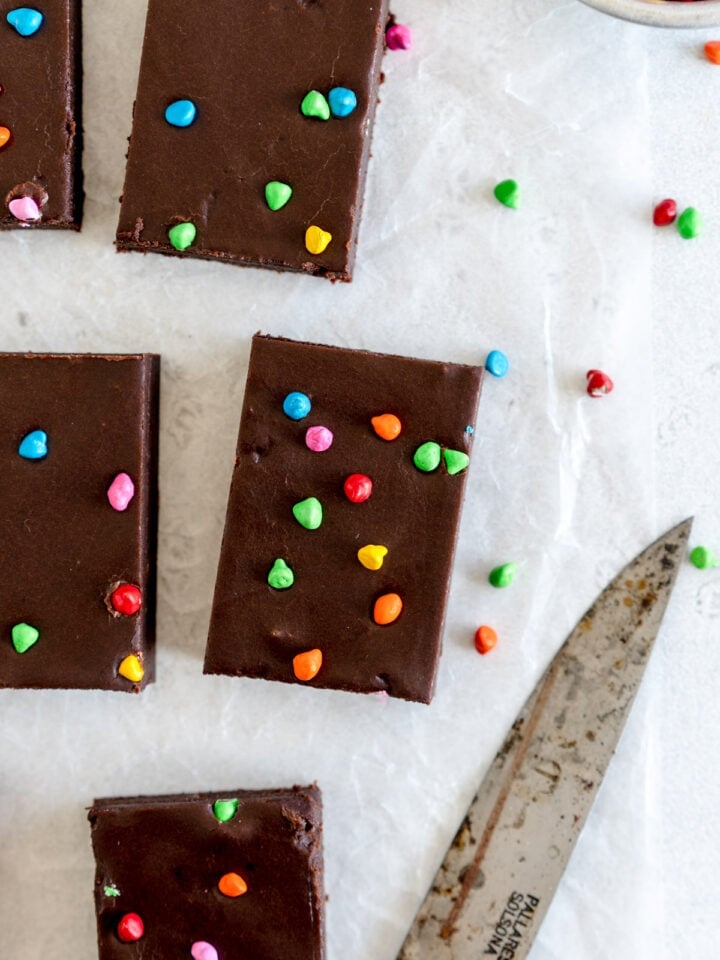
      Recipe for Louise Cake

      Filed Under: Bars and Slices, New Zealand Recipes

      Lemon Poppy Seed Loaf Cake

      slice of lemon poppy seed loaf cake

      Lemon poppy seed cake is a super easy lemon loaf cake recipe. This moist lemon cake is filled with poppy seeds and finished with a simple lemon icing.

      slice of lemon poppy seed loaf cake

      Lemon Poppy Seed Loaf Cake

      Hi hi! Just popping in to share the recipe for this super simple but crazy delicious Lemon poppy seed loaf cake. I love making loaf cakes - they are super easy, and you can dress them up or keep them simple. This is a basic lemon poppy seed loaf cake, full of lemon flavour and perfectly moist. It is finished with a punchy lemon icing which is brushed on once the cake has cooled, giving it that perfect crackly outer crust that is just so delicious.

      I have a bunch of loaf cakes and quick breads on my site - generally quick breads such as banana bread have a higher ratio of leavening to dry ingredients, while loaf cakes are more cake based batter, such as a pound cake or a carrot cake, but either name goes here.

      This easy lemon loaf cake can be made in advance - it actually tastes better the next day once it has had time to sit, and is the perfect any time cake.

      baked lemon loaf cake
      side shot baked lemon loaf

      What is a pullman pan?

      I baked this lemon poppy seed cake in a pullman pan, which is basically just a loaf pan with square sides. The one I have comes with a lid, which makes it great for making square loaves. I love how square loaf cakes look - the pullman pan makes them stand up nice and tall.

      If you don't have a pullman pan then no worries at all - a regular loaf pan will work just fine. I would use one that measures approximately 9"x5" (23cmx13cm).

      pieces of sliced lemon cake

      What is the purpose of baking at a lower temperature?

      When I was testing this lemon poppy seed loaf cake, I noticed that when I baked at a higher temperature, the centre got super domed and there was a super sharp edge to the cake with a pronounced middle. I tried two ways around this - decreasing the leavening, and decreasing the baking time.

      Reducing the leavening (baking soda and powder) gave a cake that was too dense, but reducing the baking temperature did the trick. Baking at a slightly lower temperature means that the cake bakes more slowly, giving it less of a chance for the middle of the cake to rise aggressively. I use this method in my chocolate loaf cake too, as I found baking it at 350°f / 180°c gave a large dome in the middle of the cake.

      sliced glazed lemon loaf
      glazed lemon loaf

      How to get a crack down the middle of a loaf cake

      This is a sneaky little optional trick for how to control where your loaf cake cracks. If you take a little softened butter and pipe a line down the middle of the cake, the cake will crack evenly down the middle. This works most of the time - you can see mine cracked down the middle then has a little subsidiary fracture next to it too.

      I do this with softened butter, but you can also dip either a knife or a bench scraper into some melted butter and mark a line down the middle.

      If you aren't worried about your cake cracking down the middle (I feel so ridiculous writing this haha), then feel free to leave this step off, I just thought it was a super interesting trick and wanted to share!

      front shot sliced lemon loaf

      ❤️ Made this recipe and love it? ❤️

      I would LOVE for you to leave me a review and star rating below to let me know how you liked it! Also, please make sure to tag me on Instagram!

      Answers to your baking questions

      Over the years, many of you have asked me questions about:

      • baking in grams
      • adjusting oven temperatures
      • what kind of salt to use
      • and many more!

      I've curated and answered them all for your easy reference in this frequently asked questions post!
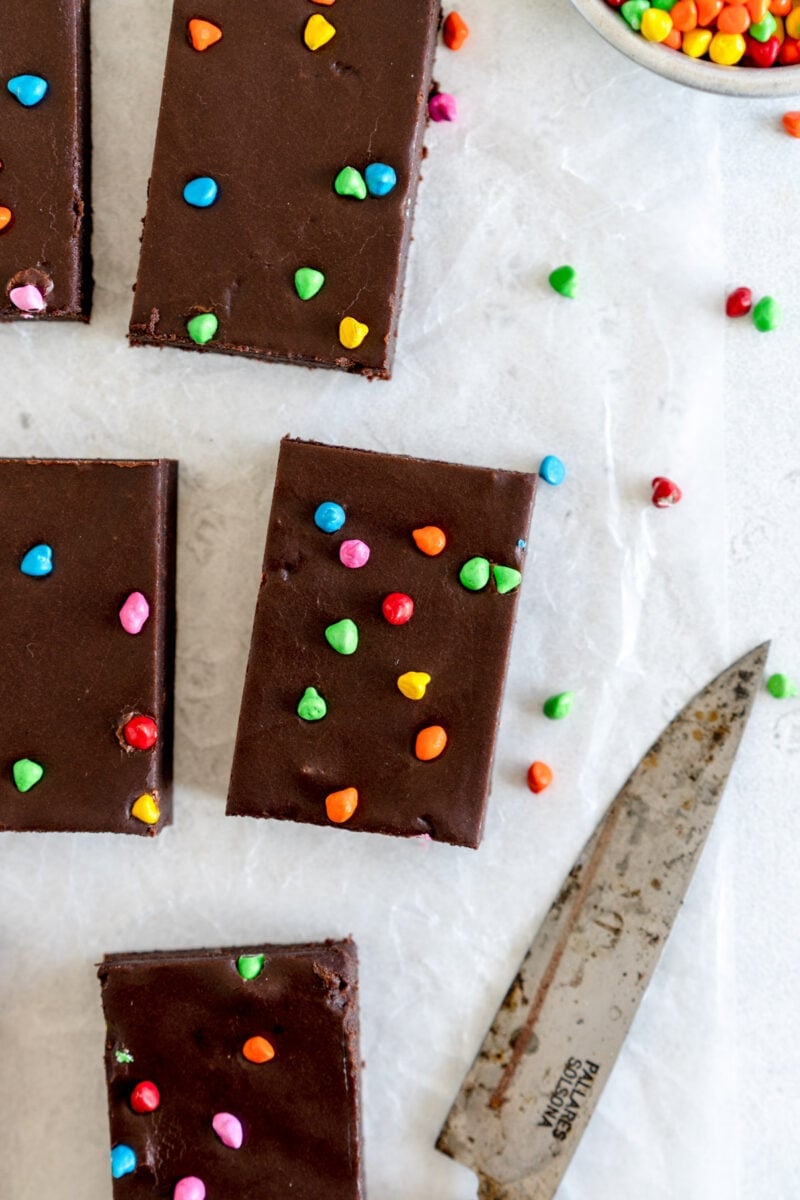
      Recipe For Lemon Poppy Seed Loaf Cake

      Filed Under: Loaf Cakes and Quickbreads

      Small Batch Tiramisu

      side shot tiramisu

      Small Batch Tiramisu is the perfect Easy Tiramisu Recipe. Small Batch Tiramisu is assembled in a loaf pan, and has layers of espresso soaked lady fingers and a zabaglione filling. This small batch dessert recipe is perfect to make ahead for any occasion.

      side shot tiramisu

      Table of contents

      • Small Batch Tiramisu Recipe
      • Components of Tiramisu
      • Small Batch Tiramisu
      • What sort of coffee is best for Tiramisu?
      • FAQ for Small Batch Tiramisu
      • For more small batch dessert recipes, check out:
      • Recipe For Small Batch Tiramisu

      Small Batch Tiramisu Recipe

      Hi hi - Just popping in here to share the recipe for this small batch tiramisu with you! I am not a fan of the images at all but wanted to get it up in time, so will re-shoot asap, but here is the recipe for now!

      I have a few tiramisu adjacent recipes on here - the most recent being this mini tiramisu cake, but I haven't gotten around to posting a plain tiramisu recipe until now.

      Tiramisu is a classic for a very good reason - it is relatively easy to make, great to make ahead and can easily be scaled to feed a crowd. Not to mention that it is incredibly delicious - you really can't go wrong with layers of espresso soaked lady fingers and a whipped cream mascarpone zabaglione filling.

      This is a small batch tiramisu recipe which I made in a loaf pan - it serves about 6 people, but you could very easily scale it to feed as many as you like. The process is super easy - you make your coffee soak, make your filling, then assemble the whole thing and layer it all up. It then has a quick spin in the fridge and it is all ready to go. Enjoy!

      tiramisu served on place

      Components of Tiramisu

      This easy Tiramisu recipe has three components:

      • Lady Fingers. Also called Savoiardi, lady fingers are Italian sponge biscuits that are a tiramisu classic. They are super dry when in the packet, but once they are quickly soaked in espresso and layered into the tiramisu they turn into an amazing sponge that holds the shape super well. I have seen them at a bunch of supermarkets here in NZ, and they were super common in the US too.
      • Espresso Kahlua Soak. The lady fingers are dunked in a super strong espresso mixture, which I sometimes add some kahlua to if I want it to be a little boozy. I made strong coffee with my aeropress, but however you choose to make it is fine. You can use decaf and leave out the alcohol if needed.
      • Mascarpone whipped cream filling. The filling for tiramisu is based on a Zabaglione, which is where you cook egg yolks and sugar (and often marsala wine, although I left that out this time) together over a double boiler to form a thick, smooth mixture, which is often called a sabayon in french. This then gets mascarpone added to it, and whipped cream folded through it. This is the tiramisu filling that gets layered with the lady fingers.
      tiramisu in loaf pan with cocoa

      Small Batch Tiramisu

      This small batch tiramisu has three layers to it - lady fingers, filling, then the cocoa. This stacking is repeated 3 times for 3 layers:

      1. 8 Lady fingers, soaked in espresso.
      2. ⅓ of the filling mixture (about 225g)
      3. A dusting of cocoa powder

      Leave the final dusting of cocoa powder off the top until just before serving. If you would like the tiramisu to be a little less cocoa heavy, you can omit the cocoa dusting between layers and just put it on the top. I like to use a good quality dutch cocoa powder.

      What sort of coffee is best for Tiramisu?

      For this small batch tiramisu, I used super strong coffee that I made in the aeropress then left to cool. You could pull a few shots of espresso or make some nespresso then water it down, or you can make a strong filter coffee.

      If you would like to add alcohol, you can substitute 80-100g of the coffee with alcohol of your choice - I use Kahlua but you could use Marsala wine or rum. You could also use a decaf coffee if you wanted to.

      It is important that when you are assembling the recipe that you only dip the lady fingers into the coffee mixture very briefly - about one second. Any longer and they will go a little soggy. As the tiramisu sits and the filling sets, the lady fingers will absorb the coffee mixture.

      FAQ for Small Batch Tiramisu

      • What tools and equipment do you use?

      You can see a full list of all the tools I use here

      • Which pan did you use?
        I assembled this tiramisu in a loaf pan, which was perfect for 3 layers of lady fingers and filling. You are welcome to use a different dish if you like - two layers would likely work really well in a 9" square pan.
      • Can tiramisu be made ahead of time?
        Yes - in fact it is best made ahead of time. I prefer to make it the night before if I can, but it needs at least 4 hours in the fridge in order to allow the lady fingers to soften and the filling to set.
      • Can I use regular sugar?
        If you like you can, but you run the risk of your zabaglione being grainy. You can either blitz your sugar to make it a little finer, or make sure that the sugar is dissolved in the egg yolk mixture. Caster sugar I have found is much more common in nz than the US - if you have a fine grained regular granulated sugar in the US that should be fine. In NZ you want to use Caster.
      • Is the mascarpone compulsory?
        Mascarpone is one of the main flavours that make up tiramisu, so is really needed for this recipe.
      sliced tiramisu

      For more small batch dessert recipes, check out:

      • Apple Crumble
      • S'mores Bars
      • Rhubarb No Bake Cheesecake

      ❤️ Made this recipe and love it? ❤️

      I would LOVE for you to leave me a review and star rating below to let me know how you liked it! Also, please make sure to tag me on Instagram!

      Answers to your baking questions

      Over the years, many of you have asked me questions about:

      • baking in grams
      • adjusting oven temperatures
      • what kind of salt to use
      • and many more!

      I've curated and answered them all for your easy reference in this frequently asked questions post!

      Recipe For Small Batch Tiramisu

      Filed Under: Desserts, Small Batch Baking

      Red Velvet Sugar Cookies

      red velvet sugar cookies on pan

      Soft and chewy red velvet sugar cookies are rolled in sprinkles for the perfect crunchy finish. These red velvet sprinkle cookies are a small batch recipe and can be rolled in any colour sprinkles you like.

      red velvet sugar cookies on pan

      Table of contents

      • Red Velvet Sugar Cookies
      • Small Batch Sugar Cookies
      • What flavour is red velvet?
      • The best sprinkles for sugar cookies
      • FAQ for Red Velvet Sugar Cookies
      • For more small batch cookie recipes, check out:
      • Recipe For Red Velvet Sugar Cookies

      Red Velvet Sugar Cookies

      Hi hi! Just popping in to share the recipe for these red velvet sugar cookies with you! These are a small batch, red velvet version of my chocolate sprinkle sugar cookies, which are super popular.

      This is a small batch, no mixer required sugar cookie recipe that uses an egg yolk, so is perfect if you have an extra one kicking around! These are a firm favourite in our house. I rolled mine in white sprinkles, but you can mix it up here and do whatever you like.

      stacked shot red velvet cookies
      close up shot of sprinkle cookies

      Small Batch Sugar Cookies

      These Small Batch Red Velvet Sugar Cookies are super easy to make, and come together in less than 10 minutes. The recipe requires no chilling, so you can have these ready to go in about half an hour. I use an electric hand mixer to make these, but you could also just use a whisk and spatula and some elbow grease.

      • Combine dry ingredients. Doing this first makes things go nice and fast. Combine the flour, cocoa baking soda and salt all together in a bowl.
      • Cream butter and sugar. We all know the drill here. Cream butter and sugar together until light and fluffy.
      • Add egg yolk and mix. This recipe uses a single egg yolk, so pop that in and quickly mix to combine.
      • Add food colouring and vanilla. I used red gel food colouring for these red velvet cookies, so incorporate that in to the mixture with the vanilla.
      • Mix in dry ingredients. Pop in your dry ingredients and mix to combine. The cocoa will turn the mixture a dark red colour.
      • Scoop out and roll. Scoop the dough out into balls, then roll each in sprinkles to generously coat. Place onto the sheet pan (don't worry about flattening them).
      • Bake. Bake the cookies until they are set around the edges. Remove from the oven and leave to cool. This recipe makes 9 cookies, so I usually bake off 6 then have the last three ready to go on a smaller pan as soon as the first batch is done.
      single shot of sprinkle sugar cookie on wire rack

      What flavour is red velvet?

      Red velvet is basically light chocolate flavour. This is a chocolate sprinkle cookie, with red food colouring added. I tested these red velvet sugar cookies with a little less cocoa and found they weren't quite what I was after, so I increased the quantity slightly. So while these aren't the reddest red velvet cookies, they are very, very good.

      The best food colouring to use for a red velvet cookie is a gel food colouring. Gel food colouring is thicker and more intense, so it will not throw off the texture of what you are making by adding too much liquid. I use americolor, but there are a lot of other options out there too. I used a tsp, feel free to dial that back or leave it out completely.

      cut shot red velvet cookies

      The best sprinkles for sugar cookies

      I rolled these red velvet sugar cookies in nonpareils, or as we call them in New Zealand, Hundreds and Thousands. I have a big bag of white (and a zillion other colours) which I used for these. Plain coloured sprinkles are available online or you can usually get them at cake supply stores.

      'Jimmies' style sprinkles also work great on these cookies, or you could roll them in a sparkly sanding sugar. Whatever you use, make sure to get a good generous coating on the outside.

      FAQ for Red Velvet Sugar Cookies

      • What tools and equipment do you use?

      You can see a full list of all the tools I use here

      • Do I have to roll these in sprinkles?
        No - they are super good rolled in regular granulated sugar before they go in the oven!
      • Can I leave out the food colouring?
        Absolutely - these will just be a chocolate sprinkle cookie, and will be so good!
      • Can I use regular cocoa?
        I have only tested this recipe with dutch process - so you are welcome to try and it should be fine, but I haven't tested this myself.
      • What cookie scoop do you use?
        I use this one. You can also weigh out your dough balls - they will be approximately 50g each.
      • What brand of food colouring do you use?
        I use americolor gel food colouring, which is a great intense food colouring!
      sprinkle cookies on rack

      For more small batch cookie recipes, check out:

      • Small Batch Chocolate Chip Cookies
      • Oatmeal Chocolate Chip Cookies
      • Egg Yolk Chocolate Chip Cookies

      ❤️ Made this recipe and love it? ❤️

      I would LOVE for you to leave me a review and star rating below to let me know how you liked it! Also, please make sure to tag me on Instagram!

      Answers to your baking questions

      Over the years, many of you have asked me questions about:

      • baking in grams
      • adjusting oven temperatures
      • what kind of salt to use
      • and many more!

      I've curated and answered them all for your easy reference in this frequently asked questions post!

      Recipe For Red Velvet Sugar Cookies

      Filed Under: Cookies, Holiday Cookies, Small Batch Baking, Sugar Cookies

      Small Batch Dinner Rolls

      edge shot baked dinner roll

      Small batch dinner rolls are super easy to make and a great no mixer dinner roll recipe. This Tangzhong based dough can be made by hand. This small batch bread recipe makes nine dinner rolls.

      side shot of dinner roll

      Small Batch Dinner Roll Recipe

      Hi hi! Just popping in to share the recipe for these no mixer, small batch dinner rolls. I have a bunch of bread roll recipes on my site - these garlic butter dinner rolls, and these burger buns, which have a super versatile dough that can be used for iced buns and garlic knots.

      However, both those recipes need a mixer, and I wanted to develop a small batch baking recipe that ticked all the boxes - super soft small batch dinner rolls, that are just as soft as those recipes made in a mixer. I know not everyone has access to a stand mixer, and sometimes it is so nice to just make things by hand and from scratch.

      These dinner rolls are super soft, super squishy, and just so, so good. I have made them a bunch of times over the last few weeks, testing different recipe variations, and I can confirm that this is a keeper of a recipe - a great one to have in your back pocket if you don't have a mixer, or are end up somewhere without one and want a dinner roll fix.


      unbaked dinner rolls
      top down baked dinner rolls

      How to make no mixer dinner rolls

      This small batch dinner roll recipe is made by hand - so you have to play the role of the mixer here. It is not a no knead recipe. Someone has to develop the gluten to get that perfectly soft dinner roll, and if it is not the mixer, it is your arms. All up there is about 10 minutes of kneading in this recipe.

      I love making things by hand, particularly bread, as it allows you to see all the different phases that the dough goes through as it develops. Even if you do have a mixer I encourage you to try some bread recipes by hand occasionally as it is so interesting to see all the things that happen that we might sometimes miss in the mixer!

      • Make the Tangzhong. This dough is tangzhong based, which involves cooking flour and water together to form a roux.
      • Add remaining ingredients. Put the tangzhong into a bowl and add cold milk to help cool down the mixture. Add all the remaining ingredients except for the butter. Mix to form a shaggy dough which is starting to show structure.
      • Autolyse. This isn't a long autolyse - it is really just a quick rest for the dough to help the flour to hydrate. Leave the bowl covered to sit for 10 minutes, just to help the dough start to build strength.
      • Add the butter. Add the soft butter and mix it in.
      • Knead the dough. This part takes about 10 minutes and will be a bit of a process. The dough will look super sloppy to start with, then will come together and develop strength. A bench scraper / dough knife is helpful here to help scoop up any butter that is on your surface and add back into the dough until you finish kneading.
      • Leave to rise. Place the dough into a bowl and cover, then leave to rise. This takes anywhere between 1 to 1 ½ hours depending on the environment and how warm your kitchen is.
      • Shape the buns. Divide and shape the buns, and snuggle them into the pan, cover, and leave to rise again until perfectly puffy.
      • Bake. Egg wash the buns, then bake until golden brown. Leave to cool slightly and enjoy!
      dinner rolls ready for the oven

      The role of Tangzhong in bread dough

      The Tangzhong method is an Asian Technique, and involves cooking part of the flour and water in a bread recipe to form a thick paste, or a roux. The process of making the Tangzhong gelatanises some of the starch in the flour. This means the flour is able to absorb a lot more water, and also holds onto it throughout the dough making process. This gives an incredibly soft bread which stays soft a lot longer than other bread does. Tangzhong (which is a Chinese word) is made by cooking the liquid and flour together, while the Yudane method (which is Japanese) involves adding boiling liquid to the flour and leaving it to set overnight. The benefit of using a roux means that the bread dough can stay 'lean' - so very little added fat etc but still stay extremely tender and soft.

      I used this method recently in my hot cross bun recipe and loved how stretchy and smooth it made the dough, and had been meaning to work on a burger bun recipe for a while, so here we are! The Tangzhong means the bread stays soft for a long time, which means these keep and freeze super well

      edge shot baked dinner roll

      How to shape dinner rolls

      Shaping dinner rolls or bread rolls can take a little bit of practice to get the hang of it, but it is super fun to do once you do get it nailed. Here is how I do it.

      • Divide your dough up into however many pieces you are working with.
      • Lightly flour. I prefer to use a tiny bit of bench flour just to help make the rolls nice and tight.
      • Working with one piece of dough at a time, flatten the dough and then shape it into a ball by tucking all the edges into the middle.
      • Turn the piece of dough over so the seam is on the bottom, and using your hand as a claw shape, using a cupping motion, roll the dough into a tight ball.
      • Repeat with the other pieces of dough, then place under a piece of plastic wrap to rest.
      • Give them a quick re roll - this tightens up the dough ball and gives the rolls a nice shape.
      • If any bubbles show up on the surface when the dough is proofing, lightly pop them with a skewer to let the air out before they go into the oven.

      How can you tell when bread dough is properly proofed?

      It is important that when you make bread you go by how the dough is behaving and not just the time in the recipe. While the recipe is a good general guide, the starting temperature of your dough and also the weather and temperature of your room can affect how fast it rises.

      The best way to tell that dough for these small batch dinner rolls is ready to bake is to poke it gently with your finger. If it springs back straight away it is not yet ready. If your finger leaves a small indentation which springs back slightly, then you know that it is ready to bake. Remember to preheat your oven about 30 minutes before you think your dough will be ready in order to give it time to properly preheat. There is nothing worse than realising your buns are ready to bake and having a cold oven. If this does happen though just pop them into the fridge so that they don't over proof while you preheat your oven.

      baked dinner rolls

      What happens if my rolls are under / over proofed?

      Sometimes this happens, and it's a huge bummer. Either you leave them proofing too long, or you forget about your buns rising, and they over proof. This means the yeast produces all the gas it is capable of making while doing the second proof and it has nothing to give in the oven. It's sad but it happens.

      If you have over proofed your buns, they will probably deflate while egg washing them. Then, over proofed dough doesn't do much in the oven as there is no gas to rise the bread. They should still taste fine they might just be a bit saggy.

      If you under proof your bread, it will not spring up properly in the oven. This will mean your rolls are a little dense. Make sure to do the poke test when testing for proofing - if the dough bounces straight back, it is not yet risen enough.

      Substituting active dry yeast for instant yeast in a recipe.

      This recipe uses instant yeast, which does not need to be activated. However if you only have active dry then you can easily substitute that, you will just need to take a quick extra step to activate. What you need to do is pop the warm tangzhong in your stand mixer bowl as usual, then add the milk and sugar. If I am activating the yeast I prefer to use room temperature or slightly lukewarm milk instead of cold. Stir around then leave to sit for 5-10 minutes until foamy. Then proceed with the rest of the recipe!

      rolls ready to proof
      side image dinner roll buns

      How to make dinner rolls ahead of time

      If you wanted to prepare these dinner rolls ahead, there are a few ways to do so. To make the dinner rolls from start to finish takes about four hours with two room temperature rises, so make sure you account for that if you are doing it all in one go.

      • Make the dough ahead of time. You can do the first rest overnight and then shape and bake the dinner rolls the next day. To do this, make the dough, place in the bowl you are using to rise it, then leave it to sit on the counter for 30 minutes. This helps to kick start the rise. Once the 30 minutes are up, transfer to the fridge for at least a few hours, or an overnight rest. The dough will need a little longer for the second rise time to account for the colder dough temperature so make sure that you account for that.
      • Bake the rolls ahead of time and re warm. These rolls are best eaten on the day that they are made. If you wanted to make them ahead of time and eat later in the day, you can bake as directed (do not brush them with butter or finish with salt yet), then when you are ready to eat, cover the pan and warm the rolls in a 350°f / 180°c oven for about 10 minutes. Remove and finish with butter and salt.
      pan of baked dinner rolls

      Can dinner rolls be frozen?

      I haven't tried freezing these small batch dinner rolls, but I have frozen a lot of my other bread recipes once baked and they freeze perfectly. To freeze, place the rolls in an airtight container or ziploc bag and freeze for up to 2 months. Defrost at room temperature then refresh in the oven or microwave before eating. I often prefer to toast rolls that I have defrosted, just to help them feel extra fresh.

      Can this dinner roll recipe be scaled?

      Yes, this recipe scales super well - you could double it and bake the rolls in a 9x13" pan. If you wanted to make the rolls a different size, weigh the dough and divide by the quantity of rolls you want. This will give you an idea of what weight to make the balls of dough.

      If you wanted to bake these separately so they are more of a burger bun shape than dinner rolls all squished together, space out evenly on a lined baking sheet.

      This dough is super versatile, so scale as you like!

      single dinner roll

      FAQ for Small Batch Dinner Rolls

      • What tools and equipment do you use?

      You can see a full list of all the tools I use here

      • Which pan did you use?
        I made these in an 8" square pan, lined with parchment paper.
      • Can this recipe be made in a stand mixer?
        Yes, if you want to make the recipe in a stand mixer, just follow the instructions (you can skip the 5 minute rest period), then mix on medium speed using the dough hook until the dough is smooth and developed, 10-12 minutes.
      • Is the milk powder in the recipe compulsory?
        If you don't have milk powder, you can just leave it out. It helps contribute to the softness of the dough, but if you don't have any, then it will still be ok. I use whole milk powder but skim works too.
      • What is bread flour?
        Bread flour is a higher protein flour, often called high grade or strong flour. It helps with gluten development, to make these dinner rolls soft and squishy but the dough strong enough to work with. It is important to use the right kind of flour for these dinner rolls as a flour with lower protein development will not be strong enough.
      corner shot baked dinner rolls
      side shot baked dinner rolls

      For more small batch recipes, check out:

      • Mini Chocolate Layer Cake
      • Small Batch Cheese Buns
      • Small Batch Chocolate Chip Cookies

      ❤️ Made this recipe and love it? ❤️

      I would LOVE for you to leave me a review and star rating below to let me know how you liked it! Also, please make sure to tag me on Instagram!

      Answers to your baking questions

      Over the years, many of you have asked me questions about:

      • baking in grams
      • adjusting oven temperatures
      • what kind of salt to use
      • and many more!

      I've curated and answered them all for your easy reference in this frequently asked questions post!

      Recipe For Small Batch Dinner Rolls

      Filed Under: Breads, Buns and Rolls, Small Batch Baking Tagged With: Egg Free

      Caramel Brownie Bars

      top down shot of brownie caramel slice

      Caramel Brownies are a super easy small batch bar recipe. It has a small batch homemade brownie base, topped with a chewy brown butter caramel layer filled with peanuts, and finished with a smooth chocolate topping.

      pieces of brownie slice on sheet pan

      Hi! Just popping in to share this recipe for your holiday baking / any time baking consideration - Caramel Brownies!

      This recipe is a bit of a mash up of two of my favourite homemade bar recipes. I took this peanut butter brownies recipe and switched out the filling with the brown butter caramel from my caramel slice recipe. I added some peanuts into the brown butter caramel for a brownie snickers vibe, and finished the whole thing off with my favourite smooth chocolate topping. Making caramel from scratch can take a bit of practice but once you have it nailed, it is so fun and satisfying!

      These caramel brownies are super easy to make and are the perfect twist on a homemade brownie recipe. They need some time to allow the brownie to cool before adding the caramel and then letting it set, but the payoff is absolutely worth it.

      I quite often double the base, split it between two loaf pans, then make a pan of these and a pan of either the peanut butter brownie bars or the squiggle slice, which use the same base too. Next up might have to be a peppermint brownie bar!

      I love this brownie caramel slice so much and I hope that you do too!

      Table of contents

      • Caramel Brownie Bars
      • Tips and Tricks for Caramel Brownies
      • How to make homemade salted caramel
      • Why are there two quantities of butter in the recipe?
      • Frequently Asked Questions
      • Recipe For Brownie Caramel Slice


      slices of brownie caramel slice
      brownie slice with peanut caramel

      Caramel Brownie Bars

      These caramel brownies have a few components, which take a wee bit of putting together, but the workload can easily be split up over a day or two.

      • Small Batch Chocolate Brownie Base: This is a favourite recipe of mine and one that I use all the time. It bakes in about 20 minutes, then you leave it to cool. I like to underbake mine just a touch, so that it is nice and fudgy. If it has puffed up too much when baking, you can gently and carefully press down on it with a glass or a spatula.
      • Brown Butter Peanut Caramel layer. This is a super chewy, delicious caramel that I stirred some roasted, salted peanuts through when it came off the heat. This caramel is easy to make - you heat everything together in a pot until it reaches temperature. A candy thermometer is a must here.
      • Smooth Chocolate Topping. I use this in a lot of recipes - it first showed up on my peppermint slice, but it is super easy. Melting chocolate together with just a touch of a neutral oil such as grapeseed or canola makes it super smooth and really easy to cut.
      close up peanut brownie caramel slice

      Tips and Tricks for Caramel Brownies

      I use this 1 ¼ lb loaf pan to make all my small batch bar recipes. It has fairly straight sides and is wide enough that you can easily smooth things in. I love it so much that I have two! They are a great investment - I use mine for so many things - rhubarb cheesecake, passionfruit slice, s'mores bars, small batch brownies, and squiggle slice. If you are in NZ, I have seen them sold a few places, including here, or Moore Wilson's stocks them too.

      The pan size I used was 9"x5"x2.75" (23x13x7), and you want to use something with nice straight sides to make removing the bars nice and easy.

      How to store caramel brownies

      I store anything with a chocolate top on them like these caramel brownies in the fridge in an airtight container. I prefer to cut it all at once and then pop it into the container. This makes removing to serve much easier as I like to let it stand for a little bit at room temperature just to let the caramel soften a touch.

      How to scale a loaf pan recipe

      The great thing about a loaf pan recipe is that it is very easy to scale. If you would like to scale this recipe, you can use my handy recipe scaling tool - just input the size of the pan that the recipe calls for (9x5 rectangle) and then the pan size you have, and the calculator will spit out the conversions for you. If you would like to double the recipe (to save any weird egg calculations), you could use an 8" square pan and it would be a little thicker, or a 9" pan and it would be a little thinner than what is shown here.

      Breaking up the workload

      This recipe has a few components, so if you like, you can break up the workload. It cuts best when it has had at least a few hours in the fridge for the brownie layer to chill and the caramel layer to cool completely.

      I often make the brownie the night before, then add the caramel and the chocolate topping the next day. Alternatively, you can do the brownie and caramel part in one day, then add the chocolate topping the next. If the bars are nicely chilled, the chocolate topping layer will not need long to set, and you can pop it in the freezer to speed up this process too.

      You can also pop the whole thing together in one day (which is what I most commonly do) - just make sure you account for time for the brownie layer to cool and then for the caramel to chill.

      How to get a clean cut on brownies

      I use a really sharp knife - I don't usually heat it as it will smudge the chocolate topping, but if you are having a hard time cutting, you can dip your knife in hot water then dry off before cutting the caramel slice. I like to cut it into 6 slices first, then cut each of those into 2 or 3 depending on what size pieces you would like.

      slices of brownie caramel slice
      peanut caramel

      How to make homemade salted caramel

      The brown butter salted caramel layer in this recipe is one of my favourite things. It is easy to make, silky, chewy, and has an incredible depth of flavour from the brown butter.

      It can seem a little intimidating to make (boiling sugar always is), but remember that when you are making it, if at any time you are worried things are going too fast, just pull it off the heat and keep stirring, and it will be ok.

      This recipe uses golden syrup and condensed milk, which also make it a little easier to make as opposed to a dry caramel.

      • Brown the butter. I get you to use a tiny bit more than you will need, just to make sure that you don't get caught short. Brown the butter and leave to cool slightly until you are ready to make your caramel.
      • Combine all ingredients. Everything except for the vanilla and the salt goes into a heavy bottomed saucepan, and is cooked together. Have your salt and vanilla ready to go, and your brownie base ready and waiting to have the caramel added to it.
      • Cook the caramel. This is the important step - you need to make sure that the caramel reaches the correct temperature of 220f° / 105°c in order to set. Keep stirring continuously, and if you are worried it is getting too hot, briefly move off the heat and then put back on again.
      • Add Vanilla, salt, and peanuts. Remove the caramel from the heat and add in the remaining ingredients. Be careful as it may bubble when you add the vanilla. Stir well to combine.
      • Transfer to the pan. Add the caramel on top of the cooled chocolate brownie layer.
      • Leave to cool. You want to leave the caramel to cool until all the heat has gone out of it and it has had a chance to set before adding the chocolate topping layer. This should take a few hours, or you can leave it overnight if you like.

      Why are there two quantities of butter in the recipe?

      Different butters will have different moisture levels, which affects the yield of brown butter. American style butter have a higher water content, so will produce less brown butter when the water is cooked off.

      European or New Zealand style butter, which is higher in fat than American butter, will have less water that needs cooking off, so you will end up with a higher yield of brown butter.

      The quantity of the butter in the recipe is important here, so the best way to measure it is by using a scale and weighing before and after browning, rather than giving an initial quantity of butter and only using that measurement You start with an initial quantity of butter - in this case 100g, and then cook it down. You then re-measure the weight of the brown butter, and use 70g of that in your caramel recipe. I have accounted for the moisture loss from the initial quantity of brown butter in the recipe.

      caramel bars on sheet pan

      Frequently Asked Questions

      • What tools and equipment do you use?
        You can see a full list of all the tools I use here
      • Can this recipe be made Gluten Free?
        I haven't tried it, but in the past brownies have been fine made with a gluten free 1:1 flour blend. The rest of the recipe is gluten free.
      • I have a nut allergy. Can I leave out the peanuts?
        Yes, just omit them from the caramel.
      • I don't have a candy thermometer. Can I make this without one?
        I haven't tried this. If the caramel does not get hot enough, then it will not set properly and it will be too soft. I really recommend a candy thermometer - it is a great thing to have! I use this one but there are a lot of other cheaper digital ones around too!
      • Why is my caramel layer soft?
        If your caramel layer is soft, it was not cooked enough. It will still be delicious, but next time make sure you use a candy thermometer to cook your caramel. Make sure the probe of the thermometer is in the middle of the caramel. If it is too close to the bottom, you will get a false reading.
      • Can I use a different kind of nut?
        Yes - use whatever you like here. This would be delicious made with hazelnuts! I prefer to use roasted, salted nuts to make things easy.

      pieces of brownie slice on pan with wax paper

      For more brownie recipes, check out:

      • brownie cookies on sheet pan
        Brookies
      • cheesecake brownies on wax paper
        Cheesecake Brownies
      • I Finally Found It - My Forever Brownie Recipe
      • stacked up brownies on tray
        Small Batch Dairy Free Brownies

      ❤️ Made this recipe and love it? ❤️

      I would LOVE for you to leave me a review and star rating below to let me know how you liked it! Also, please make sure to tag me on Instagram!

      Answers to your baking questions

      Over the years, many of you have asked me questions about:

      • baking in grams
      • adjusting oven temperatures
      • what kind of salt to use
      • and many more!

      I've curated and answered them all for your easy reference in this frequently asked questions post!

      Recipe For Brownie Caramel Slice

      Filed Under: Bars and Slices, Brownies, Small Batch Baking

      Moist Olive Oil Chocolate Loaf Cake

      side cut shot chocolate loaf cake

      This homemade chocolate loaf cake has terrific texture and moistness because it's made with olive oil, rather than butter. Top with chocolate frosting (optional)!

      corner shot chocolate loaf cake

      Hi hi! Just popping in to share the recipe for this chocolate loaf cake! I have been sitting on this one for a while and I am so, so excited to share it with you! This easy olive oil chocolate loaf cake recipe is the perfect back pocket recipe. It comes together quickly with little effort, and is dairy free, so a great option to make if you are catering for guests with dietary requirements. This chocolate loaf cake has a super simple dairy free chocolate icing, but can also be finished with a a quick sprinkle of powdered sugar.

      I love making loaf cakes - they have the vibes of a larger cake but are so simple and often don't need anything else, although I do love a quick and easy glaze or even just a dust of powdered sugar.

      The chocolate icing is a nod to my childhood - it is a dairy free version of my brownie frosting, and it's just the best thing ever. You could add a little peppermint extract for a fun holiday twist, or some holiday sprinkles too if you like.

      This chocolate loaf cake is perfect for whipping up when you need something quick and easy, and is great to make ahead. I love it so much and I hope you do too! If you are looking for another good dairy free loaf cake, my Carrot Cake Loaf is perfect, and if you don't need Dairy free, my lemon poppyseed loaf cake is for you!

      side shot chocolate loaf cake
      chocolate loaf cake with frosting

      How to make Chocolate Loaf Cake

      This dairy free chocolate loaf cake recipe is super easy, and comes together in just a couple of steps.

      • Whisk together dry ingredients - flour, brown sugar and white sugar (for texture and taste), baking powder, baking soda.
      • Whisk together wet ingredients - eggs, olive oil, and plant based milk.
      • Combine wet and dry ingredients and mix well to combine.
      • Bloom the cocoa powder by making a paste with the boiling water, then add to the mixture and whisk to combine. This is the secret trick to a super rich chocolate loaf cake.
      • Add the bloomed cocoa powder to the batter and mix to incorporate.
      • Transfer the whole thing to the lined loaf pan and bake until the centre springs back and a skewer comes out clean. Leave to cool.
      • Finish with the chocolate icing - whisk together all ingredients until smooth then spread over the cake and finish with sprinkles.

      The secret to a super rich chocolate loaf cake

      Blooming the cocoa in boiling water before adding to the batter is an easy trick which gives you a super rich chocolate cake. I use this technique in my mini chocolate layer cake too. To bloom the cocoa you combine the cocoa and boiling water to form a paste, then stir this into the batter. This helps to release the flavour from the cocoa and gives you a super rich chocolate cake. Lots of cakes will add boiling water to the recipe - I took this one step further by making a separate paste from the cocoa. It really does make a massive difference to the flavour of the cake with very little effort.

      The importance of oven temperature in a recipe

      You will notice that the bake temperature of this chocolate loaf cake is 325°f / 160°c, which is lower than the 'regular' 350°f / 180°c that most cakes are baked at. I played around with this when I was testing as I found that the loaf cake was doming too much in the middle of the pan and the edges were getting dry before the middle could cook, which gave a differentiation in texture. Dropping the oven temperature slightly meant that the cake didn't dome as much in the oven, which makes it a much nicer shape and much easier to add the dairy free chocolate frosting.

      This is another reason why it is super important to make sure that your oven is properly calibrated. I highly recommend having an oven thermometer in there to check the accuracy.

      top shot frosted loaf cake

      Can You use olive oil in baking?

      Using oil in cakes provides a different kind of moisture (oil is liquid at room temperature while butter is not), and chocolate cakes made with butter can be on the drier side. An oil based chocolate cake is going to have a better texture, moistness, and overall crumb. This also makes it really easy to keep dairy free.

      side cut shot chocolate loaf cake

      FAQ for Chocolate Loaf Cake

      • What tools and equipment do you use?
        You can see a full list of all the tools I use here
      • Which pan did you use?
        I made this chocolate loaf cake in a 1lb loaf pan which is 8.5"x4.5" (21.5x11.5cm). You could make it in something larger - the loaf will just be a slightly different shape.
      • Can this cake be made ahead?
        This chocolate loaf cake recipe is super delicious and moist, so it is perfect to make ahead (up to a day). I would leave off the frosting until the day you serve, and store it in an airtight container at room temperature.
      • Can I make this not dairy free?
        Yes! Just use regular milk in both the cake and the frosting.
      • Is it possible to make this cake gluten / egg free?
        I haven't tried either sorry!
      • Can chocolate loaf cake be frozen?
        Yes, this will work great. I often double recipes like this (I have two loaf pans), and once cool, wrap one tightly in plastic wrap and freeze.
      • Can this loaf cake be made into muffins?
        That should work just fine if you wanted to make dairy free chocolate cupcakes - divide the mixture evenly between lined muffin pans and bake - check after about 15 minutes for doneness. I am not 100% sure on how many it would make, but usually aim for filling the liners ¾ full.
      corner shot chocolate loaf
      top down baked chocolate loaf cake

      ❤️ Made this recipe and love it? ❤️

      I would LOVE for you to leave me a review and star rating below to let me know how you liked it! Also, please make sure to tag me on Instagram!

      Answers to your baking questions

      Over the years, many of you have asked me questions about:

      • baking in grams
      • adjusting oven temperatures
      • what kind of salt to use
      • and many more!

      I've curated and answered them all for your easy reference in this frequently asked questions post!

      Recipe For Chocolate Loaf Cake

      Filed Under: Loaf Cakes and Quickbreads Tagged With: Dairy Free

      Mini Olive Oil Chocolate Cake (Small Batch)

      slices of chocolate cake with chocolate frosting

      Follow these simple steps at home to make this easy homemade recipe for moist mini chocolate cake with olive oil, espresso powder and Dutch process cocoa powder. The small batch chocolate cake bakes in an eighth sheet pan, and yields 8 servings. Frost the mini cake with chocolate Swiss meringue buttercream, and sprinkles to finish.

      side slice of chocolate sheet cake

      Hi hi! Just popping in to share the recipe for this mini chocolate cake with you. This is another in the series of mini sheet cakes I have been making - so far I have made this tiramisu cake, brown butter carrot cake and mini funfetti cake, and I have a few more up my sleeve!

      This easy chocolate olive oil cake recipe comes together super quickly and bakes in an eighth sheet pan for a mini chocolate sheet cake. It is topped with a smooth and silky small batch chocolate Swiss meringue buttercream. This cake is super versatile - you can mix and match flavours however you like!

      For more small batch recipes I have a whole category of things to choose from: Small Batch Baking Ideas

      baked chocolate cake
      cake with chocolate frosting

      What I learnt during recipe testing

      This mini chocolate cake is super easy to make - you just combine the dry ingredients, combine the wet ingredients, then mix them together and transfer to your cake pan.

      The ingredient list is made up of the usual chocolate cake suspects - flour, sugar, milk, cocoa, baking powder, and oil for moisture. I much prefer an oil based chocolate cake over a butter one, as I find that the texture is much nicer and the cake doesn't dry out.

      This recipe is baked at 325°f / 160°f as opposed to the standard 350°f / 180°c you usually see in baking recipes. When I was testing it, I found that baking at a higher temperature caused the cake to have a larger dome in the middle, which isn't ideal if you are making a sheet cake. Ideally you want it to bake up nice and flat.

      After playing around with all the variables (bake temp, leavening agent, sugar, etc), I found that reducing the baking temperature was the most effective way to prevent this.

      This is why it is so important to make sure that your oven is calibrated / that you have a thermometer in there. Some recipes aren't too sensitive, but for others it will make a huge difference.

      sliced chocolate cake with chocolate frosting

      Baking in an Eighth sheet pan

      I made this mini funfetti cake in an eighth sheet pan, which is half the size of a quarter sheet pan. They are super fun to bake in - I own a bunch. I love them for small batches of bread rolls, or also for mini sheet cakes such as this recipe. They line perfectly with quarter sheet pan sized parchment (one of my favourite things), and are just so, so cute. I use them all the time for toasting nuts or baking up a single cookie.

      If you can't get hold of an eighth sheet pan, this mini funfetti cake will also work perfectly made in a 9"x5" (23x13cm) loaf pan. You will just need to watch the bake time!

      top down image of chocolate cake with frosting

      What is Dutch Process Cocoa and why is it important?

      Dutch cocoa and regular aren't necessarily interchangeable due to the nature of them. Regular cocoa is acidic whereas dutch process cocoa has been put through an alkalising process, which means that it reacts differently in baking.

      Regular, acidic cocoa powder will react more strongly with baking soda (which is basic), so the cake will behave differently. This is important to note when baking, especially when swapping in Dutch cocoa for a recipe which calls for regular cocoa - it may affect the rise.

      I have only tested this mini chocolate cake recipe with dutch cocoa. It uses both baking powder and soda so you are welcome to try regular cocoa, I just don't know how you would get on. It is certainly worth tracking down Dutch cocoa if you can - I love the intensity and richness it gives to chocolate cake.

      ❤️ Made this recipe and love it? ❤️

      I would LOVE for you to leave me a review and star rating below to let me know how you liked it! Also, please make sure to tag me on Instagram!

      Answers to your baking questions

      Over the years, many of you have asked me questions about:

      • baking in grams
      • adjusting oven temperatures
      • what kind of salt to use
      • and many more!

      I've curated and answered them all for your easy reference in this frequently asked questions post!
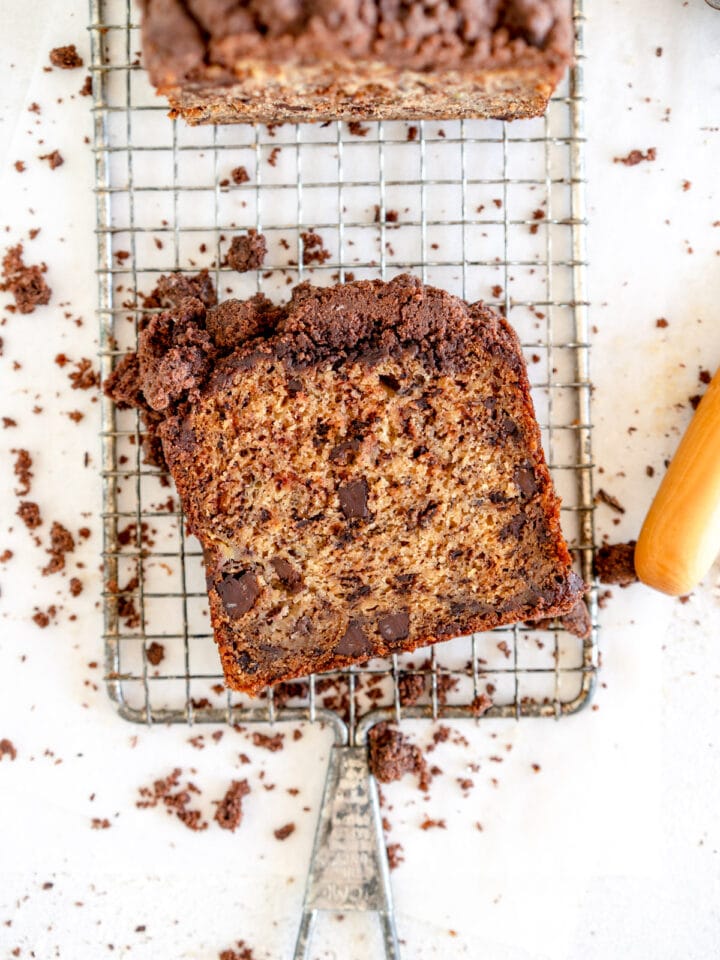
      Filed Under: Cakes, Sheet and Snack Cakes, Small Batch Baking

      How to Make Caramel-Pecan Nut Sticky Buns

      Homemade sticky buns are a delicious twist on classic cinnamon rolls! If you haven't had sticky buns before, they're a cinnamon roll baked onto a bed of caramel sauce and pecan nuts, and then inverted when served, so you get a whole lot of gooey pecan caramel goodness on the tops of your cinnamon buns! Overnight option included in the instructions!

      Thank you so much to Heilala Vanilla for sponsoring this post. All opinions are my own. Thank you for supporting the businesses who support Cloudy Kitchen!

      You can use the code CLOUDY20 to get 20% off everything on Heilala Vanilla!

      Hi hi! Just popping in to share this sticky buns recipe! I'm a tiny bit mad at myself that I haven't made these before now, but we finally got there.

      If you haven't had sticky buns before (the US version is different to what we have in NZ), they are a cinnamon roll baked onto a bed of caramel and pecans, and then inverted when served, so you get a whole lot of gooey pecan caramel goodness on the tops of your cinnamon buns. The best thing ever.

      I made a vanilla golden syrup caramel to go on the bottom of these caramel pecan sticky buns, and it's just so, so good. They are seriously sticky and the slightly toasty flavour that comes from the toasted pecans and the golden syrup is incredible alongside the soft vanilla bean dough.

      I have a whole blog section on making your buns if you're looking for ideas for homemade buns and rolls!

      Components

      Homemade sticky buns are a super simple but very delicious twist on a cinnamon roll - they basically are a cinnamon roll, baked on a bed of caramel and pecans.

      • Sticky Pecan Topping. This is the 'topping' as the buns get inverted to serve, but is what goes down into the pan first. I made mine with a golden syrup vanilla bean caramel and some toasted pecans.
      • Brioche Dough. I used my go-to brioche dough here, loading it up with vanilla bean paste. It is rolled out thin and filled with cinnamon roll filling. I also use this same dough for my brown butter cinnamon rolls and my baked apple cinnamon rolls.
      • Cinnamon Filling. I used a blend of cinnamon and cardamom here, but you are welcome to only use cinnamon if you like.

      How to make Sticky Buns

      • Make the brioche base. I used my regular brioche dough for this sticky bun recipe - super easy and quick to make. I use a stand mixer but if you needed to make it by hand, you can follow my recipe for small batch cinnamon rolls and double the dough quantity then follow this recipe as written.
      • Toast the Pecans. Toasting your nuts is a super easy step that makes a massive difference flavour wise. I prefer to toast mine in the oven just at 350°f / 180°c for 10-12 minutes. Toasting them in the oven means that they get more evenly toasted.
      • Make the caramel for sticky buns. This is a super easy caramel - stir together brown sugar, golden syrup and butter, boil together briefly, then transfer to the bottom of the pan and sprinkle over the pecans.
      • Assemble the cinnamon rolls. The topping needs a tiny bit of time to cool, so while that is happening, pop together your cinnamon rolls. Cut them into even pieces and arrange on top of the caramel sauce layer. I like to arrange them so all the seams are facing the same way.
      • Leave to rise. Leave the whole thing to rise until the cinnamon rolls are doubled in size and super puffy.
      • Bake. Pop the sticky buns into the oven and bake until the buns are golden on top. If you are worried they are browning too fast before the caramel is done, you can tent the tops with some foil.
      • Rest. Once the sticky buns come out of the oven, leave them to rest for 5-10 minutes just to let the caramel cool slightly.
      • Invert. Flip the whole pan over onto a serving platter or a baking sheet, so they are now sitting caramel side up. Serve slightly warm or at room temperature.

      Vanilla Bean Brioche with Heilala Vanilla

      If you've been here for a while you will know that I have a long term obsession with all things vanilla bean paste - specifically, Heilala Vanilla's Vanilla Bean Paste. I popped it into all the components of these Pecan Sticky Buns - a vanilla bean infused brioche dough, flecks of vanilla bean in the caramel base, and a little bit in the cinnamon brown sugar filling. It's a holy grail product for me and the company is just so incredible - I am so proud to have worked with them for as long as I have, and their vanilla is hands down the best i've ever used.

      Heilala makes all kinds of amazing products, but the one I always have on hand is their Double Fold Vanilla Bean Paste. It is called double fold as it is double the strength of their single fold, so double the concentration of the vanilla seeds, and the extract base is also double the strength. A jar of their double fold contains the equivalent of 300 vanilla beans, with half a teaspoon of it being equivalent to one vanilla bean. A jar lasts me close to a year with extremely heavy use. This is what is used in high end pastry kitchens which is another thing I love about Heilala - you can get the exact same product that pastry professionals choose to use in their restaurants.

      A jar of vanilla bean paste a great baking investment but would also make an amazing gift if you've got someone in your life who loves baking but can be a little hard to buy for - a big jar of vanilla is the perfect present. Heilala has given me a discount code to use in their store - CLOUDY25 will get you 25% off their products. I'm hooked and I know you will be too.

      For Black Friday, Heilala is running an incredible deal on their holiday pack which includes a jar of the double fold paste, a jar of their classic vanilla paste, some vanilla paste samples, and a super cute funfetti cupcake pan and pink tea towel. Pop on over here to check it out.

      How to make brioche ahead of time

      I prefer to do a cold rise on my brioche dough whenever I can. Even if it just a couple of hours in the fridge on the day that I want to use it makes a difference.

      The advantage of working with a cold dough is that it is super easy to roll out, which makes getting a nice neat roll on your cinnamon rolls super easy.

      Doing a cold rise also means that the buns can be made on your schedule - the cold temperature slows down the yeast, meaning that you aren't tied to a certain time to assemble your homemade sticky buns.


      FAQ for Pecan Sticky Buns

      What tools and equipment do you use?
      You can see a full list of all the tools I use here

      Which pan did you use?
      I baked my sticky buns in this 9x13" pan, but you can use anything you like with a similar size. Just make sure it has higher sides to hold in the gooey pecan mix.

      What is a good substitute for Golden Syrup?
      You can use honey if you can't find golden syrup. It's worth getting some if you can though - you can get it online if you can't find it in store. I use it in my caramel slice and ginger crunch recipe as well as my pecan pie so lots of ways to use it up 🙂

      Can Sticky Buns be made by hand?
      Yes - just double this recipe for the dough then proceed as written.

      Can the pecans be substituted?
      Yes, you can use toasted chopped walnuts or other nuts if you like.

      How do I scale this recipe for a smaller batch?
      Halve the recipe and make in a 8" square pan. Roll the dough to a 14" (35cm) square and cut into 9 rolls. Watch the rise time and bake time carefully!

      How do you store sticky buns?
      Sticky buns are best eaten on the day that they are made, but if you are eating them a day or so after, I prefer to refresh in the microwave briefly. Store in an airtight container at room temperature.

      ❤️ Made this recipe and love it? ❤️

      I would LOVE for you to leave me a review and star rating below to let me know how you liked it! Also, please make sure to tag me on Instagram!

      Answers to your baking questions

      Over the years, many of you have asked me questions about:

      • baking in grams
      • adjusting oven temperatures
      • what kind of salt to use
      • and many more!

      I've curated and answered them all for your easy reference in this frequently asked questions post!

      Recipe For Pecan Sticky Buns

      Filed Under: Breads, Brioche, Cinnamon Rolls

      Pesto Dinner Rolls

      pesto dinner rolls in pan

      Pesto dinner rolls are super soft and an easy dinner roll recipe to make. They have a soft pesto dough, and are finished with pesto and parmesan cheese. These cheesy dinner rolls are a super delicious twist on a regular dinner roll recipe!

      pesto dinner rolls in pan

      Pesto Dinner Rolls

      Hi hi! Just popping in to share this recipe for Pesto dinner rolls. These are a super fun twist on a regular dinner roll recipe. They have a super soft dough that is made with pesto instead of butter or oil. This gives the dinner rolls an amazing pesto flavour that will go along with anything. These soft dinner rolls are finished with a pesto oil mixture and loaded up with freshly grated parmesan cheese. They are great as a holiday dinner side, or they would also be amazing just as a side dish to a meal.

      rolls waiting to rise
      risen pesto rolls

      How to make Pesto Dinner rolls

      These pesto dinner rolls are super easy to make. I like to do both rises at room temperature. However, you are welcome to do the first one overnight if you like (see faq for tips)

      • Make the Tangzhong. This is made by cooking down a portion of the flour and milk in the recipe to form a paste. This is the base of the dough.
      • Add the remaining ingredients. Everything all goes in the mixing bowl here, rather than developing the dough and adding in the fat at the end.
      • Mix the dough. This pesto dinner roll dough has a fairly long mix time. This is important to help develop the dough and give strength.
      • Leave to rise. Pop the dough into a warm spot and leave to rise until doubled in size and puffy. I like to oil both the bowl and the dough slightly to prevent it from drying out.
      • Shape into rolls. Divide up the dough by weighing it and dividing the dough weight by the number of rolls you would like (in this case we are doing 12). Shape each into a ball, then leave to rest and shape again. This step helps make sure that the rolls are shaped nice and tightly.
      • Leave for second proof. The dinner rolls then go through a second rising period, where they will get puffy and soft.
      • Bake the dinner rolls. Brush the dinner rolls with milk (this helps browning), then bake until golden brown. You can also measure the internal temperature of the dinner rolls with a thermometer to double check the doneness. 190°f / 90°c is a good temperature to shoot for.
      • Finish with pesto. The dinner rolls get brushed with a coating of pesto and olive oil just to really drive home the pesto flavour, then finished with parmesan cheese. The best.
      baked pesto dinner rolls

      The role of Tangzhong in bread dough

      The Tangzhong method is an Asian Technique, and involves cooking part of the flour and water in a bread recipe to form a thick paste, or a roux. The process of making the Tangzhong gelatanises some of the starch in the flour. This means the flour is able to absorb a lot more water, and also holds onto it throughout the dough making process. This gives an incredibly soft bread which stays soft a lot longer than other bread does. Tangzhong (which is a Chinese word) is made by cooking the liquid and flour together, while the Yudane method (which is Japanese) involves adding boiling liquid to the flour and leaving it to set overnight. The benefit of using a roux means that the bread dough can stay 'lean' - so very little added fat etc but still stay extremely tender and soft.

      This technique works particularly well for this dinner roll recipe - the lack of butter or lots of eggs in the dough really allows the pesto flavour to shine through, and also makes these a great option for making ahead as they stay fresh for much longer than traditional dinner rolls.

      What is Bread Flour?

      Bread flour is a high protein flour, often made from a harder variety of wheat than all purpose.. A leaner dough like this Pesto dinner roll dough relies on the higer protein to help with gluten development in the dough. I have tried this dough with an all-purpose flour before and it didn't go well, so it really needs the extra strength from the bread flour. Bread flour is often called 'high grade' or strong flour in other places.

      If you are unable to get bread flour where you are, you can add in a little gluten flour with your dry ingredients. I haven't tried this myself but I know that others have in the past and it has worked for them!

      pesto bread dough
      angle shot of risen pesto buns

      Adding pesto to bread dough

      These pesto dinner rolls use an adapted version of my super soft burger bun dough, but with pesto in them instead of the butter. Adding pesto gives an incredible flavour to the dough - it's a super easy switch, but makes such a massive difference flavour wise!

      The pesto is added in with the rest of the ingredients into the dough. It provides the oil that the dough needs to develop the amazing texture that is has, but also gives it a beautiful green colour and basil flavour.

      How to tell if your buns are properly proofed

      It is important that when you make bread you go by how the dough is behaving and not just the time in the recipe. While the recipe is a good general guide, the starting temperature of your dough and also the weather and temperature of your room can affect how fast it rises.

      The best way to tell that dough is ready to bake is to poke it gently with your finger. If it springs back straight away it is not yet ready. If your finger leaves a small indentation which springs back slightly, then you know that it is ready to bake. Remember to preheat your oven about 30 minutes before you think your dough will be ready in order to give it time to properly preheat. There is nothing worse than realising your buns are ready to bake and having a cold oven. If this does happen though just pop them into the fridge so that they don't over proof while you preheat your oven.

      close up shot of pesto dinner rolls

      Signs of over proofed bread

      Sometimes this happens, and it's a huge bummer. Either you leave them proofing too long, or you forget about your buns rising, and they over proof. This means the yeast produces all the gas it is capable of making while doing the second proof and it has nothing to give in the oven. It's sad but it happens.

      If you have over proofed your buns, they will probably deflate while egg washing them. Then, over proofed dough doesn't do much in the oven as there is no gas to rise the bread. They should still taste fine they might just be a bit saggy.

      This is why it is super important to go by how your dough is looking, rather than the rise time in the recipe. So many factors impact the rate at which your dough rises - the season, temperature of your kitchen, ingredient temperature etc. Go by how the dough is looking rather than the rise time in the recipe.

      edge shot pesto dinner rolls
      corner shot risen rolls

      Tips for making Dinner Rolls ahead of time

      These pesto dinner rolls are great to make ahead of time. There are a few ways that you can do this, but the way that I prefer is to fully bake them, but not add the pesto and oil mixture on the end. Instead, I leave them to cool, then refresh in a 350°f / 180°c oven for 5-10 minutes until warmed through. Then I add the pesto and oil mix and finish with the cheese and the salt.

      Because this dough is super soft it refreshes super well. You want to add the olive oil and pesto mixture close to serving to avoid any sogginess. If you are only planning on eating half and saving the rest, only finish half and store the leftovers in an airtight container at room temperature.

      baked pesto dinner rolls

      Substituting active dry yeast for instant yeast

      This recipe uses Instant yeast, which does not need to be activated. If you only have active dry that is just fine - the quantity is the same.

      However, you will need to activate the active dry yeast in the liquid before proceeding with the recipe. To do this, make the Tangzhong then add the cold milk, and give it a mix to ensure the mixture is lukewarm.

      Add the sugar and the yeast to the milk tangzhong mixture, then leave to sit for 10-15 minutes until foamy. This kick starts the active dry yeast. You can then proceed with the rest of the recipe.

      pesto dinner rolls ready to serve

      FAQ for

      • What tools and equipment do you use?
        You can see a full list of all the tools I use here
      • Which pan did you use?
        I baked these in a 9x13" pan with high sides, which I find helps to keep them all snuggled in.
      • Can the first rise be done overnight?
        Yes, if you like the first rise for these pesto dinner rolls can be done overnight. Just know that they will need significantly more rise time the next day after shaping. I like to leave the dough out on the counter for 30 minutes or so before putting it into the fridge. This helps to kick start the rising process.
      • Will the hot Tangzhong not kill the yeast?
        The cold milk is there to bring the mixture down to lukewarm, so it is cool enough to add the yeast.
      • Why did my rolls deflate slightly when they came out of the oven?
        The dough for these pesto dinner rolls is super soft, so sometimes when it comes out of the oven, it deflates slightly around the edges of the rolls. This is completely normal and just from the nature of the dough.
      • Can this recipe by made by hand?
        I haven't tried making this specific dough by hand, but you can certainly try. It will be quite the workout as the dough is quite soft and sticky. If you can, use a mixer.
      • Is the milk powder compulsary?
        No - if you don't have it, just leave it out.
      corner shot of baked bread rolls

      ❤️ Made this recipe and love it? ❤️

      I would LOVE for you to leave me a review and star rating below to let me know how you liked it! Also, please make sure to tag me on Instagram!

      Answers to your baking questions

      Over the years, many of you have asked me questions about:

      • baking in grams
      • adjusting oven temperatures
      • what kind of salt to use
      • and many more!

      I've curated and answered them all for your easy reference in this frequently asked questions post!

      Recipe For Pesto Dinner Rolls

      Filed Under: Breads, Buns and Rolls

      How to make Flaky Apple Hand Pies

      baked apple hand pies

      This apple hand pie recipe has a unique twist to it - it has a sharp cheddar pie dough. Adding finely grated cheese to pie crust is an amazing way to add a super subtle but crazy delicious twist on a classic apple pie. Lattice instructions plus visual guidance included!

      shot of apple hand pies on parchment paper

      Hi hi! Just popping in to share the recipe for these Apple Hand Pies! Hand pies are basically a mini, handheld pie, and I love making them. These apple hand pies have an easy precooked apple pie filling, which I also use in my easy apple pie recipe, and a sharp cheddar pie dough, which is a super fun twist on a regular homemade pie dough recipe. Just trust me on this one.

      These apple hand pies are super flaky, and can be finished any way that you like. I went for a braided lattice of varying thicknesses, which I think looks so cute all baked up! There is a visual guide in the post but feel free to keep it super simple too.

      These are different from a turnover in that they have a top and bottom, whereas a turnover is made from one piece of pastry that is folded (or turned) over to form the shape. This recipe makes 10 super delicious apple hand pies but you can absolutely scale the recipe too.

      corner shot of baked pie
      apple hand pies ready for the oven.

      Apple Cheddar Pie

      This apple hand pie recipe has a slightly unique twist to it - it has a sharp cheddar pie dough. Adding cheese to pie crust is an amazing way to add a super subtle but crazy delicious flavour to your crust. It is as simple as adding some freshly grated sharp cheese such as a sharp cheddar or an aged havarti to your pie dough when you combine the dry ingredients.

      The cheese needs to be finely grated so that it incorporates into the pie dough, but it adds an amazing depth of flavour. You may be thinking to yourself 'apple and cheese?! no thank you!' but I just need you to trust me on this one. It's so, so good. The slightly savoury flaky pie crust against the sweet precooked apple filling and then the crunchy sugar on the top is just the best thing ever. I hope you love it as much as I do!

      When you are choosing a cheese to use in your cheesy pie dough, you want to go for something firm and aged. You could use a sharp cheddar, or I made these with an aged havarti and it was amazing. You could also incorporate some parmesan, or something like a manchego would be so good too.

      Make sure that it is freshly grated. I use the smaller holes on a box grater to grate the cheese just as I am combining the dry ingredients for the pie.

      braided apple hand pie

      Precooked Apple Pie Filling

      These apple hand pies use a precooked apple pie filling, which I borrowed from this apple butterscotch pie that comes from Erin's Pie Book. Using a precooked filling is super beneficial for a few reasons. It takes the guesswork out of the filling. By precooking your filling, you know how thick it is going to be before it goes into the oven, so you don't have to worry about it not thickening up enough in the oven.

      This is especially important for something like a hand pie. It also stops it going everywhere in the oven. The precooking of the apple means that the filling is easy to work with, and is a necessary step for a hand pie, as these only bake for 25 minutes, which would not be enough time to cook the apple filling and also get a beautiful flaky crust. The precooked filling is super easy to make:

      • Combine melted butter, apples, brown sugar, cinnamon and salt in a pan and cook until the sugar and butter have melted and the apples have started to soften.
      • While that is cooking, combine the flour and sugar in a bowl. This removes any lumps from the flour to prevent any lumps in your filling.
      • Add the flour mixture to the pot and cook until it thickens.
      • Transfer to a pan and leave to cool until you are ready to assemble. To cool it down fast, spread it onto a sheet pan, which increases the surface area and helps it to cool quickly.
      braided apple hand pie

      How to make easy to work with Pie Dough

      I use a little tip that my baking bestie Erin Mcdowell taught me - to laminate my pie dough after making it but before rolling it out for use. What this does it pops a few layers within the pie dough. This makes it homogenous and easy to work with but also still nice and flaky. So you get the best of both worlds - flaky AF pie dough which is super easy to work with. This is especially helpful for something like these apple hand pies which have a more intricate lattice. Here's how you do this:

      • Make your pie dough - For this recipe I make the dough then form it into a rectangle. Then I wrap tightly in plastic and chill for only an hour. This gives the butter time to chill down enough that it won't melt everywhere when you roll it out.
      • Roll out and perform turn 1 - Roll the dough into a large rectangle on a lightly floured surface. Then brush off any excess flour and perform a letter fold - where you fold it like a business letter.
      • Perform turns 2 and 3 - Repeat the process again two more times. Your dough should be super homogenous at this point!
      • Shape - At this point I shape the dough into the general shape I am going to need when rolling it out. In the case of these apple hand pies I just shape into a big rectangle and then wrap tightly.
      • Chill again - Either chill your dough for at least 2 hours or overnight, or freeze for another time.

      See all the tips and tricks for pie crust in my post: How to make Pie Crust.


      cut shot apple pie
      baked apple hand pies

      How to Lattice a Hand Pie

      There are a few ways to finish off these apple hand pies. I went for the super extra method because I have zero chill, but you can do whatever you like. I suggest cutting all your bottom pieces at once and then cutting all your top strips so you can just sit and assemble the pies.

      A super cute way to lattice these apple hand pies is use strips of varying widths. This way you can trim edges and use up excess dough as you need without it being super obvious. Here's how I latticed these apple hand pies:

      • Lay down all the strips going in one direction. They will extend over the edges, if any are super long then you can trim them and keep the strip for another lattice.
      • Add the strips going the opposite direction one at a time. To do this you lift up every second strip - so 1,3,5,7, then lay down your strip. Fold them back down then fold up the alternate strips - 2,4,6,8 etc.
      • Once your lattice is done, carefully trim the edges with a sharp knife so that they are nice and clean, then transfer the apple hand pie to a baking sheet.

      If you didn't want to do an intricate lattice you could just make super wide strips and use those to cover the pie.

      apple pie filling on pastry
      lattice pie strips on filling
      latticed hand pie
      trimmed down hand pie

      Tips for a clean lattice on a pie

      There are a few things that really make a difference when making a nice, clean lattice on a pie. They may all seem like small details, but when you are making something fiddly like a pie lattice the details really matter.

      • Keep things cold. If you're worried your pie dough is getting too hard to work with, just throw it into the fridge for a bit to let it firm up.
      • Use a ruler. I use a ruler and a pastry wheel when I am cutting pie dough, and it really helps to keep things nice and tidy.
      • Have a plan. Work out your basic design before you start - with these I kept them all with an angled lattice. You can pick a general theme and go from there, it just helps to have an idea in your head.
      • Make all your decorations first. I always make the braids first as they need 'fresh' dough (they aren't as clean made from scraps), and put them on a parchment lined tray and store in the fridge until I need them.


      How to use up extra pie dough scraps

      With any pie, but particularly one with lots of different pieces of dough like these apple hand pies, you will have scraps leftover. These are perfectly fine to use. They may not be quite as flaky as the dough that has only been rolled out once, but they work just fine.

      To use up pie scraps, just gather them up as you have them, and gently press them back together. Wrap them in plastic and pop into the fridge for about 15 minutes to firm up slightly, then you can roll them out and use them.

      This apple hand pie recipe makes 10 hand pies, but you will have a tiny bit of filling and pastry leftover. If you wanted to, you could probably get an extra two pies out of the leftovers.

      corner baked shot of apple hand pies

      FAQ for Apple Hand Pies

      What tools and equipment do you use?
      You can see a full list of all the tools I use here

      Can Apple Hand Pies be made ahead of time?
      I haven't tried it, but you can likely freeze these before you bake them. Alternatively you can assemble them and leave lightly covered in the fridge overnight and bake off the next day.

      What are the best apples for making apple pie?
      I used a mix here of braeburn and granny smith. I like the variation in flavour and texture. Just grab a mix of things that you like.

      How big should I roll the piece of dough used for the bottom rectangles of the hand pies?
      I roll it out so that it is at least 20cmx35cm (about 8"x14"). This way you can cut two rows of five rectangles measuring 7cmx10cm (about 3"x4"). Aim to go slightly larger than that though so you can get a nice clean rectangle that is 20cmx35cm and cut your pieces from that.

      How do you stop apple hand pies from going soggy
      Store apple hand pies in an airtight container either in the fridge or at room temperature. They will soften over time, but to refresh and re crisp up the pastry, refresh them in a 350°f / 180°c oven for about 15 minutes to reheat and crisp up the pastry.

      braided pie apple

      ❤️ Made this recipe and love it? ❤️

      I would LOVE for you to leave me a review and star rating below to let me know how you liked it! Also, please make sure to tag me on Instagram!

      Answers to your baking questions

      Over the years, many of you have asked me questions about:

      • baking in grams
      • adjusting oven temperatures
      • what kind of salt to use
      • and many more!

      I've curated and answered them all for your easy reference in this frequently asked questions post!

      Recipe For Apple Hand Pies

      Filed Under: Fruit Pies, Hand Pies, Pies Tagged With: Egg Free

      Small Batch Cinnamon Rolls

      corner cut shot of cinnamon rolls

      Small Batch Cinnamon Rolls are made by hand and do not need a mixer. This small batch brioche recipe is easy and versatile. These no mixer cinnamon rolls are finished off with a cream cheese cinnamon roll frosting.

      corner cut shot of cinnamon rolls

      Table of contents

      • Small Batch Cinnamon Roll Recipe
      • How to make Small Batch Cinnamon Rolls
      • How to make Brioche without a mixer
      • How to substitute active dry yeast for Instant yeast
      • The best way to cut cinnamon rolls
      • The Benefit of using chilled dough in cinnamon rolls
      • FAQ for Small Batch Cinnamon Rolls
      • For more Small Batch Recipes, Check Out:
      • Recipe For Small Batch Cinnamon Rolls

      Small Batch Cinnamon Roll Recipe

      Hi hi! Just popping in to FINALLY share the recipe for these small batch cinnamon rolls, that don't need a mixer! I worked on this recipe all the way back in April / May, and have finally gotten around to popping it on my website.

      I have wanted to make a smaller batch of cinnamon rolls for a while now, and also wanted a dough that does not use a mixer, as I know not everyone has access to one. This recipe can easily be made with a mixer too, but I like having a dough up my sleeve that I can make if I have limited equipment, and this is the one. I've used it for rhubarb buns, these cinnamon bun twists, and doughnuts, and it works amazingly for all of them. It's super simple to make, and incredibly versatile.

      These small batch cinnamon rolls are soft and squishy, and filled with a brown sugar cinnamon filling (all good, standard cinnamon roll things). This recipe makes 9 smaller cinnamon rolls, which to me, is the perfect amount. (if you want more, this recipe is great for that!)

      single cinnamon roll ready to be baked
      frosted buns in pan

      How to make Small Batch Cinnamon Rolls

      These are super easy to make, and the dough can either be done the night before or earlier in the day.

      • Make the cinnamon roll dough. You can do this either by hand or with a mixer, and this step can be done the night before if you need. Leave to rise in the fridge for a few hours, or overnight.
      • Roll out the dough. The dough is rolled out into a square, then spread with the brown sugar cinnamon roll filling.
      • Assemble the cinnamon rolls. Roll your dough up into a log, then cut up into rolls and arrange in your pan.
      • Second rise. Leave the rolls to proof for a second time, and preheat the oven.
      • Bake. Bake the rolls until they are golden brown, then leave to hang out for a little bit while you prepare the frosting.
      • Finish with Frosting. I used a standard cream cheese frosting here as it is my favourite, but you can really go for whatever you like here icing wise.
      cinnamon rolls in pan

      How to make Brioche without a mixer

      The base of these cinnamon rolls is a small batch, no mixer brioche. It is super easy to make. I have a whole bunch of recipes coming up using it which I am so excited to share!

      • Combine dry ingredients - This brioche is pretty standard when it comes to ingredients. All-purpose flour, instant yeast, sugar, salt.
      • Add wet ingredients - One egg, lightly beaten, and some milk goes in. The butter is incorporated later.
      • Bring together - You want to develop some strength in the dough here. This kneading process will take about 8-10 minutes. Bring the dough together in your bowl then transfer to a work surface and work the dough until it is soft and smooth, and when you press lightly with your finger, the indentation springs back.
      • Add the butter - The butter is added to the dough. This step will get super sloppy. Don't worry though. It will come together. Keep kneading and mixing until it comes together. Then give a few more minutes of mixing just to ensure it is mixed in. You want it to pass the window pane test, or to bounce back nicely when you press with a finger.
      • Leave to rise - This dough for this purpose works best with a cold rise. I give it some time on the counter first to kick start the rise and then pop it into the fridge.

      A plastic or metal bench scraper will be super helpful when you are incorporating the butter in. Just keep scraping up the excess butter and squishing it onto the dough. It will come together.


      cinnamon rolls waiting to be baked
      baked small batch cinnamon rolls

      How to substitute active dry yeast for Instant yeast

      This recipe uses instant yeast, which means that there is no need to activate it and it can be added to the brioche dough along with the rest of the dry ingredients. If you only have access to active dry yeast, that is fine, and you can sub them 1:1, except you will need to activate the yeast first. This is easy to do, you just have to change the method slightly.

      To do this, just combine the lukewarm milk, active dry yeast, and the sugar from the recipe in your mixing bowl. Leave it to sit until foamy (about 10 minutes), then proceed with the rest of the recipe. If you want to read more about yeast, this article is great! I really like this brand of instant yeast as it is specially formulated to cope with enriched dough, but any instant or active dry yeast will do the trick.

      The best way to cut cinnamon rolls

      There are a bunch of different ways to cut cinnamon rolls. Some people swear by dental floss, which gives you clean lines but won't work if you have anything extra in your rolls like nuts etc. Cutting with dental floss does work great for a super soft dough, and I use that technique in my cheese bun recipe.

      Others use a sharp chef's knife. I prefer to work with chilled dough and just use a sharp bread knife to cut the rolls. Make sure you're doing as few 'saws' as possible, but I find with a chef's knife you're more likely to squish the roll of dough.

      Remember that it also doesn't really matter. When the dough rises it often sorts itself out shape wise, and if your rolls are a little wonky they are still going to taste great.

      I do prefer to cut the dough into sections first and then divide each section up, as I find that this is the best way to get even heights on your rolls. You could also cut one the right size then use that as a template for cutting. You do you here.

      frosted rolls with cream cheese

      The Benefit of using chilled dough in cinnamon rolls

      I prefer a cold fridge rise when I am making anything shaped using brioche (buns, twists, babka etc). There are a few reasons for this:

      • Cold dough is easier to roll out. Often with recipes such as these small batch cinnamon rolls, you need to roll the dough relatively thin. It is much easier to do this neatly if your dough is cold to start with. You end up with cleaner edges and more evenly rolled dough.
      • Doing the first rise in the fridge allows you to be flexible. Yeast doesn't wait for anyone when it is rising, which means you can be tied to the schedule of the dough. However there is a way around this - by using the fridge for your first rise. This allows you to be totally flexible with your timing, and also allows you to make the dough ahead of time.
      • Clean cuts on your cinnamon rolls. Often in a recipe if you are using room temperature dough I will get you to chill the log of dough before cutting. This helps firm up the dough and the filling a little, allowing for cleaner cuts. Starting with chilled dough eliminates this step.
      baked small batch cinnamon rolls
      baked cinnamon rolls with cream cheese frosting

      FAQ for Small Batch Cinnamon Rolls

      • What tools and equipment do you use?
        You can see a full list of all the tools I use here
      • Which pan did you use?
        I used an 8" pan which I lined with parchment paper. You can use whatever sized pan you would like here, but I found they snuggled together well in the 8" pan.
      • Can I use my mixer to make this recipe?
        Yes! The process is exactly the same as my regular brioche recipe
      • Help - my dough didn't rise!
        Because of the smaller quantity of dough, it can be hard to tell if the dough has risen. I like to take a photo of it before I start rising it just to compare as it sometimes doesn't look like it has risen loads.
      • Can I do the second rise overnight?
        I get asked this often, and have tried it myself, and honestly, I don't rate it. I find that the filling often leaks out overnight, then you have to wait for the rolls to finish rising before you bake them. In my opinion you are better to have the dough and filling ready to go and then just allow an extra 15 minutes to assemble the rolls the morning that you want to bake them.
      • Can these be frozen?
        If you want to freeze these small batch cinnamon rolls your best bet is to slightly under bake them, then freeze them before you frost them. Then you can defrost and refresh in the oven.
      • How can these be made on the same day?
        Making these on the same day works just fine - you just have to make sure that you allow enough time for the dough to rise in the fridge. It needs 2 ½ - 3 hours.
      • Help - my dough is super sloppy?!
        It takes a bit for the butter to incorporate. Someone once described this recipe as 'a wild ride on the bench'. It will get there I promise - just keep working it. The butter will incorporate.
      close up of roll with cream cheese frosting

      For more Small Batch Recipes, Check Out:

      • Small Batch Chocolate Chip Cookies
      • Mini Funfetti Cake
      • Squiggle Slice

      ❤️ Made this recipe and love it? ❤️

      I would LOVE for you to leave me a review and star rating below to let me know how you liked it! Also, please make sure to tag me on Instagram!

      Answers to your baking questions

      Over the years, many of you have asked me questions about:

      • baking in grams
      • adjusting oven temperatures
      • what kind of salt to use
      • and many more!

      I've curated and answered them all for your easy reference in this frequently asked questions post!

      Recipe For Small Batch Cinnamon Rolls

      Filed Under: Base Recipes, Brioche, Cinnamon Rolls, Small Batch Baking

      Perfectly Chewy Chocolate Chip M&M Cookies

      m&m chocolate chip cookies

      These chocolate chip M&M cookies are heaven: super soft, perfectly chewy, and jammed full of M&M candies. The cookies have a terrific chew - the result of using two egg yolks in the cookie batter rather than a whole egg. This is a small batch baking recipe that makes 12 cookies, and no stand mixer is needed. Best of all, the cookie dough requires no chill time in the refrigerator, and can be baked right away!

      close up cookie image

      Hi hi! Just popping in to share the recipe for these m&m cookies- this is about as halloween as you're going to get from me. I've never really been into lots of spooky baking, but I am a massive fan of adding candy to cookies, and I LOVE m&ms.

      As a baking blogger, I already have an extensive cookie recipe collection, filled with a ton of chocolate chip cookie recipes, but these these chocolate chip M&M cookies are super delicious. I made them a whole bunch this week, tweaking the recipe to get it right.

      These m&m chocolate chip cookies are a small batch chocolate chip cookie recipe. They have an egg yolk base (like my egg yolk chocolate chip cookies) using two egg yolks rather than a whole egg, which gives the base of the cookie a super delicious chew and texture. These cookies use a melted butter base, but if you wanted to brown the butter to add extra depth of flavour like I do in my brown butter chocolate chip cookies you could too.

      They are absolutely jammed with m&ms and I popped some chopped dark chocolate in there too, just to balance things out. These disappeared very quickly in my house - I love them and I hope you do too! If you would like a cookie bar version of these chocolate chip M&M cookies, check out my M&M cookie bar recipe! If you're after a larger scale batch of cookies, you can either scale this recipe, or add candy to my Perfect chocolate chip cookies. If you still have yolks to use, I have a whole section of recipes to use up egg yolks on my site!


      chocolate chip cookies on pan
      angle shot m&m cookies

      Why I love these m&m cookies

      • No mixer required. I just use a bowl, a whisk and a spatula to make these cookies (and a scale of course). I love using my stand mixer but I also love the simplicity of a recipe just made by hand in a bowl.
      • Super Chewy Chocolate Chip Cookies. This recipe uses two egg yolks rather than a single egg. The fat from the yolk provides amazing moisture to the recipe. It also gives the chocolate chip cookie base an incredible chewy texture. These are great to make if you have any extra egg yolks on hand!
      • Small Batch Recipe. This m&m cookie recipe only makes 12 cookies - you can bake 6 off immediately and keep the rest for later, or do them all at once!
      • No Chill Time. I know lots of cookies ask you to chill the dough (I have a few which do for a specific reason), but this recipe can be baked off straight away. I know I'm impatient sometimes and just want a quick cookie recipe - this is it!
      corner image of m&m cookies

      How to make m&m cookies

      These small batch m&m cookies are super quick to make. Here's how you do it.

      • Mix together wet ingredients. In this recipe (and lots of recipes) sugar is classed as a wet ingredient. Pop it into a mixing bowl and add the sugars and the egg yolks, and mix it all together until thickened slightly.
      • Add dry ingredients. This recipe is super simple - just uses All-purpose flour, baking powder, and baking soda. Pop those in an incorporate with a spatula. Don't over mix here. You will mix the dough more when you incorporate the mix ins, so it is ok to have a little flour remaining.
      • Add your mix-ins. Add the m&ms and chopped chocolate and stir to incorporate.
      • Scoop your cookies. I like to use a cookie scoop to portion out my dough.
      • Bake. There is no chill time in this m&m cookie recipe, so you can just pop them straight into the oven!
      scooped cookie dough

      The Role of Chill Time in Cookies

      When I was making these m&m cookies, I ended up testing a whole range of chill times with the cookies. Please excuse the phone image below (I just grabbed it from my IG stories), but I think it is so interesting to see how the chill time in a recipe affects the final outcome.

      Multiple tests and cross tests

      You can see that I tested a whole bunch of chill times and sugar and butter ratios within the m&m cookies, just to get the perfect balance. The cookie in this recipe is the one that is pictured bottom right. You are welcome to tweak the recipe to your liking to achieve your favourite texture of cookie! (I just ask that if you do and you have a disaster, please don't blame my recipe! haha).

      The difference between chilling and not chilling

      I often find that in terms of spread, there is a big difference between no chill and a 30 minute chill, especially when the recipe uses melted butter like this one. The time in the fridge gives the dough a chance to firm up a little. This means that the rate of spread is much slower than a cookie which is still at room temperature.

      The difference between a 30 minute chill and an hour chill is not as significant. However I did notice a few differences - mainly that the cookie remained slightly thicker, whereas with the 30 minute chill time the mix ins stuck out a little on the top of the cookie.

      I then tweaked again to see if I could eliminate the chill time in the recipe all together by reducing the quantity of butter by 30g and having quite a large brown:white sugar ratio within the mix.

      The final outcome

      I know some people swear by chilling their cookie dough, but I am impatient. Often I decide that I want cookies, and that they need to happen immediately. For this reason, I like to have a few recipes up my sleeve for instant cookies. A few of my other recipes do use a chill time. I find that the best way to make those and still have instant cookies is to freeze some of the dough so you always have it on hand.

      Why the ratio of brown to white sugar is important in cookies.

      You will see from the image above that I was also playing around with the ratio of brown to white sugar in the recipe. The most important thing that this highlights is how important it is to use a scale when you are baking. I was only altering the quantity of butter and sugar by 10 or 20g, and it was enough to make a huge difference.

      Typically when I am testing, I tweak the quantity of brown and white sugar in recipes to control the spread of the cookie. In general, brown sugar gives a thicker, chewier cookie, while white sugar gives spread and the crunchy edges. Combined with the quantity of butter, these are the factors that I usually change.

      The advantage of testing both chill time and the butter / sugar ratio within the same batch is that it saves you making a whole new batch each time. I just mix up one batch of dough, bake some off straight away, and leave some to chill and then bake those too. You can also play around with different oven temperatures for bake time here too, meaning you can get up to 6 tests just from the same batch of cookies (for example no chill, 350°f bake temp, no chill, 375°f bake temp, 30 min chill, 350°f bake temp, 30 min chill 375°f bake temp etc).

      Can Chocolate Chip M&M Cookies be made ahead?

      I haven't tried freezing the dough but this dough formula is incredibly similar to other recipes which freeze great. To freeze cookie dough, freeze it on a lined sheet pan until solid then transfer to a ziploc bag. You can also freeze in a container with the lid off and pop a lid onto the container once frozen.

      To see all my tips on freezing cookie dough and baking from frozen, check out my post: How to freeze cookie dough

      stacked cookies
      side image of m&m cookies

      How to make cookies thinner

      I wanted to include this as I am often asked what my recipe process is / how to change the texture of a cookie etc and because I tested all the variations, I can confidently tell you how these m&m cookies will turn out if you change the factors. Here's what you can tweak for your very own recipe testing if you like:

      • Super thin and crispy. Increase the butter quantity to 120g, and use 55g of white sugar and 110g brown sugar. Bake immediately. They will spread loads on the pan. Check after 10 minutes bake time.
      • Still thin but with a little thickness in the centre. Same as above, but chill the dough for 30 minutes to an hour before baking.
      • Slightly chewier, slightly thinner than the recipe as written: Use the same sugar quantities as the recipe in this post (45g white and 120g brown), but increase butter quantity to 120g. Bake straight away for thinner cookies, and chill dough for 30 minutes to an hour for slightly thicker.
      • Slightly Thicker cookies with no chill. Make the recipe as written. I found this was fairly similar to the 120g butter with a 30 minute chill time recipe, but spread just a touch less. For me this is perfect, although it is good to know if I want it just a tiny bit thinner, that increasing the butter quantity and chilling the dough works great too.

      For all my tips and tricks on how to make the best chocolate chip cookies, check out my ultimate guide: How to make perfect chocolate chip cookies

      mm-cookies-on-pan

      Frequently Asked Questions

      What tools and equipment do you use?
      You can see a full list of all the tools I use here

      Can these cookies be made ahead?
      I haven't tried freezing the dough but this dough formula is incredibly similar to other recipes which freeze great. To freeze cookie dough, freeze it on a lined sheet pan until solid then transfer to a ziploc bag. You can also freeze in a container with the lid off and pop a lid onto the container once frozen.

      Why do you say to re-weigh the butter?
      When you melt butter, a little evaporates. This rate of evaporation may vary from butter brand to butter brand, so the only accurate way is to weigh it once it has melted. 100g of butter, melted is not the same thing as 100g melted butter. Try it for yourself if you're curious - measure out 100g butter, melt it, then re-weigh. It may be a tiny bit off and we are all about accuracy here at Cloudy Kitchen!

      How do you store chocolate chip cookies?
      Store these M&M chocolate chip cookies in an airtight container at room temperature for up to five days.

      edge of pan with cookies

      For more Chocolate Chip Cookie recipes, check out:

      • chocolate chip cookie bars on wax paper.
        Brown Butter Chocolate Chip Cookie Bars
      • pan of chocolate chip cookies
        Chewy Chocolate Chip Cookies with Nutella Chunks
      • brownie cookies on sheet pan
        Brookies
      • corner shot chocolate chip cookies
        Malted Chocolate Chip Cookies with Mini Eggs

      ❤️ Made this recipe and love it? ❤️

      I would LOVE for you to leave me a review and star rating below to let me know how you liked it! Also, please make sure to tag me on Instagram!

      Answers to your baking questions

      Over the years, many of you have asked me questions about:

      • baking in grams
      • adjusting oven temperatures
      • what kind of salt to use
      • and many more!

      I've curated and answered them all for your easy reference in this frequently asked questions post!
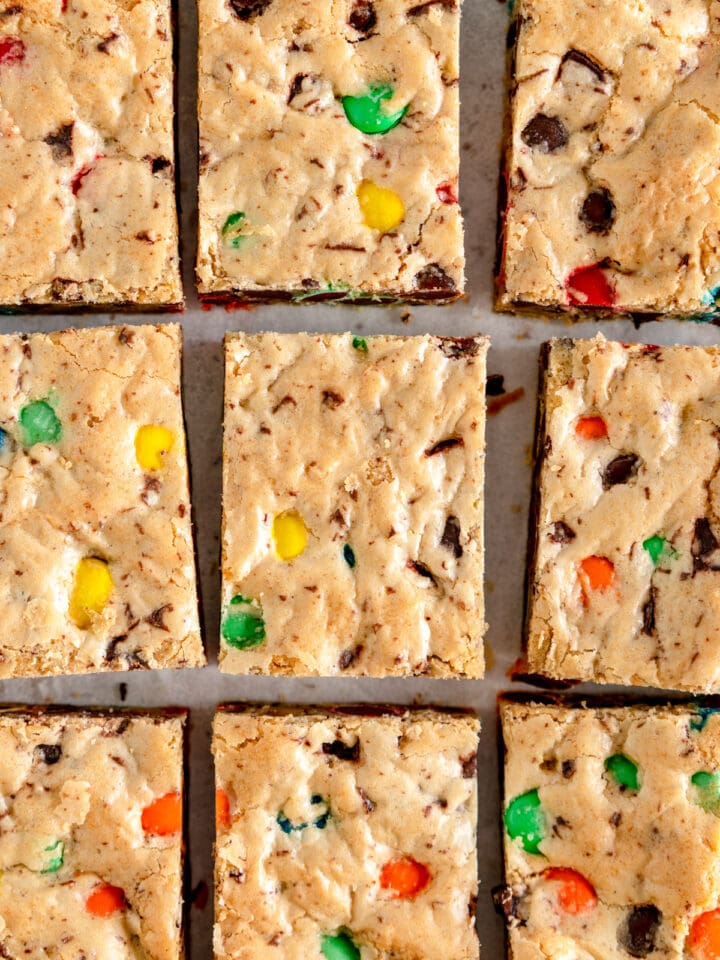
      Filed Under: Chocolate Chip Cookies, Cookies, Holiday Cookies, Small Batch Baking

      Oatmeal Chocolate Chip Cookies with Oil (No Butter)

      corner shot oatmeal chocolate chip cookie

      These oatmeal chocolate chip cookies use oil rather than butter! After 15 minutes, they emerge from the oven deliciously chewy, soft and super flavorful! Packed with chopped chocolate and old fashioned oats, they're quick to make, and require no rest or chill time. Sprinkle with flaky sea salt to finish.

      corner shot oatmeal chocolate chip cookie

      Hi hi! Just popping in to share the recipe for these Dairy Free Oatmeal Chocolate Chip Cookies with you! am so excited to finally be able to add this recipe to my Collection of chocolate chip cookie recipes with you as they are just so, so good.

      These Oatmeal Chocolate Chip Cookies are chewy, soft, and super flavourful, packed with chocolate and oats, and also happen to be dairy free, thanks to the olive oil so if you are looking for chocolate chip cookies with no butter, i've got you covered. They are a riff on my Small batch olive oil chocolate chip cookies which are a reader favorite - if you like those, also check out my easy double chocolate chip cookie recipe which is also an oil based cookie!

      These cookies come together quickly and don't have a rest time. The recipe makes six huge chewy oatmeal chocolate chip cookies, although if you like you are most welcome to scale back the recipe and make these a little smaller (although I will never say no to a giant cookie).

      close up side shot oatmeal cookies
      angle shot oatmeal chocolate chip cookies

      How to make Easy Oatmeal Chocolate Chip Cookies

      These chewy Oatmeal Chocolate Chip Cookies come together in almost less time than it takes the oven to preheat. There is no softening butter required (so they are a great no butter cookie recipe), and they have no rest time, so they are great to just throw together and pop into the oven whenever you're needing a cookie. I do love a long rest time sometimes on a cookie (my perfect chocolate chip cookies use one), but as a food blogger, it's great to have a perfect back pocket recipe that can be ready in 30 minutes.

      • Whip your wet ingredients. These cookies are super easy - you start by whipping together the sugars, oil, and egg until slightly thick and fluffy.
      • Add your dry ingredients. Dry ingredients go in - flour, oats, leavening agents, and some salt and espresso powder. Mix it all in. It may look a tiny bit oily but that is fine - it's an oil based oatmeal cookie and so that is totally normal.
      • Add your chocolate. I use chopped chocolate for these cookies (and all chocolate chip cookies), but you can use what works well for you here.
      • Portion up the cookies. A cookie scoop is a great tool here, but you can also portion these by weight if you like.
      • Bake off! These chewy oatmeal chocolate chip cookies bake at a slightly lower temperature than other cookie recipes (more on that in a bit). Pull them out and scoot them into shape if you like, and finish with some sea salt. That's it - these are so, so easy. I love them so much and I hope you do too!

      What makes a chewy cookie chewy?

      For this oatmeal chocolate chip cookie recipe, there are a few factors that give them a delicious chewy texture:

      • Ratio of sugars. The ratio of brown to white sugar makes a big difference in cookies, with cookies with a higher ratio of white sugar being a little more chewy.
      • Inclusion of oatmeal. I know that these wouldn't be oatmeal chocolate chip cookies without the addition of oats, but they provide a whole bunch of texture, and give you an amazing chewy cookie.
      • Chocolate chip cookies with no butter. Because this is a chocolate chip cookie recipe using olive oil, the oil in the recipe contributes a chewyness as there is no water in it (unlike butter) so it really lets the sugars and oats play together for the most amazing chocolate chip cookie.
      stack of oatmeal chocolate chip cookies

      How do you store Oatmeal Chocolate Chip Cookies?

      I store my cookies in an airtight container at room temperature. They last up to five days if stored correctly.

      The best Oats to use for Oatmeal Cookies

      I tested these Oatmeal Chocolate Chip Cookies with Old Fashioned Oats. I haven't tested with any other type of oats so I am not sure if it would work with a rolled oat, and I think a quick cooking oat would get too sludgy.

      Old fashioned oats are chunkier and a little thicker than other styles of oats, which makes them perfect in this oatmeal chocolate chip cookie recipe. They give a great chew to the cookie, and also help to provide some structure - another secret to super chewy cookies.

      Three types of sugar in chewy oatmeal chocolate chip cookies?

      You will notice that there are three types of sugar in these chocolate chip cookies. This trick of using a little raw / turbinado sugar is one of my favourites and the ratio of brown to white sugar affects spread in cookies.

      • Muscovado Sugar / Brown Sugar - This gives cookies less of a spread, while also adding flavour and helping to keep a slightly soft centre.
      • White / Granulated Sugar - white sugar helps cookies to spread, and gives that lovely chewy texture around the outside. Playing around with the ratio of white to brown sugar is a fun way to change the spread of a cookie. This is what helps to make a chewy cookie chewy.
      • Turbinado / Raw Sugar - This is one of my favourite things to add into a cookie as it gives a super delicate crunch, which is so nice along with the chewy oats.

      Why are these cookies baked at a lower temperature?

      You may notice that the baking temperature on these cookies is 325°f / 165°c. There is a reason for this. Baking temperature affects a few things, mainly how these cookies spread and how quickly they bake.

      If cookies are baked at a hotter temperature, particularly with an oil based recipe such as this one, they will spread more, and bake faster (obviously). While 350°f / 180°c is great for most cookie recipes, I found that it caused these cookies to melt down too fast and end up thinner than I was hoping.

      It is also important to make sure your oven is running at an accurate temperature if you are making things that are temperature sensitive. An oven thermometer is a great investment.

      full sheet pan of cookies

      Tips for Perfect Chocolate Chip Cookies

      There are a few tips that I use every time for perfect chocolate chip cookies. These tips can be applied to every cookie recipe. They are completely optional (aside from using a scale of course!) but make a big difference if you're looking for perfect chocolate chip cookies!

      • Chop your chocolate. Chopped chocolate gives you pockets of chocolate and perfect chocolate shards distributed throughout the cookie. I prefer chopped chocolate over chocolate chips in cookies forever. Chocolate also melts much better than chips. It's the best ever.
      • Use a cookie scoop. You can weigh out your cookie dough balls if you don't have a cookie scoop, but they are a great investment. They help to get the dough all relatively the same size and make things super quick and easy. I use this one.
      • Add chocolate puddles. To get puddles on the top of cookies, press the dough into a disc and press additional chocolate on the top, then squish it back up into a ball of dough. This encases all the chocolate inside and as it bakes you get perfect puddles.
      • Scoot your cookies. The "Cookie Scoot" is my secret weapon to perfectly round cookies. It's a totally optional step, but one that I really love. All you do is take a round object slightly larger than the cookie. As soon as the cookies come out of the oven, while they are still hot, put the cutter over the cookie and 'scoot' it into a perfectly round shape. The best. I do it basically every time now.

      For more tips and tricks on making perfect chocolate chip cookies, check out my ultimate guide: How to make perfect chocolate chip cookies

      sheet pan with oatmeal chocolate chip cookies

      Frequently Asked Questions

      What tools and equipment do you use?

      You can see a full list of all the tools I use here. I used a 3 tablespoon Cookie Scoop to scoop out the cookies, but you can also divide the dough and weigh it out.

      Can these cookies be made ahead?

      I haven't had great success with freezing an oil based cookie dough like this one, particularly when the recipe also contains oats. The oats tend to hydrate and the texture of the cookie is thrown off. With that being said, the baked oatmeal chocolate chip cookies would freeze well I think! I just haven't frozen the dough.

      I don't have muscovado sugar, what can I use?

      No worries if you don't - you can sub in brown sugar (light or dark). If you don't have any raw sugar I would substitute it with 10g brown sugar or muscovado (whatever you are using) and 10g granulated sugar.

      Help - my cookies spread everywhere?!

      Your oven is likely running too hot. Reduce the baking temperature and it might be a good idea to invest in an oven thermometer - so often ovens do not run at the temperature on the display.

      Do I have to use the espresso powder?

      If you don't have access to espresso powder you can either use fine instant coffee, or you can just leave it out. Up to you - it is just there to add flavour and enhance the taste of the chocolate.

      Can these be made smaller?

      Yes, absolutely. If you don't want massive cookies, you can scale these back and do a 2 tablespoon scoop, which will be about 45 to 50g of dough.

      close up corner of oatmeal chocolate chip cookies

      For more easy chocolate chip cookie recipes, check out:

      • cookie on sheet pan with parchment paper
        Brown Butter Chocolate Chip Cookies
      • m&m chocolate chip cookies
        Perfectly Chewy Chocolate Chip M&M Cookies
      • chocolate chip cookie bars on wax paper.
        Brown Butter Chocolate Chip Cookie Bars
      • close in shot single cookie
        Egg Yolk Chocolate Chip Cookies

      ❤️ Made this recipe and love it? ❤️

      I would LOVE for you to leave me a review and star rating below to let me know how you liked it! Also, please make sure to tag me on Instagram!

      Answers to your baking questions

      Over the years, many of you have asked me questions about:

      • baking in grams
      • adjusting oven temperatures
      • what kind of salt to use
      • and many more!

      I've curated and answered them all for your easy reference in this frequently asked questions post!

      Filed Under: Chocolate Chip Cookies, Cookies, Small Batch Baking Tagged With: Dairy Free

      Nutella Donuts

      close up shot nutella doughnut

      Small Batch Nutella Donuts are made with a small batch brioche donut recipe which can be made by hand without the use of a mixer. These are Nutella Filled donuts, but you can finish them any way that you like! This Small Batch Donut Recipe only makes 8 Donuts!

      close up shot nutella doughnut

      Nutella Donuts

      Hi hi! Just popping in here to share the recipe for these Nutella Donuts with you! These are a small batch donut recipe, using the no mixer, small batch brioche dough that I developed. I used the same dough to make these cinnamon bun twists and these rhubarb custard buns, and I have a few more recipes coming your way too which also use the same base dough.

      I filled these small batch donuts with a nutella filling just as I was after something simple, but the great thing about donuts is that you can make them any size / shape / filling that you like. Mix and match the fillings and shapes as you like.

      If you've been here for a while you will know I am a massive, massive fan of a base recipe. Having one base dough that you can use for a wide variety of different things is a game changer for me. It means I have a large component of the recipe that I know will already work, and I am confident in. There is no point making a new dough recipe every time if I already have one that I like and works. This brioche dough is super versatile too and works in both savoury and sweet applications. I love using my mixer but sometimes is it just fun to do things by hand too!

      close up shot filled donut

      Steps for Making Donuts

      These Small Batch Nutella Donuts aren't too tricky to make, but there is a wee bit of waiting involved with the two rise periods. Here's how I do it:

      • Make the Brioche Dough. This is a small batch no mixer brioche (which can be done both as a double mixture and with a mixer if you like). The dough needs at least a few hours in the fridge, or you can do it overnight.
      • Shape the donuts. This is super easy - Just divide the dough into 70 g balls and shape into tight balls. Place on a piece of parchment paper - I find it easiest to place each one individually on a piece of paper so you can move them as they are rising / it makes them easier to add to the oil.
      • Proof the donuts. The donuts go through a second proof, where they rise again before frying. Depending on the temperature of your dough and also the environment, this rising time varies. Go by how the dough looks, rather than the time.
      • Fry your donuts. I use a deep fryer when I make donuts, but there are notes further down the post on how to use a pot or a dutch oven. Fry the donuts, a few at a time, until golden brown and done inside.
      • Toss in sugar. Once the donuts are done, they are left to drain then tossed in sugar and left to cool.
      • Fill the donuts. I made these Nutella Donuts, but your options really are endless here and you do you with filling and finishes.
      side on image of filled nutella donut

      How to make Brioche By Hand

      The base of these small batch donuts is a brioche which is made by hand (if you like). I wanted to develop a no mixer brioche as I know not everyone has access to a mixer. It is totally possible to make it by hand, but just be aware that it will get sloppy but this is ok. It will all smooth out as you keep kneading and the butter incorporates!

      • Combine dry ingredients - This brioche is pretty standard when it comes to ingredients. All-purpose flour, instant yeast, sugar, salt.
      • Add wet ingredients - One egg, lightly beaten, and some milk goes in. The butter is incorporated later.
      • Bring together - You want to develop some strength in the dough here. This kneading process will take about 8-10 minutes. Bring the dough together in your bowl then transfer to a work surface and work the dough until it is soft and smooth, and when you press lightly with your finger, the indentation springs back.
      • Add the butter - The butter is added to the dough. This step will get super sloppy. Don't worry though. It will come together. Keep kneading and mixing until it comes together. Then give a few more minutes of mixing just to ensure it is mixed in. You want it to pass the window pane test, or to bounce back nicely when you press with a finger.
      • Leave to rise - This dough for this purpose works best with a cold rise. I give it some time on the counter first to kick start the rise and then pop it into the fridge.

      A plastic or metal bench scraper will be super helpful when you are incorporating the butter in. Just keep scraping up the excess butter and squishing it onto the dough. It will come together.


      cut open shot nutella donuts

      Why rising dough in the fridge is so effective

      You will notice that this dough includes a fridge rise. I love proofing dough in the fridge, particularly when it is an enriched dough such as this small batch brioche. There are a few reasons for this.

      • Makes the recipe flexible. When you are making a yeast based recipe, you need to go by how the dough is behaving rather than your own personal schedule. Popping the dough in the fridge means you can bring it out when you are ready to shape the donuts, rather than when the dough is ready for you.
      • Avoids over proofing. The fridge slows down the rising process, so by popping the dough in the fridge, you know you are avoiding over proofing (provided you don't leave it too long. I try not to go over 24 hours). This is a great way to make dough too if you're just starting out and you're not sure on proofing time etc for the first rise.
      • Makes preparing ahead of time easy. The best part about a cold fridge rise is that it makes prepping the dough ahead of time super easy. Making donuts in particular has a few steps, and making the dough the night before means you can already have it ready to go the next day.

      If you did want to make these Nutella Donuts all in one day that works too - the dough needs about 2 hours in the fridge minimum.

      Can these Donuts be made into a different shape?

      The best part about making your own donuts at home is that you can mix and match the shapes. You could divide up the dough and do some as filled donuts like these nutella donuts, then cut some out and do round fried donuts that you glaze, and then a few donut holes or mini donuts. You do you here and just have fun with it.


      The Best Way to Fry Donuts

      I use a deep fryer usually when I make donuts, but it is also easy enough to do it just on the stove top. For this I prefer to use a dutch oven or a heavy bottomed pan. The Cast Iron of the dutch oven means that the oil holds temperature much better.

      If you are making them in a Dutch Oven, you will need to use a thermometer. Make sure that you measure the temperature in the middle of the oil and that your thermometer is not touching the bottom of the pot, where it could give you an inaccurate reading. It is also important to check your oil temperature before the next batch goes into the fryer.

      top corner shot nutella donuts

      Can Donuts Be Baked?

      I get this question a lot, and the answer is, that if you bake these nutella donuts, you will get bread rolls. Brioche donuts use the same base recipe as a brioche bread roll, the cooking process is just different (baked vs fried). So while you can bake them, they won't be fried donuts.

      Baked donuts are a thing but they are cake based and use a donut pan. They aren't yeast raised like these brioche donuts.

      Can you make donuts in an air fryer?

      This is the same as the answer above - you will end up with bread rolls. An air fryer is basically just a tiny convection oven, so all you will do is bake the dough and get bread rolls. I think the name 'fryer' is sometimes misleading to people - an air fryer, while it has its uses, is not a substitute for a deep fryer or frying in oil when it comes to making donuts.

      Alternative Fillings for Nutella Donuts

      I filled these Small Batch Donuts with Nutella as it was super easy and I had it on hand, but you can really go wild here and fill them with anything that you like. They are delicious filled with a custard or a lemon curd, or you could use a homemade hazelnut filling. Mix and match it and do what you like here! A store bought jam or fruit curd would go perfectly in here too - I am all for an easy substitute!

      How to tell when dough is properly proofed

      This can be a tricky one. The best way to tell if a dough is properly proofed is to give it a very gentle poke with your fingertip. Properly proofed dough will get an indentation from your finger that slowly springs back. If it is not ready yet, the dough will totally bounce back and you know that it needs more rising time.

      Make sure you start to preheat your oil toward the end of the rising period. Preheating the oil can take up to 20 minutes, so you want to make sure it is ready when the donuts are ready to fry. If you are worried they are going to over proof and your oil is not hot enough yet, you can put them into the fridge to help slow down the rising process.

      side on shot nutella donuts on pan

      The best way to fill a donut

      Donuts can be a tiny bit tricky to fill but if you use a piping bag with a tip you should be ok! Here's how I do it.

      • Coating on first. The sugar coating on these donuts goes on when they are hot from the fryer, so they will already have the coating on them.
      • Make a hole. I like to use a large chopstick for this, to poke a hole into the donut and wiggle it around a little. This creates space for the filling to go in.
      • Add your filling to a piping bag. You could spoon this in, but it's going to get really, really messy. A piping bag fitted with either a round tip or something called a bismark tip is going to be your friend her.
      • Fill the donuts. The best way to make sure your donut is full is that you can feel it become 'heavy'. Some of the filling might also ooze out of the hole. Use caution here when you're using a filling such as Nutella as it can get rich fast, so you may want to break a sacrificial one open first to check the amount of filling. If you are filling with something like a whipped cream and you're not worried about quantity, just go for it.

      Donut Troubleshooting

      There are a couple of issues that you may run into when making donuts, and they are usually to do with either the proofing on your dough, or the temperature of the oil. I highly recommend doing a test donut and breaking it open to check the doneness inside, so you can adjust your time as needed for the frying as every frying setup differs.

      • My Donuts are raw inside: Your oil is probably too hot! If your oil is too hot, your doughnuts will brown too much on the outside before they are fully cooked. This will give you a melt in your mouth middle, and not in a good way. The best way to do this is to carefully monitor your oil temperature, you want it to stay around 350°f / 180°c.
      • My Donuts are taking forever to cook / are Oily: This sounds like the opposite issue and that your oil is too cold. Again, watch it carefully! If you are using a thermometer make sure that it's suspended in the middle of the oil and not touching the bottom as this will give a false reading. Make sure you check the temp between batches too, as adding the doughnuts will drop the temperature.
      • My Donuts are stodgy and dense: Sounds like they weren't proofed enough! Make sure that they are properly proofed. To do this I like to poke one. If the dough bounces back straight away then they aren't ready yet. If your finger leaves a little indentation in the dough which slowly bounces back, you are good to go. Remember that proofing takes a little longer if you started with cold dough. For the donuts to proof at room temperature, it was about 50-55 minutes. Remember that the weather makes a big difference too!
      corner shot nutella donut

      FAQ for Nutella Donuts

      Can this recipe be made ahead of time?
      Donuts are definitely best eaten on the day that you make them, as they are much more enjoyable fresh.

      What are the rings on the sides of the donuts?
      Those 'tan lines' are from the donuts frying. They happen when the dough is nicely proofed - basically the dough floats as it fries and the middle section doesn't have as much contact with the oil and so you get the ring around the middle. Don't worry too much if yours doesn't have this ring though - just go by how the proofing is!

      Can I use active dry yeast in the recipe?
      Yes, that will be fine you will just have to activate it in the milk and the sugar before proceeding with the recipe. Heat the milk to lukewarm then combine with the milk and sugar and leave until foamy, about 10 minutes.

      What is Neutral Oil?
      Neutral oil means that it is Neutral tasting. You can use a canola, or a rice bran or a vegetable oil. All of these oils have relatively high smoke points which makes them great for frying.

      Can I make this recipe in a mixer?
      Yes, if you don't want to do it by hand, then go for it. Just follow the recipe as written - mix everything together on about medium speed using the dough hook for 10 minutes to form a dough then incorporate in your butter and continue to mix until smooth and cohesive.

      Do I have to use Nutella to fill the donuts?
      No - you can use whatever you like, if you are looking for something to try I would recommend my chocolate hazelnut spread.

      side on image of donuts

      For more small batch recipes, check out:

      • Small Batch Cheese Buns
      • Rhubarb Custard Buns
      • Small Batch Chocolate Chip Cookies
      • Peanut Butter Brownie Bars

      ❤️ Made this recipe and love it? ❤️

      I would LOVE for you to leave me a review and star rating below to let me know how you liked it! Also, please make sure to tag me on Instagram!

      Answers to your baking questions

      Over the years, many of you have asked me questions about:

      • baking in grams
      • adjusting oven temperatures
      • what kind of salt to use
      • and many more!

      I've curated and answered them all for your easy reference in this frequently asked questions post!

      Recipe For Nutella Donuts

      Filed Under: Brioche, Doughnuts, Small Batch Baking

      Tiramisu Cake

      side cut shot of tiramisu sheet cake

      Learn how to make super easy Tiramisu Cake Recipe. A homemade vanilla cake is soaked with espresso and finished with an espresso mascarpone whipped cream frosting. Watch the Tiramisu Cake Video for step by step instructions and read the post for a small batch option!

      top down cut shot of tiramisu snack cake

      Hi hi! I hope things are well with you. Just popping in to share this tiramisu cake recipe! This is a rework of a super old recipe of mine, which I turned into a sheet cake with a coffee soak, and an espresso mascarpone frosting.

      This tiramisu cake is a super fun twist on a regular vanilla snack cake - I love it and I really hope you do too! Homemade cake recipes are something that feel extra special, and this from scratch tiramisu cake is the perfect dessert for any occasion.

      You will see two sizes of tiramisu cake in this blog post - a larger sized one, and a smaller one which was made in an eighth sheet pan. You can scale this recipe accordingly!

      If you are looking for a more classic tiramisu recipe, check out my small batch tiramisu recipe!

      • What is tiramisu cake?
      • How to make Mascarpone Frosting
      • How to Substitute for Buttermilk in this recipe
      • Frequently Asked Questions
      vanilla snack cake with coffee
      angle top shot of tiramisu sheet cake

      What is tiramisu cake?

      Tiramisu cake is all the flavours of the classic Italian dessert tiramisu... but in a cake! This recipe has a few components, which when combined, become the most amazing, easy tiramisu cake recipe.

      • Vanilla Cake. This vanilla cake recipe is super similar to my funfetti cake recipe, except that I switched out buttermilk for the yoghurt and milk in the recipe. The buttermilk adds a super delicious tanginess to the cake. The cake represents ladyfingers or savoiardi biscuits which are traditionally used in tiramisu!
      • Coffee Syrup Soak. I just went for a super strong coffee soak, which is brushed over the slightly warm cake. You can add booze here if you want to - kahlua or another coffee liqueur works great.
      • Espresso Mascarpone Frosting. Because you aren't layering the cake here and getting lots of coffee soak within each layer, I added some espresso to the mascarpone frosting too. This added amazing flavour and went so well with the classic dusting of cocoa that tiramisu gets.
      full size tiramisu cake

      How to small batch this recipe

      The full size version of this tiramisu cake makes a 9"x13" (20x30cm) cake. However if you were wanting to do a small batch version, you could do a half batch of the recipe and bake it in an eighth sheet pan. The method is exactly the same, it just uses half the quantity of ingredients. The quantities for a half size cake are:

      Vanilla Cake

      • 130g all-purpose flour
      • 1 teaspoon baking powder
      • ¼ teaspoon kosher salt
      • 110g buttermilk, at room temperature
      • ½ teaspoon vanilla bean paste
      • 75g unsalted butter, at room temperature
      • 80g granulated sugar
      • 1 large egg, at room temperature

      Make the recipe as written, then spread the mixture into a lined eighth sheet pan or 9"x5" loaf pan and bake for 25 to 30 minutes.

      Coffee Soak

      • 25g strong coffee, cold

      Espresso mascarpone frosting

      • 115g mascarpone, cold
      • ¾ teaspoon espresso powder or fine instant coffee
      • 55g powdered sugar, sifted
      • ¼ teaspoon vanilla bean paste
      • pinch of salt
      • 120g heavy cream, cold from the fridge
      cake with frosting and cocoa
      espresso mascarpone frosting

      What is an Eighth sheet pan?

      I made this mini tiramisu cake in my favourite pan at the moment - an eighth sheet pan. The name comes from the size - they are an eighth of a full sheet pan (so quarter sheet pan, half sheet pan etc come from this too). Eighth sheet pans are a great size and are super handy for all sorts of things such as baking bake a single cookie, or they are great for toasting nuts. I also have them around my kitchen to use to keep things organised - I pop things I am defrosting onto them to keep them off the counter, and I have one by the stove to hold all my oil and things I use for cooking.

      The eighth sheet pan is also used in my baking all the time - this funfetti snack cake was made in one, along with these small batch cheese buns. I have a bunch more recipes coming your way soon too which use this pan. They are super cute and a great investment.

      However, if you don't have an eighth sheet pan then no worries at all - this recipe can be made in a loaf pan. Make sure you use a loaf pan that is on the larger side so that your vanilla cake batter doesn't end up too thick. I have this one which I tested and it worked great.

      side cut shot of tiramisu sheet cake

      How to make Mascarpone Frosting

      I topped my tiramisu cake with an espresso mascarpone frosting. This frosting is essentially a mascarpone stabilised whipped cream that has been sweetened.

      Mascarpone frosting is super easy to make with an electric handheld mixer, or you can use your stand mixer if you like. The technique may seem a little strange adding liquid cream to the frosting but I promise that it all comes together nicely! The frosting is creamy and smooth, and goes so well with the vanilla cake.

      • Whip together the mascarpone cheese and the espresso powder. The espresso powder needs to mix in evenly so adding it in first gives it a good chance to do so.
      • Add in the powdered sugar, vanilla, and salt, and mix to incorporate.
      • With the mixer going, stream in the heavy whipping cream. This step will feel very strange. The cream is going to make the mixture loose and sloppy, but just keep mixing, it will come together.
      • Whip together the cream and mascarpone mixture. It will combine and then after a little more whipping, will thicken and turn into a smooth and silky mascarpone frosting. If you over whip by accident, just incorporate a little more liquid cream in.
      • Transfer to a piping bag to pipe onto the cake, or smooth on with a spatula. I used an ateco #865 tip.
      top down shot of tiramisu sheet cake
      corner frosted tiramisu sheet cake

      How to Substitute for Buttermilk in this recipe

      If you don't have buttermilk on hand, for this recipe in particular (and often other baking recipes), lemon juice and milk isn't the best subsitute. This recipe from Serious Eats goes into a lot of detail on buttermilk subs and which is best in baking. I prefer to go for a yoghurt / sour cream and milk combination which I use in my other vanilla cake recipe - you can use 65g milk and 45g greek yoghurt or sour cream if you don't have buttermilk on hand.

      piped espresso mascarpone frosting

      Frequently Asked Questions

      What can I use instead of espresso powder?
      If you don't have access to espresso powder, you can use finely ground instant coffee.

      Can tiramisu cake be made ahead of time?
      Yes, you can make this recipe ahead of time and store in the fridge. The coffee soak may make it a little more moist, but it will be fine.

      How do you store tiramisu cake?
      Store leftover tiramisu cake in an airtight container in the fridge.

      What is a good substitute for Mascarpone?
      You can try to substitute mascarpone with cream cheese, but it won't taste as much like tiramisu. Cream cheese is much more tangy and tastes quite different to mascarpone. It's really worth tracking it down if you can!

      tiramisu snack cake with espresso mascarpone frosting

      For more homemade cake recipes:

      • side shot devil's food cake
        Devil's Food Sheet Cake
      • side shot chocolate cake
        Mini Chocolate Layer Cake
      • Vanilla Buttermilk Cake with Swiss Meringue Buttercream
      • Funfetti Cake with Chocolate Buttercream

      ❤️ Made this recipe and love it? ❤️

      I would LOVE for you to leave me a review and star rating below to let me know how you liked it! Also, please make sure to tag me on Instagram!

      Answers to your baking questions

      Over the years, many of you have asked me questions about:

      • baking in grams
      • adjusting oven temperatures
      • what kind of salt to use
      • and many more!

      I've curated and answered them all for your easy reference in this frequently asked questions post!

      Filed Under: Cakes, Sheet and Snack Cakes, Small Batch Baking

      Savory Monkey Bread

      This Cheesy Savory Monkey Bread is made with a super soft Tangzhong dough which is rolled in pesto then arranged in a pan. The Monkey Bread is covered with cheese and left to rise for the perfect savory monkey bread recipe that is perfect for any occasion!

      side shot of cheesy monkey bread

      Savory Monkey Bread

      I am just popping in to share the recipe for this cheesy pesto savory monkey bread. I made this a whole bunch of times when I was testing it and it's just so, so good. It's super simple to make but it is a fun wee twist on a garlic bread or cheese bread, and perfect to make to accompany a meal. I love adding pesto to bread recipes - this savory monkey bread is made with a grilled vegetable pesto and is drowned in parmesan before rising and again before baking. It tastes a bit like a pizza bread. I love it a lot and I hope you do too - making homemade monkey bread is easy and fun!

      top down cheesy monkey bread

      How to make Monkey Bread

      The process for making this savory monkey bread is super simple. The dough is super soft and fluffy, and just goes so well with the pesto and cheese.

      1. Make the monkey bread dough. This Tangzhong based dough is similar to the one I use for my small batch cheese buns, and is egg free. I used olive oil in the place of the butter in the recipe and it worked great and gave an amazing flavour to the dough.
      2. Leave the dough to rise - I do this all in one day as it is easy to do, but you could absolutely make the dough ahead of time and do the first rise in the fridge overnight.
      3. Divide and roll into balls - portion out the dough and roll into balls. I went for 20g per dough ball. Pop them into a bowl.
      4. Add pesto and coat - add your pesto into the bowl with the dough balls and mix well to coat.
      5. Arrange the dough balls into your prepared pan. I like to make sure they are one flat layer. Snuggle them in there if you need.
      6. Add the first layer of parmesan cheese and leave to rise. This means you get some cheese in between the balls of dough for optimum cheesiness.
      7. Rise the monkey bread then add a second layer of cheese and bake!
      monkey bread dough
      Balls of monkey bread dough
      monkey bread with pesto
      pesto monkey bread in pan

      How to make a Tangzhong based dough

      The Tangzhong method that I used for this cheesy monkey bread dough is an Asian Technique, and involves cooking part of the flour and water in a bread recipe to form a thick paste, or a roux. The process of making the Tangzhong gelatanises some of the starch in the flour. This means the flour is able to absorb a lot more water, and also holds onto it throughout the dough making process. This gives an incredibly soft bread which stays soft a lot longer than other bread does.

      Tangzhong (which is a Chinese word) is made by cooking the liquid and flour together, while the Yudane method (which is Japanese) involves adding boiling liquid to the flour and leaving it to set overnight. The benefit of using a roux means that the bread dough can stay 'lean' - so very little added fat etc but still stay extremely tender and soft.

      I scaled back my burger bun recipe and removed the egg to avoid any awkward egg dividing. I also used an olive oil base rather than butter, which added amazing flavour to the dough. The soft dough works perfectly for this monkey bread recipe.


      baked monkey bread in pan

      What is Bread Flour?

      This cheesy monkey bread recipe calls for Bread Flour (also sometimes called Strong flour or High Grade Flour in other places). The role of this is important especially in this Tangzhong dough which is quite soft and needs the gluten for strength. Bread Flour is higher in protein than All-Purpose and is often made with a harder variety of wheat. This means that it develops gluten better and gives the dough strength. This is particularly important in a soft dough recipe.

      I have tried to make this dough with All-purpose flour and it did not go well. The bread flour is super important here so I really recommend getting some. If you can't find it where you are, you can buy gluten flour and add some to the dough to help develop strength. I haven't tried this so i'm not too sure on the ratios but it should work fine.

      monkey bread with cheese

      Small Batch Monkey Bread

      This cheesy monkey bread is a small batch monkey bread recipe - I made it in an 8" (20cm) square pan. Monkey Bread is usually made in a bundt pan or something similar. I wanted to try and scale it back, and it worked great!

      If you wanted to do a larger batch of this you could double it and pop it into a 9"x13" (23x33cm) pan instead and it would work great! The dough rises up a lot so I wouldn't want to double up the layers of dough balls.

      Can this recipe be made ahead of time?

      I usually make this recipe all in one day, but you could certainly make the dough ahead of time and leave it to rise in the fridge overnight. This dough does have quite a long rise time on it in comparison to other doughs, so I recommend leaving it on the counter for 30 minutes before putting it into the fridge to finish rising. This gives the dough a chance to kick start the rising process.

      I haven't tried doing the second rise overnight or in the refrigerator but I think it would work just fine. If you do that, I would leave off the cheese and add it all on just before baking so it doesn't get soggy. You may need to bring the monkey bread out of the fridge and leave it to sit to finish rising and come to room temp before baking.

      How to reheat monkey bread

      If you make this recipe ahead of time and want to reheat before serving, I would suggest covering the pan with foil and placing in a 350°f / 180°c oven and refreshing for 10 minutes or so.

      FAQ for Savory Monkey Bread

      Do I have to weigh out the dough balls?
      You don't have to if you don't want to, but we all know how I feel about using your scale. If you eyeball it you run the risk of the dough balls being different sizes and baking at different rates. You don't have to be too pedantic about getting them bang on 20g - just something around that range would work best.

      How do you sub active yeast for instant?
      Substituting active dry yeast for Instant yeast is a 1:1 swap: you just have to go about it slightly differently and include a step where you activate the yeast. After making the Tangzhong, add the cold milk to the bowl along with the sugar and mix, then check it isn't hotter than lukewarm. Then, add the yeast and leave it for about 10 minutes to activate. Once it is foamy, you can proceed with the rest of the recipe.

      What tools and equipment do you use?
      You can see a full list of all the tools I use here

      Can I use other cheese for this recipe?
      Yes, mix it up however you like - it would be delicious with some cheddar cheese. You could also finish with a sprinkle of fresh herbs such as parsley or oregano.

      side shot of baked monkey bread

      ❤️ Made this recipe and love it? ❤️

      I would LOVE for you to leave me a review and star rating below to let me know how you liked it! Also, please make sure to tag me on Instagram!

      Answers to your baking questions

      Over the years, many of you have asked me questions about:

      • baking in grams
      • adjusting oven temperatures
      • what kind of salt to use
      • and many more!

      I've curated and answered them all for your easy reference in this frequently asked questions post!

      Recipe For Savory Monkey Bread

      Filed Under: Savoury Breads, Small Batch Baking Tagged With: Egg Free

      Squiggle Slice

      squiggle slice side shot

      This Squiggle Slice is inspired by a classic New Zealand biscuit, the squiggle! This small batch bar recipe has a fudgy brownie base, a custard icing filling, and is topped with homemade honeycomb and chocolate, and finished with a yellow chocolate squiggle.

      close up side shot squiggle slice

      Squiggle Slice

      Hi hi! I am just popping in to share the recipe for this SQUIGGLE SLICE with you. A friend suggested I make this months and months ago, and it's been on my mind ever since. This Squiggle Slice has a small batch brownie base, a custard powder icing filling, and then a hokey pokey / honeycomb chocolate topping. I combined a bunch of components from other recipes of mine to make this squiggle slice, and I'm just obsessed with it.

      If you haven't heard of squiggles before they are an iconic NZ biscuit (cookie). Squiggles have a snappy cookie base, then a sort of yellow icing like filling, and are topped with honeycomb chunks then covered in chocolate. They are finished off with a squiggle of yellow chocolate, which is where the name comes from. Squiggles are my ultimate number one favourite biscuit ever, and I can't believe it has taken me this long to recreate them! I love this recipe SO much and I really hope that you do too!

      top cut shot squiggle slice
      angle cut shot squiggle slice

      Components of Squiggle Slice

      There are a few components to this squiggle slice recipe, but you can easily break up the workload and make it on your own time!

      • Make the brownie base. I borrowed the brownie base recipe from my peanut butter brownie bars - it's super easy and fudgy and just so good.
      • Add the filling and freeze. Once the brownie is cool (you can throw it in the fridge to speed this up if needed), make the filling layer. It's a super easy basic icing recipe, which you can just mix together with a hand mixer. Spread the filling over the cooled base, and pop it into the freezer to firm up slightly.
      • Make the hokey pokey chunks. While the filling is in the freezer, make the hokey pokey. This also needs about 30 minutes in the freezer to really firm up so you can cut it into chunks.
      • Add the chocolate hokey pokey. Once the hokey pokey has set, you chop it up into chunks, then add it to some chocolate which has been melted together with some neutral oil. The oil is to just make it easy to cut without cracking. The hokey pokey gets mixed with the chocolate, then you pour it over the filling.
      • Leave to set. Once the hokey pokey and chocolate is on, you leave it to set for about an hour. I usually just do this in the fridge so that the chocolate doesn't sweat as much when you take it out.
      • Add the squiggle. This part is optional if you like, but a quick and easy way to tie it all in together. You just pipe a squiggle of melted chocolate mixed with some oil and yellow food coloring onto the tops of the bars. You could do milk chocolate here too if you wanted!
      end cut shot squiggle slice

      Small Batch Recipes made in a Loaf Pan

      This recipe is a small batch slice recipe, which I made in a loaf pan. Making slice in a loaf pan is my current favourite thing to do. I love a good larger batch slice, but with only two of us at home, this small batch recipe works perfectly for us.

      If you wanted to double it, you could use a 9" pan. Your layers might be a tiny bit thicker than what I have here, but it will be absolutely fine, I promise! If you double it, just make sure to press down the edges of the brownie slightly when it comes out of the oven if they have puffed up too much. I have a handy pan calculator you can find here you can use too if you like.

      I use this pan to make this small batch recipe. If you are in NZ, you can find it here. I use it for almost all of my small batch bar / cheesecake recipes, so it is an amazing investment. The sides are nice and straight and it releases easily. I have two because I love them so much! I sometimes double the brownie base part of this recipe and divide it between two pans, and make one squiggle slice, then one batch of my peanut butter brownie bars (or just eat the brownie part alone as it's so good!)

      How to get clean cuts on squiggle slice

      This squiggle slice can be a teeny bit intimidating to cut as it has big chunks of hokey pokey in it, but you'll be fine as long as you have a sharp knife. I found that it is really important to make sure that the brownie layer is totally cold throughout before slicing. Because it is on the fudgy side, if it is nice and cold, the brownie will cut cleanly. I use a chef's knife rather than something serrated.

      corner squiggle slice image

      How to make Honeycomb / Hokey Pokey

      This recipe uses a homemade honeycomb recipe, or hokey pokey as we call it in NZ. This is made just by cooking down sugar and golden syrup, then adding baking soda which makes the mixture foam up. The hokey pokey is then transferred to a pan and popped into the freezer just to harden.

      Make sure that you have your lined pan ready and your baking soda already sifted before you start making hokey pokey. Things go quickly once you get going so it is good to have everything ready.

      The best way to clean a pot you've used for making candy or caramel is to just fill it with warm water and let the water soak off the stuck on parts.

      If it all goes wrong and you're worried you've messed it up, just start again. It will be fine I promise!

      super close up squiggle slice
      close up squiggle slice

      How to break up the workload for Squiggle Slice

      There are a few components to this squiggle slice, but it is very easy to break up the workload. You can make the brownie layer the day before and leave it to cool completely, then assemble it all the next day. You could also make the whole thing in one day then leave it to set fully overnight.

      The hokey pokey doesn't do super well in the freezer for a long period of time as it will get a bit weepy, so that part needs to be done according to the recipe. Once it's chopped up and in the chocolate though, you are fine and can leave it in the fridge!

      What can I use instead of Golden Syrup / Custard Powder?

      I get this question a lot when I use custard powder and / or golden syrup in recipes. I know they are both a little harder to find in the US / you have to get them online which is what I did when I lived there. However, for this squiggle slice recipe, both are pretty necessary.

      If you really want you can leave out the custard powder from the filling. However, it is certainly going to affect both the taste and the texture. You would then just have a vanilla filling. I have a couple of other recipes using custard powder - my nanaimo bars, my rhubarb custard buns, and also my custard square. Custard powder keeps super well too, so a jar will last you well!

      Golden syrup I am going to say is non-negotiable here. You can sub other things, but it just isn't going to taste the same. Once you've used golden syrup there's no turning back really. It gives the most amazing, slightly toasty, sweet flavour to things. You can use it again to make my ginger crunch, tan slice, oatmeal pie, or my pecan pie. It's also delicious just over waffles or pancakes!

      top down close up squiggle slice

      Frequently Asked Questions for Recipe

      Can you use regular food colouring for the squiggle part?
      I haven't tried it, I've only used gel food colouring, but I think it will be just fine. The chocolate already has oil in it so you don't have to worry about it seizing like you would if it was plain chocolate.

      What can I use instead of golden syrup?
      Honey works, but it won't quite taste the same.

      Do I have to make my own hokey pokey?
      No you don't - I haven't tried it but chunks of chopped up crunchie bar should work just fine in here!

      Why did you use caster sugar in the recipe?
      I made this with both caster sugar and regular granulated sugar (which is a bit more coarse in nz), and found that due to the small quantity, I was left with some grains in the hokey pokey made with regular sugar. Switching to caster sugar fixed this. You can use normal sugar if you want, it might just be a tiny bit grainy but will still work ok! If you are in the US, the sugar there is much finer so you can just use regular sugar.

      Can this recipe be made gluten free?
      Yes! This would be a great recipe to make gluten free. Because the brownie only has a teeny bit of flour in it and brownies don't require the gluten for structure, you can sub the all-purpose 1:1 with a gluten free flour blend. Then the filling, topping and hokey pokey are all gf by nature 🙂

      end shot side squiggle slice
      close up angle shot squiggle slice

      For more New Zealand recipes, check out:

      • No-Bake Peppermint Slice
      • Oaty Ginger Crunch
      • Iced Buns
      • Anzac Biscuits

      ❤️ Made this recipe and love it? ❤️

      I would LOVE for you to leave me a review and star rating below to let me know how you liked it! Also, please make sure to tag me on Instagram!

      Answers to your baking questions

      Over the years, many of you have asked me questions about:

      • baking in grams
      • adjusting oven temperatures
      • what kind of salt to use
      • and many more!

      I've curated and answered them all for your easy reference in this frequently asked questions post!

      Recipe For Squiggle Slice

      Filed Under: Bars and Slices, Brownies, New Zealand Recipes, Small Batch Baking

      Chewy Chocolate Chip Cookies with Nutella Chunks

      pan of chocolate chip cookies

      Nutella chocolate chip cookies are a terrific twist on classic chocolate chip cookies. Rich and flavorful, this cookie recipe calls for frozen chunks of Nutella to be folded into the cookie dough, rather than swirls of hazelnut spread. Making the homemade nutella chunks is easy, and 100% worth the effort. Let's make this small-batch cookie recipe, which yields 12 tasty cookies!

      corner shot nutella chocolate chip cookies

      Hi hi! Just popping in to share the recipe for these Nutella Chocolate Chip Cookies. I worked on a whole bunch of small batch chocolate chip cookies before we left NYC, and I'm slowly drip feeding them onto the site to add to my Chocolate Chip Cookie Collection which I feel like is an essential service to provide as a baking blogger!

      If you love my Perfect classic chocolate chip cookie recipe, I promise you will love these Nutella chocolate chip cookies too. They have a super simple but absolutely game changing step - chunks of frozen Nutella.

      These Nutella Chocolate Chip Cookies are based on my Malted Milk Chocolate Chip Cookies. They are super simple and don't need a mixer. If you're after a recipe using brown butter, my brown butter chocolate chip cookies and my small batch chocolate chip cookies would be a perfect fit, or if you're looking for a dairy free chocolate chip cookie recipe, check out my olive oil chocolate chip cookies!

      top down tray of chocolate chip cookies

      How to make Nutella Chocolate Chip Cookies

      These Nutella chocolate chip cookies are super easy to make. It does take a teeny bit more time to wait for the Nutella chips to freeze and then chill down the cookie dough, but I promise you that it is worth the wait!

      1. Make the nutella chips. These are just nutella piped out onto some parchment and frozen.
      2. Mix together the cookie batter. This is a no mixer chocolate chip cookie recipe - I just use a whisk, bowl, and a spatula for folding in the chocolate and nutella. It's super simple - melted butter, sugar and egg get whipped together, then dry goes in.
      3. Add the chopped chocolate and nutella chips and mix to combine.
      4. Scoop out your dough and give it a chill for at least 30 minutes. You can take this up to a day if you want, or just freeze any excess dough if you aren't baking them all at once.
      5. Bake off your cookies! That's it! Super, super simple.
      angle shot chocolate chip cookies

      Nutella Chunks for Cookies

      For this Nutella Chocolate Chip Cookie recipe, I found that the best way to get nutella into the cookie dough was to make nutella chips. By freezing the nutella first, you are able to delay the melting of the nutella, which keeps it slightly separate from the rest of the cookie. I also held a few back to add on the tops of the cookies, which got pretty melty but was very delicious.

      The nutella pairs perfectly with the malted milk chocolate chip cookie - these are a jacked up version of classic chocolate chip cookies and I am very here for it. To make the nutella chunks all you do is pop it into a piping bag and pipe blobs onto a parchment lined baking sheet. You then freeze the sheet so the nutella freezes and you get perfect chunks of nutella for your cookies.

      If you don't have a piping bag you can use a ziploc bag or you can also just spoon chunks of Nutella onto the pan. I like to loosen the chunks from the paper and then pop it back into the oven to reduce time out of the freezer and to help keep them intact when you add them into the cookies.

      The nutella might melt slightly when you are scooping out the dough etc - this is totally fine!

      corner image nutella cookies
      corner close up shot chocolate chip cookies

      Baking with Malted Milk Powder

      This recipe uses Malted Milk Powder. This article recently came out on food52 about it which is a great read on the history etc! I love malted milk powder for the complexity that it brings to baking. It adds an almost savoury taste to things, and is particularly good paired with chocolate. I have also been recently adding it to streusel (like in my Strawberry Rhubarb pie, and to cake recipes such as this malted milk snack cake, and it's just amazing.

      The great thing about malted milk powder is that it is a flavour enhancer but doesn't affect the texture of the cookie. So if you don't have any on hand - just leave it out!

      Can Nutella Chocolate chip cookie dough be frozen?

      Yes, this chocolate chip cookie dough should freeze well. To bake from frozen, reduct the oven temperature slightly and add a few minutes on to the bake time.

      To read all about freezing cookie dough and baking from frozen, check out my guide: How to freeze cookie dough

      close up shot chocolate nutella cookies

      Tips for Perfect Chocolate Chip Cookies

      There are a few tips that I use every time for perfect chocolate chip cookies. These tips can be applied to every cookie recipe. They are completely optional (aside from using a scale of course!) but make a big difference if you're looking for perfect chocolate chip cookies!

      • Chop your chocolate. Chopped chocolate gives you pockets of chocolate and perfect chocolate shards distributed throughout the cookie. I prefer chopped chocolate over chocolate chips in cookies forever. Chocolate also melts much better than chips. It's the best ever.
      • Use a cookie scoop. You can weigh out your cookie dough balls if you don't have a cookie scoop, but they are a great investment. They help to get the dough all relatively the same size and make things super quick and easy. I use this one.
      • Add chocolate puddles. To get puddles on the top of cookies, press the dough into a disc and press additional chocolate on the top, then squish it back up into a ball of dough. This encases all the chocolate inside and as it bakes you get perfect puddles.
      • Scoot your cookies. We all know this one - to scoot your cookies, take a cookie cutter slightly larger than the cookie, and when the cookies are hot out of the oven, scoot them into shape. This rounds them off super nicely. Optional but so good!

      For all my best chocolate chip cookie tips, check out my ultimate post: How to make perfect chocolate chip cookies

      Why Preheat your oven for so long?

      You will notice in the recipe I get you to preheat your oven 10 minutes into the dough chilling process. I always give my oven at least 20 minutes to preheat. Often the oven thermostat will let you know it is at temperature, but the whole oven won't be that hot. Using an oven thermometer really helps here, along with giving the oven sufficient time to preheat.

      This is particularly important for things like cookies which have a relatively short bake time. If the oven isn't the right temperature this can affect the outcome of the cookies. Same with how it is important to check if a recipe specifies convection bake or regular bake. Convection is typically hotter, which will cause cookies to spread a lot more. If you are finding you are having cookie spreading issues - check your oven temperature.

      pan of chocolate chip cookies

      Frequently Asked Questions

      What tools and equipment do you use?
      You can see a full list of all the tools I use here

      Can you get Malted Milk Powder in Australia / New Zealand?
      I haven't tried to source it in NZ yet so I'm not 100% sure on this. I know you can use Horlick's, but also know that Horlick's has added sugar, so just keep that in mind.

      What can I use instead of espresso powder?
      Fine instant coffee works great, or you can just leave it out!

      How do you store Nutella chocolate chip cookies?
      Store cookies in an airtight container. This recipe only makes 12 cookies, so they don't last too long at my house, but they should keep for up to five days at room temperature.

      corner close up image nutella chocolate chip cookies

      For more chocolate chip cookie recipes, check out:

      • brownie cookies on sheet pan
        Brookies
      • m&m chocolate chip cookies
        Perfectly Chewy Chocolate Chip M&M Cookies
      • corner shot oatmeal chocolate chip cookie
        Oatmeal Chocolate Chip Cookies with Oil (No Butter)
      • close in shot single cookie
        Egg Yolk Chocolate Chip Cookies

      ❤️ Made this recipe and love it? ❤️

      I would LOVE for you to leave me a review and star rating below to let me know how you liked it! Also, please make sure to tag me on Instagram!

      Answers to your baking questions

      Over the years, many of you have asked me questions about:

      • baking in grams
      • adjusting oven temperatures
      • what kind of salt to use
      • and many more!

      I've curated and answered them all for your easy reference in this frequently asked questions post!

      Filed Under: Chocolate Chip Cookies, Cookies, Small Batch Baking

      Cheesy Garlic Bread Made from Pizza Dough

      garlic bread on paper with knife

      This delicious cheesy garlic bread recipe is made using Detroit-style pizza dough! The dough is no knead so it's super easy to make. While the recipe does need to rest in the refrigerator overnight, it's completely worth it - the result is ultra-cheesy and chewy homemade garlic bread that's the perfect accompaniment to any meal.

      Baked garlic bread on wax paper with knife

      Hi hi! Just popping in to share the recipe for this Cheesy Garlic Bread! I tested and made this a bunch of times over the last few weeks, and I am just so excited to share the recipe with you. I love making delicious savoury bread recipes, and this cheesy garlic bread ticks all my boxes!

      This Garlic Bread is the perfect accompaniment to any meal, and is especially good served alongside a lasagna or soup. It is perfectly cheesy and garlicky, and the dough is soft and chewy. The detroit style pizza dough has an overnight rest so you can prepare this ahead of time and have perfect homemade pizza dough garlic bread.

      Detroit Style Pizza is a deep dish style pizza made in a square or rectangle baking pan. It generally has a thick layer of cheese that goes edge to edge in the pan, so when it bakes it has a crispy, cheesy crust. It is super easy to make and my no-knead garlic butter version comes together with very little effort. If you want to make individual garlic breads, my homemade garlic knots would be perfect for this!

      cheesy garlic bread slice shot
      sliced cheesy garlic bread

      Pizza dough garlic bread

      This Cheesy Garlic Bread is made with a no knead Detroit Style Pizza Dough, which is a riff on my focaccia recipe. The dough has an overnight rise, then is left to rise again the next day. There are a few steps but the overall process is so worth it!

      1. Make the dough. The no knead detroit style pizza dough is made the night before, then left to rise overnight in the fridge.
      2. Turn the dough out into the pan. The dough gets turned out into an oiled pan, and is left to spread out. You dimple it outwards every 10-20 minutes.
      3. Add the cheese. Chunks of cheese get dotted over the surface of the dough so that when it rises, it surrounds the cheese. This is what gives you melty pockets of cheese within the bread.
      4. Leave to rise. The garlic bread goes through its rising process - this takes 3-4 hours so make sure that you account for it.
      5. Bake. Once the dough is risen and puffy, pop it into the oven and bake until deep golden brown.
      6. Add Garlic and Cheese. Once the bread has baked, top with garlic butter and sprinkle with the rest of the cheese, and return to the oven until the cheese has gone nice and melty.
      7. Finish with Garlic Butter. Once the bread is done, finish with the rest of the garlic butter. You could also garnish with herbs such as parsley here! Slice into chunks and enjoy! I serve mine plain but you could also serve with some marinara sauce for dipping.

      Adding cheese to pizza dough

      This Cheesy Garlic Bread made with pizza dough has cheese added two ways - risen in the dough itself and grated on the top. Once the dough has been added to the pan, chunks of cheese are dotted over the dough. When the cheese is added to the dough, as the dough rises it rises around the chunks of the cheese.

      The result of this is pizza dough that is studded with chunks of cheese throughout. I borrowed this idea from Peter Reinhart's Detroit Style Pizza book. The chunks of cheese throughout are melty and delicious and go so well with the garlic butter.

      cheese chunks on dough ready to rise
      risen bread dough with cheese chunks

      How to make No Knead Pizza Dough

      The process of making no knead pizza dough is almost identical to my method of making my no knead focaccia. Garlic bread made from homemade dough is next level delicious. I dropped the hydration on my dough (this is 84% whereas my focaccia is about 89%. I also used all bread flour as opposed to a mixture of bread and All Purpose flour like I use in the focaccia recipe. Using a high protein flour gives a much stronger bread that is slightly chewier and perfect for making this cheesy garlic bread.

      • Combine all dry ingredients in a bowl. If you are using active dry yeast, see the FAQ for this.
      • Add in oil and water and mix until you get a shaggy dough.
      • Leave to sit for 5 minutes - this lets the dough start to hydrate properly.
      • Perform three sets of stretch and folds, each 2 minutes apart, to build strength.
      • Shape the dough into a ball and place into an oiled container to rise.

      How to stretch and fold bread dough

      While the dough doesn't require kneading I do get you to do a series of turns of the dough to build strength before it is left to rise. Stretch and folds are a sourdough technique and are a quick way to help develop gluten in the dough.

      In this recipe, you do three sets of stretch and folds, with each set consisting of 16 folds (four times around the bowl with a fold every 90 degrees) The sets of stretch and folds are spaced two minutes apart. As you stretch and fold, you will notice the dough starting to smooth out and develop strength. Here is how you perform one set of stretch and folds:

      • Wet your hands and remove the cover from the bowl.
      • Take a section of the dough and stretch it up and fold it onto itself.
      • Rotate the bowl 90° and repeat the process. Repeat this two more times until you have gone around the bowl.
      • Do three more rounds of stretch and folds around the bowl (so each set will have 16 stretch and folds, or four trips around the bowl)
      • Rest the dough for 2 minutes.

      If this seems confusing, just know that you are performing three sets of 16 stretch and folds, spaced two minutes apart.

      detroit style pizza dough in pan

      How to rise garlic bread

      Once the dough is spread out in the pan, it needs 3-4 hours to rise until it is puffy and jiggy. Make sure you account for this. The time also depends on your environment, so make sure you go by your dough and not the time.

      If you want to speed up the dough rising slightly, you can create a humid warm environment. I like to do this in the oven - I place an oven pan on the bottom of the oven or the bottom shelf (with the oven off), and fill it with boiling water. This makes the inside of the oven nice and warm and steamy which is the perfect environment for rising your dough. Make sure you leave a note that there is dough in the oven so you don't turn it on by mistake!

      If at any point you are worried things are moving too quickly and you are not ready to bake your bread yet, the fridge is your friend when you are working with a yeasted dough. Just pop the whole pan back into the fridge to slow down the rising process and buy yourself some more time.

      The best cheese to use for Garlic Bread Using Pizza Dough

      You can use whatever cheese you like for this cheesy garlic bread, but I would ideally go for something mild and melty. I used Havarti (I used Castello Brand) which comes in a 200g block, which was perfect for this as I grated half and did half in the chunks to rise in the dough.

      You could use a mozzarella or a mild cheddar here, or mix it up with what you like! Something that is a little soft and will get nice and soft in the oven is great. You could also finish with a grating of parmesan cheese.

      side on shot of baked cheesy garlic bread
      pieces of baked cheesy garlic bread

      Sample Schedule for Garlic Bread

      The great thing about this no knead detroit style pizza dough I use for this Cheesy garlic bread is that it is super versatile. It needs about 12 hours in the fridge to rise, but you can leave it up to a few days. Sometimes I make a double of the dough and pop it into two separate containers. Then I can just bring some out and bake off as needed.

      It is best to make the dough at least the night before you make the garlic bread. I usually make the pizza dough the night before. Then I start the rising process 5 hours before I want to bake the garlic bread.

      If you want to do two rises in the fridge this should work too. You will need to take the time to let the dough settle in the pan and then add the cheese and cover with plastic wrap. Leave on the counter for about half an hour to kick start the rising process. Then place into the fridge overnight. The next day, pull the dough out from the fridge and leave to stand on the counter while the oven preheats. It may need a little more time to come back to room temperature and finish rising. Make sure that it is puffy and jiggly.

      Small Batch Garlic Bread

      If you would like to small batch this cheesy garlic bread, it will work great! I tested this loads with my Focaccia recipe. If you like, you can halve the recipe and bake it in either a 9"(23cm) round pan or an 8" (20cm) square. You could also make a full batch of the no knead pizza dough and divide it in two (deli containers work great for this), and bake half off at a time as a small batch. You will need half the cheese and half the garlic butter quantities, and it may take a little less time to rise.

      Best pan for Garlic Bread

      For this recipe you must use a nonstick metal baking pan. Do not try and make this recipe with glass. Glass is a very poor conductor of heat and so I do not recommend it for this recipe. Glass can also stick very badly. The high heat needed for the baking will not work with a glass dish and you will have sticking issues.

      Anything that is non stick and made of metal will work well. If you are worried about sticking, you can butter the pan before you grease it. You can also divide the dough into two and do two 9" (23cm) rounds or two 8" (20cm) squares at once (or one of each) if you don't have a 9"x13" pan.

      baked cheesy garlic bread on wax paper

      Frequently Asked Questions

      What tools and Equipment do you use?
      You can see a full list of all the tools I use here

      What is Bread Flour?
      Bread flour is flour which is higher in protein. It is referred to as high grade or strong flour if you are outside of the US! If you can't get bread flour this recipe should also work with all-purpose flour. The crust will just be a little softer.

      Can I use a baking stone or steel?
      I didn't have one here but if you wanted to make sure you get a really crispy bottom on your garlic bread, you can preheat the oven with a baking stone or pizza steel in there. I use one whenever I can when I am making detroit style pizza and it makes a big difference!

      Can Garlic bread be made ahead of time?
      This garlic bread is best eaten hot from the oven, but if you need to, you could try making it ahead. To do this, you could bake it until it is nearly done, but hold off on adding the garlic butter and grated cheese. Then when you are ready to serve it, cover with foil, then pop it back into the oven to warm up, then bring out and add the garlic butter and cheese, then bake again as per the recipe and add more garlic butter. This should warm up the bread and give the cheese a chance to melt.

      Can you freeze garlic bread?
      I don't think this would freeze well sorry!

      Can I use active dry yeast?

      Yes - but you will need to activate it in the lukewarm water and sugar first for 5 minutes until it goes foamy, then proceed with the recipe.

      baked cheesy garlic bread in pan
      piece of baked cheesy garlic bread on paper surrounded by other pieces of bread

      For more savoury baking recipes, check out:

      • No knead everything Bagel Focaccia
        Everything Bagel No Knead Focaccia
      • Garlic Butter Dinner Rolls
        Garlic Butter Dinner Rolls
      • baked bread roll with ketchup and mustard
        Chewy Pretzel Buns
      • edge shot baked dinner roll
        Small Batch Dinner Rolls

      ❤️ Made this recipe and love it? ❤️

      I would LOVE for you to leave me a review and star rating below to let me know how you liked it! Also, please make sure to tag me on Instagram!

      Answers to your baking questions

      Over the years, many of you have asked me questions about:

      • baking in grams
      • adjusting oven temperatures
      • what kind of salt to use
      • and many more!

      I've curated and answered them all for your easy reference in this frequently asked questions post!

      Filed Under: Savoury Breads Tagged With: Egg Free

      Soft and Fluffy Chelsea Buns (Custard Raisin Buns)

      single glazed chelsea bun

      Follow these simple steps at home to bake New Zealand-style Chelsea Buns, soft brioche buns filled with raisins and custard. A New Zealand classic! Baked to Perfection, this homemade recipe for soft and fluffy Chelsea Buns emerges from the oven with a golden hue and is finished with a simple Chelsea Bun glaze.

      single glazed chelsea bun

      Hi hi! Just popping in to share this re-shoot of a recipe I have had on my blog for about 5 years now - Chelsea Buns! These were one of the first 'nostalgic re makes' that I did where I recreated a baked good from my childhood. They are also the recipe I developed the brioche base recipe we all know and love today!

      Chelsea buns differ to cinnamon buns (according to a brief googling session) in that they have the fruit filling, and the glaze is different. Cinnamon Buns have a thicker frosting, whereas a chelsea bun has a glazed top. Keep in mind these are the UK definitions so may differ to what people are used to in the US. It's all so interesting to me how things can be similar in different countries and have a totally different name.

      This Chelsea Bun recipe is a favourite of mine for a good reason. The buns are super fluffy, but with a gooey centre from the custard, and wee raisins flecked throughout. The icing is super simply but just so good - I love these so much and I hope you do too! If you are after a classic cinnamon roll recipe, my small batch cinnamon rolls are amazing!

      baked pan of chelsea buns

      What is Custard Powder?

      Custard Powder is similar to what is used to make instant pudding in the states. It is corn starch based, then uses other flavours and thickeners. The taste is super nostalgic so I used it in these chelsea buns. You can grab some online or in some grocery stores in the US (it's super common in the supermarket in NZ) - I use it to make my Custard Square too! If you can't find you should be able to sub corn starch. I haven't tried it but it will work just fine.

      pan of iced chelsea buns

      ❤️ Made this recipe and love it? ❤️

      I would LOVE for you to leave me a review and star rating below to let me know how you liked it! Also, please make sure to tag me on Instagram!

      Answers to your baking questions

      Over the years, many of you have asked me questions about:

      • baking in grams
      • adjusting oven temperatures
      • what kind of salt to use
      • and many more!

      I've curated and answered them all for your easy reference in this frequently asked questions post!

      Recipe for Chelsea Buns

      Filed Under: Brioche, Buns and Rolls, New Zealand Recipes

      Brown Butter Salted Caramel Tart

      Brown butter salted caramel tart with chocolate ganache topping. A brown butter graham crust is filled with a silky, chewy brown butter salted caramel filling, and is topped off with a smooth dark chocolate ganache. This tart only requires 10 minutes of bake time, and can be prepared ahead, making it the perfect summer or any time recipe.

      DSC04197.jpg
      DSC04215.jpg

      Brown Butter Salted Caramel Tart with Chocolate Ganache

      I just discovered the photos for this Brown Butter Salted Caramel Tart just chilling on my computer, so I figured I should probably pop the recipe up here for you! This guy is super easy, only takes 10 minutes of baking time, and can be made ahead, so is perfect for prepping ahead of time and not boiling up your entire kitchen. Can you tell we are right in the middle of summer here in NYC? It’s sticky.

      This tart is super easy and is kind of a riff on a few of my recipes. I took a brown butter graham cracker crust and filled it with the filling from this brown butter salted caramel slice, which is potentially one of my favourite recipes from this year. I then topped the whole thing with a chocolate ganache, which I used a dark chocolate for in order to balance out the sweetness of the caramel.

      DSC04219.jpg

      How to add a crumb crust to a tart pan

      I have a sneaky wee trick that makes adding a crumb crust to a tart pan super easy - start with the sides first. This means you get nice even sides, then you can work on spreading out the bottom crust.

      Take your time when you are making a crumb crust. An even crust makes a huge difference to the overall neatness of the crust.

      DSC04222.jpg

      Accounting for moisture loss with Brown Butter

      You will notice that the initial quantity of butter is not the same as the two quantities of brown butter called for in the recipe. This is to account for the moisture lost when you brown butter. Browning butter cooks off the water and browns the milk solids. This means that you end up with a smaller quantity of butter than you started with. You will see that I call for 255g butter to make the brown butter, but the butter in the recipe only adds up to 195g. This is me accounting for the moisture loss. It's not a typo.

      Different butter loses different amounts of moisture when browned due to how it is made. For example most US butter has a higher water content than European or NZ butter, so you will end up with less browned butter relative to the quantity you started with as you are cooking off more moisture. This is why baking by weight is so important. Different butters will yield different quantities of brown butter so it is important to re-weigh your brown butter.

      I know that making brown butter can be intimidating. Don't be scared, I will hold your hand the whole way through in my post and you'll be nailing it in no time: Brown Butter 101: The Ultimate Guide

      DSC04231.jpg

      Breaking up the Workload

      This recipe has a few steps where it needs to be chilled, so you can definitely do it over the course of a day or two to break up the workload of this caramel tart.

      You could do the crust and the filling on day one, then leave it to chill overnight. Then you could add the chocolate the day of serving. You could also do it all in one day and chill the whole thing overnight.

      This caramel tart keeps super well in the fridge, so it is great to make ahead.

      DSC04256.jpg

      Frequently Asked Questions about Salted Caramel Tart

      What pan did you use to make this?
      I used a 9" removable bottom tart tin for this, which meant that it was super easy to just lift out once I was done - I placed a bowl upside down and put the tin on top, which meant that the outer ring could be easily removed without awkwardly having to try and hold it at the same time as taking it off.

      What can I use instead of graham crackers?
      If you can't find graham crackers where you are you can use digestives or something similar. Just watch the quantity of butter - you may need more or less depending on how absorbent the biscuits are. You want it to be the consistency of wet sand.

      How to do you get the ganache to a smooth texture?
      I added the ganache when it was cooled so I could add texture - to do this I popped it in the fridge, stirring very frequently until it was thick enough to spread on.

      Is a thermometer compulsory?
      I haven't tried making the caramel without a thermometer but you can try if you want - you want to cook it until it is a deep golden brown colour. A candy thermometer is a great investment though! When you are using one make sure that it is not touching the bottom of the pan as that will give you a false reading.

      Why didn't my caramel set?
      If you have issues with your caramel setting there is a good chance you did not take it hot enough. Make sure you cook it to temperature and make sure your thermometer is not at the bottom of the pan but within the caramel.

      DSC04240.jpg

      ❤️ Made this recipe and love it? ❤️

      I would LOVE for you to leave me a review and star rating below to let me know how you liked it! Also, please make sure to tag me on Instagram!

      Answers to your baking questions

      Over the years, many of you have asked me questions about:

      • baking in grams
      • adjusting oven temperatures
      • what kind of salt to use
      • and many more!

      I've curated and answered them all for your easy reference in this frequently asked questions post!

      Recipe for Salted Caramel Tart

      Filed Under: Tarts Tagged With: Egg Free

      Zucchini Bread

      zucchini bread with streusel

      This Easy Zucchini Bread Recipe is great to use up any extra zucchini. The Brown Butter Zucchini Bread is perfectly moist and is topped with a brown butter streusel topping. This zucchini bread recipe comes together quickly and is perfect for any time!

      Recipe Originally Published in July 2017 - updated June 2021

      zucchini bread with streusel
      • slice of zucchini bread
      • side on image of zucchini bread

      Easy Zucchini Bread Recipe

      Hi hi! Just popping in to share a re-work of this recipe for Zucchini bread! I first published this Easy Zucchini Bread Recipe in 2017 and decided it was time to give it a re-shoot. I am always pleasantly surprised (and relieved) that the recipes from back in the day on my site still work super well, but I have learnt a lot since then in regards to writing helpful recipes, so it makes sense to revisit them every now and then just to give things a bit of a clean up.

      So here we are - a four years later zucchini bread re-work! This one is so, so good, and it's great without the streusel too if you're not feeling too motivated. It's a great way to use up those spare zucchini you may have kicking around in your fridge. We always end up with loads in summer and it's so nice to use some of them up in a sweet application like this zucchini bread.

      End shot zucchini bread

      How to make Zucchini Bread

      This Zucchini Bread Recipe was adapted from the one on my friend Deb of Smitten Kitchen's site. I browned the butter and then in a classic Cloudy move, topped the zucchini bread with a brown butter oat streusel. Full credit goes to Deb though for an absolute banger of a base recipe. It's super easy to make, and comes together quickly, even with the streusel.

      1. Brown the butter. I'm going to get you to do this all at once, then divide it up to use throughout the recipe.
      2. Make the streusel. This step is super simple - just combine the dry ingredients then add the brown butter and mix until clumpy.
      3. Combine all wet ingredients and whisk together.
      4. Add dry ingredients and mix to combine until a batter forms.
      5. Fold the zucchini through. Zucchini adds amazing moisture and is a flavour chameleon - it takes the form of the ingredients it is added to.
      6. Transfer to a pan smooth off. Add the streusel. It will seem like loads but don't worry.
      7. Bake until done, then leave in the pan to cool slightly. Remove, leave to cool and enjoy!

      What is a Pullman Pan?

      I made this Zucchini Bread recipe in a Pullman pan. A pullman pan is a square shaped bread pan with super straight sides. It often comes with a lid to use for making bread that slides on, so if you are using a bread recipe that rises a lot you can add the lid and get a nice square loaf.

      For this recipe I didn't use the lid, but I love to use my pullman pan as often as I can to make loaf cakes. It gives a beautiful tall cake with perfectly square sides. I love it a lot and I think that a pullman is a great investment to make as it is super versatile.

      If you don't have a pullman pan then that is no issue at all - this recipe can just be made in a loaf pan! You can use a 9"x5" (23x132cm) loaf pan which will give you a slight wider flatter loaf. Or, you can pop it into an 8"x4" (20x10cm) loaf pan which will give you something a little taller.

      • top down slice shot zucchini bread
      • pulled back image of zucchini bread

      Brown Butter Streusel Topping

      This Zucchini bread has a super simple brown butter streusel on it. I love adding streusel to things as it gives amazing texture. This streusel has oats in it for texture, and is toasty from the brown butter. I also added in some turbinado sugar which makes it a little crunchy - if you don't have any you can just sub in brown or white sugar.

      I usually make the streusel then leave it to sit while I put together the zucchini bread. You can choose how you add it - either clumpy or crumbled up. I like to squish parts between my fingers just to make some clumps in it before adding to the pan.

      Don't worry if the streusel looks like a super thick layer - the zucchini bread will rise up and it will spread out as it bakes.

      slices of zucchini bread

      Accounting for moisture loss with Brown Butter

      You will notice that the initial quantity of butter is not the same as the two quantities of brown butter called for in the recipe. This is to account for the moisture lost when you brown butter. Browning butter cooks off the water and browns the milk solids. This means that you end up with a smaller quantity of butter than you started with. You will see that I call for 255g butter to make the brown butter, but the butter in the recipe only adds up to 195g. This is me accounting for the moisture loss. It's not a typo.

      Different butter loses different amounts of moisture when browned due to how it is made. For example most US butter has a higher water content than European or NZ butter, so you will end up with less browned butter relative to the quantity you started with as you are cooking off more moisture. This is why baking by weight is so important. Different butters will yield different quantities of brown butter so it is important to re-weigh your brown butter.

      I know that making brown butter can be intimidating. Don't be scared, I will hold your hand the whole way through in my post and you'll be nailing it in no time: Brown Butter 101: The Ultimate Guide

      • slice of zucchini bread on rack
      • top down shot of zucchini streusel bread
      end shot zucchini bread

      ❤️ Made this recipe and love it? ❤️

      I would LOVE for you to leave me a review and star rating below to let me know how you liked it! Also, please make sure to tag me on Instagram!

      Answers to your baking questions

      Over the years, many of you have asked me questions about:

      • baking in grams
      • adjusting oven temperatures
      • what kind of salt to use
      • and many more!

      I've curated and answered them all for your easy reference in this frequently asked questions post!
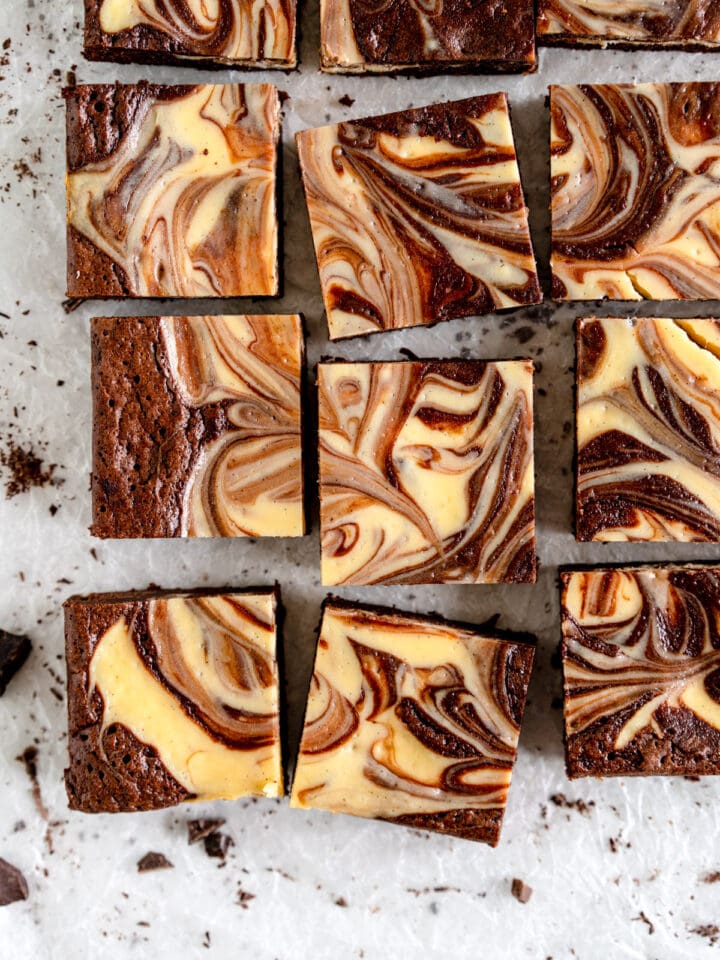
      Recipe for Zucchini Bread

      Filed Under: Loaf Cakes and Quickbreads

      Iced Buns

      side shot of pink buns

      These Raspberry Iced Buns are a New Zealand Bakery Classic. They have a super soft Tangzhong bread roll, filled with raspberry jam and finished with sweet pink icing. The dough for these soft bread rolls is super versatile and you can divide and use to make a whole range of soft bread roll recipes!

      side shot of pink buns

      Raspberry Jam Iced Buns

      Hi hi! Just popping in here to share the recipe for these Raspberry Jam Iced Buns with you. I developed the recipe for my super soft burger buns a while back, and I am just fully obsessed with how perfect and soft the dough is that I had to turn it into a bunch of other recipes too.

      These Raspberry Iced Buns go by many names. We called them 'pink buns' growing up and they are a NZ bakery / supermarket bakery classic. I guess they first originated as a way for bakeries to repurpose bread rolls by filling them with jam and finishing them with icing. Iced buns were the ultimate after school snack.

      I of course had to recreate them with my super soft dough. I didn't stray too far from the original - perfect, super soft bun, raspberry jam filling, and a super sweet but very very nostalgic pink icing. They taste just right.

      • soft baked bread rolls
      • bread rolls with piped jam

      How to make Frosted Buns

      These Raspberry Iced Buns follow the same format as my Super Soft Burger Bun recipe. The dough is exactly the same, they are just made smaller, baked together, then finished with a raspberry jam bun filling and a sweet pink icing.

      • Make your Tangzhong - Tangzhong is made by cooking together bread flour and milk in a pan until a thick paste forms. This goes into the bowl of the stand mixer.
      • Add cold milk - I borrowed this tip from King Arthur - they add cold milk to the hot Tangzhong to cool it down so it's cool enough that it doesn't kill the yeast.
      • Mix in remaining ingredients - Pop everything else except for the butter into the bowl and throw it onto your mixer. Let it mix for about 10-15 mins until it is smooth and elastic and pulling away from the sides.
      • Add butter - Room temperature butter goes in and you keep mixing until it is incorporated. This only takes a few minutes. Make sure your butter isn't too soft here or it will get all melty.
      • First rise - Shape the dough into a ball and stick it into a bowl. Rise it at room temperature, or see further down the post for instructions on how to do the overnight rise
      • Pre-shape your buns - Divide your dough into however many buns you like and give them a quick pre-shape, then rest them for 10 minutes, quickly shape again, and arrange on a pan.
      • Do the second rise - This is another room temperature rise, where the dough will get super puffy. The buns will rise together.
      • Egg wash and bake - The egg wash helps the buns to bake up beautifully golden. You can use milk here too if you want. I like egg wash. Bake until they are golden brown.
      • Fill with Jam - These iced buns are filled with jam. I used raspberry, but you can use whatever you like. Poke a hole in the tops of the buns with a chopstick then pipe the jam into each bun.
      • Finish with icing - I finished these iced buns with a super simple bun icing. I made mine pink, same as what I grew up eating, but you're welcome to leave it plain. You can also add some coconut on here too if you like.
      pan of frosted buns

      Tangzhong Buns

      The Tangzhong method used for these iced buns is an Asian Technique, and involves cooking part of the flour and water in a bread recipe to form a thick paste, or a roux. The process of making the Tangzhong gelatanises some of the starch in the flour. This means the flour is able to absorb a lot more water, and also holds onto it throughout the dough making process. This gives an incredibly soft bread which stays soft a lot longer than other bread does. Tangzhong (which is a Chinese word) is made by cooking the liquid and flour together, while the Yudane method (which is Japanese) involves adding boiling liquid to the flour and leaving it to set overnight.

      The benefit of using a roux means that the bread dough can stay 'lean' - so very little added fat etc but still stay extremely tender and soft. The Tangzhong means the bread stays soft for a long time, which means these keep and freeze super well. It works perfectly in these iced buns!

      frosted pink bread rolls

      One soft bread roll dough, many uses

      The thing that I love the most about this Tangzhong based bread dough is how versatile it is. We all know how much I love a base recipe. I truly believe that it is such a great thing to have. You can take one base recipe and master it, then your options are endless. And this dough is such a good example of this (along with my base brioche dough). It can be used in all sorts of applications - savoury and sweet. It can be small batched like in these cheese buns.

      The other thing that you can do is to make one batch (or a double), and make a few different shapes from the same dough. You could shape some into burger buns, then some into these iced buns. You could also use this dough for these baked cream buns and shape them into finger buns - I haven't tried this yet but I can't wait as I know they will taste just like how I remember.

      jam filled bun

      Why did my bread rolls go wrinkly?

      This dough is super soft and fluffy, so when the buns come out of the oven, they may deflate a little. They go a little wrinkly and get little folds in the edges.

      This is totally normal - it just comes from the dough being really soft. Mine always collapse, so do not worry if yours do a little too!

      Can this recipe be made without a mixer?

      I haven't tried this iced buns recipe without a mixer, but I really do think that this particular recipe needs it. Because the dough needs to develop a lot of strength and is quite sticky, along with having a really long kneading time, it is best that you use the mixer for it.

      You are welcome to try making this recipe by hand but I have no idea how it will go. Alternatively my small batch no mixer brioche would work quite well here if you wanted to make a small batch with a different dough. You could double it too to make more rolls!

      • side on shot of iced buns
      • pink iced buns

      How to freeze bread rolls or buns

      The great thing about these super soft Tangzhong iced buns is that they are super easy to freeze. If you would like to freeze some of the rolls, do not fill them with jam or frost them. Instead, pop them into a ziploc bag or lightly wrap.

      To defrost the rolls, leave to sit at room temperature. You can refresh them in the microwave or oven to freshen. Fill and frost as directed.

      How to slow down rising at any time.

      If at any time you're making bread and you find you need a little more time while it is rising / you're not ready to bake yet, pop it into the fridge. Putting dough into the fridge slows down the rising time. Just make sure the dough is nicely covered so that it doesn't dry out on the surface.

      How to tell when buns are baked

      You want to bake these until they are a nice golden brown. However there is another way to check too if you want - you can take their internal temperature using a probe thermometer. For a dough like this, 195°f -200°c (87°c - 93°c) is an indicator that they are done. I often do this just to double check but if you don't have a thermometer you don't need to do this step!

      pan of bread rolls

      Frequently Asked Questions for Iced Buns

      What is Bread Flour in New Zealand?
      Bread flour is a higher protein flour - high grade flour works if you are in NZ!

      What is a substitute for milk powder?
      If you don't have it, you can just leave it out!

      Can this recipe be small batched?
      These cheese buns are a small batch version of this dough - this dough is also egg free.

      Can I use active dry yeast in this recipe?
      Yes, that will work just fine. What you need to do is pop the tangzhong in your stand mixer bowl then add the cold milk. Stir around - this will warm the milk up a little. Add the sugar then add the yeast then leave to sit for 5-10 minutes until foamy. Then proceed with the rest of the recipe!

      Can the first rise be done overnight?
      I haven't tried it, but it should be able to. These have quite a long rise time, so you will want to leave the dough standing out on the counter for 30 minutes or so before putting it into the fridge overnight, just to kick start the rise time. The second rise the next day will take a little longer too as you are starting with cold dough.

      Can I use Dairy free milk?
      It should work just fine. Use something that is on the creamier side if you can and just do a 1:1 sub for the milk.

      corner shot of frosted pink buns

      ❤️ Made this recipe and love it? ❤️

      I would LOVE for you to leave me a review and star rating below to let me know how you liked it! Also, please make sure to tag me on Instagram!

      Answers to your baking questions

      Over the years, many of you have asked me questions about:

      • baking in grams
      • adjusting oven temperatures
      • what kind of salt to use
      • and many more!

      I've curated and answered them all for your easy reference in this frequently asked questions post!

      Filed Under: Buns and Rolls, New Zealand Recipes

      Vegan Banana Muffins

      vegan banana muffins

      These vegan banana muffins are soft and moist, and made with chopped chocolate and cubed banana chunks. The texture is divine! They're moist, bake up well, and don't require a lot of effort. Instructions provided for a small-batch recipe (6 muffins), and also for a full tray of 12 muffins, too!

      muffins with chocolate chunks in muffin pan

      Hi hi! Just popping in here to share this vegan banana muffin recipe with you! They are super easy to make and are a great egg free if you are looking for something to use as a base, or are just looking for recipes with ripe bananas.

      These vegan muffins are super adaptable - you can scale the recipe as you like. I usually go for a banana bread when I need to use up ripe bananas, but these easy muffins are so quick and easy they are becoming my new fave!

      I love making Muffins from scratch - they are quick, and come together in less than fifteen minutes - the time that the oven takes to preheat. In this guide to easy vegan muffins, we talk about:

      muffin batter in muffin pan with chocolate and sugar

      Vegan Banana Muffin Recipe

      This recipe for vegan banana chocolate chip muffins comes from my friend Chelsea. I texted her asking her if she had a good banana chocolate chip muffin recipe and she sent this one through.

      It just so happens to also be a vegan muffin recipe, so I test drove it, realised I wasn't going to be able to develop anything better myself, and asked if I could put it on my website. She said yes because she's the best - get yourself some friends like mine.

      I scaled the recipe back to 6 muffins because there are only two of us in the house. Because it is an egg free banana muffin recipe this was super easy. Grams for the win. Double this recipe if you like, but to me, six muffins is the perfect amount of muffins. Here's how to make vegan banana muffins:

      • Combine all your wet ingredients in a bowl.
      • Chop your banana up - there are notes on this further down in the blog post as to why this banana muffin recipe uses chopped and not mashed bananas!
      • Combine wet ingredients and add to the bowl.
      • Fold through Banana and chopped chocolate.
      • Divide between muffin pans and add additional chocolate and a sprinkle of sugar on the tops.
      • Bake until done! That's it! Super easy vegan banana muffins!
      baked muffins with sugar topping

      Tips for great muffins

      I make this recipe in a few bowls - one for the wet and one for the dry. Then I chop up the banana into the bowl that had the wet ingredients in it. However you could absolutely do this in one large mixing bowl if you wanted to.

      To do this, combine the dry ingredients in a bowl, then add the wet in and give it all a good stir. Chop the banana directly into the bowl (with the bowl on the scale) then pop in the chopped chocolate.

      It is important not to over mix muffin mixture. This recipe is a little more forgiving but it is still something that is good to keep in mind. I like to add the banana and the dark chocolate once the batter is just mixed, so it finishes mixing as you fold the banana and chocolate in.

      Adding mix-ins to muffins

      I haven't tried adding anything else to these vegan muffins, but I think it would work fine as they are a versatile base. You could add in some chopped nuts such as pecans along with the banana, or add in some cinnamon.

      You could also replace the chocolate for some blueberries. If you use frozen berries, do not thaw. Toss them in a tiny bit of flour before adding in so they don't sink.

      broken open mufin on plate

      Parchment Paper Muffin Liners

      I made my own muffin liners for these muffins to make them more 'bakery' style - meaning that they rose a little higher in the muffin tray as the paper which sticks out also supports them as they bake.

      To do this I just cut some parchment paper into squares - 5.5" (14cm) seemed to work well for me but feel free to go larger if you want. I then sprayed each cavity with spray, and pressed the paper down into the muffin tins using a wooden tamper. A narrow glass would work great too. You can also use pre-cut parchment paper squares (I have a 1000 pack so i'm set for life maybe)

      Making your own muffin liners does make them a little trickier to fill as the paper likes to jump out a little, but once you have the first quantity of muffin batter in there you are fine.

      If you wanted to make 'tulip style' liners you can also cut four slits in the paper squares, starting at the edge and cutting toward the middle, then settle the square in the cavity the same way - it does sit a little more politely.

      If you want to use pre-made muffin cups or just regular cupcake liners, go for it! If your muffin pan is super non stick you could probably also just do a good spray of baking spray or rub them with butter and do away with the paper completely.

      baked muffins in muffin pan

      Best Bananas for Banana Muffins

      These Vegan Banana Chocolate Chip Muffins work best with bananas that aren't totally black. You want them to still have a tiny bit of firmness to them as unlike other banana muffin recipes, they are chopped rather than mashed before going into the banana muffins.

      If yours are totally black that's just fine too - it will work just fine with both. Just don't mash them up as you want them to stay slightly chunky within the banana muffin.

      I haven't tested these with frozen banana but I am sure that it will work. Defrost them as normal then just drain off any excess liquid and use the weight of the banana called for in the recipe.

      I haven't tried adding anything else to these muffins, but I think it would work fine as they are a versatile base. You could add in some chopped nuts along with the banana, and add in some cinnamon.

      You could also replace the chocolate for some blueberries. If you use frozen berries, do not thaw. Toss them in a tiny bit of flour before adding in so they don't sink.

      muffins in parchment paper liner

      Chopped Chocolate vs Chocolate Chips for Muffins

      I tested these with both chocolate chips and chopped chocolate, and once again, chopped wins over chocolate chips. Using chopped chocolate means you get delicious melty pockets of chocolate within the muffin. You also get little shards of chocolate throughout the muffin batter.

      If you have chocolate chips they work great too. Use what you have on hand, but if you do have a bar of chocolate handy, I highly recommend! Chopped chocolate also works great to add to the tops of the muffin for a nice chocolate topping.

      I also added some raw sugar to the tops for a nice crunchy finish. Both of these are optional - do what you like here if you prefer naked muffins!

       muffin batter in pan

      Frequently Asked Questions

      How to make vegan muffins fluffy
      It is important to not over mix your muffins - particularly when it comes to vegan muffins. Make sure you only just incorporate the wet ingredients. You can add the chopped banana and chocolate when the mix is just coming together to help avoid over mixing.

      What tools and equipment do you use?
      You can see a full list of all the tools I use here

      Can I use Dairy milk in this recipe?
      Yes! I used Oat milk for these to keep them vegan but if you want to use regular milk, go ahead! Any plant based milk will work - soy milk or almond milk would be good too.

      What is the best pan to use?
      I used a six cup muffin pan, but if you make this in a regular 12 cup, put the muffins in every second hole so they have some space between them.

      Why didn't my muffins rise?
      This recipe doesn't rise loads! They don't have a nice tall muffin top but I promise they are still very very good!

      What can I use instead of apple cider vinegar?
      I haven't tried anything else sorry! However Lemon juice or another light or fruity vinegar should work if you wanted to give it a go. Stay away from malt vinegar or anything super strong like balsamic.

      What is a neutral oil?
      Neutral oil is anything that is neutral tasting - extra light olive oil, grapeseed oil, canola oil, vegetable oil etc.

      muffins in parchment paper ready to eat

      ❤️ Made this recipe and love it? ❤️

      I would LOVE for you to leave me a review and star rating below to let me know how you liked it! Also, please make sure to tag me on Instagram!

      Answers to your baking questions

      Over the years, many of you have asked me questions about:

      • baking in grams
      • adjusting oven temperatures
      • what kind of salt to use
      • and many more!

      I've curated and answered them all for your easy reference in this frequently asked questions post!
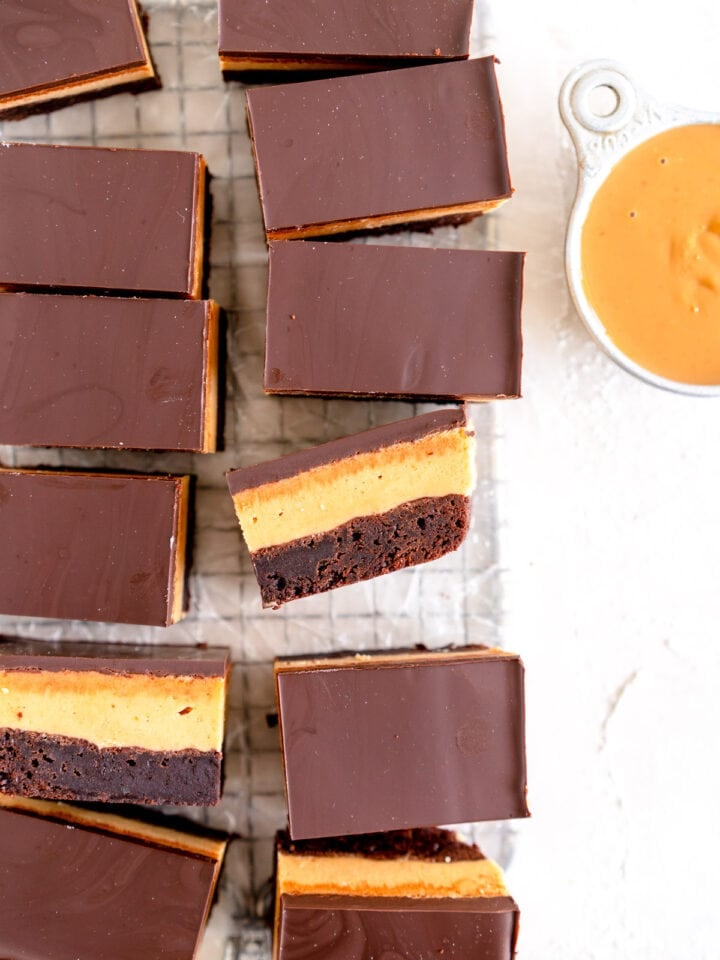
      Filed Under: Muffins, Small Batch Baking Tagged With: Dairy Free, Egg Free, Vegan

      Blueberry Crostata

      baked blueberry crostata

      This Blueberry Crostata has a cooked homemade balsamic blueberry pie filling and a flaky pie crust. It is assembled in a tart pan and has a simple lattice pie top. This Blueberry Balsamic Crostata can be made with fresh or frozen fruit and is perfect for berry lovers!

      blueberry crostata ready to bake

      Blueberry Balsamic Crostata

      Hi hi! Just popping in to share the recipe for this Balsamic Blueberry Crostata. I made this months ago, while we were packing to leave NYC, and I have been super excited to share it with you. This Blueberry Crostata has a flaky homemade pie crust, an easy blueberry pie filling, and a super cute and easy lattice top. I made it in a tart pan, as I love how easy it makes things. Making a pie recipe in a tart pan also gives you the most amazing crust to filling ratio.

      The filling is a precooked berry pie filling, spiked with some lemon zest and balsamic vinegar. It can be made with fresh fruit if that is in season for you right now, but I also tested it with frozen blueberries and it worked amazingly. This one took a whole bunch of testing so I think we ate different versions for about two weeks straight, but we loved it and I hope you do too!

      Crostata is a name that is used for a galette style pie and also an Italian Jam tart made with a short pastry. This is kind of a mixture of both - a blueberry pie / blueberry tart / crostata hybrid. Whatever you want to call it, there's flaky pie dough, blueberry pie filling and a really good time.

      • blueberry crostata with slice taken out
      • side shot blueberry crostata

      How to make Blueberry Crostata

      This recipe is a bit of a pie / tart hybrid. I did it in the style of an Italian crostata, which usually has a jam filling but has the lattice top with filling poking through. This Blueberry pie has a cooked blueberry balsamic pie filling which is super delicious and easy to make. A few of the steps can be done ahead of time, meaning you can break up your workload and have this ready for dessert or any time pie eating!

      • Make the Pie Crust. This recipe has a super simple homemade pie crust. It is the same recipe that I use for all of my pies.
      • Prepare the blueberry filling. This Blueberry Crostata has a pre cooked blueberry pie filling, which can be made ahead and stored in the fridge until ready to use.
      • Assemble the crostata. I did a lattice top on this as the filling is already thickened. However, you can finish it any way that you like.
      • Chill. The Crostata needs to chill for at least 30 minutes before baking, in order to give the dough time to cool right down before it goes into the oven.
      • Bake. Bake the crostata until the top is golden brown and the filling is super bubbly. Let it cool before serving.
      sliced blueberry crostata

      Blueberry Pie with Frozen Blueberries

      This is a super easy recipe if you are looking to make blueberry pie with frozen blueberries. This makes it great to make any season. I tested it with both fresh and frozen blueberries and couldn't notice much difference between them. This means you can have a perfect blueberry crostata right in the middle of winter!

      Pre cooked Blueberry Pie Filling

      Pre cooking pie filling, particularly for something like this blueberry crostata, is super helpful. Having a pre cooked filling cooks out some of the moisture of the berries, meaning they won't leak liquid all over the pie crust when the crostata is assembled. Pre cooking gives you a chance to cook down the filling with the thickener. This means that you know how thick the pie filling is going to be before it goes in the oven. You know how it will bake up, which eliminates that awful guessing game of 'is my pie going to be ok, or soupy in the middle'. We don't want any soggy bottoms around here, and a pre-cooked filling really helps to ensure that.

      The steps for pre-cooking a pie filling are super simple. I like to do it ahead if I can - that way it is all already done, and ready and chilled.

      1. Combine berries, lemon zest, and balsamic in a pan.
      2. Place over heat and cook until the mixture is boiling, then continue to cook until the berries have released some of their juices and are starting to break down.
      3. Combine the sugar and cornstarch in a bowl. Mixing the sugar and starch together removes any lumps you may have in the starch, reducing the chances of a lumpy pie filling.
      4. Add the sugar and starch to the pan, and cook until thickened. This should only take a few minutes.
      5. Transfer to a container and leave until completely chilled. Having a chilled filling means that when you assemble you aren't adding warm filling to a cold pie crust, which could make it hard to assemble.

      If you need to chill the filling down quickly, you can pop it onto a sheet pan and cover with plastic wrap. Spreading it out on a pan rather than putting it in a container increases the surface area, so it chills quicker.

      • pastry case
      • cooked blueberry filling

      How to make Pie in a Tart Pan

      I used a removable bottom tart pan to make this berry crostata - rather than a more standard pie pan. I love using a tart pan for a few reasons:

      • It is super easy to get nice clean edges on a tart pan. Instead of trimming like a pie crust, you can just press the pie crust against the sharp edge of the tart pan and it cuts away cleanly.
      • A tart pan gives a great crust to filling ratio. A tart pan is shallower than a pie pan, so you get a thinner layer of filling to go with the flaky lattice pie topping.
      • Removing this blueberry crostata from the pan is super easy. My favourite way to remove a tart from a pan like this is to use a bowl. Turn the bowl upside down, and then press the tart down onto it. The outside ring will drop off, leaving the tart on the base. You can either slide the crostata off, or serve on the base.

      If you would like to make this in a pie dish it should work just fine. Just work out the capacity of your pie pan compared to the tart pan and scale accordingly for the filling. The crust recipe will stay the same.

      Super Flaky Pie Crust Recipe

      I used my regular flaky pie crust recipe for the crust for this crostata. It is super versatile and easy to work with, thanks to the laminations in the dough.

      When dividing the dough to use for this blueberry crostata, I like to shape the two pieces into different shapes. The piece of dough that is to be used for the base crust is shaped into a disc. The one to be rolled into a lattice is shaped into a rectangle then wrapped up and rested. Starting the dough in the shape you intend it to be in when rolled out is a great way to give yourself a head start on the shape of the dough - it is much easier to roll dough into a rectangle if it starts as one!

      How to break up the workload

      There are a few ways to break up the workload for this blueberry crostata. The components can be made ahead of time, then the whole crostata assembled later.

      • Make the filling ahead of time. The Blueberry Pie Filling can be precooked up to a few days in advance and stored in an airtight container until ready to use.
      • Mix pie dough ahead of time. I like to make a whole bunch of pie dough all at once. I wrap it tightly and then store in the freezer until I am ready. Pie dough defrosts overnight in the fridge and is then ready to use. It will also store up to a few days in the fridge if you want to make it ahead and chill until you are ready.

      How to make a lattice top on a pie

      I finished this Blueberry Crostata with a simple lattice top, but just placed the strips on an angle to give it an angled lattice. Lattice on pies are super simple to do, you just follow the pattern:

      1. Lay out all the vertical strips on the pie filling. Make sure that the spacing is even between them. This will form your foundation.
      2. Lift every second strip up and fold it back - so strips 1,3,5,7 etc.
      3. Place a strip of pie dough down and carefully unfold the strips and place them back down.
      4. Fold back every strip again but starting with the alternate set of strips - so lift up strips 2,4,6,8 etc and fold them back.
      5. Place another strip of pie dough and reset your strips.
      6. Repeat the process, alternating which strips you fold back. I like to start in the middle and work my way down, and then start in the middle and work my way toward the top of the pie.

      Use the longest strips in the middle of the pie. You can use shorter strips as you get closer to the edges of the pie. If you have any strips which have messy parts on them, arrange them so that the mess part is covered by another strip of pie dough (if you like, messy parts on pies are also fine!)

      See the video below for a visual guide on how to lattice a pie.

      crostata ready to bake with sugar

      Frequently Asked Questions about Blueberry Crostata

      Can this Blueberry Crostata be made ahead of time?
      Yes! You can either bake it ahead of time and serve room temp, or assemble it and leave it assembled overnight in the fridge to bake the next day.

      What can I use instead of Turbinado sugar on the top?
      You can just leave it off if you don't have any. Regular sugar will burn.

      Can the filling be made with other berries?
      I haven't tried it but it should work! You may need to increase the starch a little if the berries are more juicy than blueberries.

      Can this crostata be frozen?
      Yes! You can either freeze it before baking (without egg wash), or freeze the baked crostata.

      What pan did you use?
      I used this tart pan.

      I am worried my pie will get a soggy bottom?
      If you bake it properly, you will not get a soggy bottom. Don't be afraid to bake your crostata until the crust is nice and golden. Leave it on the lower oven rack the whole bake time if you need. If the top is browning too fast, tent it with foil. Go by how it looks rather than an exact bake time. I tested this 6 times and didn't have any issues but you need to go by how the crostata is baking rather than the bake time - all ovens are different!

      • side on shot berry crostata
      • slice of blueberry crostata
      baked blueberry crostata

      ❤️ Made this recipe and love it? ❤️

      I would LOVE for you to leave me a review and star rating below to let me know how you liked it! Also, please make sure to tag me on Instagram!

      Answers to your baking questions

      Over the years, many of you have asked me questions about:

      • baking in grams
      • adjusting oven temperatures
      • what kind of salt to use
      • and many more!

      I've curated and answered them all for your easy reference in this frequently asked questions post!
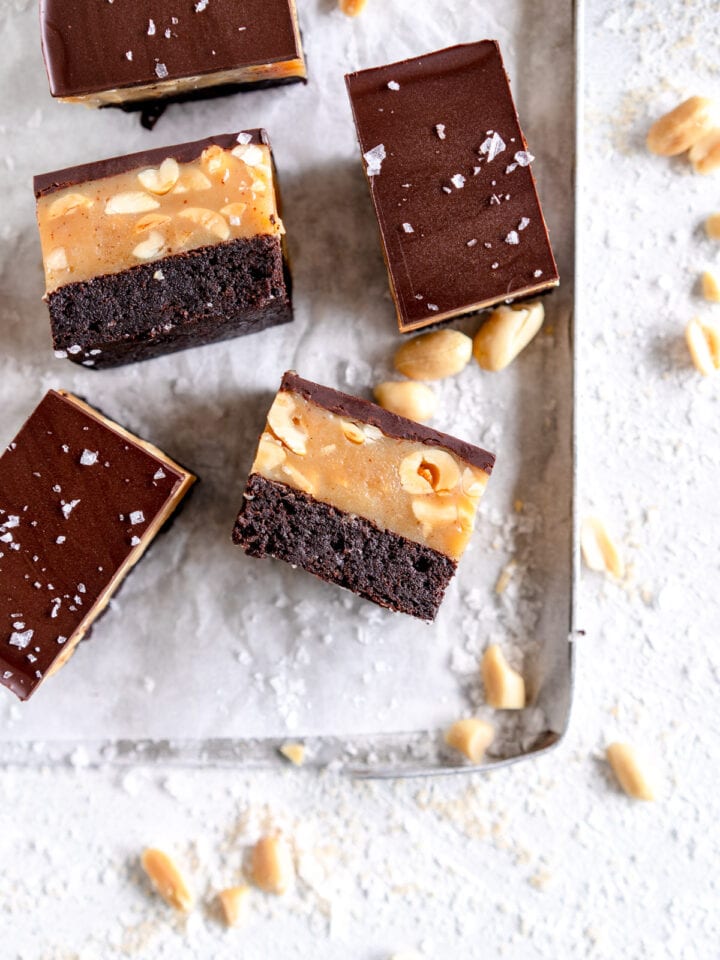
      Recipe For Blueberry Crostata

      Filed Under: Fruit Pies, Pies Tagged With: Egg Free

      Cinnamon Bun Twists

      angle shot of cinnamon bun twist

      These Cinnamon Bun Twists are made with a small batch brioche recipe and do not need a mixer! These braided cinnamon buns are easy to make and have a soft dough and an easy cinnamon bun filling. They are made in a muffin pan for perfectly shaped cinnamon twists!

      angle shot of cinnamon bun twist

      Cinnamon Twists

      Hi hi! Just popping in to share the recipe for these Cinnamon Bun Twists with you! When I was working on my small batch no mixer brioche recipe, I wanted to try making a few thing with it to put it through its paces. There are still some small batch cinnamon rolls and doughnuts coming your way. However I wanted to see if it could hold up to being made into a twisty cinnamon bun and I am happy to report that it certainly can! These Cinnamon Bun Twists are much easier to make than they look. They are super soft and filled with a simple cinnamon bun filling. I finished them just with some powdered sugar, but you could also add some Swedish Pearl Sugar to them too if you like!

      • angle shot cinnamon twist
      • side close up shot cinnamon twists

      How to make Cinnamon Bun Twists

      These Cinnamon Twist Buns have a few steps to them, but they are super easy to do.

      • Make the dough. These twisted cinnamon buns are made with my small batch brioche recipe. You can either make this in a mixer, or you can do it by hand. The first rise is done in the fridge to help make the dough easier to roll out.
      • Roll the dough out and spread with the filling. Fold the dough up into thirds (see video demonstrating this)
      • Cut the dough into strips - you should get 8 strips from the dough, one for each bun. Chill the strips down.
      • Braid the buns. There is a better explanation of this further down the post. It's super simple but they look so, so good. I recommend starting with the wonkiest strip first just so you can use one to practice.
      • Give the buns a second rise, then brush with egg wash and bake. This recipe is baked at 375°f / 190°c, a slightly higher temperature than other recipes, as the buns are only small.
      • Finish with powdered sugar. You could add a sugar syrup here too if you wanted, or a glaze, but I love them plain.
      top down cinnamon twist

      No Mixer Small Batch Brioche

      These buns use my small batch brioche. You can use a mixer for this if you like, but I wanted to develop a recipe for a brioche that can be made by hand. Not everyone has a mixer, and sometimes it's fun to do by hand too. I think that making bread by hand really gives you a good idea of how the dough is meant to look. It will get sloppy when you add the butter in but don't worry - it will come together.

      • Combine dry ingredients - This brioche is pretty standard when it comes to ingredients. All-purpose flour, instant yeast, sugar, salt.
      • Add wet ingredients - One egg, lightly beaten, and some milk goes in. The butter is incorporated later.
      • Bring together - You want to develop some strength in the dough here. This kneading process will take about 8-10 minutes. Bring the dough together in your bowl then transfer to a work surface and work the dough until it is soft and smooth, and when you press lightly with your finger, the indentation springs back.
      • Add the butter - The butter is added to the dough. This step will get super sloppy. Don't worry though. It will come together. Keep kneading and mixing until it comes together. Then give a few more minutes of mixing just to ensure it is mixed in. You want it to bounce back nicely when you press with a finger.
      • Leave to rise - This dough for this purpose works best with a cold rise. I give it some time on the counter first to kick start the rise and then pop it into the fridge.

      A plastic or metal bench scraper will be super helpful when you are incorporating the butter in. Just keep scraping up the excess butter and squishing it onto the dough. It will come together.

      powdered sugar on cinnamon twists

      How to Twist Cinnamon Buns

      The method for making these I got from Richard Bertinet, although I have seen it a few places before too. Basically you fold the dough up, cut strips, and braid them up. The braid then gets rolled up into a twisted cinnamon bun!

      1. Cut the folded dough into strips, each about 4cm wide. Chill the strips for 15 minutes or so to help firm them up.
      2. Cut the dough into three strips, leaving one end (about 1cm worth) intact
      3. Braid the three strips until you have a single braid.
      4. Starting with the intact end, roll the braid up into a ball.
      5. Shape lightly if needed and then place in the muffin pan.
      • strip of dough
      • cut strips in dough
      • braided bun
      • cinnamon twist bun

      Tips to make dough ahead of time

      There are a few ways that you can break up the workload when you are making brioche based things. The main one is to make your dough ahead of time. This Small Batch Brioche dough does well with an overnight cold rise. Rising the dough in the fridge slows down the rising process. This means you can leave it in the fridge until you are ready to bake it, rather than your schedule being dictated by when they dough is ready to be rolled out.

      Working with cold dough is also significantly easier. Chilling the dough firms up the butter, making the dough a little firmer to work with but still pliable and easy to roll out. I find that starting with a cold dough means you can roll out dough much more evenly, and also get it thinner, making it easy to get the right sized rectangle of dough for making these cinnamon twisted buns.

      This dough needs a minimum of 2 hours in the fridge to rise. Standing it on the counter to give it a little kick start helps a lot. I often make it a day ahead if I can. Ideally you do not want to leave it more than 24 hours in the fridge on the first rise, however I have left it longer before and it has been ok too.

      How to roll out a nice even rectangle of dough

      Rolling out a nice even rectangle of dough can be really tricky. I've been there. There are a few wee tricks though that can make it a little easier.

      1. Shape your dough into a rough rectangle. The dough will probably have somewhat of a round shape from being in a bowl. This is fine if you want round dough. However, if you start with a rectangle you are more likely to have a more even rectangle of dough when you roll out. Squish the dough into a rectangle shape. I like to use a bench scraper to make the sides nice and straight.
      2. Flatten your dough slightly with your rolling pin. If you start rolling straight away, the dough will roll out unevenly. Instead, flatten it lightly with your rolling pin. Press down on it a few times to flatten it, starting at the bottom and working your way up, then turn the dough 90 degrees and repeat the process again. What this does is gives you a larger flatter piece of dough to start rolling out, which is easier to keep an even thickness.
      3. Square off your rectangle as you go. As you are rolling out, pause a few times to square off the edges of your dough. Again, I like to use a bench scraper for this. It is easier to stop a few times and see what is happening than roll out all in one go and then try and fix any unevenness.

      How to get a clean cut on cinnamon buns

      Chilling the dough down once it has been cut into strips will help you get a nice clean cut on your dough. This gives both the dough and the filling a chance to firm up a little. I use the fridge but you can also use the freezer for about 5 minutes if you're in a rush.

      Make sure that you wipe the blade of your knife between cuts too if needed.

      Doubling this recipe

      This recipe can easily be doubled. When it comes to rolling out, you can go about this two ways. You can either divide the dough into two and roll out two rectangles, or you can double one dimension of the dough and roll yourself out a 64x36cm rectangle. You want to keep the other dimension the same. When it comes to folding if you have doubled the dough, fold from the long end so you end up with a folded rectangle that measures 12cmx64cm.

      Can these buns be made with other fillings?

      Yes, you can fill these with whatever you like. However - remember that they need a lot of twisting, so you don't want to go with anything too slippery. I tried testing these with Nutella and it was a huge mess. If you wanted to use a chocolate filling, I would recommend my espresso chocolate babka filling (a half batch should work well). Make sure you chill the strips in the fridge to let the filling set up.

      If you don't want to use cardamom in the filling you can also just replace it with cinnamon. You could also spread the dough with some room temperature butter then sprinkle it with some sugar which has had lemon zest and vanilla rubbed into it. Just don't use Nutella. Trust me on this one.

      • twisted cinnamon bun
      • cut open cinnamon twist

      Frequently Asked Questions for Cinnamon Twists

      Can this dough be made in the mixer?
      Yep! Pop everything except for the butter into the mixer and mix for 10 min until the dough comes together and is smooth, then add butter and mix to incorporate then give it a further 5 minutes until the dough is smooth and elastic.

      Can this recipe be made all in one day?
      Yes. Ideally you want to start with chilled dough when you roll it out though. So give the dough 20 min on the counter then transfer to the fridge for about 2 hours to give it a chance to rise.

      Do I have to chill the dough in the fridge?
      You don't have to but you need to roll out the dough quite thin before spreading with the filling. It's much much easier to do this with chilled dough. Skip that step if you want but you've been warned.

      Can these be finished another way?
      Yes! You can do whatever you like here. They would be delicious sprinkled with some Swedish pearl sugar before they go in the oven, or you could glaze them babka style with a sugar syrup as soon as they come out. I just used powdered sugar, but these would also be good with a simple icing.

      cut open cinnamon bun

      For more Small Batch recipes, check out:

      • Peanut Butter Brownie Bars
      • Small Batch Dairy Free Brownies
      • Rhubarb Custard Buns
      • Small Batch Chocolate Chip Cookies

      ❤️ Made this recipe and love it? ❤️

      I would LOVE for you to leave me a review and star rating below to let me know how you liked it! Also, please make sure to tag me on Instagram!

      Answers to your baking questions

      Over the years, many of you have asked me questions about:

      • baking in grams
      • adjusting oven temperatures
      • what kind of salt to use
      • and many more!

      I've curated and answered them all for your easy reference in this frequently asked questions post!

      Recipe For Cinnamon Bun Twists

      Filed Under: Brioche, Cinnamon Rolls, Small Batch Baking

      Pizza Pretzels

      These Pizza Pretzels are a fun twist on a regular soft pretzel recipe. These Small Batch Pretzels are covered in cheese and pepperoni and served with the dip of your choice. These cheese pretzels are going to be a crowd favourite!

      Pizza Pretzel on pan

      Pizza Pretzels

      Hi hi! Just popping in to share the recipe for these Pepperoni Pizza Pretzels with you. Before we left New York I redeveloped my Pretzel dough recipe and made a few things with it which I will share here. The pretzel dough is super versatile and easy to make, so I am excited to show off what it can do!

      I had a bag of tiny pepperoni in my fridge so naturally I had to make cheese pretzels and then take it one step further and add the pepperoni to make pizza pretzels.

      These cheese pretzels are covered in pepperoni and are just so good. I scaled the recipe back to a small batch pretzel recipe. The cheese is crunchy and the pepperoni is salty and flavourful. You can serve them with whatever you like - I used a tomato based sauce but they would also be amazing with hot honey.

      • pepperoni and cheese pretzel ready for oven
      • baked cheese pretzel

      How to make Small Batch Pretzels

      I scaled back my regular pretzel recipe, which made 12 large pretzels. This smaller batch pretzel recipe makes 6 pretzels, but you can easily double it if you like.

      This recipe is a pretty stiff dough, so I like to make it in the stand mixer with the dough hook. I haven't tried making it by hand. It would be quite hard to knead it by hand I think. You are welcome to try but please know it has not been tested so I cannot guarantee the results.

      • Make the Pretzel Dough. This can be done either the day before, or the same day. Leave to rise.
      • Divide the dough and shape the pretzels. I did traditional pretzel shapes, but these would work great just as pretzel sticks or twists too.
      • Second rise. I do the second rise for pretzels uncovered, in order to let the pretzels develop a bit of a skin. This helps them stand up to the water bath.
      • Chill. Slightly chilled dough is a little less floppy and easier to work with when putting the pretzels in the water bath. Popping the risen pretzels into the fridge helps with this.
      • Baking Soda bath. This step gives the pretzels their pretzel taste and helps them to get golden brown in the oven. I used baked baking soda for this step.
      • Add cheese and pepperoni. These are pizza pretzels, so I added grated cheese and tiny pepperoni. Leave the pepperoni off if you would just like plain cheese pretzels.
      • Bake. Bake the pretzels until they are golden brown, the cheese is nice and bubbly and the pepperoni is nice and sizzly.
      • Enjoy! Serve alongside some dipping sauce of your choice.
      angle shot pepperoni pizza pretzel

      How to Shape a Pretzel

      Pretzels are easy to shape once you get the hang of it. I've added a shaping video down below, or you can follow these steps:

      1. Divide the dough into the number of pretzels that you want to make.
      2. Shape each piece of dough into a ball and place under a piece of plastic wrap to rest.
      3. Flatten or roll each ball into a rectangle and then roll into a log. Place back under the plastic wrap.
      4. Working with one piece of dough at a time, roll the log out to a 30" rope. This will seem long but remember that the pretzel will puff up.
      5. Shape the log of dough into a 'U' shape.
      6. Cross the two ends over each other twice, to form a twist.
      7. Bring the ends down and press onto the rounded part of the pretzel.
      8. Carefully transfer to a sheet pan
      9. Repeat with the remaining pretzels
      • full tray of pizza pretzels
      • pizza pretzel with cheese

      Baking Soda vs Lye for Pretzels

      Some pretzel recipes will have you use lye to soak the pretzels in. Giving the pretzels a wee bath in lye (sodium hydroxide) helps to speed up the Maillard reaction, which gives the pretzels that lovely brown colour and chew. However, lye is caustic (alkaline) and scary, so I used something a little less alkaline but still very effective - baked baking soda. Baking soda (sodium bicarbonate) is moderately alkaline, but baking it produces sodium carbonate, which is slightly more alkaline, so therefore perfect for dipping your pretzels without having to worry about the safety risk of using Lye. Yay chemistry!

      To make baked baking soda: Line a sheet pan with foil, and spread 1 cup of baking soda evenly over it. Bake at 250˚f / 121˚c for one hour, then transfer to an airtight container. This will be enough for four batches of pretzels - you use ¼ cup at a time.

      corner shot pretzel

      Pepperoni and Cheese Pretzels

      I found these tiny pepperoni when I was looking for pepperoni for another project, and had no choice but to get them to make these Pizza Pretzels as they are SO CUTE. The brand is "Hormel", and I got them in NYC just via online grocery. If you can't find them (they seemed to be a bit of a niche product), you can cut up a salami stick to form little circles of salami. Alternatively you could use slices of regular sized salami.

      Make sure that you put enough pepperoni on the pizza pretzels - as they bake they will rise a little and it will get spread out. You can always add more mid way through the baking process.

      If you don't eat meat you can just leave the pepperoni off. You could sprinkle the cheese pretzels with pizza style condiments too before baking - garlic powder, or chilli flakes, or some oregano! You do you here.

      Baking Pretzels on Silpat vs Parchment

      I use Silpat mats (silicone mats) when I am making pretzels as it stops them from sticking. I came across this in testing. After the pretzels came out of the water bath, if I put them directly onto the parchment, they were sticking super, super badly.

      There are two ways around this - either drain the pretzels for a few minutes on a wire rack after dipping and then transfer to lightly oiled parchment paper, or line the baking sheets with silpats or silicone baking sheets rather than baking paper.

      I found baking on silicone to be the easiest option - once the pretzels come out of the dip they are a little delicate, so moving them from the rack to the baking sheet can be a little stressful. It works though! A few silpats or silicone baking mats are a great investment! With these Pizza Pretzels the cheese doesn't stick to the mat too, so makes the whole process much easier.

      pretzels ready for oven

      Do I have to do the baking soda bath?
      If you don't, they won't taste like pretzels. The soak in the alkaline solution is what gives them the pretzel taste. It also gives the cheese something to stick to.

      What is Pretzel Salt?
      Pretzel salt is a coarse salt - it is opaque (which I think comes from having some air in it), so it gives a textural crunch. You can use a fine coarse salt too if you can't find pretzel salt

      Which type of cheese is best for Pretzels?
      I used a mixture of grated mozzarella and cheddar, but you can use whatever you have on hand. Mozzarella is mild and stretchy and goes great with the pepperoni slices.

      How should pizza pretzels be stored?
      I store these just in an airtight container or wrapped in foil if it isn't too hot. You can put them wrapped in the fridge if you like. To reheat you can pop in the microwave and re-warm. They are best eaten on the day that they are made though!

      Can I replace Instant Yeast with Active Dry?
      Yes. If you only have active dry yeast, it works as a 1:1 sub in the recipe. However you will need to activate it. Bring the milk to a lukewarm temperature, then add the sugar and the yeast. Leave for 10-15 minutes until it gets foamy, then add the rest of the ingredients and continue with the recipe.

      What is Bread Flour?
      Bread flour is flour with a higher percentage of protein. If you are in NZ or the UK it is 'high grade flour' or 'strong flour'

      Can the beer in the recipe be replaced?
      Yes, if you don't want to use it, you can use water.

      unbaked pretzels on pan

      For similar recipes, check out:

      • Pretzels with Cheese Sauce Dip
      • Caramelised Onion, Goat Cheese, and Sundried Tomato Pesto Pretzel Buns
      • Pretzel Bites with Feta Pesto Dip

      ❤️ Made this recipe and love it? ❤️

      I would LOVE for you to leave me a review and star rating below to let me know how you liked it! Also, please make sure to tag me on Instagram!

      Answers to your baking questions

      Over the years, many of you have asked me questions about:

      • baking in grams
      • adjusting oven temperatures
      • what kind of salt to use
      • and many more!

      I've curated and answered them all for your easy reference in this frequently asked questions post!
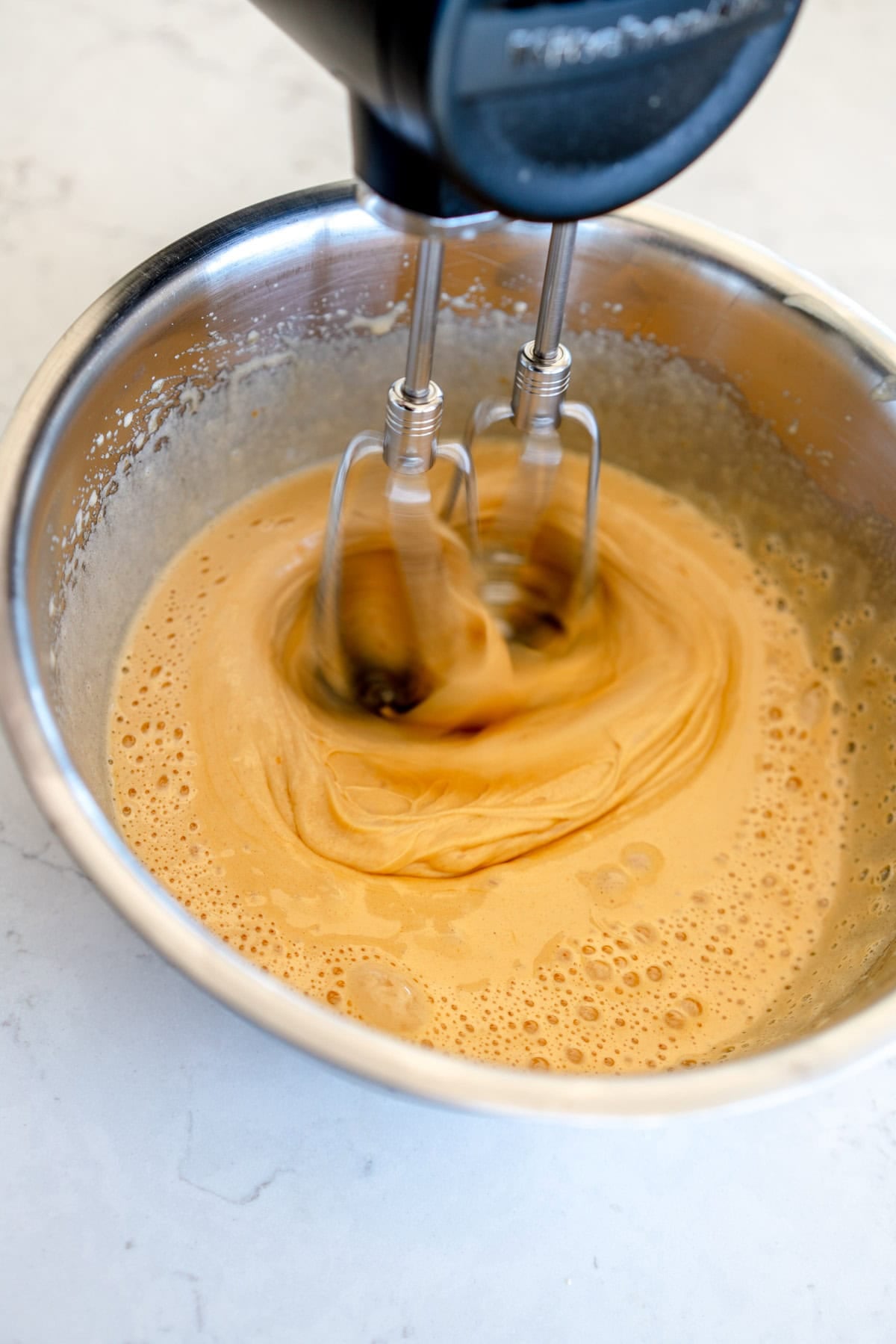
      Recipe for Pizza Pretzels

      Filed Under: Savoury Breads, Small Batch Baking Tagged With: Egg Free

      Roasted Peach Cream Puffs

      These Roasted Peach Cream Puffs are the perfect easy cream puff recipe. These cream puffs are filled with a simple stable whipped cream recipe and roasted peaches which is a quick and easy cream puff filling. This cream puff recipe is super versatile so you can fill them with anything that you like!

      cut shot of peach cream puffs

      Roasted Peaches and Cream Cream Puffs

      Hi hi! Just popping in to share the recipe for these peach cream puffs with you. I made these when I was making my vanilla bean cream puffs. They have the exact same shell but I just filled them with roasted peach and vanilla bean whipped cream. One of the things that I love the most about cream puffs is how versatile they are. You can make one cream puff recipe and fill it with anything that you like, or do a range of fillings! This recipe is a choux au craquelin - so has the craquelin layer on the top, which is a disc of cookie dough added just before the cream puffs go into the oven.

      • cream puff shells on wire rack
      • side shot of cream puff filled with whipped cream

      How to make Cream Puffs

      Once you get the hang of how to make choux pastry, making cream puffs is super easy. There are a couple of steps, but the workload can certainly be broken up.

      • Roast the peaches. I like to to this ahead and just keep them in the fridge in a container.
      • Make the craquelin. This needs a wee bit of time to chill down until it is solid, so do this ahead. It can be done up to a few days ahead and stored in the freezer if you like. I like to roll mine out between two sheets of parchment paper.
      • Make the Choux Pastry. Choux pastry is made by making a 'roux' from milk, water, butter, and flour. It is then cooled and egg is incorporated into it. Once you get the hang of it, it is super easy to make!
      • Bake the Cream Puffs. Pipe your choux pastry out onto your template. Then cut the craquelin into discs and place on top. Bake until perfectly puffy and golden and then leave to cool!
      • Put it all together. Once the cream puffs are done, you cut the top off them and fill them, then replace the top again.

      Making Cream Puffs ahead of time

      Ideally you will assemble these cream puffs close to serving so that they do not go soggy. However elements can be prepared ahead of time if you like so that you are ready to go when serving time comes.

      • Roast the peaches ahead of time. These can be done up to 3 days in advance and just stored in an airtight container in the fridge.
      • Make the craquelin ahead. The craquelin layer will store between the two sheets of parchment up to a few days ahead until you need it.
      • Freeze the baked cream puffs. Empty cream puffs store great in an airtight container in the freezer. Even if you are making them a day ahead of time make sure that they are frozen, or they will go stale.
      cream puff filled with whipped cream

      Easy Cream Puff Filling

      I filled these cream puffs with roasted peaches in the base and then a super simple vanilla bean whipped cream. I slightly sweetened it to be a vanilla bean chantilly cream. You can either make whipped cream just with a whisk or stand mixer. However this time I tried a technique I saw on pastry chef Paola Velez's IG reels - using an immersion blender. Using a stick blender to make whipped cream gives a super dense, stable whipped cream which is perfect for piping.

      If you don't want to use a stick blender you can also just use a whisk. To get cream that is good for piping you don't want to whip it too too much - keeping it slightly on the soft side is helpful to prevent it from going grainy.

      How to Save Over Whipped Cream

      If you've accidentally over whipped your cream, don't worry. There is a way to fix it. Just add a little more liquid cream to the mix, and whisk to incorporate. It should thin it out and smooth the mixture, making the cream good to go. Take it slow when making whipped cream with the blender as it can happen fast.

      • roasted peaches
      • whipped cream filled cream puffs

      How to make Roasted Peaches

      Roasting stone fruit is a quick and easy way to prepare it. I love roasting fruit - it brings out an amazing flavour and softens the fruit enough to be super versatile. It also means you can use slightly tired fruit and transform it into something that makes a perfect dessert. It is a great way to add flavour to fruit that might not be quite in season, or it also works great with frozen fruit.

      To roast peaches, simply toss them with some sugar and vanilla and pop them onto a pan, then roast in the oven until they are slightly softened and bubbly. This can be done ahead of time too and stored in the fridge.

      Cream Puffs and Choux au Craquelin

      While I refer to them as cream puffs, these are technically 'choux au craquelin' - choux with a craquelin added before baking. Craquelin is a cookie dough mixture that is rolled out thin and frozen and then added as a disc on the top of the choux. Cream puffs are simply choux au craquelin without the choux. Adding the craquelin makes a delicious crispy layer on top of the choux, and it also helps them to bake up nice and round. You can leave it off if you like! Do what you want here 🙂

      Why did my Cream Puffs Collapse?

      There are a few reasons your cream puffs might collapse or not puff up properly in the oven. The first is that you may not have cooked out the moisture enough. Make sure you give it a full 2 minutes on the stove. The second is that there is no way for the steam to escape when the puffs are baked. To avoid this I poke a hole in the side of each puff with a knife as soon as they come out to let the steam out.

      piped cream puffs

      How to Scale This Recipe

      This recipe can very easily be scaled. Feel free to halve the recipe to make less cream puffs. This is why we love grams! However keep in mind that the empty cream puffs freeze super well, so you could just freeze some for next time. You can use my scaling calculator!

      If you want to make the cream puffs larger you can too - just trace a larger circle on the parchment and pipe bigger blobs of choux. Use the same sized cutter that you used to trace the template to cut out the craquelin. Keep in mind that they do puff up a lot in the oven so leave enough space between.

      Tips for Freezing Cream Puffs

      If you really want to make these well ahead of time you can freeze the empty cream puff shells. They do tend to go stale fast, so even if you are making them a day ahead of time, store them in the freezer until you are ready to use them. They defrost quickly at room temperature. The freezer helps to keep them nice and fresh. To freeze the cream puffs, place them on a sheet pan and freeze for about 30 minutes, then transfer to an airtight container and store in the freezer until ready to use.

      To defrost frozen cream puffs, just bring them out and leave them to sit at room temperature to thaw. This should only take 10-15 minutes.

      How to get the right consistency of choux batter

      I have included an extra 'just in case' egg in the ingredients. Sometimes you need to add extra egg to the pastry if necessary. You want the mixture to be at a consistency where if you dip in the beater of the mixer, the batter will form a 'v' shape and eventually break off. If it is too stiff, and breaks off very quickly, you may need to add another beaten egg. Mix to incorporate and then perform the test again. See the video at the top of the page or my IG highlights for the correct consistency.

      sliced cream puff on tray

      Frequently Asked Questions about Cream Puffs

      Can this recipe be made with other fruit?
      Yes - use whatever you want. They would be delicious with a fruit curd in the bottom before the whipped cream, or any other stone fruit works great roasted too.

      Can these be made without a stand mixer?
      You don't have to - people can make choux by hand, but I haven't tried it so I'm not 100% on what the method would be.

      Is it ok to bake both trays at one time?
      My oven doesn't have the best track record with baking two trays of things at once, so I usually do one tray at a time. I pipe out all the puffs and then just add the craquelin to one tray and leave the other to sit at room temperature while it bakes. Then once the first tray is done, I bring the oven back up to temperature and add the craquelin to the second tray and bake them off. If your oven can handle two trays then go for it. I just use conventional bake - I haven't tried this with fan bake as I don't trust my oven but if you do, then please report back!

      Can I use frozen fruit?
      Yes! Using frozen peaches works great for this recipe.

      close up shot of peach cream puff

      For more related recipes, check out:

      • Roasted Peach Streusel Macarons
      • Chocolate Hazelnut Cream Puffs
      • Coffee and Milk Chocolate Cream Puffs with Rose Icing
      • Custard Square with Homemade Puff Pastry
      • Apricot Pop Tarts with Vanilla Bean Icing

      ❤️ Made this recipe and love it? ❤️

      I would LOVE for you to leave me a review and star rating below to let me know how you liked it! Also, please make sure to tag me on Instagram!

      Answers to your baking questions

      Over the years, many of you have asked me questions about:

      • baking in grams
      • adjusting oven temperatures
      • what kind of salt to use
      • and many more!

      I've curated and answered them all for your easy reference in this frequently asked questions post!
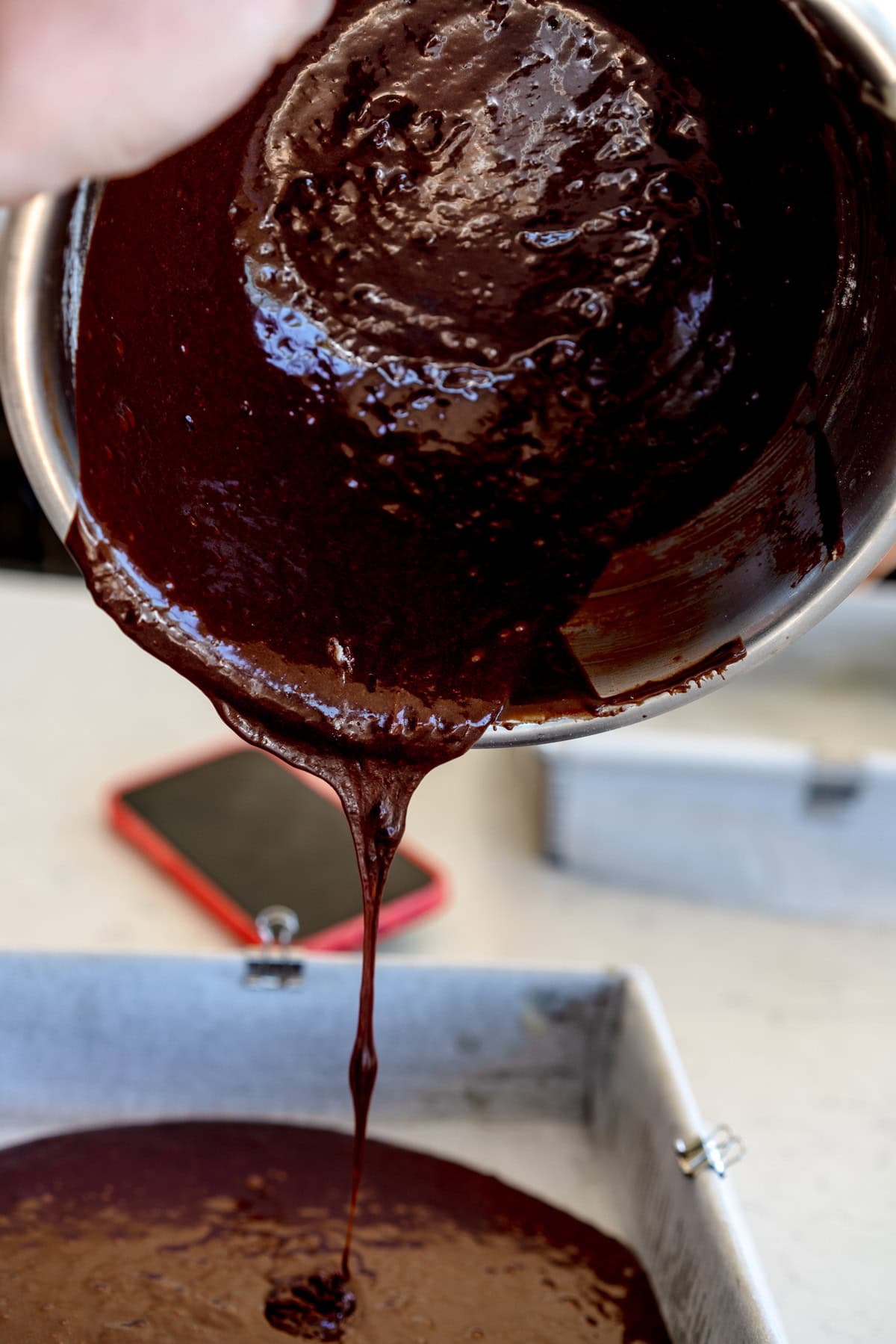
      Recipe For Roasted Peach Cream Puffs

      Filed Under: Uncategorized

      Easy Baked Rhubarb Bars

      side on shot rhubarb bars

      These homemade rhubarb dessert bars are tart, sweet, and a terrific use for fresh rhubarb. Assembling the dessert bar layers is really easy! Baked in a 9" square baking tin until the topping is golden brown and the fruit filling is bubbling! This recipe works great with other fresh fruit - see the notes in the post on how to incorporate other fruit!

      side shot rhubarb shortcake bars
      shortcake dough ready to be pressed in
      Base dough spread into pan
      pressed in shortcake dough
      Make it super flat and smooth

      Rhubarb Bars

      Hi hi! Just popping in to re share the recipe for these Rhubarb Bars. These rhubarb shortcake bars have been on my website for a few years now. They are super simple to make - there is one base dough that forms the base and topping of the shortcake. I love an easy bar recipe, and these are exactly that!

      I made these shortcake bars with fresh rhubarb but they are super versatile and can be made with other fruit too. The rhubarb is just mixed with some starch and arranged in a layer on top of the base. Then it is topped with the crumble topping and the whole thing goes into the oven.

      These homemade shortcake bars are easy and fun to make, and are a huge favourite in our house, either as a quick throw together recipe or served with ice cream for dessert. I love baking with rhubarb - for more easy rhubarb recipes check out my rhubarb pie and my easy rhubarb galette.

      Dessert bars are one of my favourite things to make, as they are quick to do and for the most part, great to make ahead of time. Check out more recipes for dessert bar recipe ideas!

      Add the filling - this rhubarb was super pink!

      What does rhubarb taste like?

      It is quite hard to describe what rhubarb tastes like - it is super sour, but also super aromatic. You eat the stalks only, and it is often cooked with sugar to take away the tart taste.

      When is Rhubarb in season?

      Rhubarb grows year round in New Zealand and is one of my favourite things, so I love incorporating it into dessert recipes with rhubarb. It is particularly good cooked down into a compote, which I use to make my rhubarb cheesecake dessert bars!

      In other countries, the rhubarb season is much shorter and generally is in spring. Make the most of fresh rhubarb if you do see it, it's so worth picking some up.

      Why is this called a shortcake?

      This is what we call a shortcake in New Zealand - a fruit layer on top of a dough base with more dough topping it. They are significantly different to what the US calls a shortcake, which is more of a biscuit situation. The pastry is short and sweet, and the fruit layer is often quite tart to offset the sweetness of the dough. Shortcake bars come together quickly and get assembled all in one go with no par baking needed.

      • Make the shortbread crust. This is a classic short, sweet pastry that is made by creaming together butter and sugar and then adding dry ingredients.
      • Divide the dough. The same dough is used for the base and topping of these shortcake bars. Weigh out some of the dough and press into the baking pan, and reserve the rest.
      • Add the Rhubarb. Mix the rhubarb with a wee bit of sugar, tapioca starch and vanilla, stir to combine, then arrange evenly on top of the base.
      • Add remaining dough. Sprinkle the remaining crumb mixture over the rhubarb. You want to add it in chunks.
      • Bake. The Rhubarb Shortcake Bars bake until the topping is golden and the filling is bubbling. The bars need a little time to cool before slicing so the fruit layer can set.
      rhubarb shortcake ready to bake
      Top with the rest of the base mixture
      corner shot baked rhubarb shortcake bars
      Super easy baked bars!

      Two ways to make Rhubarb Shortcake Bars

      I originally made these rhubarb bars as shown in the photos below. To do this, I chilled the dough after mixing then rolled it out and cut it into squares. One of the squares was the base and the other the lid. This is how we make an apple shortcake in NZ. It's a little fiddly but it works.

      I sent the recipe of this rhubarb shortcake to my friend Lisa a few years ago (she is an amazing NZ based pastry chef), and she adapted it by adding the dough on in chunks on top of the fruit as opposed to my sandwich method. It works so much better and is much quicker. So it only made sense to also re-shoot this rhubarb shortcake using the same method. It tastes the same, just has a different format and involves much less mucking around and chilling pastry.

      stacked rhubarb shortcake bars

      How to make shortcake bars with other fruit

      The great thing about these shortcake bars is that the recipe is super versatile. You can absolutely make this with other fruit. You could easily add in some blueberries or other fruit along with the rhubarb. Shortcake is also often made with berries or plums here in Nz. You could use these quantities for strawberry rhubarb. Or, you can make this your own. Just keep in mind to adjust the starch and sugar as needed as different fruit have different moisture and sweetness. Some options you could make:

      • Strawberry rhubarb bars using the fruit quantities in my strawberry rhubarb bars recipe
      • Peaches, Apricots, Plums, nectarines, cherries, - about 750g fruit should go with about 23g starch and then approx 75g sugar. Adjust as needed! I do a mix of whatever I have.
      • Rhubarb and Blueberry - Sub some of the rhubarb for fresh or frozen blueberries
      • Cranberry - this recipe works great with frozen cranberries if you have any leftover from anything! The filling is 450g frozen or fresh cranberries, 15g tapioca starch, 125g granulated sugar, ½ teaspoon vanilla, ¼ teaspoon salt, and then 20g water or orange juice. Baking and assembly instructions are the same.
      • Mixed berry - I would follow similar proportions to the cranberry but adjust the sugar as needed. It would also work great with frozen berries.
      • Apple - I used 750g diced apple with 90g sugar and 25g tapioca starch (use less if you are using cornflour / corn starch - you need about half the quantity)
      side on shot rhubarb shortcake
      Bars made using the roll-out method detailed in the blog post
      top down image of cut rhubarb shortcake bars
      This method looks good but the other is much easier!

      FAQ for Rhubarb Bars

      Can I use cornstarch in place of tapioca starch?
      Yes. I haven't tried it but tapioca starch is about half as potent as corn starch so I would do about 1 tablespoon plus 1 teaspoon worth (11g) of cornstarch (cornflour if you're from nz). I love tapioca starch as it sets clear but cornstarch also will work. You generally need half the quantity of cornstarch if tapioca starch is called for in the recipe. I will update as soon as I have tested it!

      Is there meant to be baking powder in the crust recipe?
      Yes - it is meant to be there!

      How do you store rhubarb bars?
      Store your rhubarb bars lightly covered at room temperature. Do not put in a sealed container or they will go soggy.

      close up cut rhubarb shortcake bars
      close up side shot rhubarb shortcake

      For more Rhubarb recipes, check out:

      • slice of rhubarb flan
        Rhubarb Custard Pie
      • cut open shot of rhubarb custard bun
        Rhubarb Custard Buns
      • rhubarb no bake cheesecake
        Rhubarb Cheesecake
      • Rhubarb Muffins
      baked cut rhubarb shortcake bars

      ❤️ Made this recipe and love it? ❤️

      I would LOVE for you to leave me a review and star rating below to let me know how you liked it! Also, please make sure to tag me on Instagram!

      Answers to your baking questions

      Over the years, many of you have asked me questions about:

      • baking in grams
      • adjusting oven temperatures
      • what kind of salt to use
      • and many more!

      I've curated and answered them all for your easy reference in this frequently asked questions post!

      Recipe for Rhubarb Bars

      Filed Under: Fruit Bars, New Zealand Recipes

      Strawberry Rhubarb Pie

      sliced pie with crumble topping

      This Strawberry Rhubarb Pie is a super easy pie recipe. It has a homemade strawberry rhubarb pie filling, and is topped with a brown butter malted milk crumble pie topping. This easy strawberry rhubarb crumble pie is made with an easy par baked pie crust and is great to make ahead. It is the perfect strawberry and rhubarb dessert.

      side shot of strawberry rhubarb pie

      Hi hi! Just popping in to share the recipe for this easy Strawberry Rhubarb Pie. This Strawberry Rhubarb Crumble Pie is the perfect summer dessert. It has a par baked crust made from a flaky pie dough, then a pre-cooked strawberry rhubarb pie filling. It is then topped off with a thick layer of brown butter malted milk streusel, which is the most amazing crumble pie topping.

      I made this pie a few times during testing and it is just so, so good. It is great to make ahead and tastes just as good the next day too. The malted milk powder and brown butter give the streusel an incredible depth of flavour. I love this one and I really hope you do too!

      Par baked pie crust

      Tips for Foolproof Pie Dough

      There are a few things that will make your life a little easier when you are making a homemade pie crust for this strawberry rhubarb pie.

      I have a whole blog post on this, that covers tips and tricks for foolproof dough, how to freeze pie dough and bake from frozen, and all the little bits and pieces that will make your pie life easier! Check it out - All Butter Pie Crust: A Beginner's Guide

      This Strawberry Rhubarb Pie has a par baked crust. The purpose of par baking a pie crust is to partially bake the pie crust. This means that when the wet filling goes in, the crust doesn't go soggy. It gives the crust a chance to start the baking process ahead of the filling being added. It's extra insurance to avoid a soggy bottom and means you get a lovely golden brown bottom pie crust.

      Check out all my tips and tricks in my post: How to blind bake pie crust

      sliced pie with crumble topping

      Crumble Topping for Pie

      Crumble pie is one of my favourites. It is super easy to make and there aren't any tricky lattice tops. For this strawberry rhubarb crumble pie I tweaked the crumble recipe from my apple crumble pie. I browned the butter and added in some malted milk powder. The malted milk powder is a totally optional step, but gives an incredible depth of flavour. Brown butter is also an optional step but one I highly recommend. It takes the crumble flavour to the next level. This crumble would be perfect on other desserts too such as an apple or other fruit crumble.

      To make the crumble topping you simply whisk together the dry ingredients. I use flour, sugar, some turbinado sugar for crunch, the malted milk powder, and some old fashioned oats for texture. Then the brown butter goes in and the whole thing is mixed up to form the crumble topping. You can easily make this ahead of time and store in the fridge until you are ready for it. You could also make a double of the recipe and freeze it in an airtight container until you need it.

      crumble topping for pie

      Pre Cooked Pie Filling

      Aside from par baking the pie crust, this strawberry rhubarb crumble pie also has a pre cooked filling. For fillings that are wet, such as strawberry and rhubarb, and other berries, pre cooking the filling removes some of the moisture. It also means you know the consistency of the filling before it goes into the oven, so you don't have to worry about how it bakes up or how it will turn out. The whole filling is cooked together and the starch added.

      This is also a great way to prepare some of the pie components ahead of time. You can transfer the filling to an airtight container if you are making it well ahead. However if you are in a pinch and need it to cool down quickly, you can spread it onto a sheet pan. This increases the surface area of the filling and helps it to cool down.

      pre cooked strawberry rhubarb pie filling

      Why tent a crumble pie with foil?

      In the first part of the baking process I get you to cover the pie with foil. The purpose behind this is to allow the pie to get a head start on baking without the topping browning too much. Once you remove the foil to finish baking the pie, if you are worried the topping is browning too much, just pop the foil back on until the filling is done and the pie is baked.

      ❤️ Made this recipe and love it? ❤️

      I would LOVE for you to leave me a review and star rating below to let me know how you liked it! Also, please make sure to tag me on Instagram!

      Answers to your baking questions

      Over the years, many of you have asked me questions about:

      • baking in grams
      • adjusting oven temperatures
      • what kind of salt to use
      • and many more!

      I've curated and answered them all for your easy reference in this frequently asked questions post!
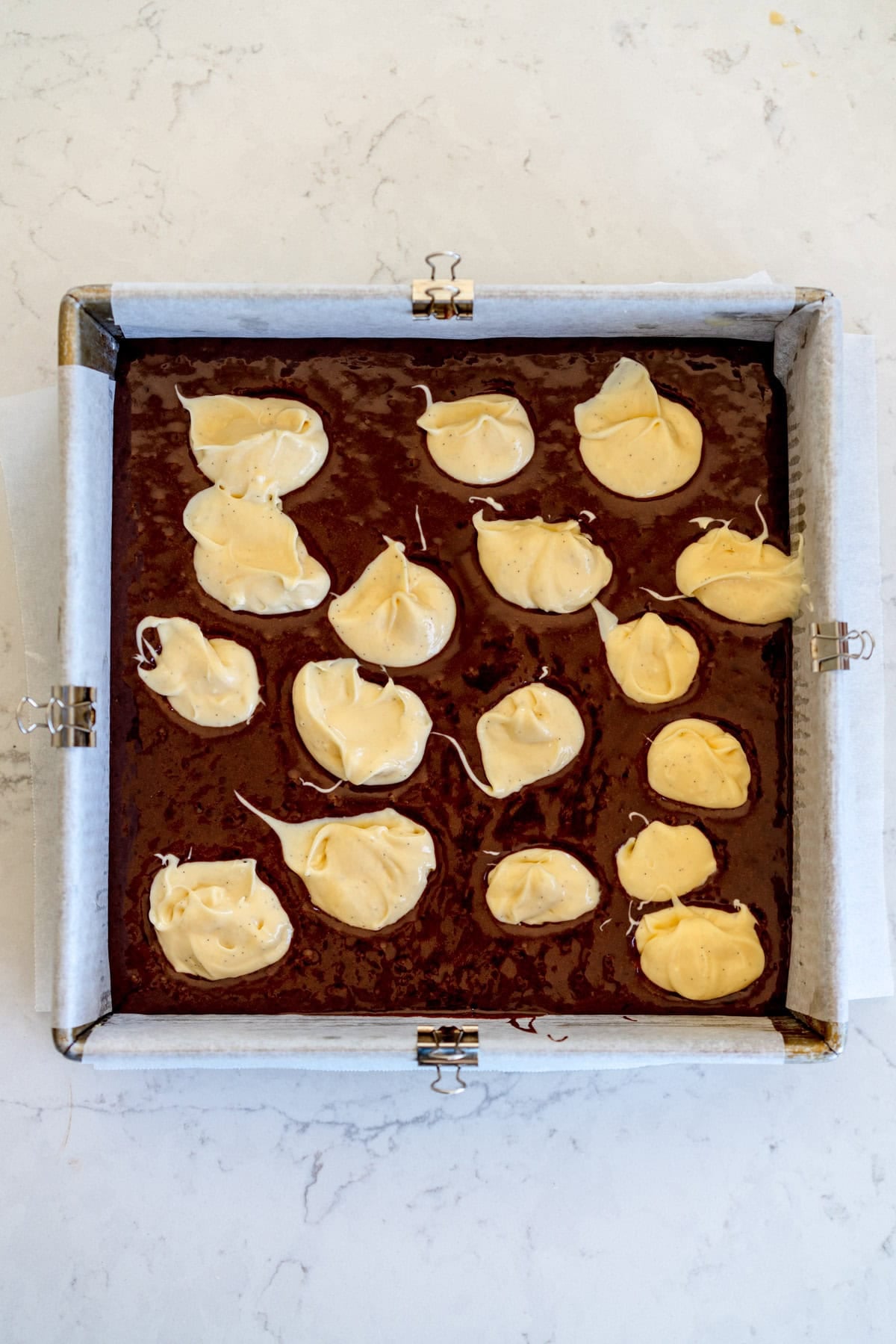
      Filed Under: Fruit Pies, Pies, Single-crust pies

      • « Previous Page
      • 1
      • 2
      • 3
      • 4
      • 5
      • 6
      • …
      • 12
      • Next Page »
      Erin Clarkson Cloudy Kitchen

      HI, I'M ERIN

      My recipes range from quick & easy all the way to complex & impressive. I love the science and process of recipe development almost as much as baking itself. I specialize in rigorously tested recipes that are fun, reliable, and accurate.

      More about me →

      • https://www.instagram.com/cloudykitchen/
      • Facebook
      • Pinterest
      • TikTok

      Popular

      • Christmas Macaron Box
      • close up of roll with cream cheese frosting
        10 Minute Cream Cheese Frosting for Cinnamon Rolls
      • cookie on sheet pan with parchment paper
        Brown Butter Chocolate Chip Cookies
      • burger bun on wire rack
        Homemade Burger Buns

      Footer

      Cloudy Kitchen Classics

      • Chocolate chip cookies
      • Brownie cookies
      • Chocolate cookies
      • Vanilla cookies
      • Cheesecake brownies
      • Focaccia bread
      • Ciabatta recipe

      Popular Cookie Recipes

      • Oatmeal raisin cookies
      • Peanut butter oatmeal cookies
      • White chocolate chip cookies
      • Gingersnap cookies
      • Shortbread cookies
      • Snickerdoodles cookies
      • Anzac biscuits

      Easy Breads & Buns

      • Hot cross buns
      • Sticky buns
      • Burger buns
      • Dinner rolls
      • Soft pretzels
      • Pretzel buns
      • Garlic knots

      Links

      • About
      • Contact
      • Web Stories

      Newsletter

      • Sign Up! for emails and updates

      Resources

      • FAQ
      • Policies
      • All recipes at once

      Copyright © 2026 Cloudy Kitchen

      Support by Foodie Digital