Cloudy Kitchen

  • recipes
    • Breads
    • Brownies
    • Cakes
    • Choux
    • Cookies
    • Doughnuts
    • Ice Cream
    • Macarons
    • Pies
    • Quickbreads
    • Small Batch Baking
    • More →
  • about
  • contact
  • products
menu icon
go to homepage
  • recipes
  • about
  • contact
  • products
  • calculators
  • subscribe
    • Facebook
    • Instagram
    • Pinterest
    • TikTok
  • search icon
    Homepage link
    • recipes
    • about
    • contact
    • products
    • calculators
    • subscribe
    • Facebook
    • Instagram
    • Pinterest
    • TikTok
  • ×
    Home

    Thin and Crispy 30 Minute Pumpkin Spice Cookies

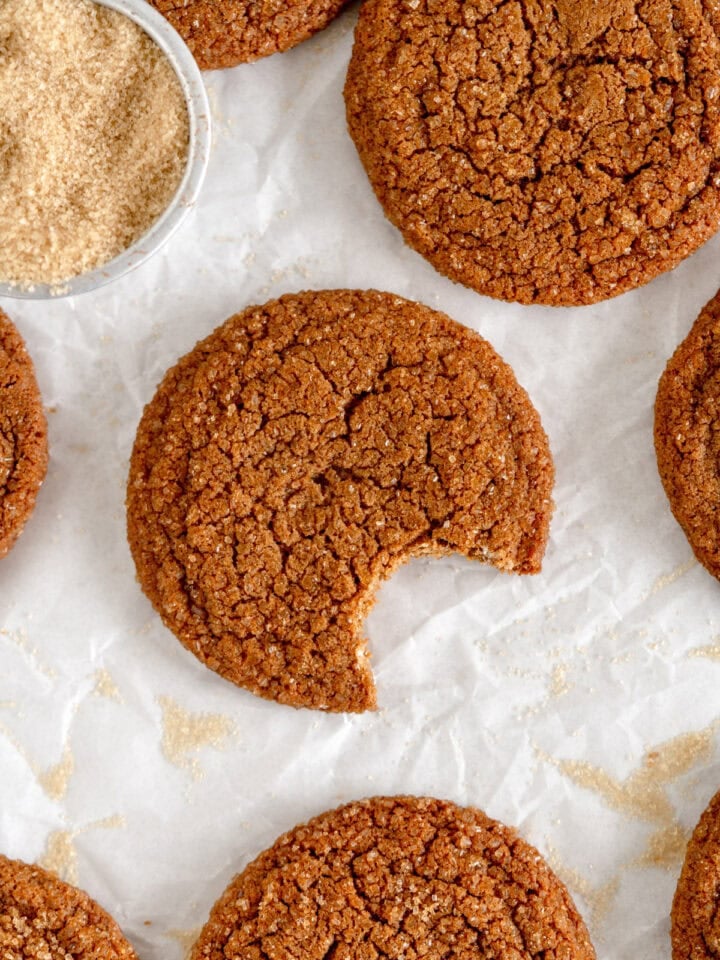
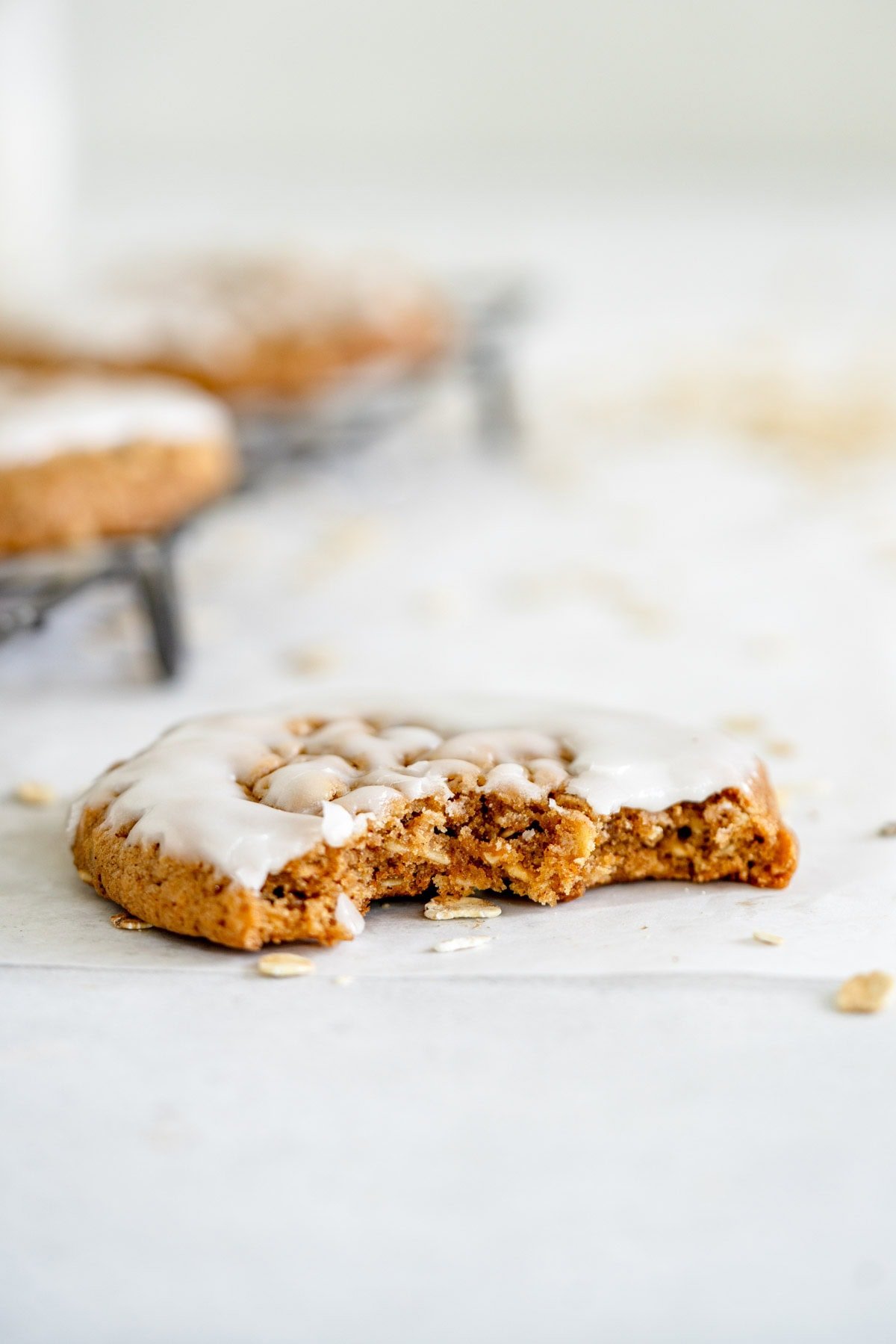
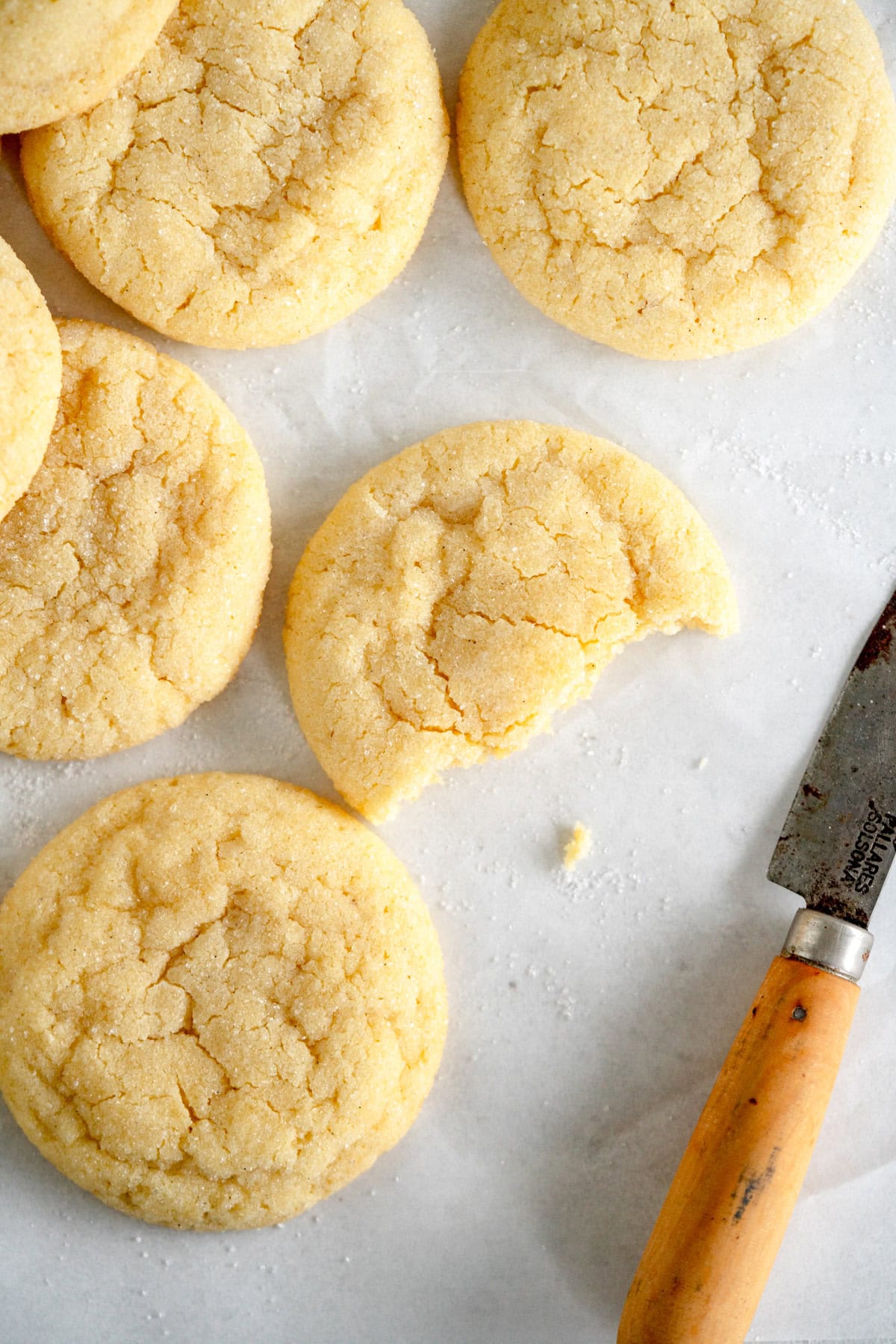
    cookie with bite taken out

    These easy pumpkin spice cookies are a twist on the gingersnap, and are thin and crispy, with a chewy middle. Pumpkin Spice cookies are full of warm and cozy spices and require no chilling - you can have cookies ASAP!

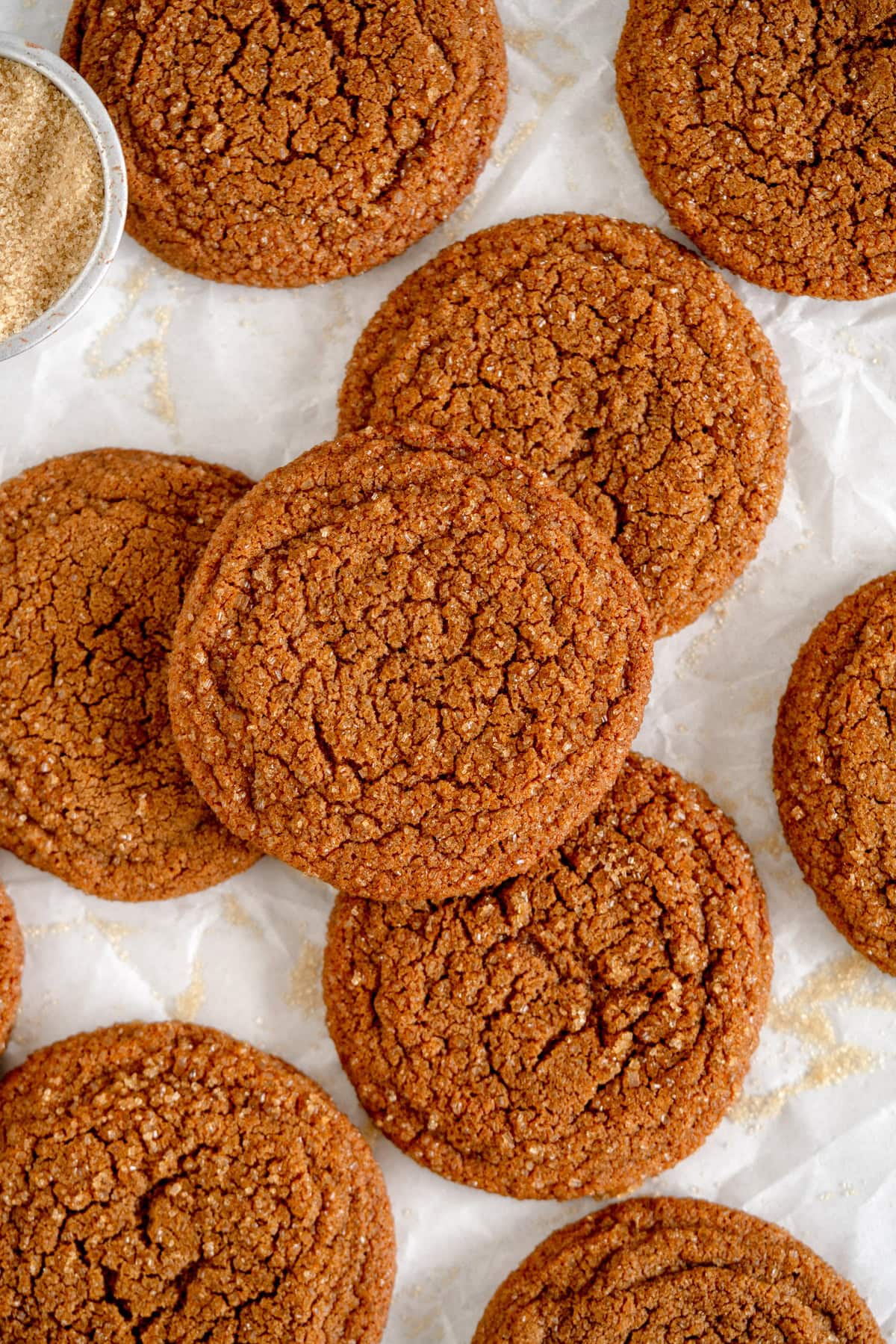
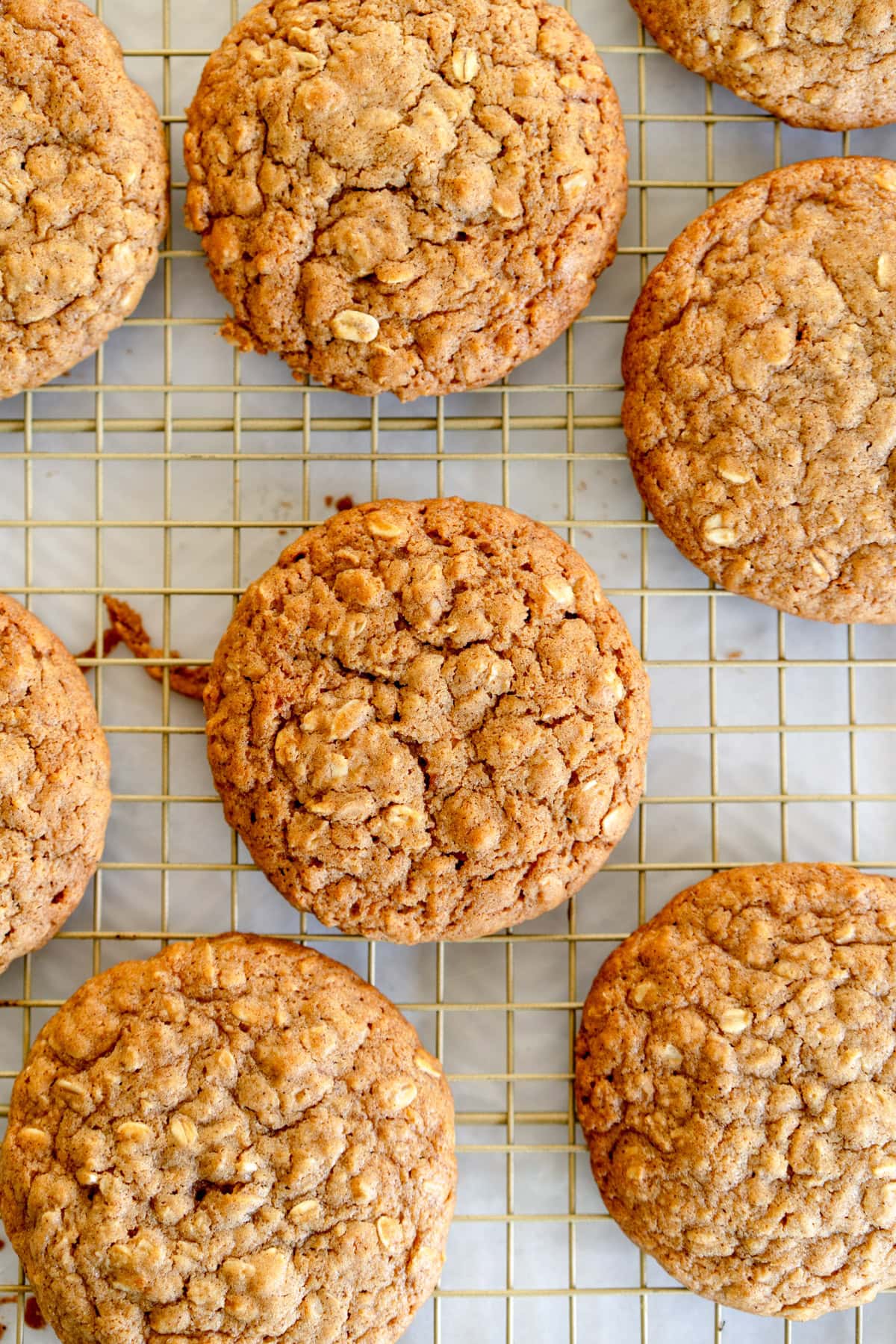
    cookies on parchment paper
    Perfect thin and crispy pumpkin spice cookies

    Hi hi! I am just popping in to share the recipe for these easy Pumpkin Spice cookies! These are a pumpkin spice twist on my Gingersnap recipe, which is one of the most popular recipes on my site.

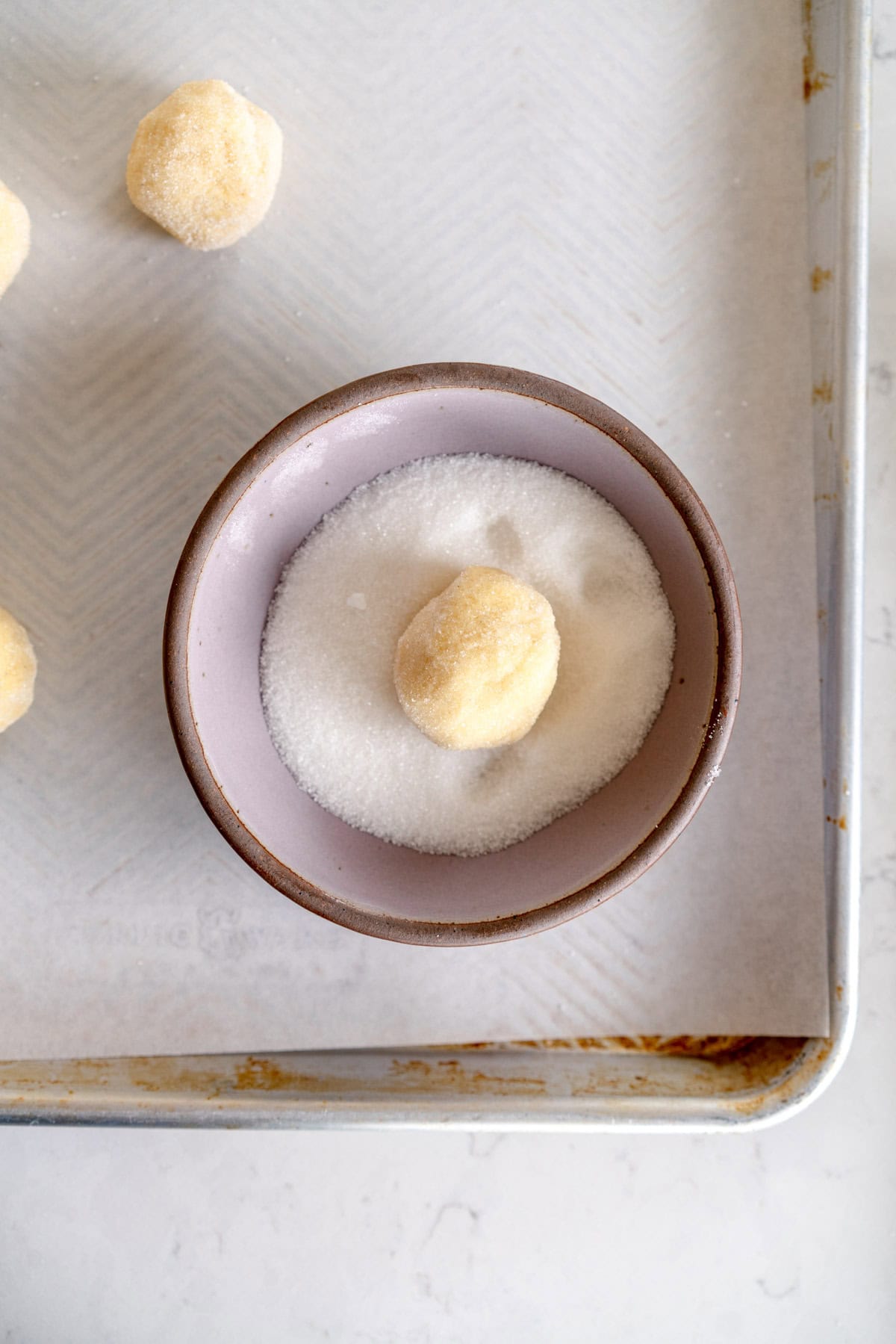
    These are a super easy cookie recipe, perfect for all year round. They are full of warm spices, and rolled in a crunchy sugar before baking for the most amazing, sparkly finish.

    The dough for these Pumpkin Spice cookies freezes super well, so they are great to keep on hand in your freezer stash!

    Can't find Pumpkin Spice near you? No worries - check out my DIY Pumpkin Pie Spice!

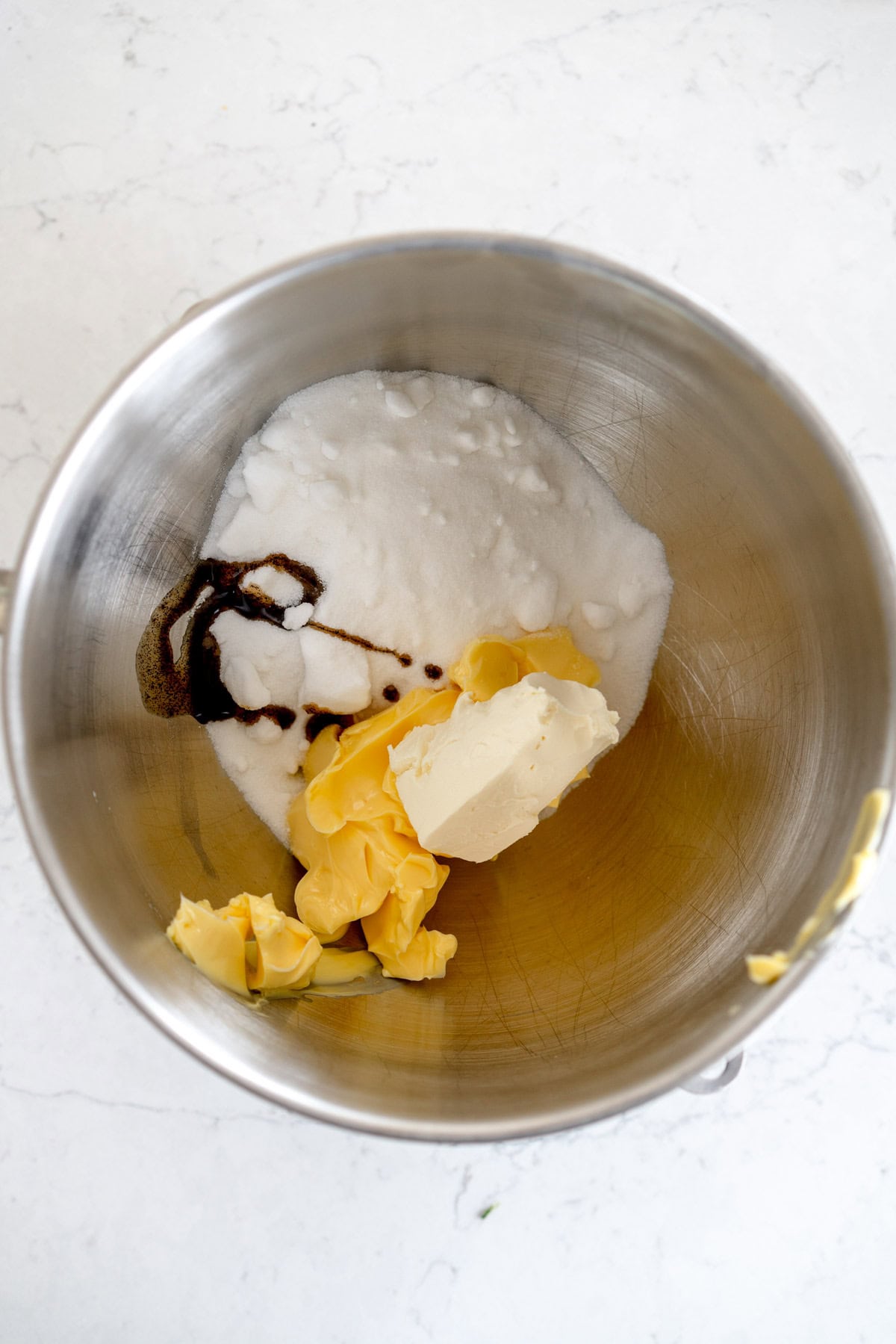
    wet ingredients for cookies
    Butter, sugar and molasses
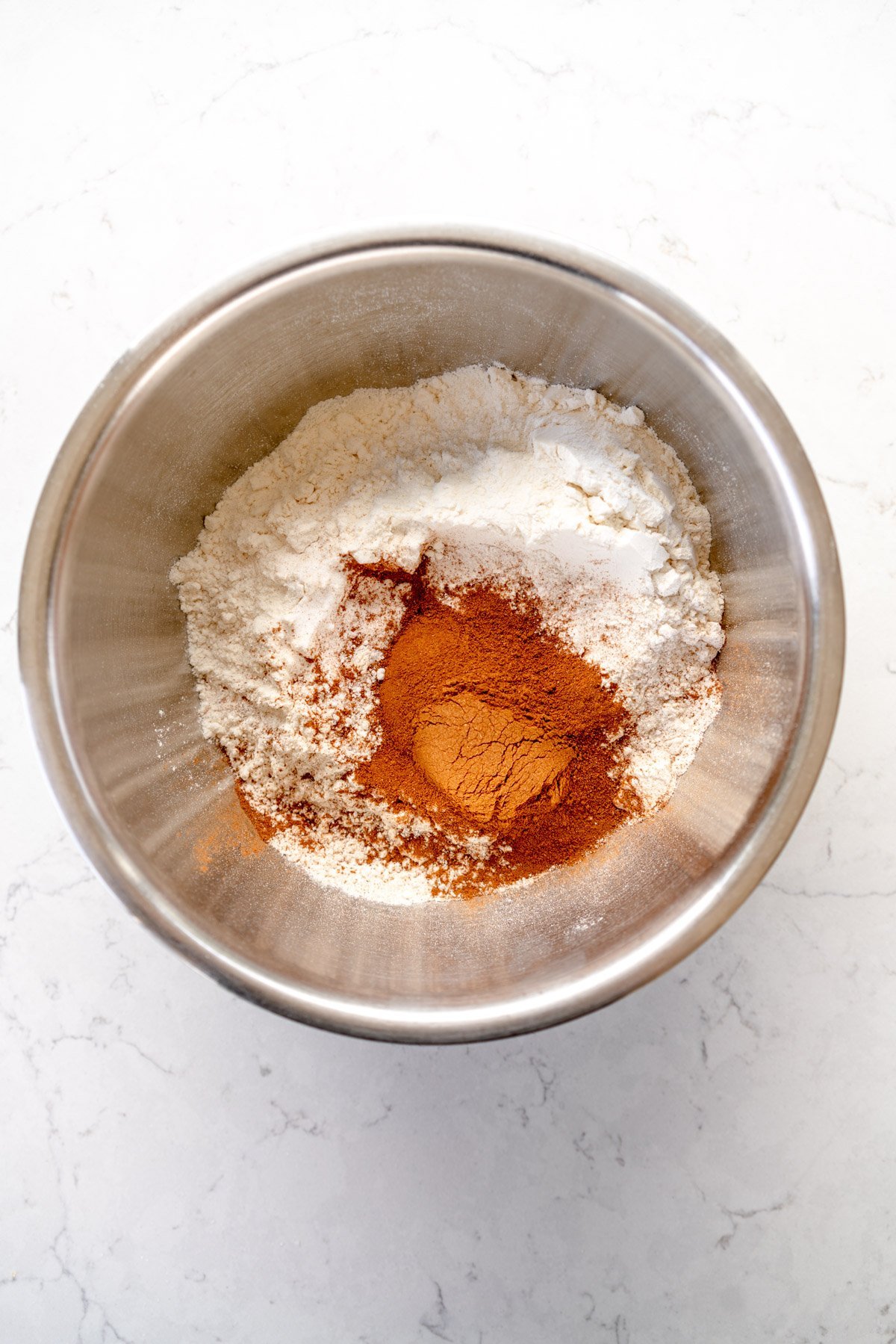
    dry ingredients for cookies
    Dry ingredients for cookies

    Do these cookies have Pumpkin in them?

    I think that a common misconception with pumpkin spice recipes is that they have pumpkin in them. Sometimes they do, but for this recipe, it is just using the spices that go into a pumpkin pie to flavour the cookies. The spice mix itself is a delicious mix of cozy warming spices, so you can easily make some up and sub it in when cinnamon and ginger are called for in a recipe if you want to mix it up a little! I put a solid amount into the cookie recipe itself and also a little into the rolling sugar similar to how I do my snickerdoodles - you can leave this out if you like but I love the flavour that it gives.

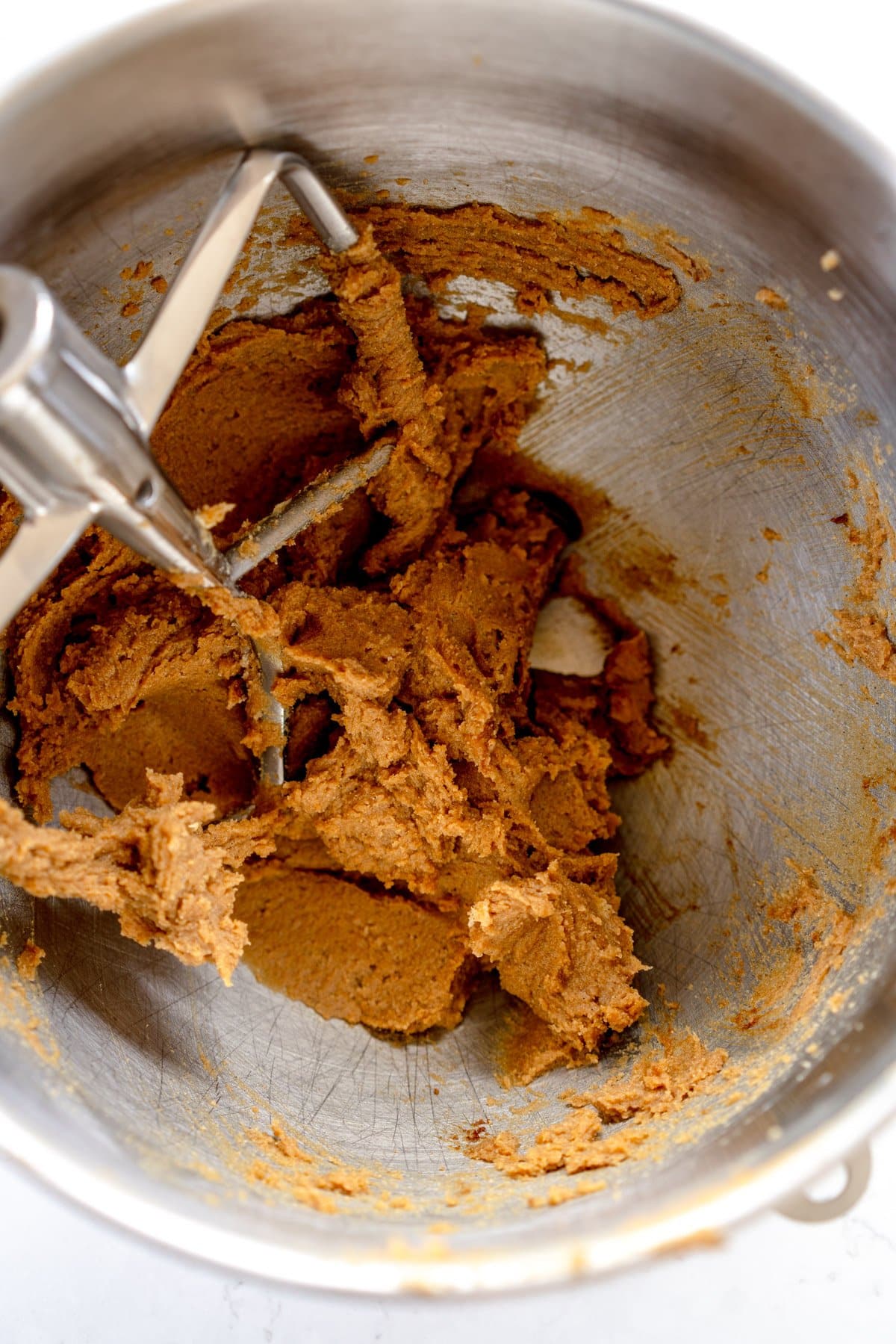
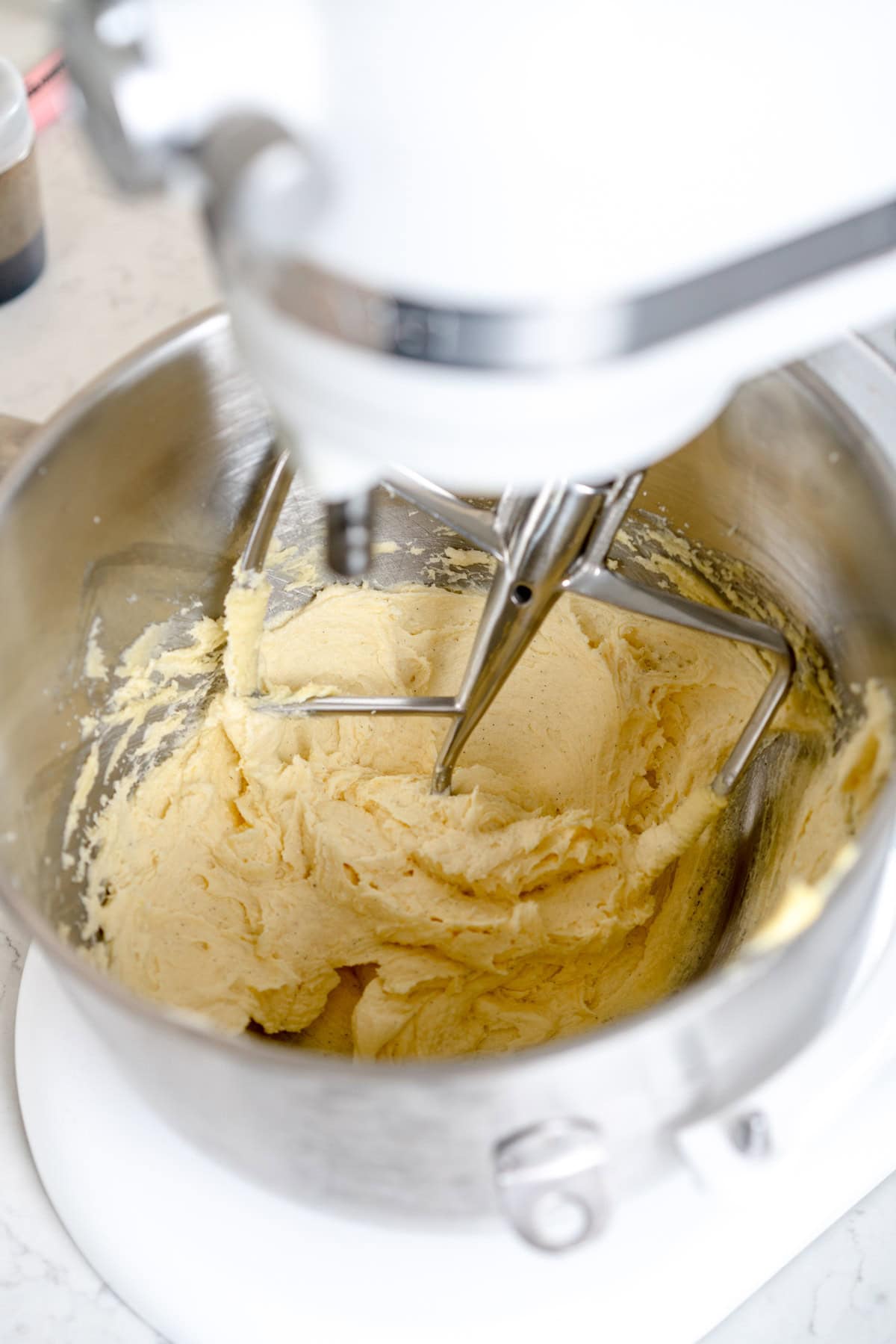
    creamed butter and sugar mixture
    Creamed butter mixture
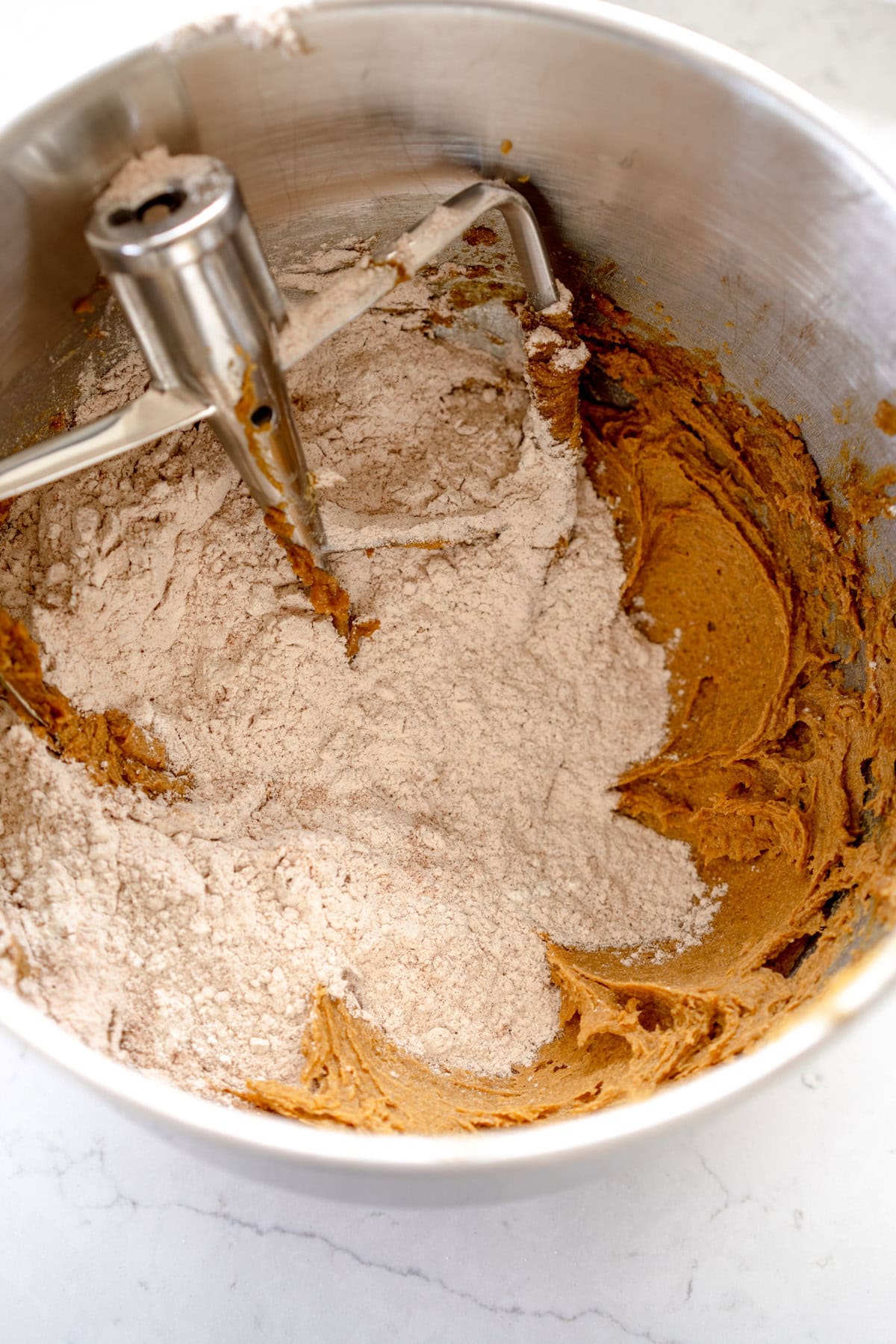
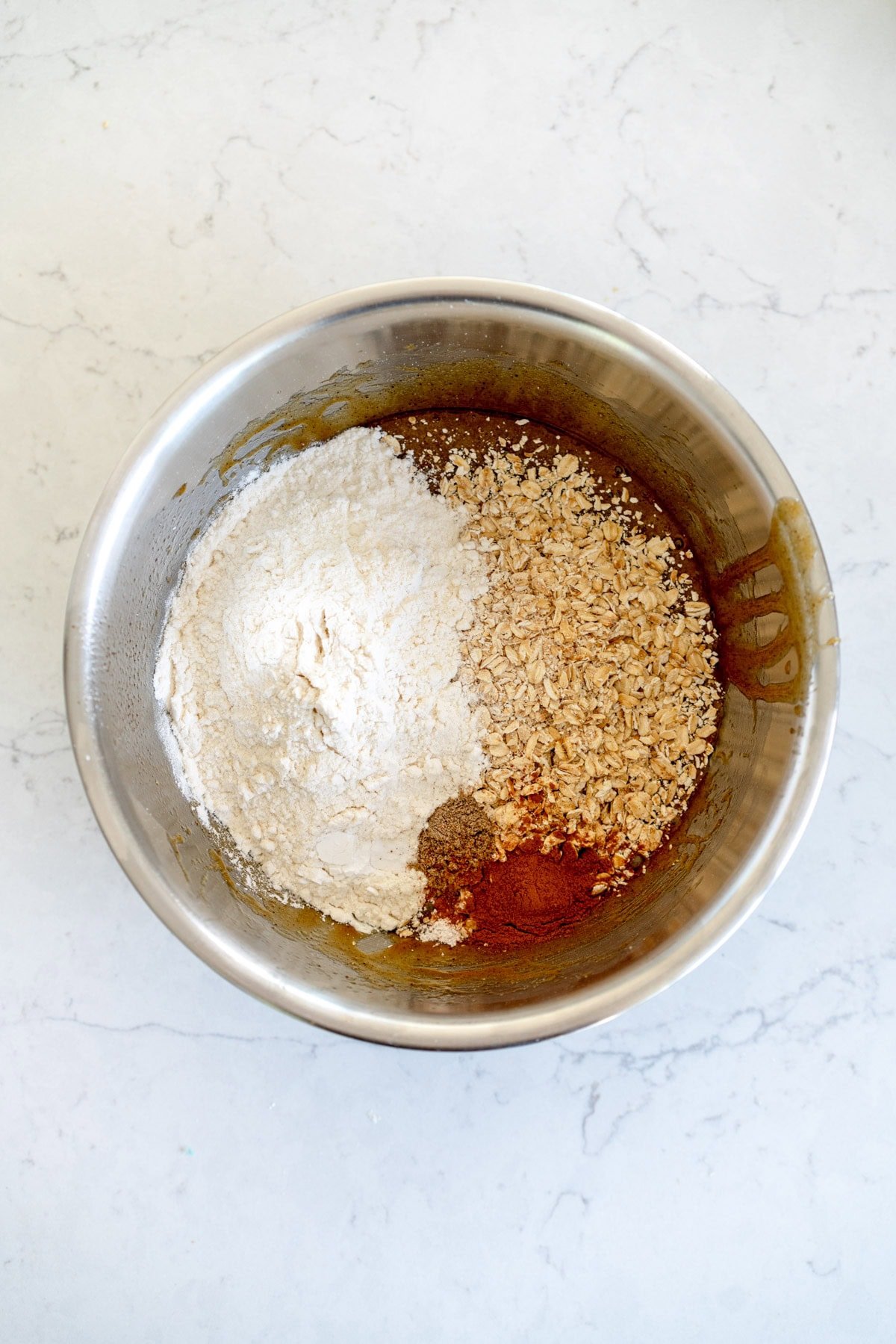
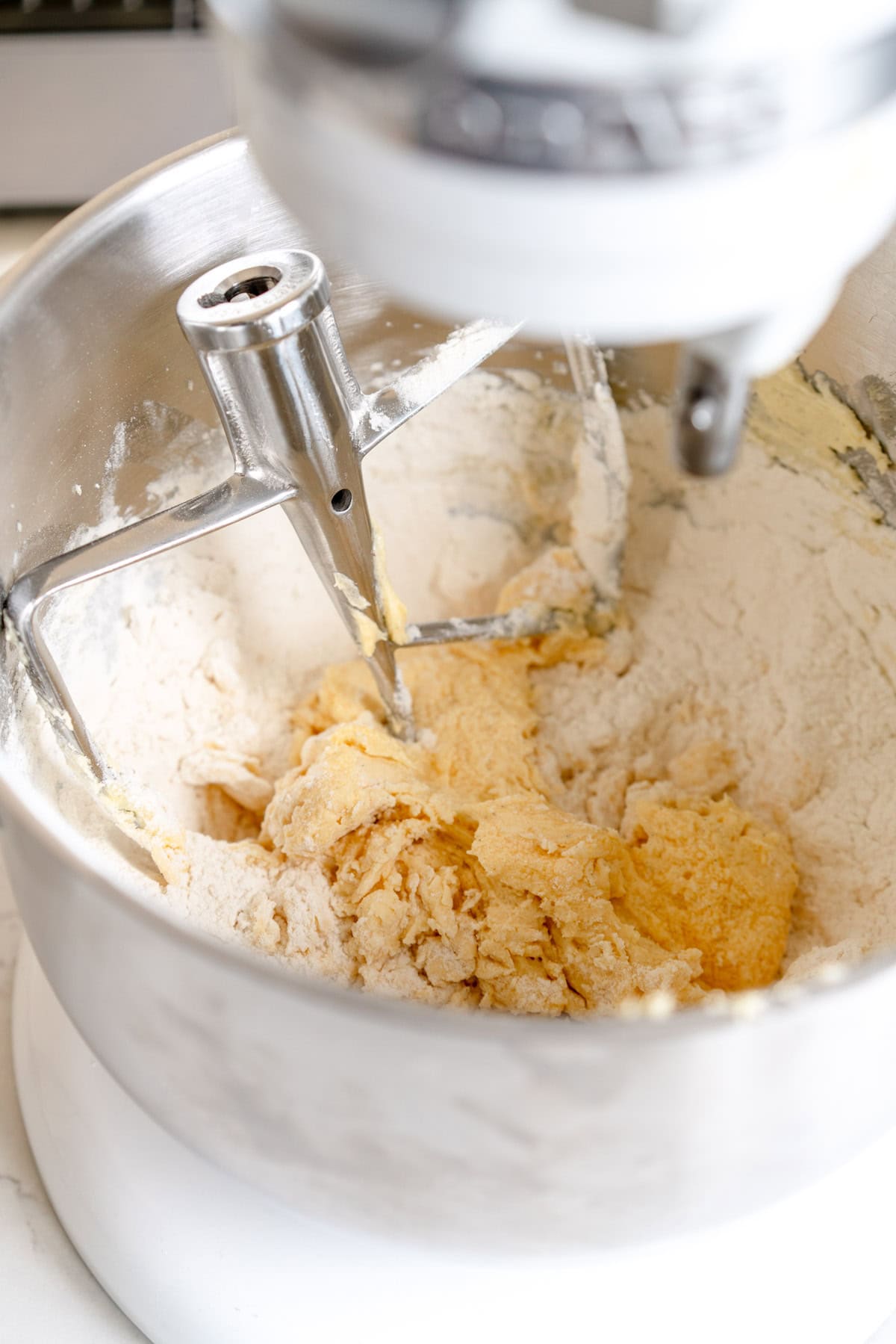
    add dry ingredients
    Add in dry ingredients and combine

    Making ahead - a great freezer stash!

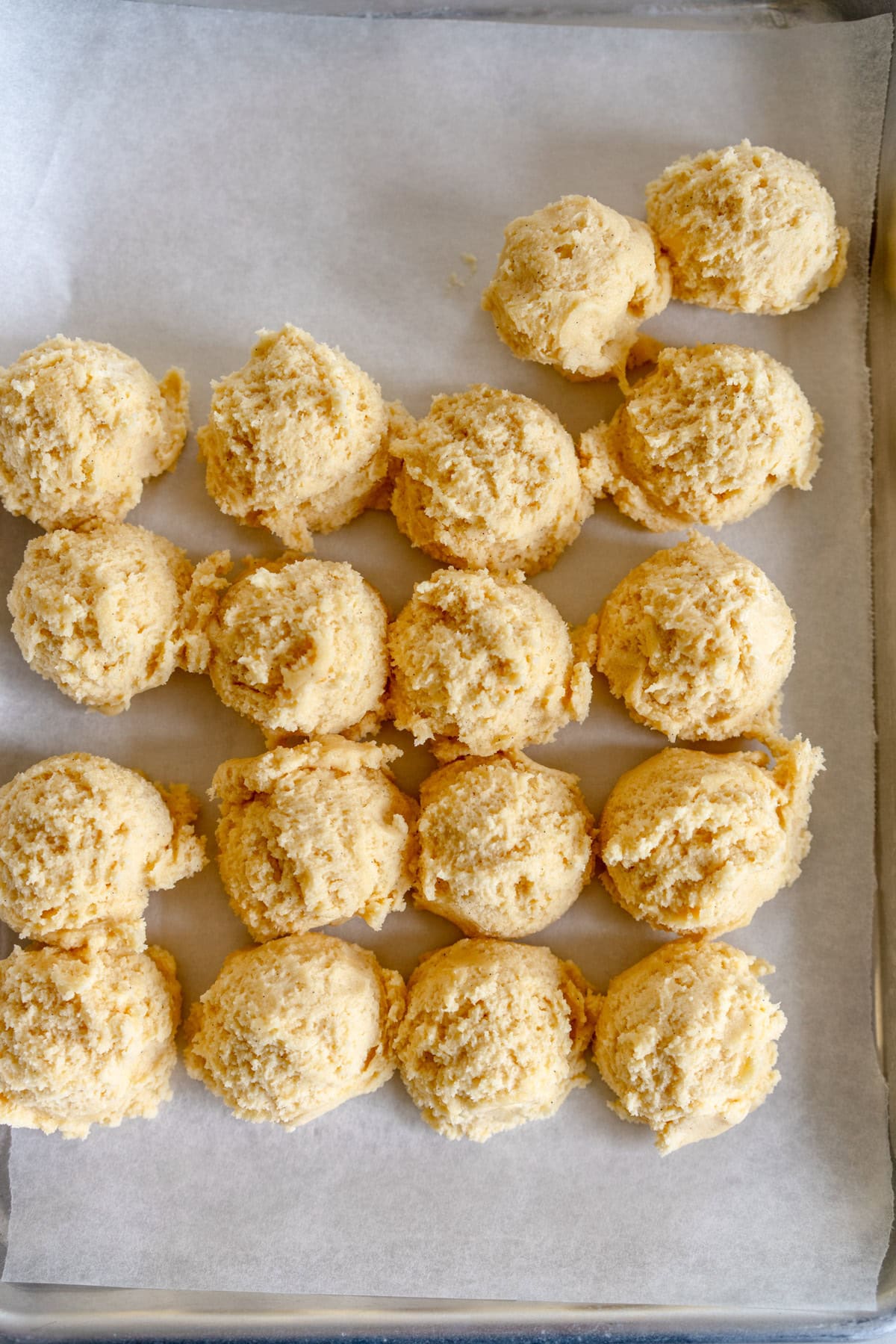
    Like my Gingersnap cookie recipe, these are great to make ahead. I roll into balls, freeze on a sheet pan, and then transfer to a bag. Do not roll in sugar if you are planning on freezing them. Roll in sugar just before you bake them.

    The cookies can be baked from frozen, but reduce the oven temperature to 325°f / 160°c and bake for a few more minutes.

    To see a full visual on this with a side by side comparison, check out my gingersnap cookie recipe.

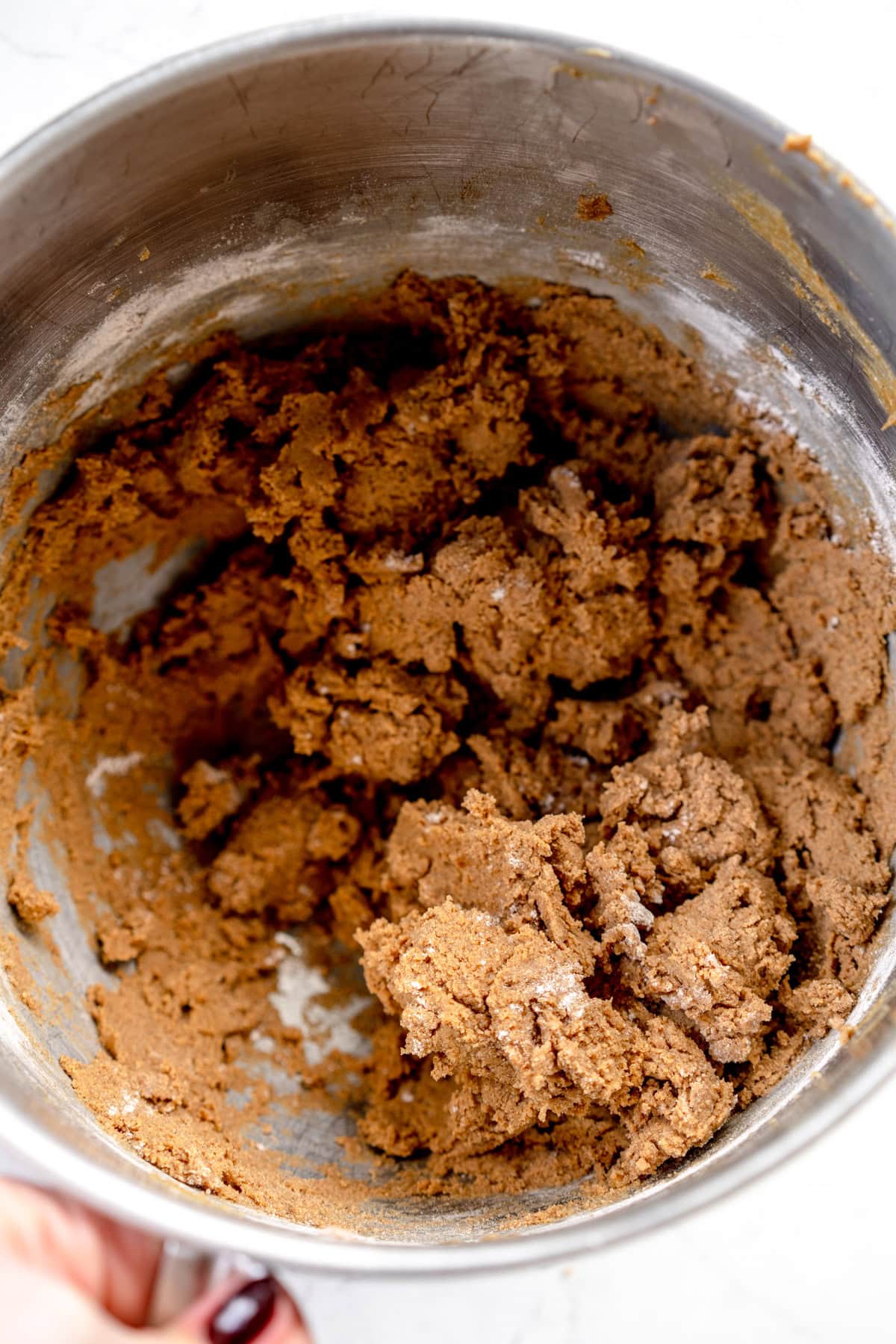
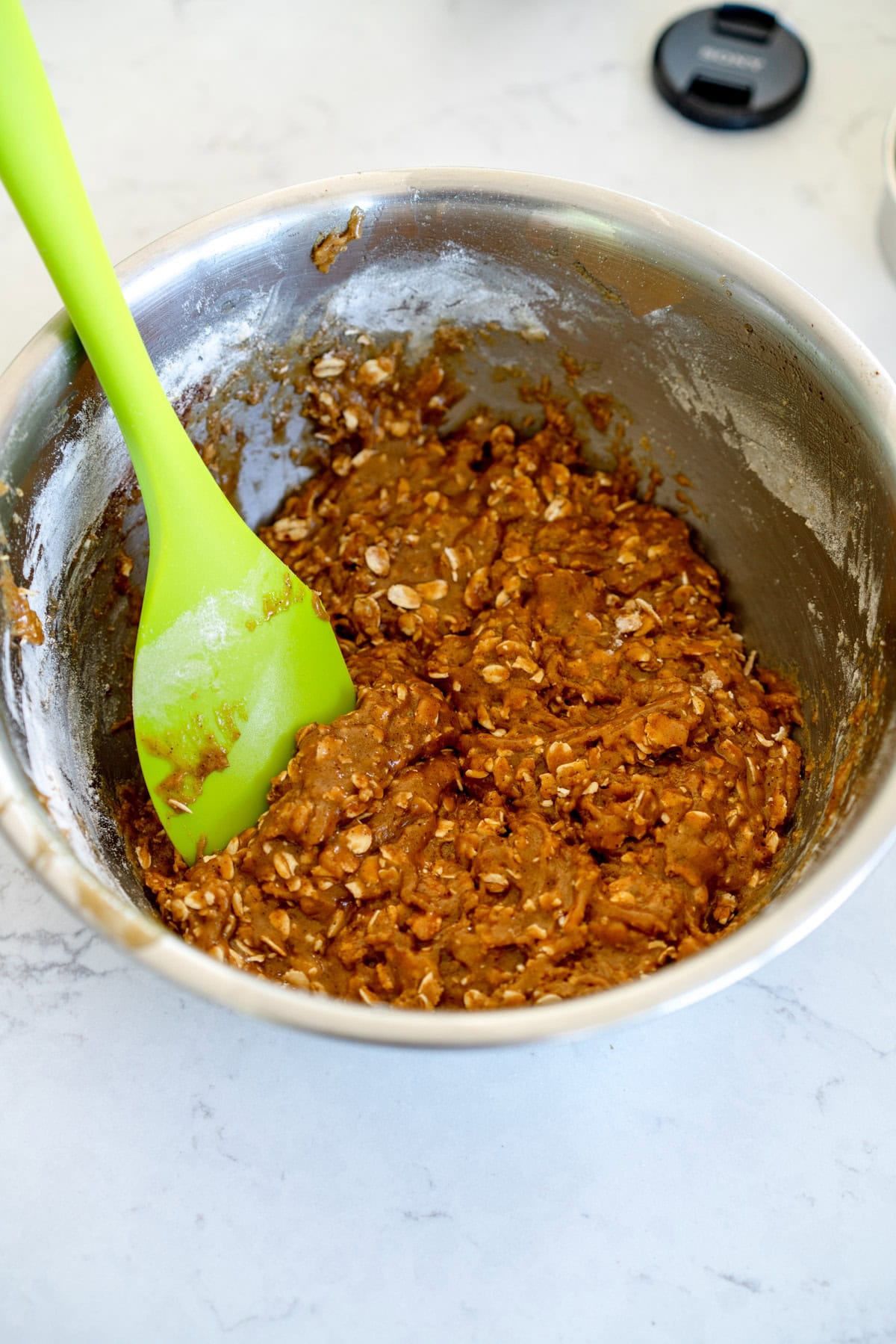
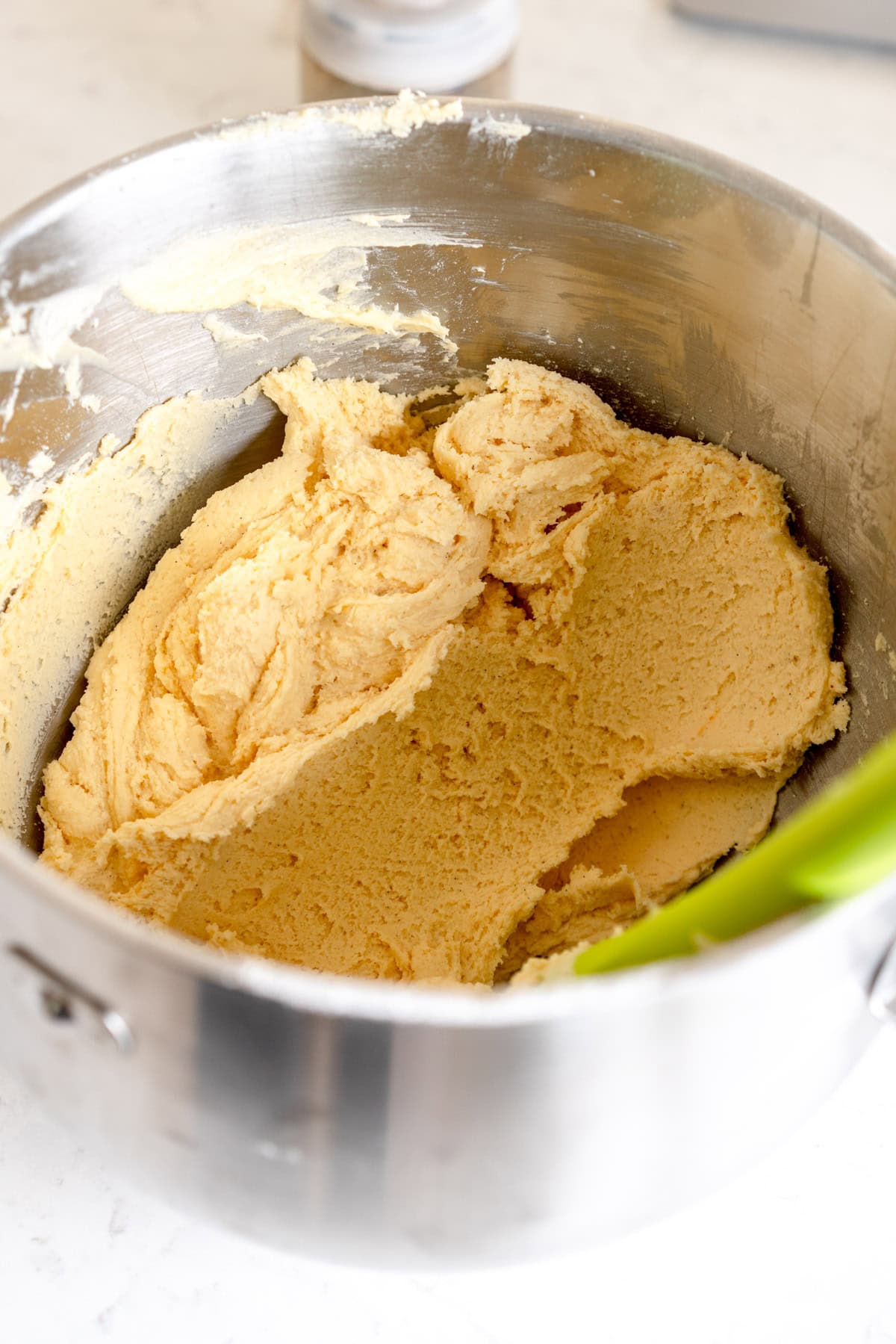
    finished gingersnap batter
    Batter ready to scoop
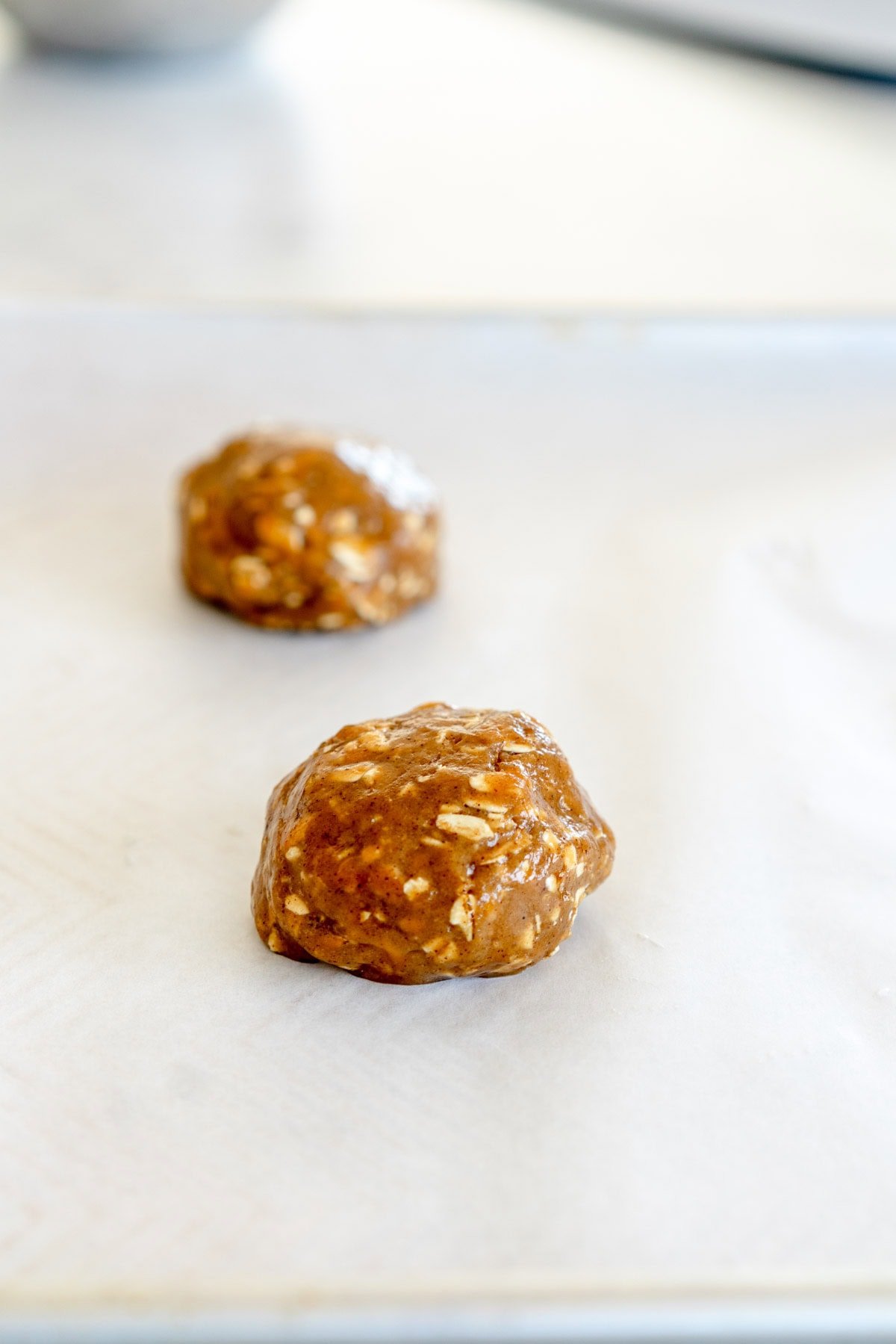
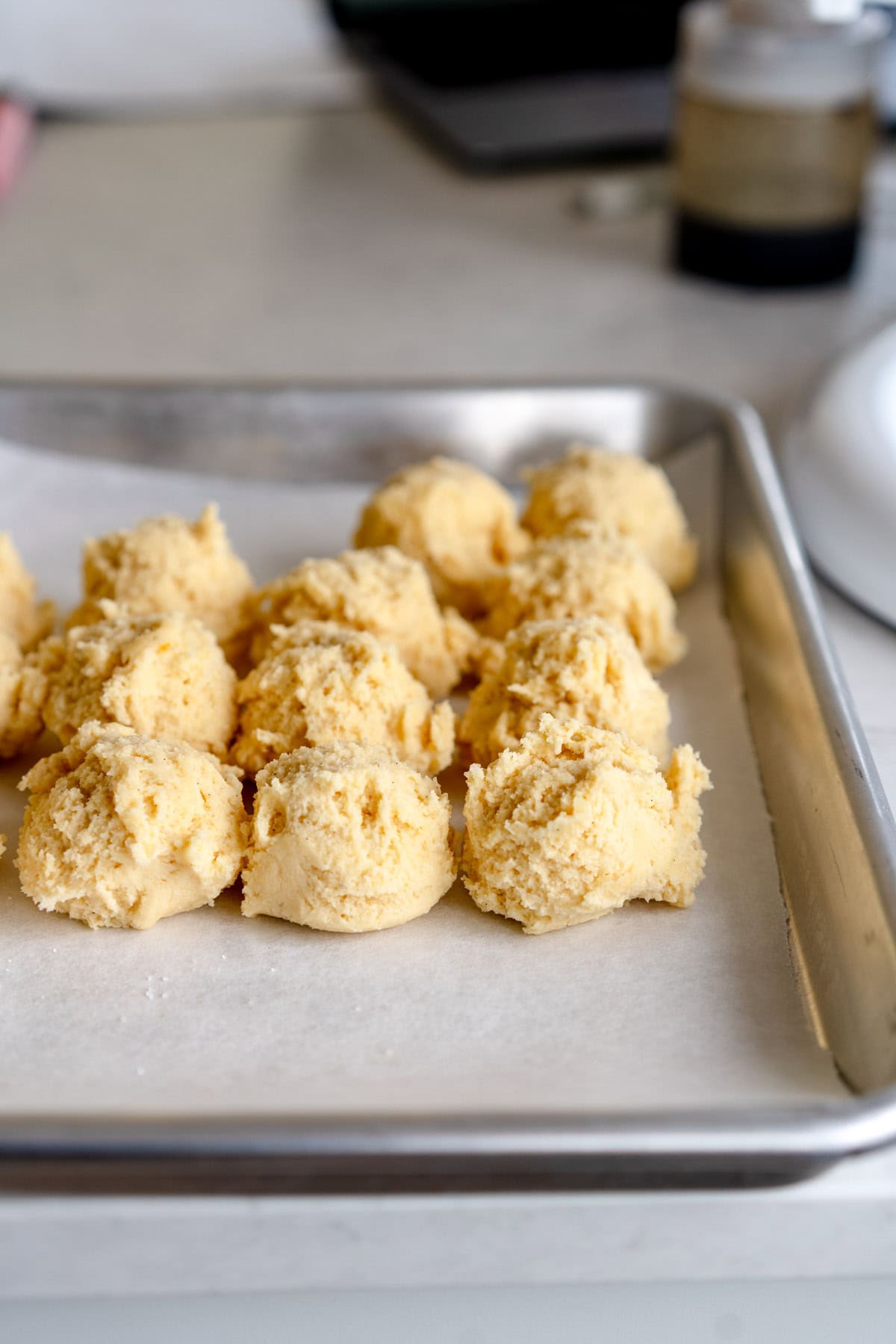
    scooped dough
    If you are freezing, leave off the sugar

    ❤️ Made this recipe and love it? ❤️

    I would LOVE for you to leave me a review and star rating below to let me know how you liked it! Also, please make sure to tag me on Instagram!

    Answers to your baking questions

    Over the years, many of you have asked me questions about:

    • baking in grams
    • adjusting oven temperatures
    • what kind of salt to use
    • and many more!

    I've curated and answered them all for your easy reference in this frequently asked questions post!
    Filed Under: Cookies, Holiday Cookies

    DIY Pumpkin Pie Spice (The Perfect Ratio!)

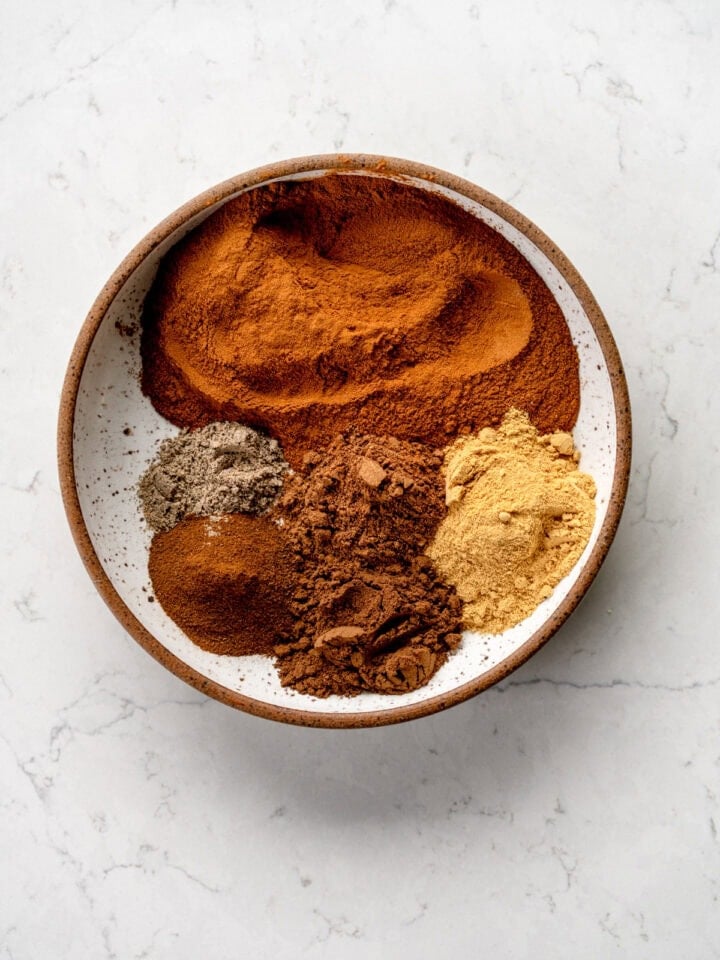
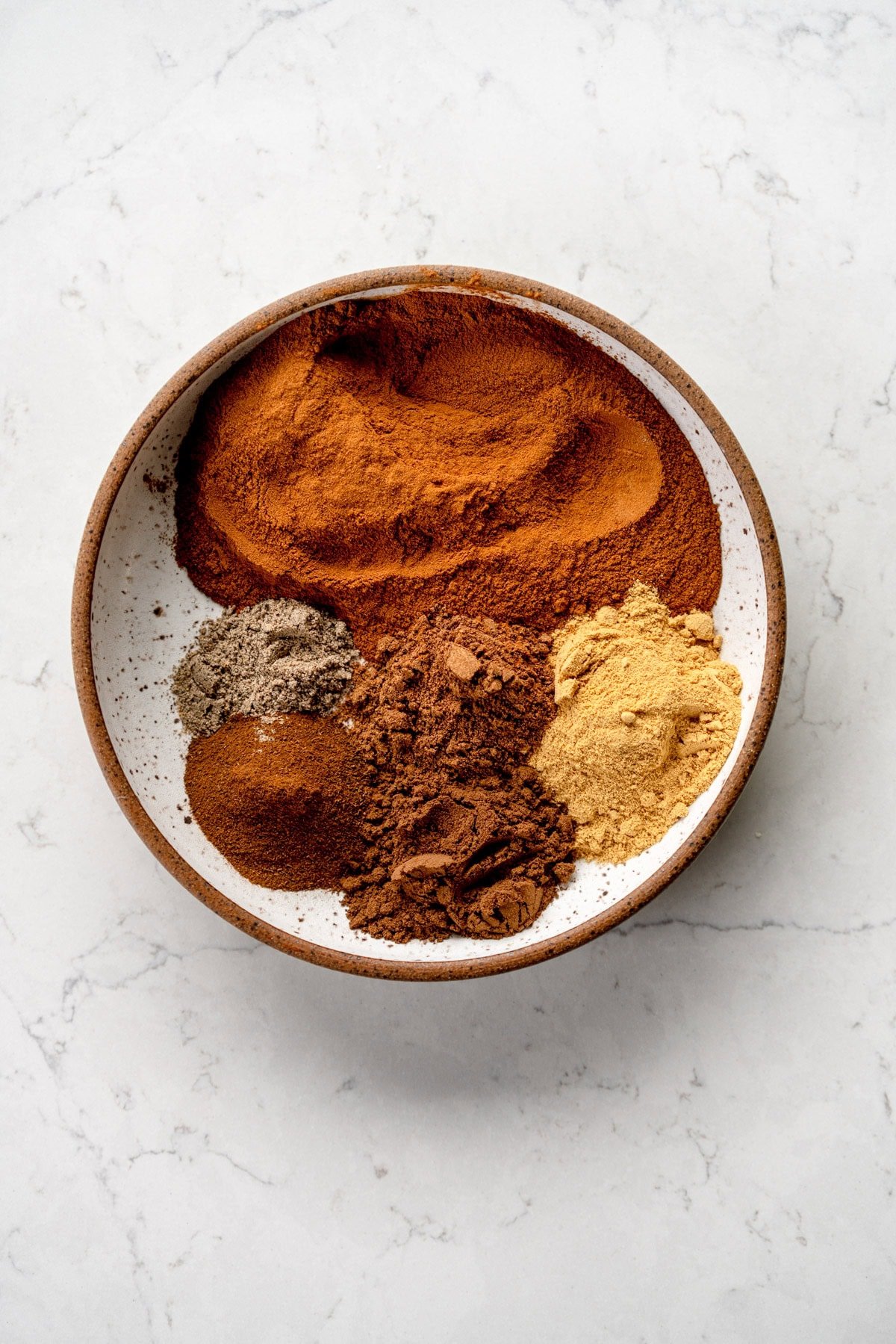
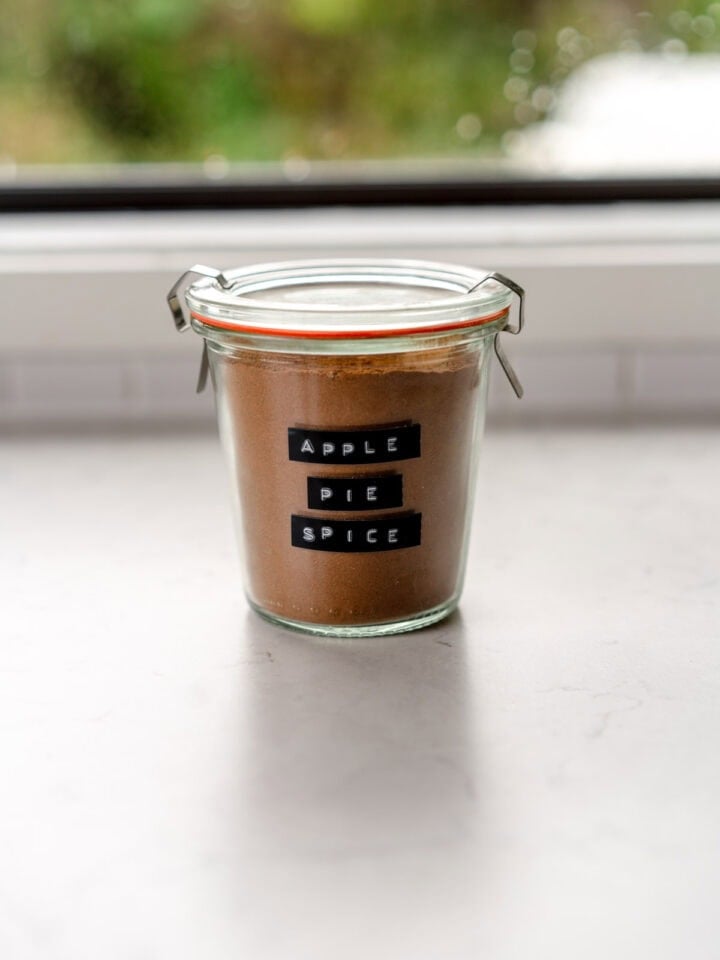
    pumpin pie spice mix

    If you can't get Pumpkin Pie Spice where you live, or you want to make your own to have on hand, this is my go-to recipe! This is great to have on hand for seasonal baking, and the best part is that you get to make it exactly to your liking!

    pumpin pie spice mix

    Hi hi! I am just popping in to share this recipe with you for an easy at home Pumpkin Pie Spice! We can't get it easily where I live, and I know not everyone can. So instead of having to search what to use instead of pumpkin spice, here we go - make your own! However, the main reason that I like to make my own is so that I can control what spices go in. This is a great option if you prefer your pumpkin spice baking a bit more ginger forward or with a little more of another spice, so making your own is great!

    This pumpkin pie spice mix obviously works great in a pumpkin pie recipe, but I also love to use it in my Pumpkin Spice Cookies!

    You can also sub the cinnamon for this pumpkin pie spice in my cinnamon sugar recipe for a deliciously spiced sugar!

    What even is Pumpkin Spice?!

    I get this question a lot. No, this recipe does not have pumpkin in it. It is called pumpkin spice because it is made up of the spices that are used in a pumpkin pie. There are all the usual suspects, but I have also added in a little bit of cardamom into mine because I love how it tastes. If you don't, leave it out. If you like more or less of a different spice, switch that up too. That's the best part - you can do whatever you like.

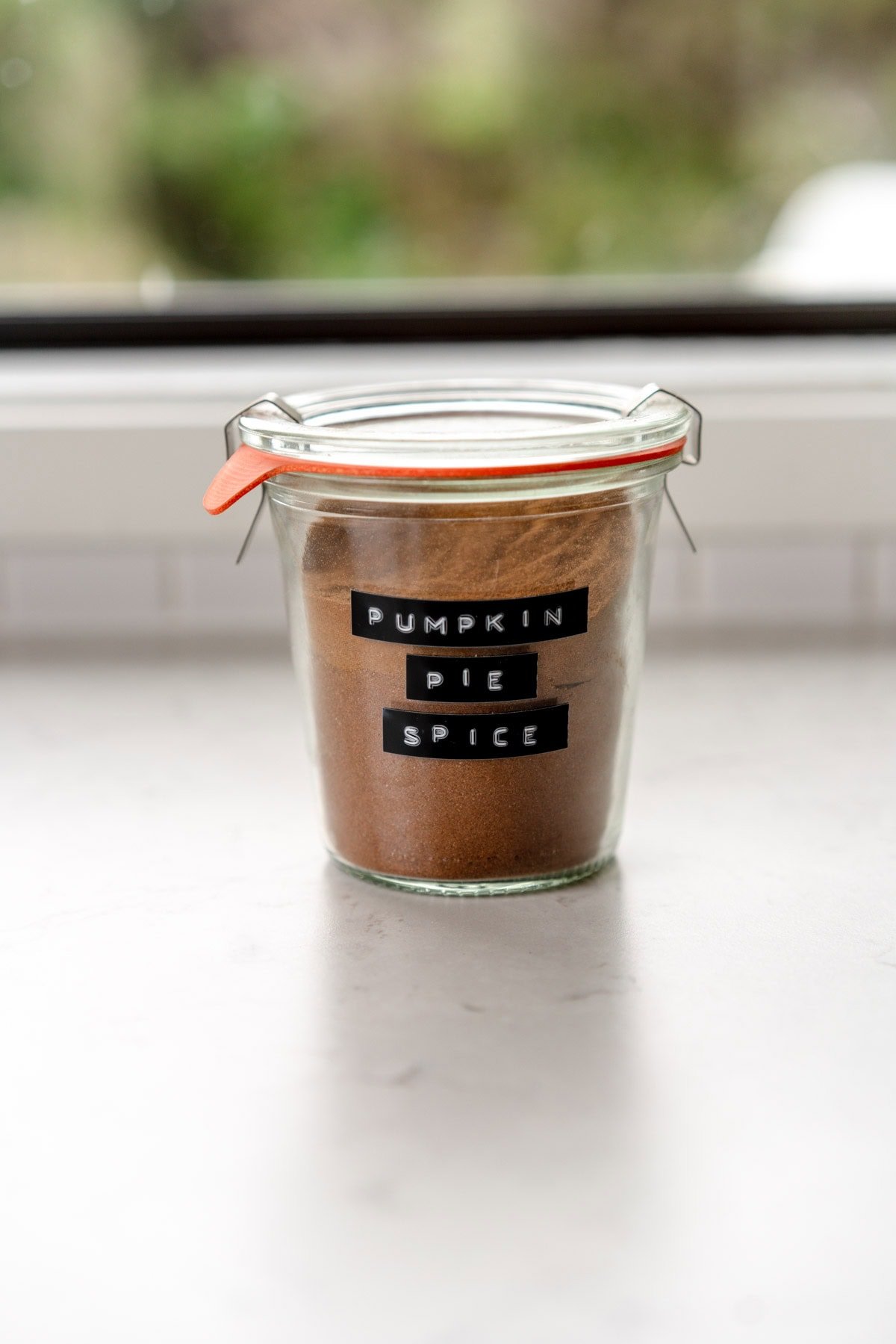
    jar of pumpkin spice

    What spices are in Pumpkin Spice?

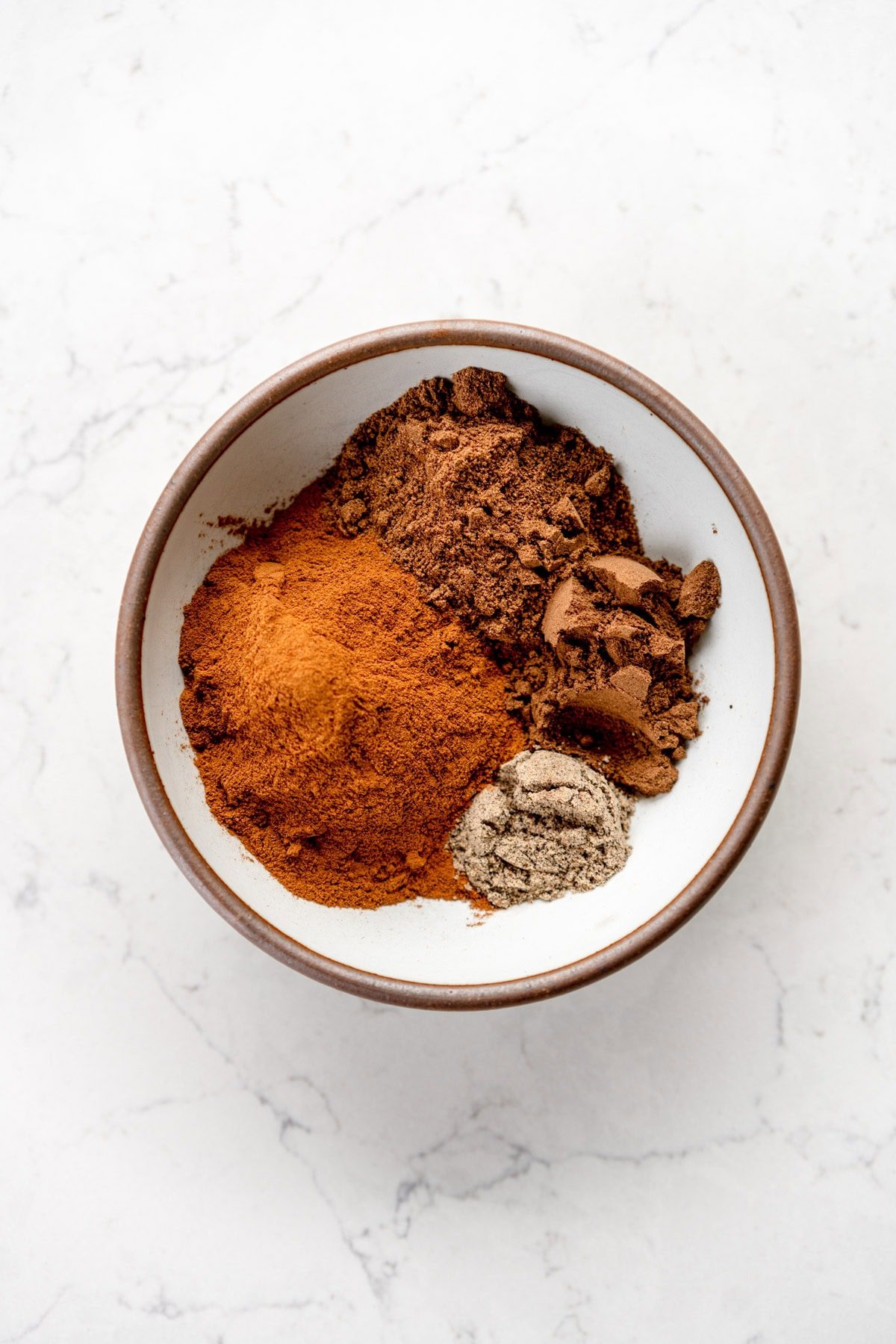
    I have the usual suspects here- mainly cinnamon which acts as a great base. I then added ginger, and then nutmeg, allspice, cloves, and just a little cardamom for warmth.

    If you can, try and make sure that your spices are fresh. The fresher they are the stronger the flavour will be. Believe it or not, spices do have an expiration date! Store them as airtight as possible to keep them fresh.

    jar of pumpkin spice

    ❤️ Made this recipe and love it? ❤️

    I would LOVE for you to leave me a review and star rating below to let me know how you liked it! Also, please make sure to tag me on Instagram!

    Answers to your baking questions

    Over the years, many of you have asked me questions about:

    • baking in grams
    • adjusting oven temperatures
    • what kind of salt to use
    • and many more!

    I've curated and answered them all for your easy reference in this frequently asked questions post!
    Filed Under: Base Recipes Tagged With: Dairy Free, Egg Free, Gluten Free, Vegan

    Fluffy Cinnamon Sugar Donut Cake

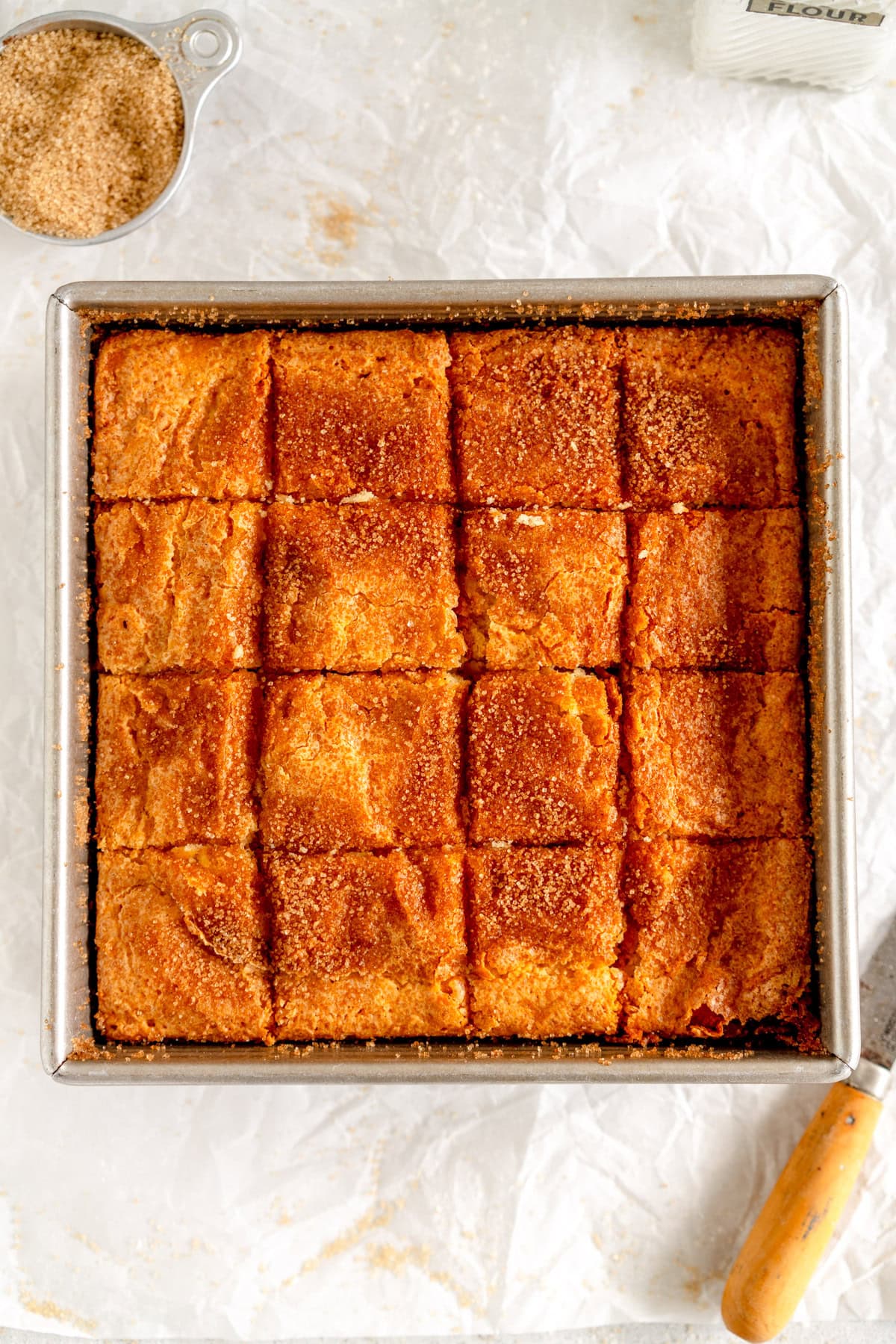
    donut cake in pan

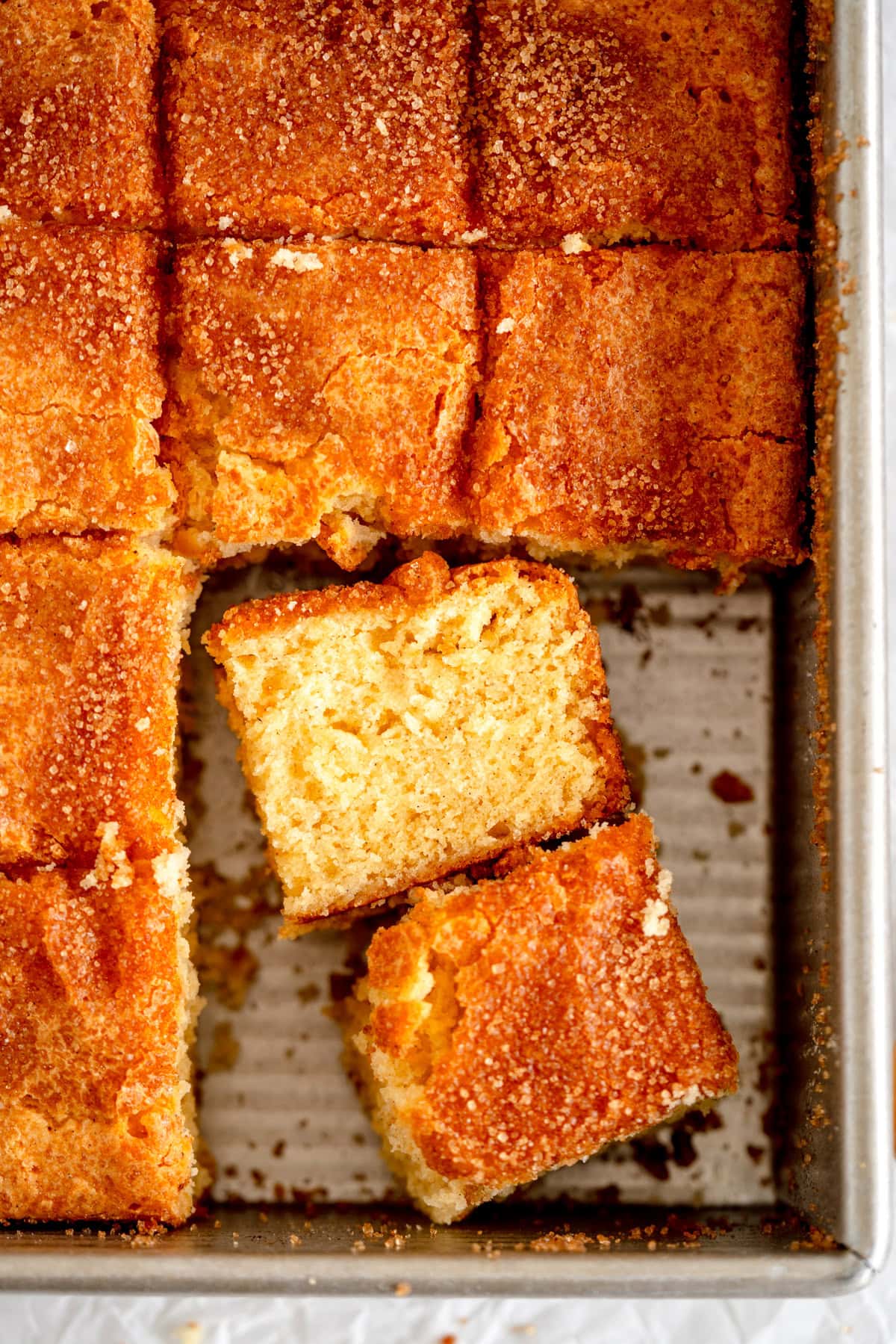
    Forget lining your pan with parchment paper - line it with cinnamon sugar! This technique takes a basic butter cake and turns it into the most amazing Donut Cake. The cake is light and fluffy, and surrounded on all sides by a delicious layer of cinnamon sugar. You'll be eating this straight from the pan warm - it's that good!

    donut cake in pan
    Fluffy Donut Cake with a coating of cinnamon sugar. Truly just the best.

    Hi hi! Just popping in to share this donut cake recipe with you! When I was making my spice cake recipe, which I top with cinnamon sugar, I tried a non-spiced version and instead of lining the pan with parchment, I lined the entire thing with a layer of crunchy cinnamon sugar.

    The result was amazing - a fluffy donut cake, covered with a layer of crunchy sugar. It is super easy to make, but the sugar in the pan trick is just enough to elevate it to something very magical. We ate the whole thing out of the pan in the first day, it's just that good.

    Like the spice cake, this is a twist on my butter cake recipe, which is a super versatile girlie - a tender and fluffy cake, made with sour cream. This donut cake is so good it deserved its own post though!

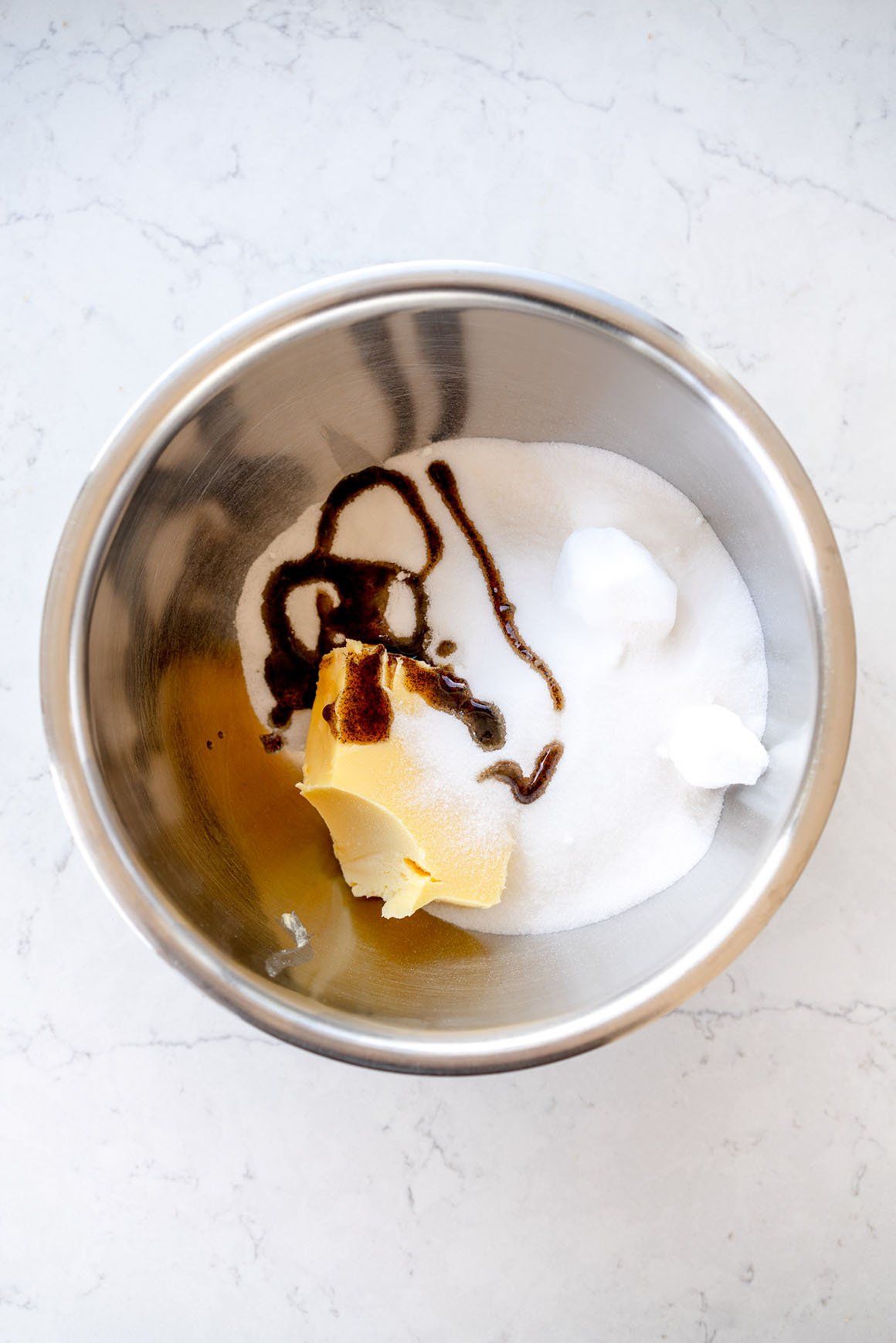
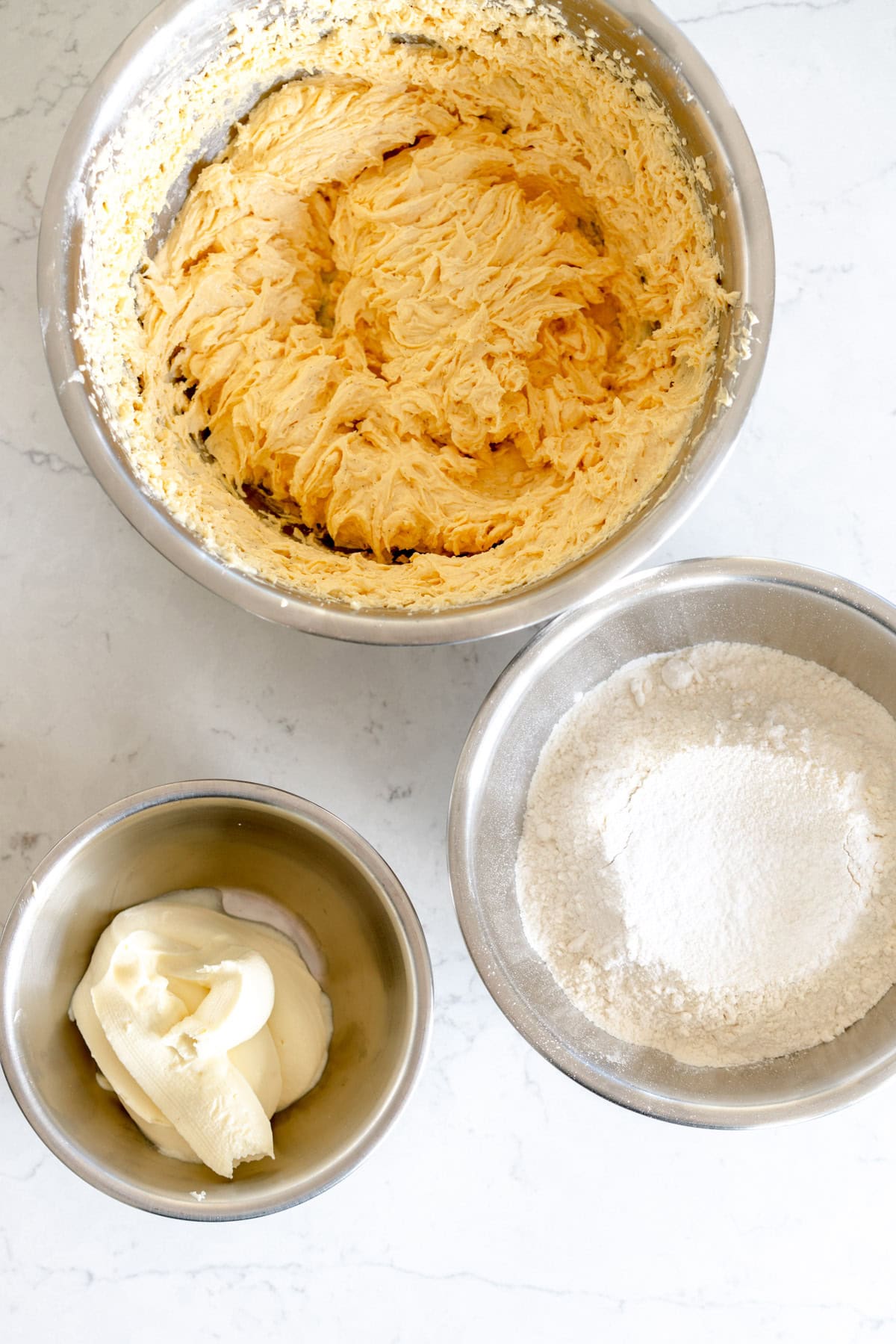
    wet ingredients for donut cake
    Butter, sugar, and vanilla
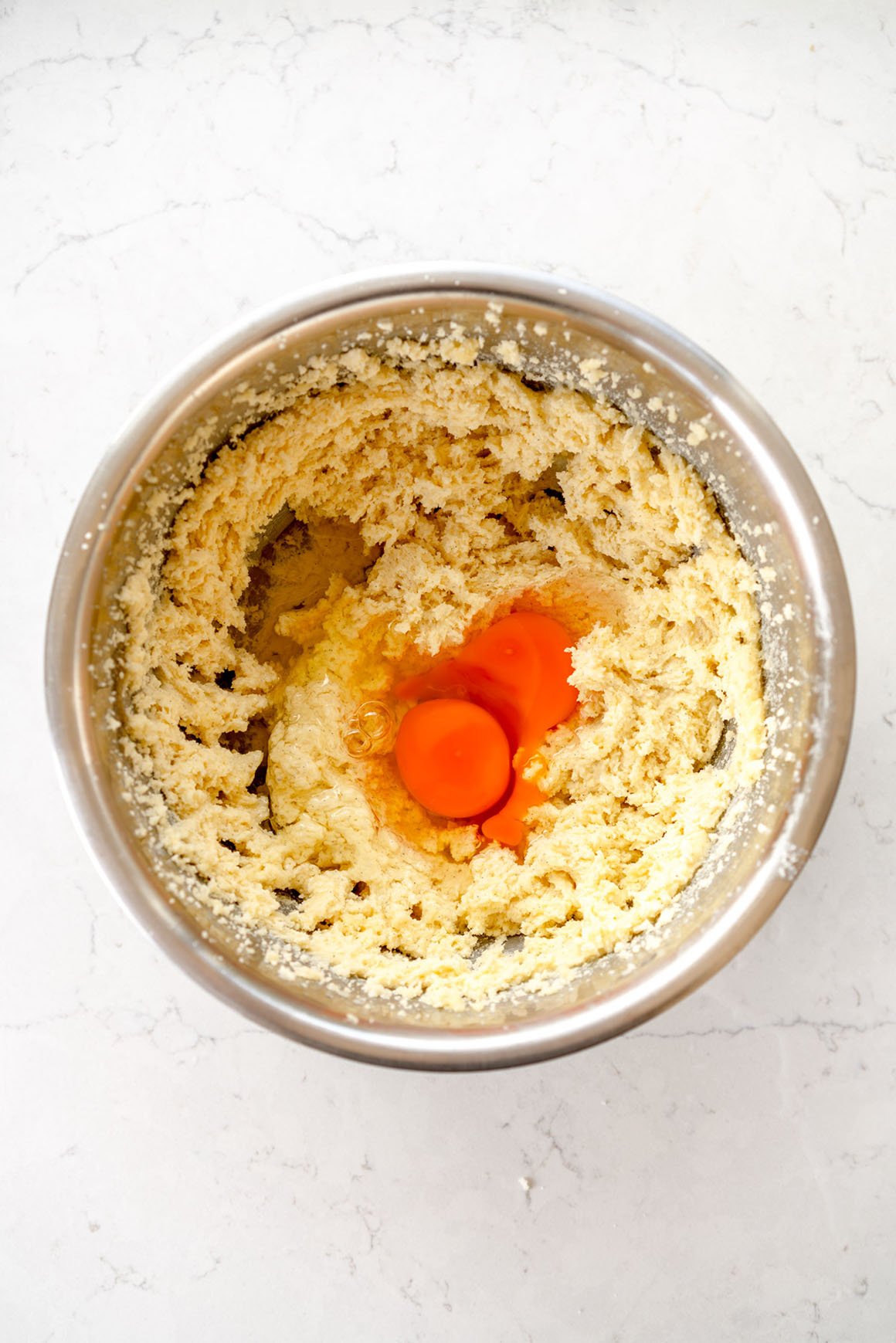
    creamed butter and sugar with eggs
    Cream well, then add eggs
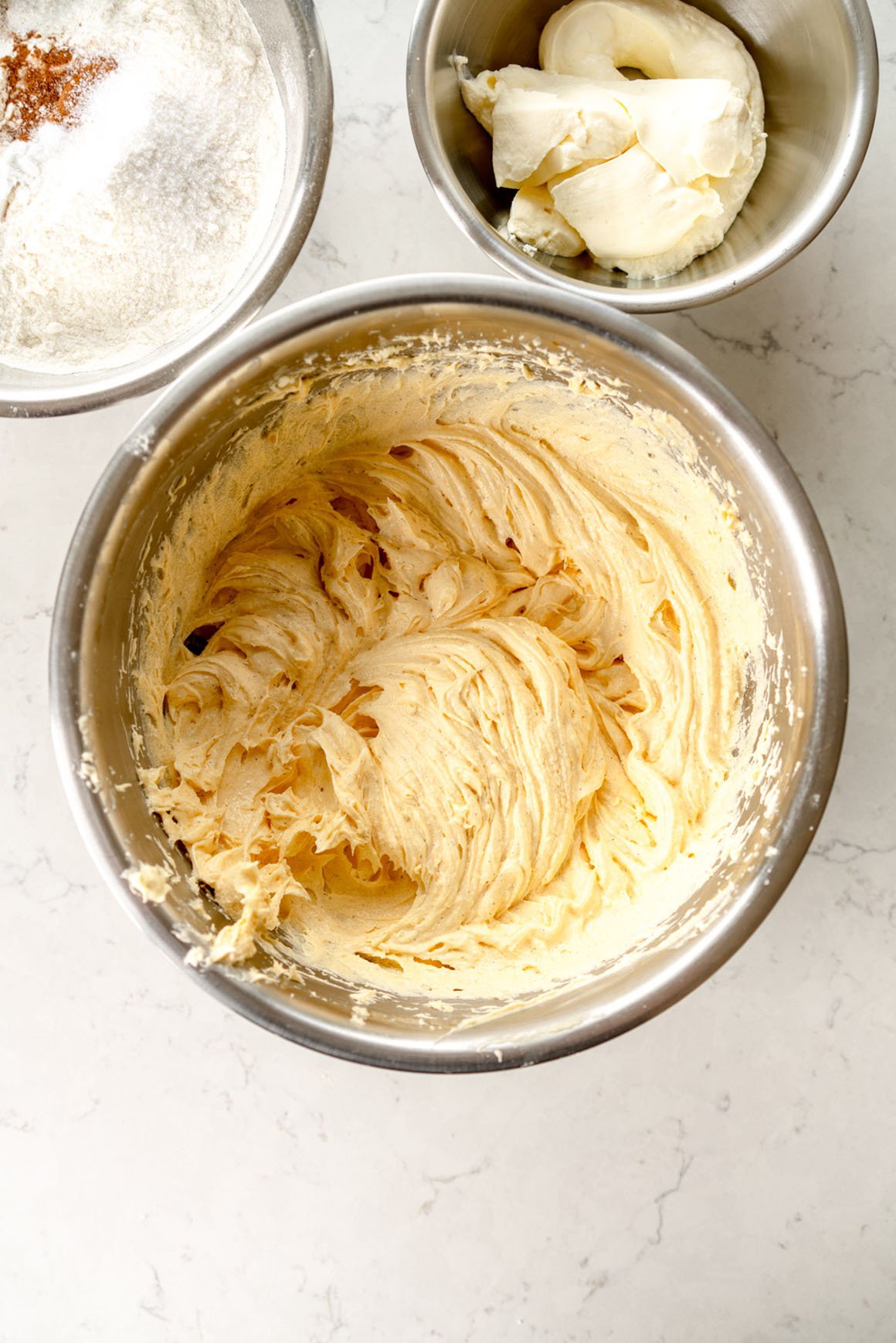
    cake with wet and dry ready to go in
    Alternate dry and wet
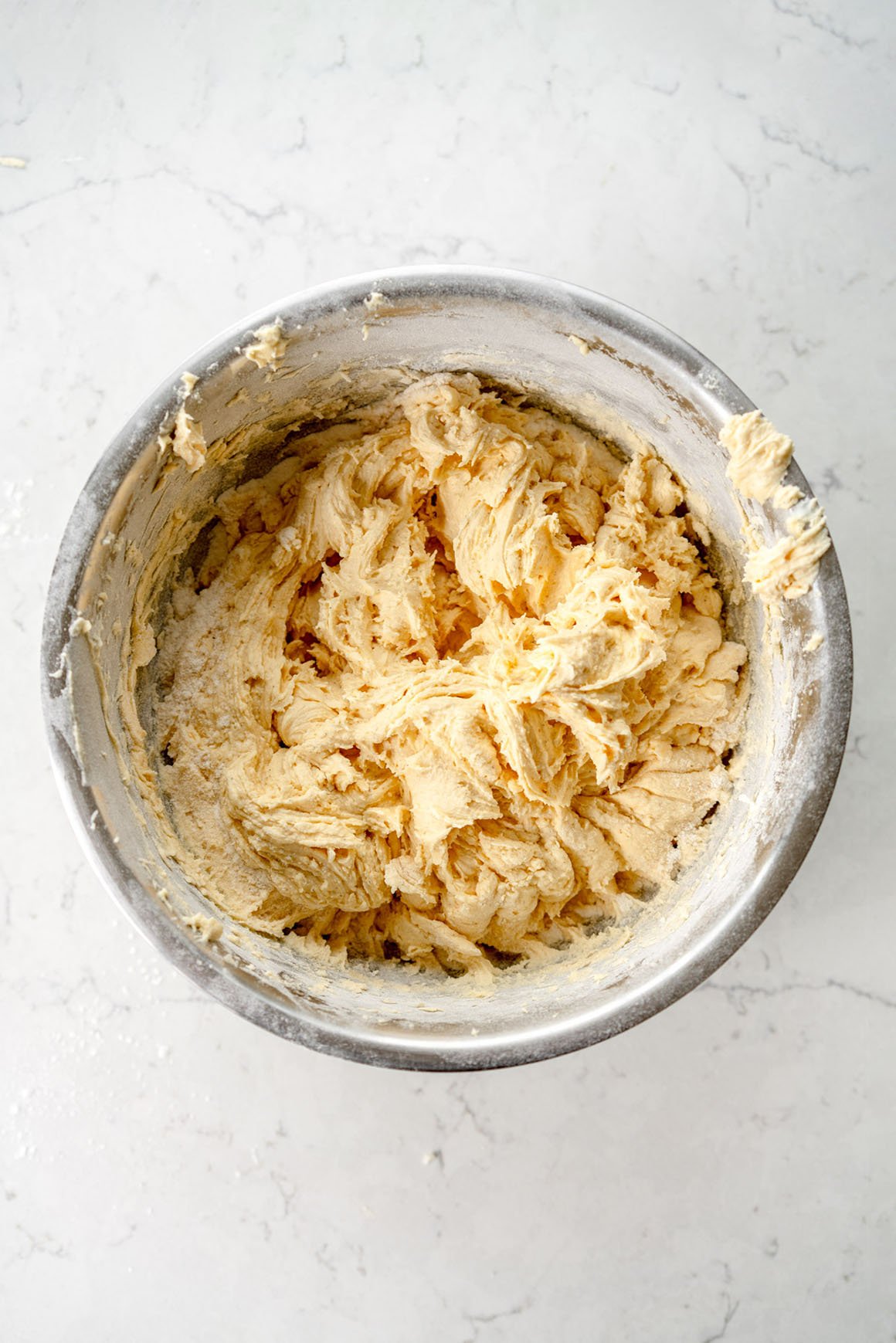
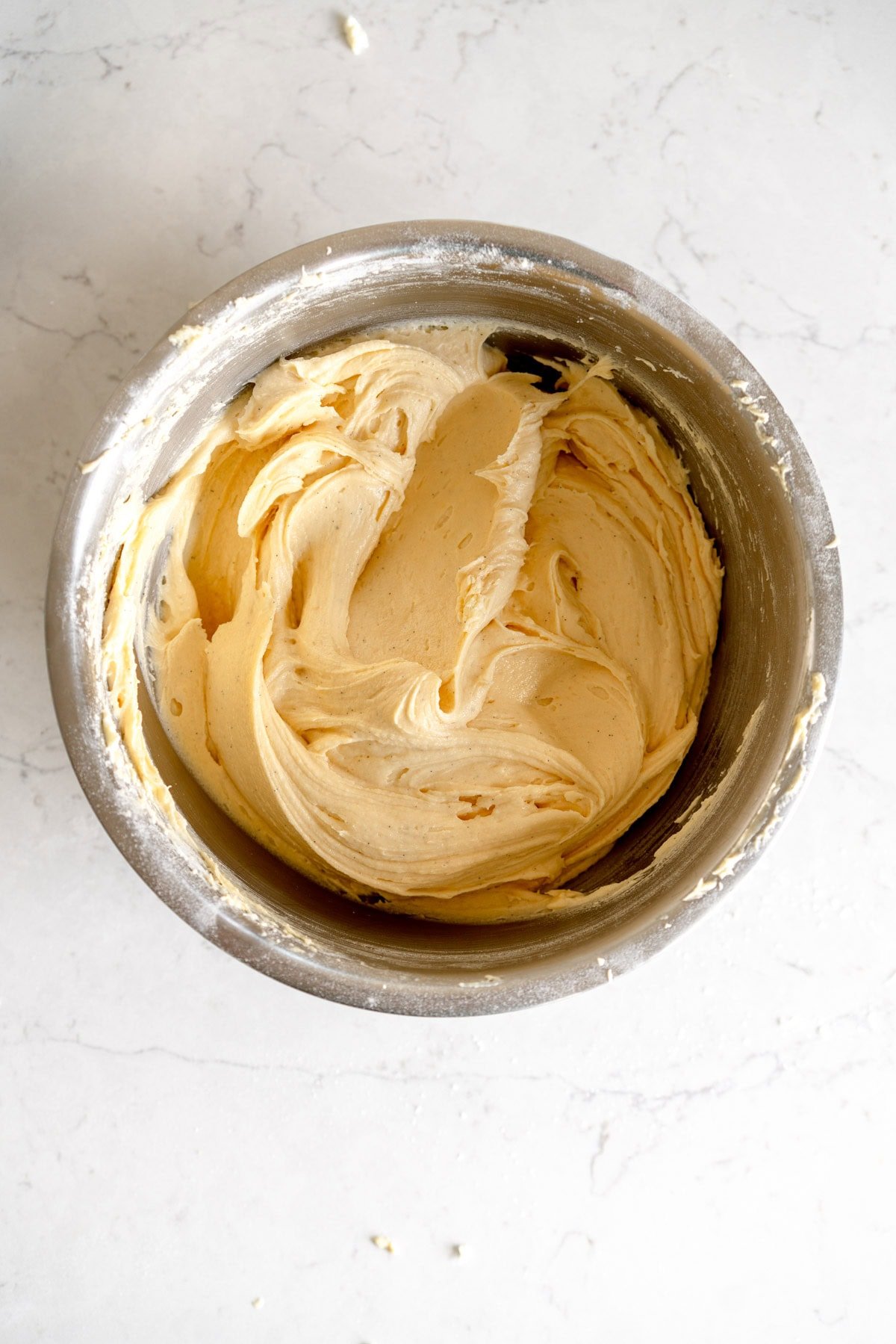
    finished donut cake batter
    Finish mixing by hand

    The trick to a donut cake - line the pan with sugar!

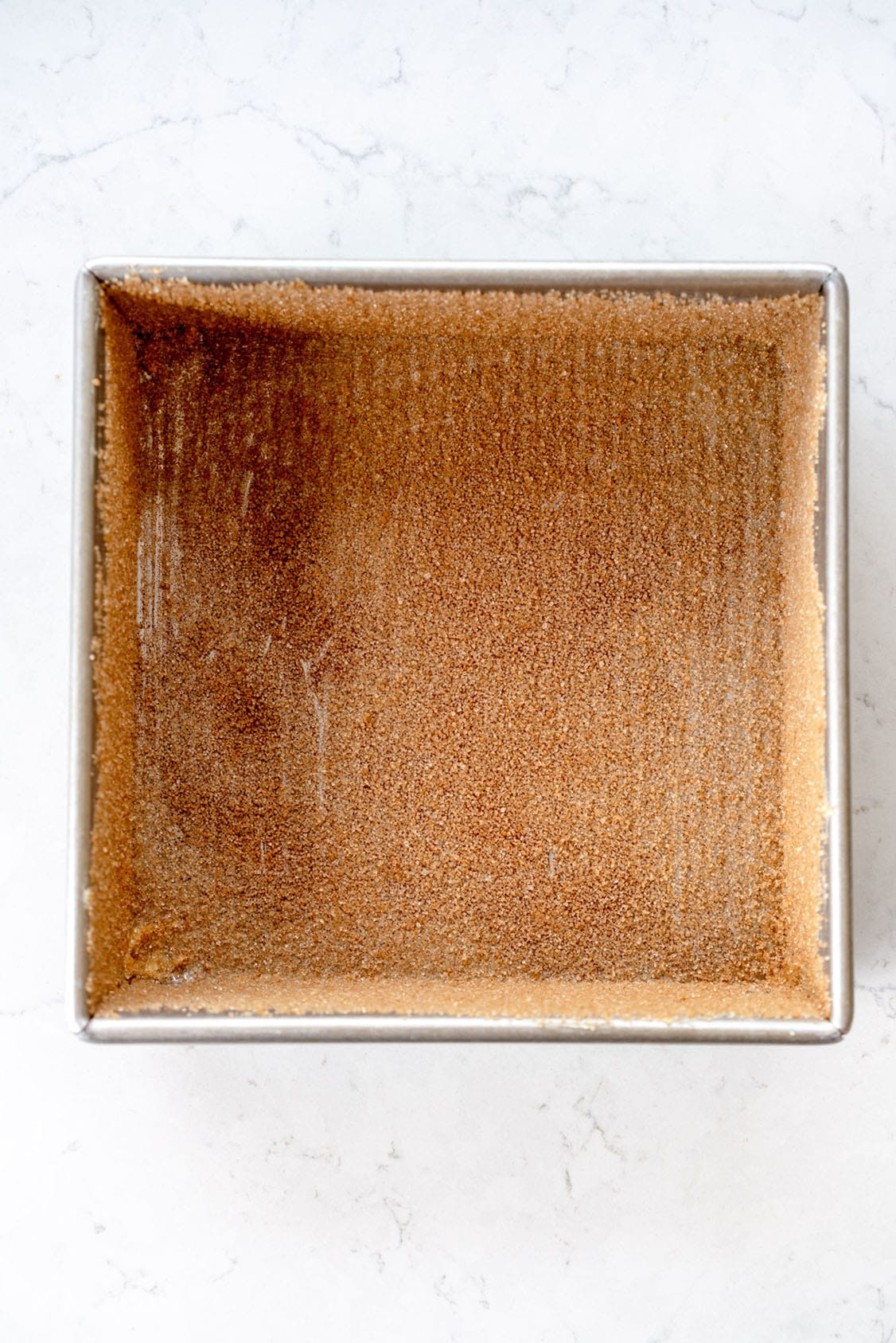
    There's something about a cinnamon sugar donut that I love so much, so I wanted to channel that for this donut cake. Instead of lining the pan with parchment paper which I usually do, I generously coated the pan in butter, then dusted it in cinnamon sugar which I made with turbinado / demerara / whatever your name is for the crunchy raw sugar.

    While this does make it a tiny bit more work in terms of taking the extra step to line the pan and being careful to smooth the batter down so that it doesn't take too much of the sugar off the sides, it is very very worth it.

    I used a non-stick pan (mine is the brand USA pan) and made it in an 8" (20cm) pan rather than my butter cake recipe which is made in a 9" (23cm) pan so a little thinner. I wanted a nice thick fluffy cake. I haven't tried this with any other kinds of pan sorry but I would go for a non-stick one to give you the best chances of a smooth removal!

    pan lined with cinnamon sugar
    Buttered then coated with sugar!
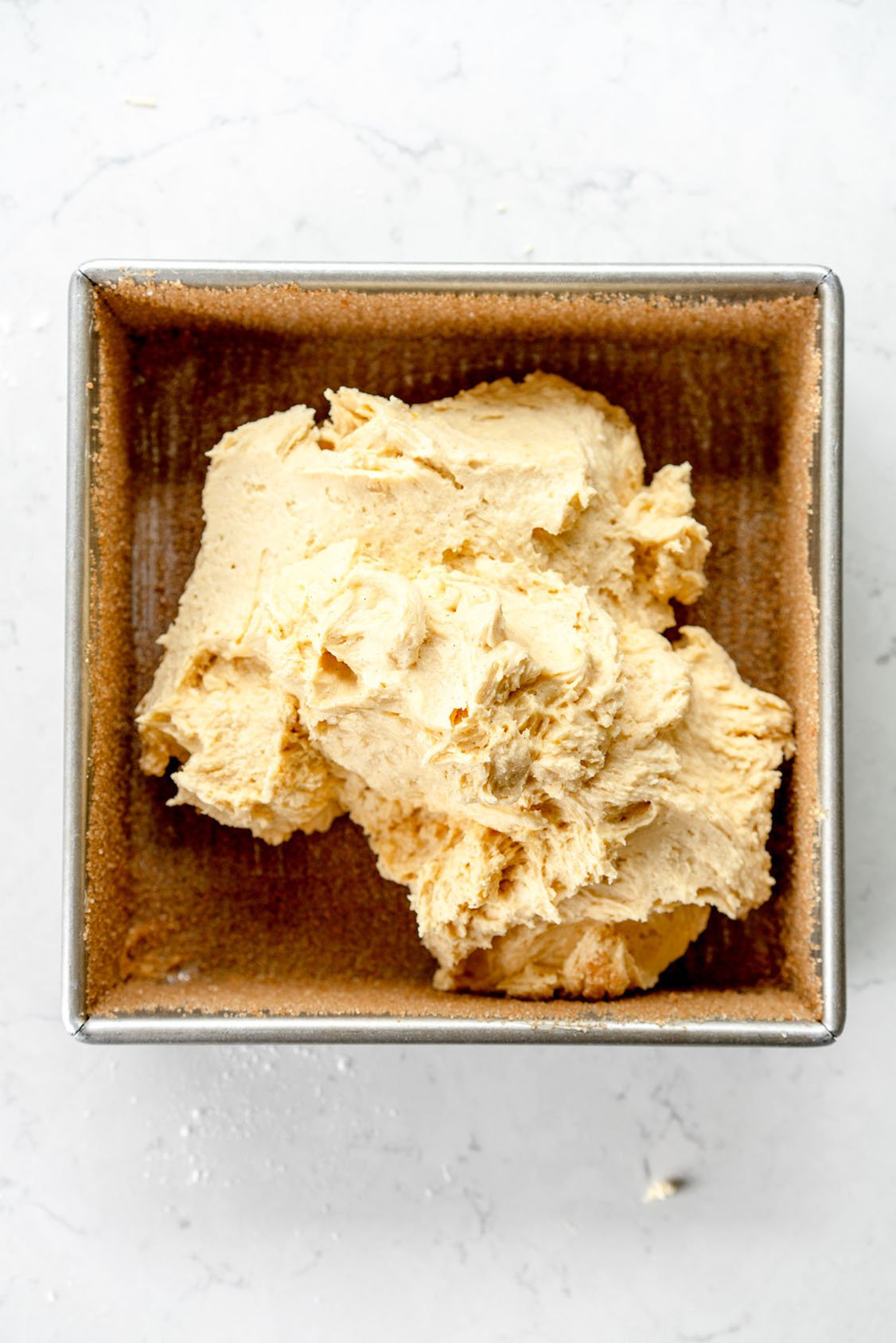
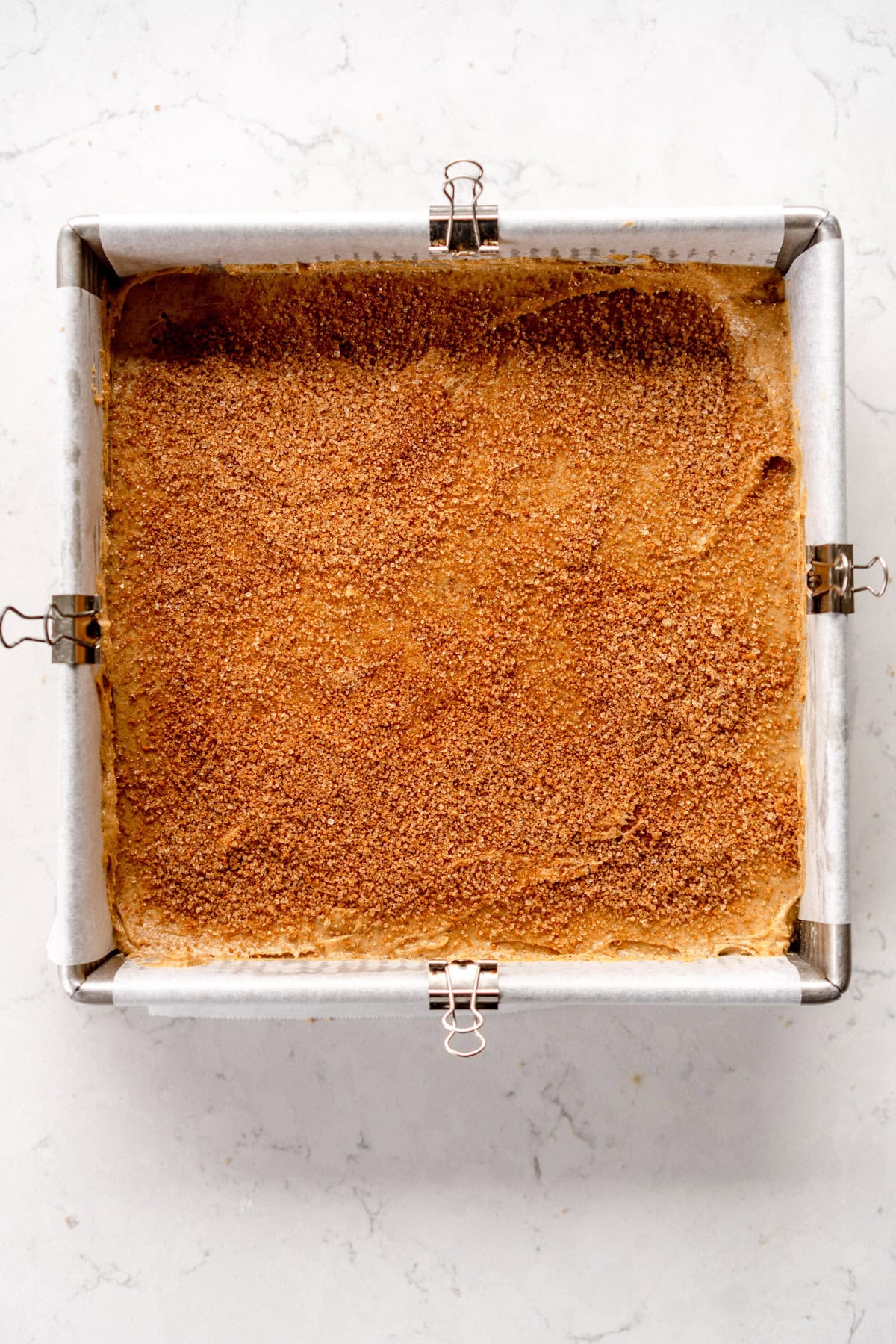
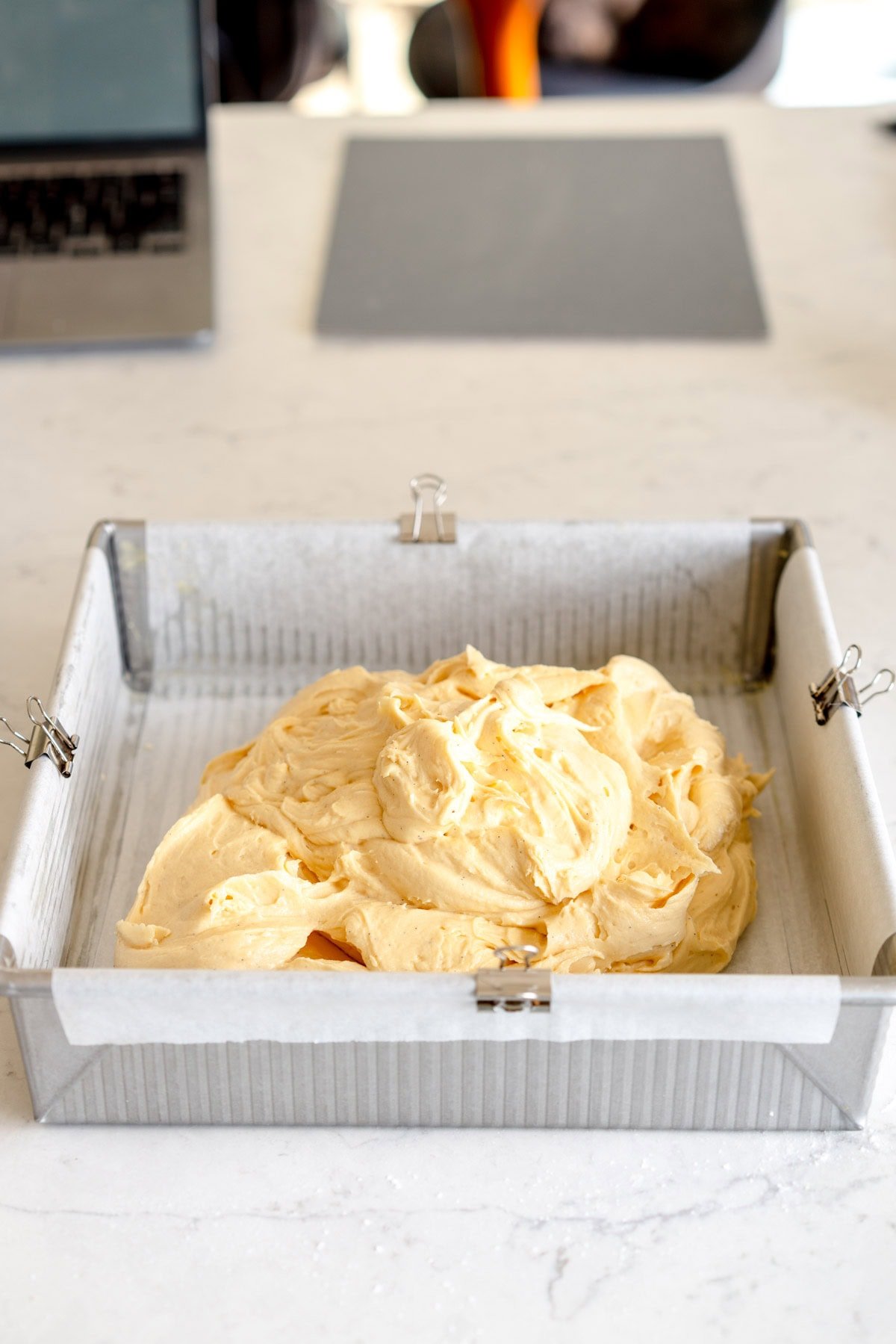
    batter in cinnamon donut pan
    Spread the cake carefully!
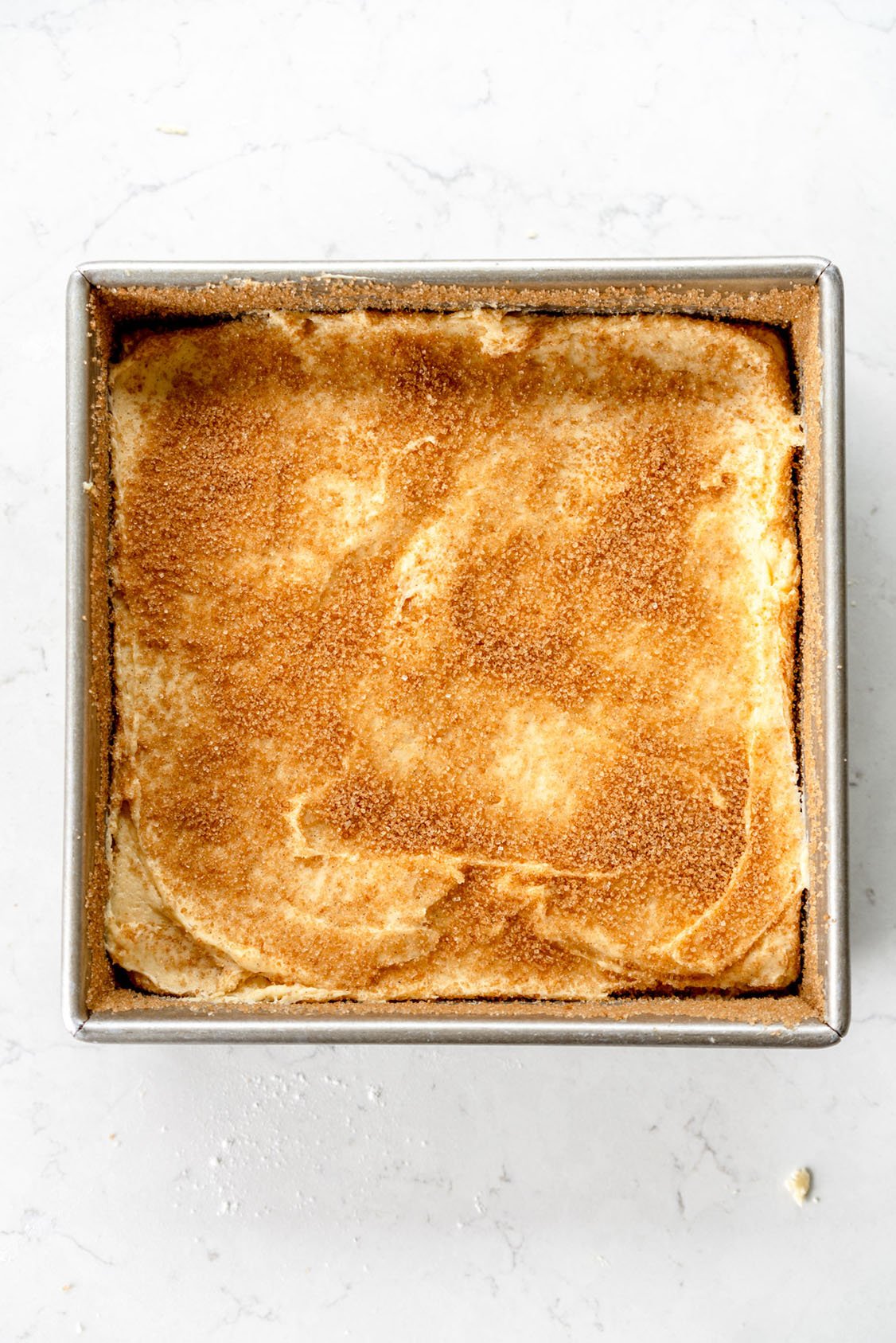
    smoothed out batter in pan
    Smooth cake well into the pan
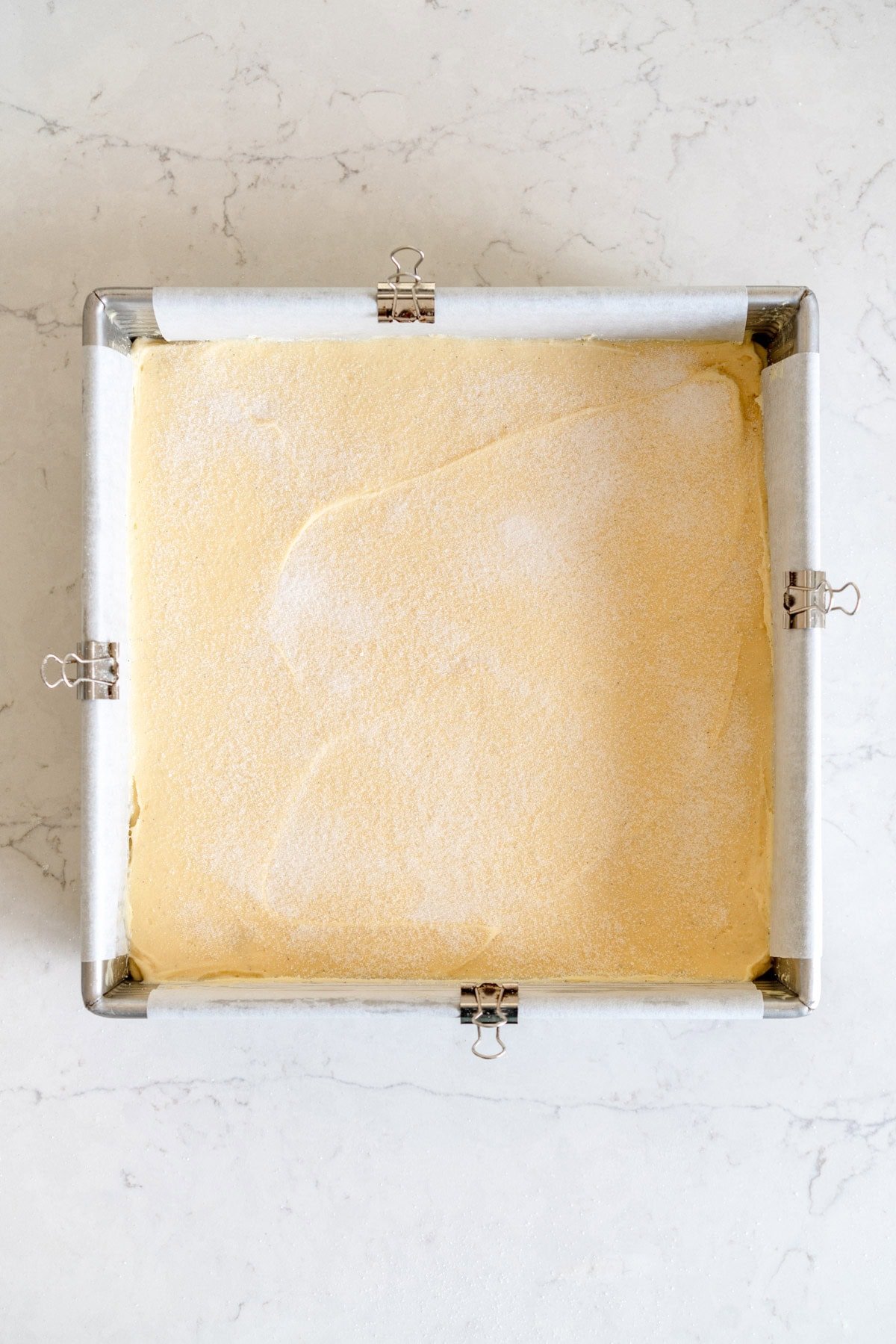
    cake sprinkles with cinnamon sugar
    Then top with remaining sugar

    My Favourite way to eat leftover donut cake

    When I was a kid we used to get these little cinnamon sugar donuts from the supermarket, and would always microwave them until they were screaming hot. I often pop leftover cake in the microwave if it is after the day that I made it, and this donut cake microwaved is next level. I start with about 20 seconds and go from there!

    finished donut cake cut
    I cut mine with a bench scraper
    Crackly cinnamon topping. The best.

    How to slice a donut cake to get it out of the pan?!

    Because this donut cake isn't made in a lined pan, you do have to be a little more careful when you are removing it from the pan. The main thing that I try to watch is that i'm not scratching my non-stick pan, so I cut it with a plastic bench scraper then use a plastic spatula to get the first piece out. Once the first piece is out it is fairly easy to get out of the pan.

    You can also turn the whole thing out - if the cake is cooled it should manage this ok, but you might damage the crackly top. You do you here. We often just eat it out of the pan.

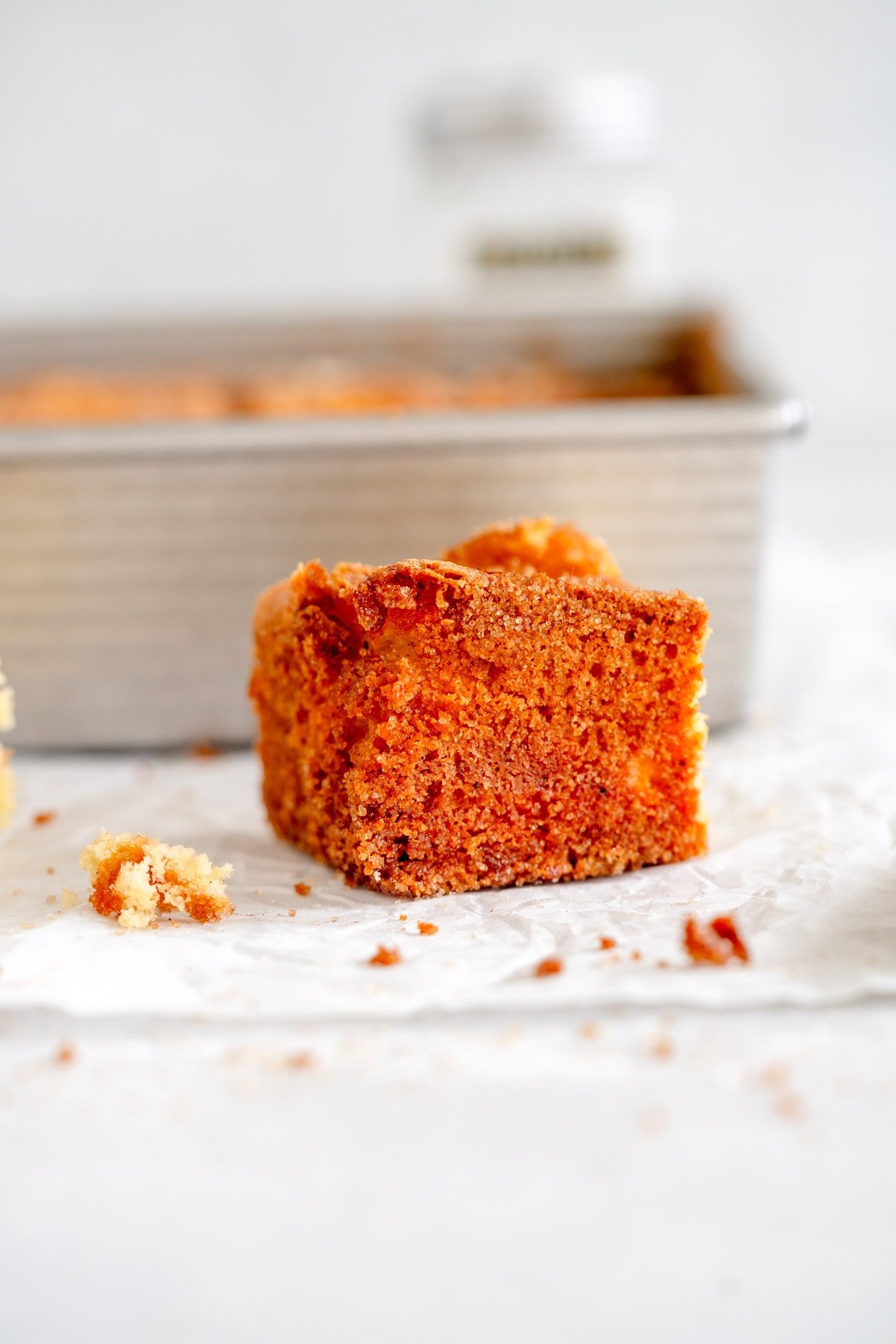
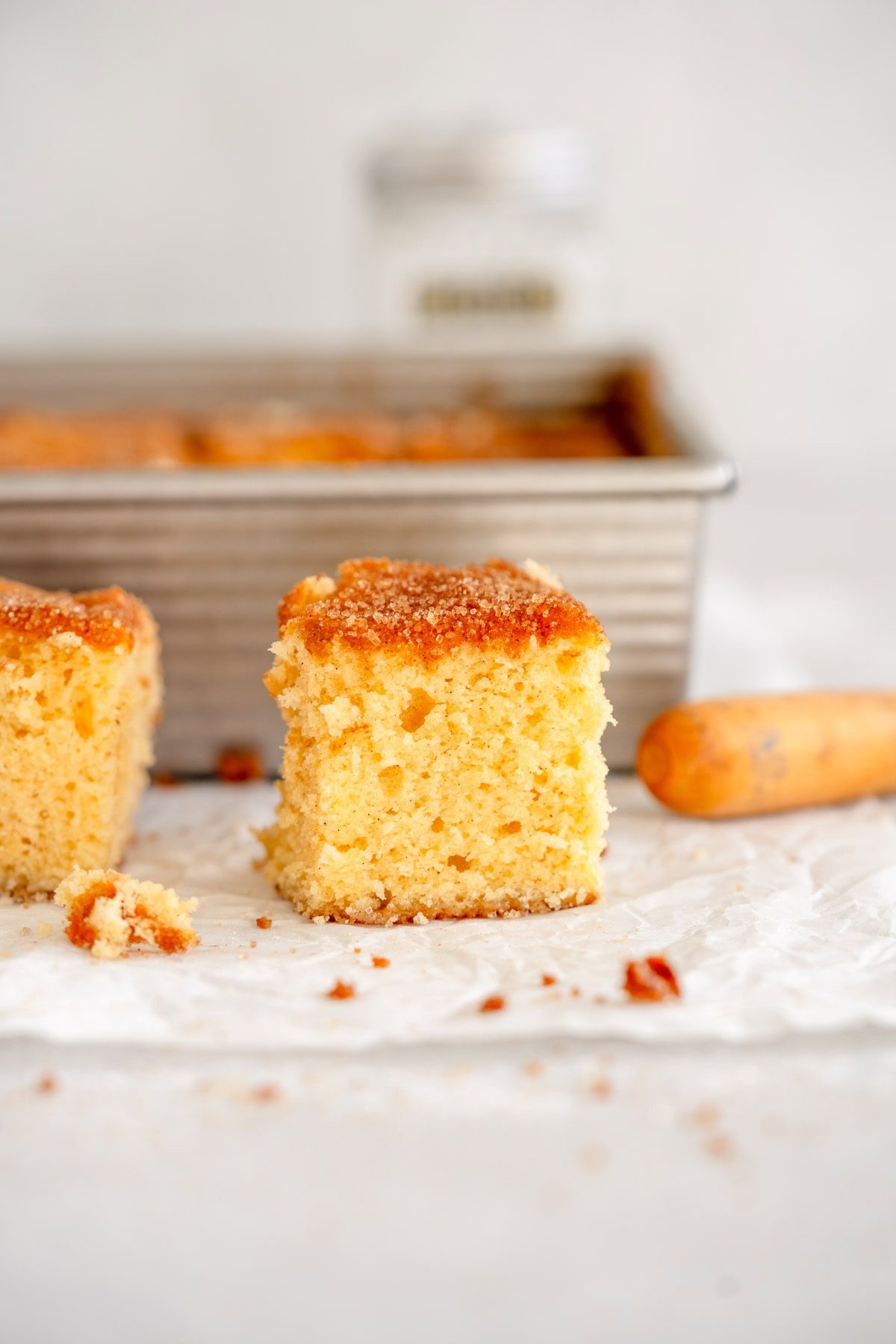
    side on shot of a piece of cut donut cake
    The cake is still super soft and fluffy, and the cinnamon sugar takes it over the edge!

    ❤️ Made this recipe and love it? ❤️

    I would LOVE for you to leave me a review and star rating below to let me know how you liked it! Also, please make sure to tag me on Instagram!

    Answers to your baking questions

    Over the years, many of you have asked me questions about:

    • baking in grams
    • adjusting oven temperatures
    • what kind of salt to use
    • and many more!

    I've curated and answered them all for your easy reference in this frequently asked questions post!
    Filed Under: Cakes, Sheet and Snack Cakes

    The Only Spice Cake Recipe You Need

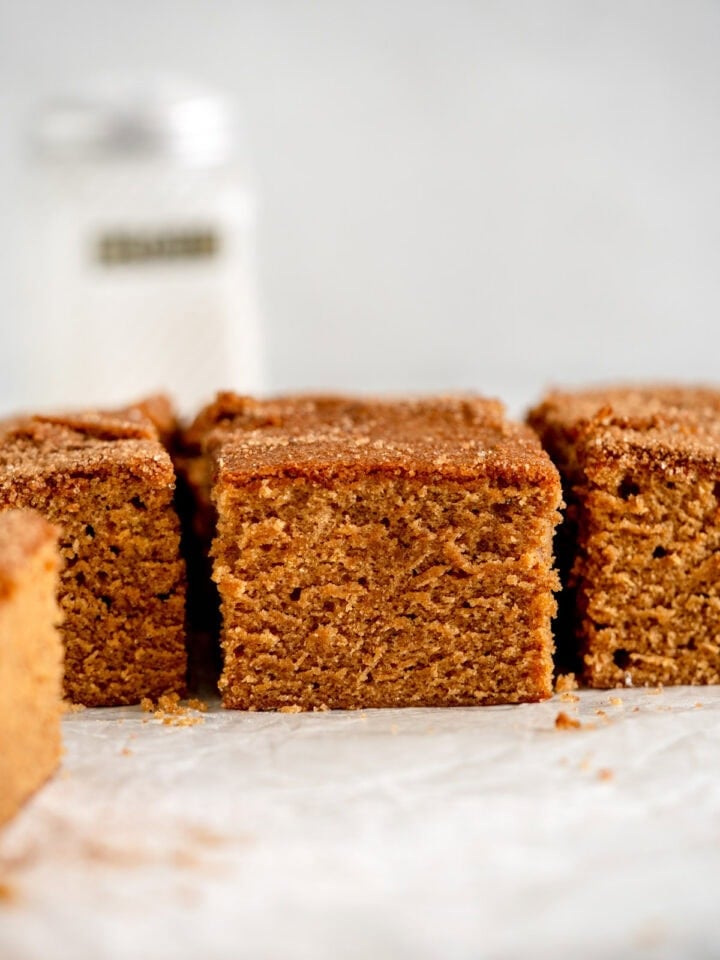
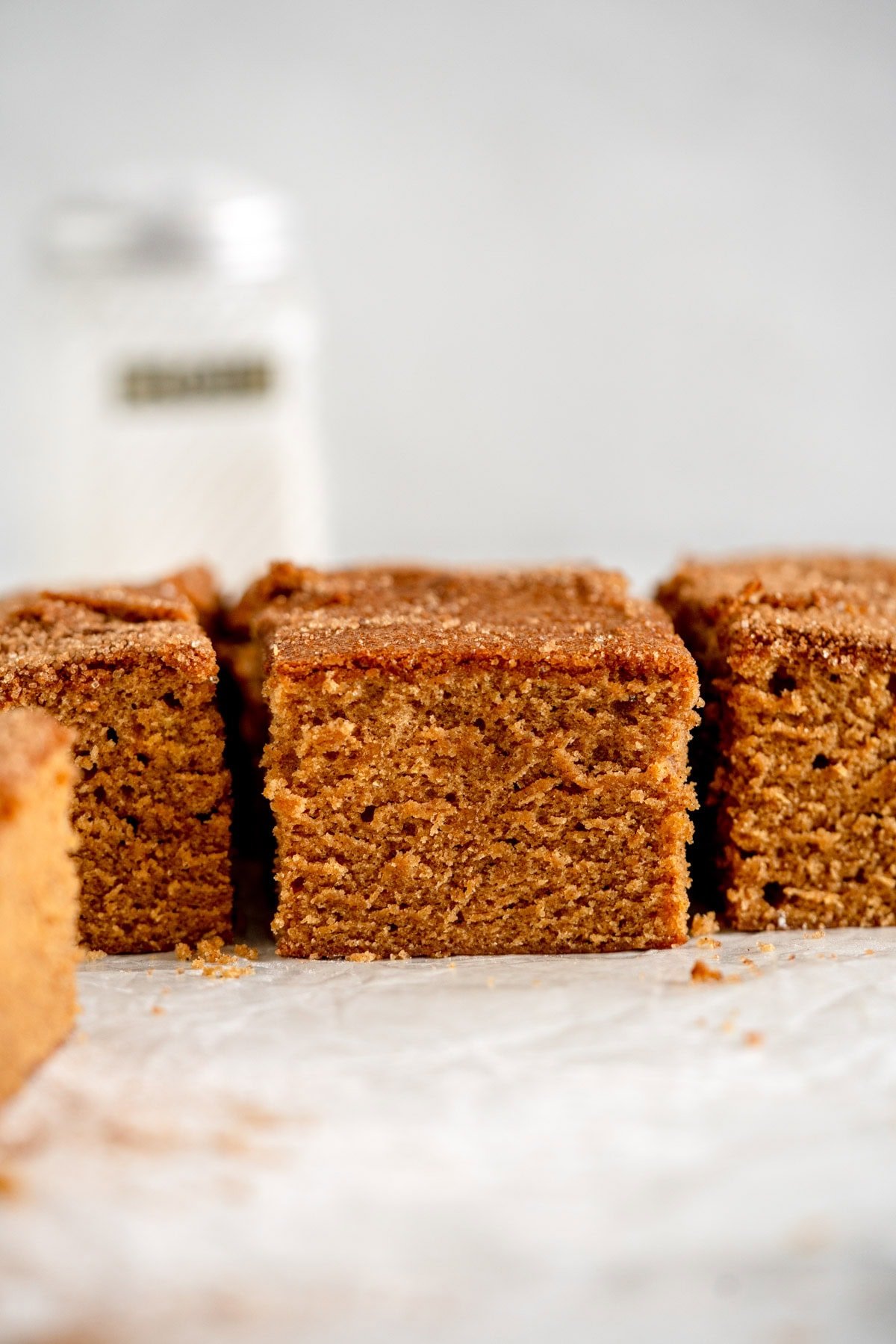
    side on image of spice cake

    Soft, fluffy, and full of all the cozy spices, this cake is like a warm hug! This easy cake comes together quickly and is finished with a crunchy cinnamon sugar topping for the perfect throw together dessert.

    side on image of spice cake

    Hi hi! I am just popping in to share this super easy Spice Cake Recipe with you! I was playing around with my butter cake recipe and realised that I don't have a good spice cake recipe on my website yet, so here we go!

    This is a soft and fluffy single layer cake, which I make in an 8" (20cm) pan. It comes together quickly, and is full of the usual warming spices. It's perfect for an anytime cake but would also be amazing warmed up with custard or ice cream for dessert.

    If you love the crunchy cinnamon sugar topping on this spice cake, give my Donut Cake a go - it has a full coating on all sides of the sugar!

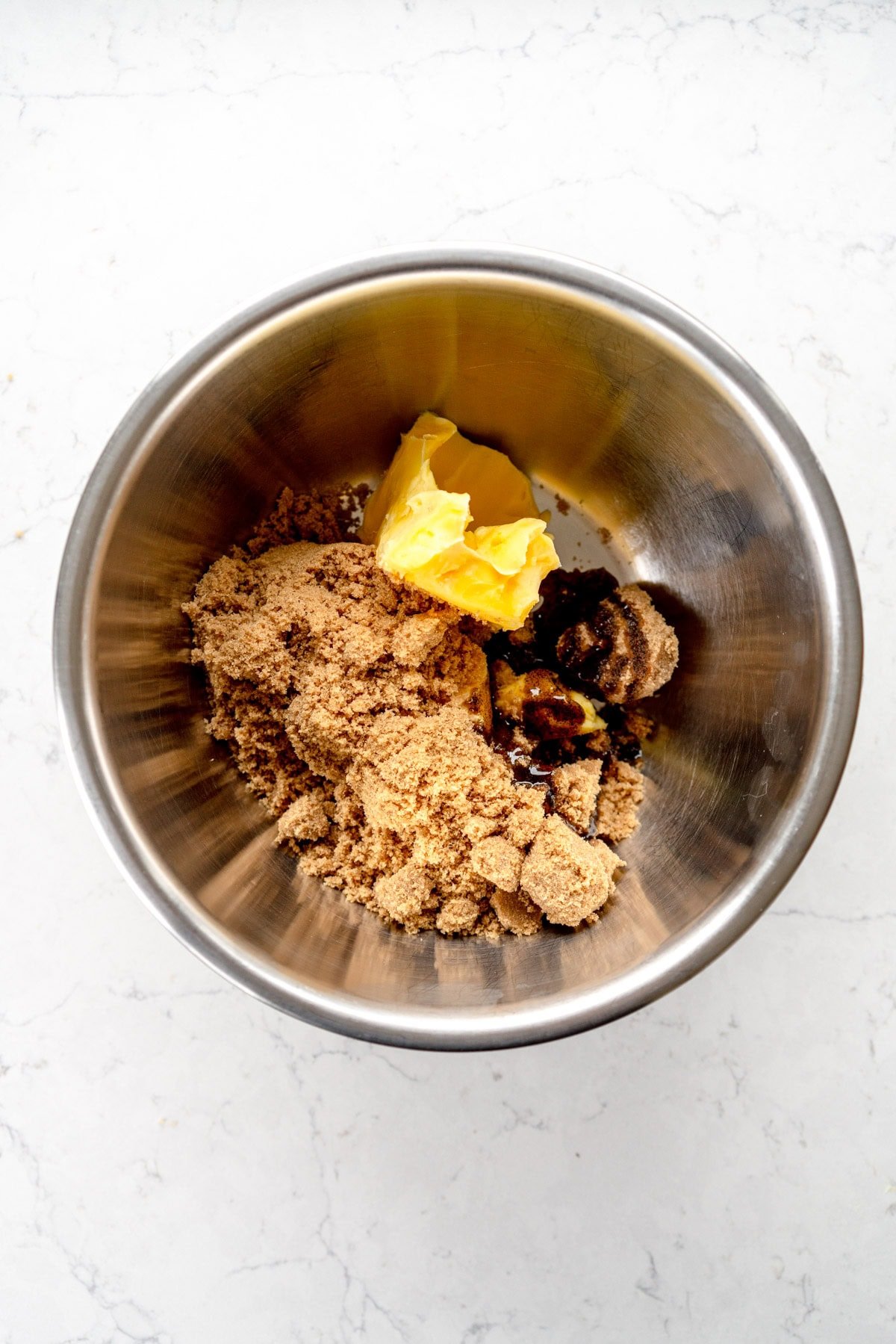
    wet ingredients for spice cake
    Butter and sugar etc ready to be creamed
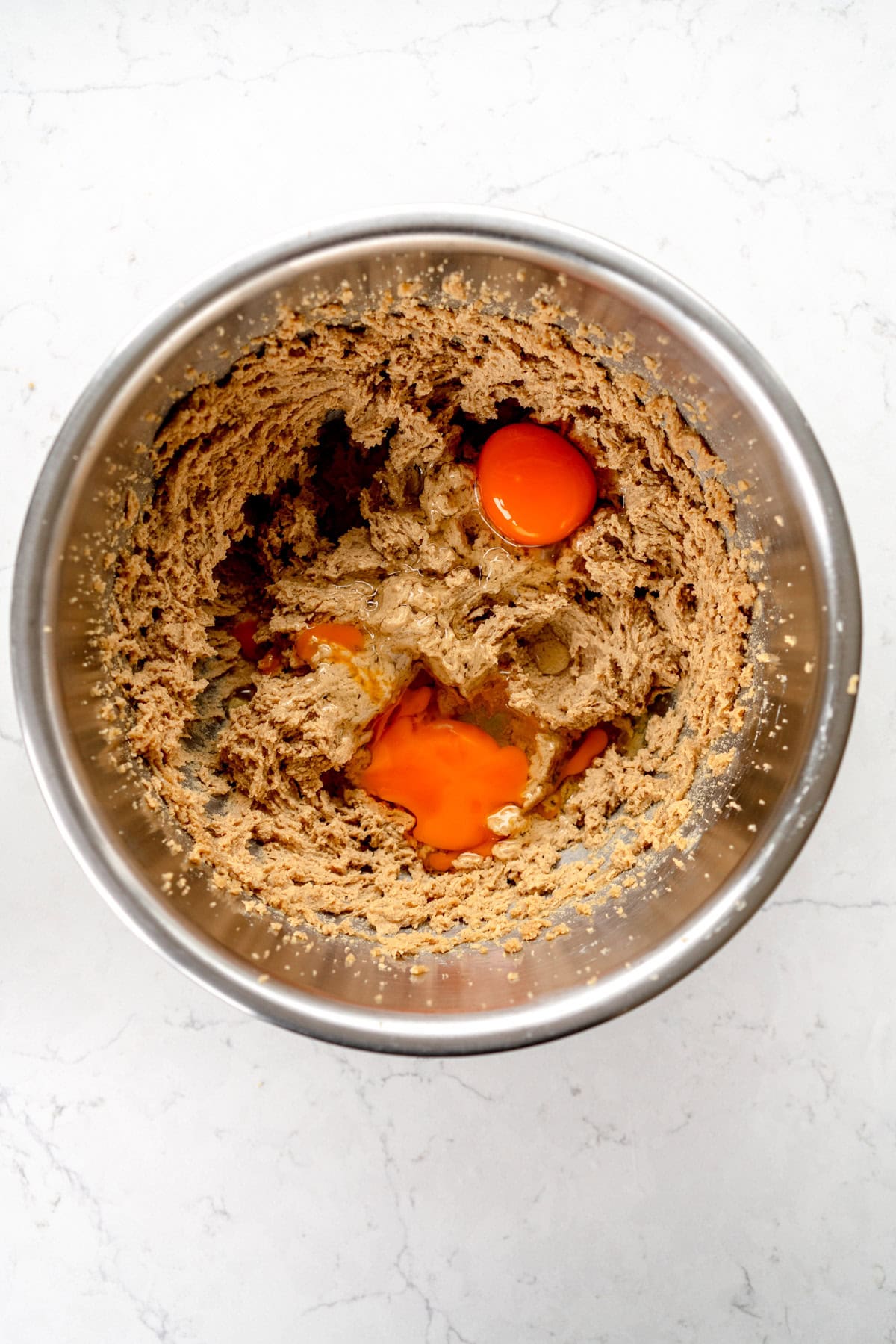
    add eggs to mixture
    Make sure to beat the mixture super well once adding eggs
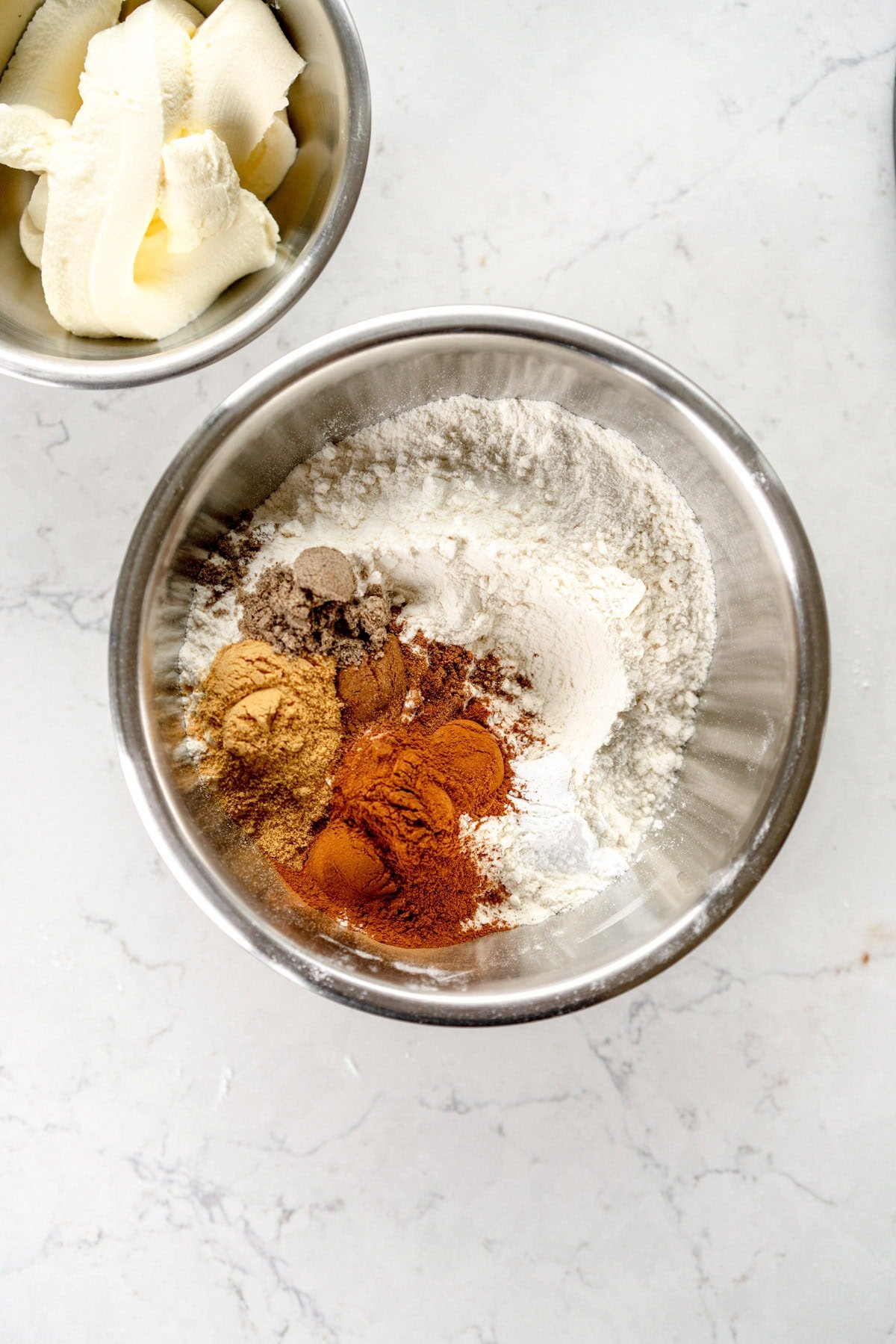
    dry ingredients
    Combine dry ingredients well before mixing in
    add sour cream to mix
    Don't fully mix in before adding sour cream

    Developing a recipe for spice cake

    To kick start the recipe testing process for this spice cake recipe, I started with my butter cake recipe, which is a super easy, super versatile butter cake, with a bunch of sour cream for moisture and texture. Here are the changes that I made and why:

    • Switched the white sugar for brown sugar. I wanted this cake to taste super toasty, and brown sugar pairs amazingly with the spices in the cake. For this recipe, it was a straight sub quantity wise.
    • Added molasses. This is optional - if you don't have it it's not the end of the world, but I added a little molasses in just to amp up the brown sugar toasty flavour.
    • Added spices. This is an obvious one but I added a bunch of spices in and chose the usual suspects - cinnamon, ginger, nutmeg, and cardamom. I didn't add cloves because I didn't want the spices to be too heavy and I feel like sometimes cloves does that. If you don't have cardamom, a wee bit extra of all the other spices in the recipe will make up for that!
    • Changed the pan size. I wanted this to be a fairly substantial cake, so I scaled to an 8" (20cm) pan, whereas my butter cake is made in a 9" (23cm) pan. This worked perfectly and I love how thick and fluffy this spice cake is!
    batter for spice cake
    Batter ready to go!
    add batter to pan
    It should be light and fluffy
    cake spread into pan
    Cake smoothed into the pan
    cake sprinkled with cinnamon sugar
    And topped with cinnamon sugar

    My favourite topping: A crunchy cinnamon sugar

    I love topping cakes with sugar, particularly if they aren't getting iced. While you can frost this cake if you would like, it really doesn't need it thanks to the nice cinnamon sugar coating on the top.

    I initially used a finer granulated sugar but there really is something so special about crunchy sugar - I especially love rolling cookies in it but it gives the most amazing sparkly, crackly finish. I mixed in a little cinnamon to mirror the flavour of the cake. It was an excellent move.

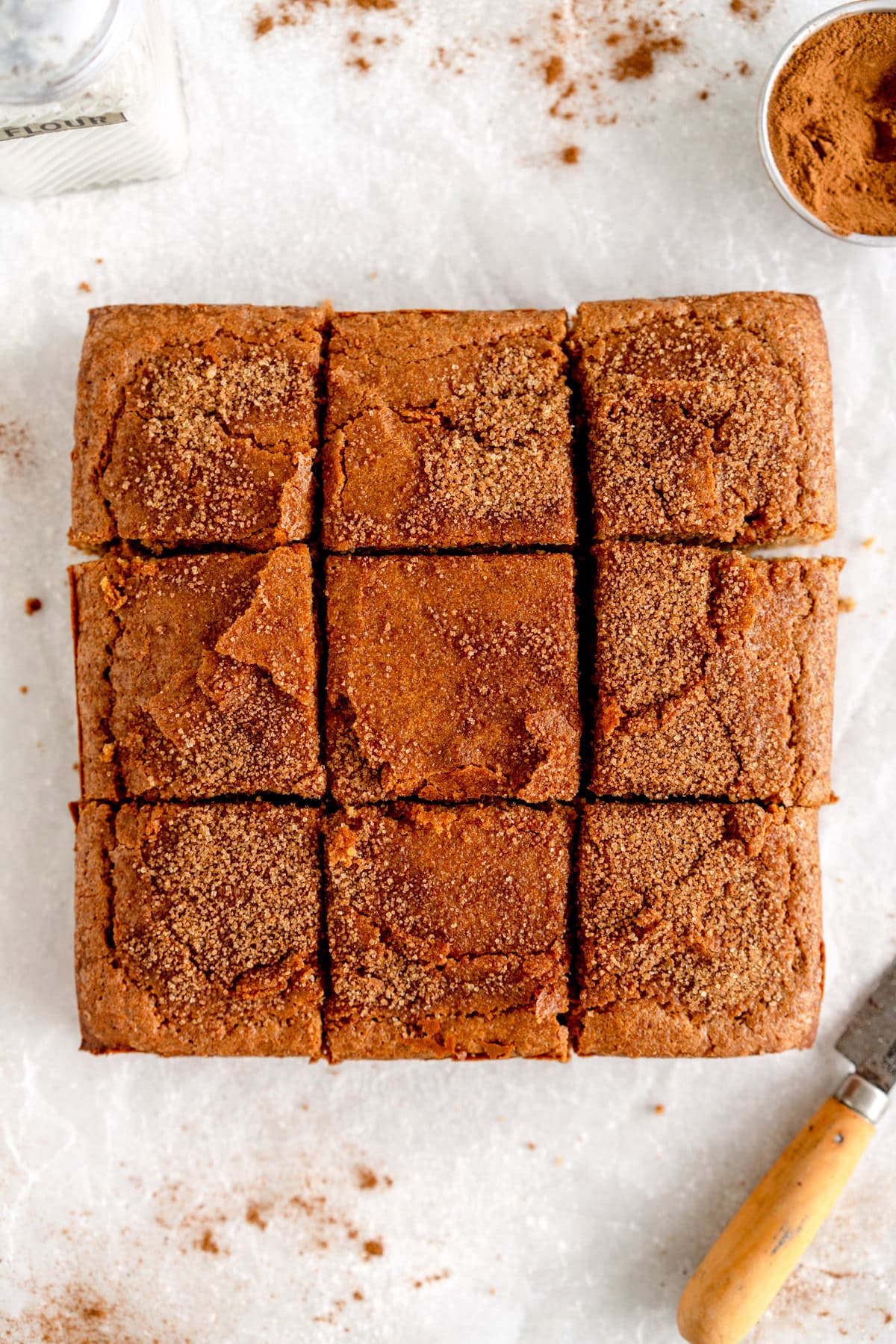
    sliced up spice cake
    I cut my cake into 9 large pieces but you do you here!

    Setting you up for success: Tips for making a great spice cake

    While this cake is super easy to make, there are a few tips and tricks that will definitely make your life easier - the main one is making sure that your ingredients are all very room temperature. If your house runs cold, I suggest putting your eggs in some warm water just to make sure they don't have a chill to them, as part of this recipe involves adding eggs and whipping well, and if the eggs are cold, they will chill the butter slightly which won't give you as fluffy of a cake batter.

    I also like to make sure that my butter is nice and soft, I find that if I am having a hard time getting my butter and sugar to come together I put a little hot water in the sink and place the mixing bowl in there and keep creaming the mixture together.

    When ingredients are the same temperature, they combine together well. Well combined ingredients = beautiful fluffy cake

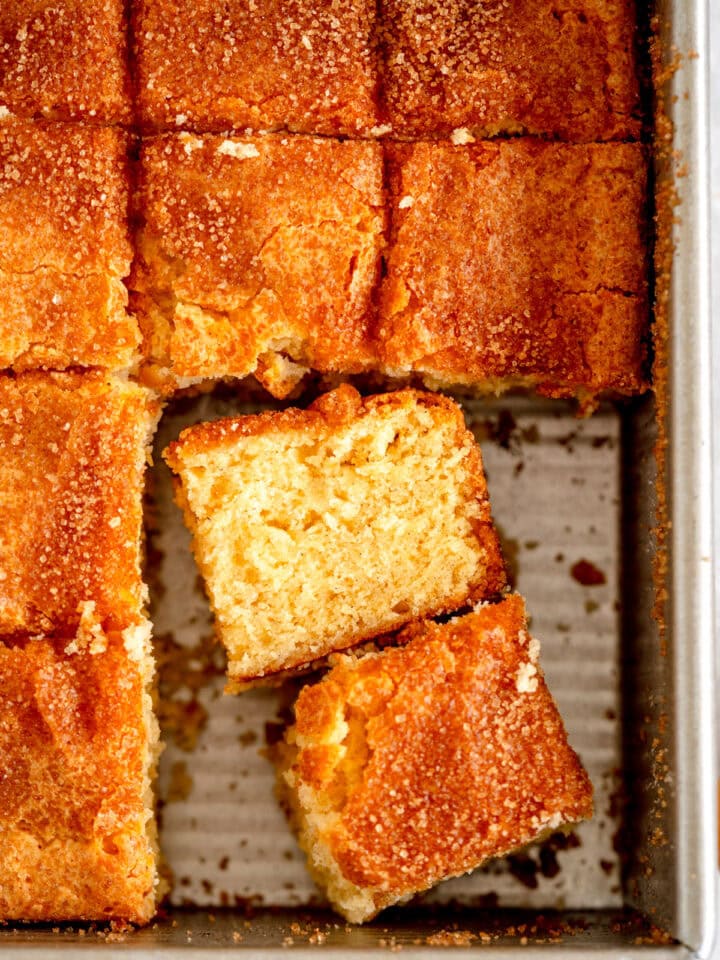
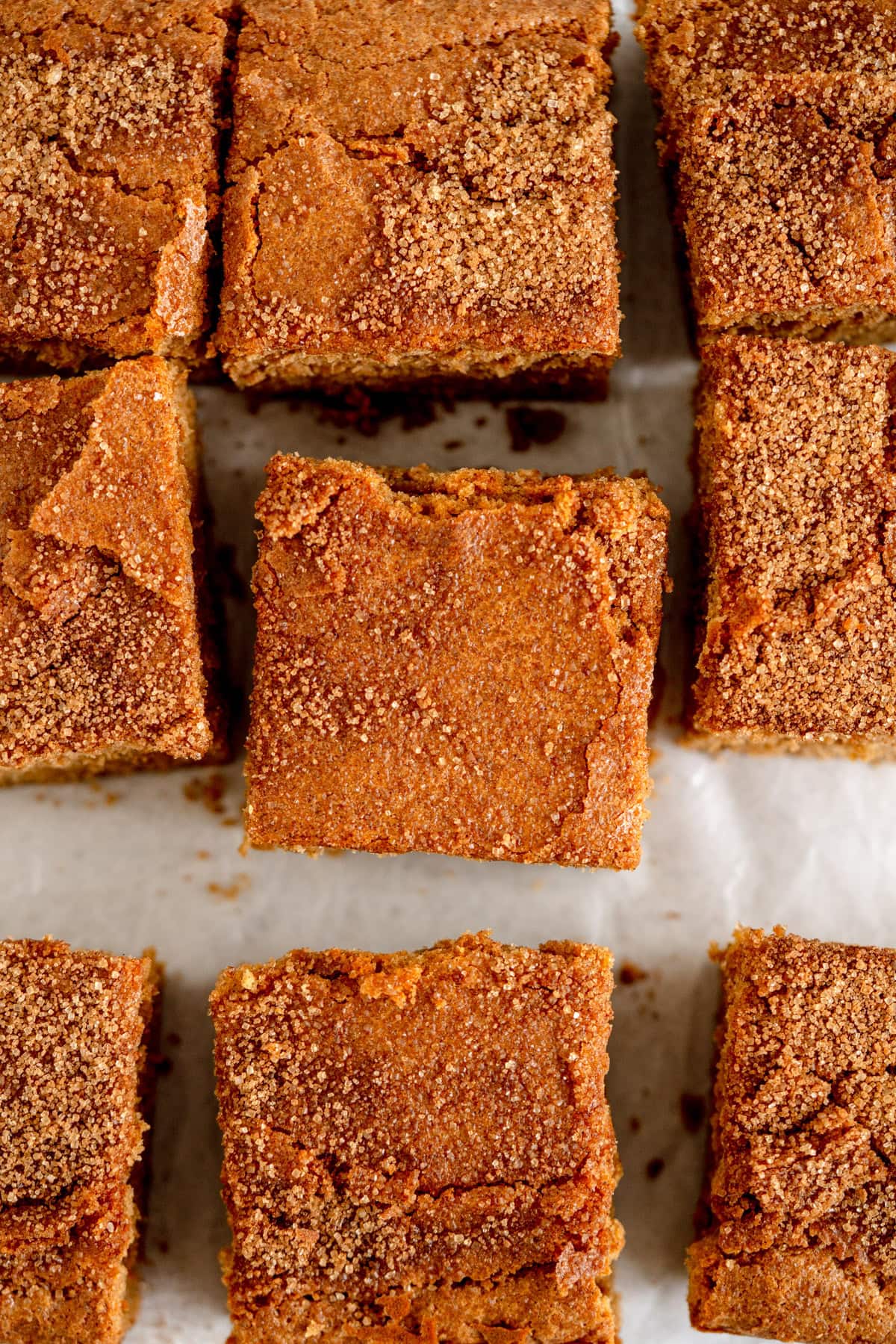
    top down shot of pieces of cake
    Crunchy, crackly cinnamon sugar topping

    ❤️ Made this recipe and love it? ❤️

    I would LOVE for you to leave me a review and star rating below to let me know how you liked it! Also, please make sure to tag me on Instagram!

    Answers to your baking questions

    Over the years, many of you have asked me questions about:

    • baking in grams
    • adjusting oven temperatures
    • what kind of salt to use
    • and many more!

    I've curated and answered them all for your easy reference in this frequently asked questions post!
    Filed Under: Cakes, Sheet and Snack Cakes

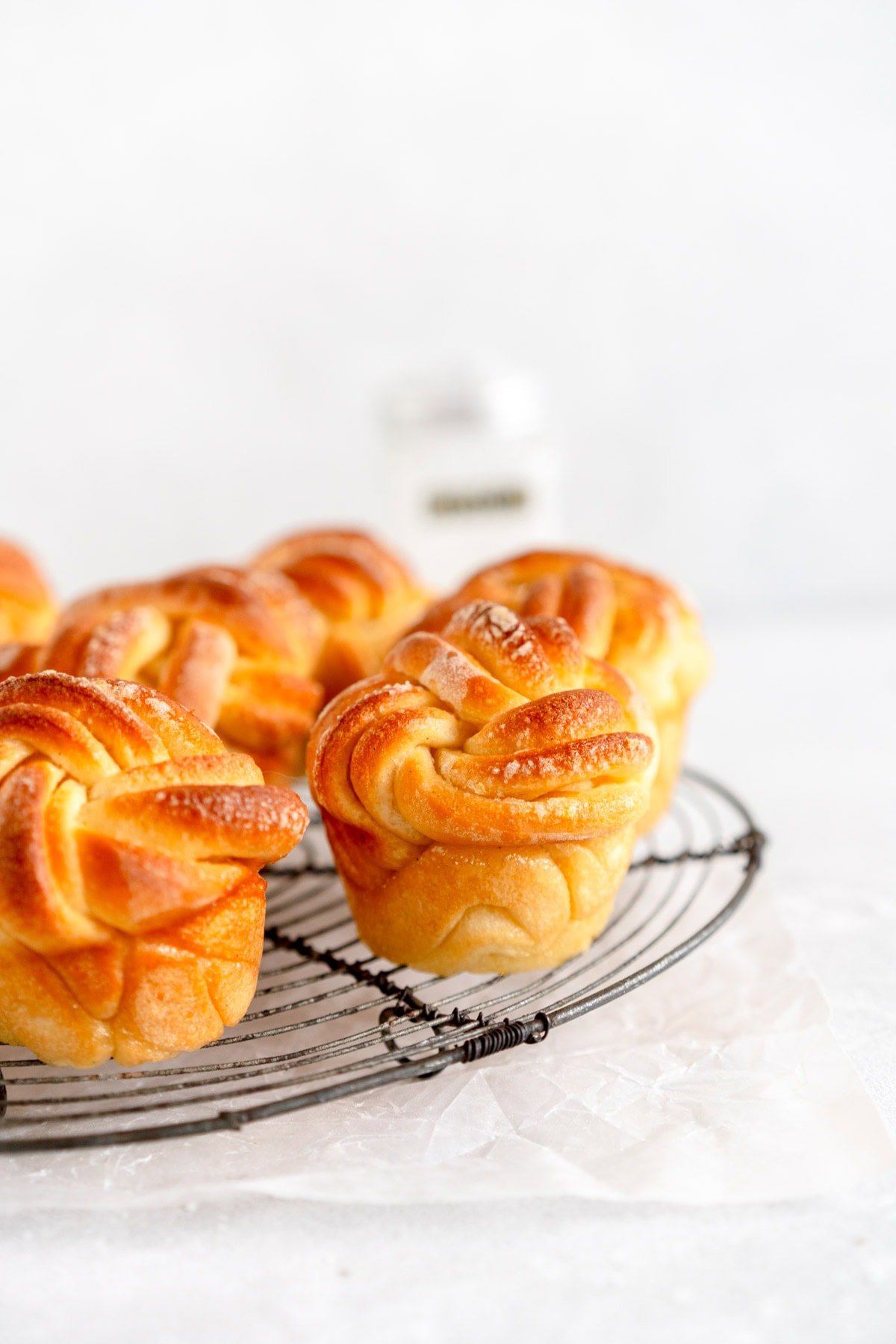
    Soft and Fluffy Braided Lemon Buns

    side on shot of lemon buns

    Soft and fluffy lemon buns are made with an easy enriched dough and filled with a lemon sugar mixture. The braiding is simple - you just cut them into strips and shape into beautiful buns! These are amazing served as is or you can finish them with powdered sugar or a lemon glaze. I made these in my new Ooni Halo Pro Spiral Mixer, which is my new favourite kitchen accessory!

    side on shot of lemon buns

    Hi hi! I am just popping in to share the recipe for these easy soft and fluffy lemon buns with you, AND to tell you about a very new addition to my kitchen - the Ooni Halo Pro Spiral Dough Mixer!

    These lemon buns are really easy to make - a basic enriched dough, flavoured with a little lemon, is made and chilled down to make it easy to work with, then rolled out, filled with more lemon sugar, and rolled up into super beautiful and easier-than-they-look buns, which proof for a second time then are baked up into little balls of lemon deliciousness.

    I used my brand new Ooni Halo Pro Spiral Mixer to make these buns. I have owned an Ooni Pizza oven for years now and it is one of my favourite things, so I was SO excited when they reached out about trying out their new mixer, which is truly a game changer, especially if you make a lot of dough! After playing around with it for a long time and really testing it out, I am so excited to tell you all about it!

    This post is sponsored by Ooni. All opinions are my own. Thank you for supporting the businesses which help keep Cloudy Kitchen running! I have been given affiliate links to use throughout the post, thank you for your support!

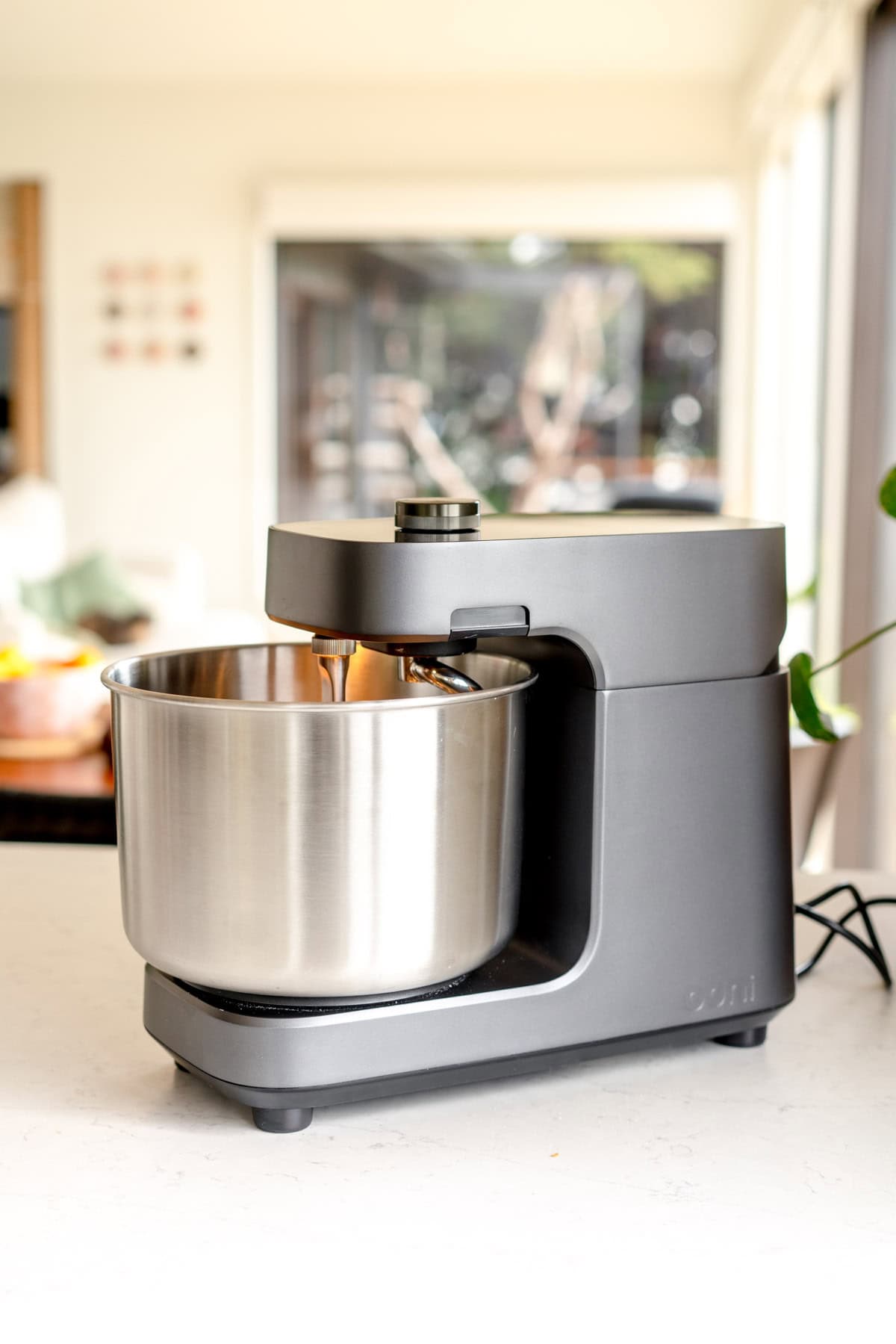
    Ooni halo pro spiral mixer
    Here she is - my beautiful new mixer!

    My New Favourite Thing: A Spiral Mixer!

    If you've ever peeked into the back of a bakery, you've probably noticed a massive mixer with a huge spiral hook on it. That is a spiral mixer, and it is designed especially to mix dough in the most efficient way possible.

    Ooni has recently released an at-home version of this mixer, which is an absolute game changer when it comes to mixing dough. I have owned a bowl lift mixer for years now and while it does a great job with the whisk and paddle attachment, it leaves a lot to be desired when it comes to the dough hook.

    Enter the Ooni Halo Pro Spiral Mixer. Designed with dough in mind, the mixer is not only beautiful enough to live permanently on my bench, but the way that it mixes dough is so clever. I no longer have to stand and hold my mixer to stop it walking across the bench.

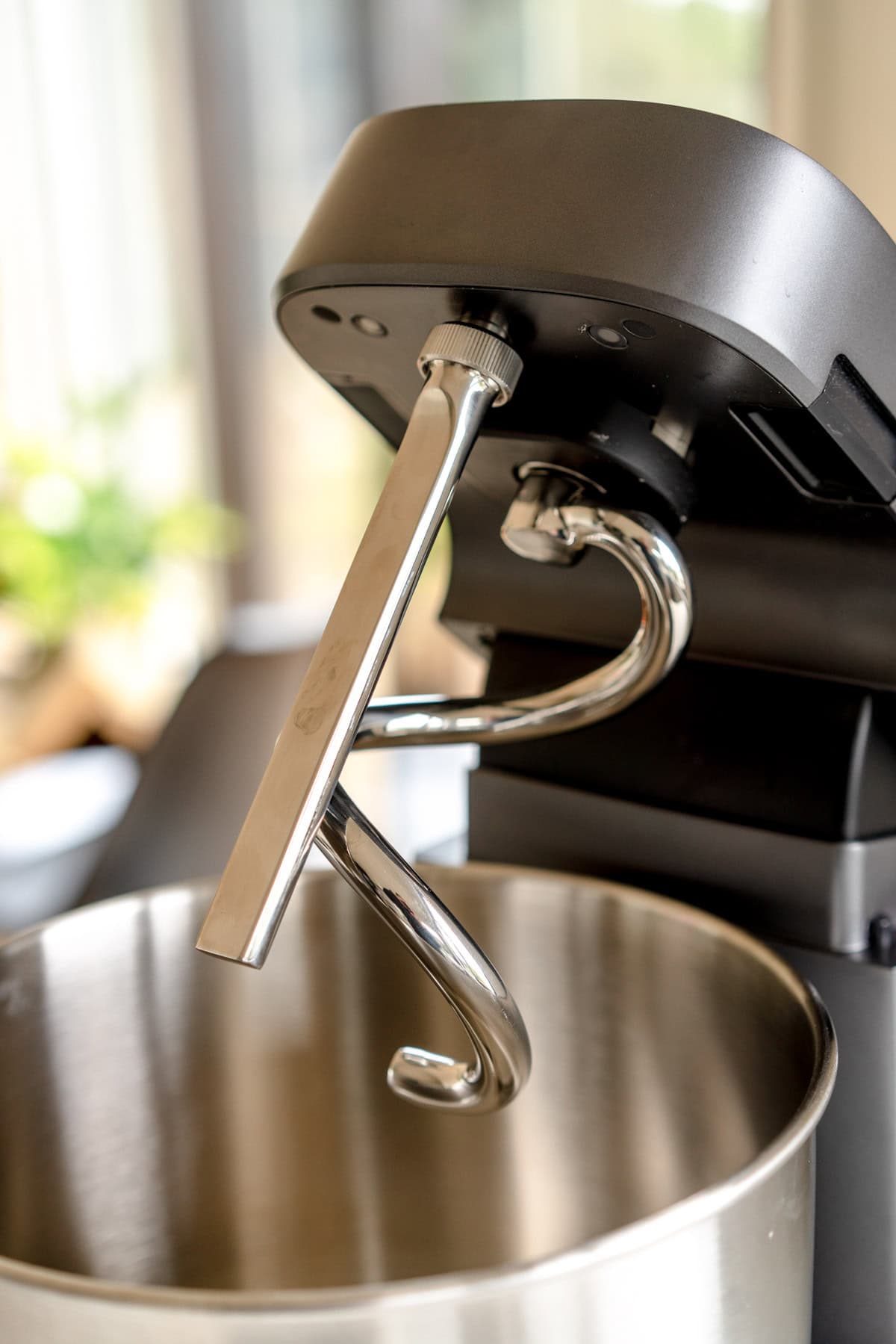
    breaker bar
    Breaker bar (doesn't move), dough hook (spins along with the bowl)

    How a spiral mixer works

    Unlike a planetary mixer which is what we are typically used to when we refer to a stand mixer, the Ooni Halo Pro Spiral Mixer differs in that both the mixing attachment and the bowl spin.

    The Ooni Halo Pro Spiral Mixer comes with a dough hook, but the game changing part is that it has a breaker bar, which screws into the head of the mixer. The breaker bar does not move, and stops the dough from coiling up the dough hook as the dough mixes, which gives you a dual action kneading system. This gives you amazing bread dough, mixed efficiently and with an amazing finish. I tested it with sourdough, lower hydration dough, a cinnamon roll dough, my focaccia dough, and a really soft and sticky milk bread dough, and it was amazing for all of them, giving me dough with amazing gluten development and extensibility that is a dream to work with.

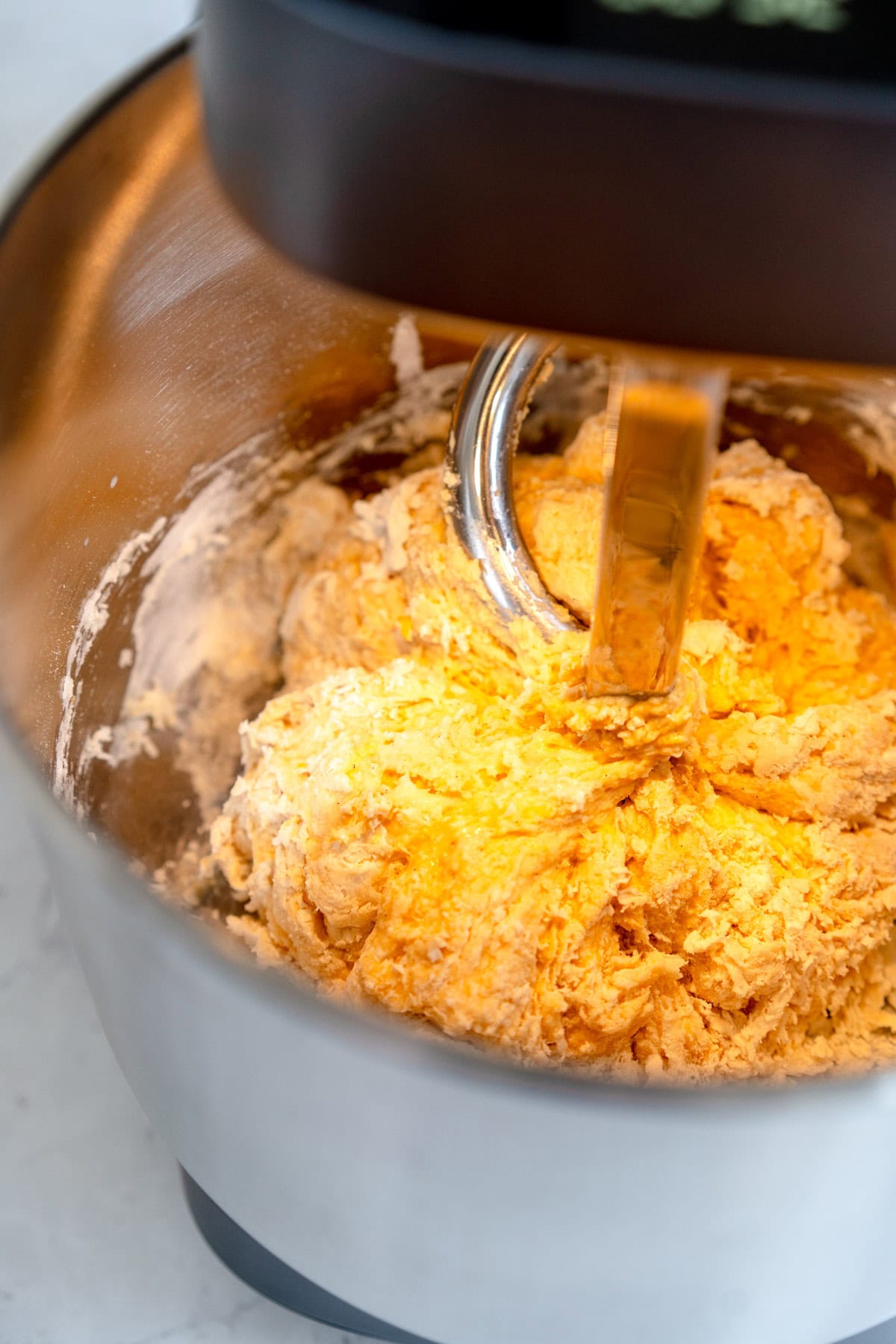
    dough inside a mixer
    Dough hook and breaker bar in action

    Features that I love

    I have been playing around with the Ooni Spiral Mixer for a month or so now, to really put it through its paces when it came to being a workhorse in the kitchen, and it has passed every challenge I have set it. I expect my appliances to work hard, and I make a ton of dough. Here are a list of things that I love the most:

    • Super Sturdy. A huge issue with a planetary style mixer is that it is not heavy duty enough to stand up to kneading bread without getting too hot or walking itself off the bench. I would have to stand and hold my planetary mixer down to keep it in place. The Ooni does not have any of those issues. I am able to easily carry it from room to room if needed, but once it is positioned on the counter, you can easily leave it there will full peace of mind that it won't be moving once you turn it on. I ran it at full speed with a relatively low hydration dough, and it didn't complain a single bit. If you have struggled with your mixer in the past you know how amazing this is!
    • The control dial. I LOVE the control interface of the mixer. It has a single dial which you turn to either a % speed or you can set it to do a certain RPM depending on what you prefer. You turn the dial to the setting you want, and just tap it to stop the mixer. You also use the dial to set the timer. The interface is digital, so you have a ton of control over what you are doing.
    • A Timer. This one is low key life changing for me. I am often multi tasking in the kitchen, and being able to set a timer for how long I want the mixer to go for is amazing, especially with a dough with multiple mixing stages or a long kneading cycle.
    • The bowl is huge but in a good way. The Ooni Halo Pro Spiral Mixer bowl is 7 litres, which may seem large but it has straight sides, so it is very easy to work with. The bowl spins on the mixer, and there is enough space between the side of the bowl and the breaker bar to reach in with a spatula to scrape the side of the bowl without having to stop the mixer. Truly a dream.
    • It has a light. Enough said. Stage lighting for your baking. The mixer also makes a delightful noise when you turn it on and off (which can be muted, but it makes me so happy)
    • Easy to lift up and down. Whatever the opposite of clunky is, that is what that mixer is. There is a little button / catch on either side of the head of the mixer, which you lift to smoothly lift the head of the mixer up and down.
    • The results are amazing. I caught myself standing and watching the mixer whenever I use it - it is absolutely fascinating to watch the dough develop, and the results are just amazing. It makes dough that is a dream to work with.
    • Easy to wash. Everything comes off - both the dough hook and the breaker bar unscrew so I can just throw them into the dishwasher.
    • Other attachments. While the Ooni Halo Pro Spiral Mixer is designed to make amazing dough, it also comes with a flexible beater and a geared whisk to make it versatile in the kitchen if you need it to be. While I will primarily be using this for dough, I also tested a triple batch of my brownie recipe using the whisk attachment and the mixer performed amazingly.
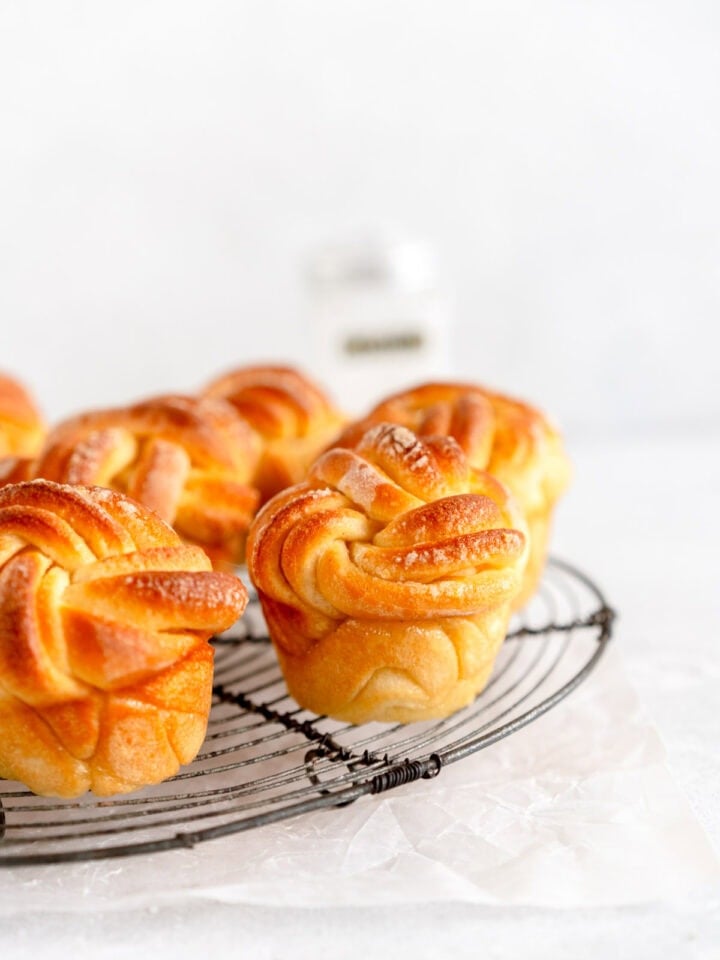
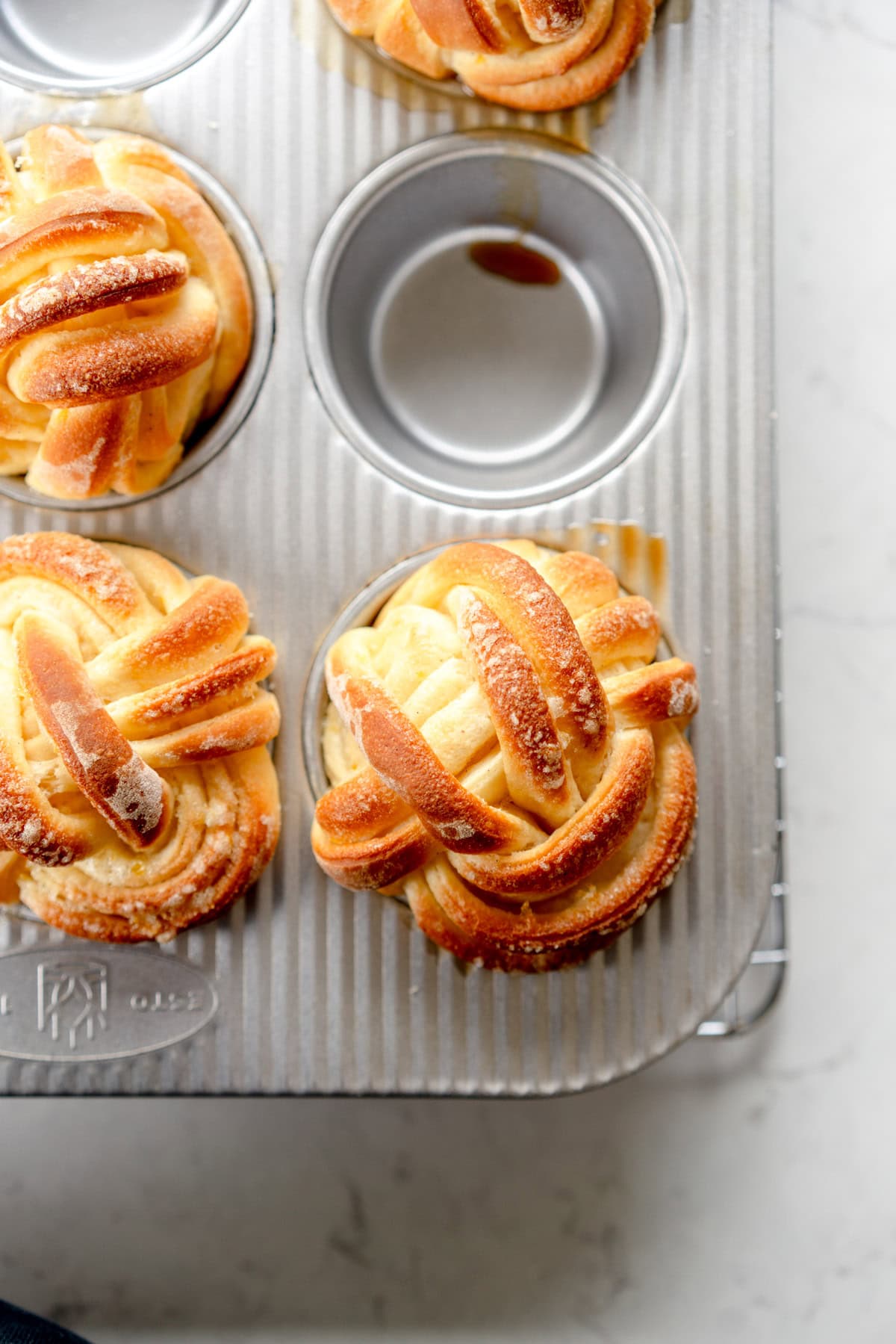
    lemon bun baked in muffin pan
    Perfect fluffy lemon buns!

    Super Easy Lemon Buns

    While I made a ton of different things to test out my new mixer, these lemon buns are super delicious, easy to make, and I know that you will love them. They start with a super easy dough which is the same one that I use to make my cinnamon rolls - it is a demi brioche style enriched dough, and I like to make it the day before or earlier in the day to give it time to firm up slightly as it rises, so that it is easy to roll out. This can be done up to two days ahead and will still work fine. The Ooni mixer made light work of the dough, even when I bumped the butter content up slightly.

    If you have made my cinnamon bun twists before - these are the same format but a larger batch - this recipe makes 16 buns. I rolled mine out into one large piece of dough but if you are new ish to rolling dough out and worried it might go a bit wonky you can absolutely divide the dough into two pieces to make eight buns per piece of dough.

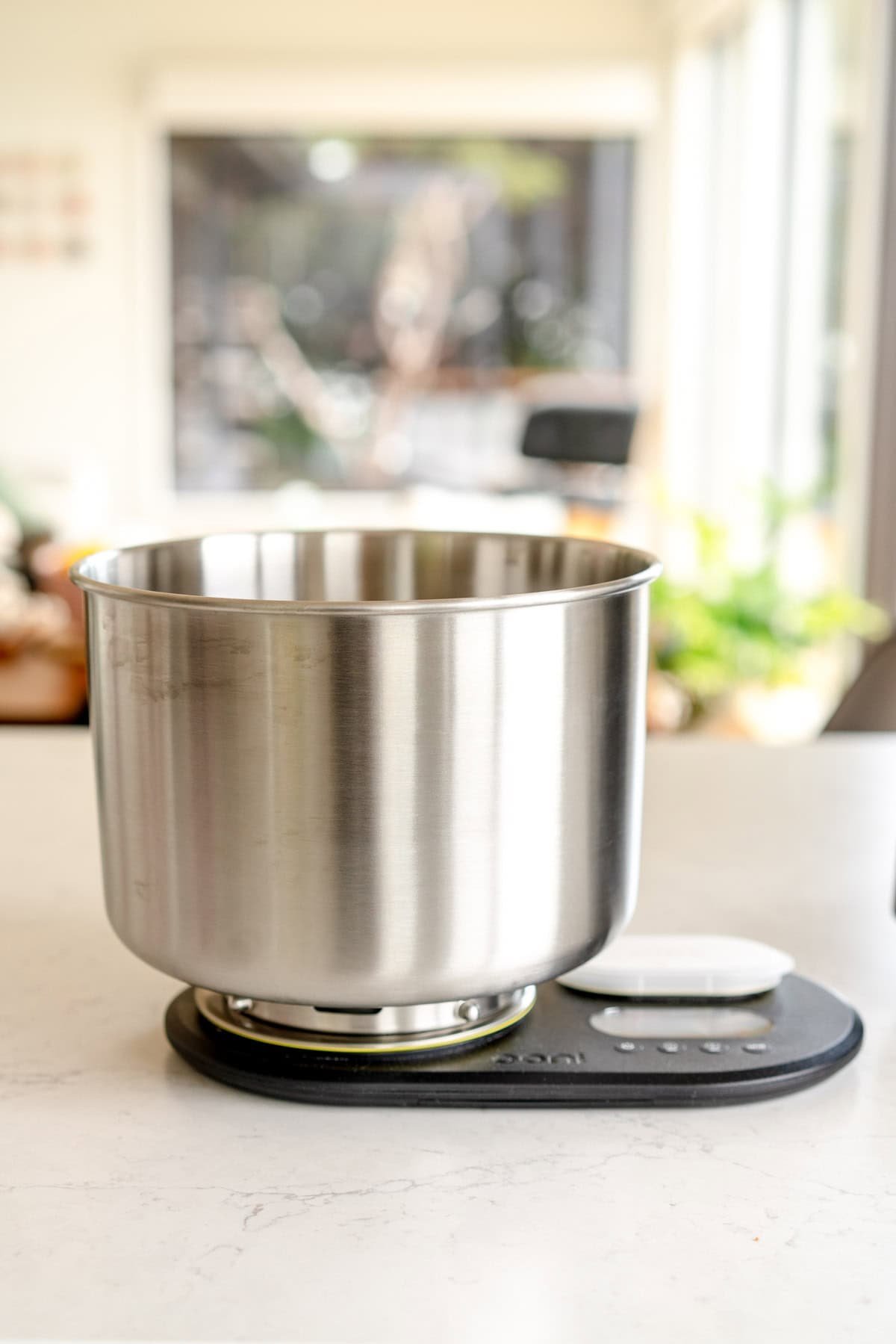
    ooni bowl on scale
    The Ooni Scale is also AMAZING!
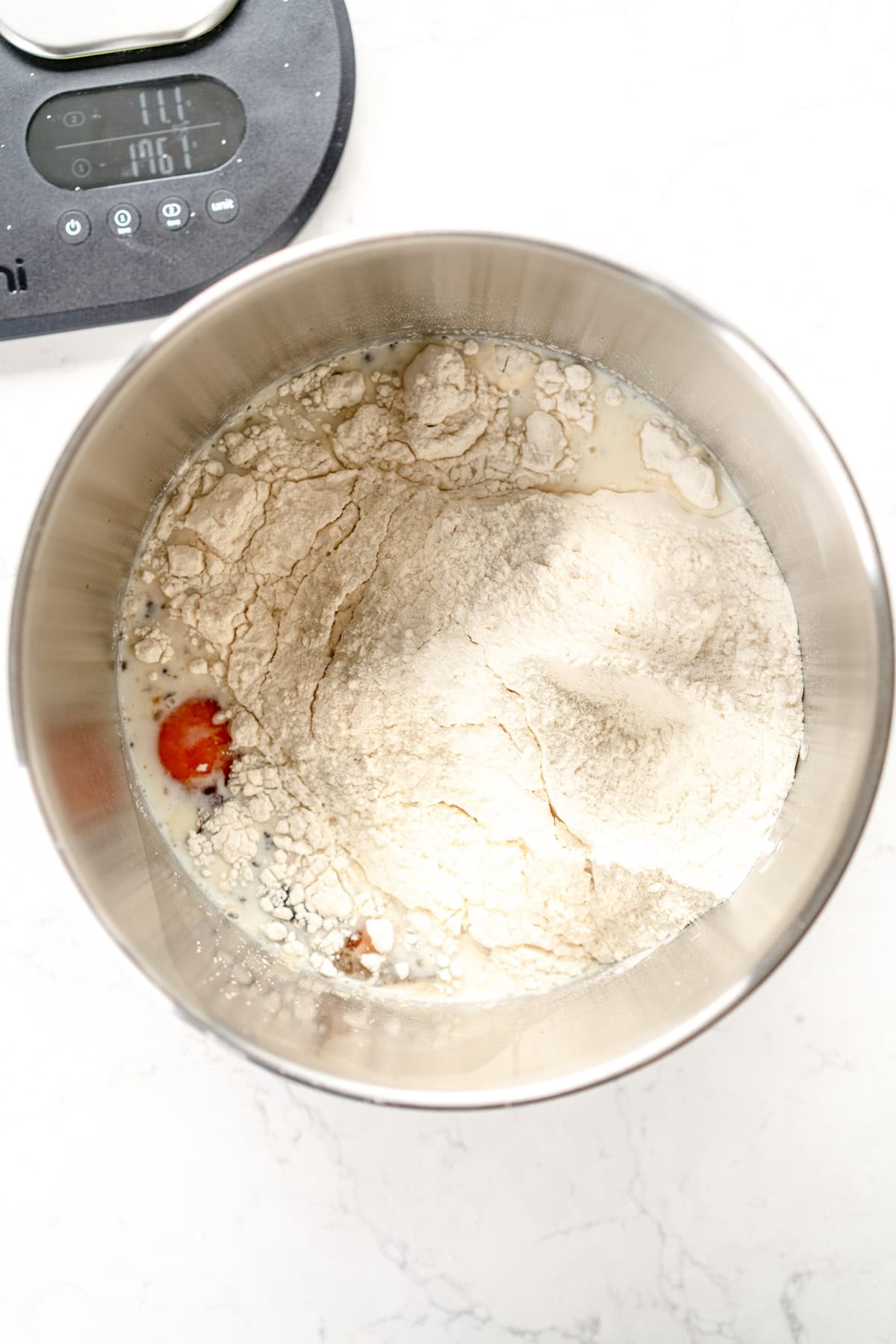
    bread dough ingredients
    Wide bowl = super easy to use

    Double Lemon in one easy step

    To make things easy, I flavoured these lemon buns with a really easy lemon sugar. You make one big batch at the start of the process and use this to both flavour the dough and fill the buns.

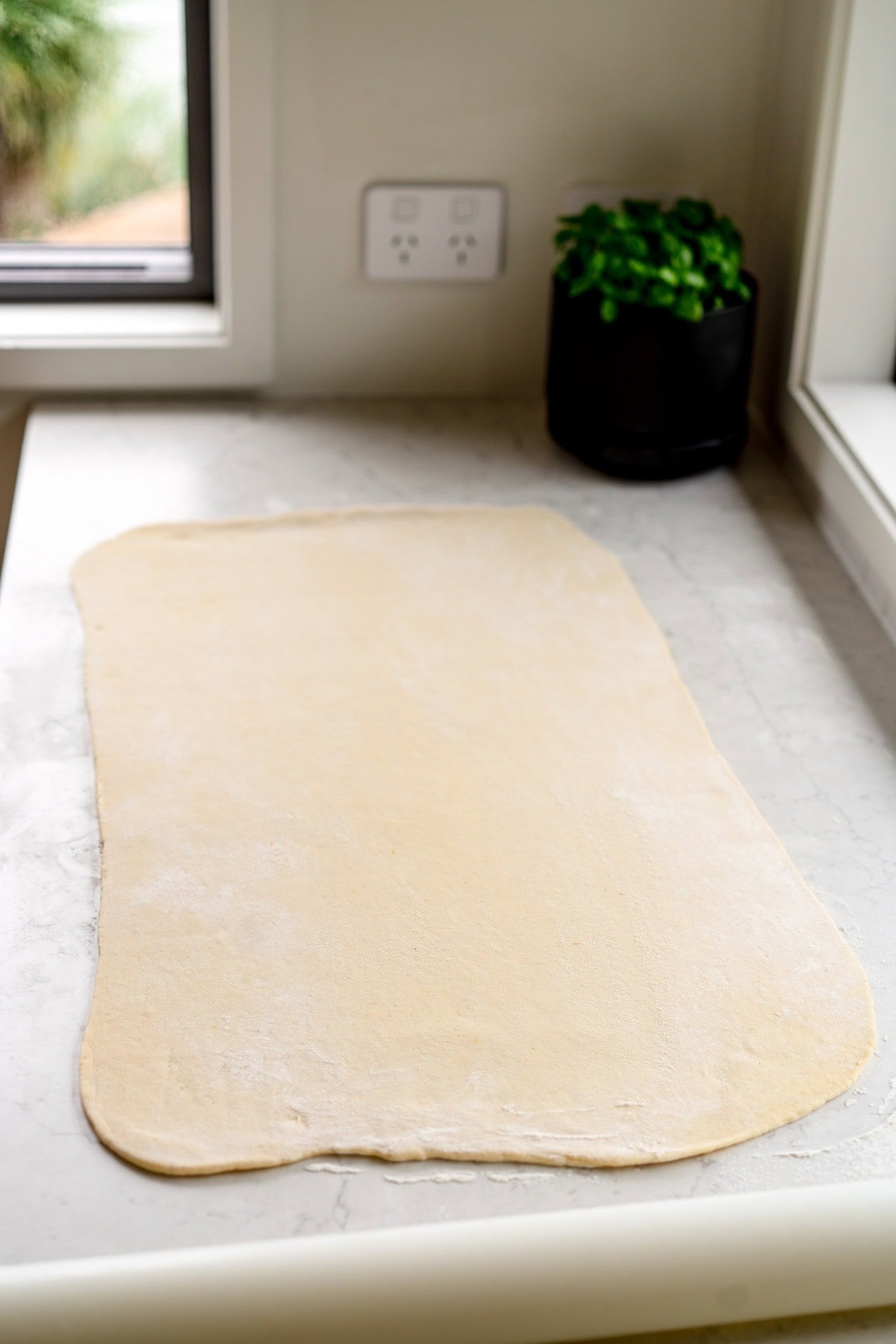
    rolled out dough
    Roll out dough
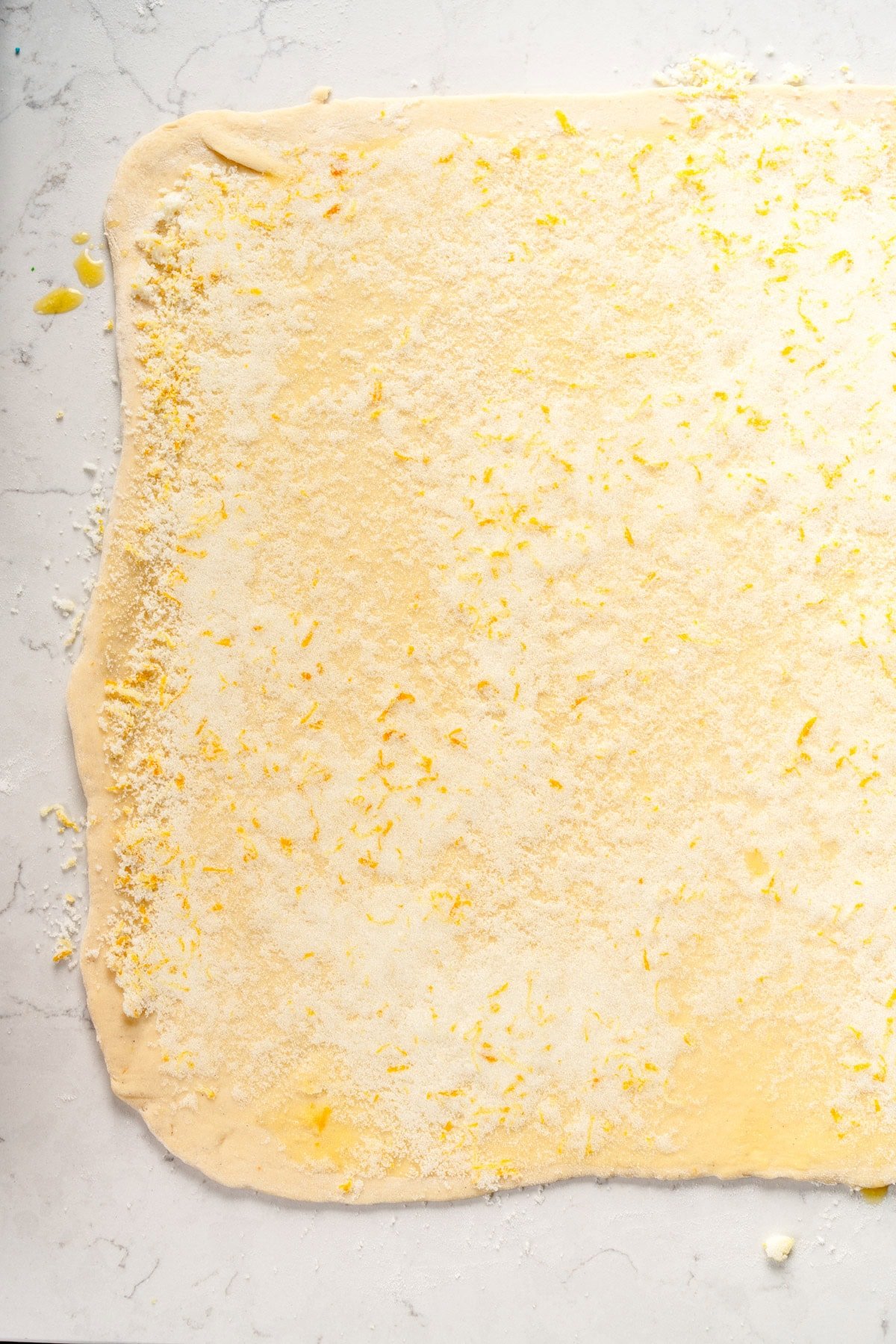
    dough covered with lemon sugar
    Sprinkle with lemon sugar

    Shaping Lemon Buns

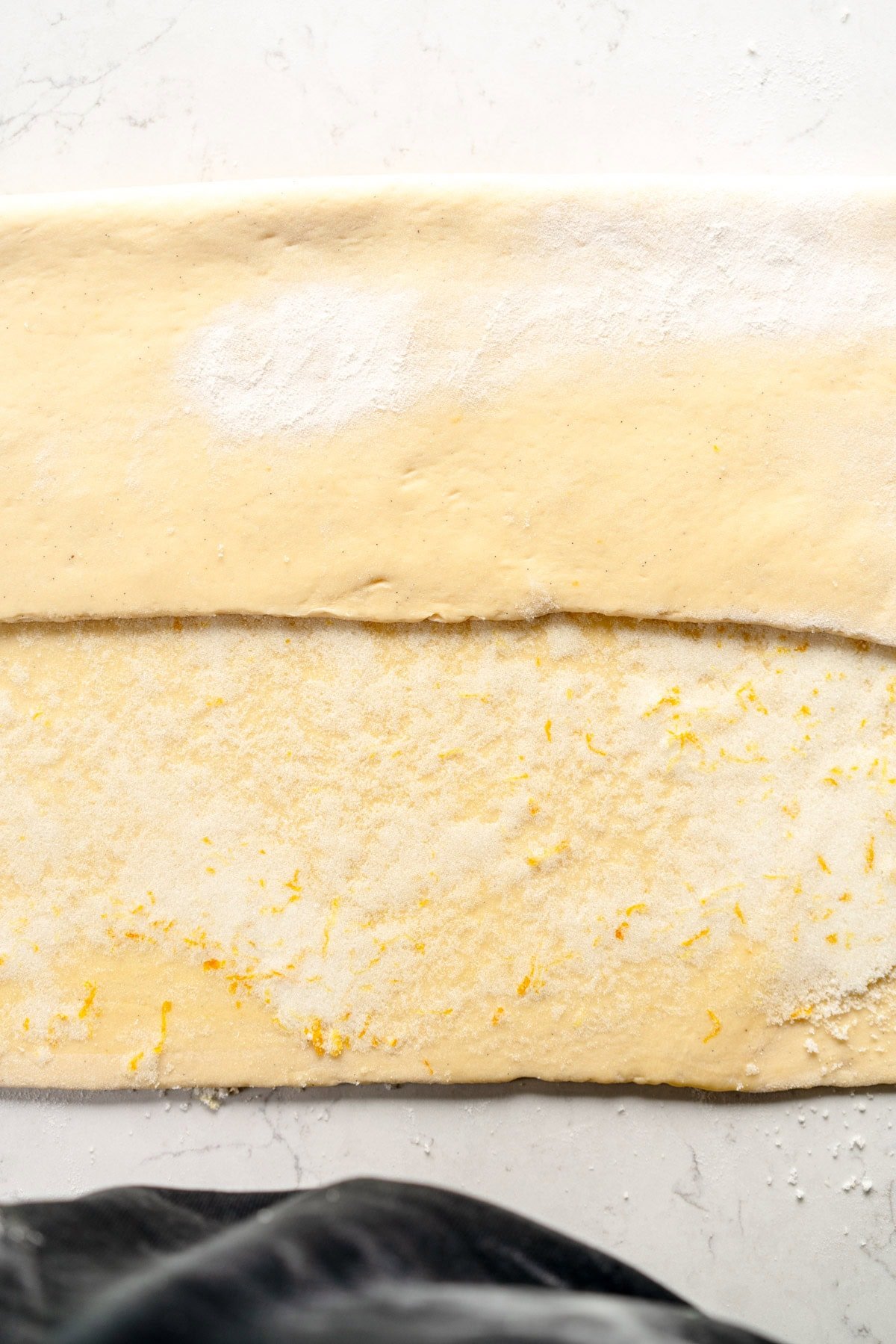
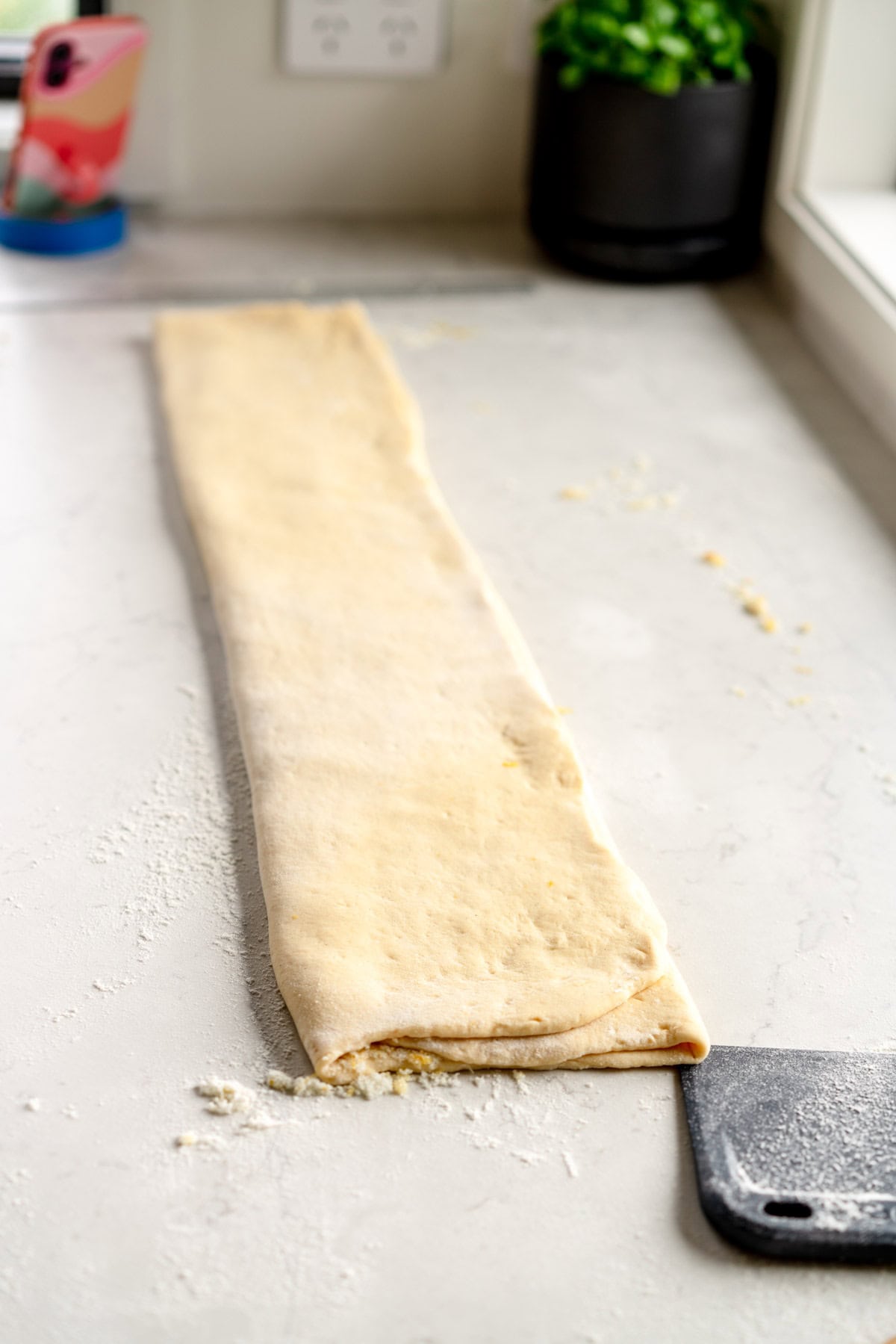
    While these buns look fancy, they are really just dough rolled out, filled, then folded up into thirds, letter style. I found that when I was testing, it worked best to brush the dough with melted butter and then sprinkle with the lemon sugar rather than make a paste to spread on like you would with cinnamon rolls. A little of the sugar comes out when you are shaping them but this is fine!

    Make sure that your dough has had enough time to chill down before you roll it out. It means that the butter firms up, and makes the dough easier to roll. I like to use a ruler and keep squaring off my edges with a bench scraper while I am rolling to help keep things nice and straight.

    folding up dough
    Fold into thirds
    folded piece of dough
    Fully folded over dough!
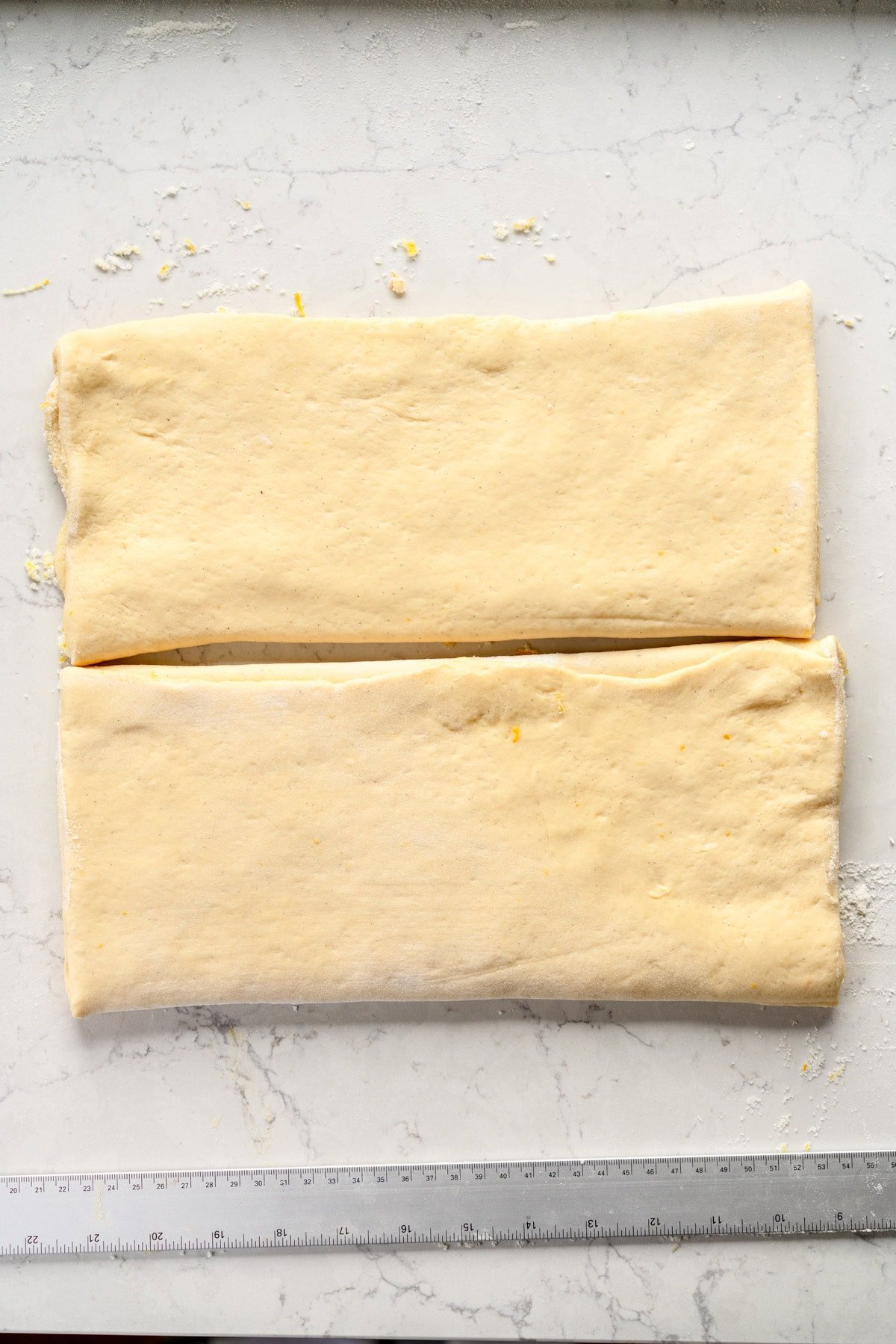
    pieces of dough ready to be cut
    Divided into two
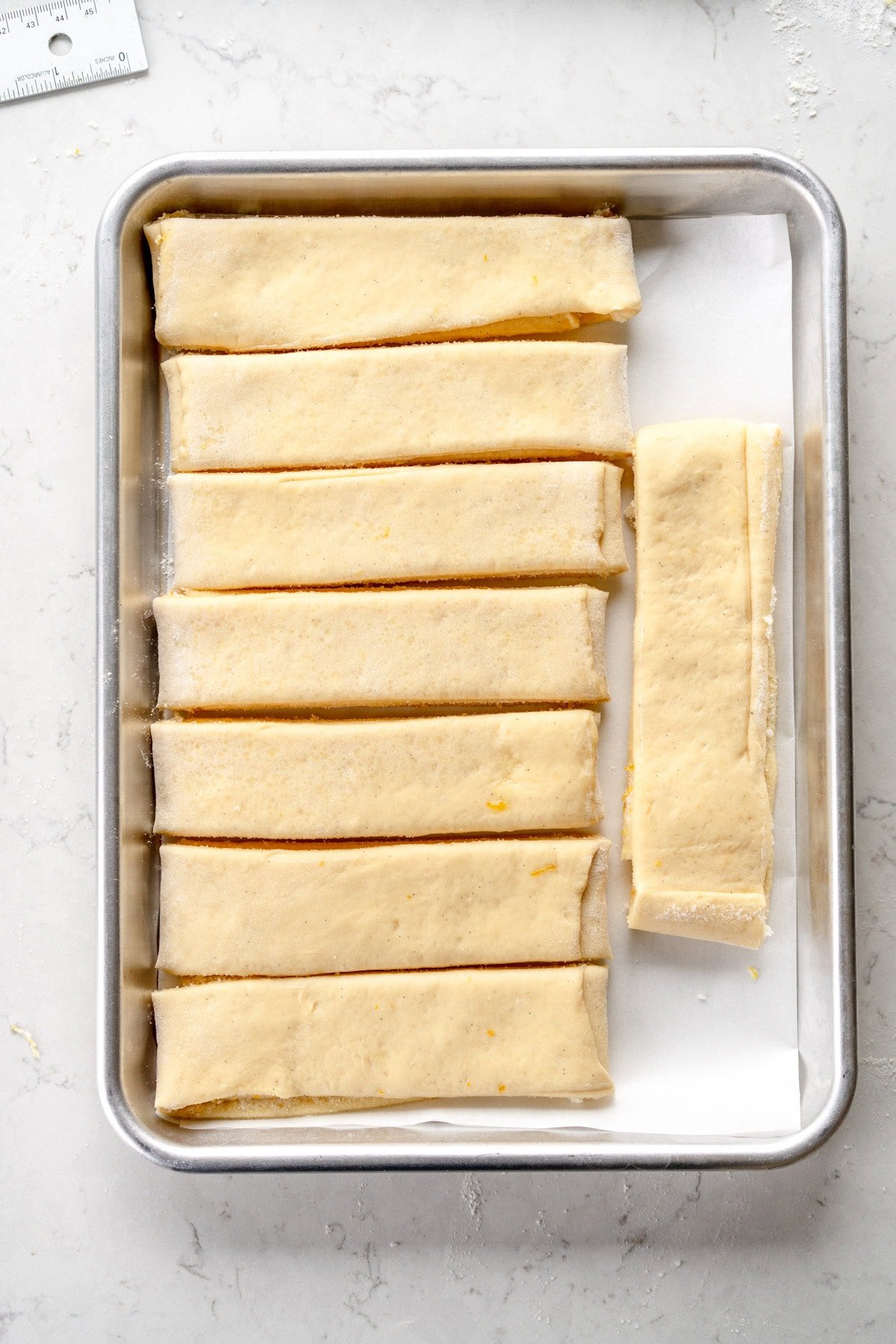
    strips of dough on a sheet pan
    Cut into strips and ready for the fridge

    The dough is then cut into strips and placed onto a sheet pan. At this point I like to pop it into the fridge to make the next part a little easier.

    The shaping looks fancy, but it is super simple - it is just a simple braid. Rising and baking the buns in a muffin pan means that everything stays contained and the slightly messy bottom all gets baked into one dough mass and the pretty top is exposed, giving you beautiful braided buns!

    You can see in the images below how I braid the buns:

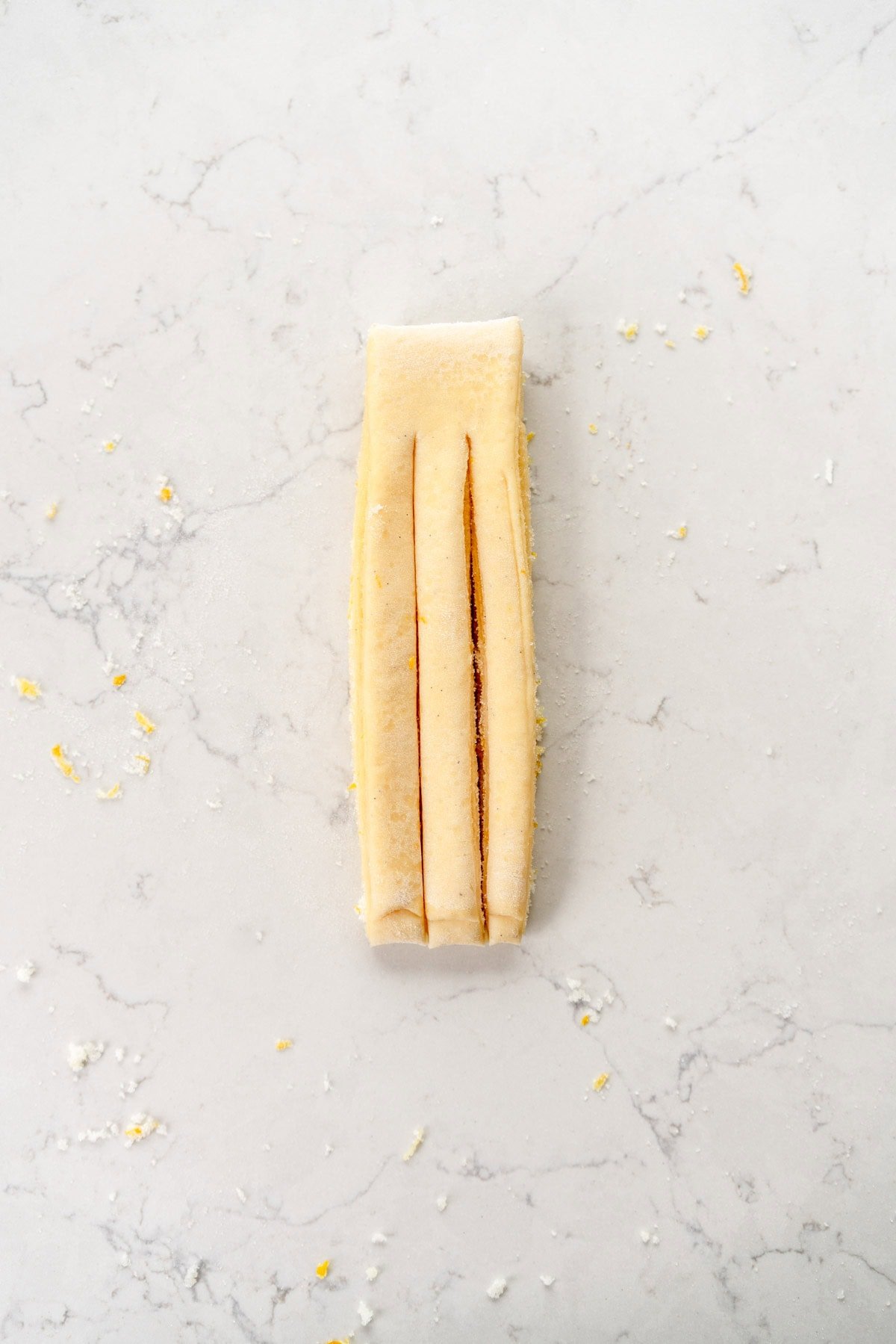
    dough cut into three
    Cut into three
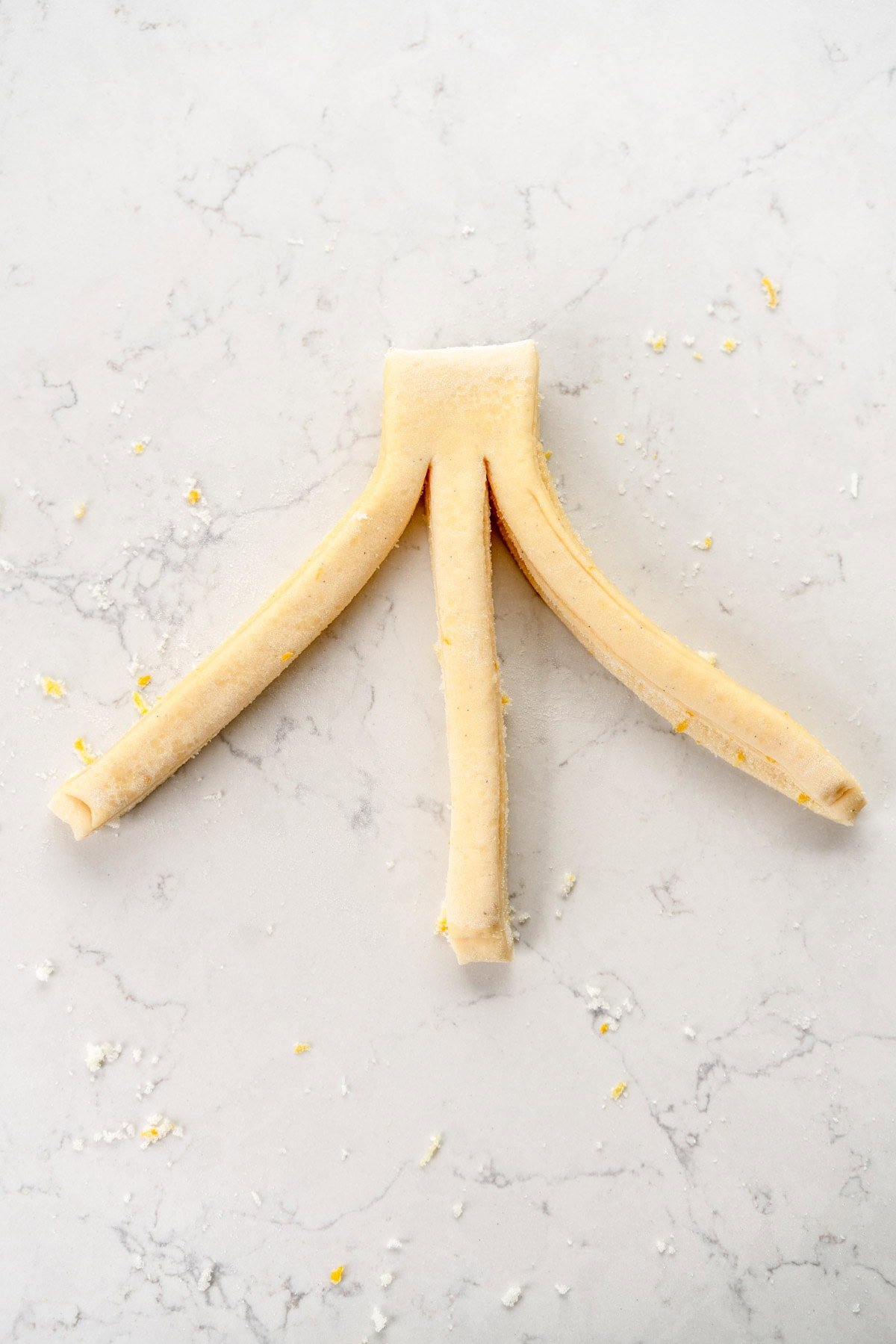
    open strips to braid
    Separate out strips
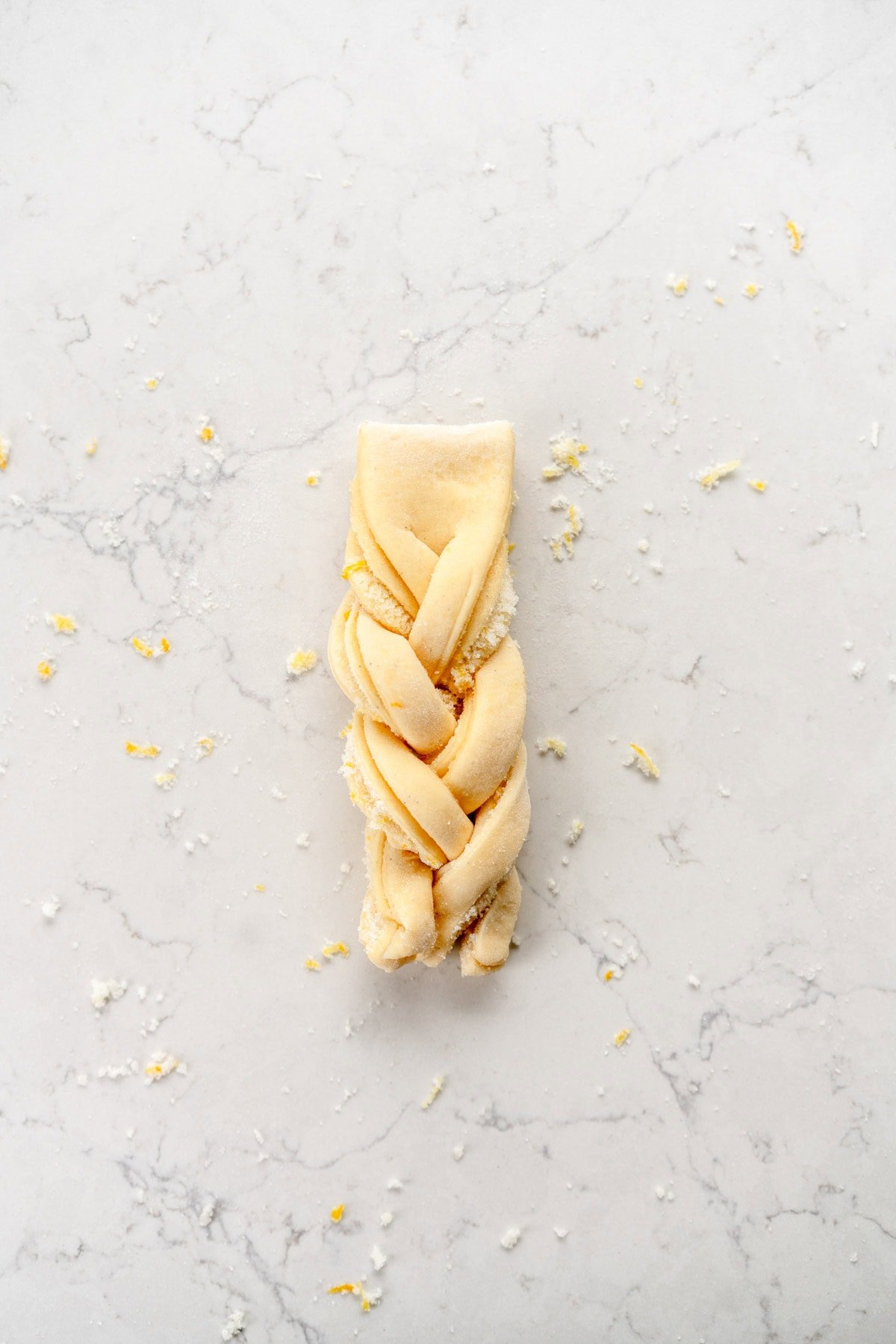
    braided dough
    Braid up
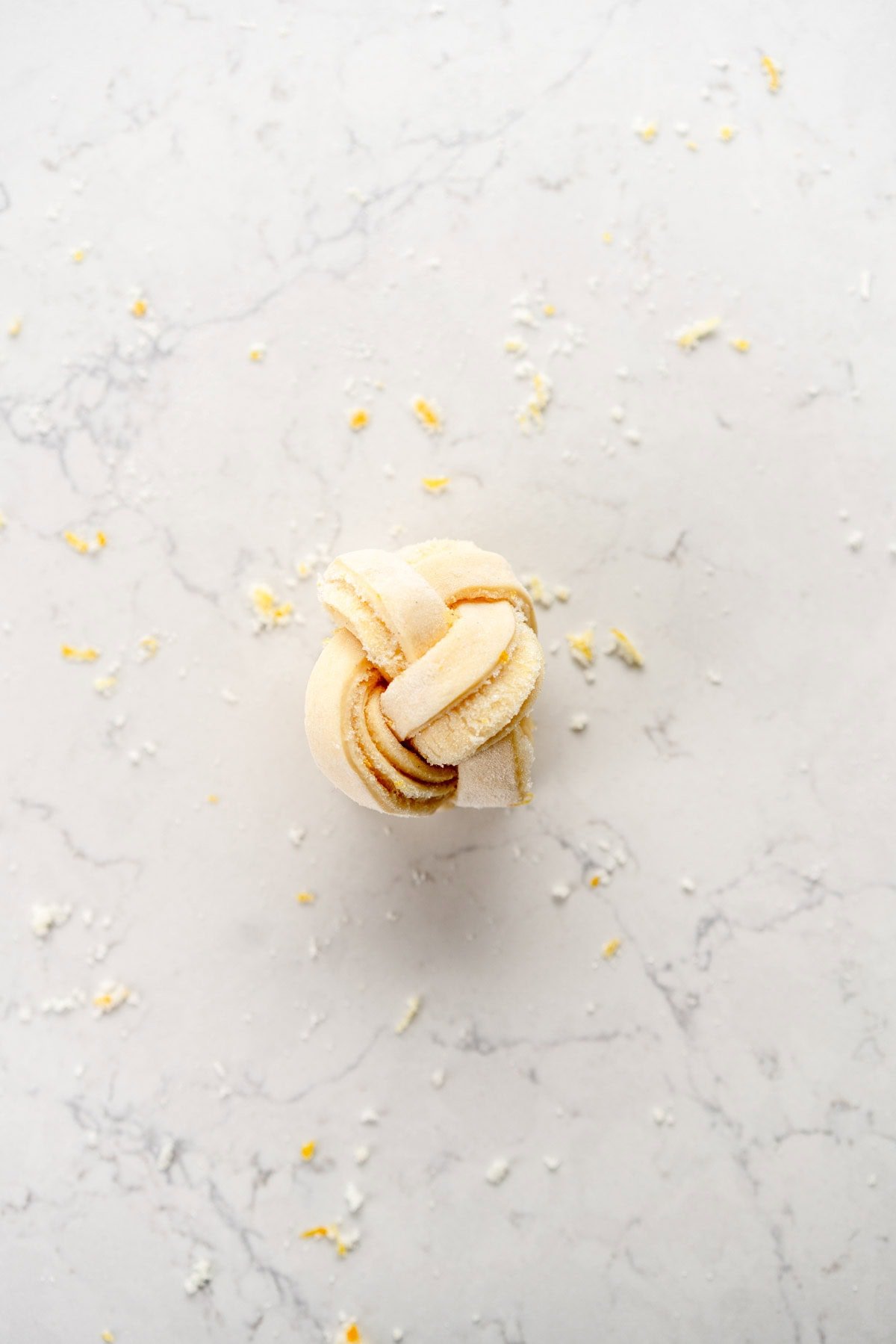
    rolled up bun
    Roll into a bun!

    Rising and baking Lemon Buns

    I like to make these in two muffin pans, and do 8 buns in each. I tried them on a baking sheet and it looked like a big tangle of spaghetti as they unrolled as they baked.

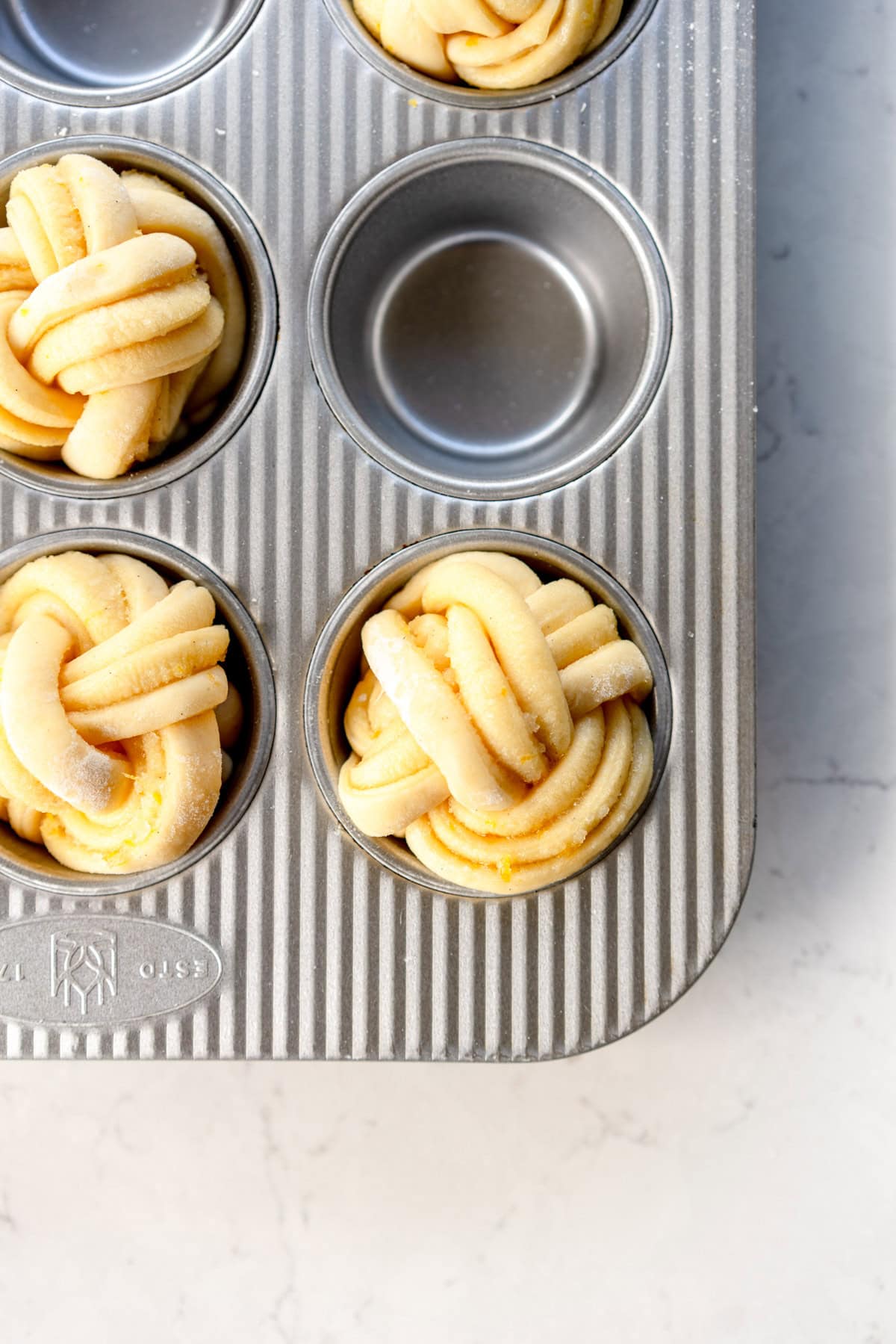
    Place each rolled up bun into the cavity of a muffin pan, nestling them in nicely. Cover with plastic wrap and leave to proof again. If you have chilled the strips to help with shaping, the dough will need a little longer for the second proof - it is winter here in NZ at the moment and they took about 90 minutes to rise.

    risen lemon bun in pan
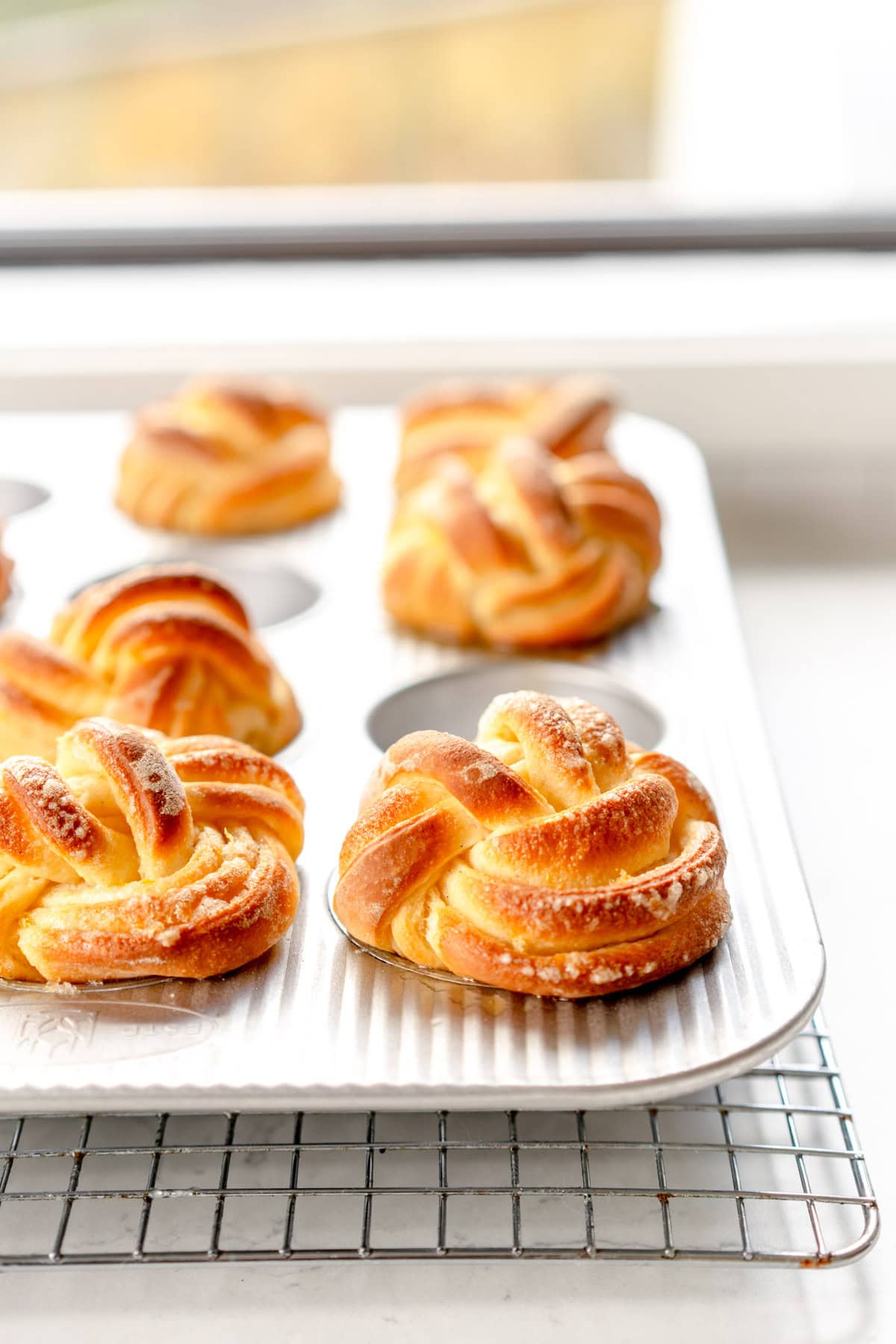
    side on image of baked lemon buns in muffin pan

    You know the buns are done when the dough leaves a small indentation that slightly springs back when pressed with a finger.

    Bake in the pans until golden brown, then leave to stand for about 5 minutes before removing from the pans. Do not leave them too long as the lemon sugar mixture will cause them to stick.

    I like to store my buns in an airtight container at room temperature. If you are eating them after the day you made them, I briefly warm them in the microwave to help freshen them up.

    For more information on the mixer please head to Ooni's website to learn more about the Ooni Halo Pro Spiral Mixer! If you are in the US, please use this link

    ❤️ Made this recipe and love it? ❤️

    I would LOVE for you to leave me a review and star rating below to let me know how you liked it! Also, please make sure to tag me on Instagram!

    Answers to your baking questions

    Over the years, many of you have asked me questions about:

    • baking in grams
    • adjusting oven temperatures
    • what kind of salt to use
    • and many more!

    I've curated and answered them all for your easy reference in this frequently asked questions post!

    Filed Under: Breads, Buns and Rolls

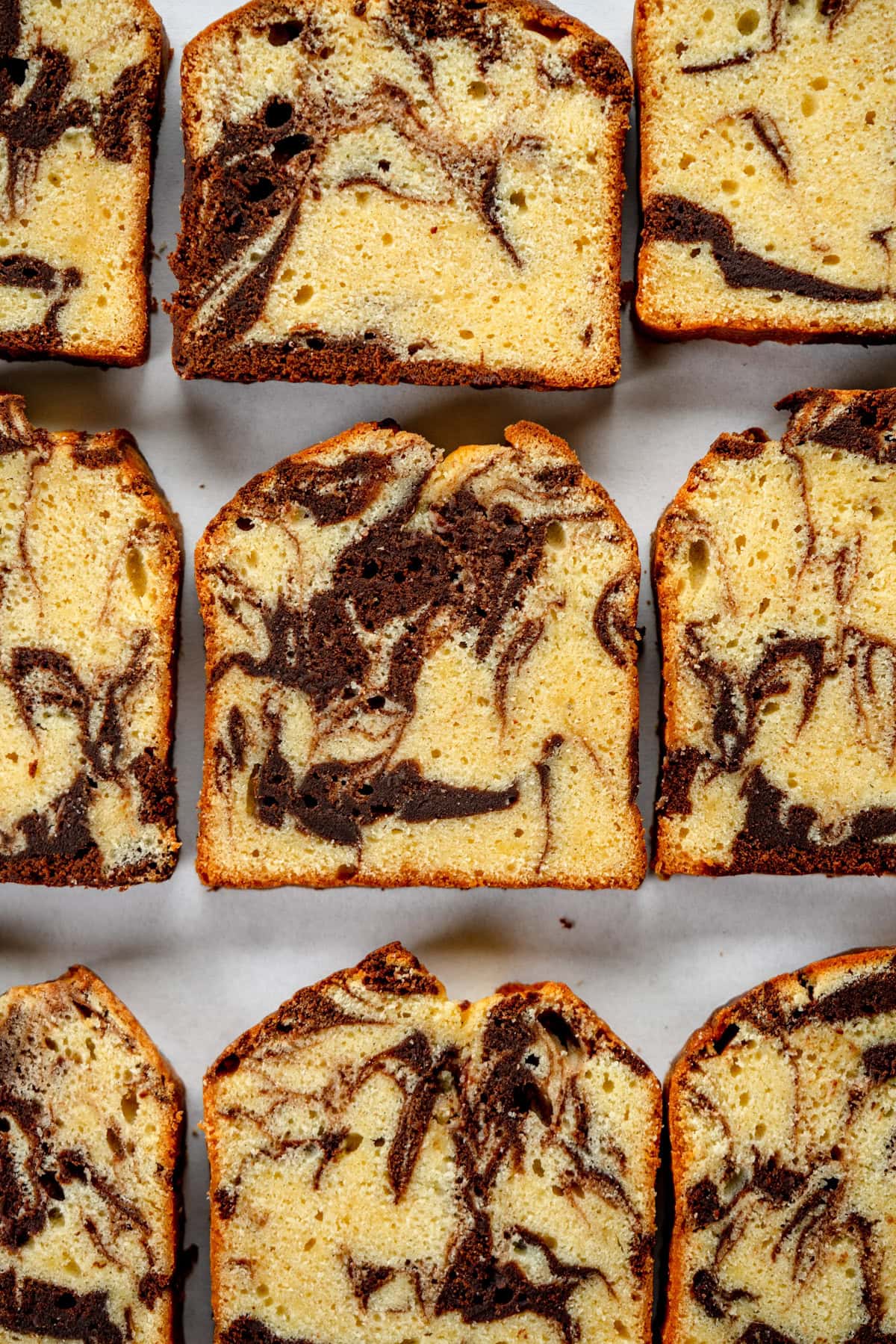
    The Marble Cake we are Obsessed with

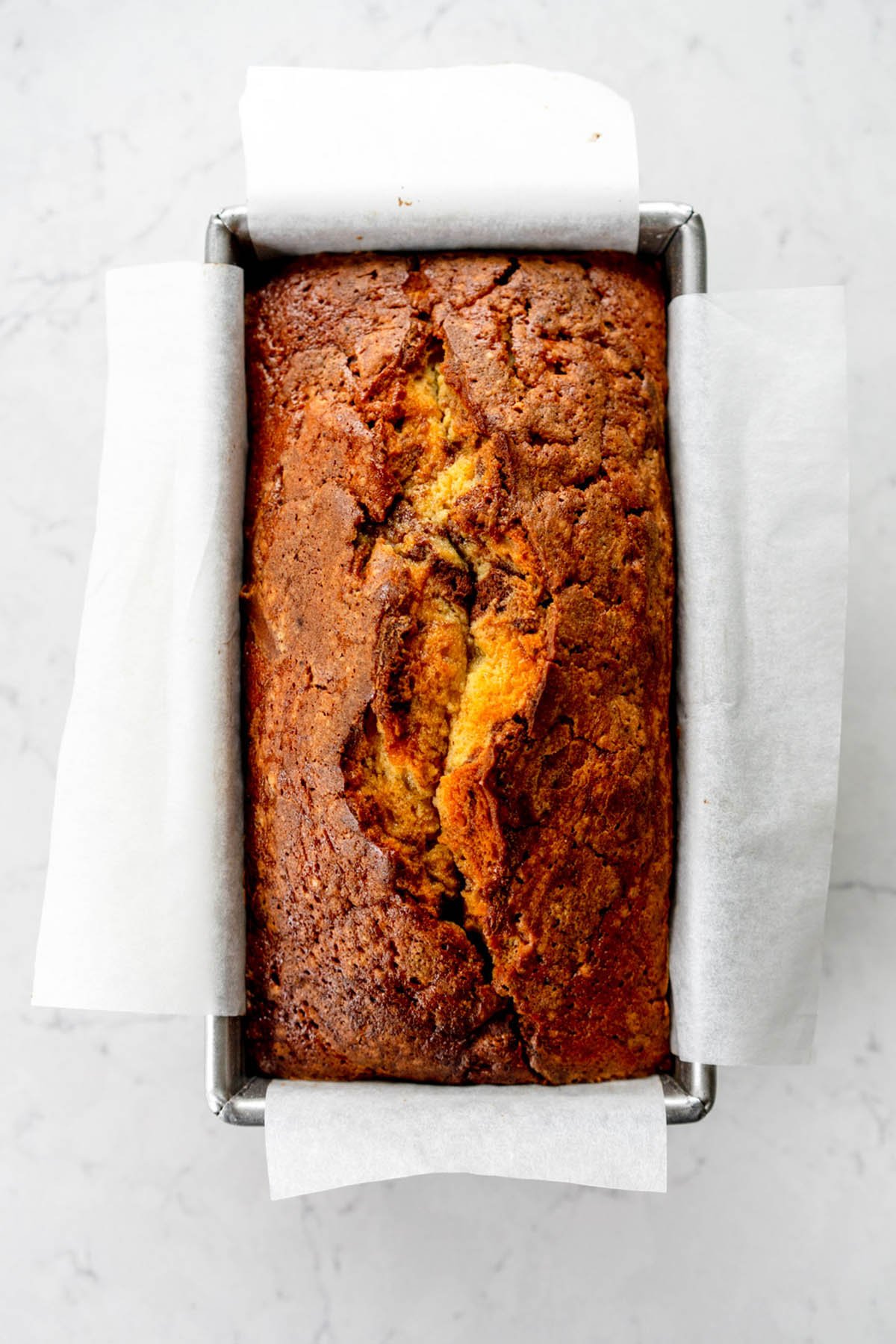
    marble cake on sheet pan

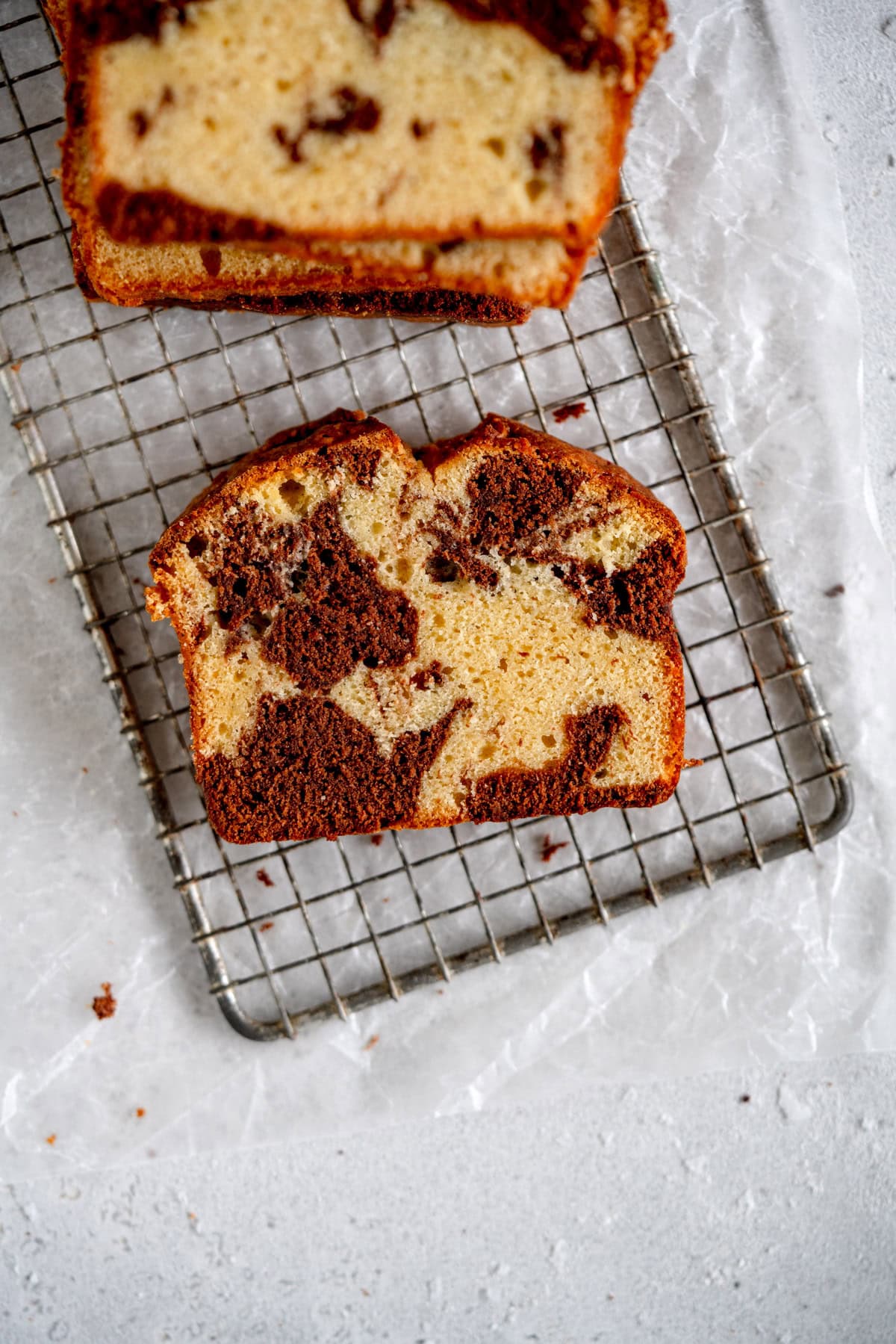
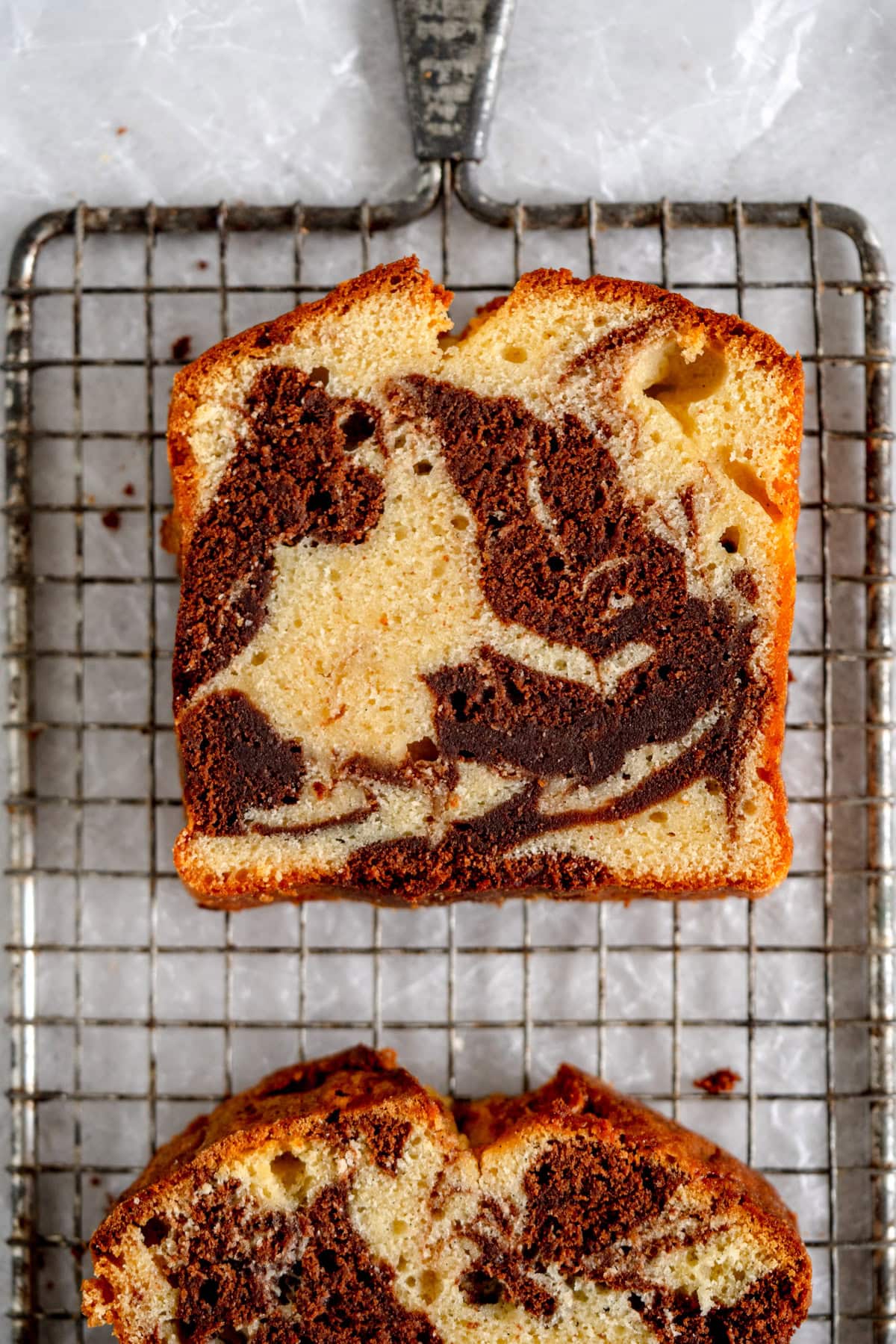
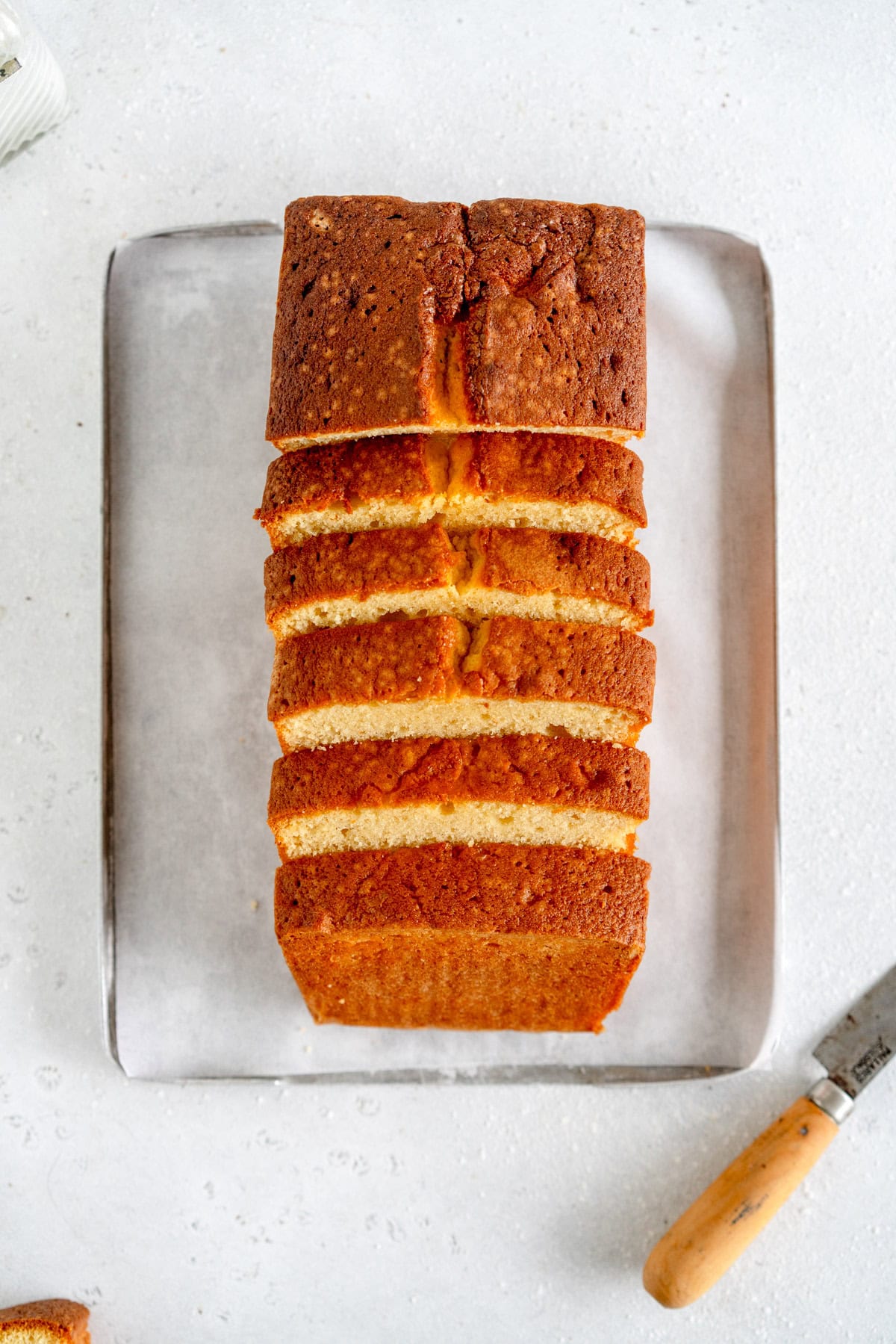
    This marble cake is your next go-to crowd pleaser! Vanilla pound cake batter is swirled with a rich chocolate batter for the most perfectly dense (in a good way!) marble cake with the most amazing texture. Made in a loaf pan, this marble cake not only looks impressive, but keeps well and is great to make ahead.

    marble cake on sheet pan

    Hi hi! I am just popping in to share this marble cake recipe with you! When I was working on my sour cream pound cake I accidentally (happens every time) went down a pound cake rabbithole, and now we have this amazing marble cake recipe!

    A few friends have actually said that they prefer this to my vanilla pound cake. Huge call. But I can see why. There's a tender vanilla cake base, swirled with a slightly denser chocolate pound cake, which I made with real chocolate, so it is super rich and almost fudgy.

    You make the one batter, set some aside, add the chocolate to the rest, and then get to assembling and swirling.

    Don't be intimidated. I'll break down the whole process for you, and there's a whole bunch of pictures to help you along the way.

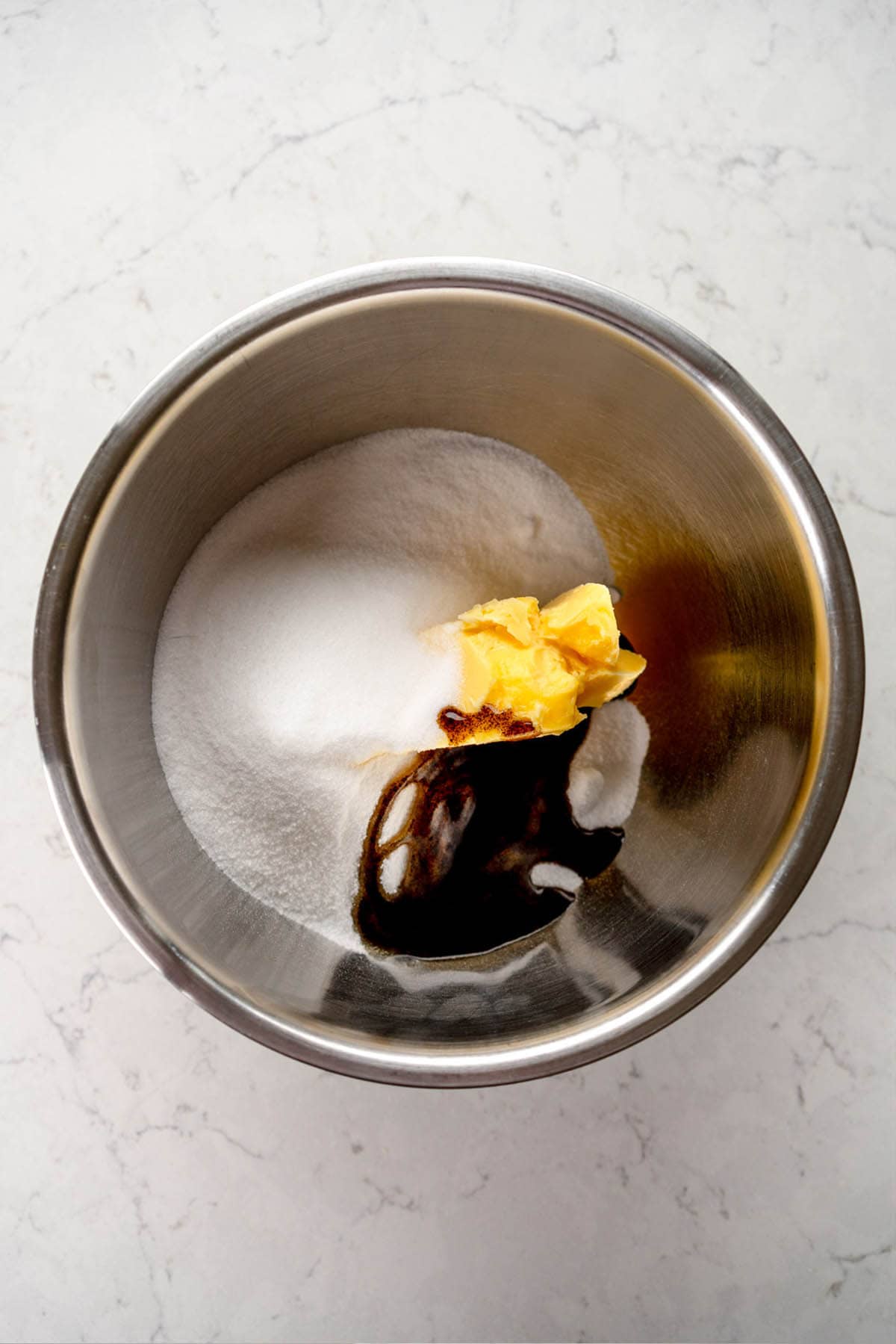
    butter and sugar for vanilla cake
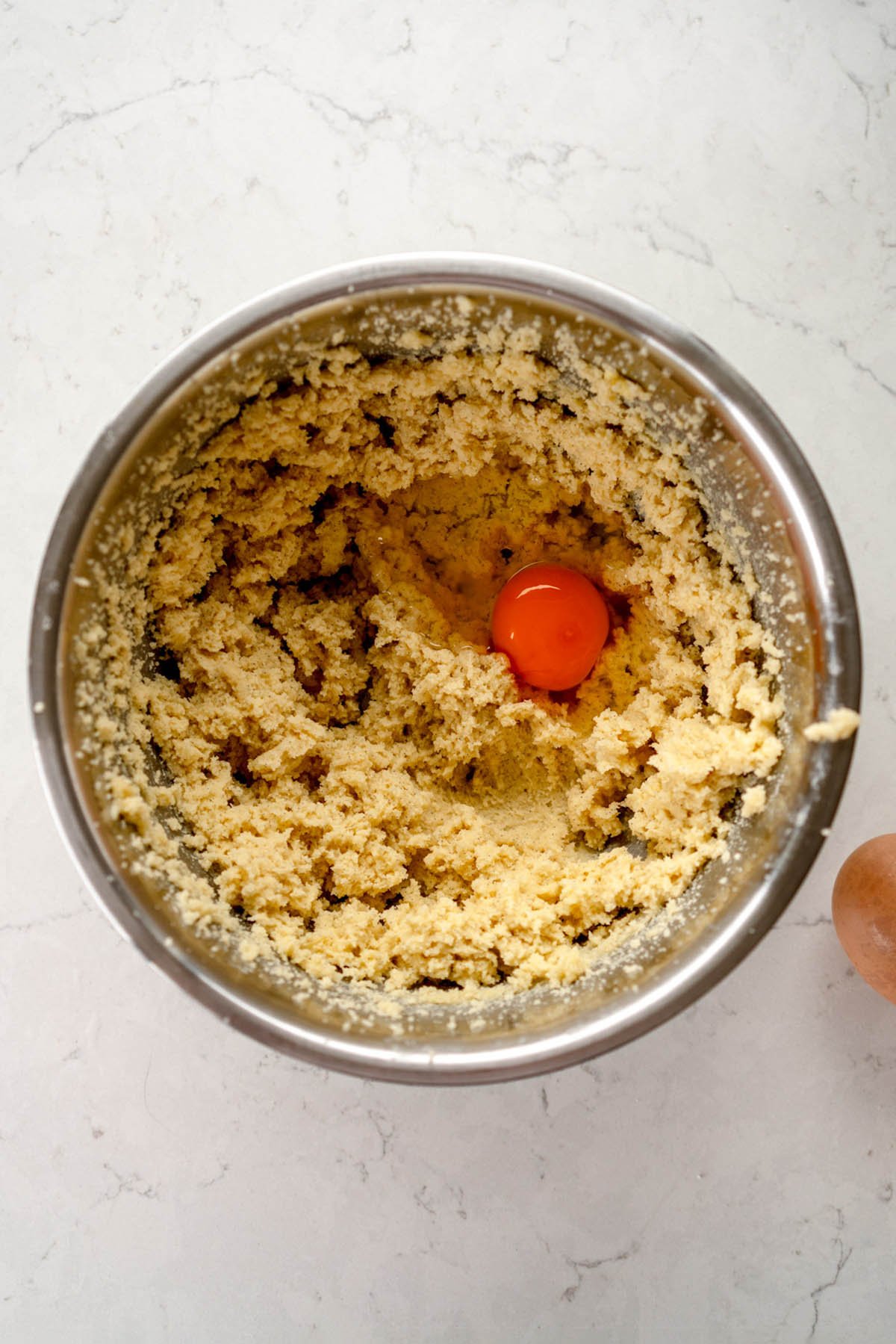
    add eggs to creamed mixture

    Recipe testing for Marble Cake

    During the recipe testing process, I made this marble cake a ton of different times. The first I went for a 50:50 split of chocolate and vanilla batter, which turned out to not be quite right - because the chocolate batter is super chocolatey, it overpowered the vanilla. I also absolutely screwed up the swirl.

    We got there though - I ended up with about a ⅓ chocolate to ⅔ vanilla split which is delicious. I dialled back on the chocolate a little in the chocolate section as it was too dense in texture.

    The rest of the testing was then just locking it all in - making it in different sized pans, playing around with bake time etc. etc. All the work was so worth it though because this cake is just so good.

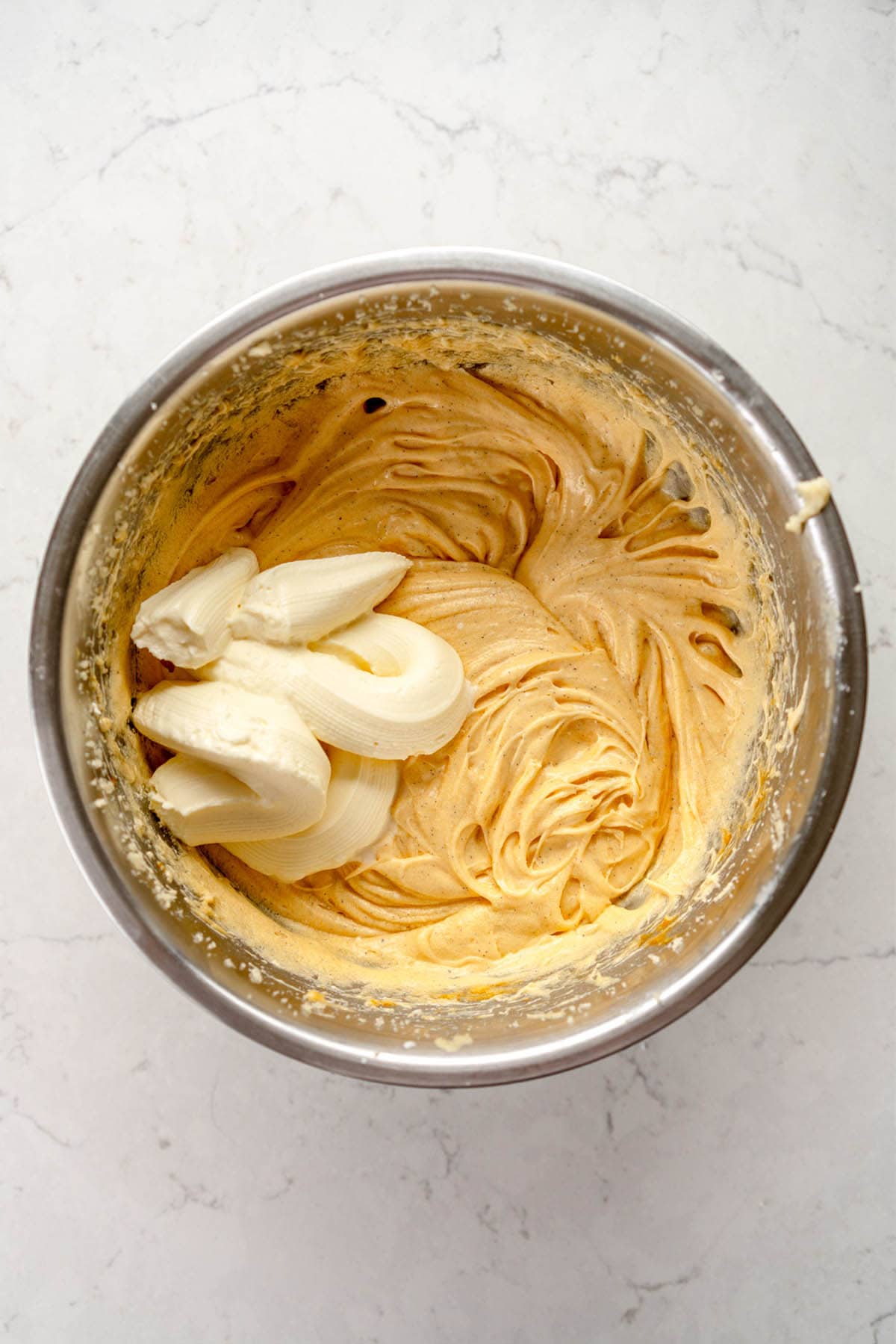
    add in sour cream
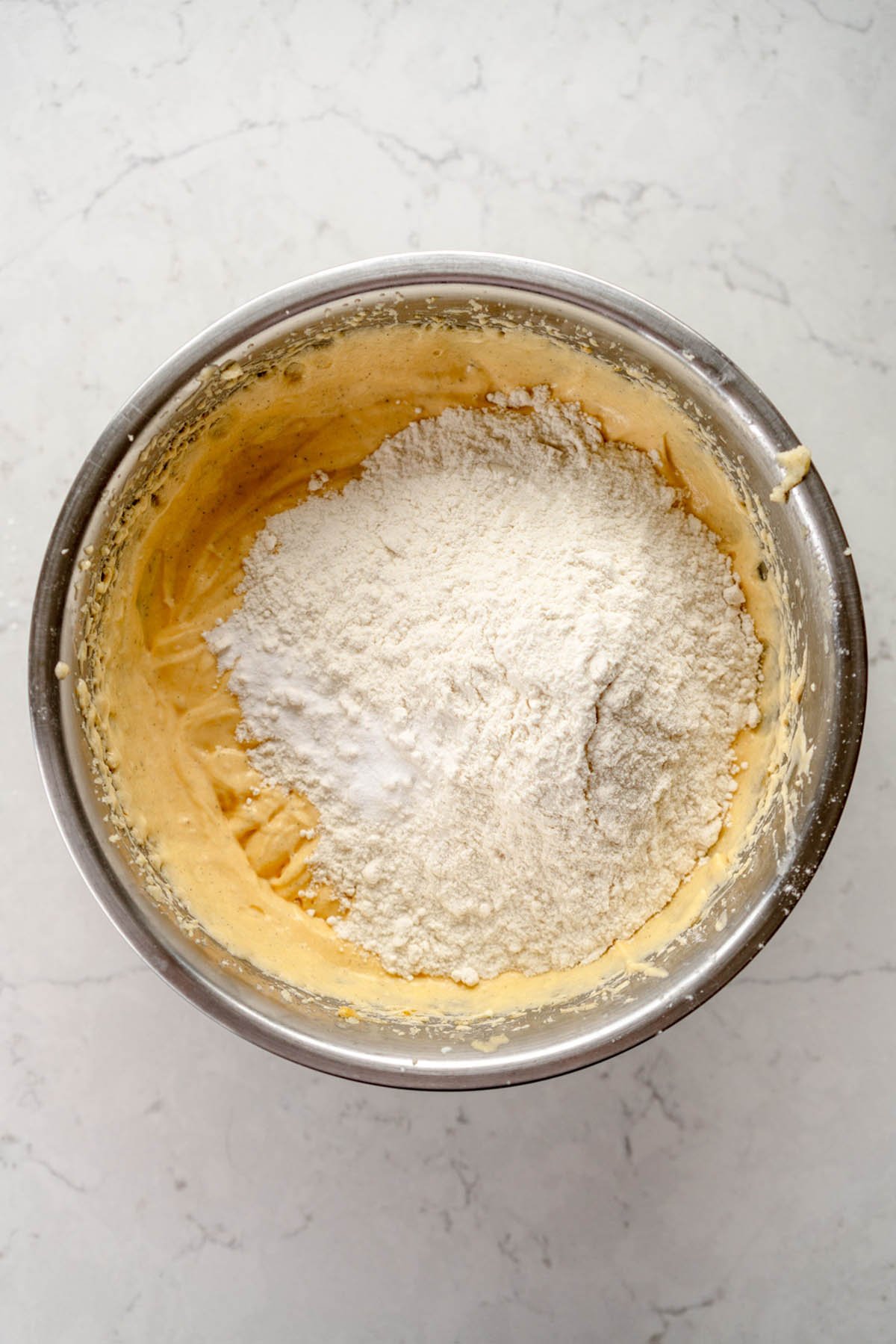
    add in flour to mixture

    The importance of room temperature ingredients.

    This is a super important one for this marble cake recipe. I know that we say that ingredients always need to be room temperature (if specified), but for this recipe especially you want to make sure that your butter is nicely room temperature, as well as your eggs and your sour cream.

    Because melted chocolate gets added into the batter, you want to make sure that the batter isn't too cool, which will cause the chocolate to harden and you will get little flecks of chocolate through your batter. Not the end of the world, but it is easy to avoid if you can.

    If your house runs cold, you can pop your eggs into a bowl of warm water for 5-10 minutes before baking. Even if they are at 'room temperature' I find warming them slightly can help with this too.

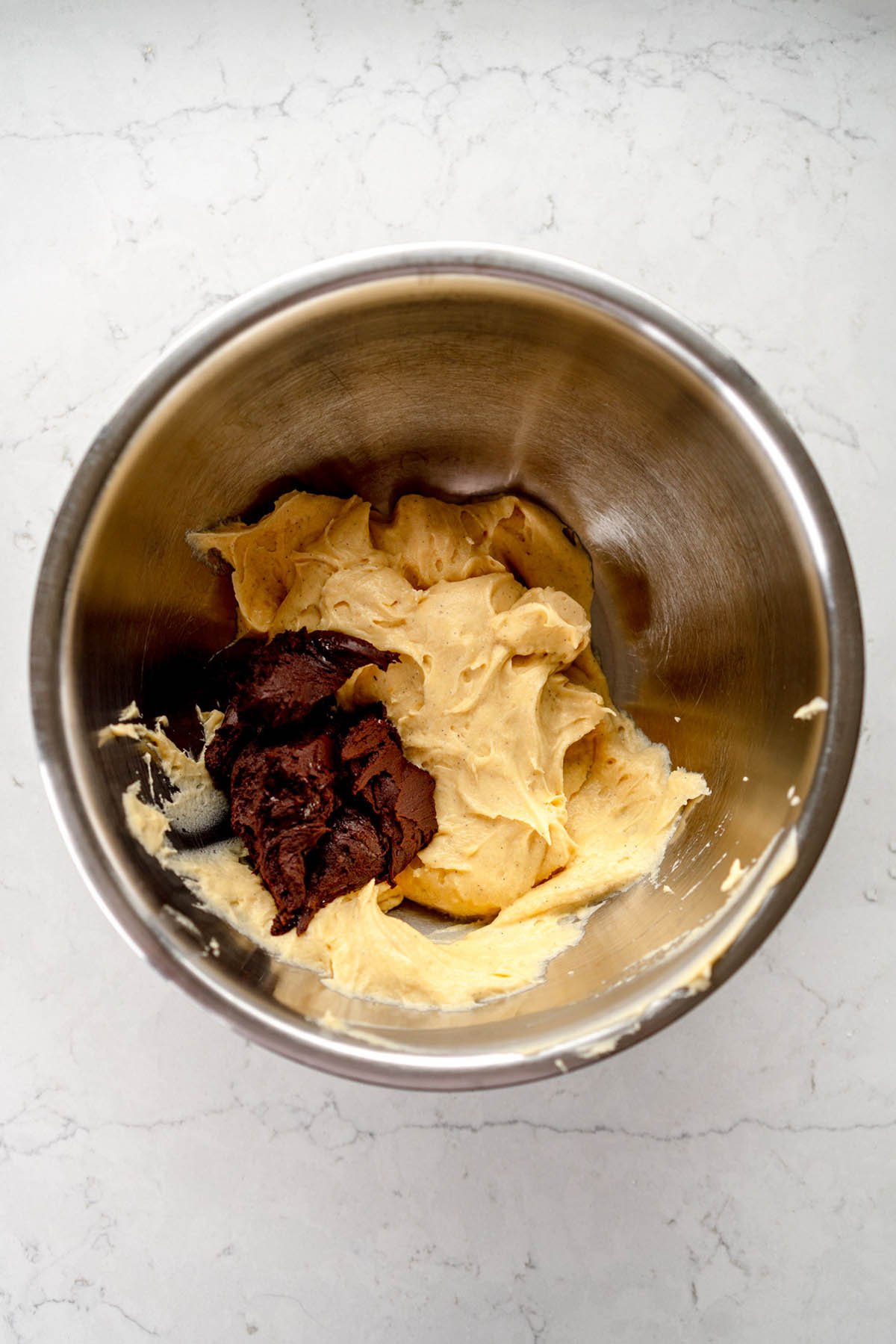
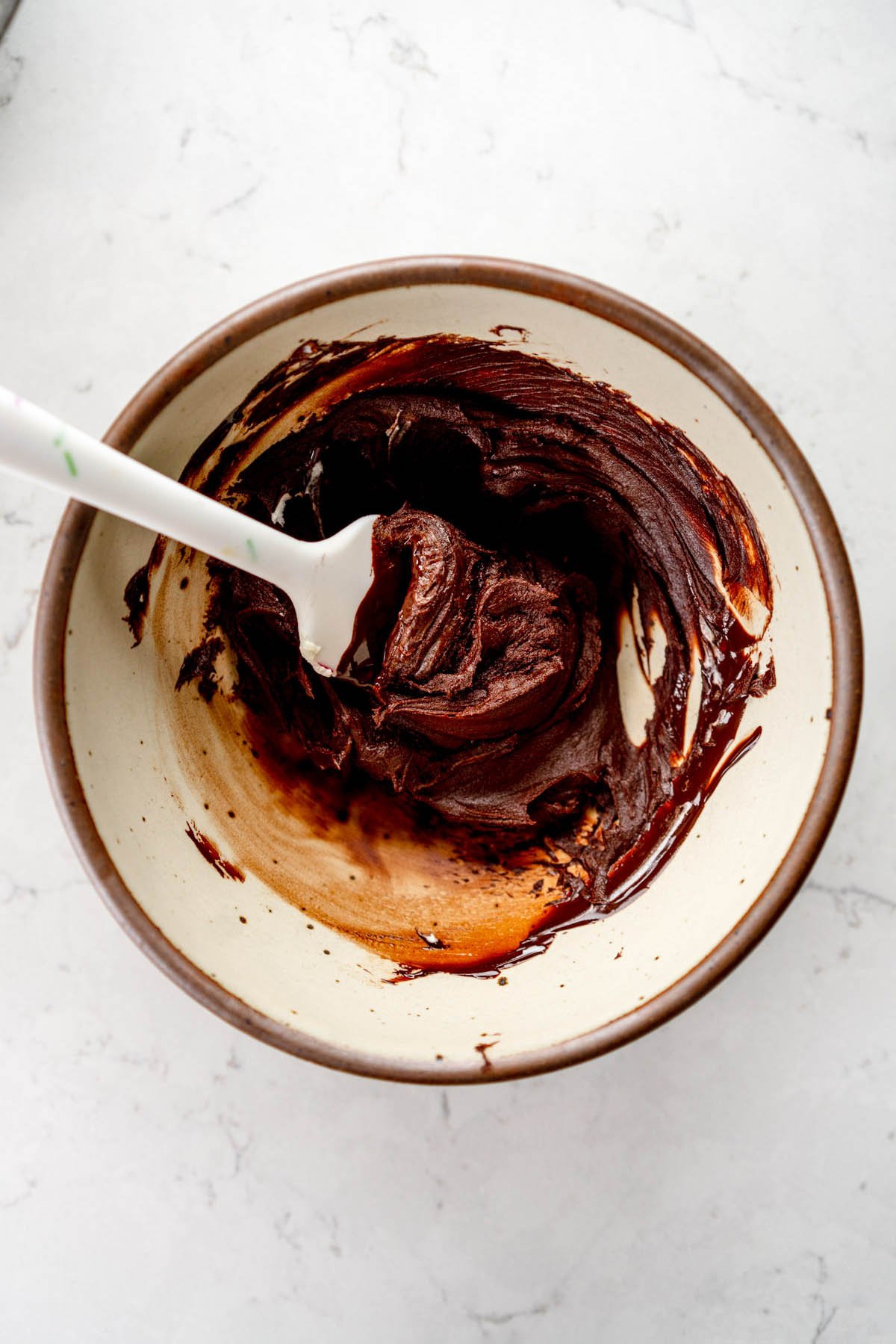
    add chocolate to vanilla mixture
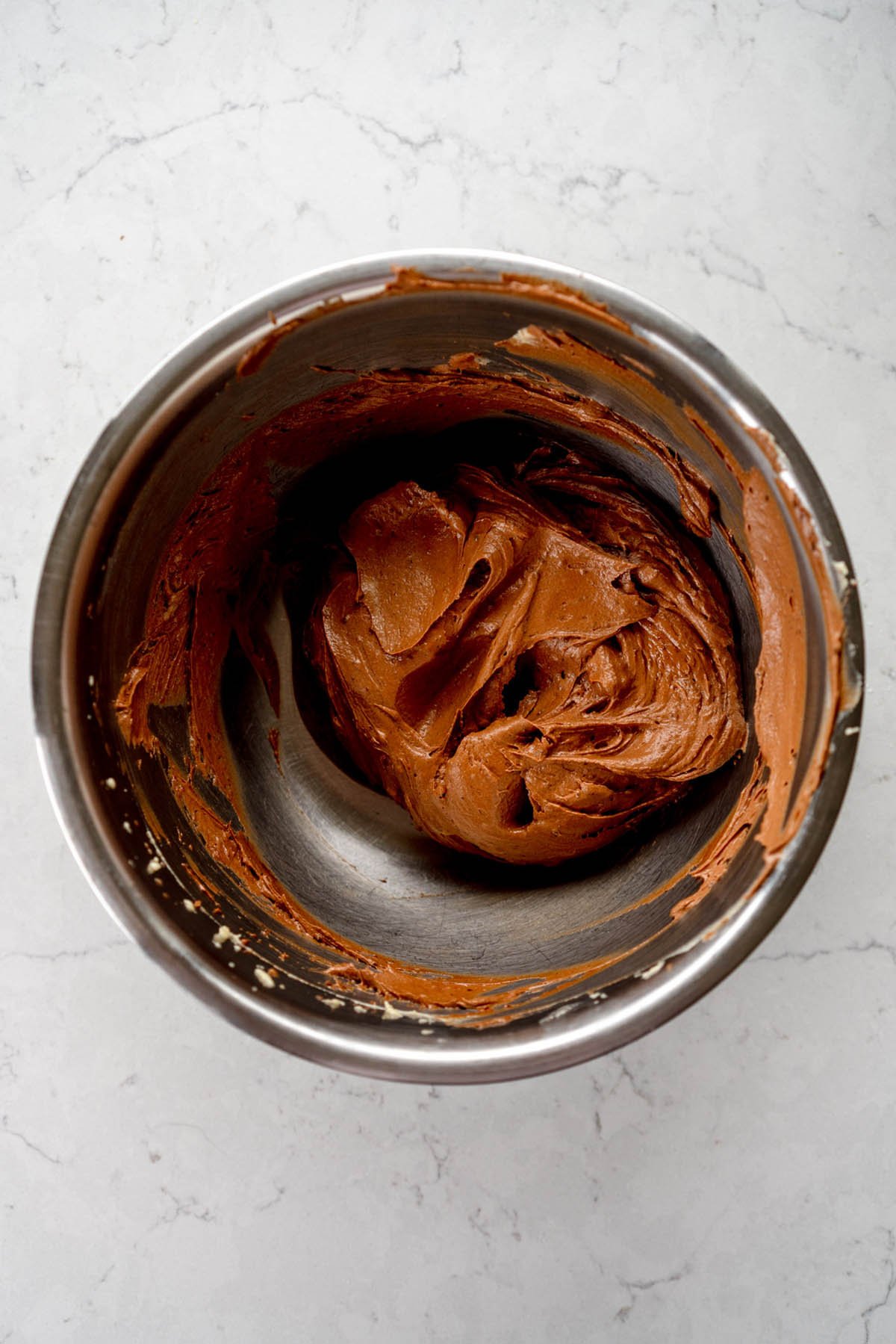
    chocolate mixture ready to go

    Does this cake need a frosting?

    Depends who you ask. I think it is delicious just as is. However, my Husband who has a tendency to put chocolate icing on anything he possibly, can, would disagree.

    If you wanted to add a frosting to this marble cake, my easy brownie frosting works perfectly.

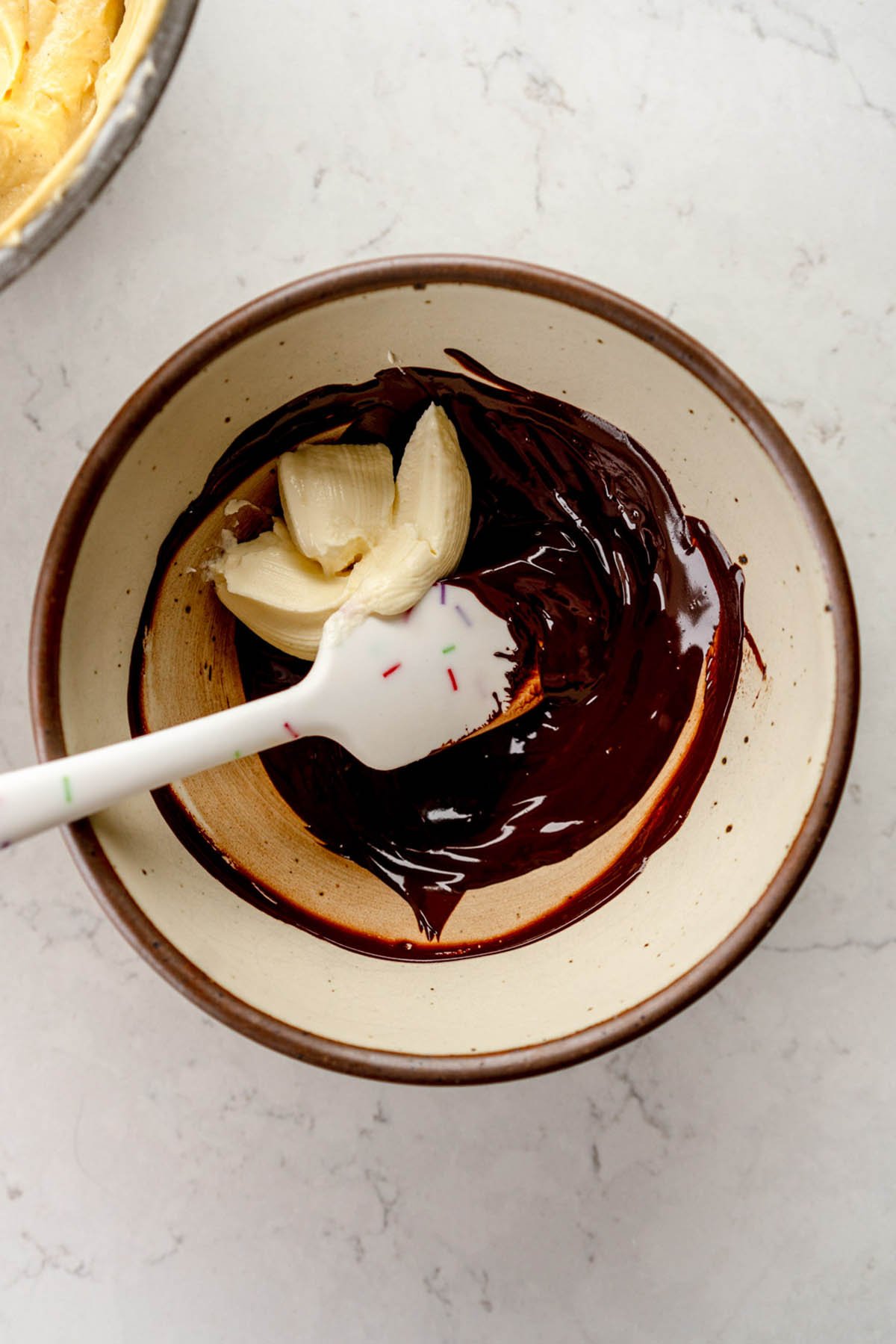
    melted chocolate with sour cream

    How to get a chocolate batter that isn't too dense but still tastes like chocolate

    I did a ton of research when I started making this marble cake recipe - a lot of the recipes use cocoa in their chocolate portion of the batter. Not this one. I really wanted the chocolate flavour to shine through and not compromise texture, so I wanted to make sure I used melted chocolate rather than cocoa powder.

    This gives a delightfully dense (in a good way) chocolate swirl through the marble cake. I also added in some sour cream to help increase the viscosity of the chocolate mixture so that there wasn't too much variation between the two batters (this was a tip from my friend Chelsea!).

    Because you are increasing the ratio of batter to the amount of baking soda in the recipe along with adding two kinds of fat to the batter, the chocolate portion does bake up a tiny bit denser than the vanilla, but I love it that way.

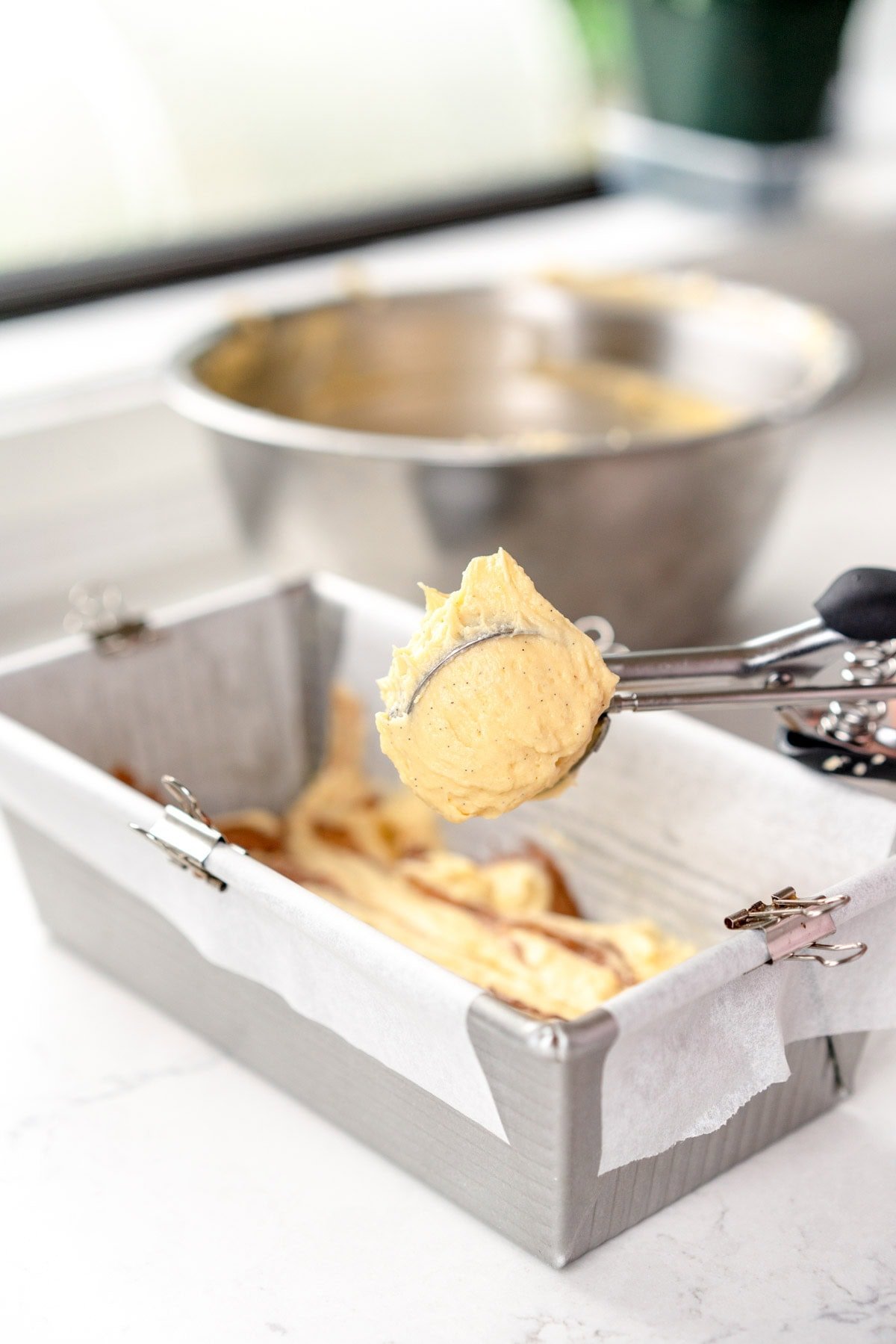
    scooping in batter

    How to assemble a marble cake

    This seems like a silly thing to need to explain but I tried a bunch of different methods for this and much prefer this way. Some other recipes online get you to alternate layering the batter, or just blob it all in and swirl.

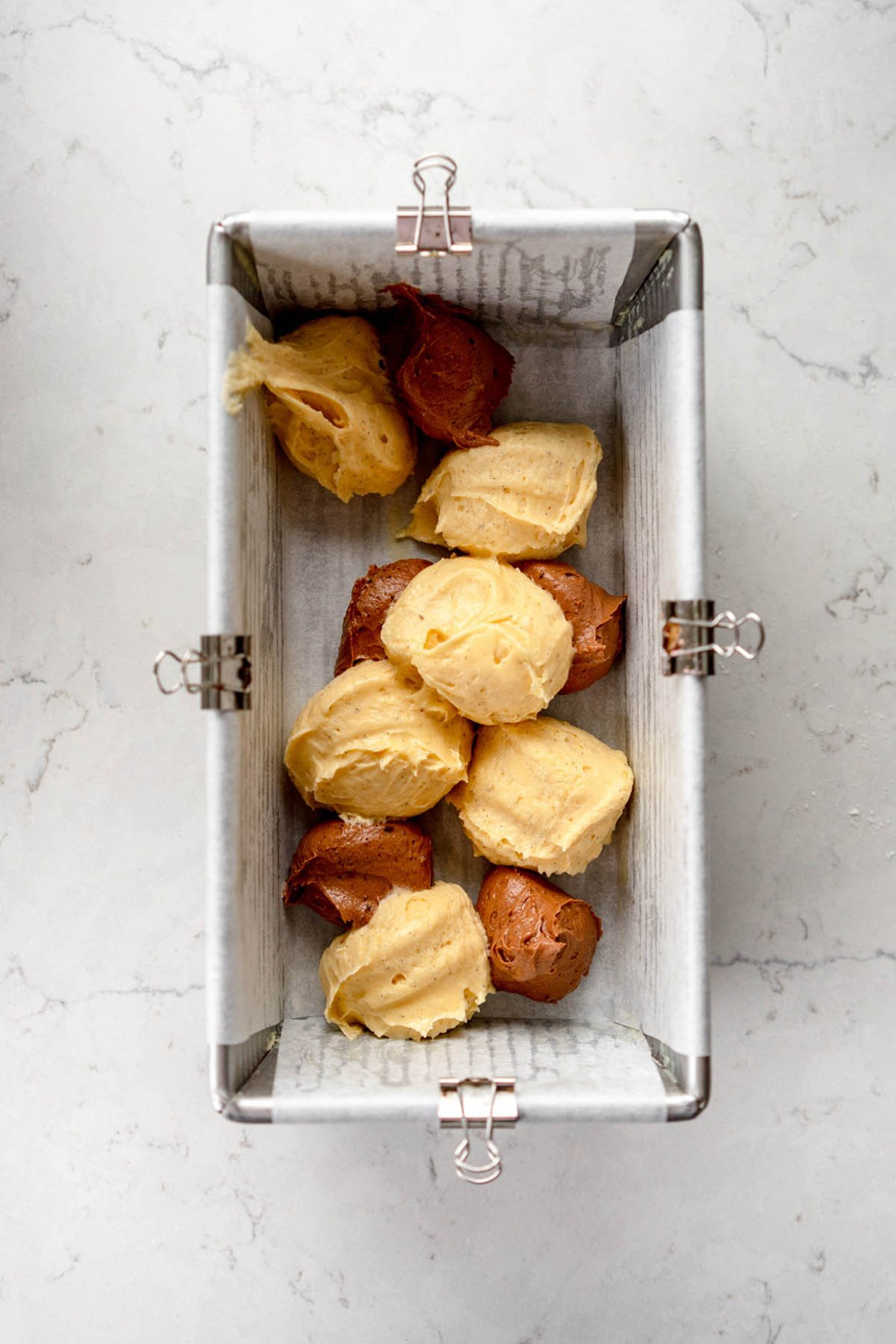
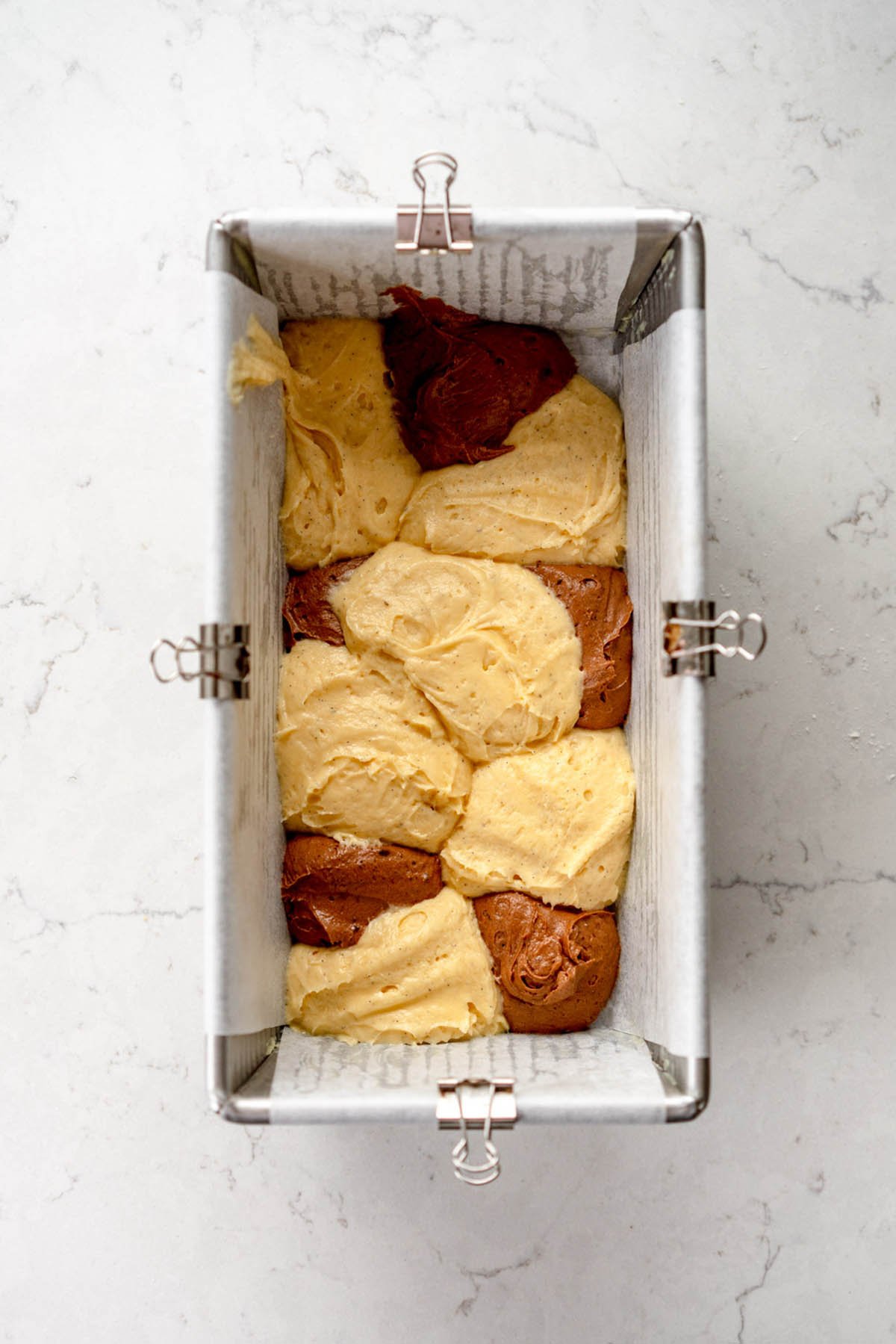
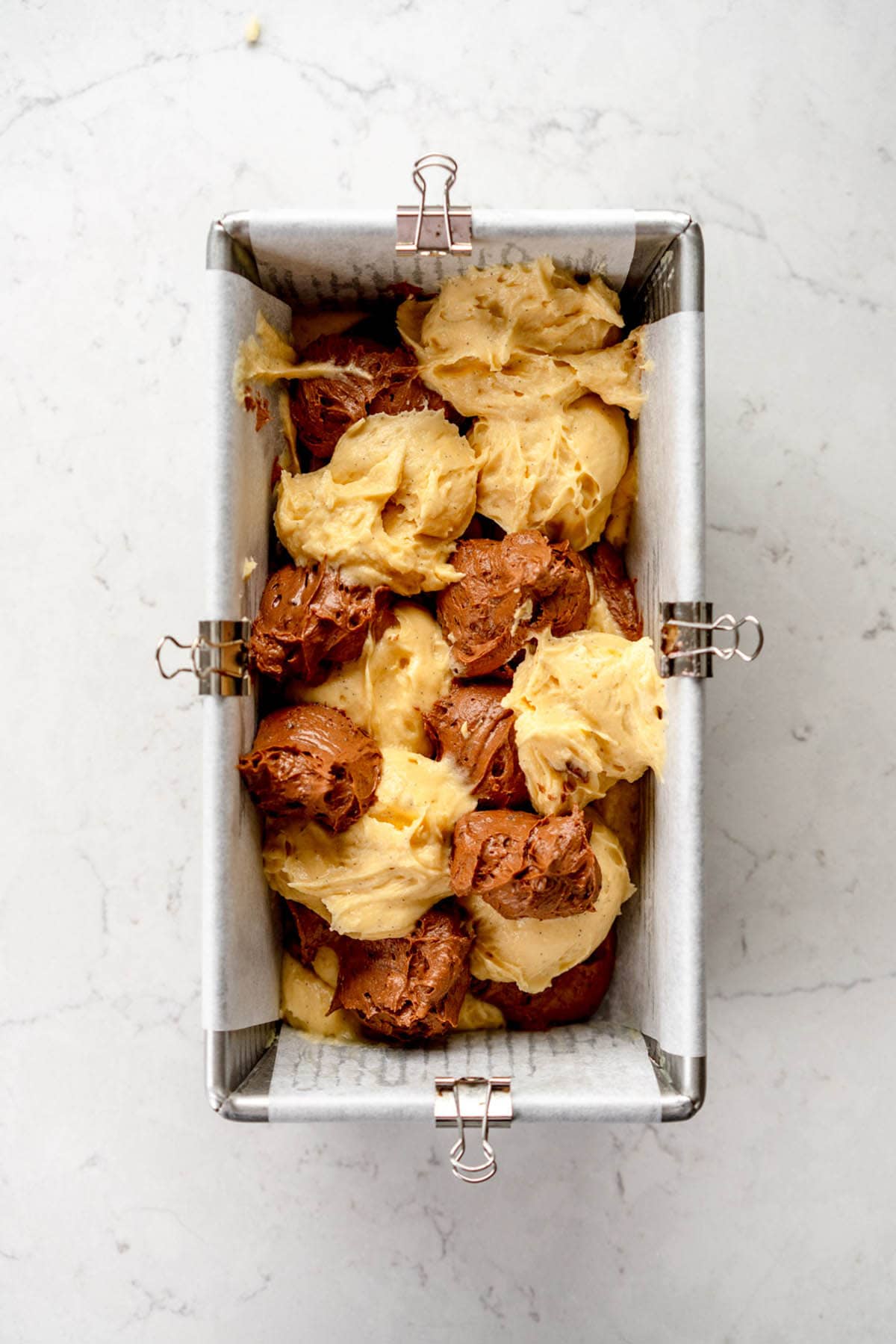
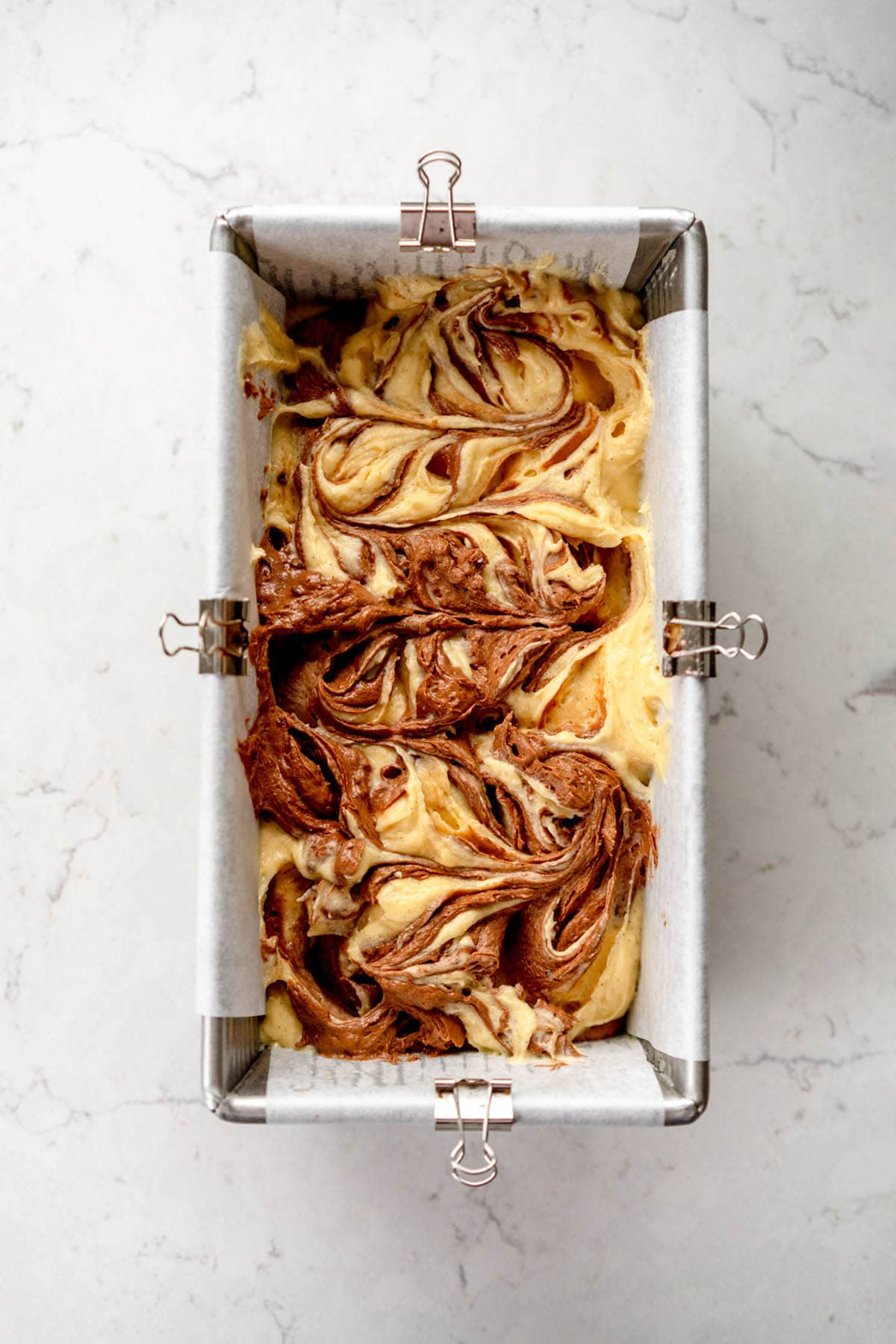
    I found that doing three separate layers, making sure to bang down the batter and then swirling between each layer was the most effective way. You can see in the images below how I did that (they show a few steps rather than the entire process but it is essentially the same thing just in three layers)

    I used a 1 tablespoon (#60) scoop for the chocolate batter and a 1.5 tablespoon (#40) scoop for the vanilla batter. Eyeballing it also works. See images below for how I assembled.

    You don't have to be super accurate, you just want to make sure that you have a nice distribution of the two different batters.

    first layer of swirls
    Layer one
    bang down the batter
    Layer one, banged down to flatten
    second layer of batter
    Layer two
    swirled marble cake batter
    Flattened and swirled layer 2

    You have to swirl more than you think you do!

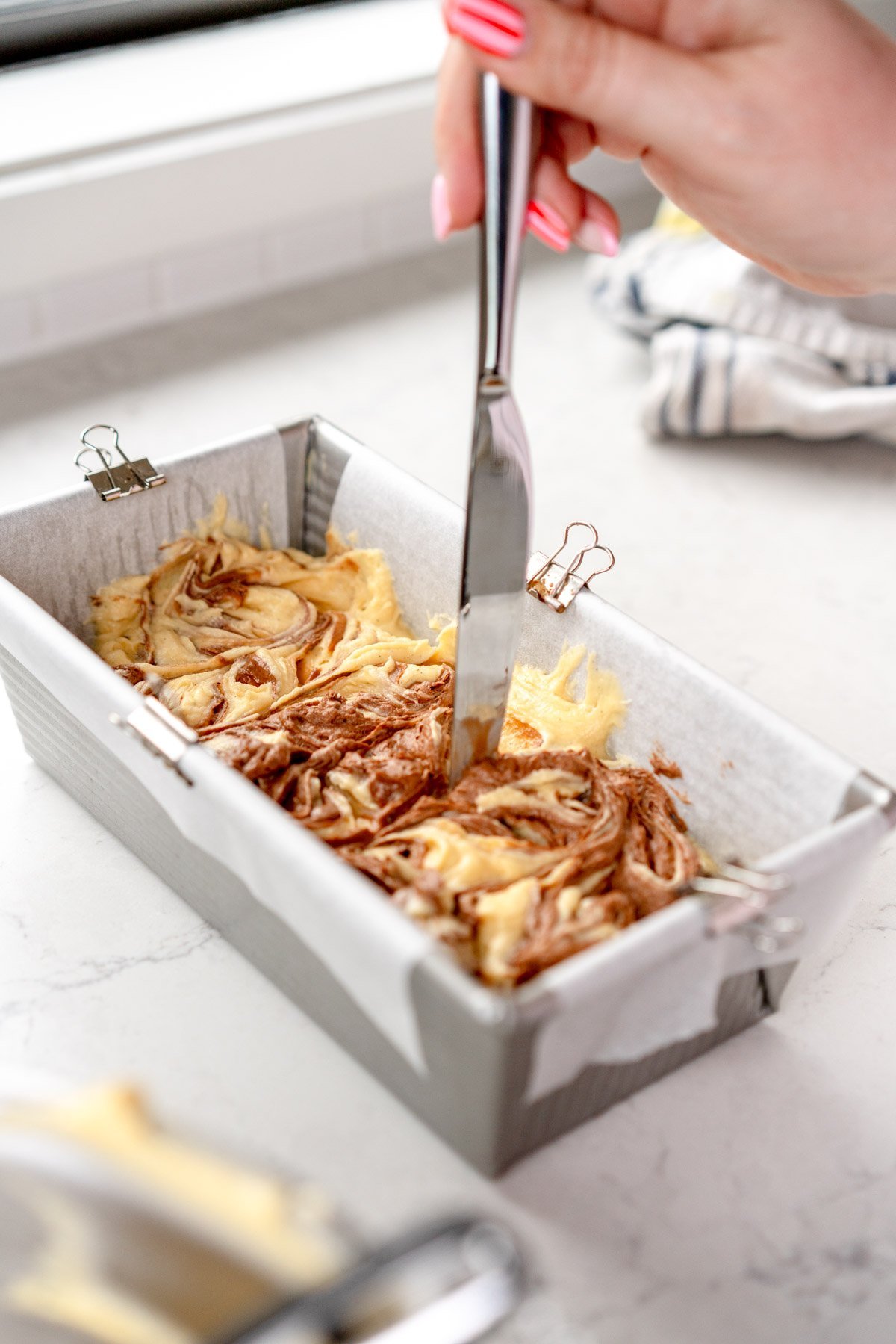
    To get a nice pretty swirl within your marble cake, you have to swirl it more than you think you would. I like to use a butter knife as it is wide enough to ensure that you get a nice mix of batters. Swirling between each of the three layers also helps. Make sure to go both up and down and side to side in your swirling!

    Please note that because of the swirling method which introduces air into the cake, sometimes there will be some bubbles in the batter and then the baked cake. This isn't a biggie, you can see that there are some in my cake!

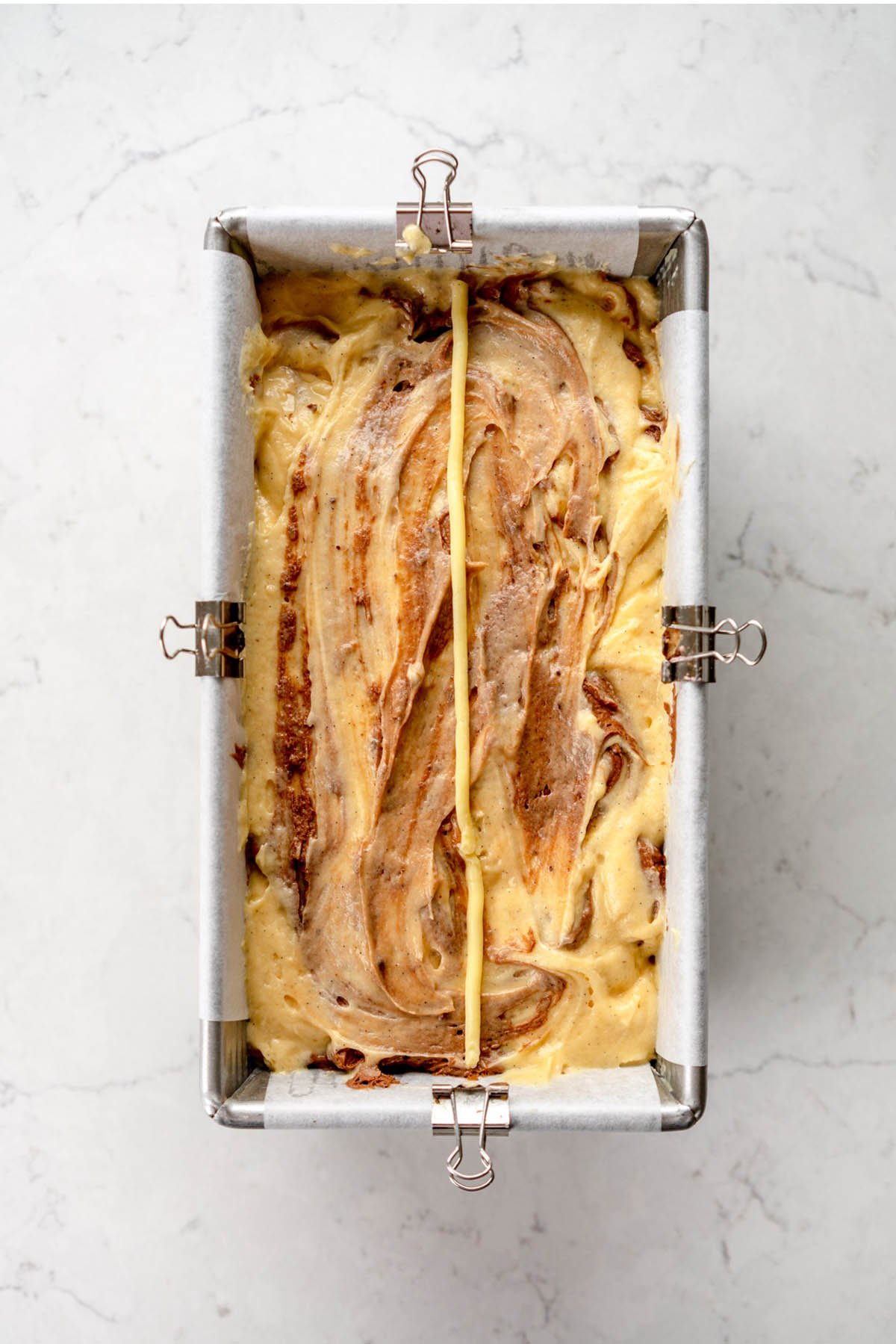
    A butter line down the middle

    I do this almost every time that I make a pound cake now - I just pipe a little line of softened butter down the middle of the cake, which controls where it cracks in the oven. This is totally optional but I did a side by side comparison in my vanilla pound cake post!

    swirling batter with butter knife
    Swirling using a knife
    marble cake ready to bake
    Butter line down the middle

    Pullman vs Pound Pan

    If you've been here for any amount of time you will know that I love using a Pullman Pan to bake pound cakes in. A pullman pan is slightly larger in size and square in shape and gives the most amazing polite sides on a cake. They are my favourite.

    However, I know that most people do not own one, so I developed the recipe to be made in a 1lb loaf pan, with notes below the recipe on how to adapt for a pullman.

    I did a full breakdown of a 1lb, 1.25lb and pullman pan along with how the cake looks baked in each in my vanilla pound cake post

    baked marble cake
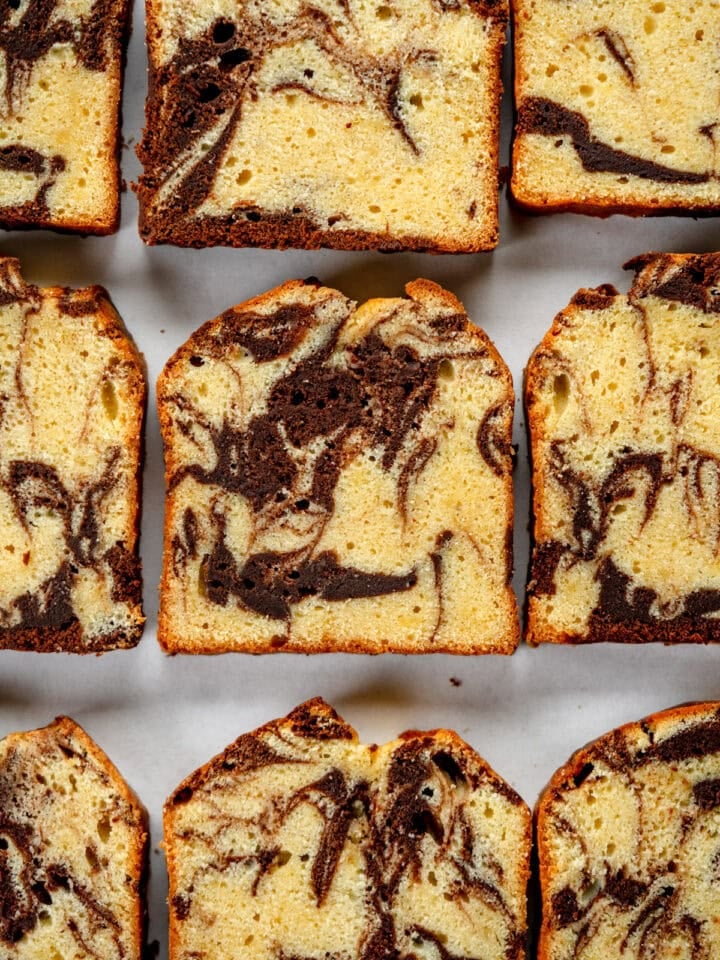
    sliced open marble cake

    Make sure that it is properly baked!

    Because the marble cake batter can be quite heavy, you want to make sure that the cake is properly baked throughout. You can see in the photo below that this wasn't quite done - this is especially important if you are baking in a pullman pan. The cake wasn't quite finished baking, so there is a thin line near the bottom of the slice where the batter isn't quite done.

    To avoid this, make sure that you test with a skewer, making sure you get near the bottom of the cake to check the crumb. A few moist crumbs attached is fine, but make sure if there are any signs of the cake being wet on the inside you leave it in for a little longer. If you are worried about it browning too much you can tent the pan with foil.

    slightly under baked
    You can see in this image where the cake wasn't quite baked enough - there is that dense line toward the bottom of the cake. It is especially important to pay attention when baking in a pullman pan.

    ❤️ Made this recipe and love it? ❤️

    I would LOVE for you to leave me a review and star rating below to let me know how you liked it! Also, please make sure to tag me on Instagram!

    Answers to your baking questions

    Over the years, many of you have asked me questions about:

    • baking in grams
    • adjusting oven temperatures
    • what kind of salt to use
    • and many more!

    I've curated and answered them all for your easy reference in this frequently asked questions post!

    Filed Under: Loaf Cakes and Quickbreads

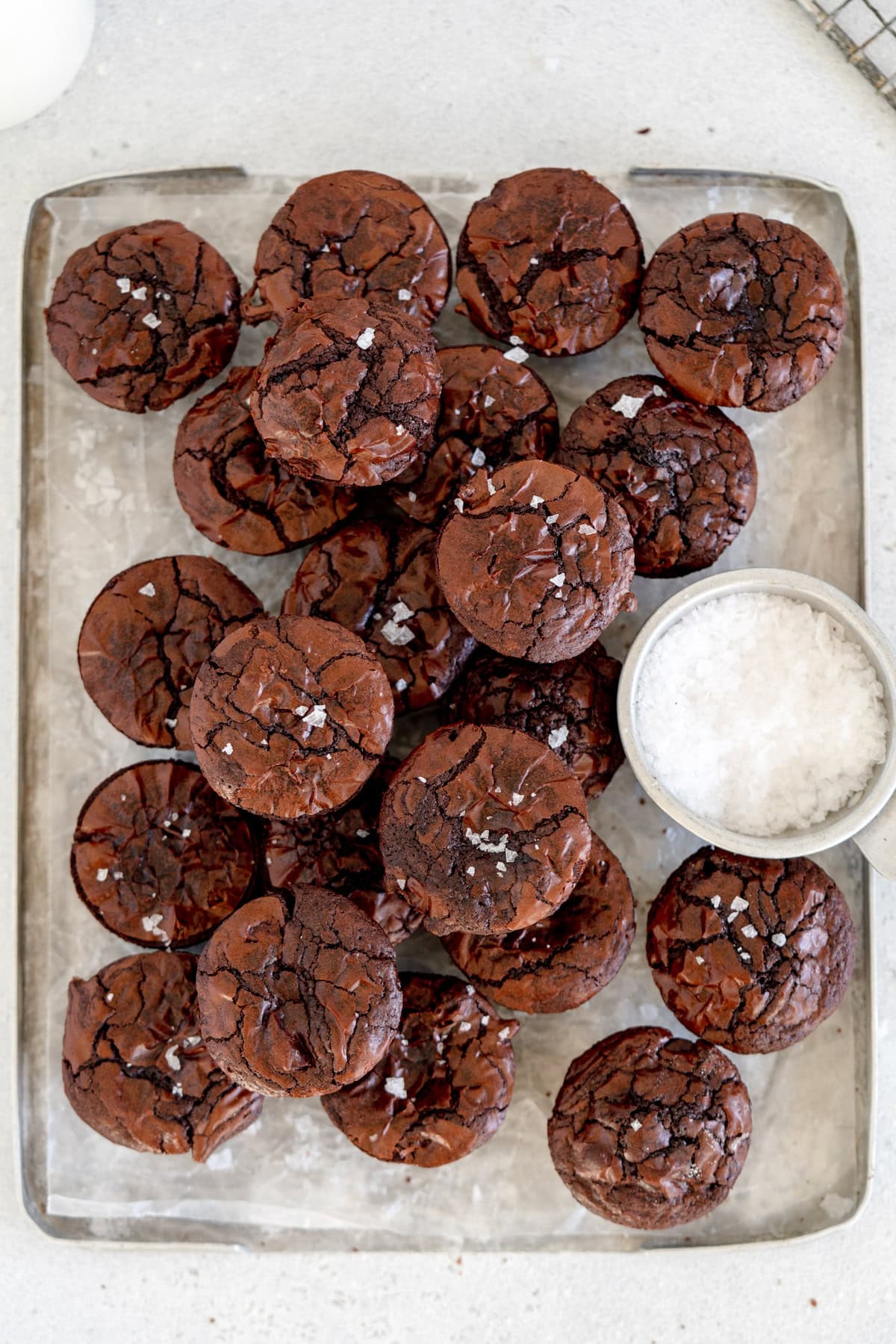
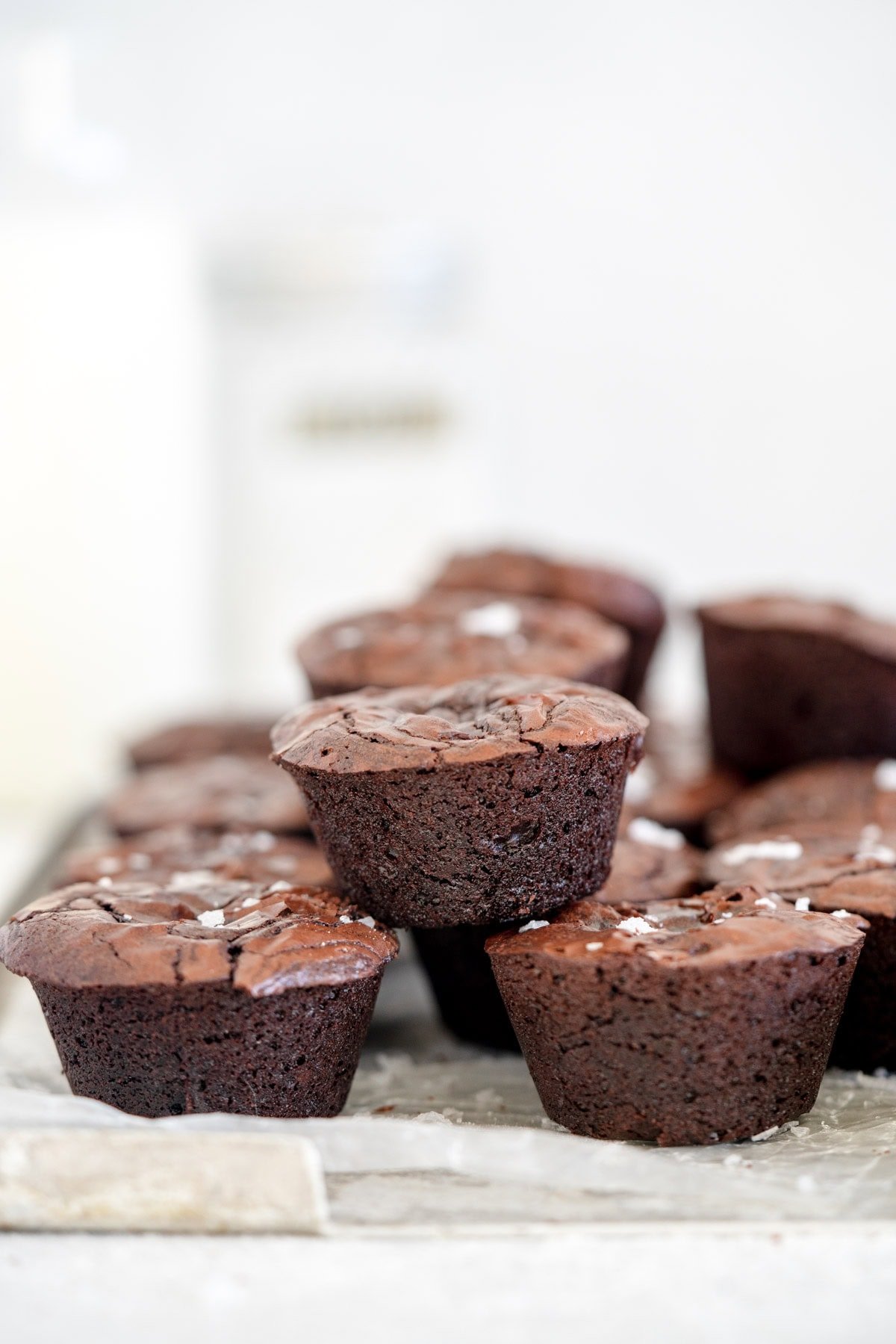
    One Pot Chewy Brownie Bites

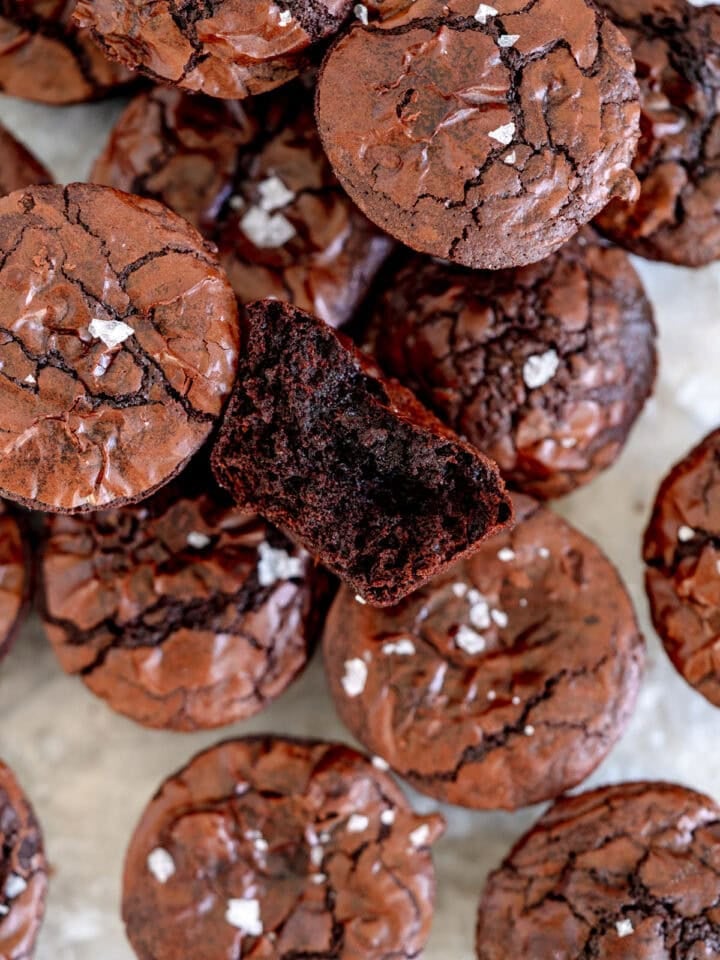
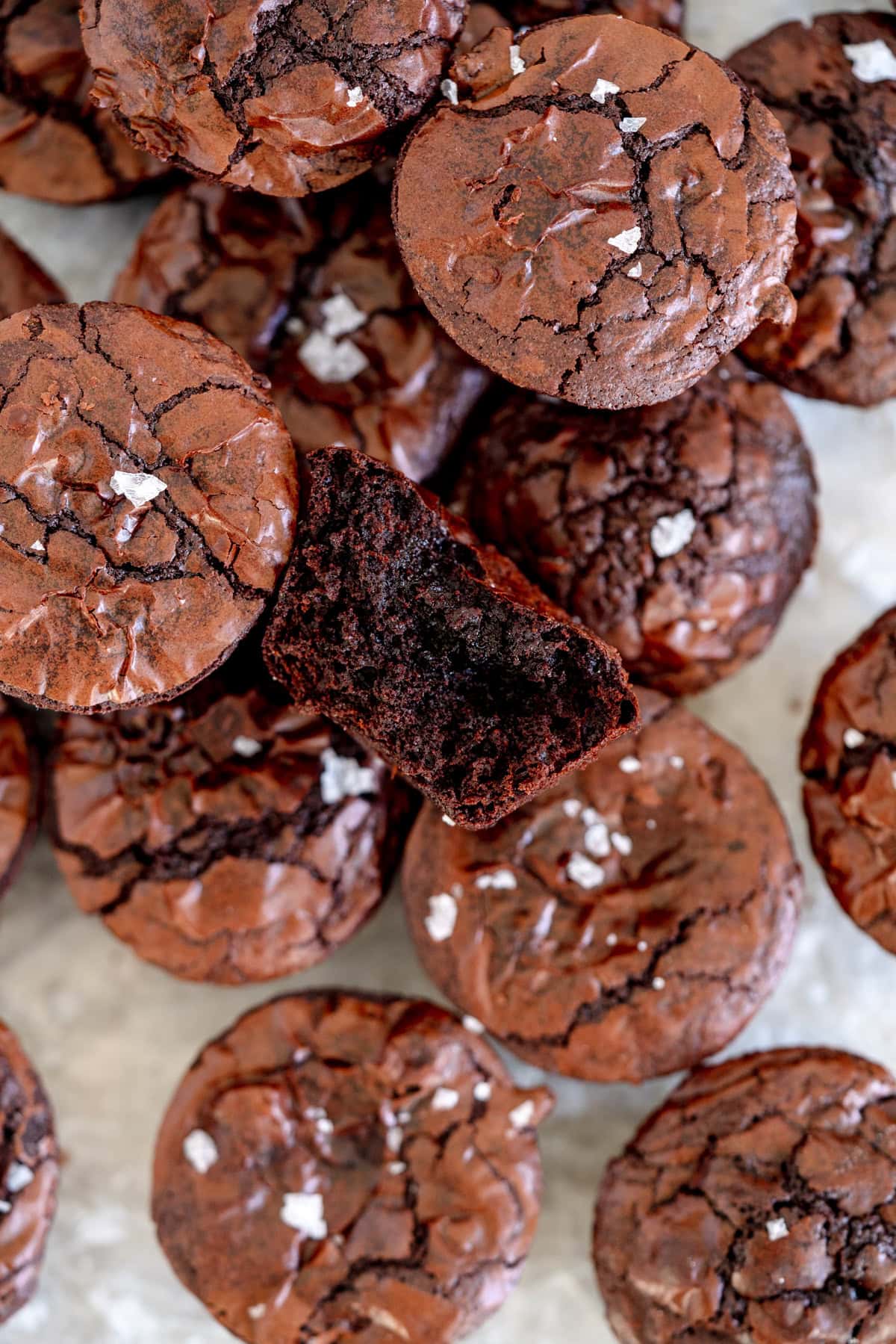
    fudgy brownie bites

    These easy Mini Brownie Bites are quick to make and come together all in one pot! They are fudgy and perfect if you are an edge brownie person - they have a gooey fudgy inside and a chewy outer. I tested this recipe over 20 times to get them just right. Read my post to learn all about how to make these bite-sized brownies!

    fudgy brownie bites

    Hi hi! I am just popping in to share this mini brownie bite recipe! I worked on these a ton a few years ago then fully forgot about them, and have recently jumped back into the recipe testing process and realised just how good they are.

    If you are an edge brownie person, these are for you. There's a double dose of chocolate, a fudgy middle, and a super chewy exterior. The recipe comes together in about 10 minutes on the stove in a saucepan. Melting down the butter and sugars together at the start of the recipe means you get that super fudgy brownie with a perfect crinkly top, with no fancy equipment required. I tested this recipe over and over and over again to get it perfect for you - I know you are going to love these as much as I do.

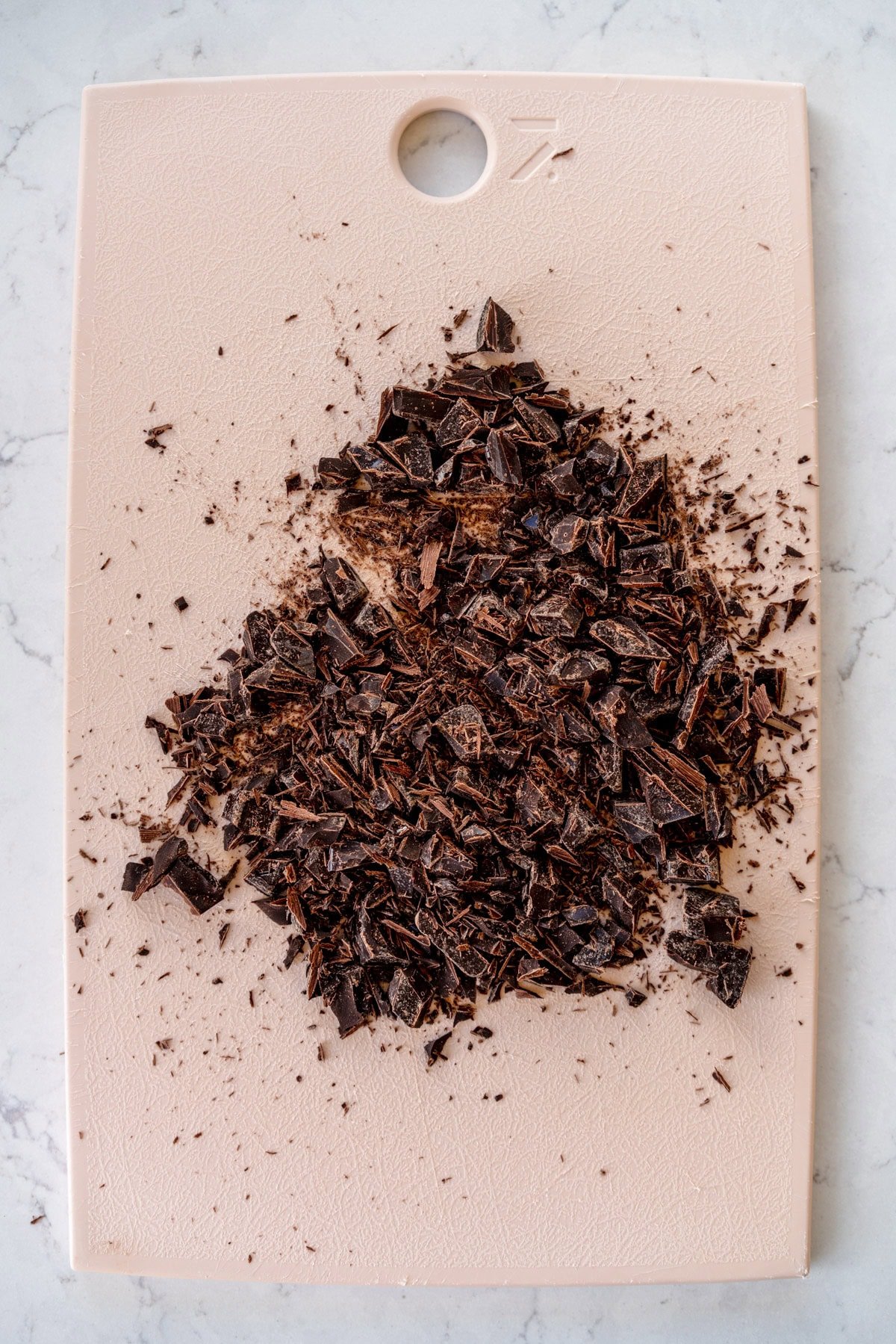
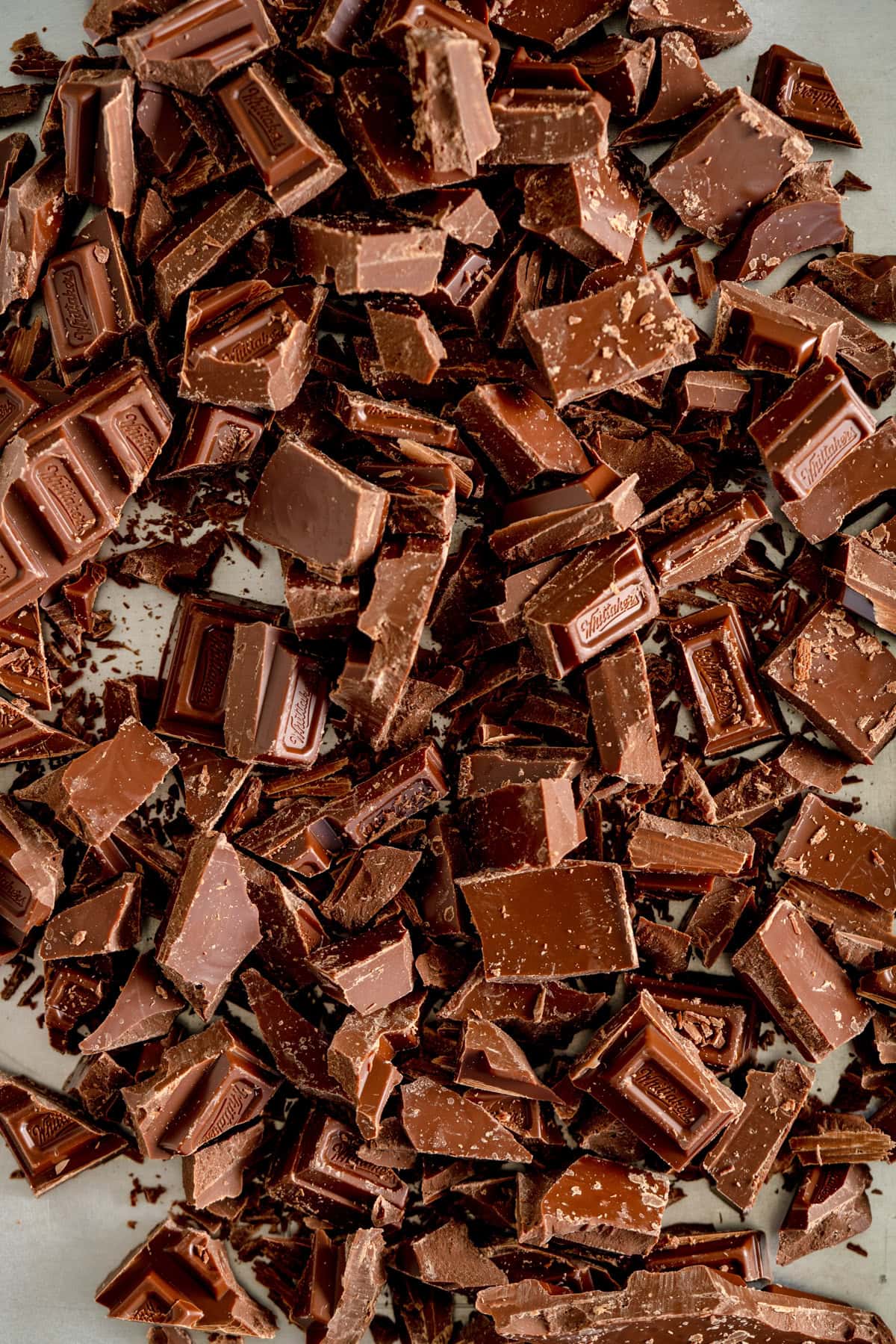
    chopped chocolate
    Chopped Chocolate
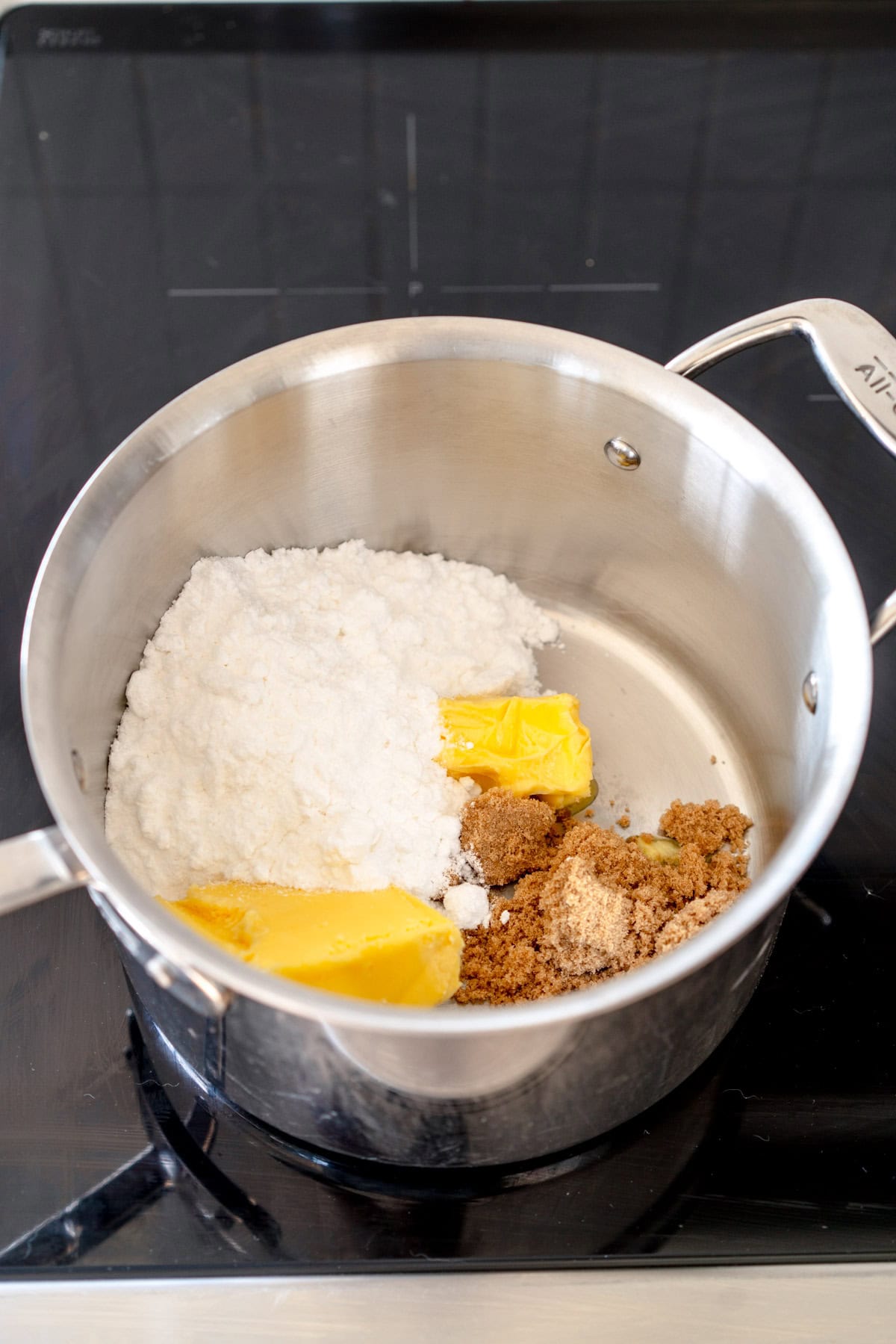
    wet ingredients for brownie bites
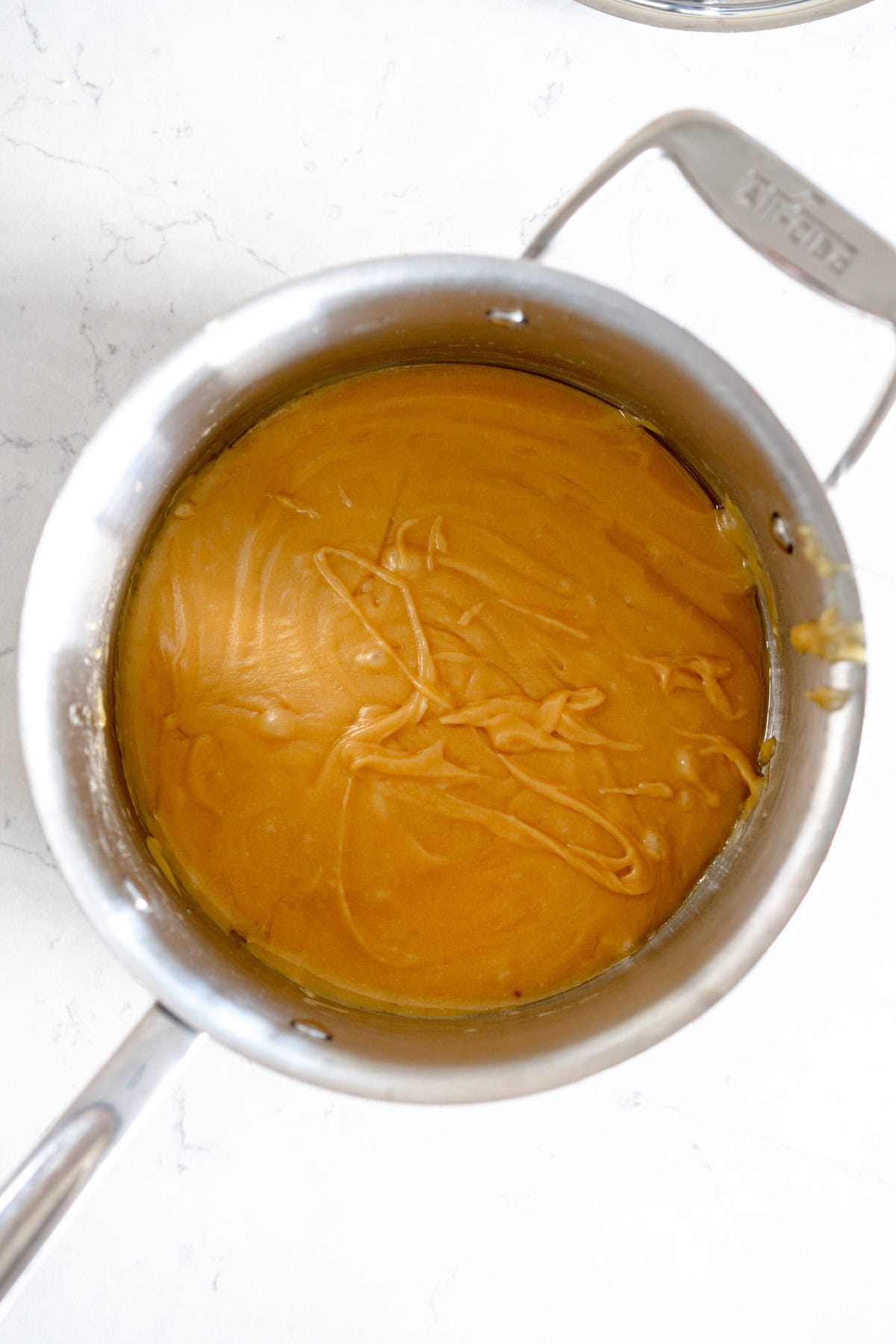
    Melt butter and sugar on the stove.

    The Recipe Testing Process for Brownie Bites

    Every now and then a recipe sends me down a massive rabbit hole and this recipe was one of them - I think I have made them at least 20 times to get them to this point. There are more variables than you think when it comes to a brownie bite recipe.

    You want the texture to be good with a fudgy middle, and you want them so that they can release from the pan but still be nice and dense and moist. I started with my classic fudgy homemade brownie recipe, and quickly realised that the formulation of the recipe needed to be completely different. Here are a few things that I found:

    • The recipe needed to be a cocoa based brownie. My classic fudgy brownie recipe which relies mainly on chocolate and butter for the fudgy finish needed to be switched up, as my regular recipe was too gooey. A cocoa based brownie is much chewier and far easier to get out of the pan.
    • Making it in a saucepan makes things easy. Melting together the butter and sugars means that you get some warmth to bloom the cocoa to bring out the chocolate flavour, but also means that you can make the whole recipe right in the pot.
    • Melt things together for a crinkly finish. I started with using granulated sugar for the recipe, but found it wasn't getting as crinkly as I would like it because it didn't have the whipping step of a regular brownie recipe. Using powdered sugar means that the sugar dissolves quickly, and you only need to briefly whisk in the eggs.
    • Chocolate for texture. I felt like the recipe needed a little something and missed the richness from chocolate. I used chopped chocolate which melts a little in the oven, giving a perfectly gooey brownie bite.
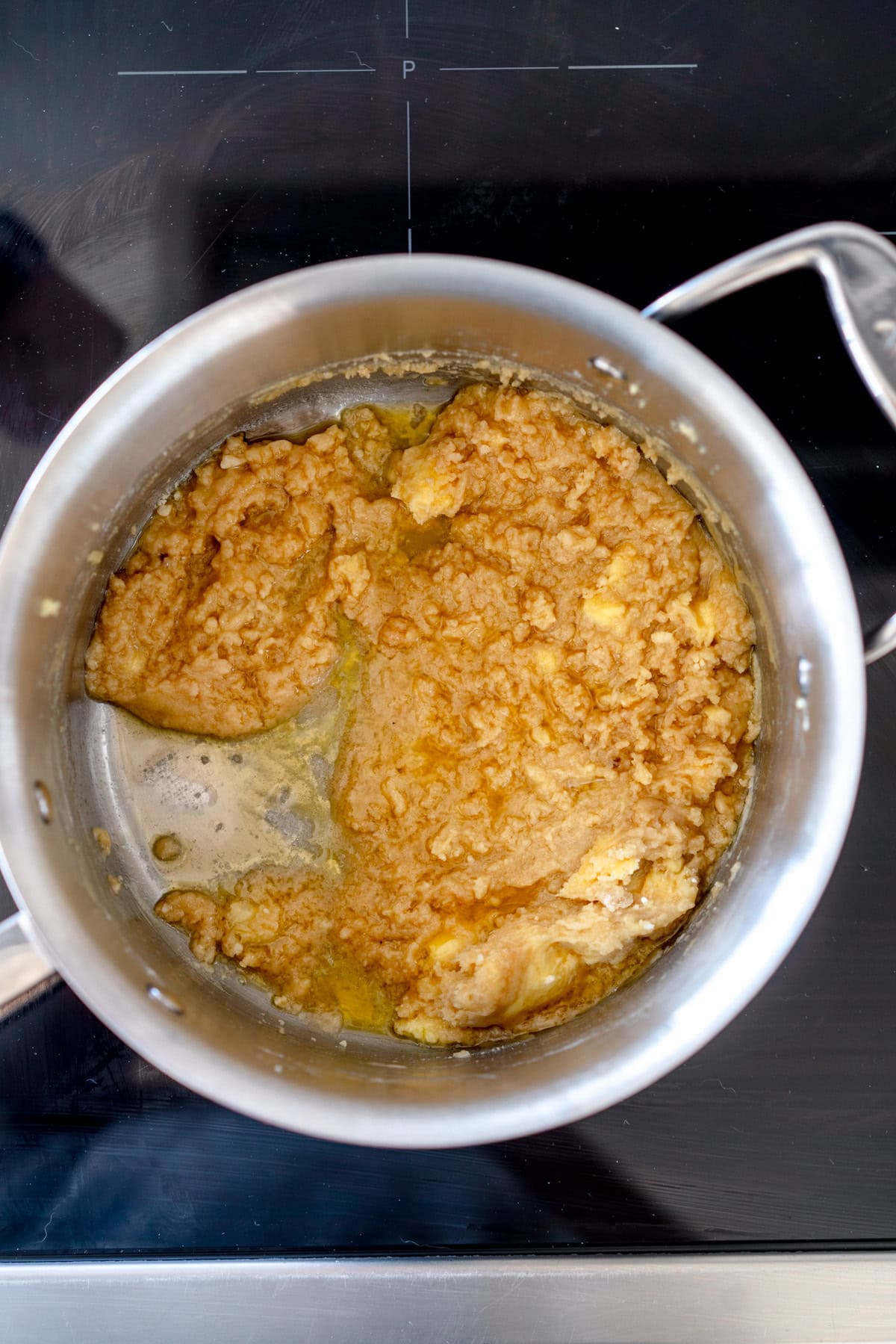
    mix coming together
    It will be a weird texture
    melted butter and sugar
    But will come together smoothly.
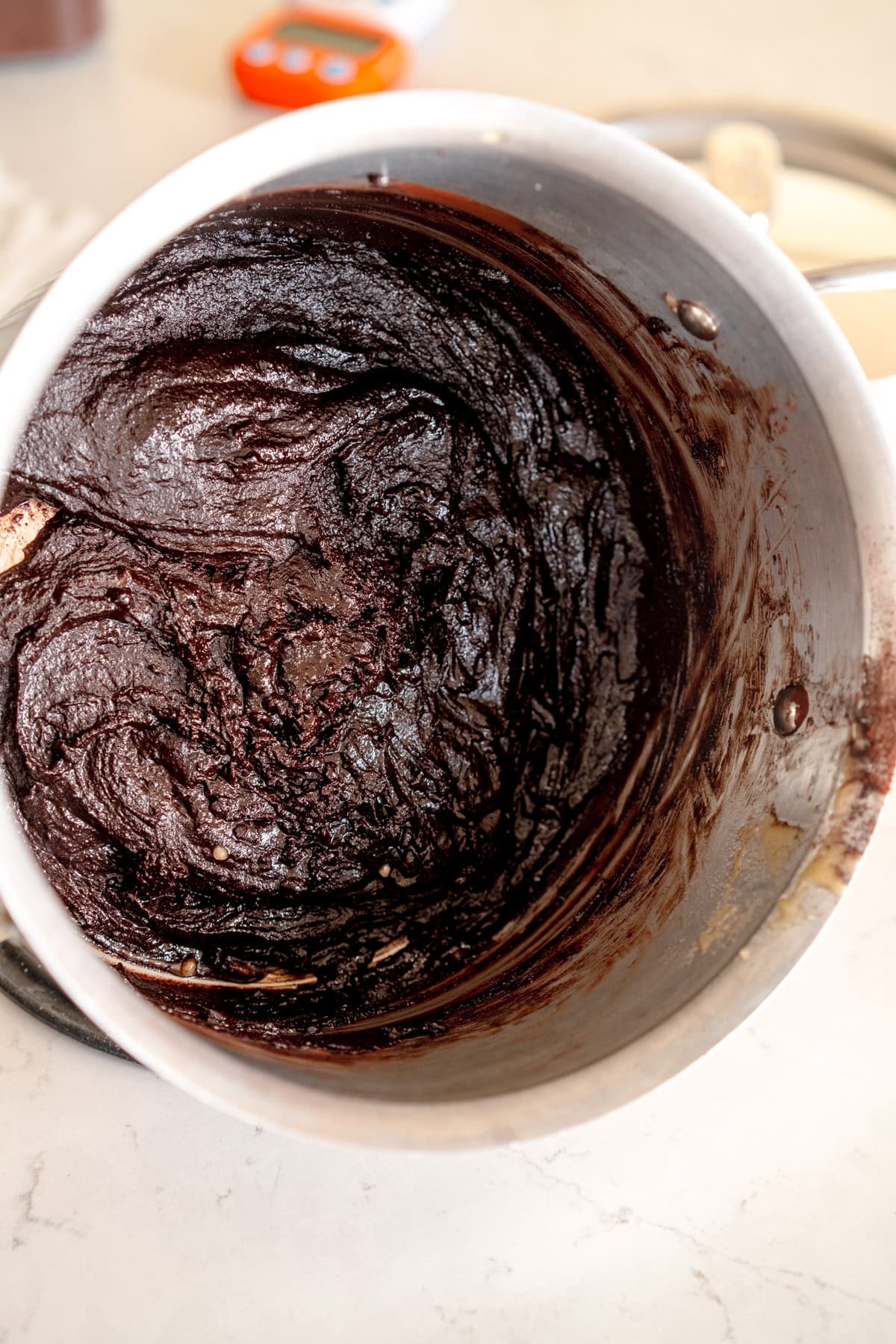
    add cocoa
    It will look grainy when the cocoa is added
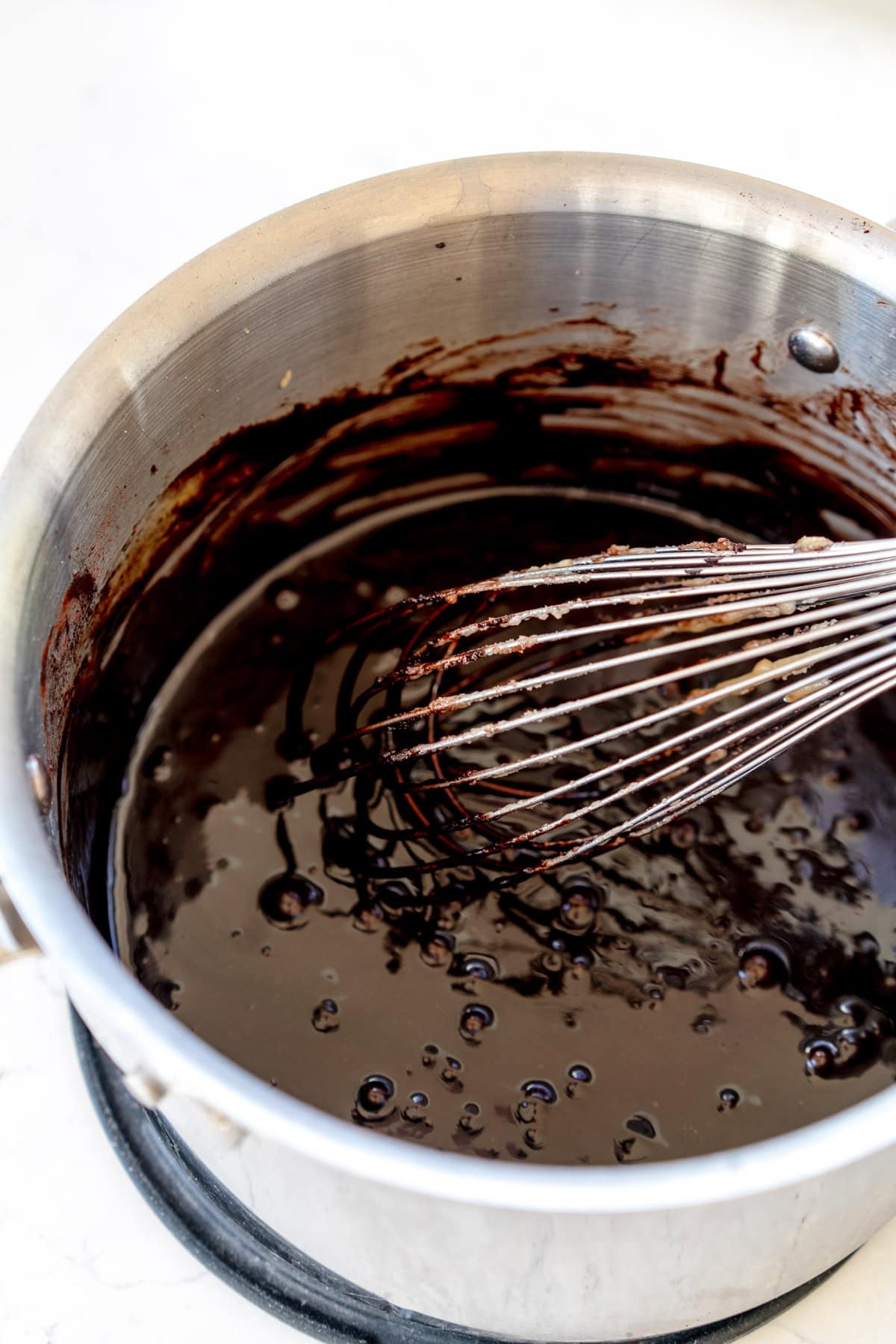
    add eggs and mix
    And then smooth out again with the eggs.

    How to get your brownie bites cleanly from the pan.

    I tested this a lot. These brownie bites are made in a mini muffin pan - the one that I prefer is from USA pan. Please note that not all muffin pans are made the same. Here is what I found works best:

    • Baking spray works better than butter. I tested both as a release method - baking spray works far better than butter when it comes to cleanly lifting out the brownie bites.
    • Wait 10-15 minutes to remove the brownie bites. I tested this all the ways too - waiting 10-15 minutes to let the brownie bites set before removing them seems to be a sweet spot.
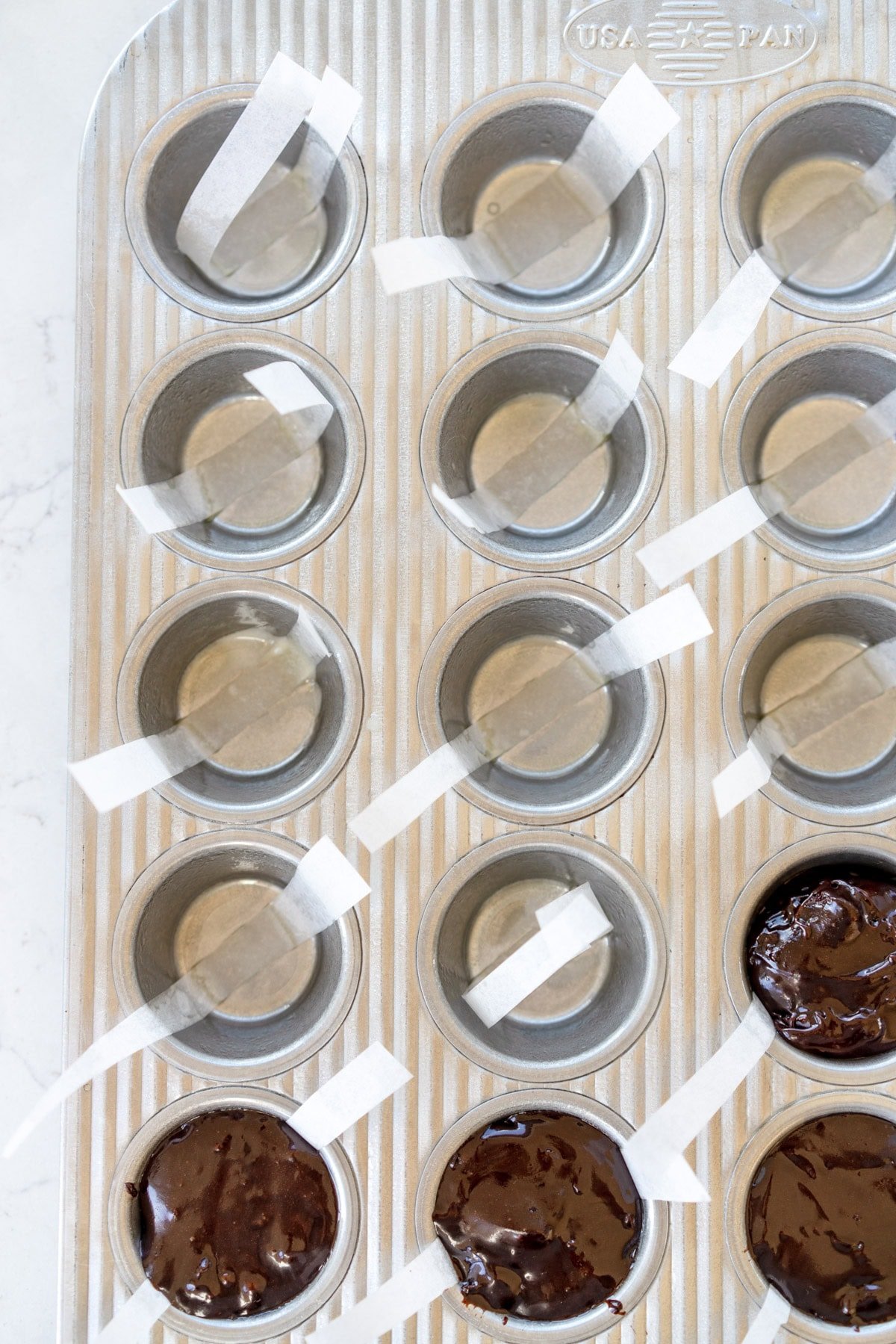
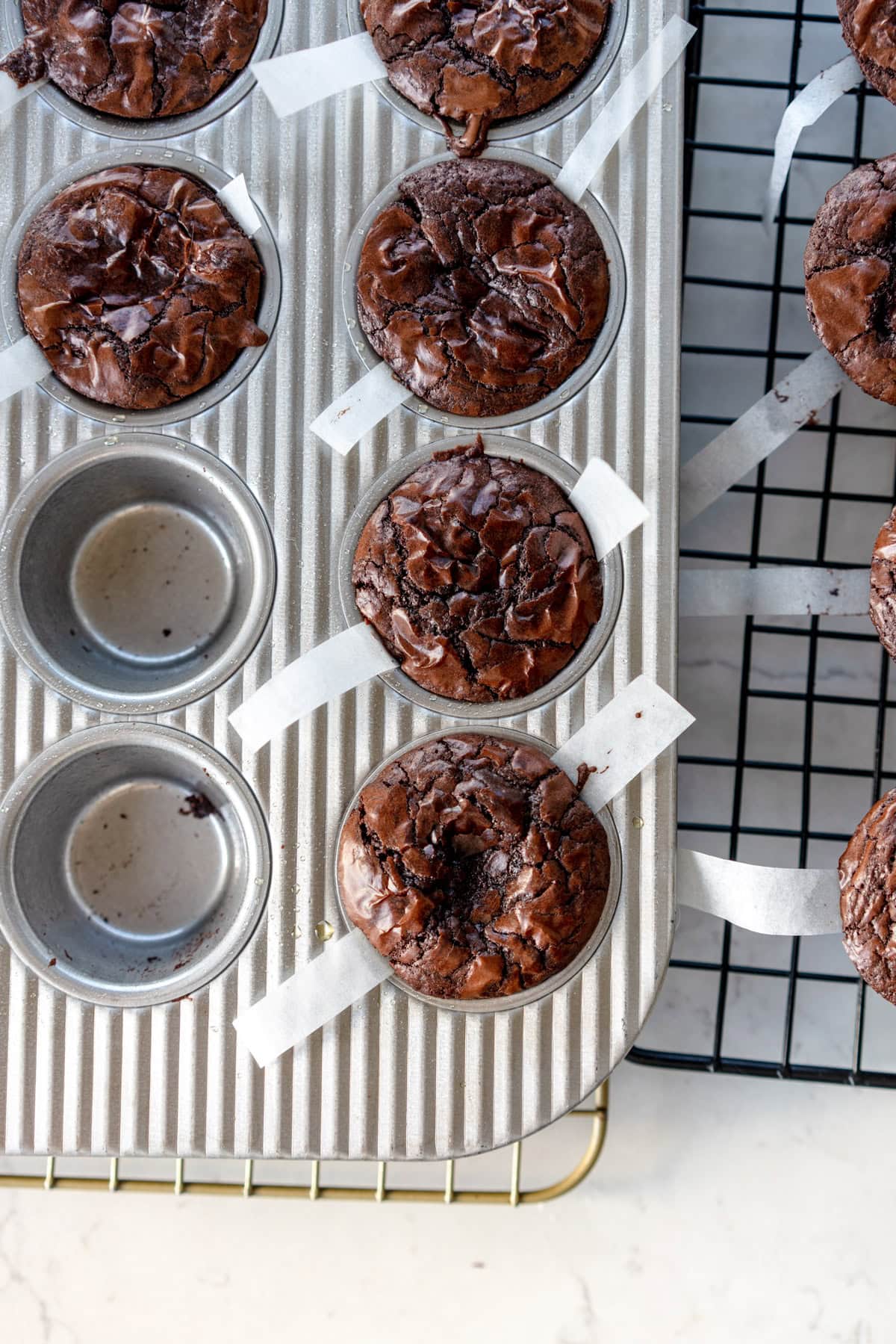
    • Add a seatbelt if you like. Adding a small piece of parchment in the bottom of each muffin cup helped a ton when it came to removing the brownie bites. This step only takes a few minutes, but means that when it comes to removing them you can just lift out the brownies.
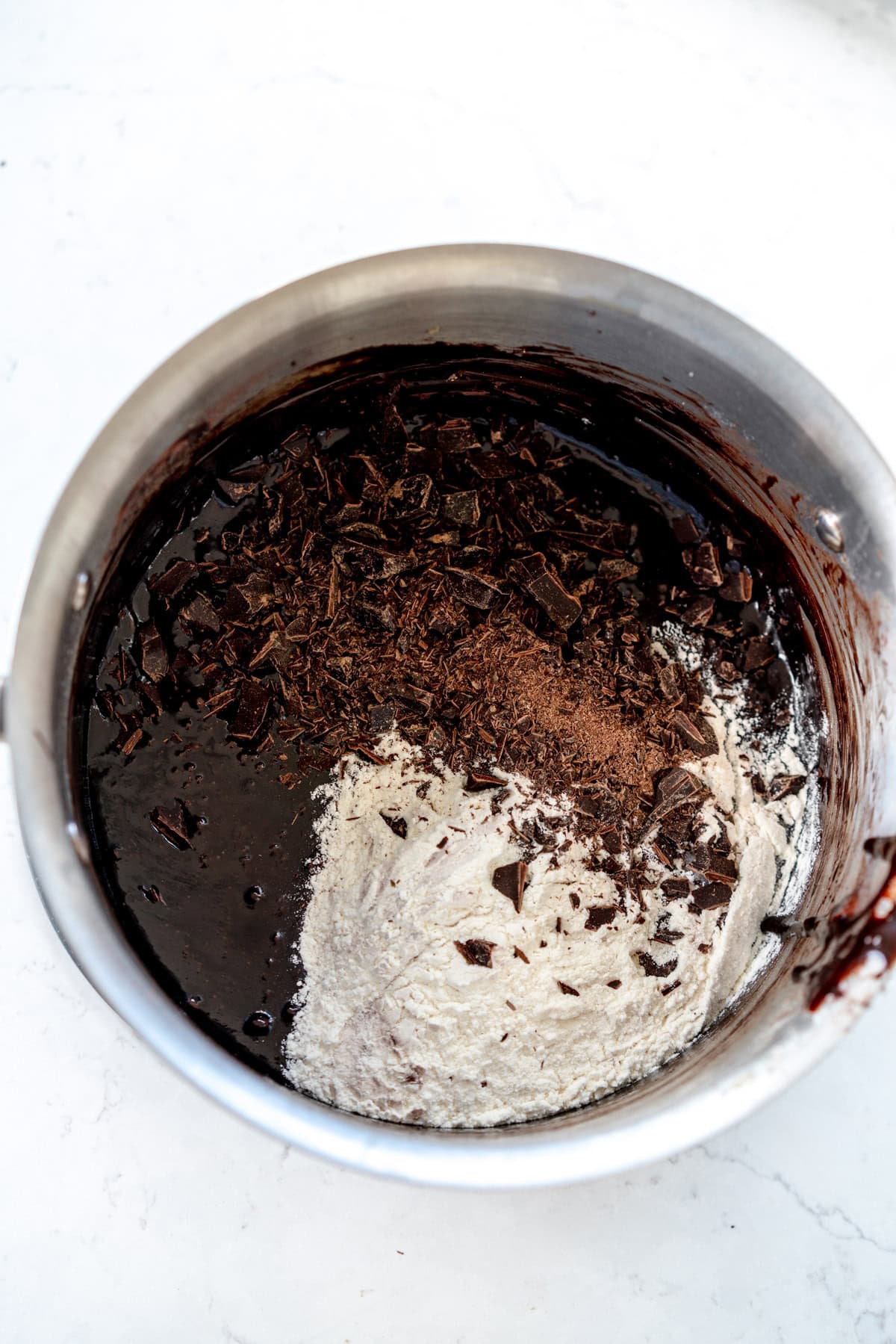
    dry ingredients added
    Dry ingredients and chocolate
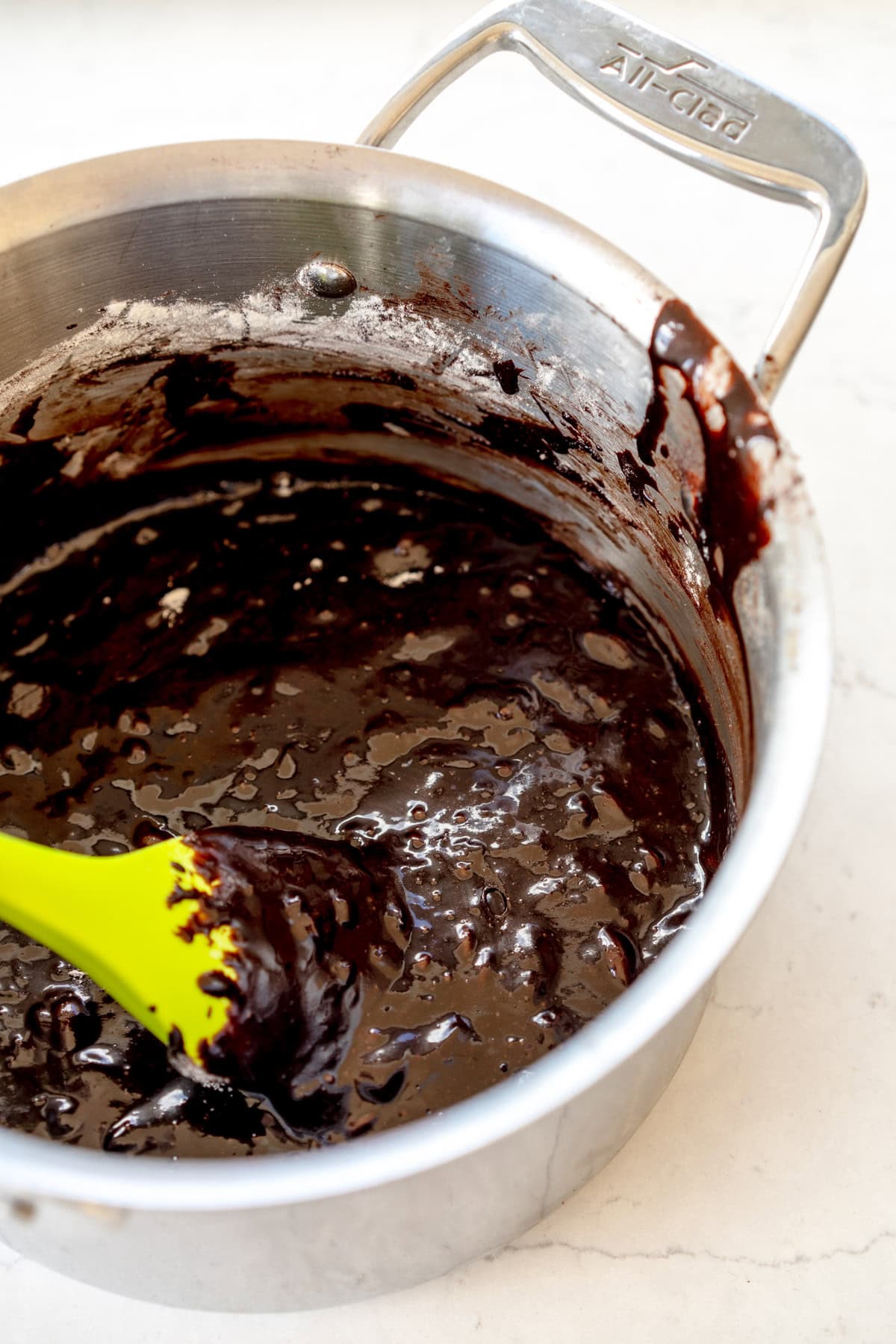
    finished brownie batter
    Perfect brownie batter!
    parchment paper slings
    Little parchment seatbelts
    brownie bites lift out of pan
    Make for clean easy removal

    Portioning out brownie bites

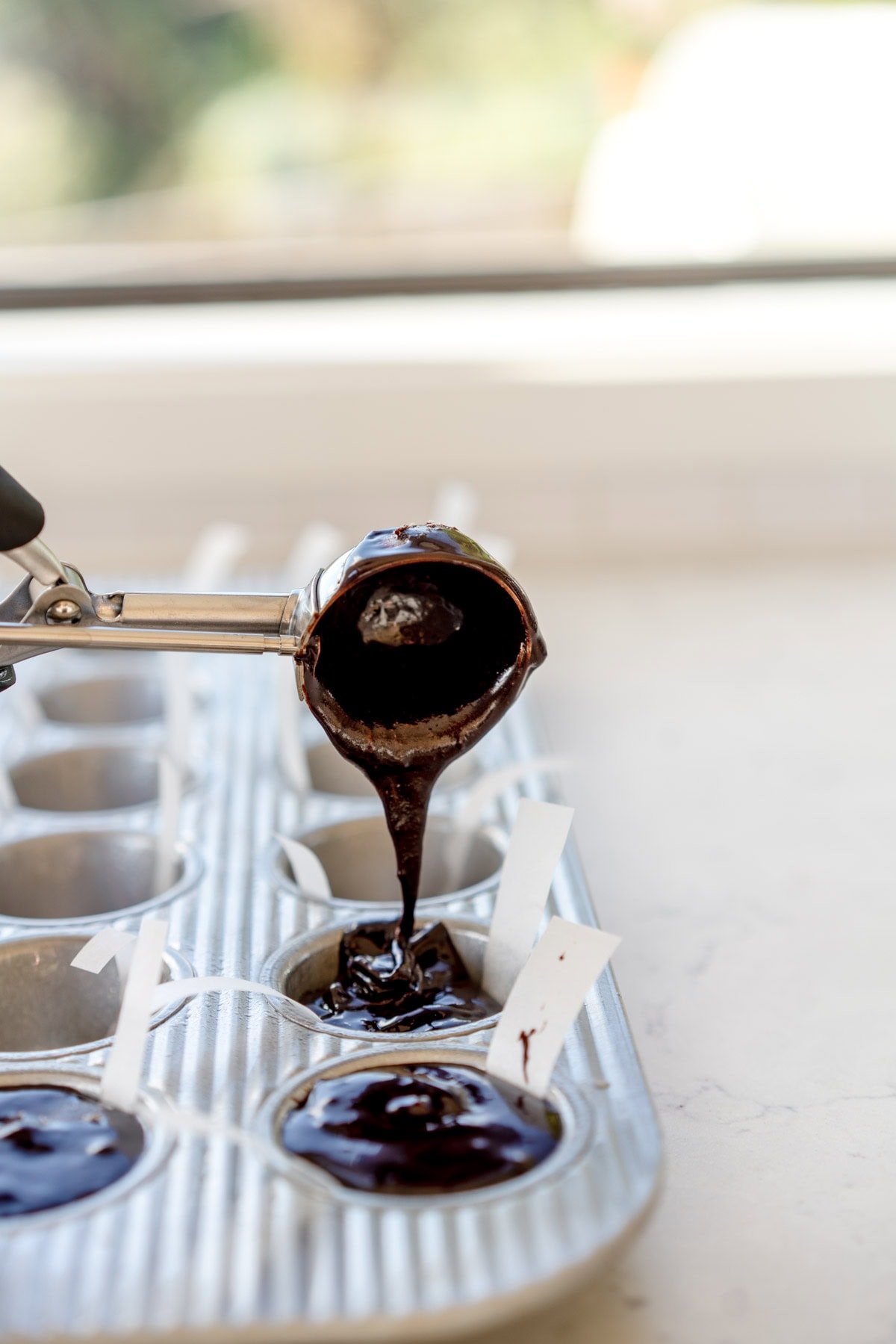
    I find that the easiest way to portion these is to use a #40 cookie scoop - one level scoop is about enough to fill each cup and divide between the 24 brownie bites perfectly.

    If you do not have a cookie scoop, you can use a spoon or spatula and divide the batter between each cup. Fill almost to the top - these do not rise enough in the oven to spill over in my experience.

    add batter to pan with scoop
    I use a cookie scoop to portion out my brownie bites.

    How to tell when brownie bites are baked

    These brownie bites puff up in the oven when they are baked. It is important to not over bake them, as the inside texture won't be as nice.

    To tell if they are done, press lightly on the top of the brownie bite. If it collapses down and still feels wet in the middle, it is not done. If it gives a little but does not collapse, and still seems moist in the middle, it is done.

    pan of brownie bites

    Chocolate Chips and Chopped Chocolate for brownie bites

    If you know me or my recipes, you know I am a chopped chocolate girl. However, I tested these brownie bites with both chopped chocolate and chocolate chips. Both work fine and do not change the recipe aside from the taste of the chocolate, so you do you here.

    Can I frost these brownies?

    Yes - I finished these a few times with a batch of my brownie frosting.

    stacked up brownie bites

    ❤️ Made this recipe and love it? ❤️

    I would LOVE for you to leave me a review and star rating below to let me know how you liked it! Also, please make sure to tag me on Instagram!

    Answers to your baking questions

    Over the years, many of you have asked me questions about:

    • baking in grams
    • adjusting oven temperatures
    • what kind of salt to use
    • and many more!

    I've curated and answered them all for your easy reference in this frequently asked questions post!

    Filed Under: Brownies, Small Batch Baking

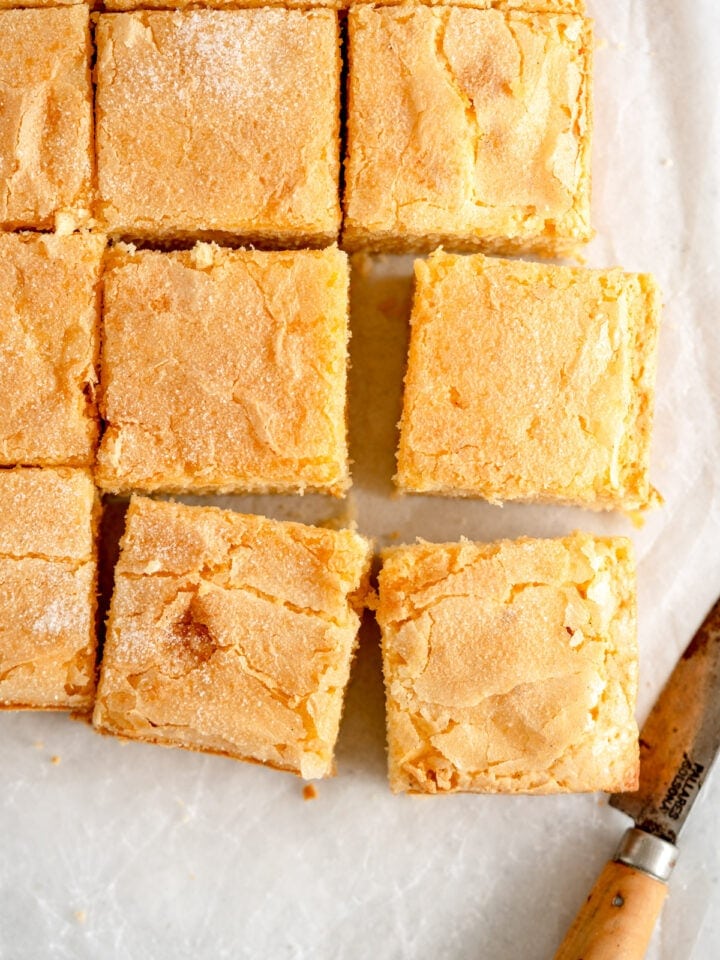
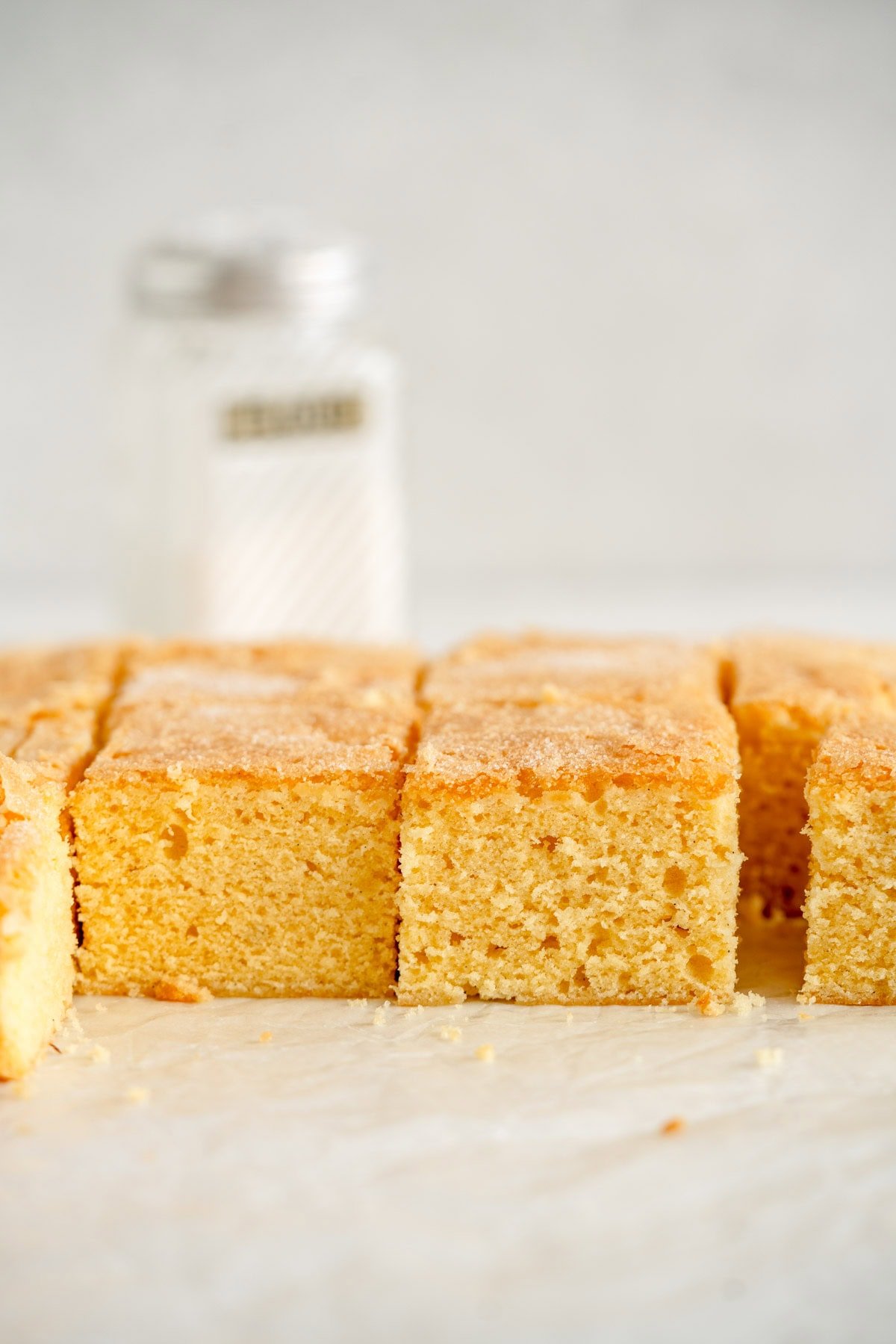
    The Butter Cake That I Can't Stop Making

    This is the butter cake recipe that I cannot stop making. A soft, tender butter cake, made with sour cream for moisture, with an impossibly light and fluffy crumb. I finish mine with sugar for a crunchy finish, but this cake is the perfect base recipe you will find yourself turning to again and again.

    Side on shot of pieces of butter cake

    Hi hi! I am just popping into share this super easy butter cake recipe with you! This Butter Cake is high up on the list of recipes I've been making over and over the last year and have finally stopped gatekeeping to share with you (ahem, vanilla pound cake).

    While I know there are a lot of butter cakes on the internet, I think that this one is a little bit special. It has a slightly different method which gives it the most amazing fluffy texture, and a hit of moisture from the sour cream also adds the most amazing delicate tang to the cake.

    We are OBSESSED with this butter cake - I have given up on making a single of it because it just disappears so quickly in my house, so I always double the recipe. It is perfect as is, (AMAZING slightly warm from the oven), and makes a beautiful dessert paired with some fruit or whipped cream.

    This Butter Cake is, to me, the perfect dessert: Great to make ahead, and just so, so versatile. I hope you love it as much as we do! For a cinnamon sugar version check out my Donut Cake, and for a spiced version, my spice cake recipe is so good!

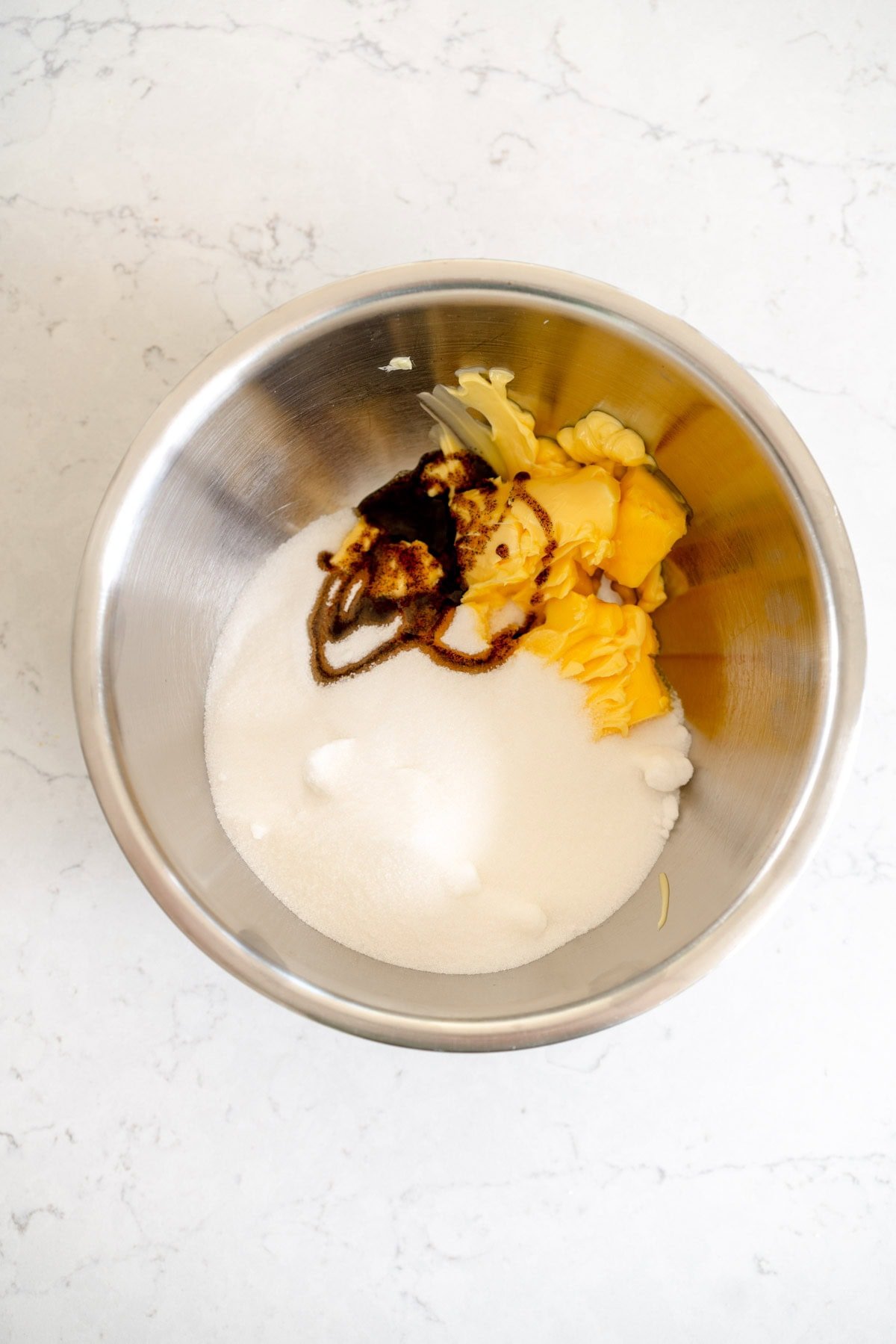
    butter and sugar for vanilla butter cake
    I prefer to cream my vanilla in with the butter and sugar.
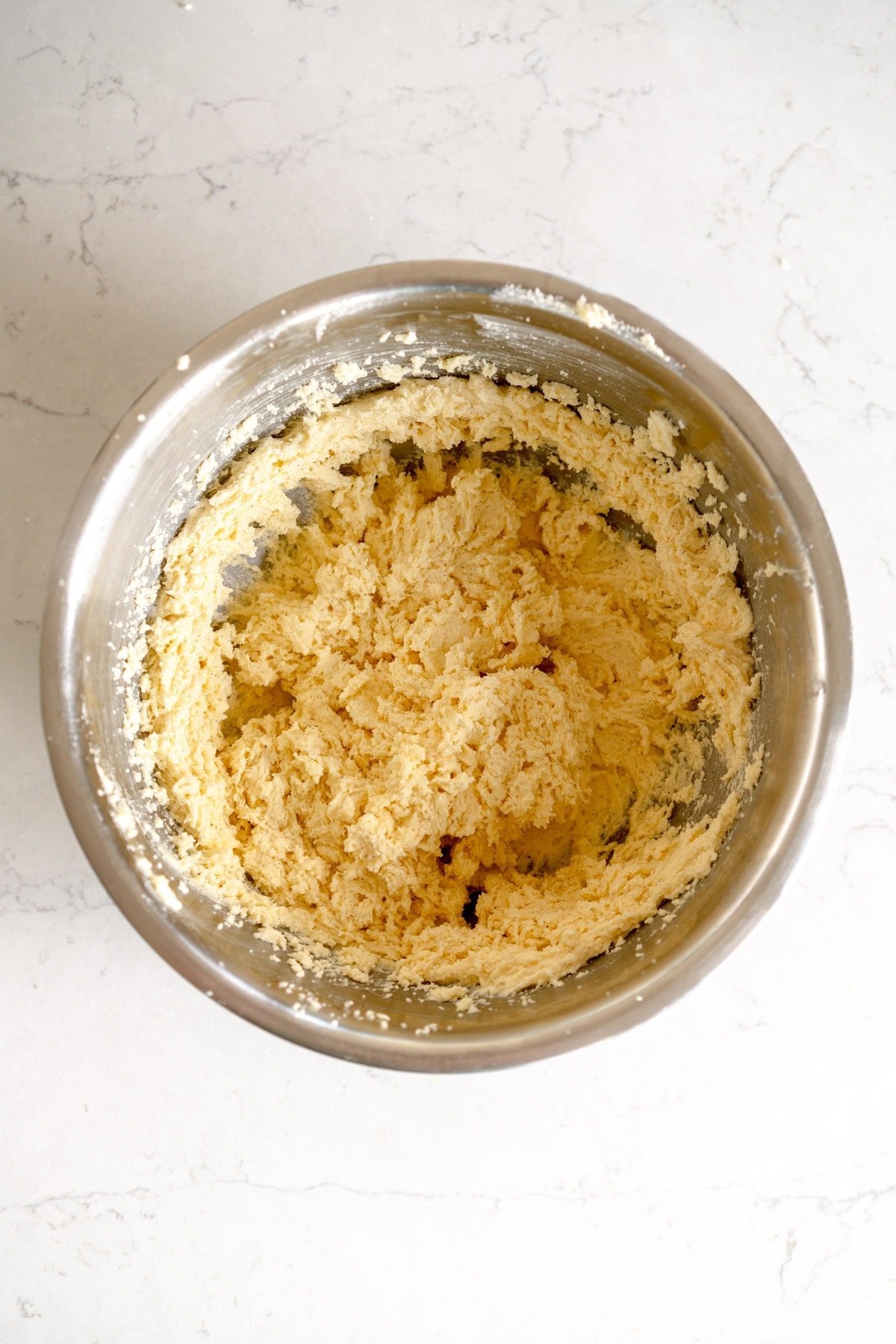
    Creamed butter and sugar mixture
    Beat it until it is super light and fluffy - scrape a few times.

    This Cake was meant to be a Pound Cake

    This cake also came from my friend Chelsea who I gave me the pound cake recipe. She knew we had been making the pound cake for about a year and were totally obsessed with it, then texted me saying 'Try this, I think it might even be better than the last one'.

    We tried it and while it was amazing, I wanted to see what would happen if I adapted it to be a flatter cake, more of a snacking style cake. A bit lighter and fluffier than the pound cake recipe, but still with an amazing texture, and something that you find yourself cutting a piece of every time that you walk past the kitchen.

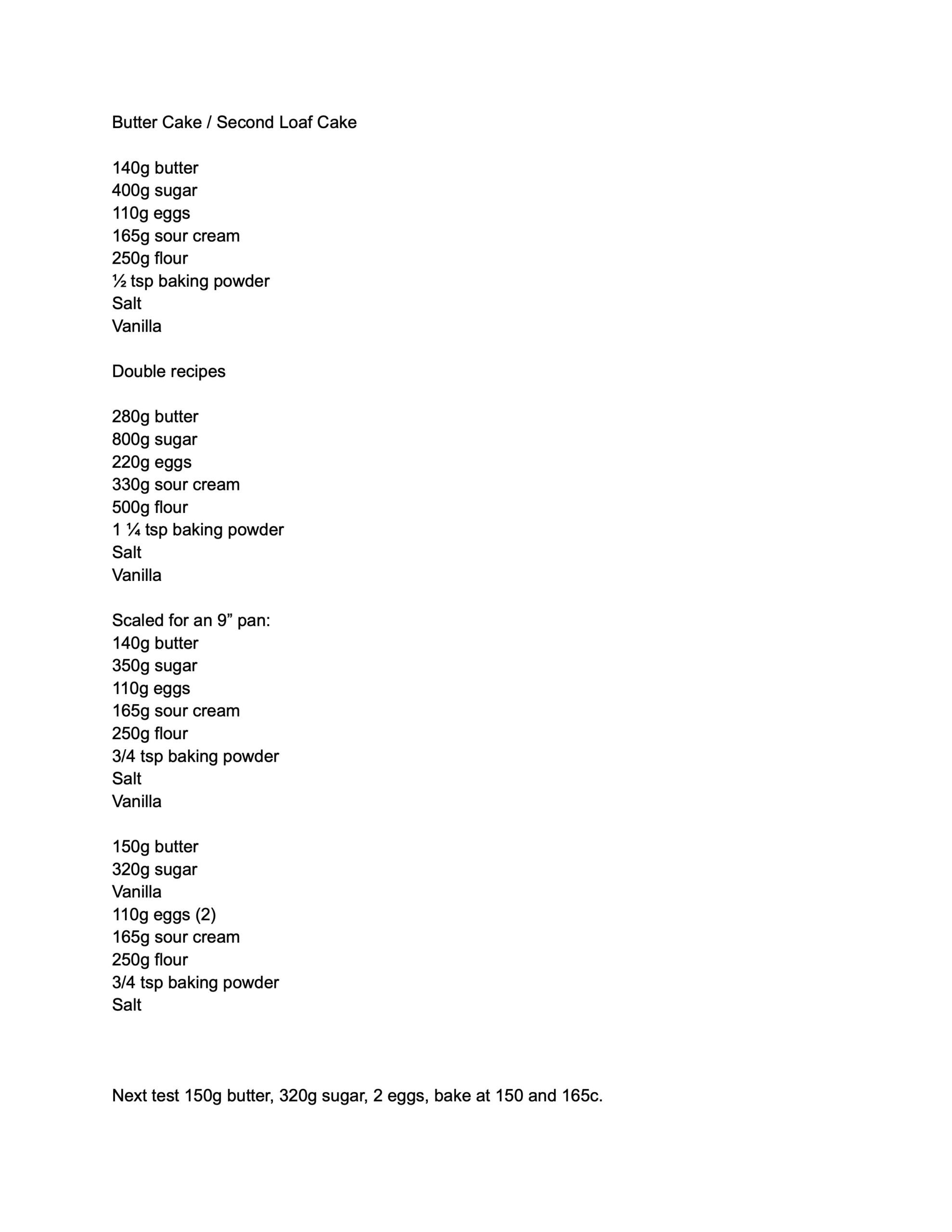
    I ended up tweaking it just a bit and playing around with the baking time - 330°f / 165°c seems to be the sweet spot, a longer, slower bake than other cake recipes. The result is magic. You can see my recipe testing notes below!

    Butter cake recipe testing
    My recipe testing notes always are super bare bones but I know what they mean!
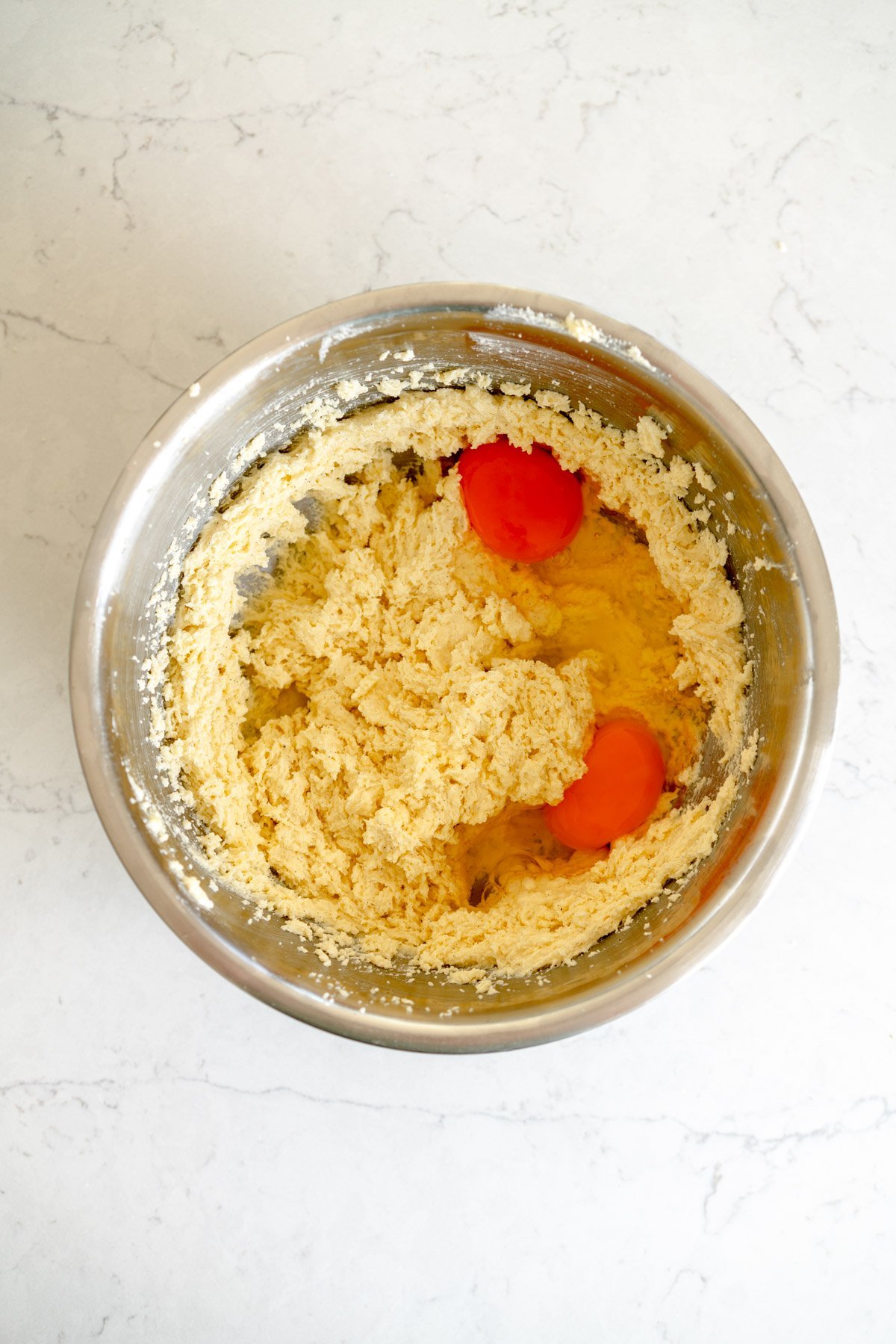
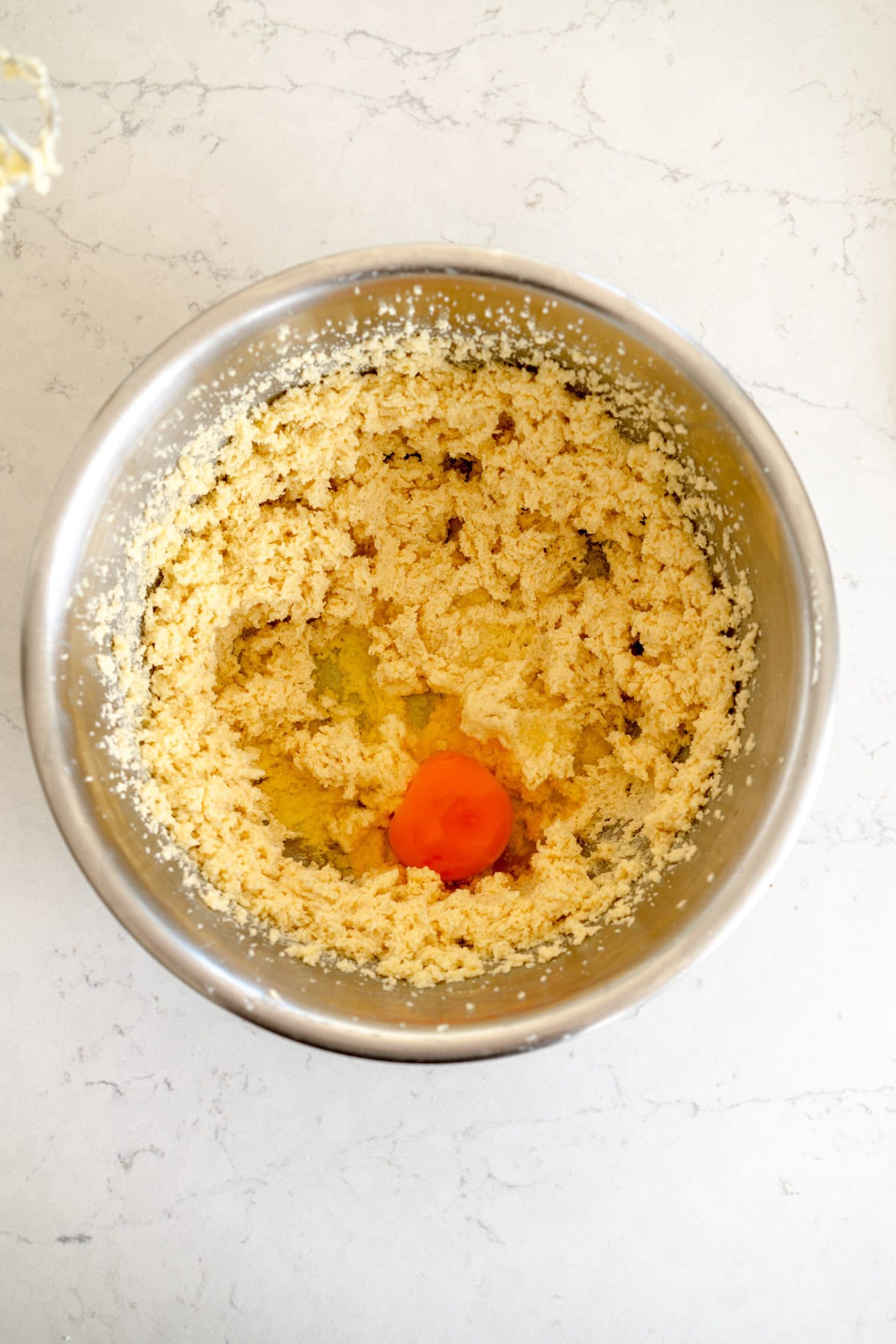
    add in eggs one at a time
    Eggs go in then you whip!
    wet and dry ingredients for cake
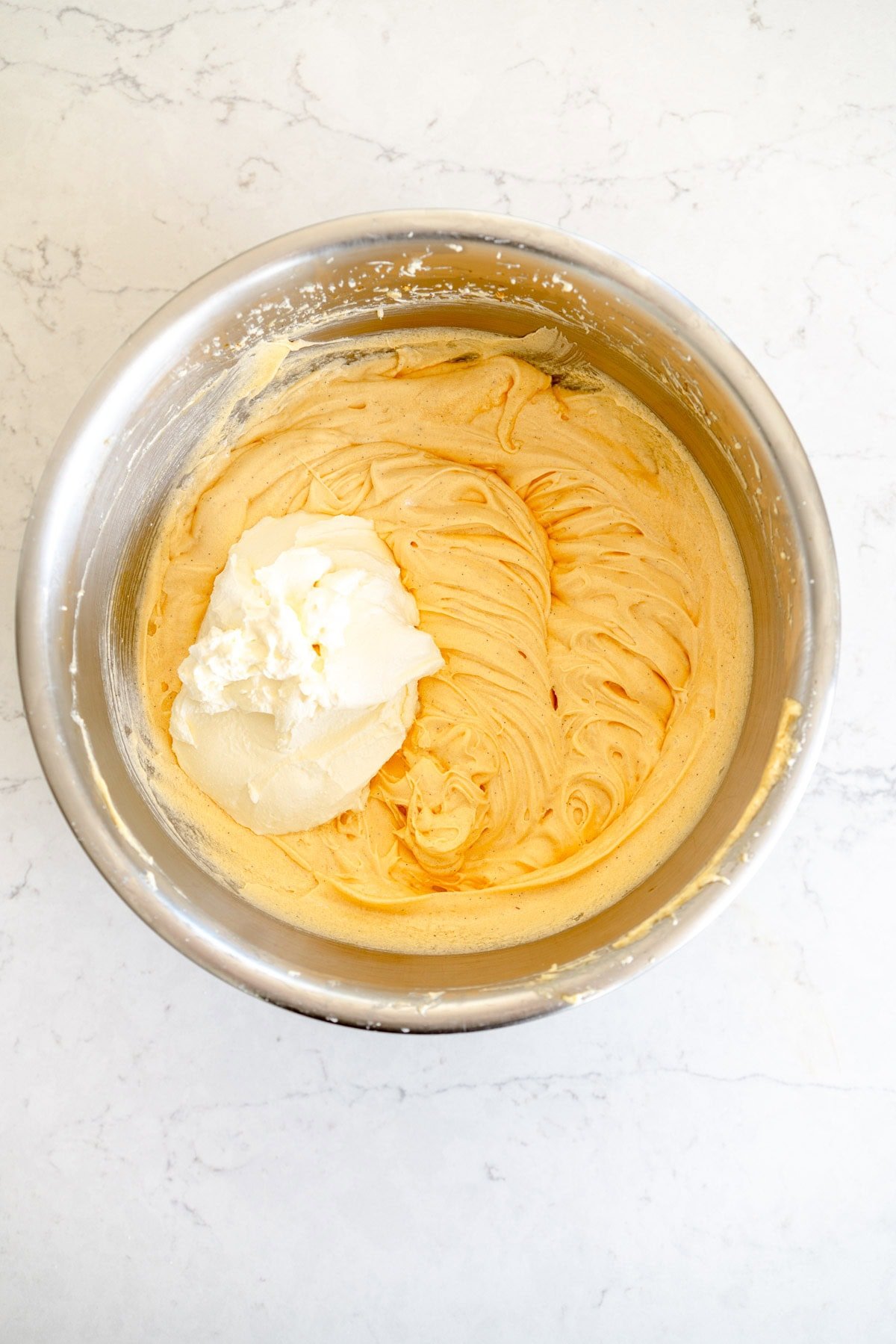
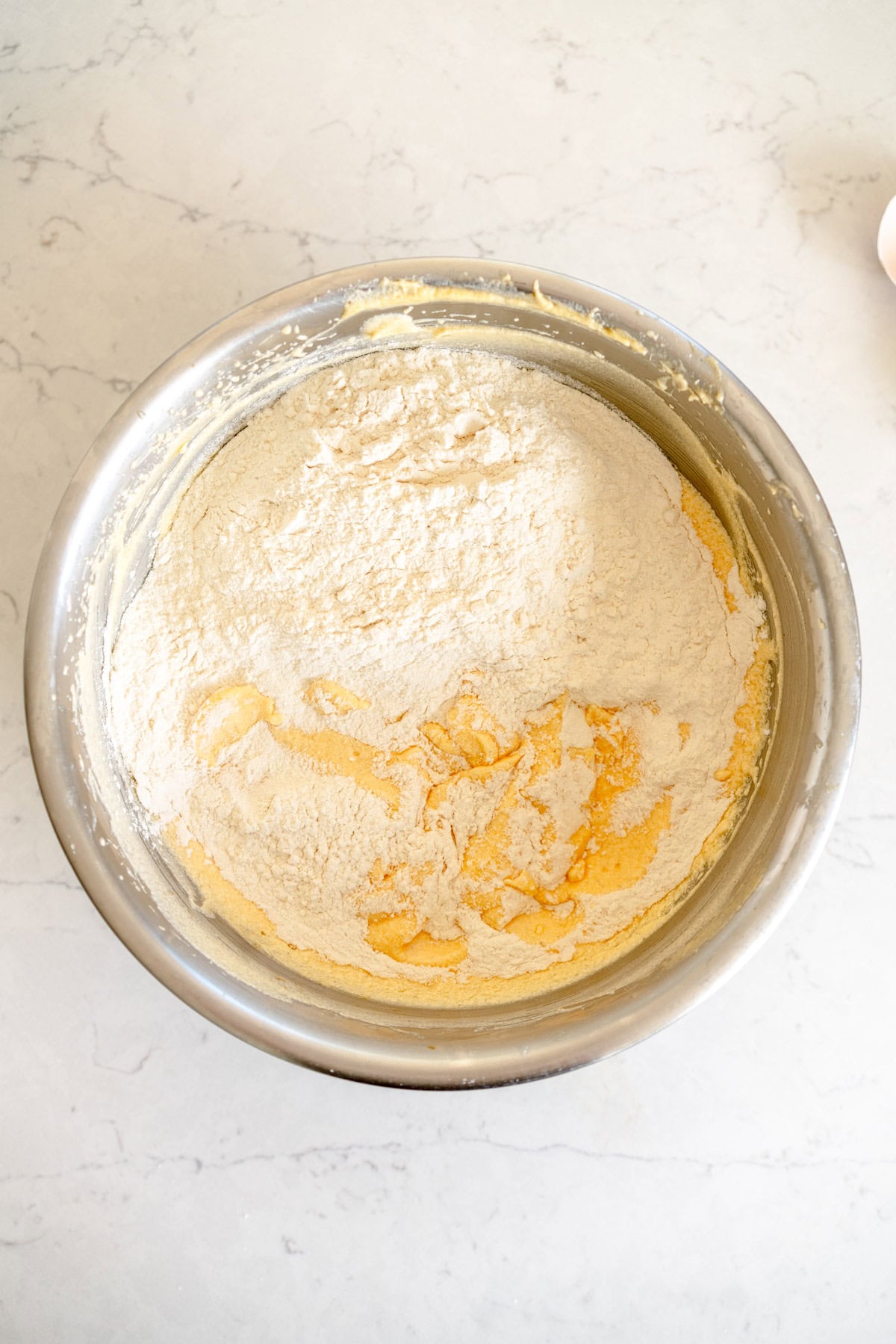
    Sour cream, flour, cake batter
    cake batter in cake pan
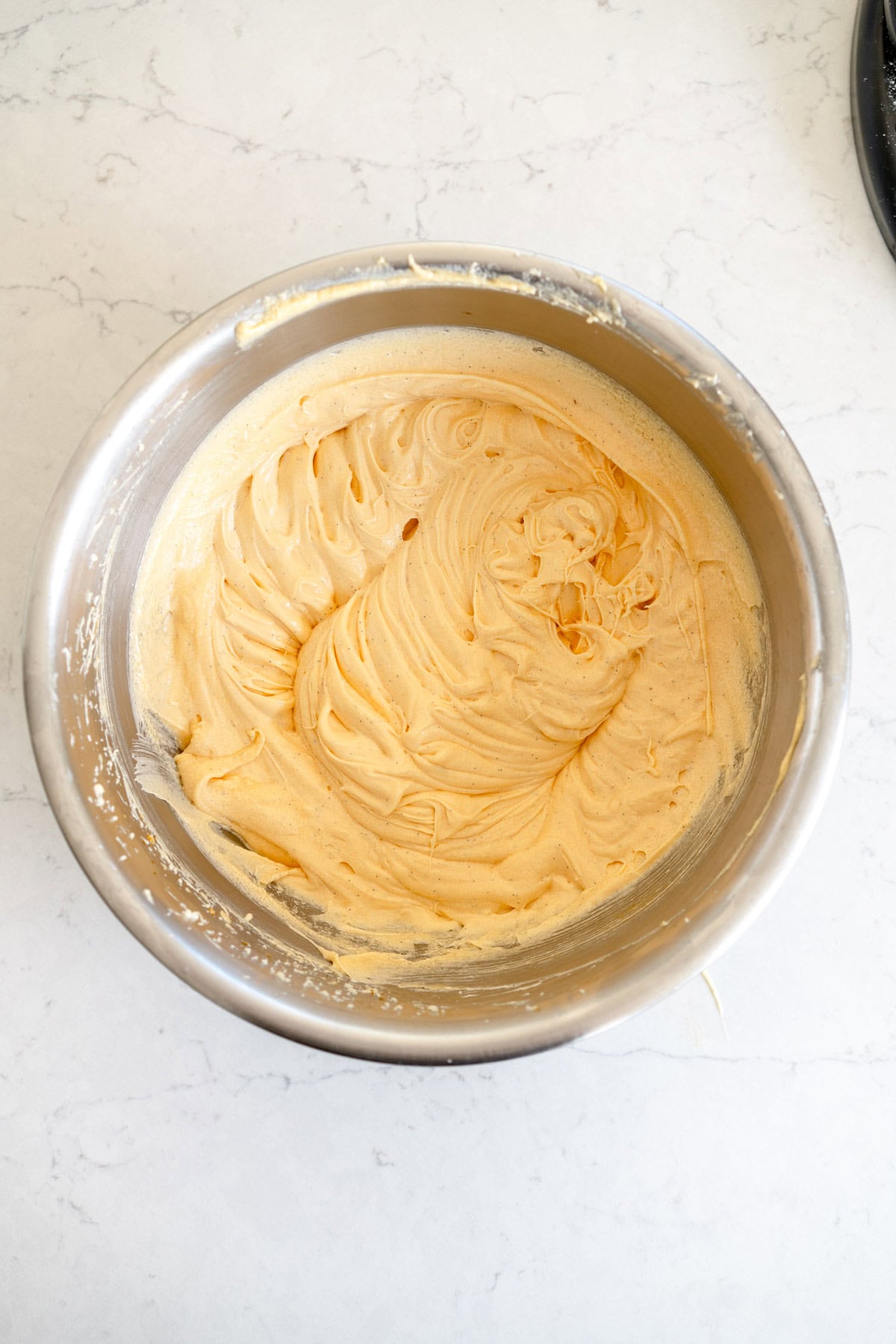
    The finished super fluffy cake batter
    cake batter added to cake pan
    Transfer to your pan and smooth out.

    A few sneaky secrets for the fluffiest cake

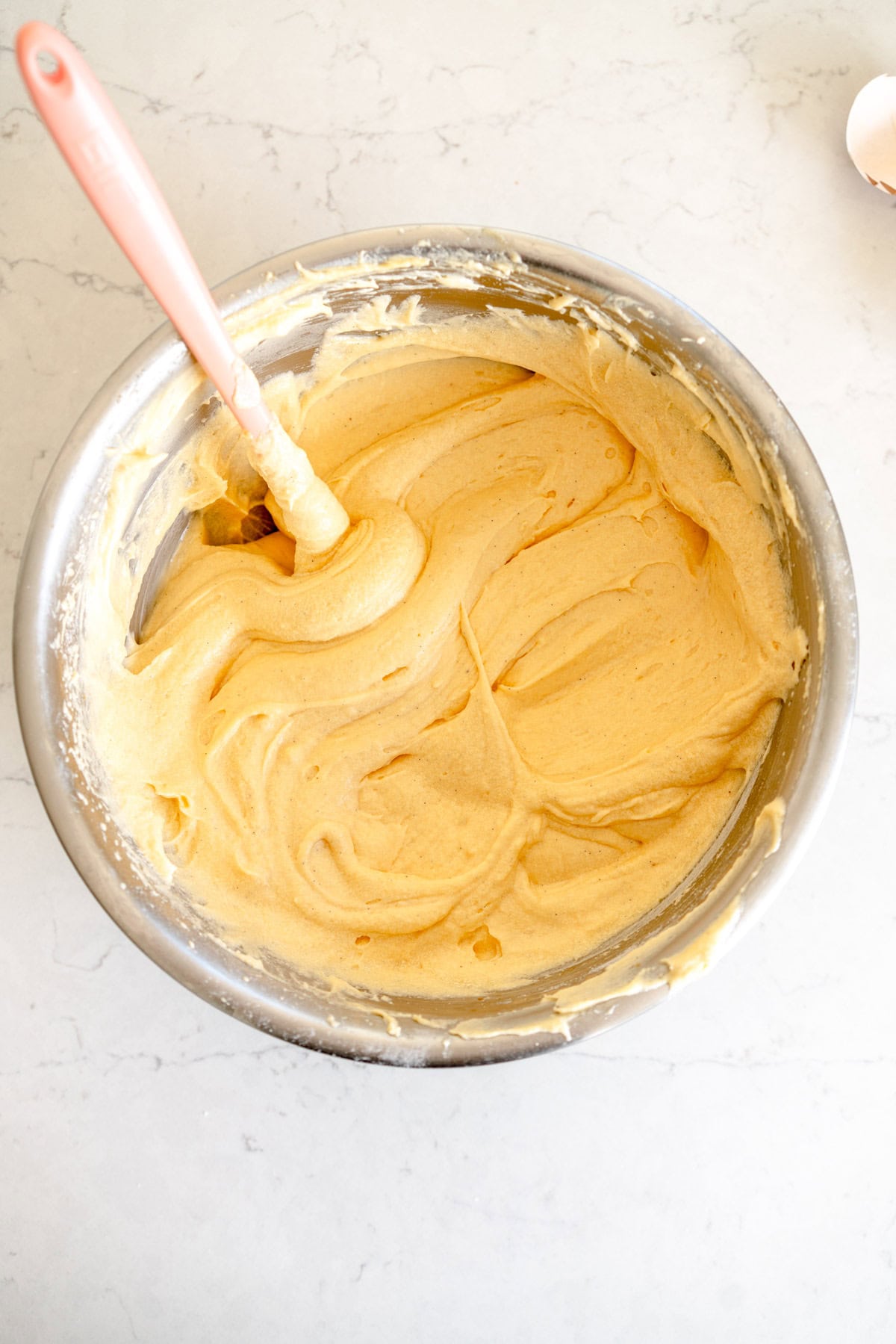
    This cake uses a slightly different method to give it that beautiful light and fluffy texture - you whip it HARD once you add the eggs. What this does it it beats up the eggs to make them super thick and the batter really light, so that it can take a fair amount of sour cream added for moisture and flavour without it being too weighed down.

    This also starts to dissolve the sugar, which helps to give you that perfect crackly, almost meringue-like top to the cake. This is a similar technique used in brownie recipes ( I really nerd out about it over there if you're interested) to give that nice crackly top.

    cake with sugar sprinkled on top
    Here is how much sugar I use
    crackly top on butter cake
    For the perfect crackly finish!

    Granulated Sugar for the perfect crackly top to your butter cake

    Another thing that I love doing when I am baking is adding a crunchy sugar top. I do this for muffins, banana bread, cookie bars, and cookies, so it only made sense to also do it for this butter cake!

    Just a little sprinkling of granulated sugar on the top of this butter cake before going in the oven gives it the most amazing crinkly finish that is so delightful to bite through.

    baked butter cake
    The finished cake
    crackly sugar topping on cake
    We eat this as is - especially warm!

    Variations on this butter cake

    This recipe is so, so easy, I have made so many variations of it using this recipe as a base. If you like this butter cake, check out these ones too:

    • Donut cake. Same cake but with the most amazing cinnamon sugar coating. There is also an option for adding jam in the recipe card!
    • Spice cake. I switched out the white sugar for brown sugar, and added in a ton of different spices. This is SO good and tastes just like a cuddle in a cake form.
    • Peach cake. Same cake, but topped with peaches - I make this all the time using canned peaches, but fresh work beautifully too!

    ❤️ Made this recipe and love it? ❤️

    I would LOVE for you to leave me a review and star rating below to let me know how you liked it! Also, please make sure to tag me on Instagram!

    Answers to your baking questions

    Over the years, many of you have asked me questions about:

    • baking in grams
    • adjusting oven temperatures
    • what kind of salt to use
    • and many more!

    I've curated and answered them all for your easy reference in this frequently asked questions post!

    Filed Under: Base Recipes, Cakes, Sheet and Snack Cakes

    Grandma-Style Condensed Milk Cookies (Massive Batch)

    pile of cookies on pan

    Did you grow up with those super nostalgic sweetened condensed milk cookies? Here's that recipe! Scaled up to use a whole can of condensed milk so there's no annoying leftovers, these condensed milk cookies are easy, can be made in bulk and easily frozen, and are just so good! This is a great egg-free cookie recipe too! The recipe makes 90 cookies!

    a pile of cookies on a pan

    Hi hi! I am just popping in to share the recipe for these easy sweetened condensed milk cookies! I grew up baking these with a friend - I think the original recipe came off the back of the condensed milk tin. There is also a version of them in my Grandma's recipe book that I have, and I know that a lot of you have grown up with something similar so I think it is a classic nostalgic recipe for a lot of us. I think it also goes by a few names - sante biscuits, highlander biscuits, kiwi crisps, etc. These cookies are crisp around the edges and soft and chewy on the inside - if you like yours crunchy you can bake them more.

    My issue with those recipes? You have half a can of leftover condensed milk left. This is a very specific pet peeve of mine - I know that you can use it for other things, but to me, it's annoying. So, I scaled up and tweaked it and recipe tested this recipe to use a whole can. They are perfect for sharing, or the dough freezes super well for baking off as you need.

    The result? A recipe which is the ultimate grandma-style recipe: super easy to make, and makes a ton of tiny cookies (the recipe makes 90).

    dry ingredients for condensed milk cookies
    Butter and sugar and vanilla
    creamed butter and sugar mix condensed milk cookies
    Cream together super well

    Sweetened Condensed Milk = the perfect egg replacer in these cookies!

    These condensed milk cookies are sort of somewhere between a classic shortbread recipe and a chocolate chip cookie recipe.

    When I was recipe testing, I wanted to scale up the batch of cookies to use up the whole can of condensed milk. Because of how condensed milk behaves in some cookie dough it makes a great egg alternative, making these a perfect egg-free cookie.

    Add the sweetened condensed milk in just after the butter and sugar have been creamed together.

    condensed milk added to cookie dough
    A whole can of condensed milk goes in!
    cookie dough with flour added
    I like to do this part with a spatula
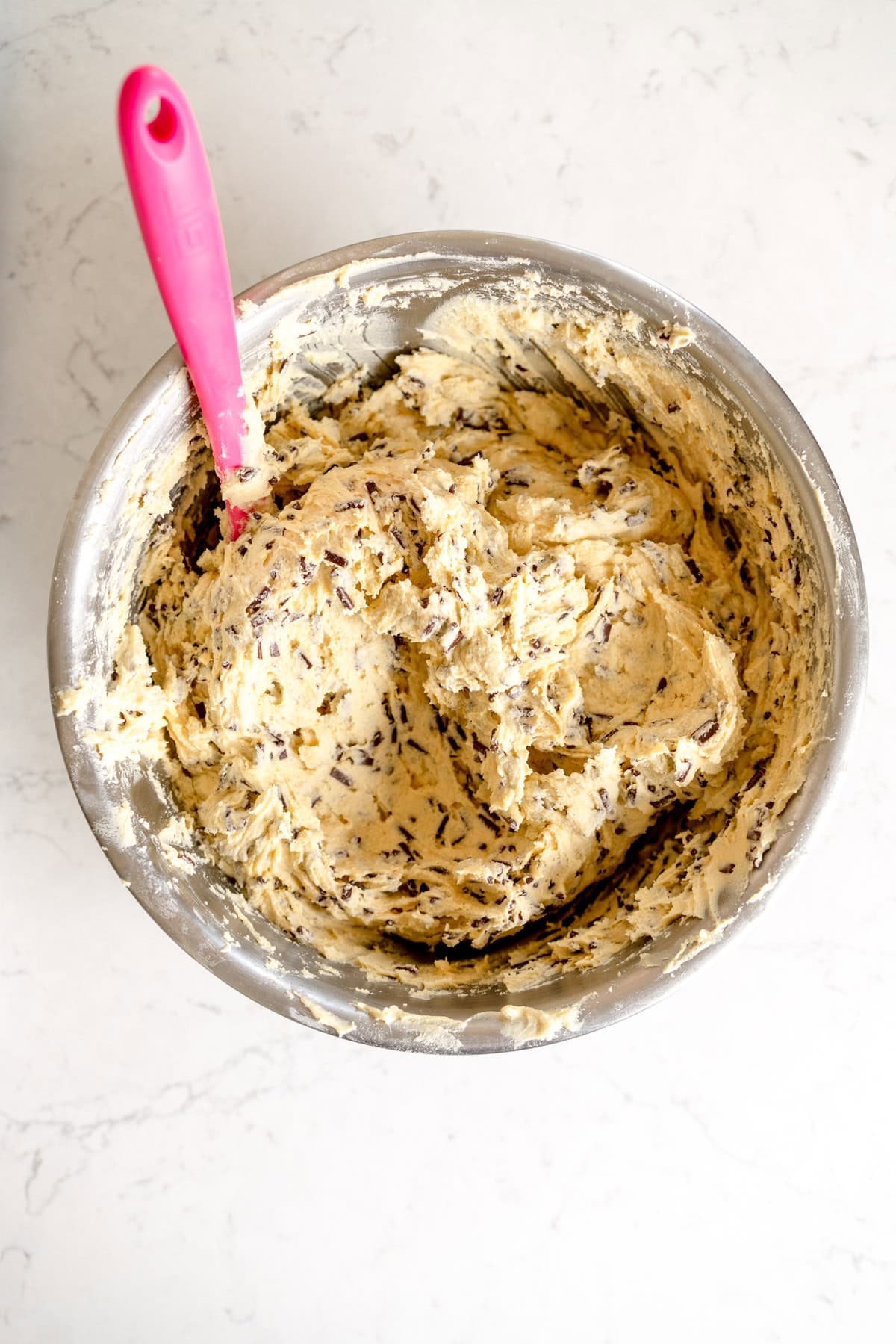
    chocolate chips added to cookie dough
    Chocolate Chips in! Basic = Delicious.
    cookie dough ready for scooping
    Combine chocolate chips by hand.

    The only time I ever use chocolate chips...

    If you have been around for any amount of time, you will know that I am a die hard chocolate chunk girlie when it comes to cookies. They just are superior in almost every way.

    However, for this recipe, I went out and bought chocolate chips. The cheap ones that you use for baking, that make things taste super nostalgic. The condensed milk cookies just didn't taste right without them.

    If you do want to use chopped chocolate that will work fine too - just finely chop chocolate and add in to the cookie batter.

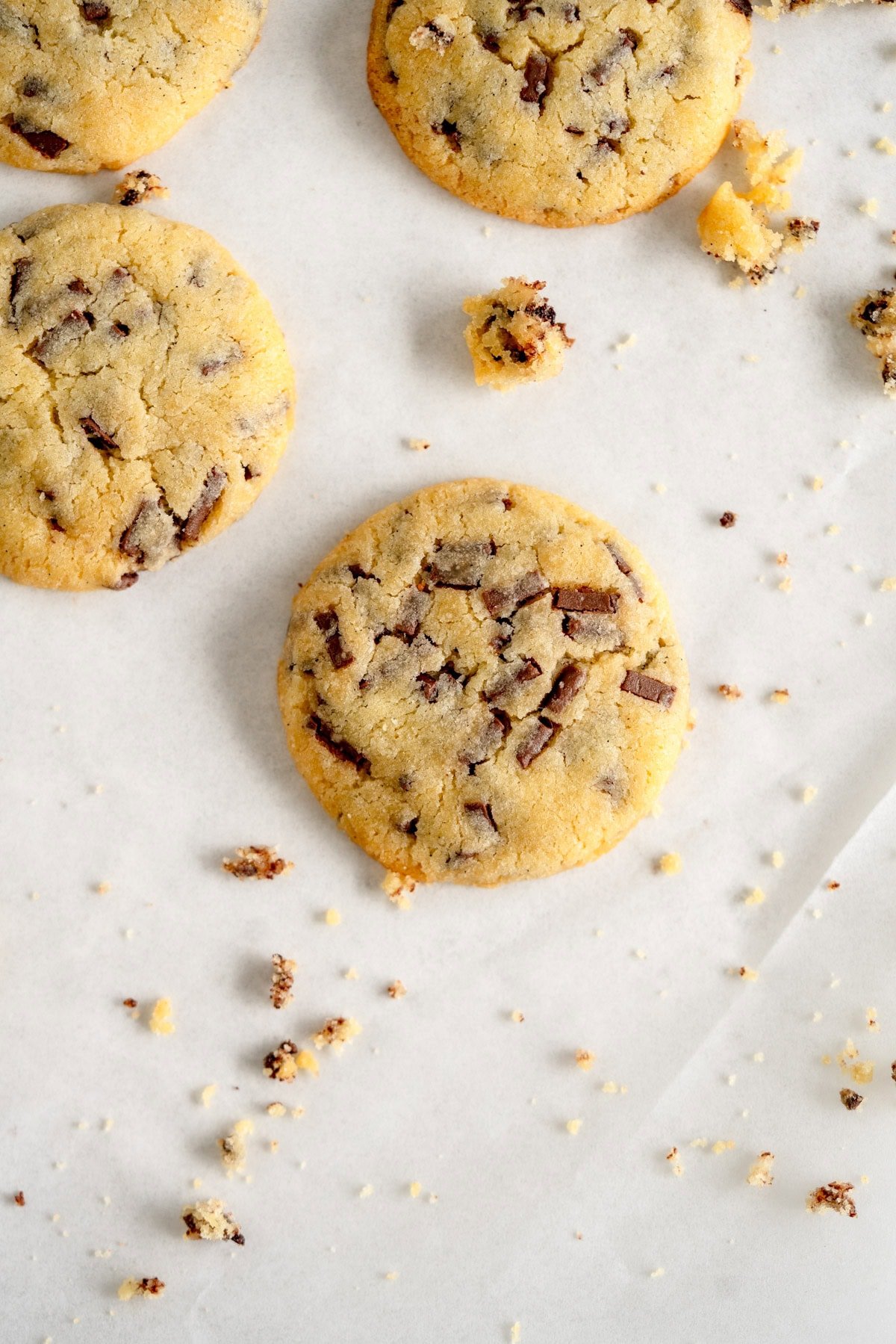
    cookie on parchment paper
    These cookies are pure nostalgia
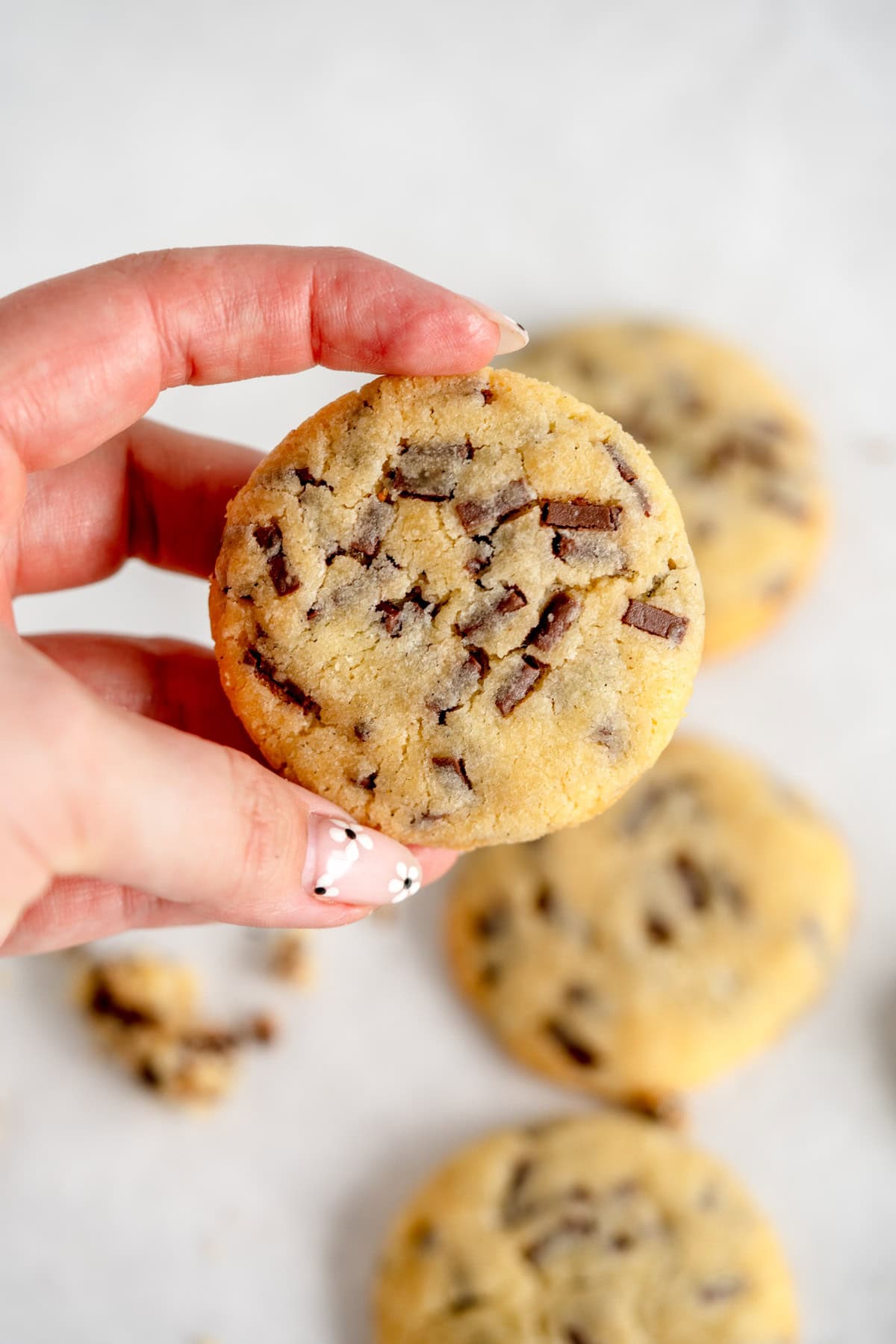
    holding baked cookie
    The recipe makes 90 little cookies!

    Massive batch of cookies = an epic freezer stash

    This recipe makes a lot. As in, 90 cookies. A lot a lot. You'll be thinking to yourself 'what do I do with so many cookies?' just trust me on this one.

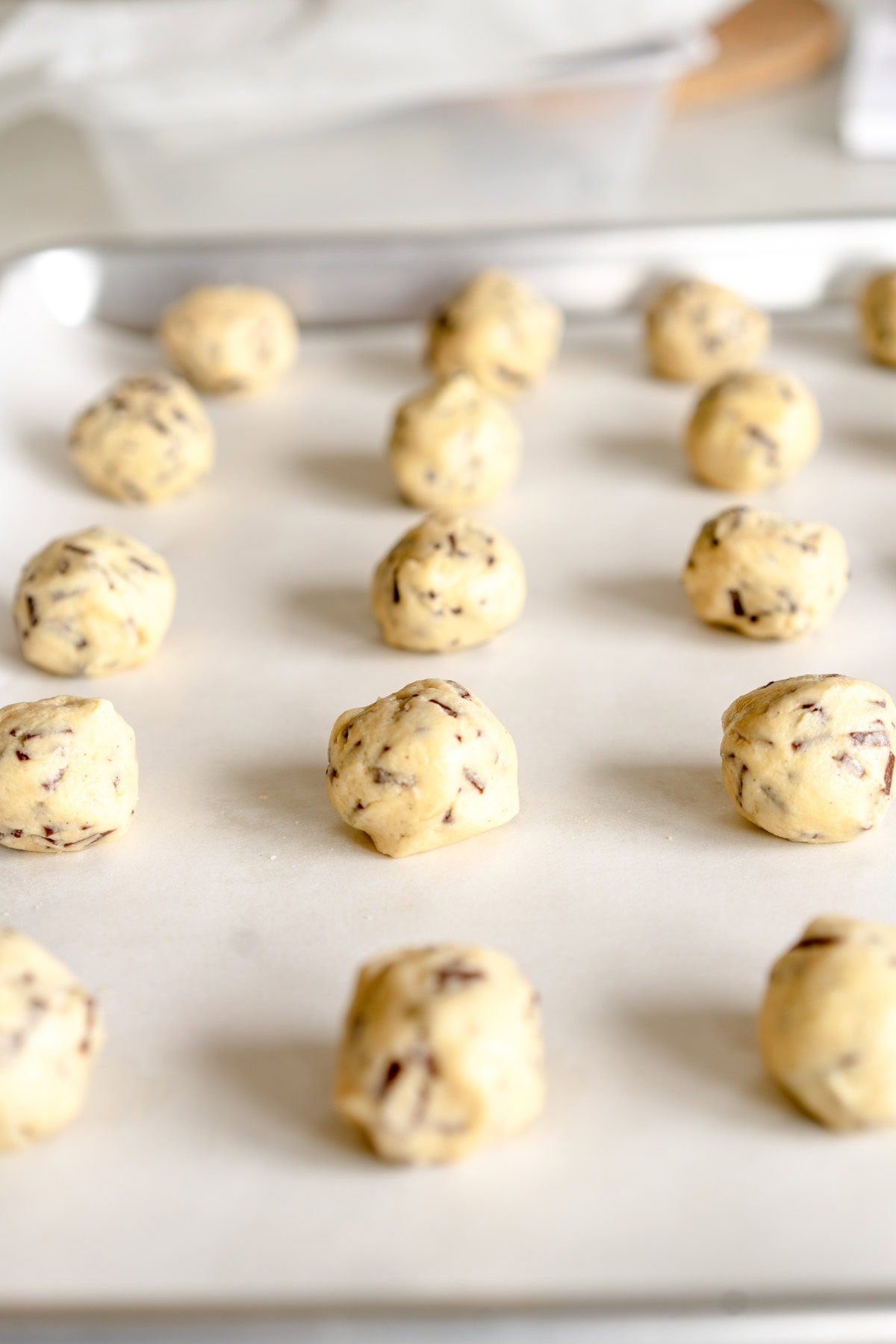
    The cookie dough freezes super well - just scoop it, roll it into balls, then freeze in an airtight container. To bake, place frozen balls of dough directly onto a lined baking sheet and bake at the temperature given in the recipe - there is no need to drop the oven temperature for this specific recipe when you are baking from frozen as there is with other recipes which bake at a higher temperature.

    scooped out and rolled cookies
    Roll into balls then bake.

    To roll or not to roll?

    Look, I had mad decision paralysis when I was making these - initially I was just scooping the dough onto the pans and baking in mounds, then switched halfway through to rolling them into balls.

    They both come out great, but I prefer the look of the rolled ones. I use a 1 tablespoon (#60) scoop to scoop them out, but if you don't have one, you can either use a regular tablespoon to measure, or weigh out 20g balls.

    rolled vs non rolled cookies
    Up top = rolled, down the bottom = baked in the mounds straight from the scoop

    ❤️ Made this recipe and love it? ❤️

    I would LOVE for you to leave me a review and star rating below to let me know how you liked it! Also, please make sure to tag me on Instagram!

    Answers to your baking questions

    Over the years, many of you have asked me questions about:

    • baking in grams
    • adjusting oven temperatures
    • what kind of salt to use
    • and many more!

    I've curated and answered them all for your easy reference in this frequently asked questions post!
    Filed Under: Chocolate Chip Cookies, Cookies, New Zealand Recipes Tagged With: Egg Free

    The Lemon Pound Cake we can't stop eating

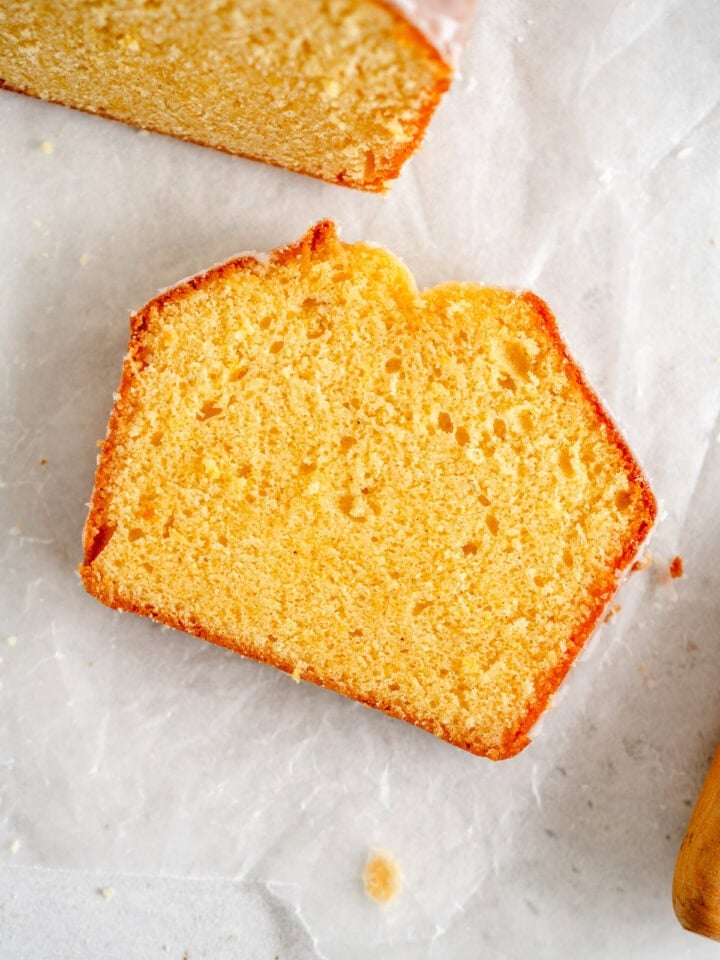
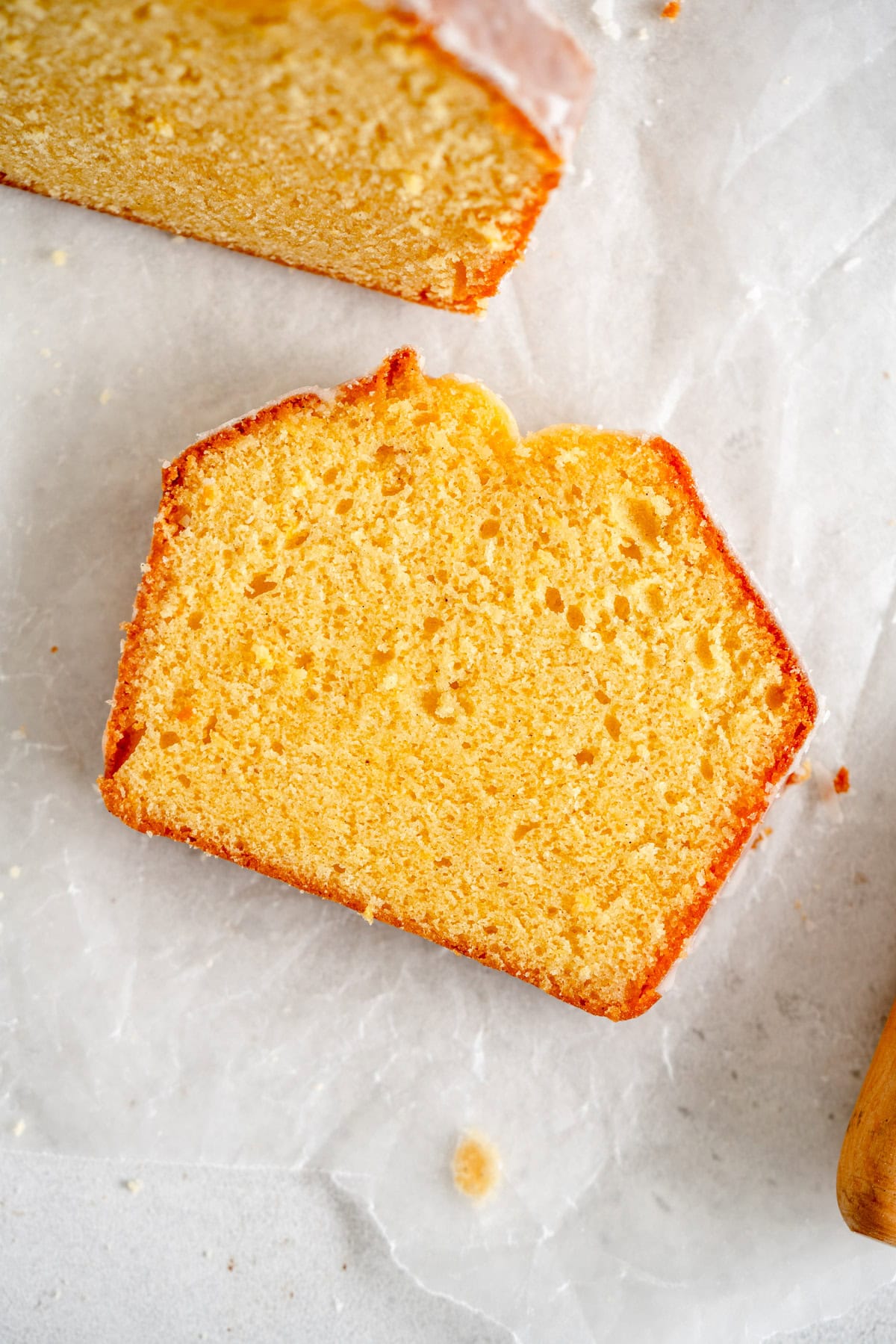
    slice of lemon pound cake on paper

    Meet your new favourite loaf cake: a soft, buttery lemon pound cake that goes ALL IN on lemon. I'm talking lemon zest in the batter, a lemon soak that's brushed on after baking, and a glossy lemon glaze that adds a bright punch of flavor (plus that perfect crackle on top!). The addition of sour cream to the batter ensures this loaf-style cake is ultra-moist and tender, too!

    slice of lemon pound cake on paper

    Hi hi! I am just jumping in to share this lemon pound cake loaf recipe with you! I have been making and loving my vanilla sour cream pound cake recipe for a long time now, and this lemon one is just a wee variation on it.

    Like the original, the texture is lush, dense (in a good way) and has a super tender crumb. The lemon flavour comes from fresh lemon in three forms - zest rubbed into the sugar before you start mixing the pound cake batter, a lemon soak brushed on hot from the oven, and a deliciously tangy lemon glaze which goes onto the cooled cake.

    It's a triple lemon situation, and it's a triple lemon situation that I know you are going to love.

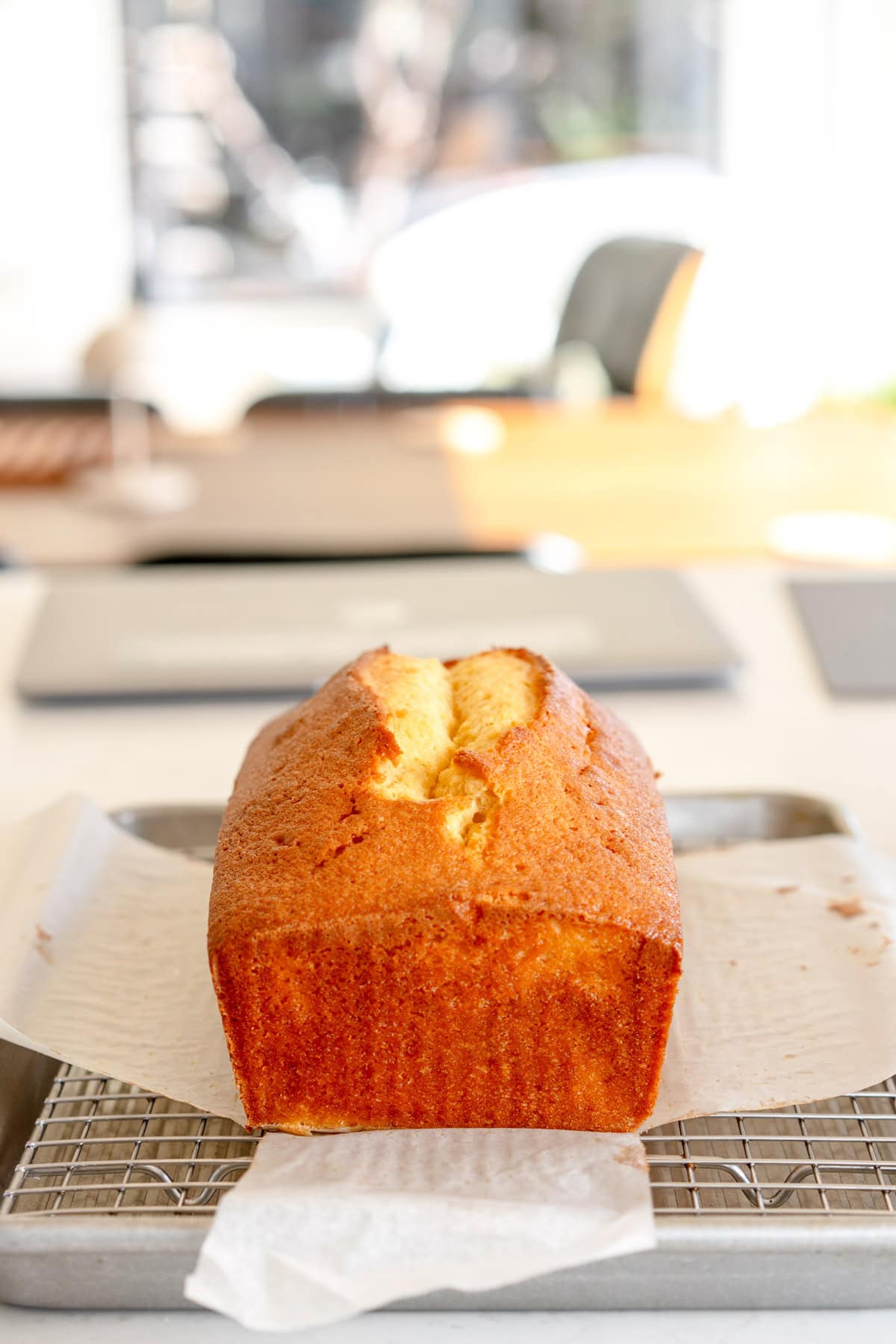
    lemon cake on wire rack
    Out of the oven ready for the lemon soak
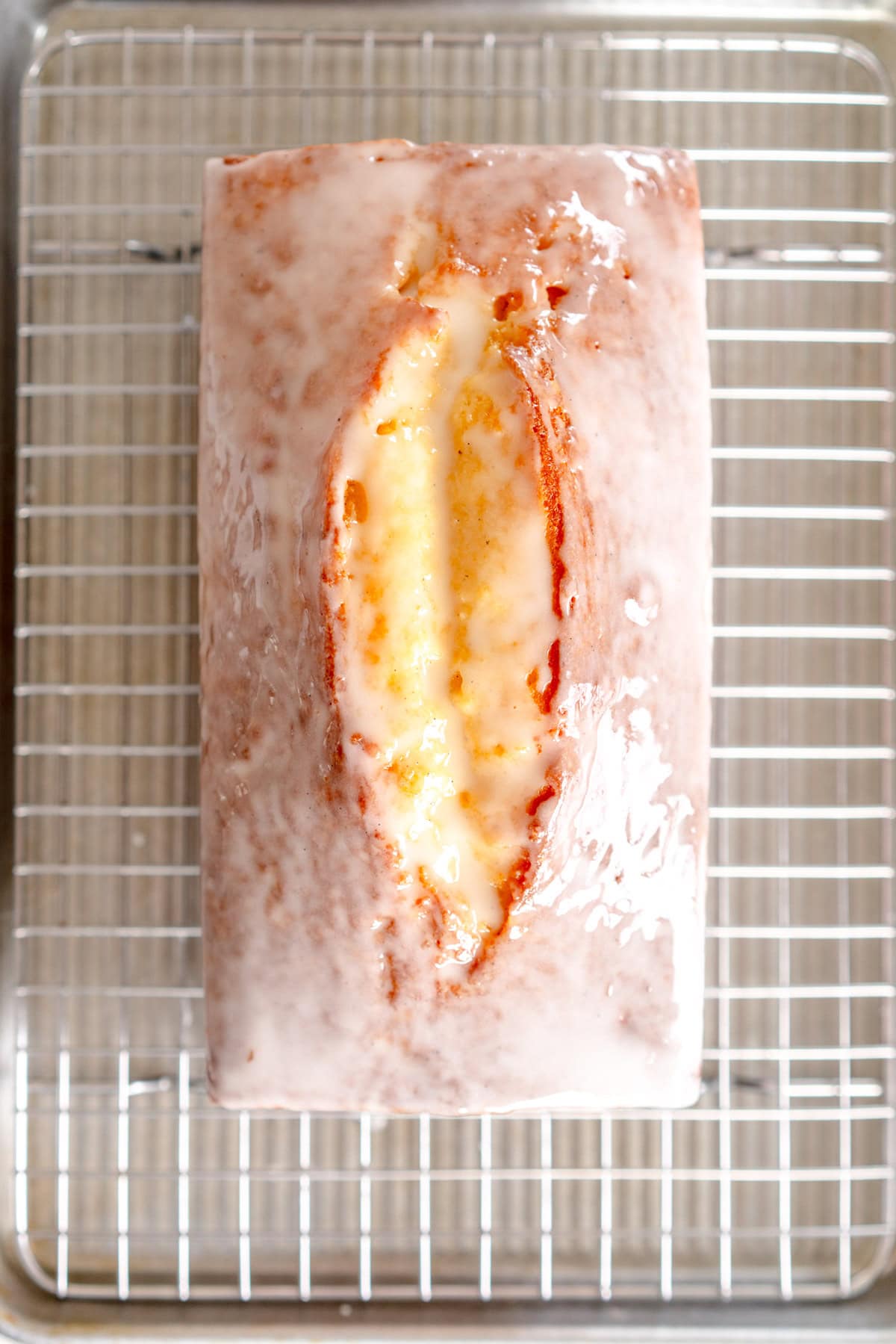
    glazed lemon cake
    Freshly glazed and ready to set

    What makes my pound cake special: Lemon three ways - zest, soak, and glaze.

    Often you see a recipe for a lemon pound cake, and there is just a hint of lemon. Not here. This lemon cake has lemon in it three ways to ensure a really deep lemon flavour:

    • Zest. Instead of adding juice to the cake which could make it claggy (the nz word for kind of soggy!), I just added a ton of lemon zest to the batter of the cake. I found during testing using 10g of lemon zest (which is about 4 lemons worth), and rubbing it into the sugar that is used in the batter that it really releases the oils and gives amazing flavour.
    • Soak. This step feels like you're going to end up with a soggy cake because it feels counterintuitive to add that much liquid to a warm cake - I promise you I felt the same way at the start, but the cake absorbs it. You make a quick syrup while the cake is resting. I boil the sugar and water together first and then add the lemon juice to keep it nice and fresh.
    • Glaze. I use the lemon glaze I put on everything for glazing this lemon pound cake. It is super easy, made with only powdered sugar and lemon juice, and is super satisfying to paint on. It sets up with a perfect crusty finish that is just so so good.
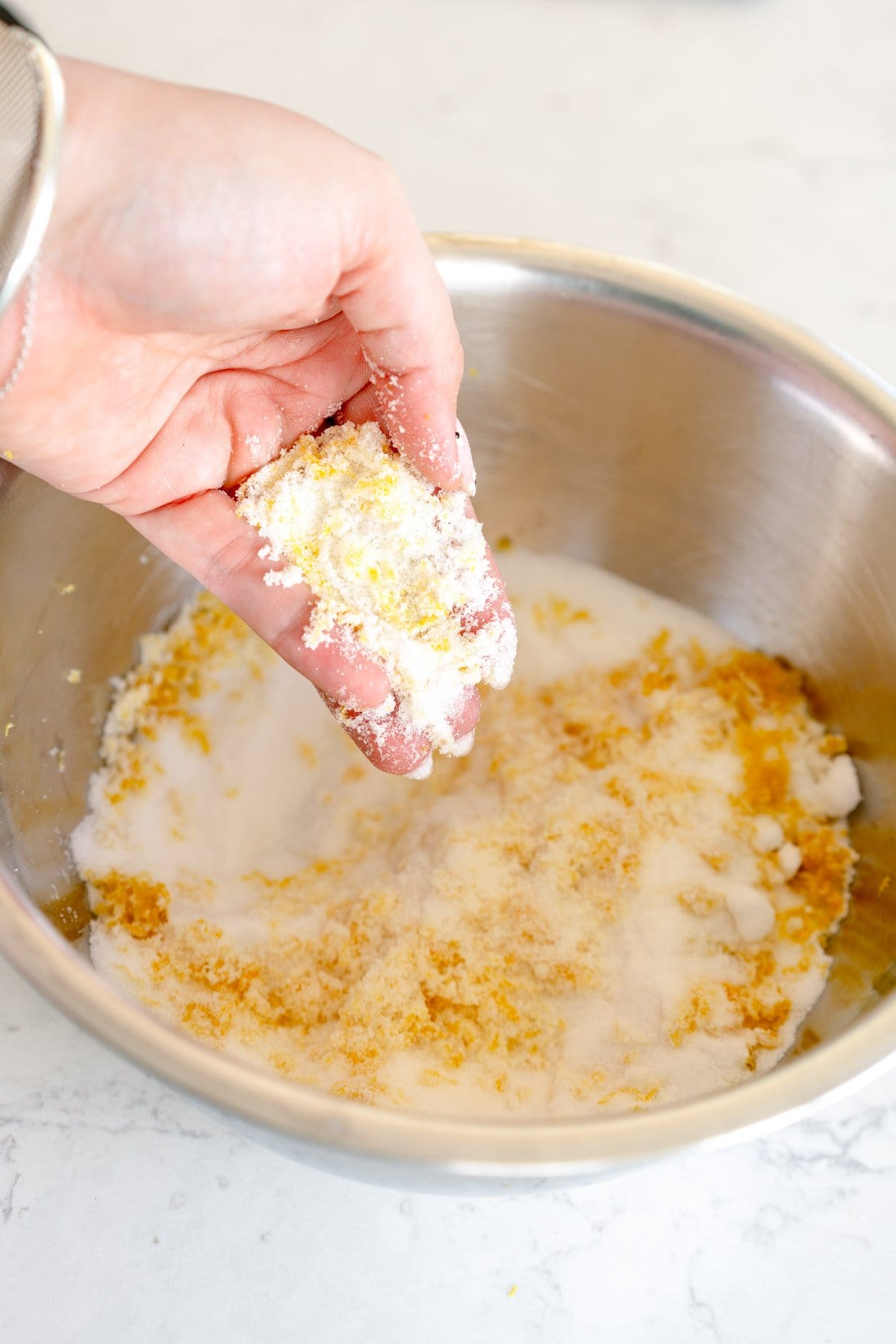
    adding lemon zest to sugar for cake
    Rub in zest using your hands
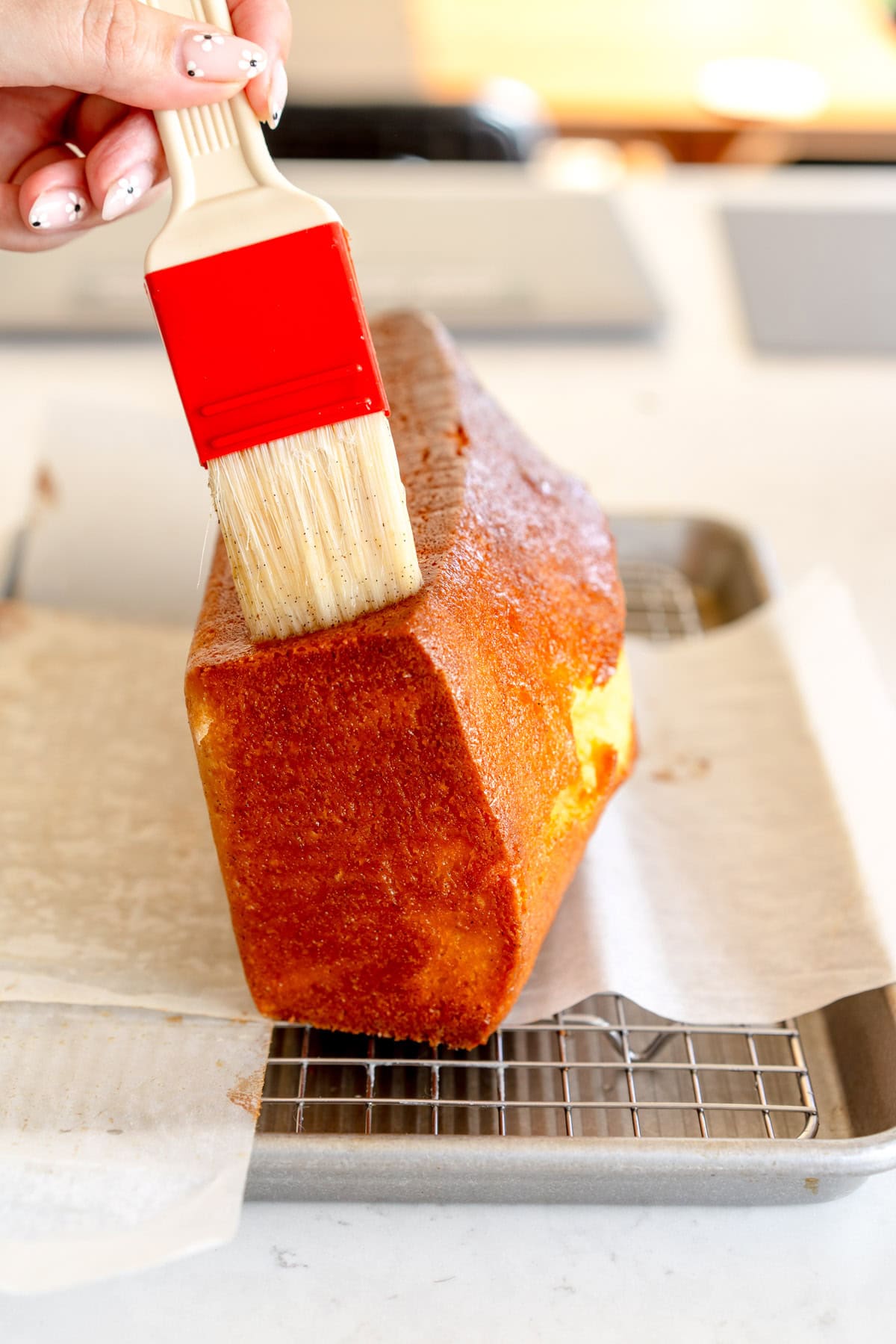
    adding lemon soak to cake
    Brush on the soak using a pastry brush.
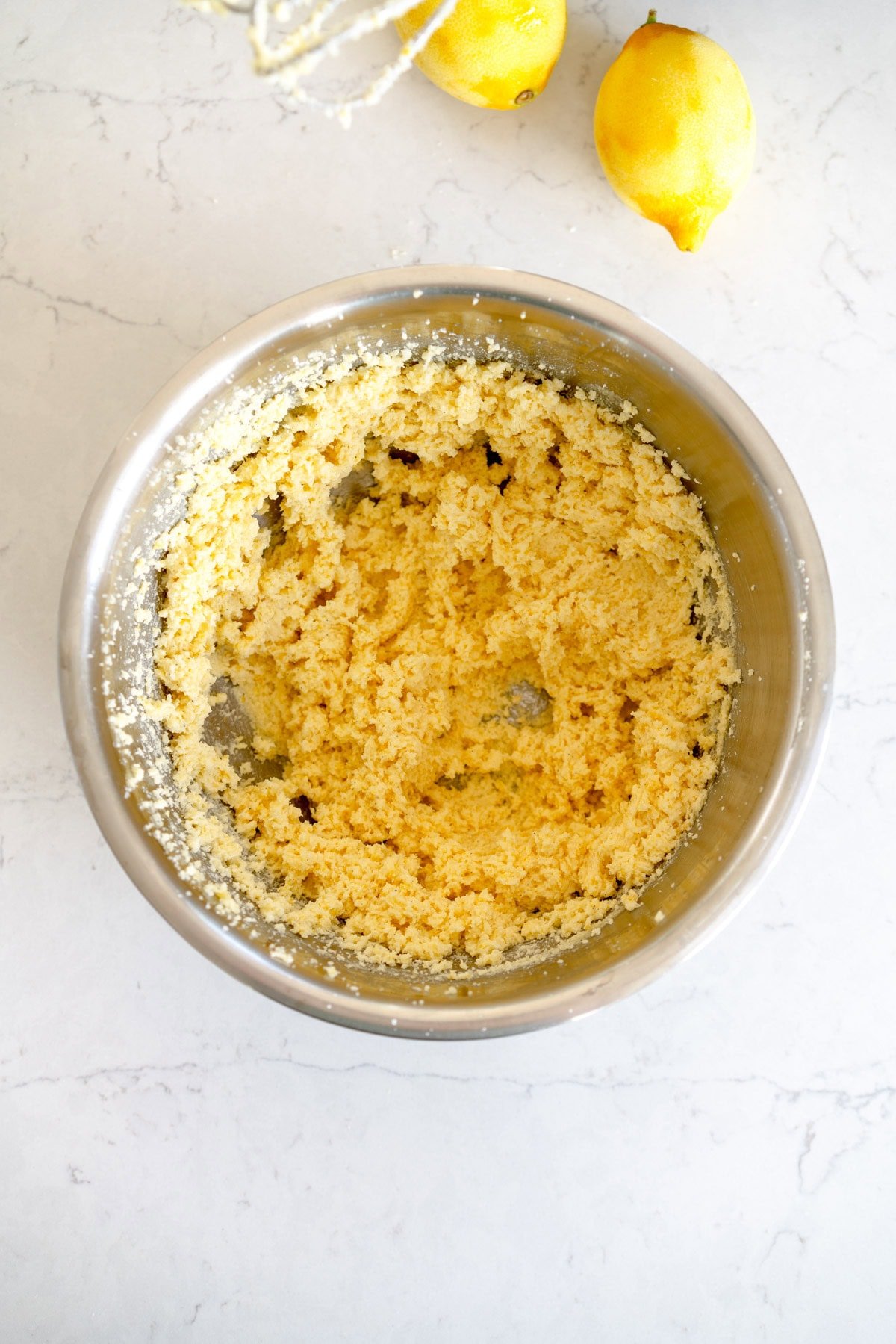
    creamed butter and sugar
    Creamed butter and sugar mix
    adding sour cream to batter
    Sour cream adds moisture and texture

    Pan Size Matters - the best pan to use.

    Don't be tempted to use the wrong sized pan - you will be so sad. Let me explain why. I talk about this in depth in my sour cream pound cake recipe (and there are some diagrams there for you too!)

    I made this in a 1 lb loaf pan (8.5" x 4.5" x 2.5" / 21.5 x 11.5 x 6.3cm), which is the same size that I use for my banana bread recipe. I used this size for the post as it is the most likely size that people will own.

    However, when I make this at home for myself, I always use a pullman pan. A pullman pan is much squarer in shape, and gives a taller, sharper cornered cake than the pound pan.

    Because the pullman is slightly larger than the 1 pound pan, I scale the recipe up slightly - there are quantities for this size in the notes section of the recipe.

    cake batter ready to go
    The batter should be fluffy and thick
    cake batter being added to pan
    Add to pan then smooth down with a spoon

    The perfect make ahead recipe.

    This recipe is great to make ahead of time as it stays super moist - I always test this as part of my recipe testing process. In fact, i've eaten it five days after i've made it and it was still amazing. If you are making a day or two before I would glaze it, otherwise if you are making a few days ahead I would add the soak, then wrap in plastic wrap and store in the fridge until you are ready to glaze and eat it - up to five days ahead of time.

    Pound cake can also be frozen - wrap the unglazed cake well in plastic wrap and store in the freezer. Defrost at room temperature before glazing and eating.

    cake batter in loaf pan
    Batter in pan - smooth down with a spoon.
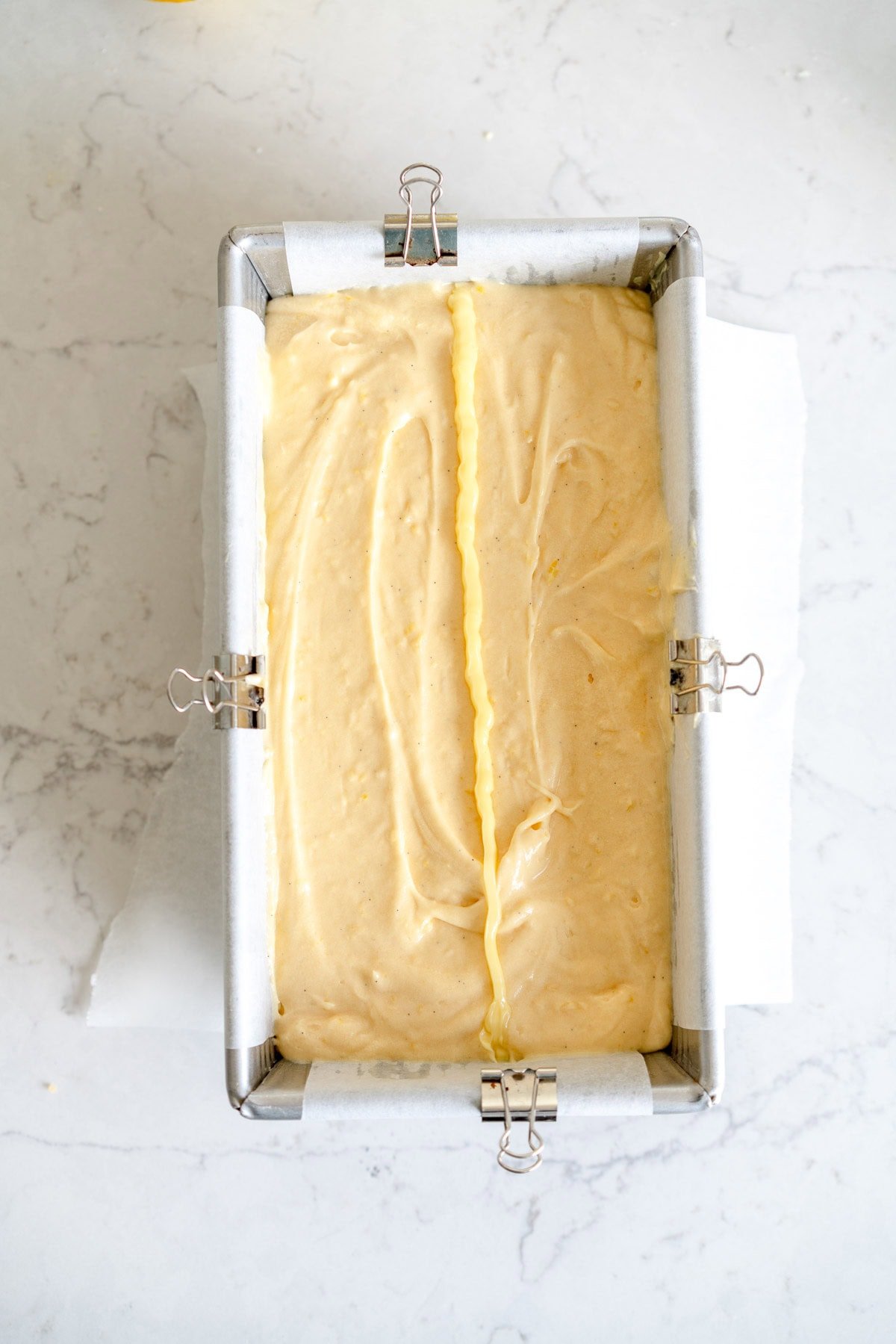
    line of butter down middle of cake
    Optional butter line down the middle.

    ❤️ Made this recipe and love it? ❤️

    I would LOVE for you to leave me a review and star rating below to let me know how you liked it! Also, please make sure to tag me on Instagram!

    Answers to your baking questions

    Over the years, many of you have asked me questions about:

    • baking in grams
    • adjusting oven temperatures
    • what kind of salt to use
    • and many more!

    I've curated and answered them all for your easy reference in this frequently asked questions post!
    Filed Under: Loaf Cakes and Quickbreads

    2 Ingredient Lemon Glaze

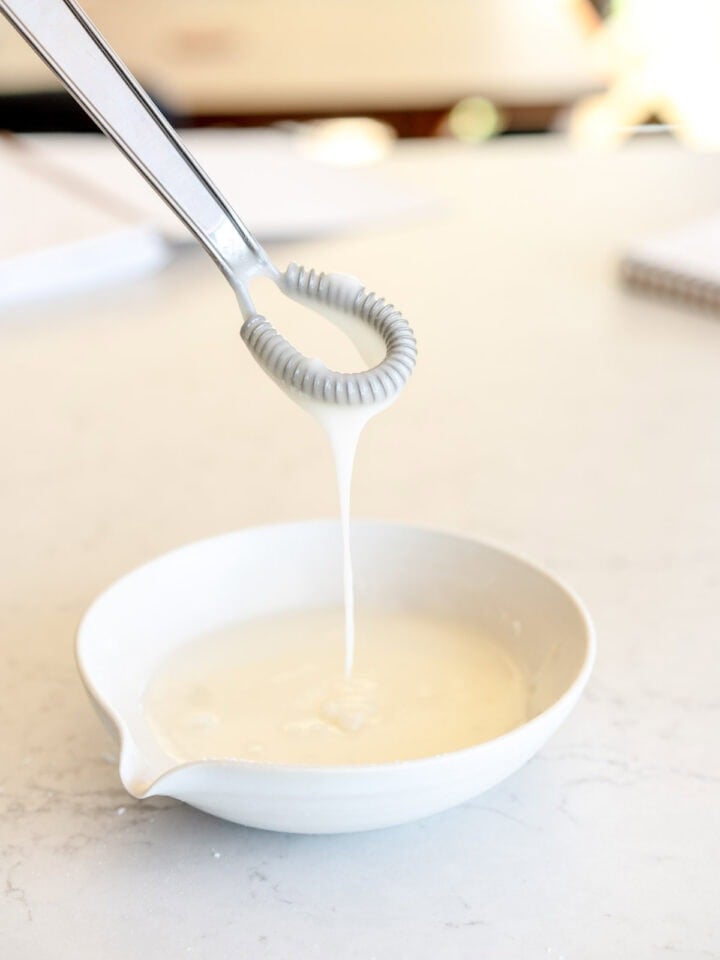
    side shot lemon glaze

    Stop guessing ratios - I have the perfect ones for you! This simple lemon glaze can be made in 2 minutes and sets hard. It is perfect for cakes, cookies, loaf cakes, and pound cakes!

    side shot lemon glaze

    Hi hi! I am just popping in to quickly share the recipe for my 2 ingredient lemon glaze with you! This seems like a slightly silly thing to make a recipe for but I got sick of trying to eyeball quantities and never end up with them quite right, and a glaze which is too runny or too thick. I was looking for the perfect lemon glaze for pound cake, and made it so many times I figured I needed to share it with you.

    So here you are - the perfect lemon glaze! I love to use it to glaze my vanilla pound cake recipe, and to paint onto sugar cookies, but it also works on a huge variety of baked goods. Scale it as you like!

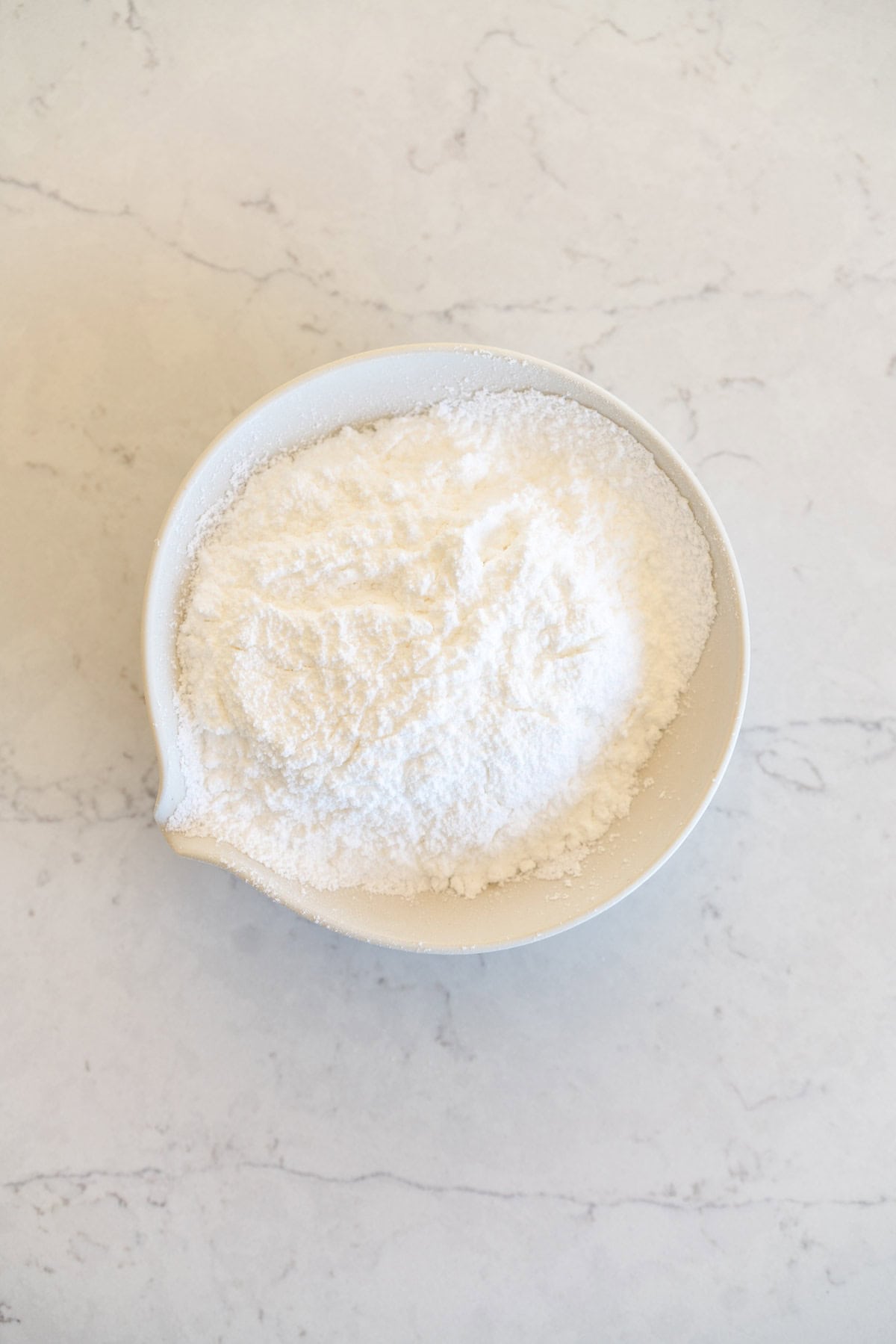
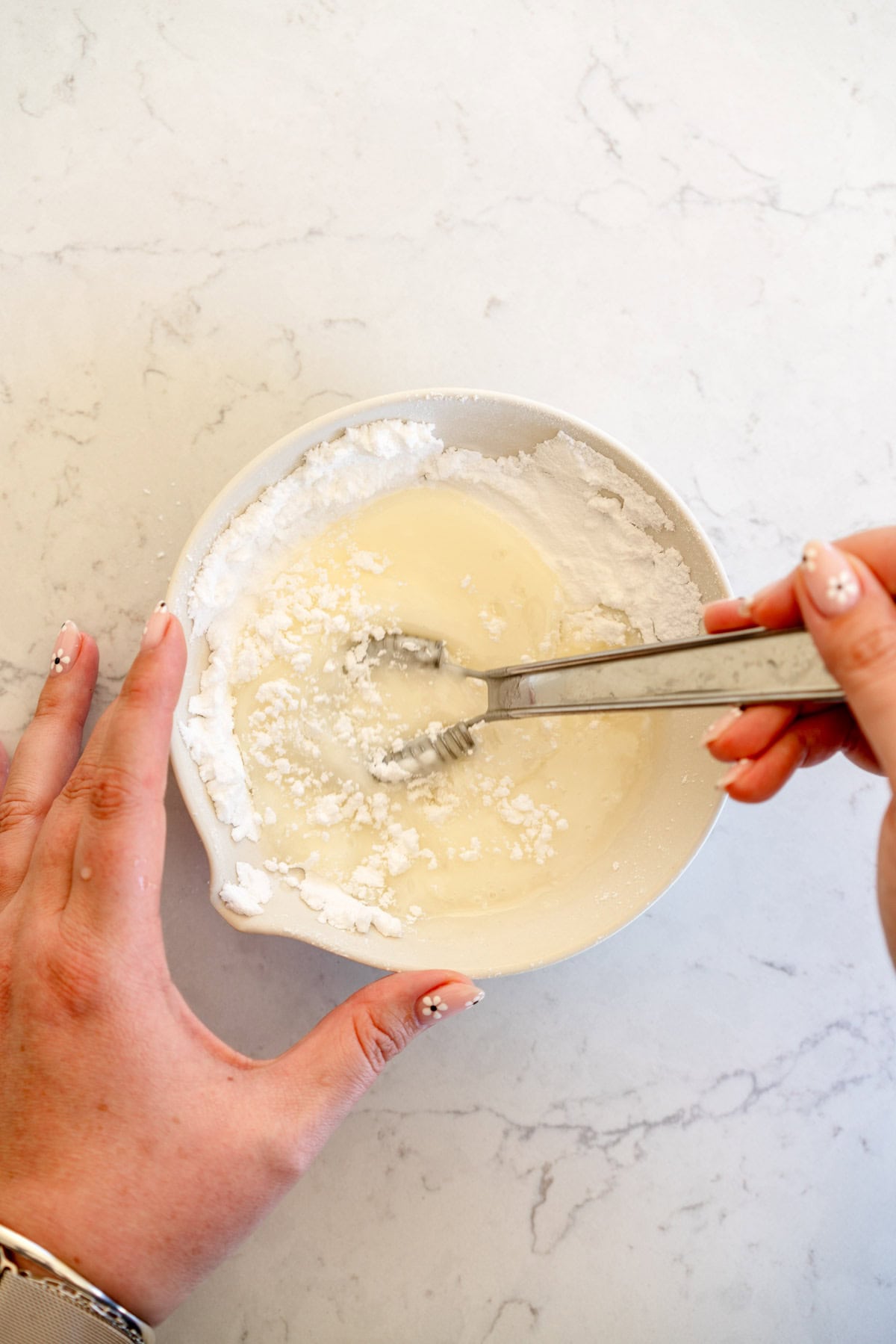
    powdered sugar in bowl
    mixed up lemon glaze

    Do I have to use fresh lemon juice for lemon glaze?

    Yes. Fresh lemon juice makes such a huge difference when it comes to flavour, and when a glaze recipe only has two ingredients, you're better off making sure that they taste good.

    If you don't have lemon on hand, I have also made this with lime juice and it was super delicious!

    How much lemon glaze does this recipe make?

    This is always a tricky one because it depends how glaze heavy of a person you are. I make a single batch of this for glazing a pound cake, and would probably use a single batch for my sugar cookies too.

    If you are making this lemon glaze just as a drizzle over something like thumbprint cookies or shortbread you may need a little less - I do find that it is harder to get the right consistency when you make a small batch though, so I would make it as written. The batch size is already pretty small.

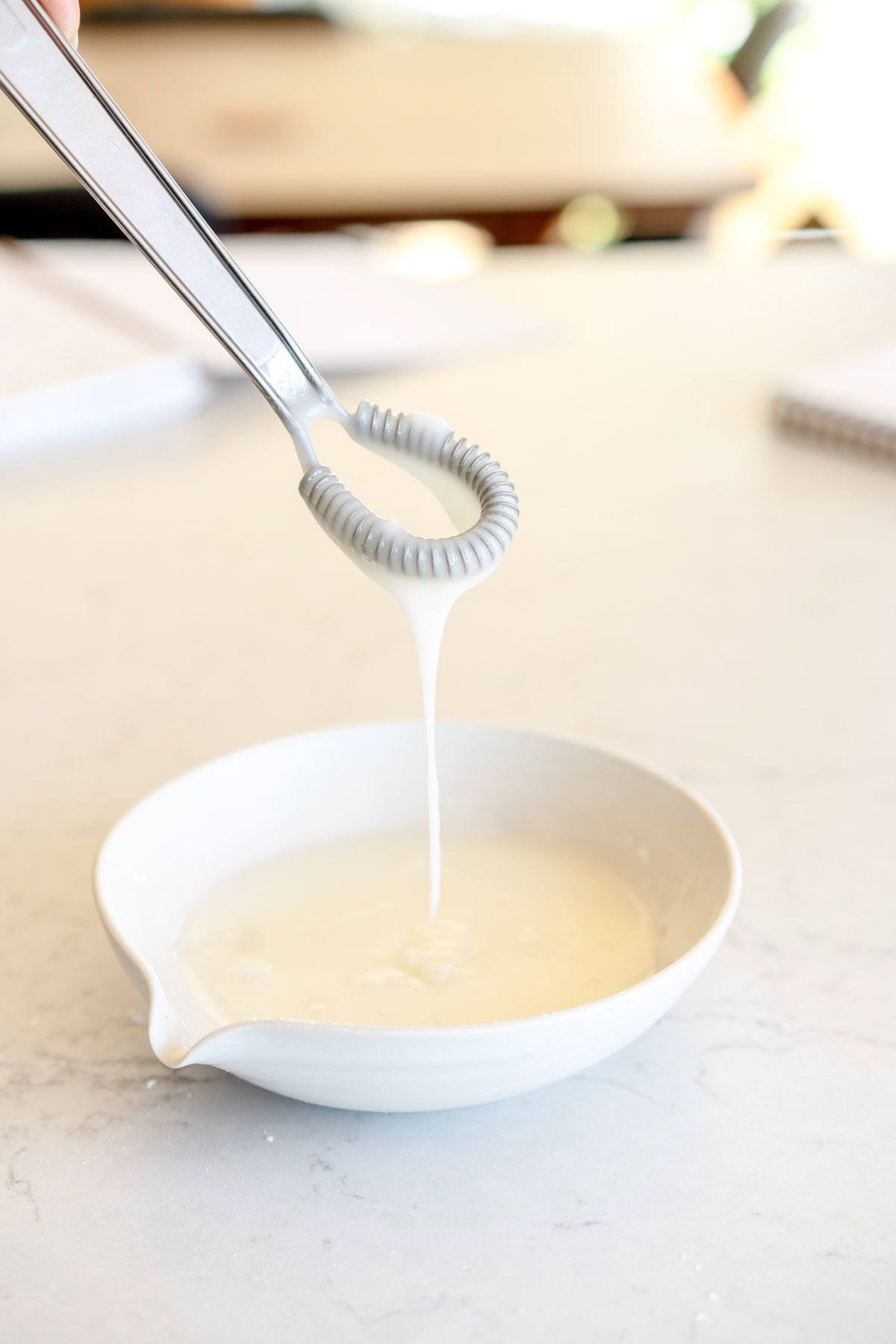
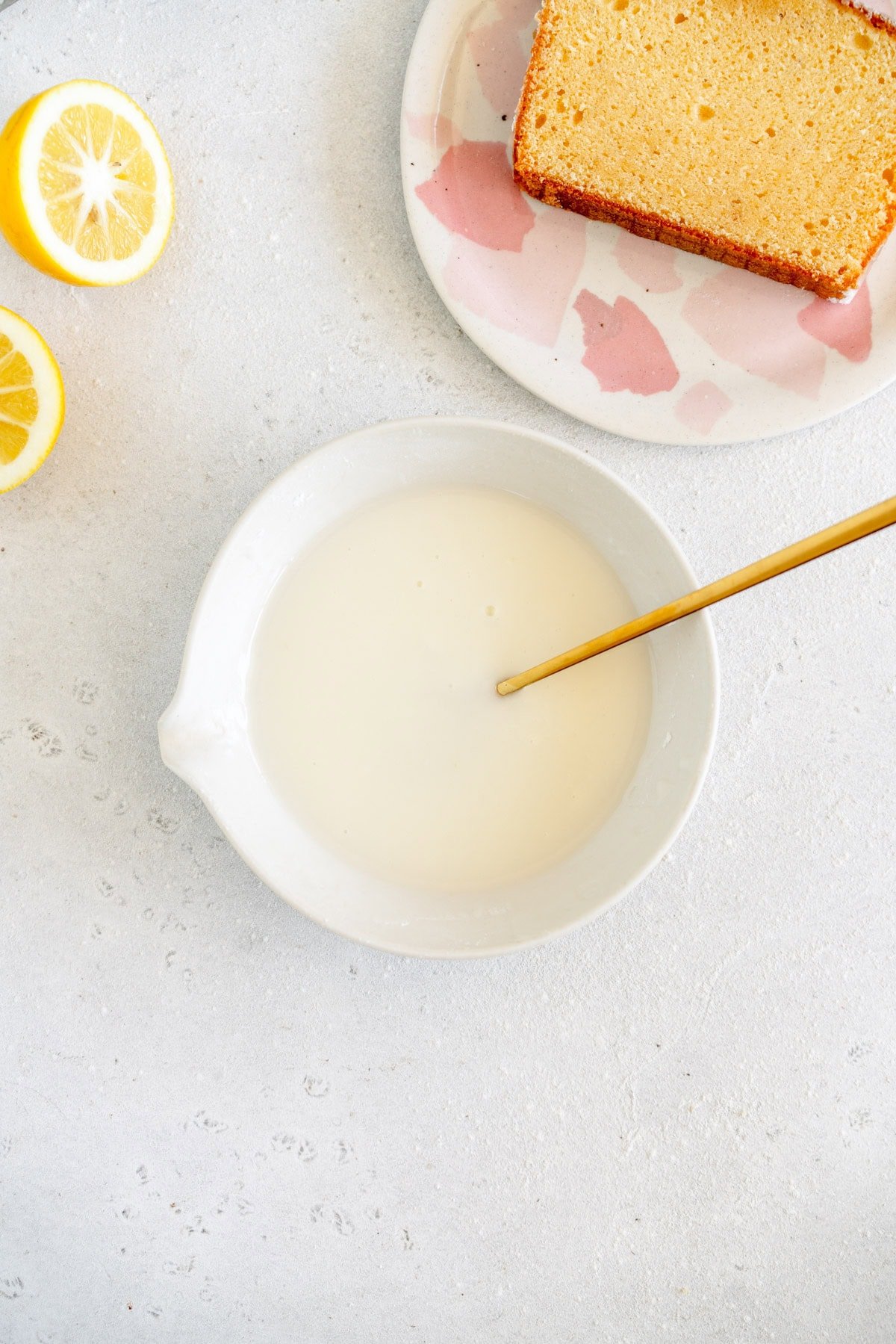
    lemon glaze in bowl

    Can Lemon Glaze be made ahead of time?

    Ideally you will make this glaze as soon as you need it, as it does go crusty as it dries. If you have leftover you want to store you can pop it into a ziploc bag and seal with no air in it so that it does not go crusty, then just snip the end off the bag and use it as a piping bag to use the rest of the glaze.

    Can this lemon glaze be piped?

    I haven't tried it - I generally use my 2 ingredient sugar cookie icing for that! It is made with milk so I find that it is a little better for piping, but if you made this lemon glaze recipe slightly thicker it would likely work ok for piping too.

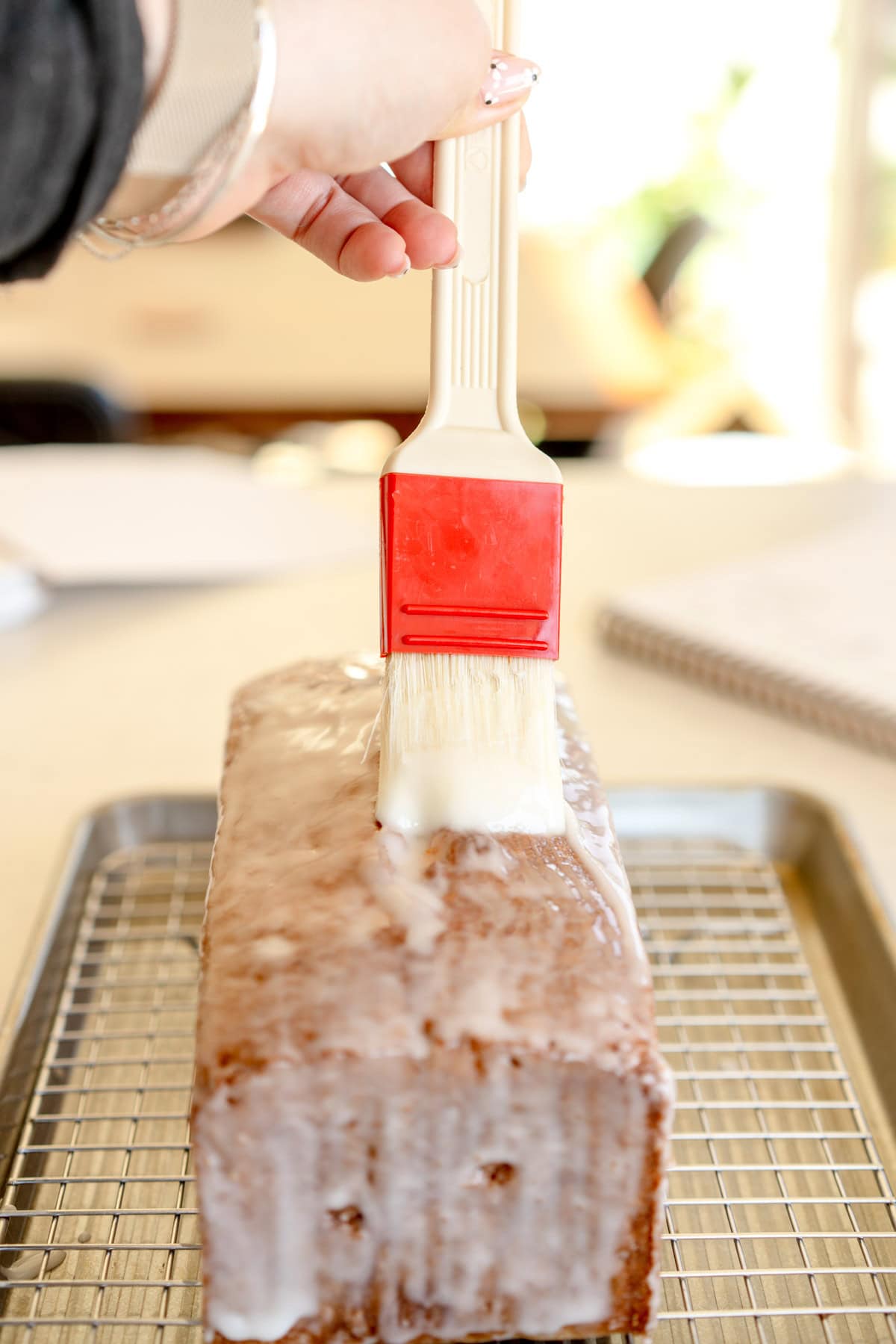
    glaze painted on cake

    Should the baking be warm or cool when I glaze it?

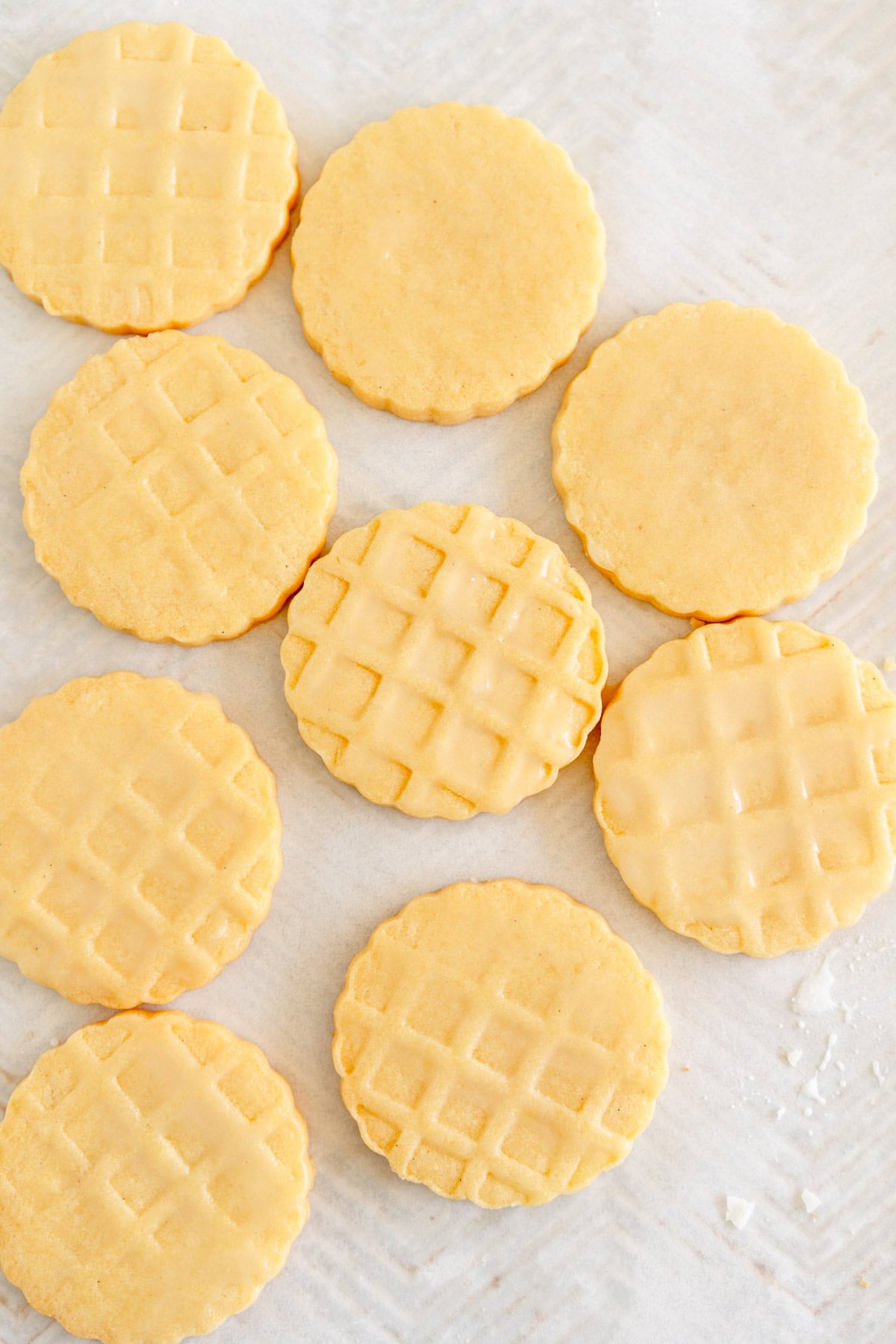
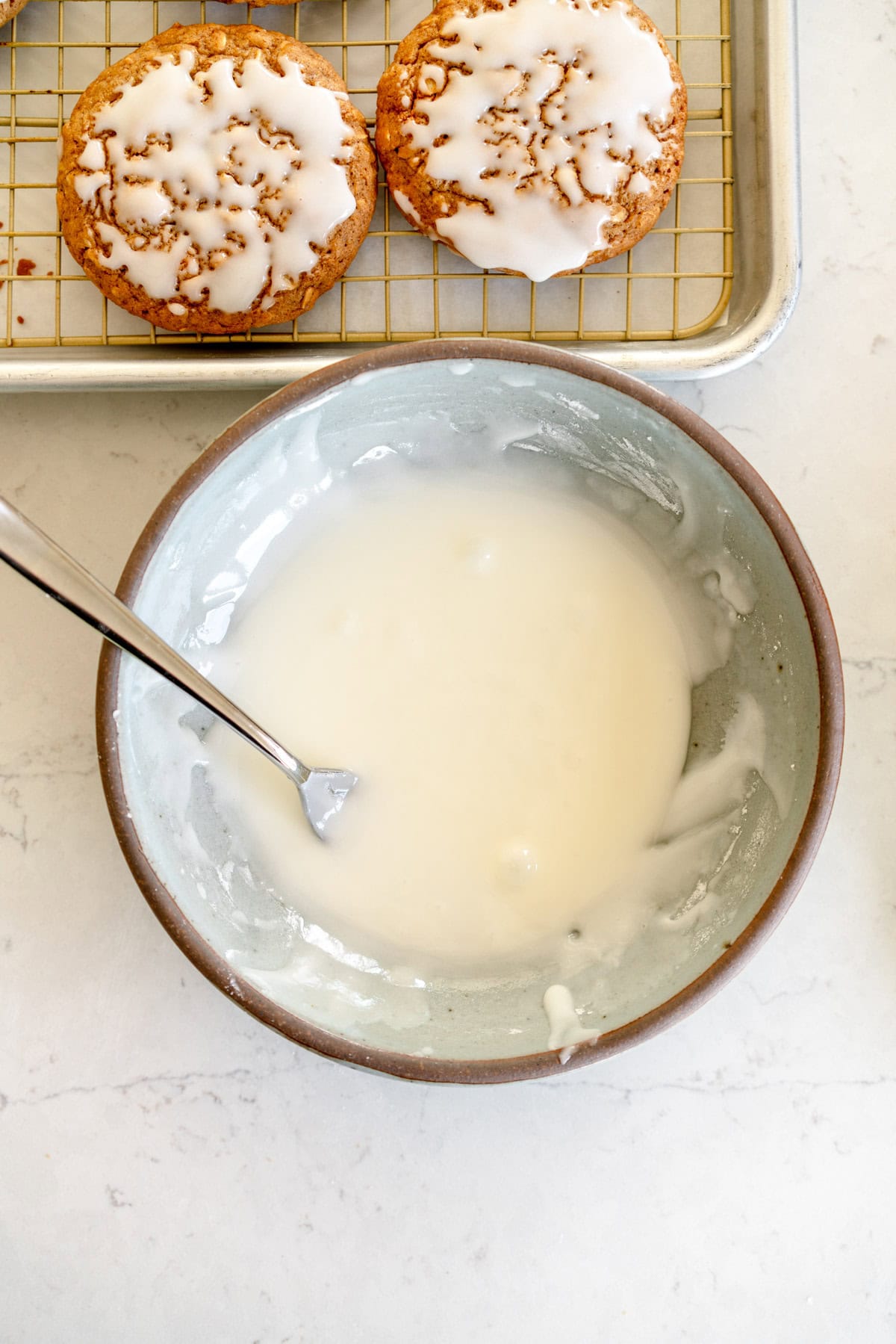
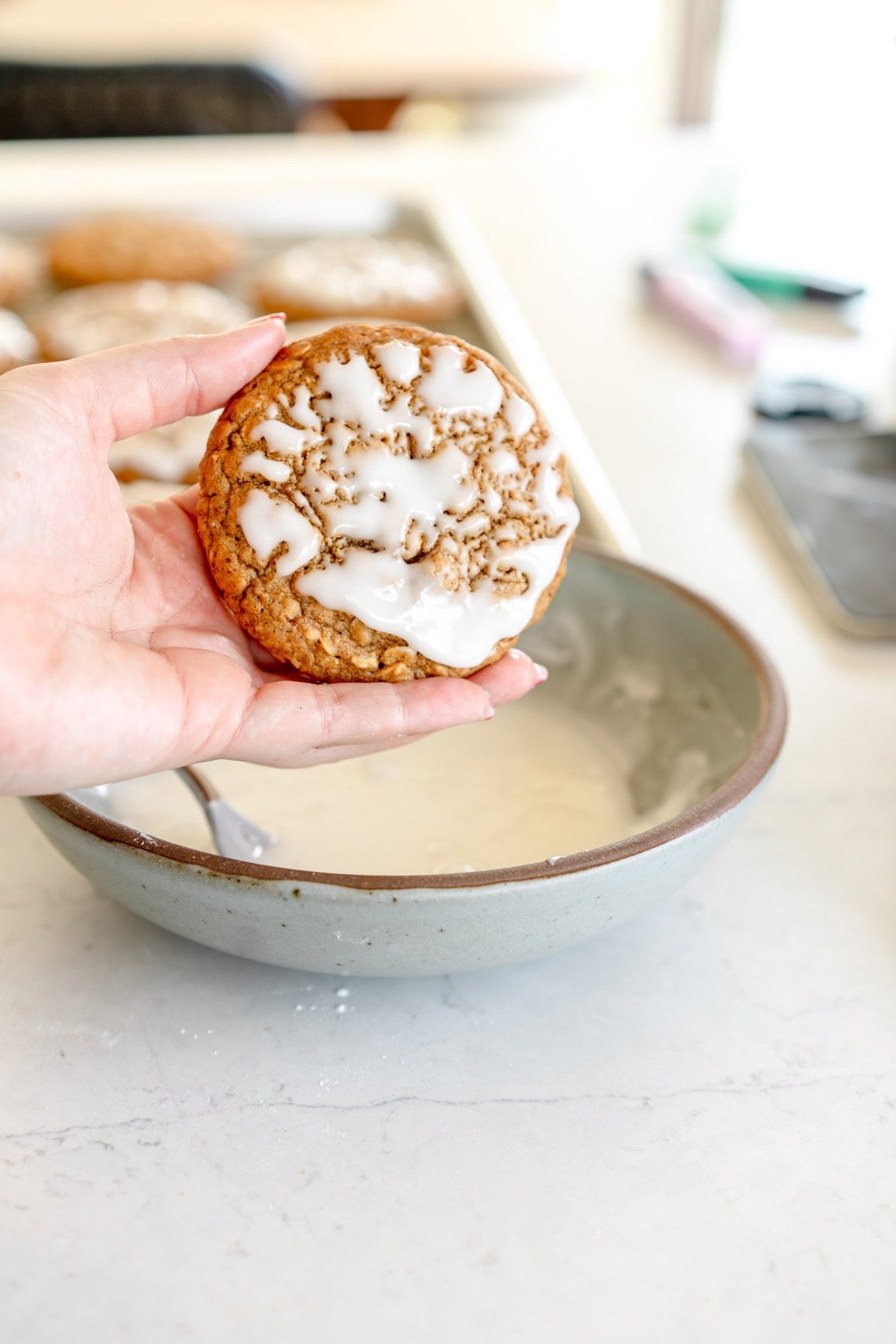
    It depends what you are making, - for something like my sugar cookies, I like to leave them to stand for 5 minutes and then glaze while they are still warm so that the glaze melts into the pattern.

    For something like a pound cake, you want to wait until the cake is cool. I like to use a pastry brush to paint the glaze directly onto the surface of the cake.

    glazed sugar cookies

    ❤️ Made this recipe and love it? ❤️

    I would LOVE for you to leave me a review and star rating below to let me know how you liked it! Also, please make sure to tag me on Instagram!

    Answers to your baking questions

    Over the years, many of you have asked me questions about:

    • baking in grams
    • adjusting oven temperatures
    • what kind of salt to use
    • and many more!

    I've curated and answered them all for your easy reference in this frequently asked questions post!

    Filed Under: Base Recipes Tagged With: Dairy Free, Egg Free, Gluten Free, Vegan

    Super Lush Sour Cream Pound Cake (Loaf)

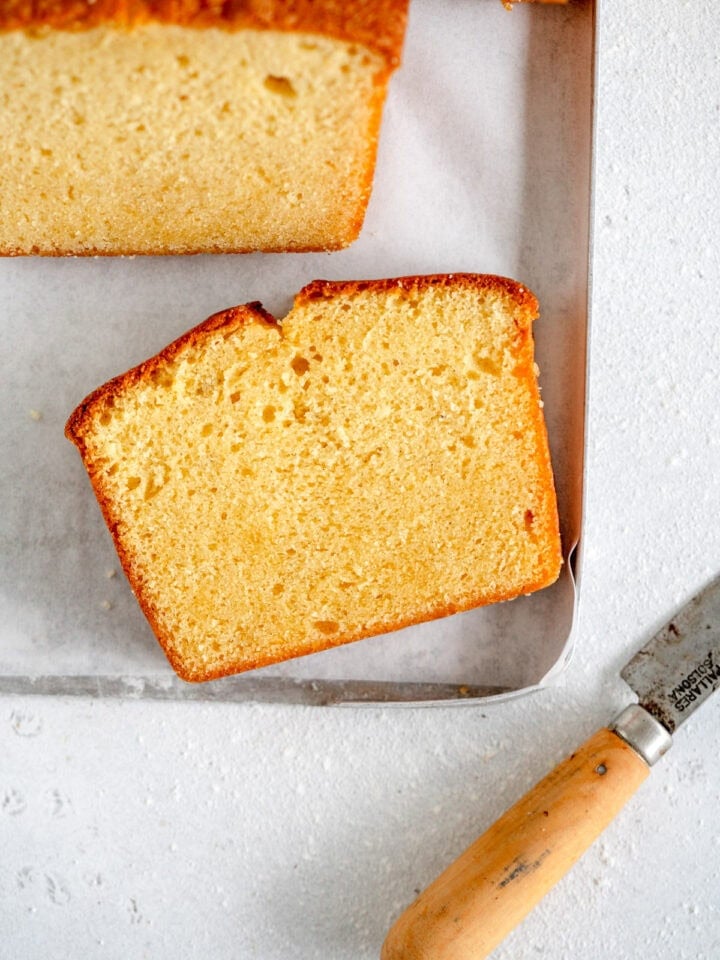
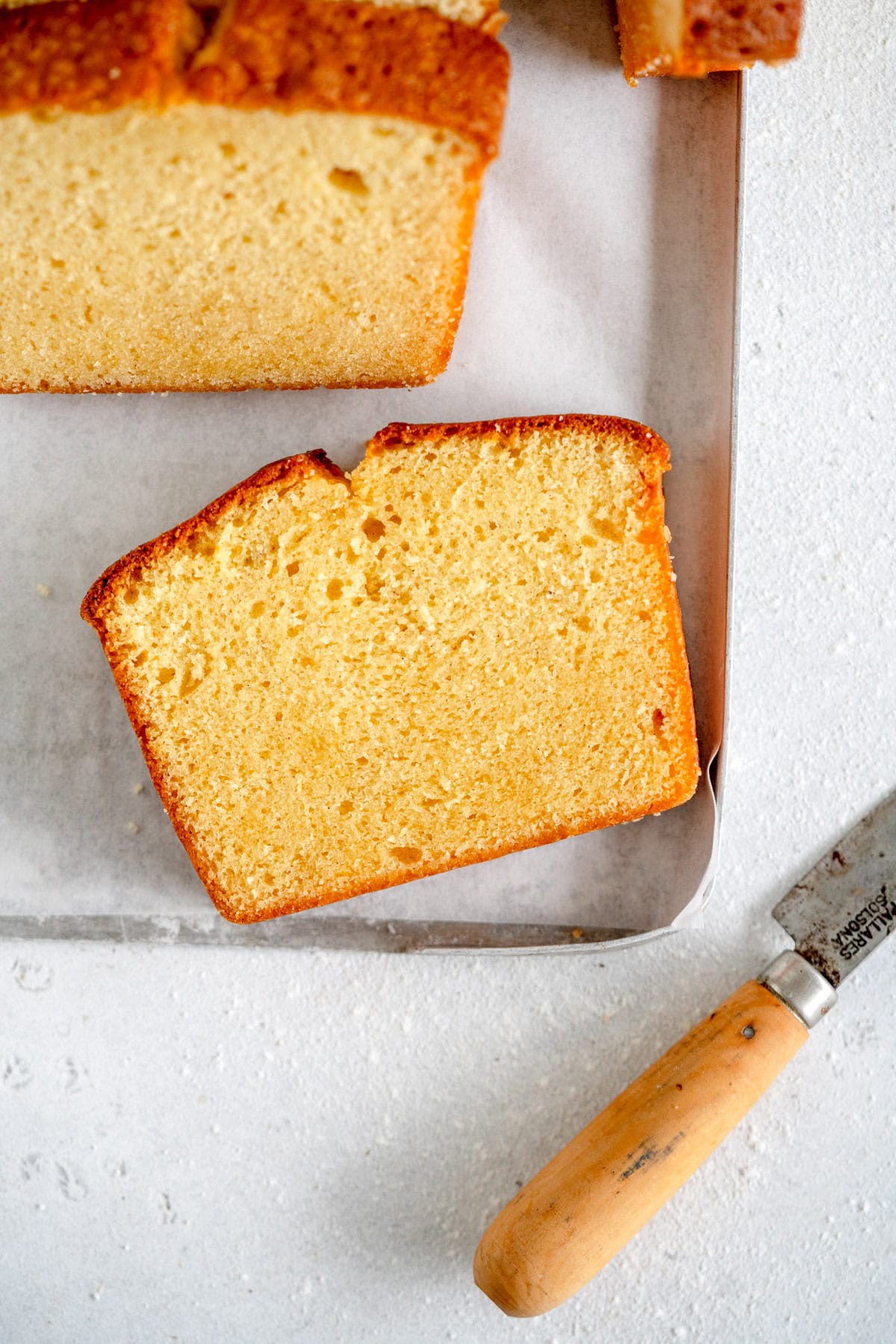
    slice of pound cake on tray

    This vanilla pound cake recipe has been my back pocket recipe for years and I know it will be yours too! This buttery pound cake recipe makes the most amazing loaf cake with an incredibly lush, tight crumb, and can be made days in advance. Leave it plain or finish it with a lemon glaze, everyone will love this super easy recipe! Adding sour cream to the recipe gives the cake moisture without adding density for the most tender crumb. Read my full guide for how to scale the recipe for pan size, and how to get that perfect split down the top of the cake!

    slice of pound cake on tray

    Look - I hate calling things the best. Because it's probably not the best pound cake you're ever going to have (it might be). But this vanilla pound cake recipe? It is my best. The recipe was given to me by one of my best friends Chelsea, and the first time we had it, my head almost exploded.

    We love this pound cake recipe so much in my house that I always have to make two, because my husband can easily finish a whole one by himself. This is the cake I make when I need something that is super easy, incredibly sturdy, and can just be wrapped up and thrown into the car. I make it for desserts, for people who have had babies, to bribe my husband into doing jobs for me, and just for ourselves to have quite a lot of the time.

    This sour cream pound cake recipe is everything that I want in a cake, packaged up into a nice polite loaf cake. It is super buttery, with the most amazing, dense but tender crumb. You can make it days ahead and it is still fine. It is delicious unglazed, or you can finish it with a simple lemon glaze for a delightfully crusty finish.

    Don't let the long bake time on this throw you off. The actual process of this is super easy. There are two sizes of pan that you can use, and I have broken the whole process down for you!

    If you are after something with a little chocolate, I took this vanilla batter and marbled it with chocolate for the most amazing marble cake recipe!

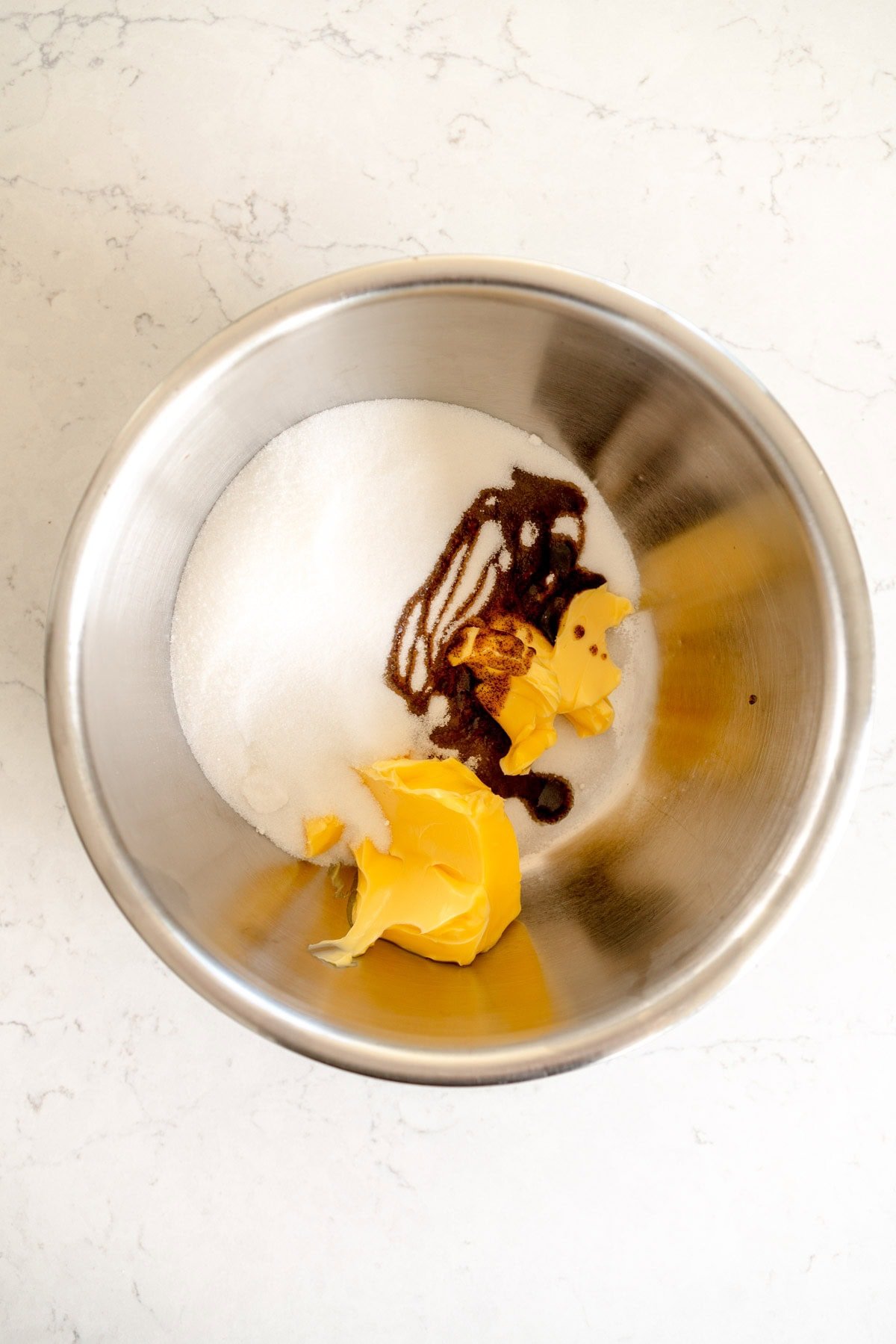
    sugar and butter for pound cake
    Butter and sugar mixture
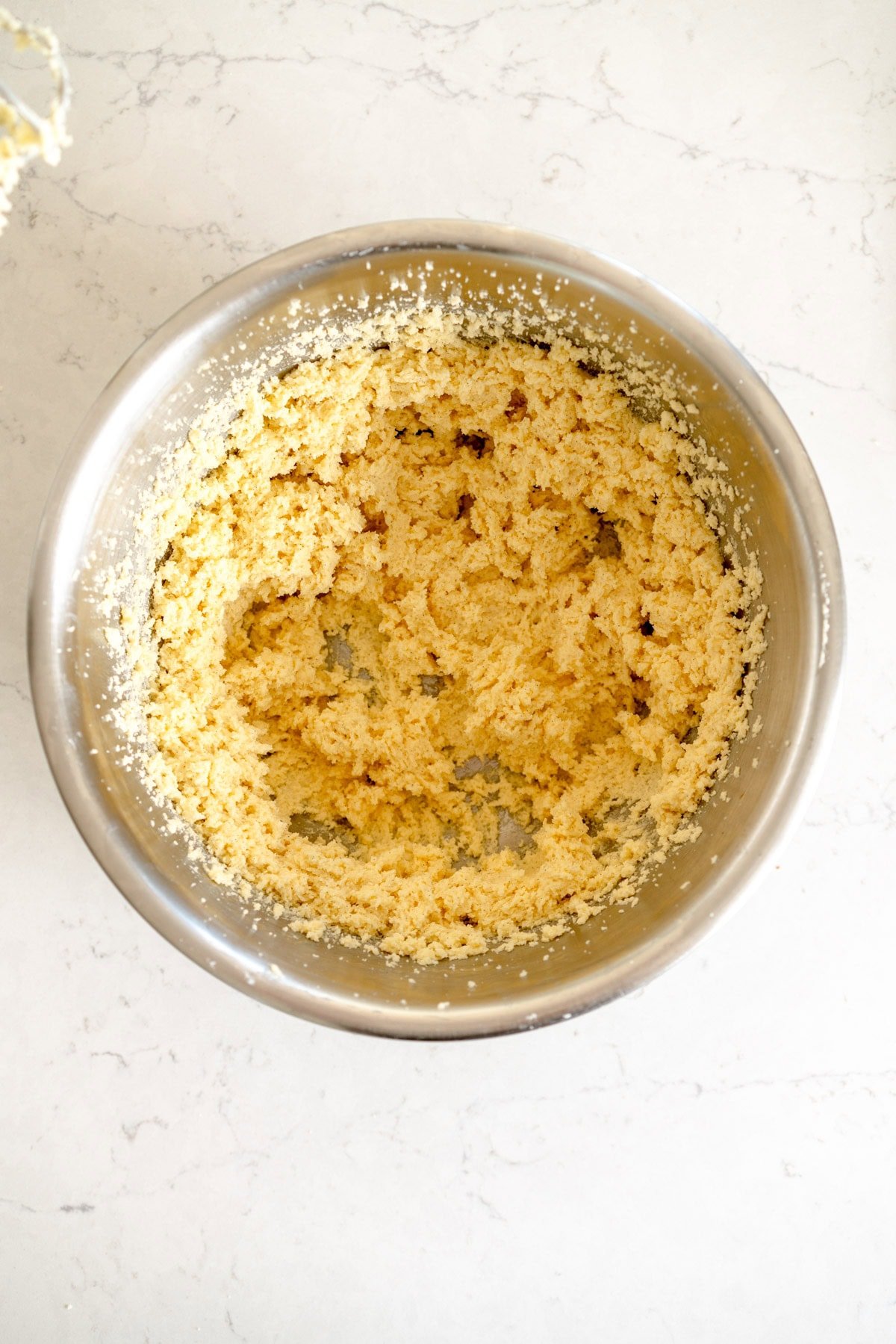
    creamed butter and sugar mixture
    Cream it super well!

    Why is it called a pound cake?

    Traditionally, a pound cake was made using a pound of each ingredient: Butter, sugar, flour, and eggs. I have tried it that way, and that bad boy was dense.

    This recipe lightens things up a little but I still think the pound cake name is appropriate because of the buttery rich taste and the super tender crumb.

    This cake isn't light and fluffy, but it is light and perfectly dense - if that makes sense. It's sturdy in a good way - the knife slices through it so nicely and only word I have for the inside crumb is lush. It's just beautiful - I'm obsessed.

    add egg to mixture
    Add eggs and combine
    pound cake batter
    Super light fluffy batter

    Sour Cream is our friend.

    The trick to that amazing crumb? Sour Cream. This could be called a sour cream pound cake - there is more sour cream in the recipe than there is butter.

    Sour cream adds a slight moisture to the recipe without making it gummy or claggy. The fat in the sour cream adds richness, and it gives the cake a very slight tangy flavour. It's just the best. You'll see what I mean when you make it.

    I haven't tried subbing greek yoghurt sorry so I don't know if it would work. Greek yoghurt is lower in fat than sour cream is, so it may not have the same outcome.

    add sour cream to batter
    Sour cream is incorporated
    add flour to batter
    Then flour carefully incorporated

    What pan should I make a Pound Cake in?

    I have made this cake so many times over the last few years, and ended up scaling up the recipe slightly for my personal use so that it can be made in a pullman pan. A pullman pan has nice square sides and holds a little more batter than a regular loaf pan.

    However, I know that not everyone will own a pullman pan, so for the sake of this recipe, I have scaled it back so that it uses a regular sized 1 pound loaf pan (which is typically measures 8.5" x 4.5" x 2.5" (21.5 x 11.5 x 6.3cm). This is the same loaf pan that I use for my banana bread recipe.

    I also made the larger scale recipe in a 1.25 pound loaf pan (9" x 5" x 2.5" / 23 x 13 x 6.3cm), and it worked well too - but if you love making loaf cakes as much as I do, I really recommend investing in the pullman pan.

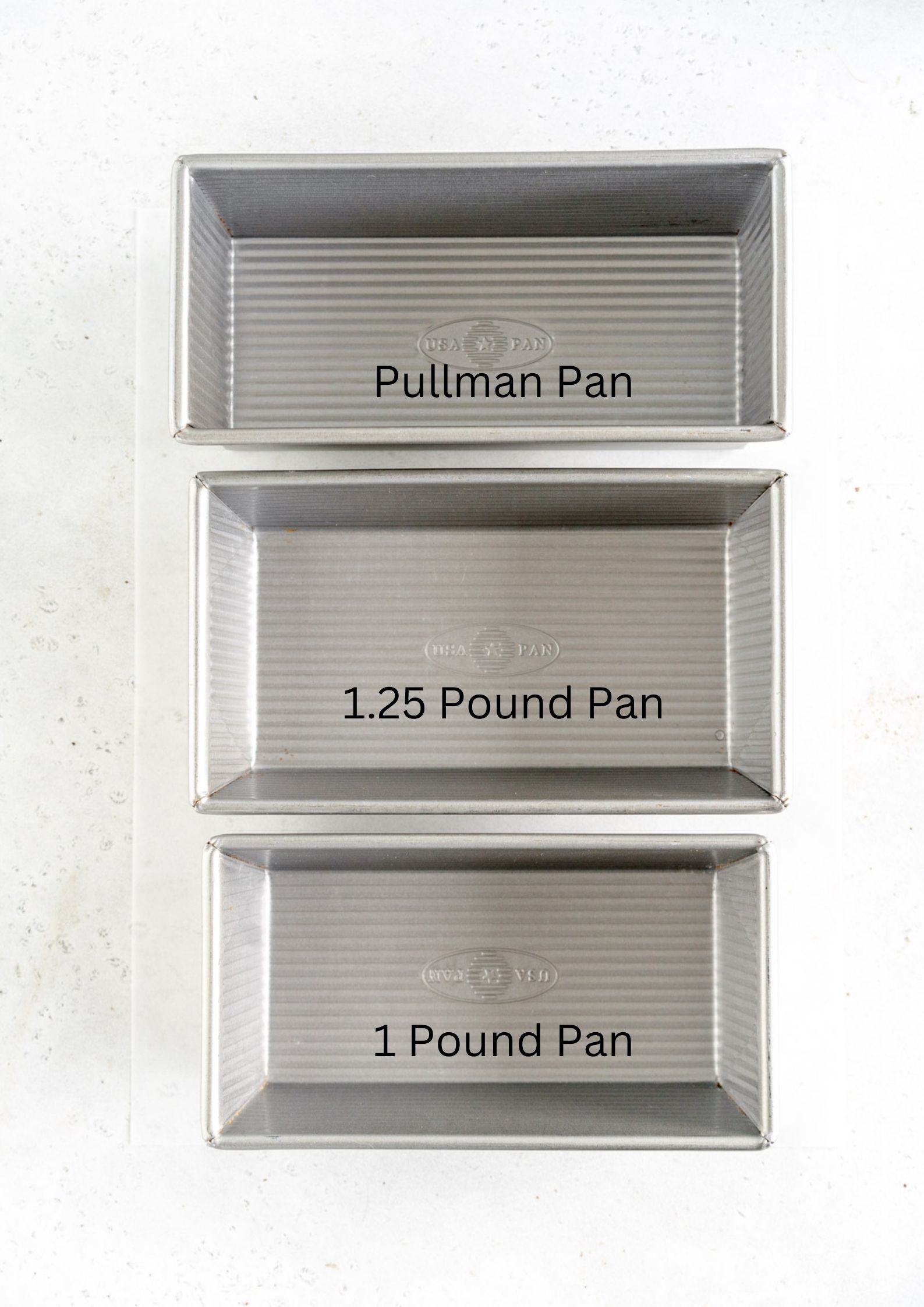
    pan sizes diagram
    Three pan sizes
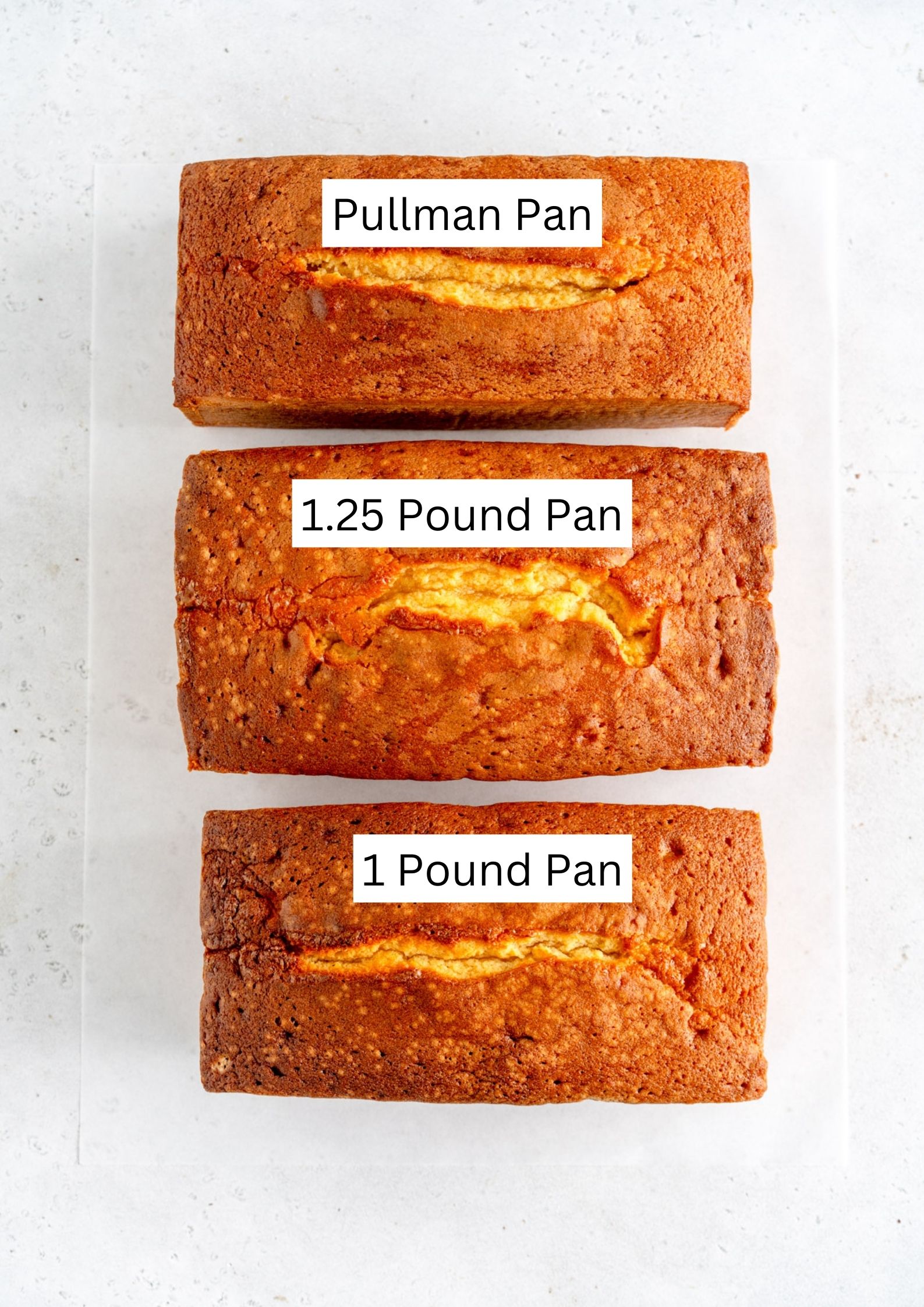
    baked cakes diagram
    Gives three different ratioed cakes

    Here are the three pan sizes used in the images:

    • 1 Pound Loaf Pan: 8.5" x 4.5" x 2.5" / 21.5 x 11.5 x 6.3cm
    • 1.25 Pound Loaf Pan: 9" x 5" x 2.5" / 23 x 13 x 6.3cm
    • Pullman Pan: 9" x 4" x 4" / 23 x 10.1 x 10.1 cm

    If you have the regular 1 pound pan, make the pound cake as written in the recipe. If you want the scaled up version for making it in a pullman pan, there are quantities in the notes section of the recipe.

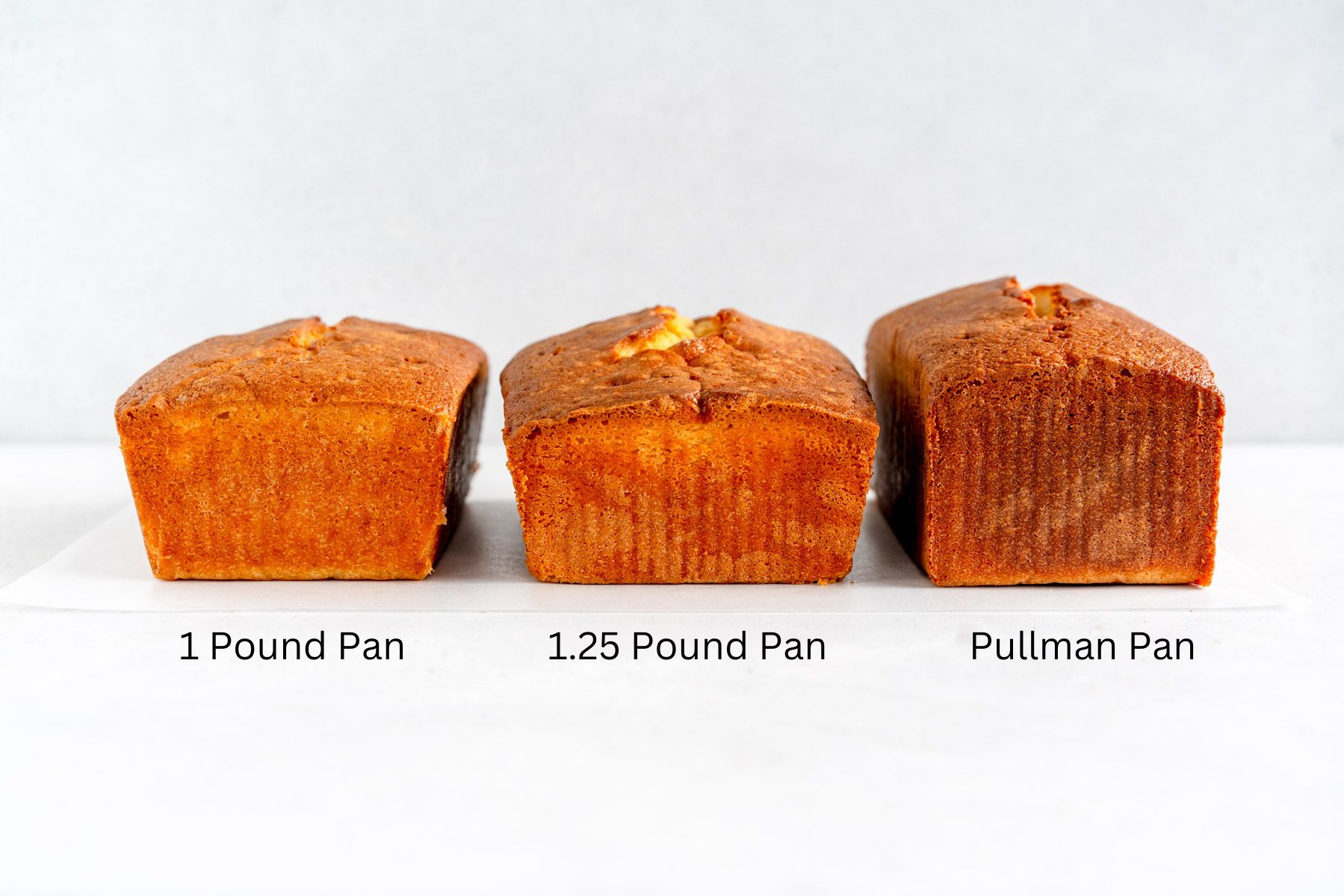
    side by side of cakes image
    I use the 1 Pound pan in the recipe but prefer using the pullman for my personal use

    Scaling up the recipe for a pullman pan.

    As you can see in the below diagram, the pans yield different shaped loaves, and you can probably see why I like the shape that the pullman loaf makes so much.

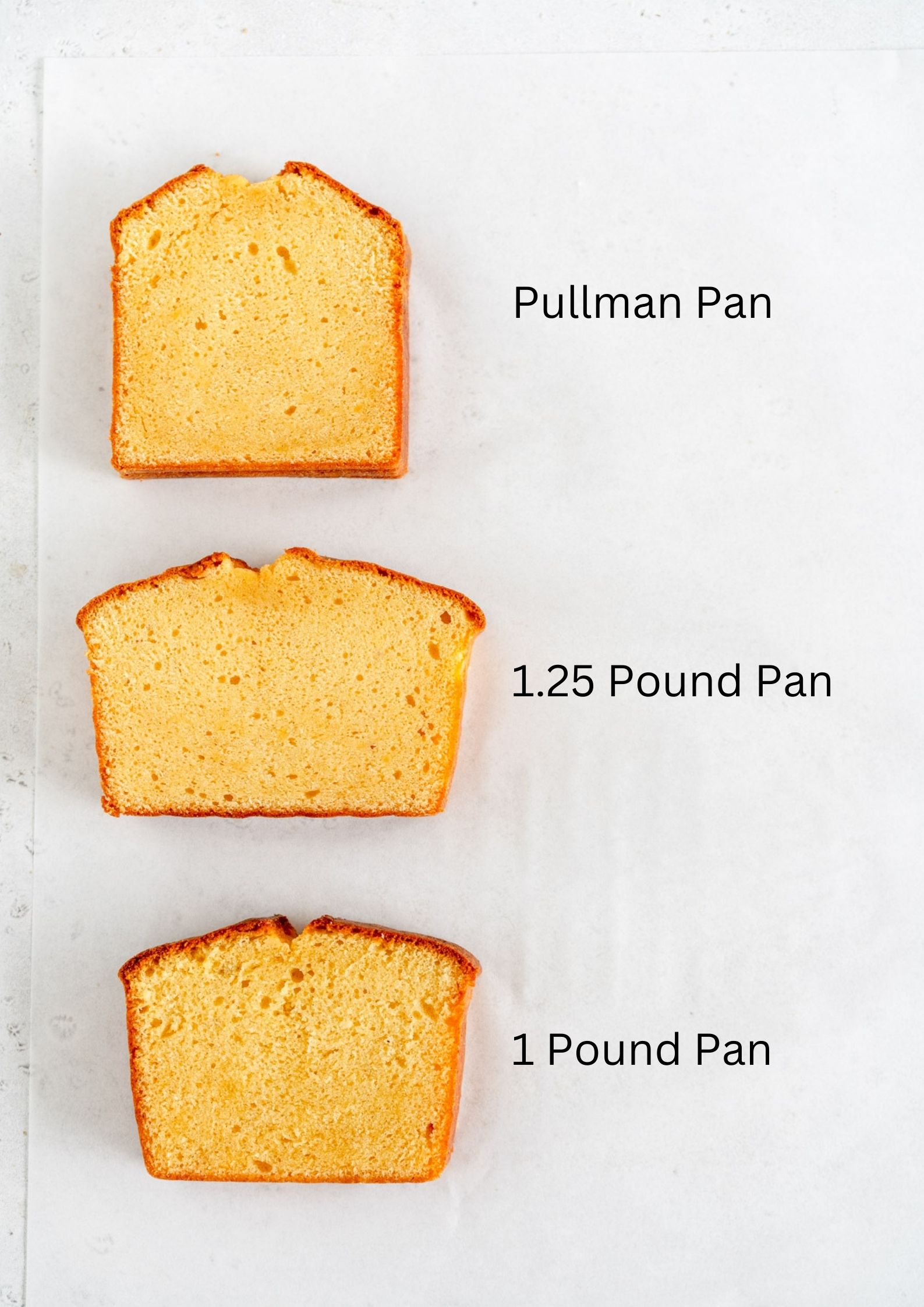
    I just scaled up the recipe to use 4 eggs instead of 3, but kept the baking soda quantity the same - this is not a typo. Because of this, the larger quantity recipe will give a slightly denser cake, which is how I prefer my pound cake, but it is already such a tiny quantity of baking soda I didn't want to reduce it any more than it is. Both ways work fine. You can see the crumb produced in the photo below.

    crumb on pound cake diagram
    When I adjust for a larger pan I do not change the amount of baking soda so the top two cakes have a slightly tighter crumb

    How to get a perfect crack on a pound cake

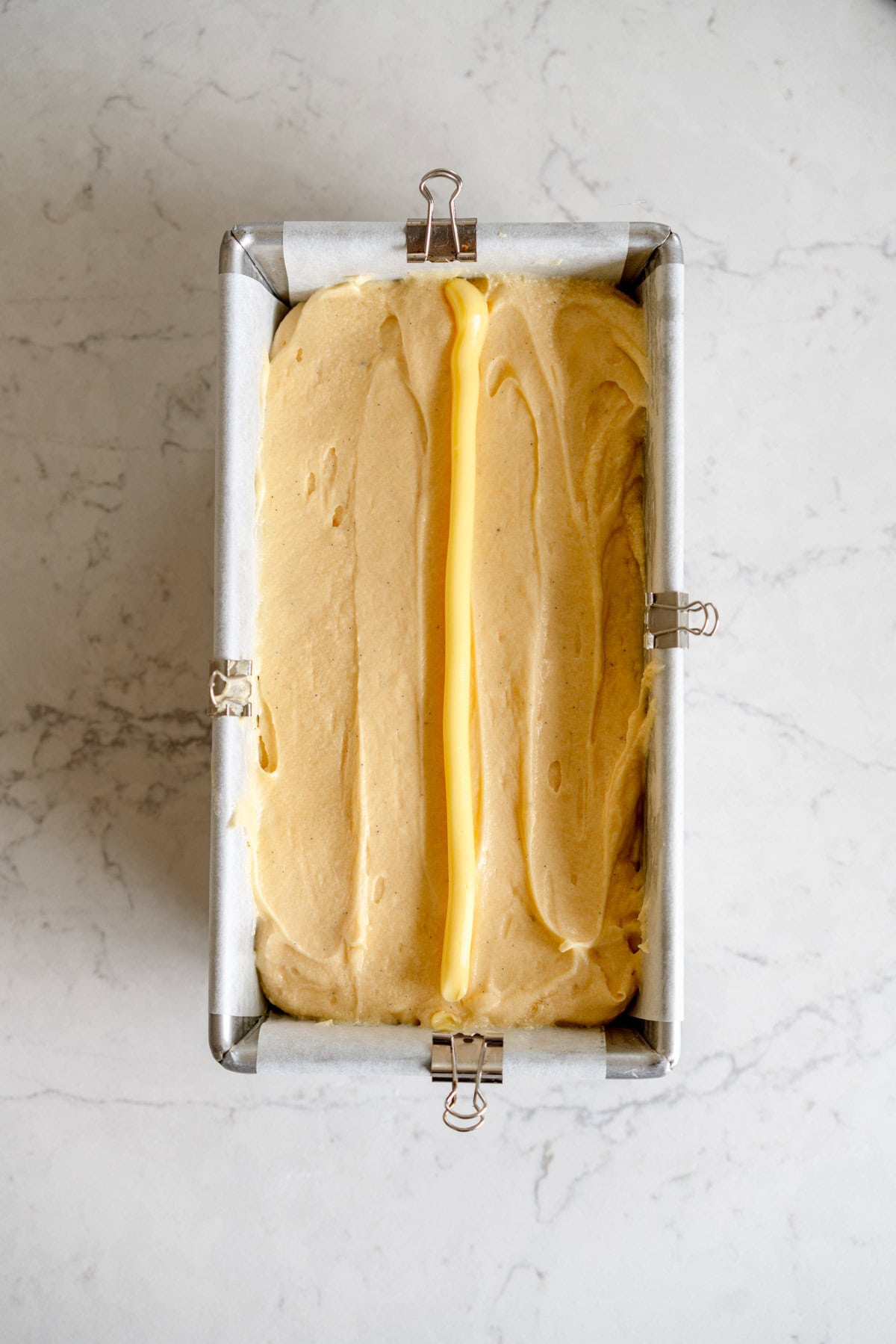
    Pound cake baked in a loaf pan often has that classic crack or divot down the middle which gives a cute v shape when you cut into a slice. This is super easy to achieve - there are a few ways of doing this, but I do it by piping a line of softened butter down the middle.

    Basically the cake is going to crack regardless, so by piping butter down the middle, you create a point of weakness from the melted butter and it means that you can control where the cake cracks.

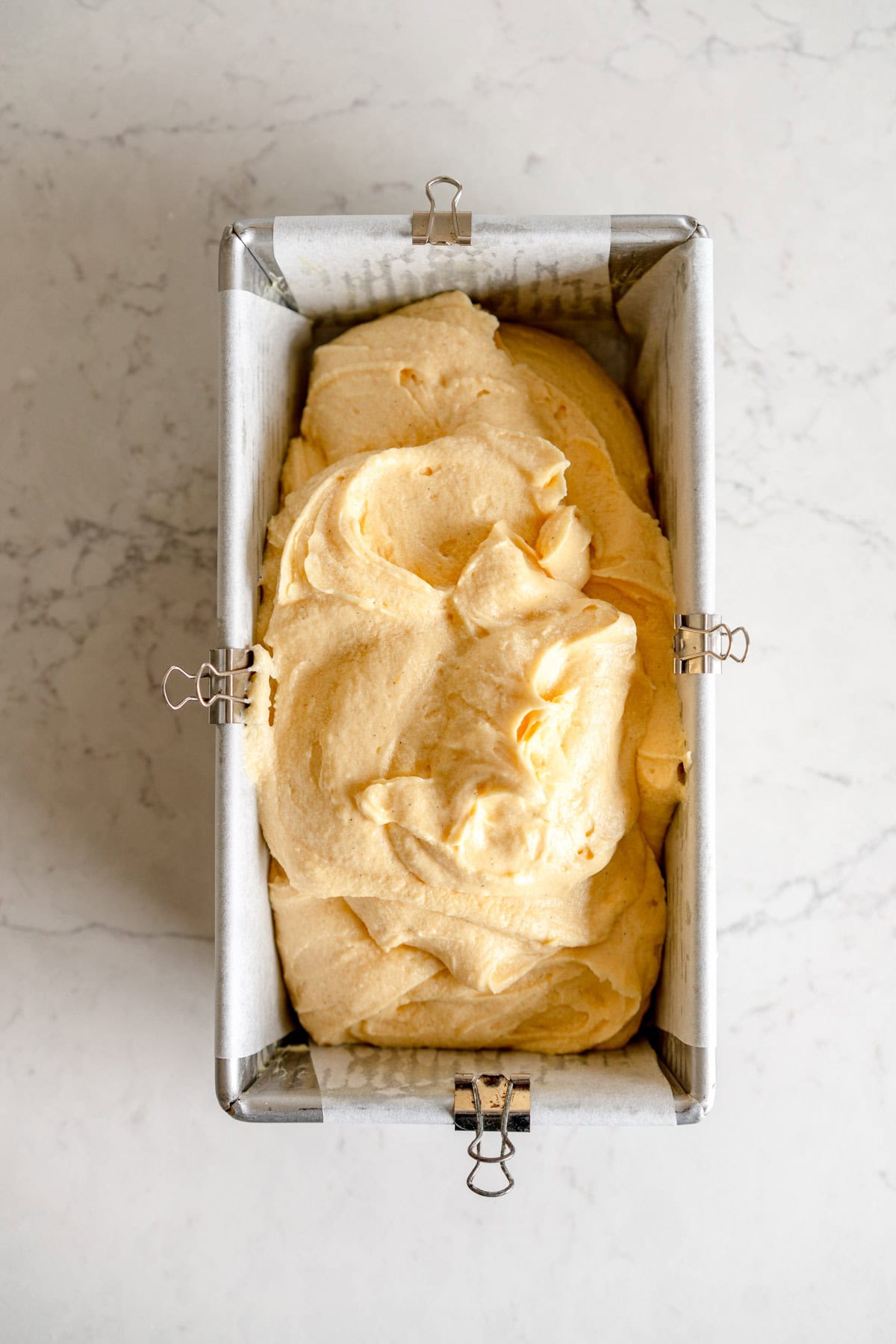
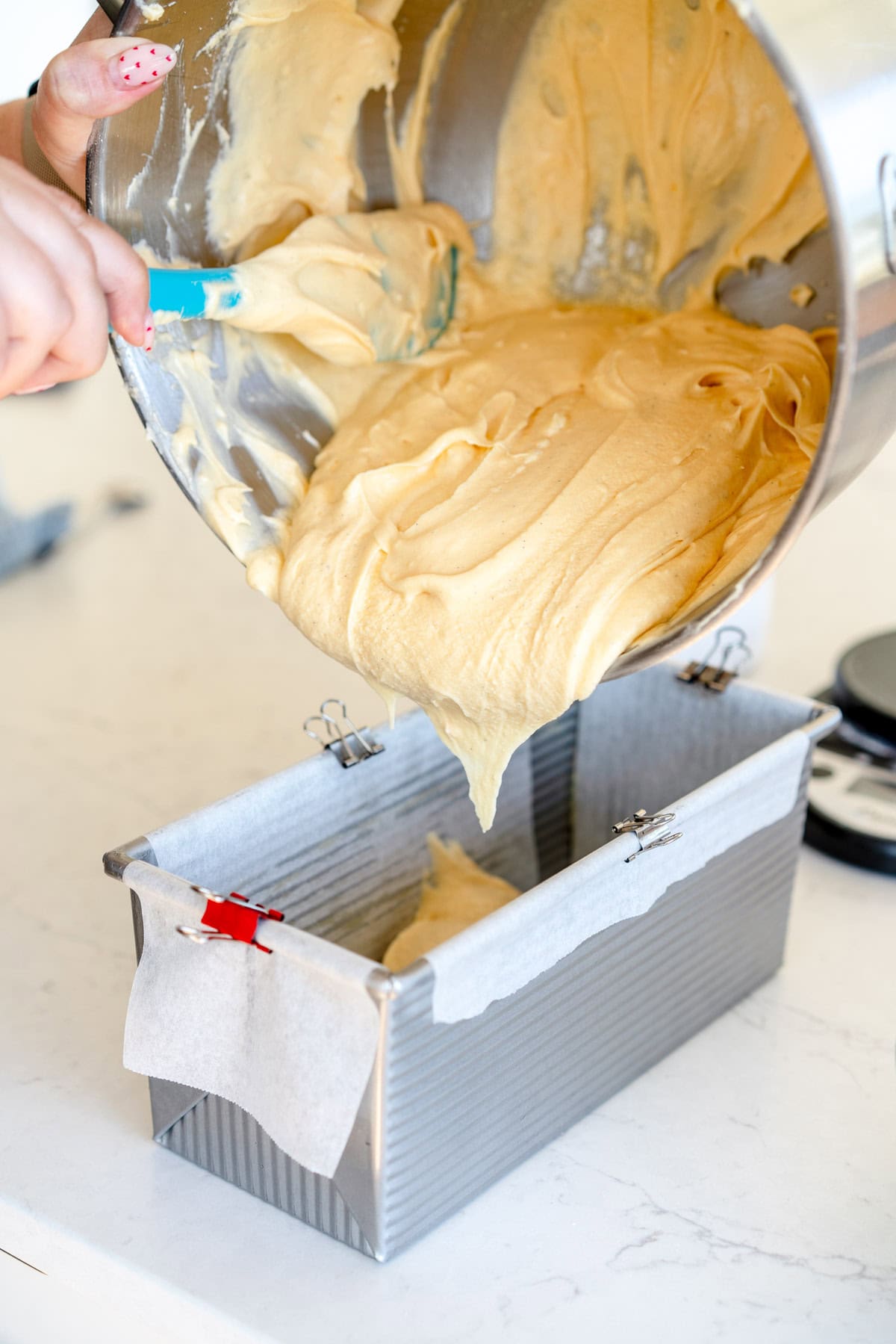
    pound cake batter added to pan
    Carefully spread cake in pan
    line piped down cake
    Optional butter line down the middle

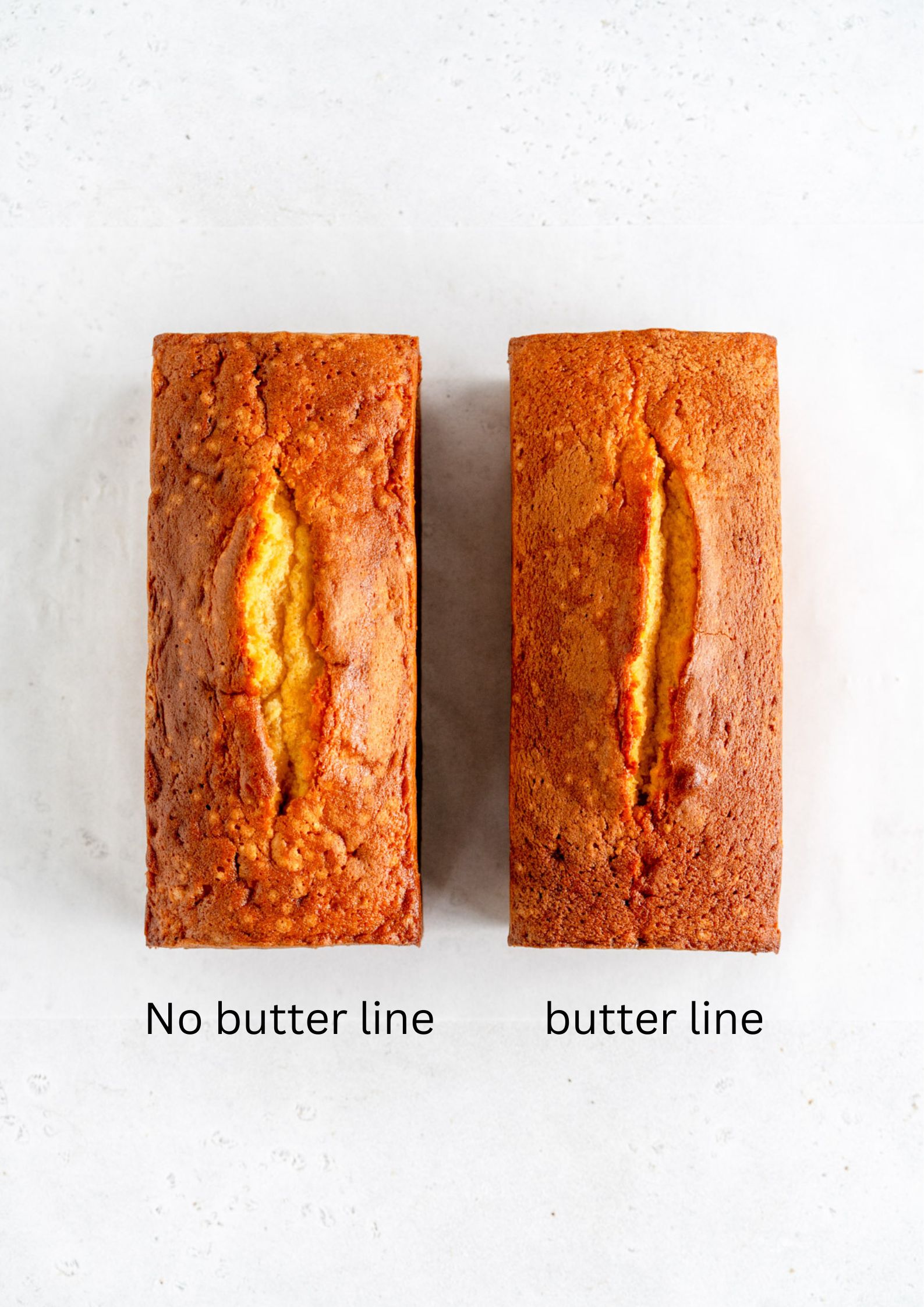
    This is totally an optional step - you can see in the images below that I made two cakes, both with and without, to show the difference! The one with the butter piped on it cracks much more cleanly.

    I have also seen people cut a little line of butter, or use oil on a bench scraper or a knife to run a line down the middle. Basically you are just trying to create a little spot of weakness.

    butter vs non butter
    Butter line vs no butter line - baked in a pullman pan

    How to finish a pound cake - to glaze or not to glaze?

    I LOVE finishing this cake off with a glaze - I use my go-to 2 ingredient lemon glaze. I make one batch of it, and once the cake is cool, I paint it all over the outside surface using a pastry brush then leave it to dry.

    This gives the most amazing crusty (in a good way) glazed finish.

    The cake is absolutely delicious unglazed and finished with a sprinkle of powdered sugar so if you want to do that too, then go for it.

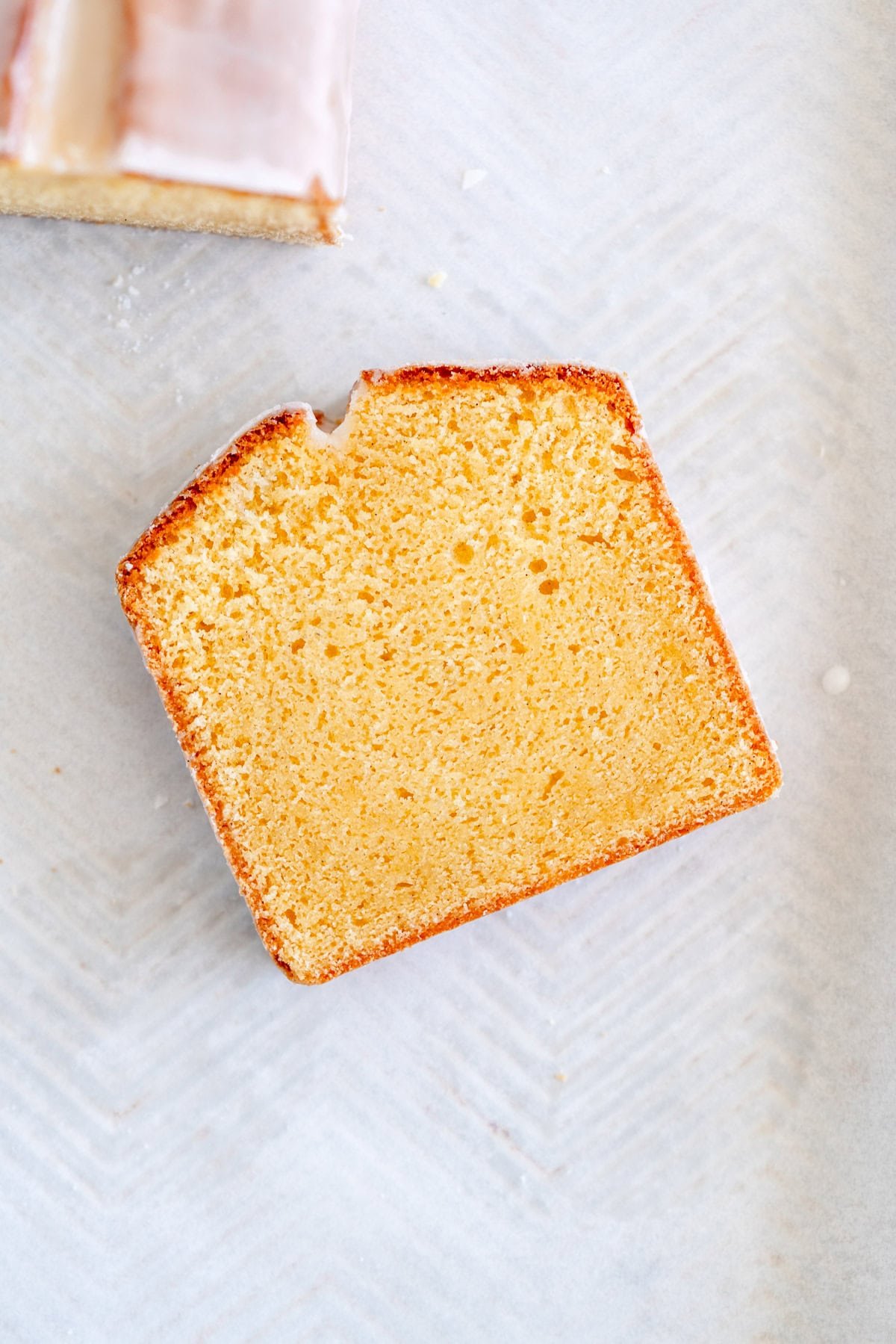
    piece of cake on parchment paper
    sliced pound cake

    How to tell when a pound cake is baked

    This cake bakes with the low and slow method - when Chelsea sent it to me she had written 'bake for many many minutes'. I bake it at 165°c / 330°f and it takes about an hour and 10 minutes in my oven.

    The best way to check that it is done is to insert a skewer or a knife into the cake, and make sure that it comes out clean (a few moist crumbs are ok). If it is at all wet, keep it in the oven to continue baking.

    If the cake starts to brown too much for your liking (this can depend on your oven), tent the top with a piece of foil.

    pound cake batter ready to go in pan

    Storage and make-ahead tips

    One of the many things I love about this pound cake recipe is how well it stores. Kept in an airtight container or wrapped in plastic wrap, it can easily last a week. When we eat it at home we just store it cut side down at room temperature but this depends on your environment and how you are comfortable storing food.

    This cake can comfortably be made 2-3 days in advance and still be an amazing texture (in fact, I think that it gets better the day after you have baked it)

    pound cake batter going into pan

    Frequently Asked Questions

    What tools and equipment do you use?
    You can find a full list of the tools and equipment I use on my products page

    Which pan did you use?
    I used a 1 lb loaf pan for this recipe, and there are also notes underneath the recipe on how to scale this recipe up to use a pullman pan.

    Can pound cake be frozen?
    Yes - tightly wrapped, pound cake can be frozen for up to 3 months.

    Can this recipe be scaled?
    Yes - I almost always double it when I am making it. I find that it is best to make it in a stand mixer if you are making more than one batch to ensure the butter and sugar get creamed properly.

    ❤️ Made this recipe and love it? ❤️

    I would LOVE for you to leave me a review and star rating below to let me know how you liked it! Also, please make sure to tag me on Instagram!

    Answers to your baking questions

    Over the years, many of you have asked me questions about:

    • baking in grams
    • adjusting oven temperatures
    • what kind of salt to use
    • and many more!

    I've curated and answered them all for your easy reference in this frequently asked questions post!
    Filed Under: Base Recipes, Loaf Cakes and Quickbreads

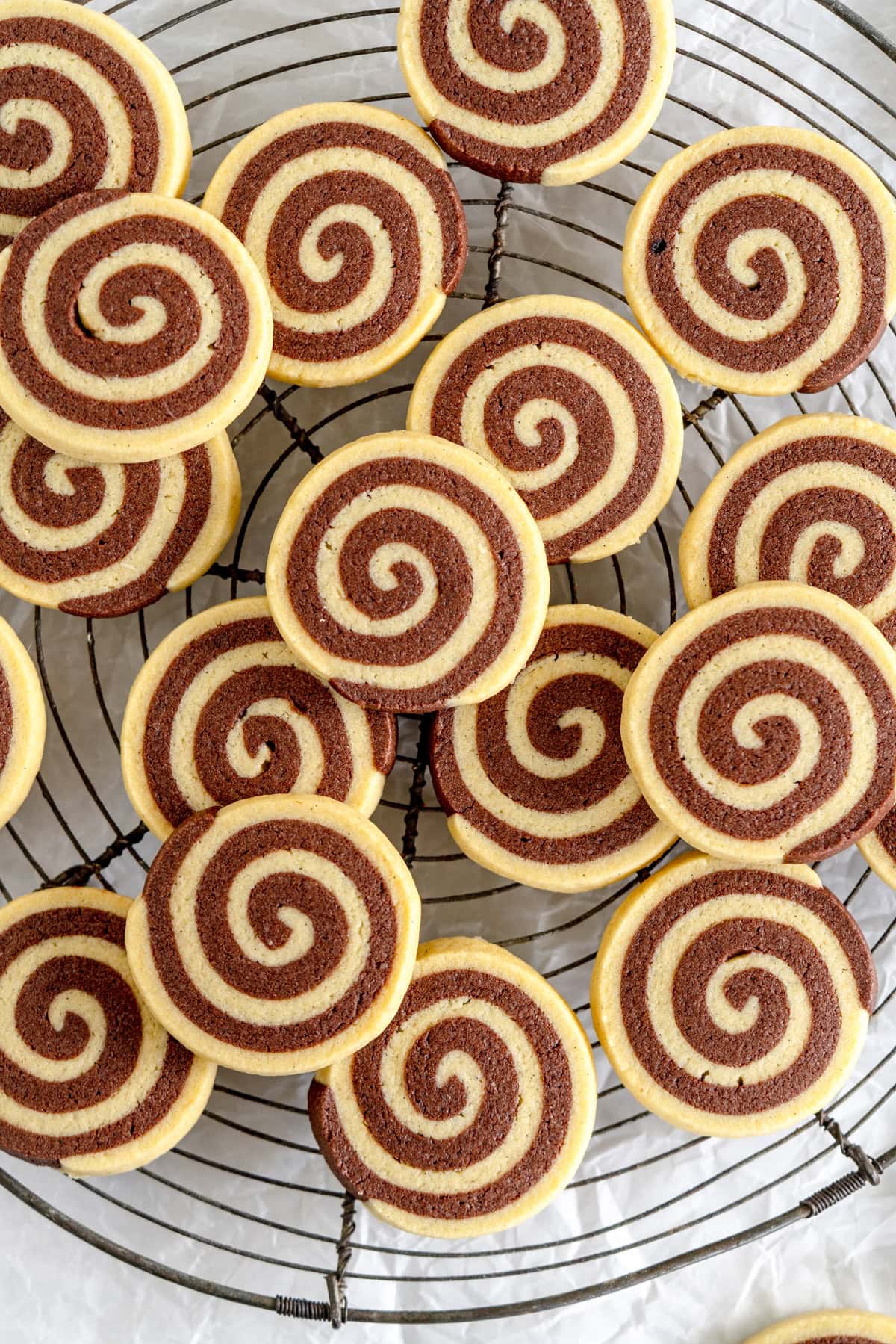
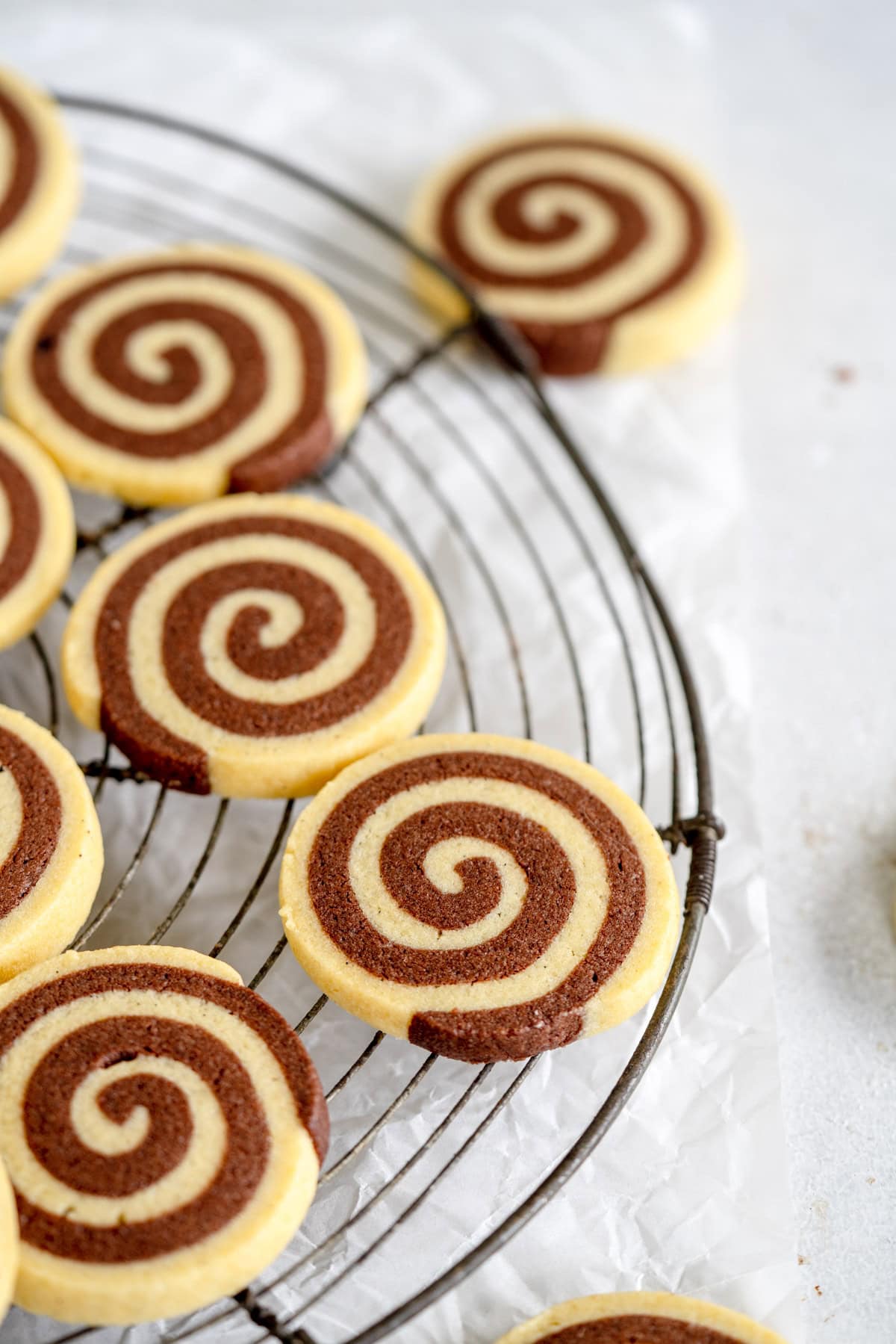
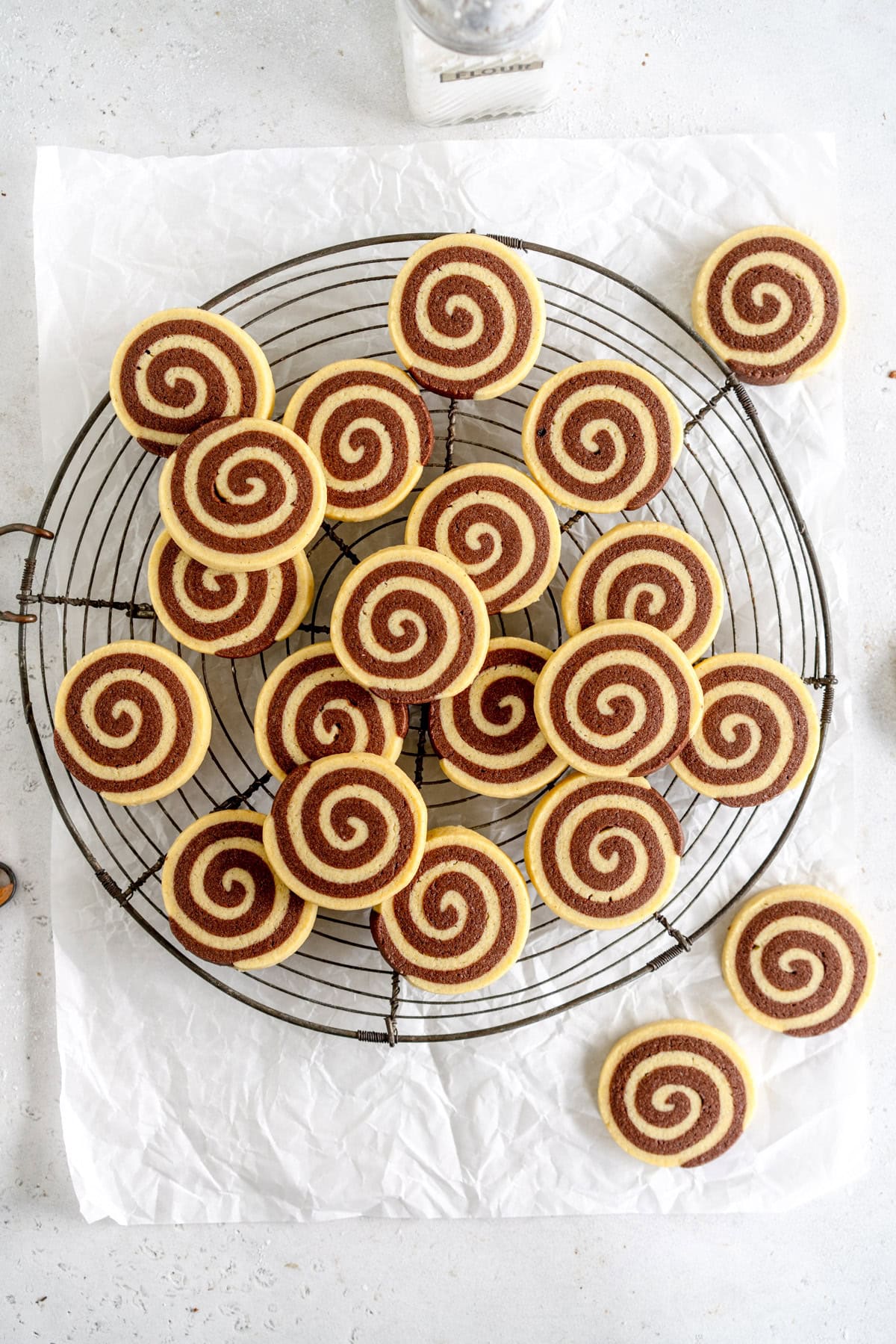
    Super Cute Pinwheel Cookies (With Template!)

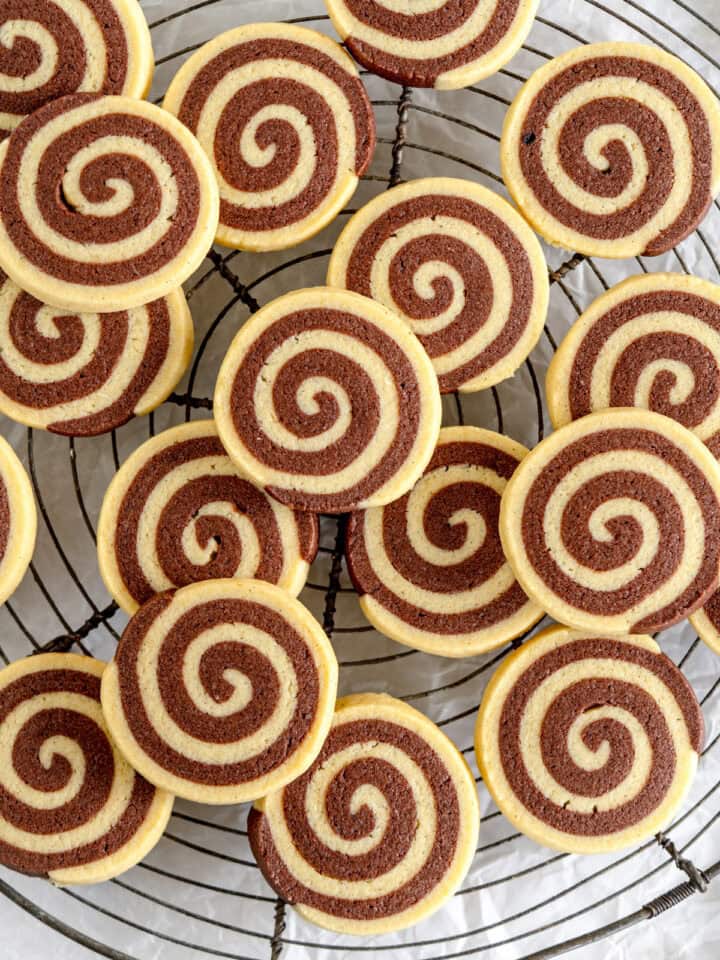
    pinwheel cookies on wire rack

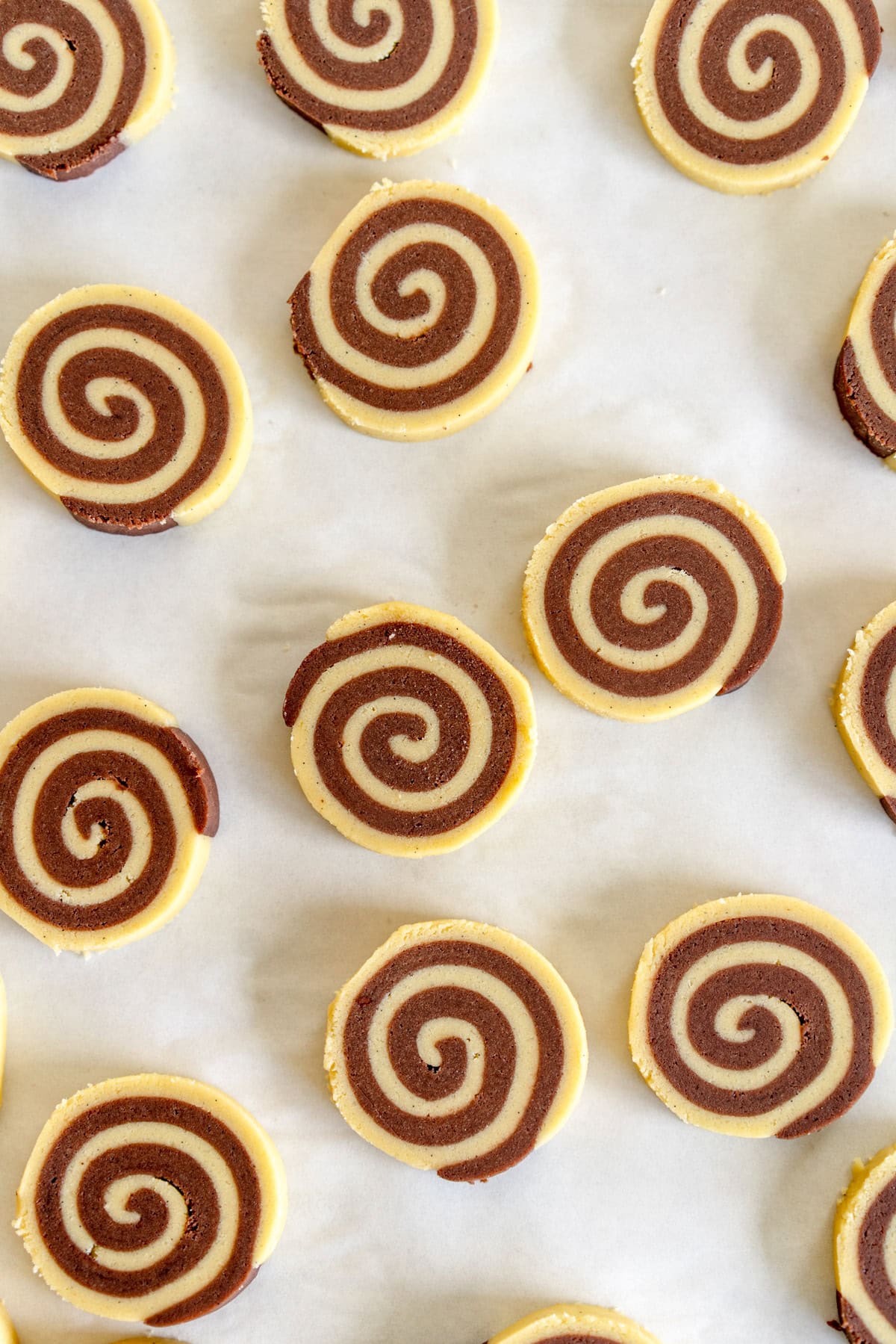
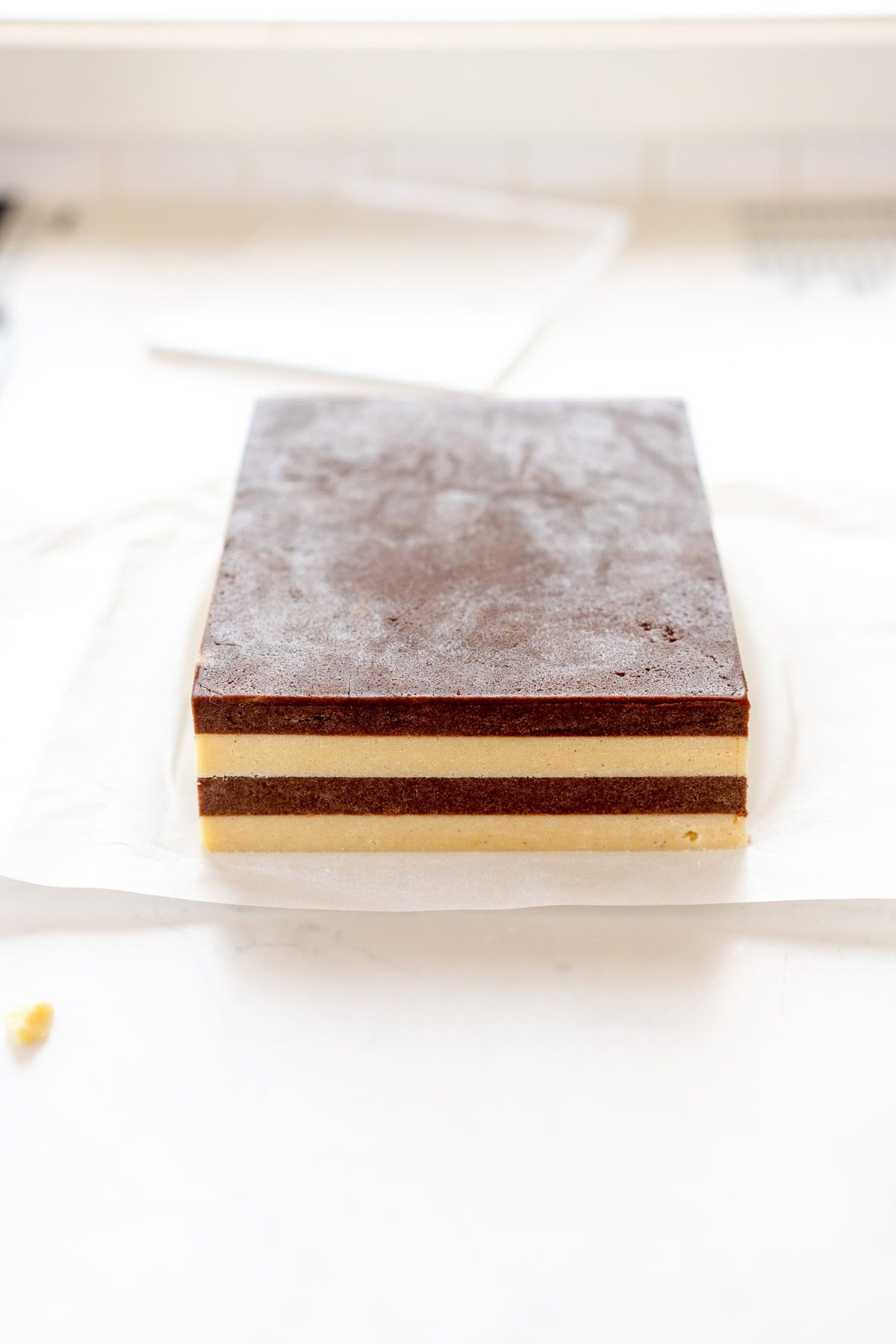
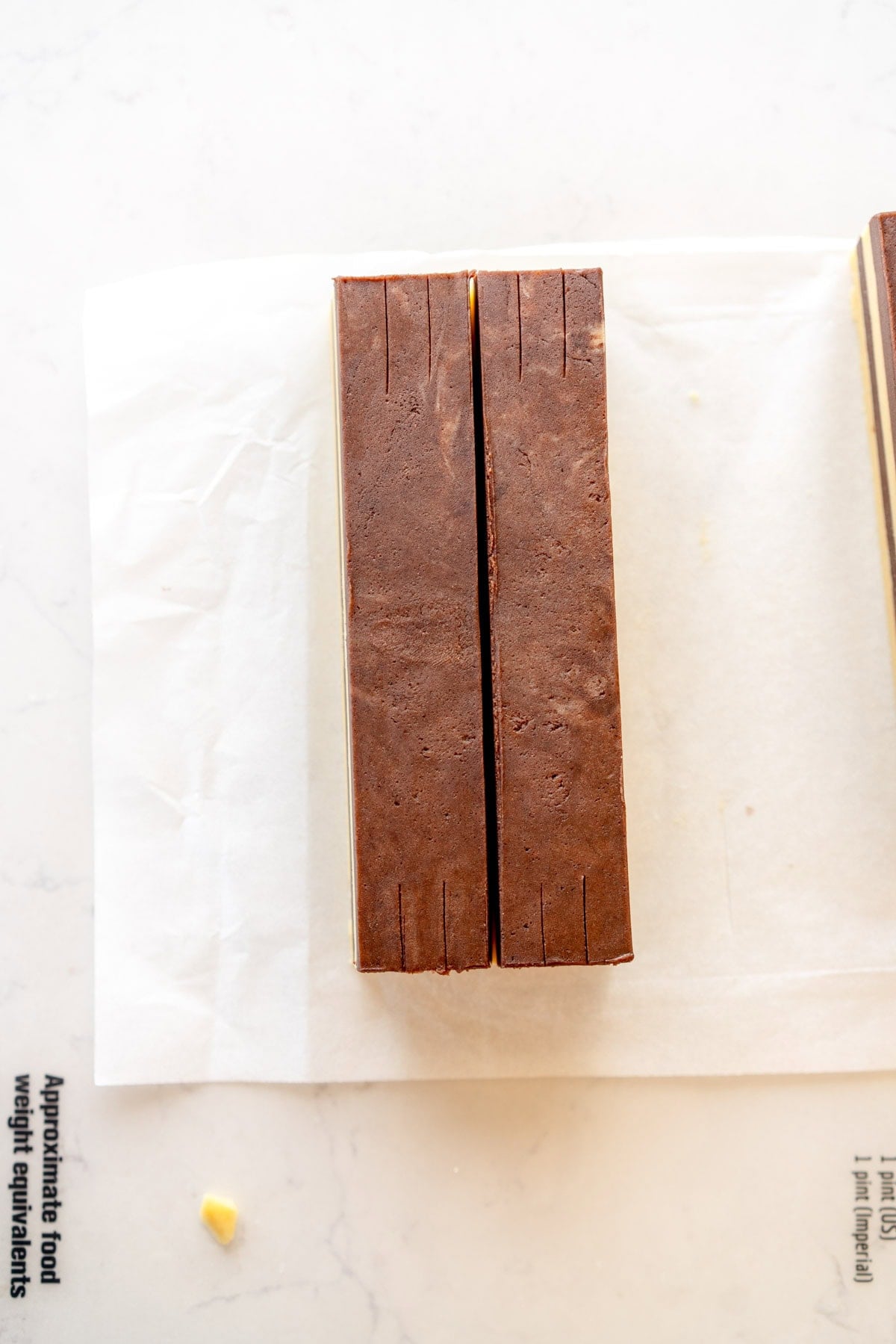
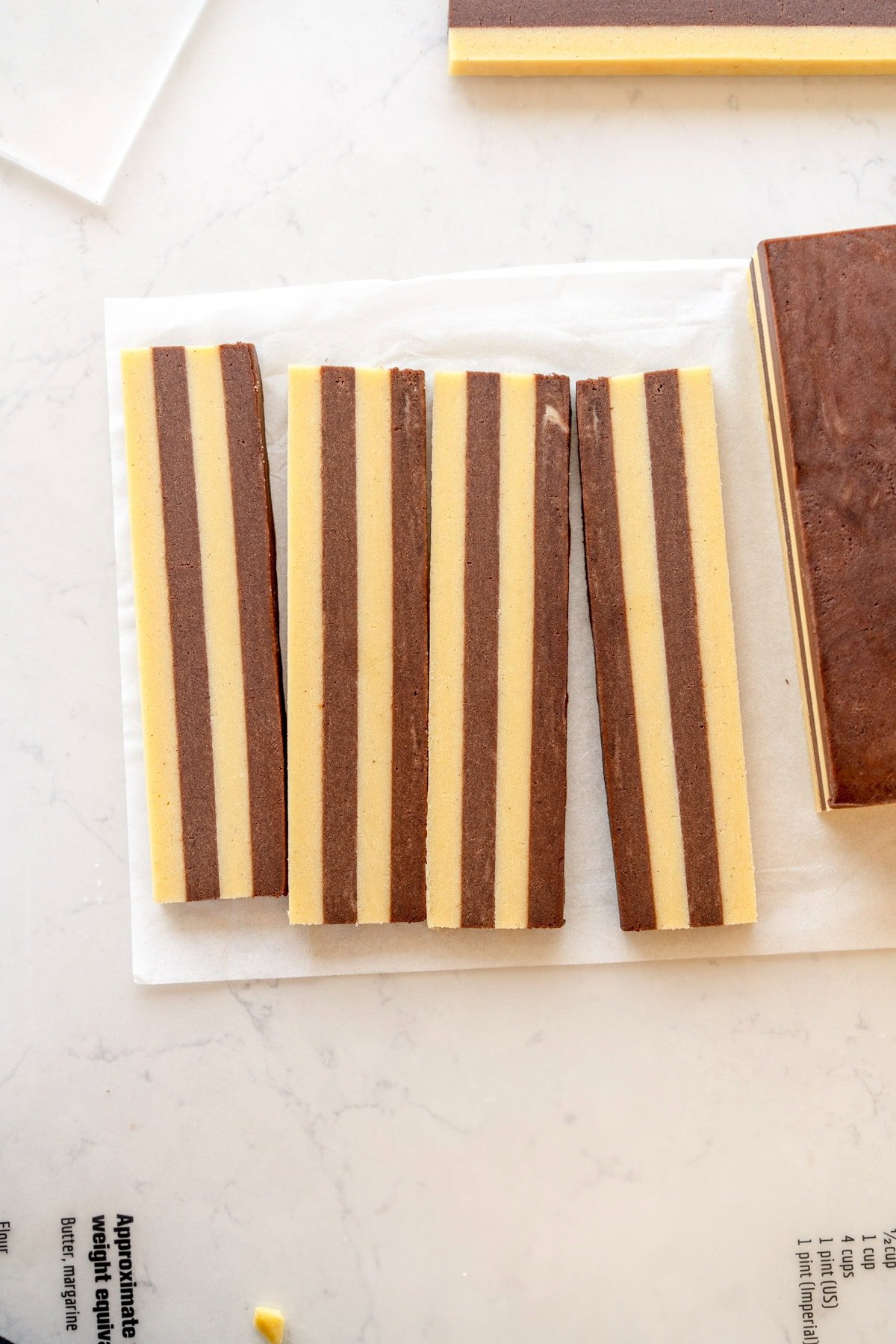
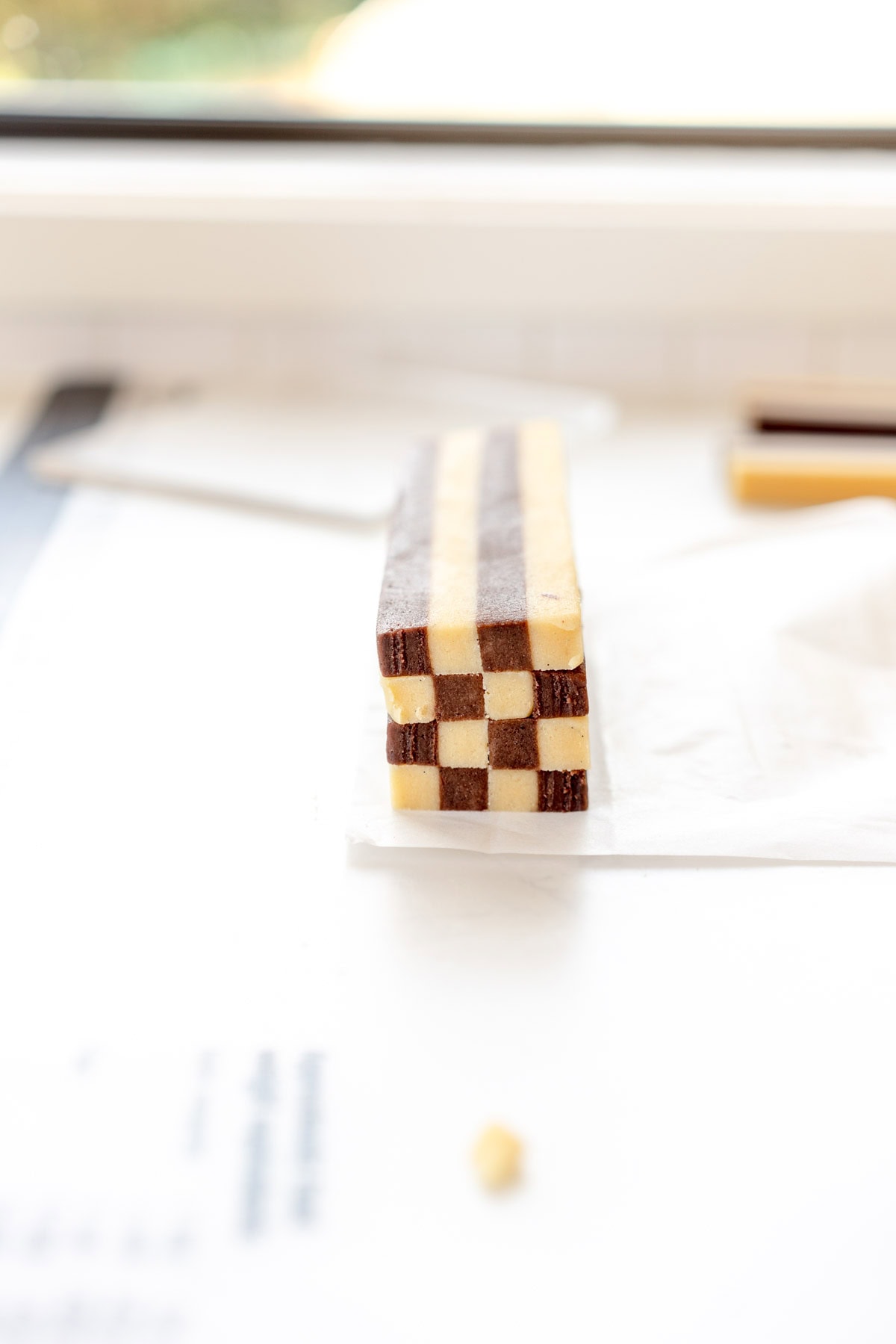
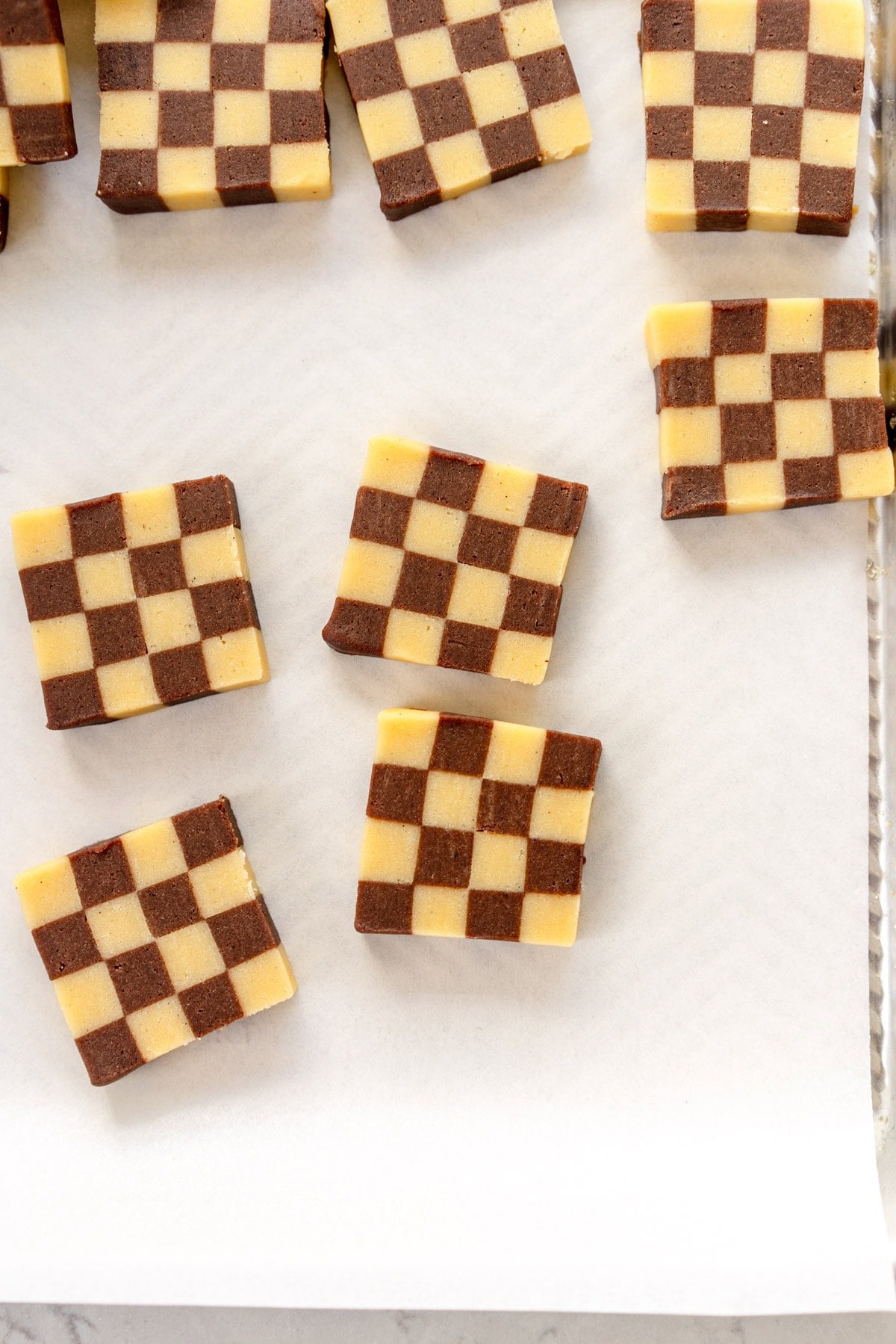
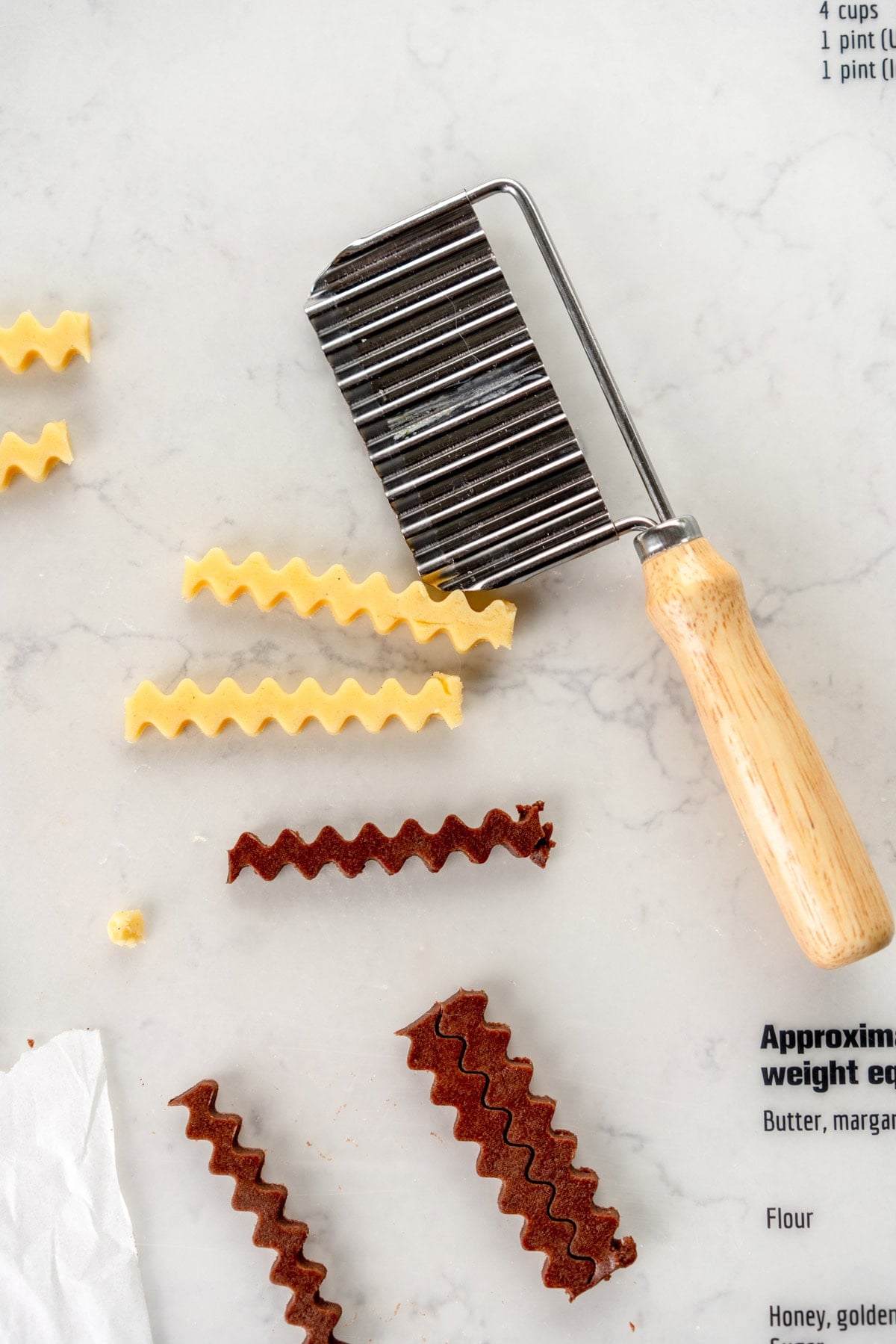
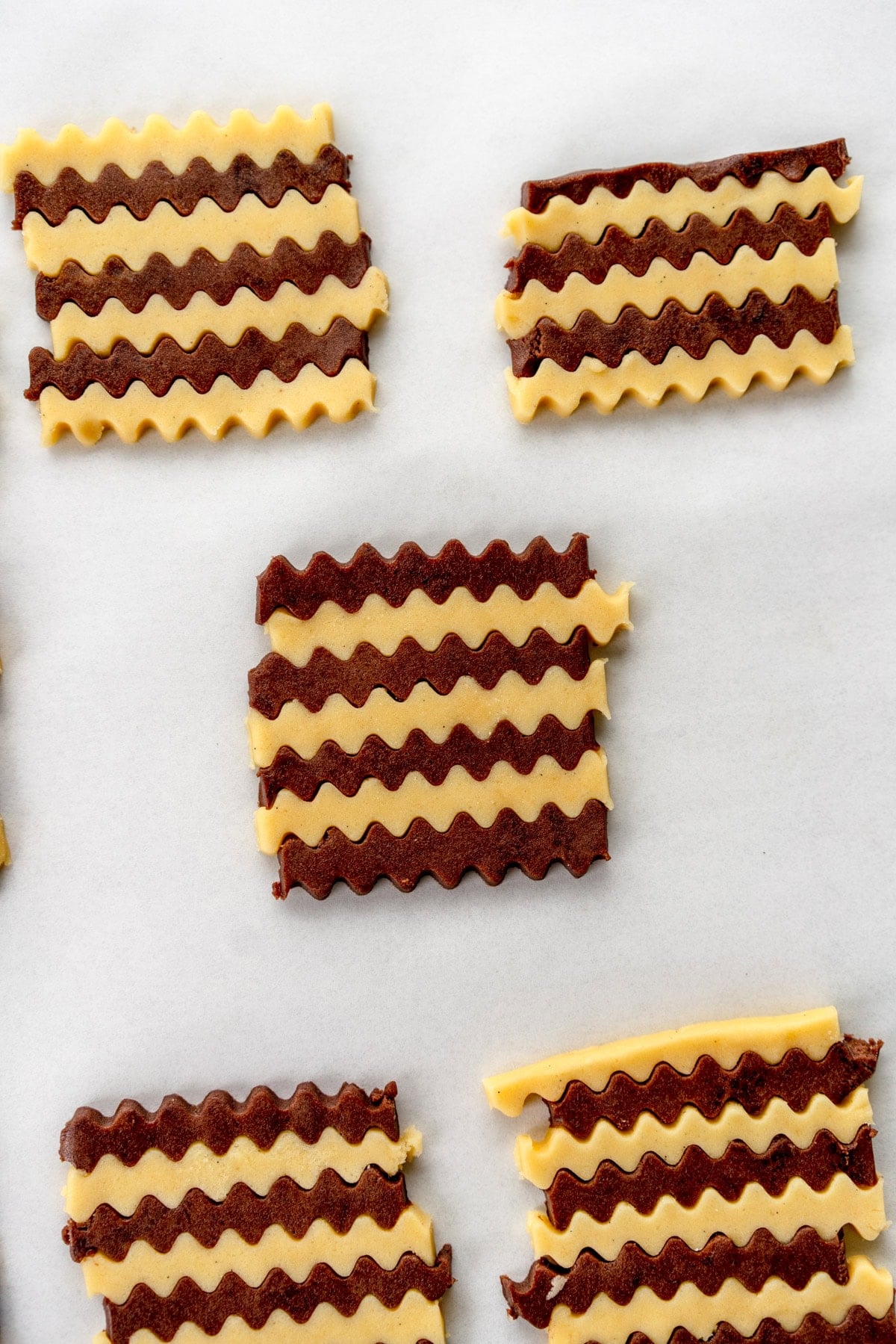
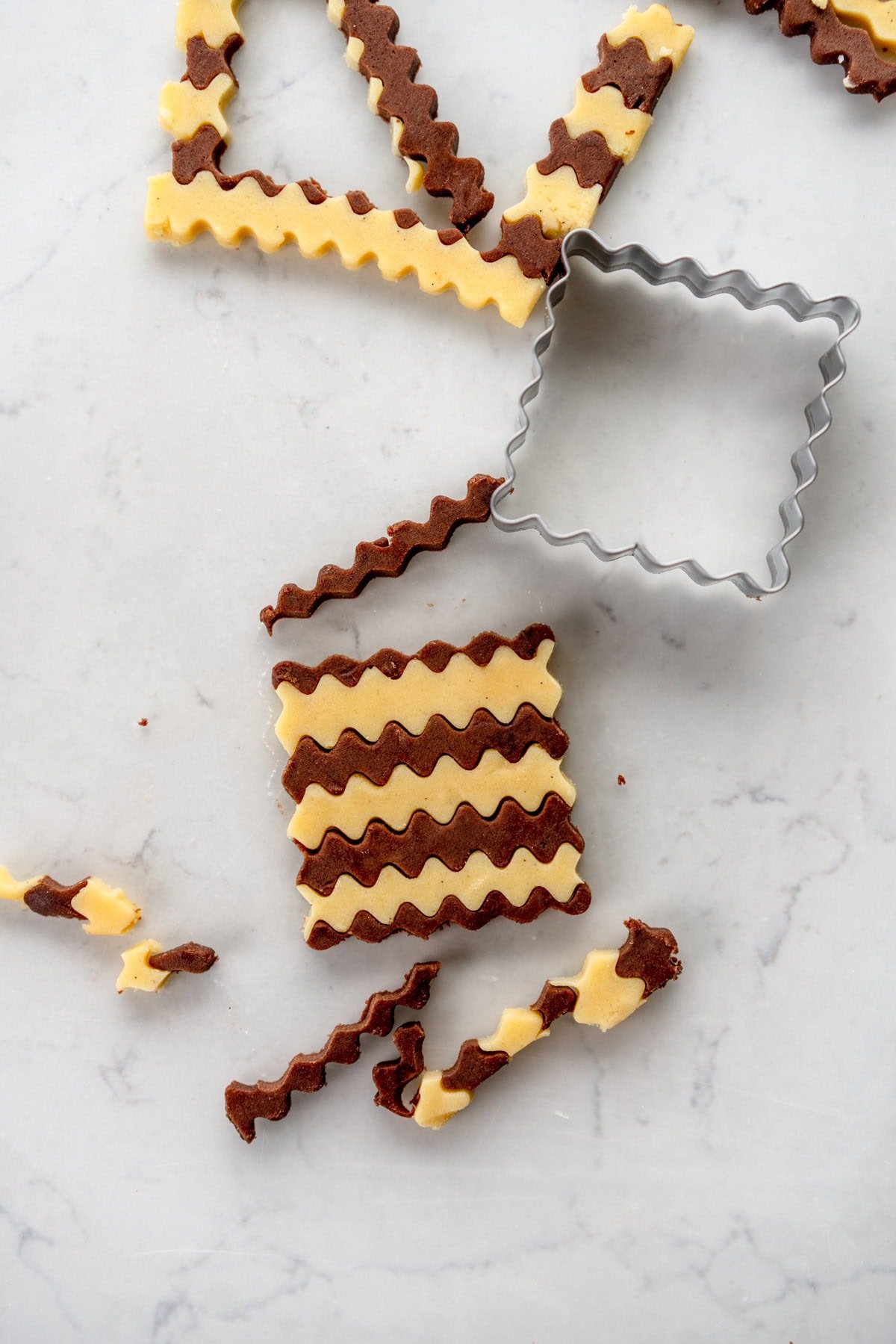
    These pinwheel cookies look fancy, but I promise with that my easy guide with a template will walk you through every step of the way. Chocolate and vanilla cookie doughs are rolled together to form a swirly pinwheel, then sliced and baked into the perfect festive cookies! Check out my step-by-step photos where I explain every step! I have also included notes on how to use the same dough to make checkerboard cookies and zig zag cookies.

    pinwheel cookies on wire rack

    Hi hi! I am just popping in to share this pinwheel cookie recipe with you! I made these what felt like a million times to get them just right and to make sure that this recipe was totally foolproof and I can hold your hand every step of the way.

    Other recipes I read were a little too vague for my liking, so I came up with a super easy template to use to make your life a lot easier - a piece of printer paper!

    This makes the process super streamlined and much easier than having to measure and re-measure dough. We make two flavours from one dough - a vanilla and a chocolate, then stack them up and layer them for the most perfect pinwheel cookie.

    These cookies are buttery, soft and chewy, and just so delicious - they taste good as well as looking amazing.

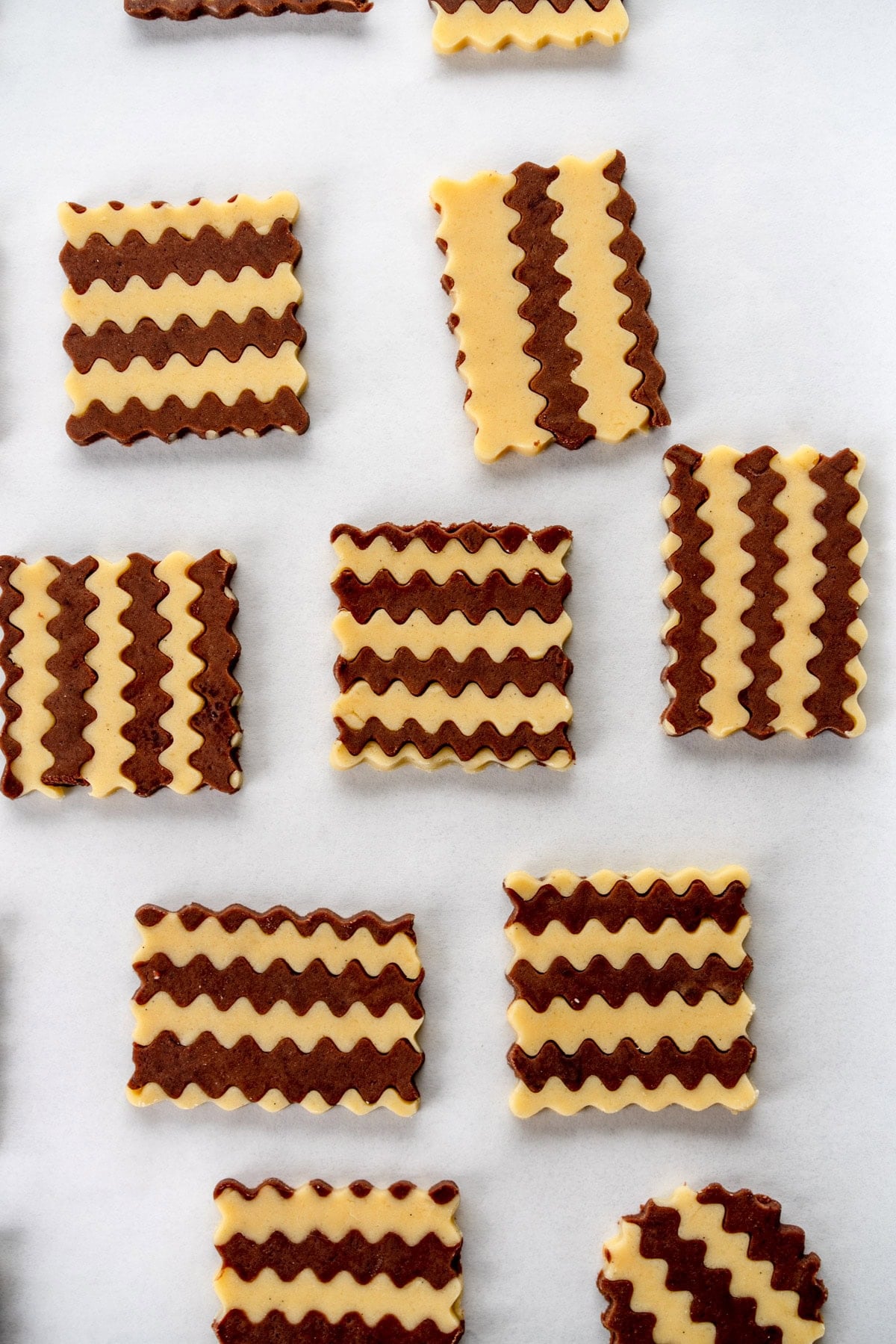
    This recipe also includes notes on how to make checkerboard cookies and super cute zig zag cookies!

    side on image of pinwheel cookie
    pinwheel cookies on rack

    What are Pinwheel Cookies?

    Pinwheel cookies are essentially a sugar cookie, made up of two different flavoured dough. I have kept mine classic and riffed off of my classic sugar cookie dough, adding in some cocoa to half for a chocolate swirl.

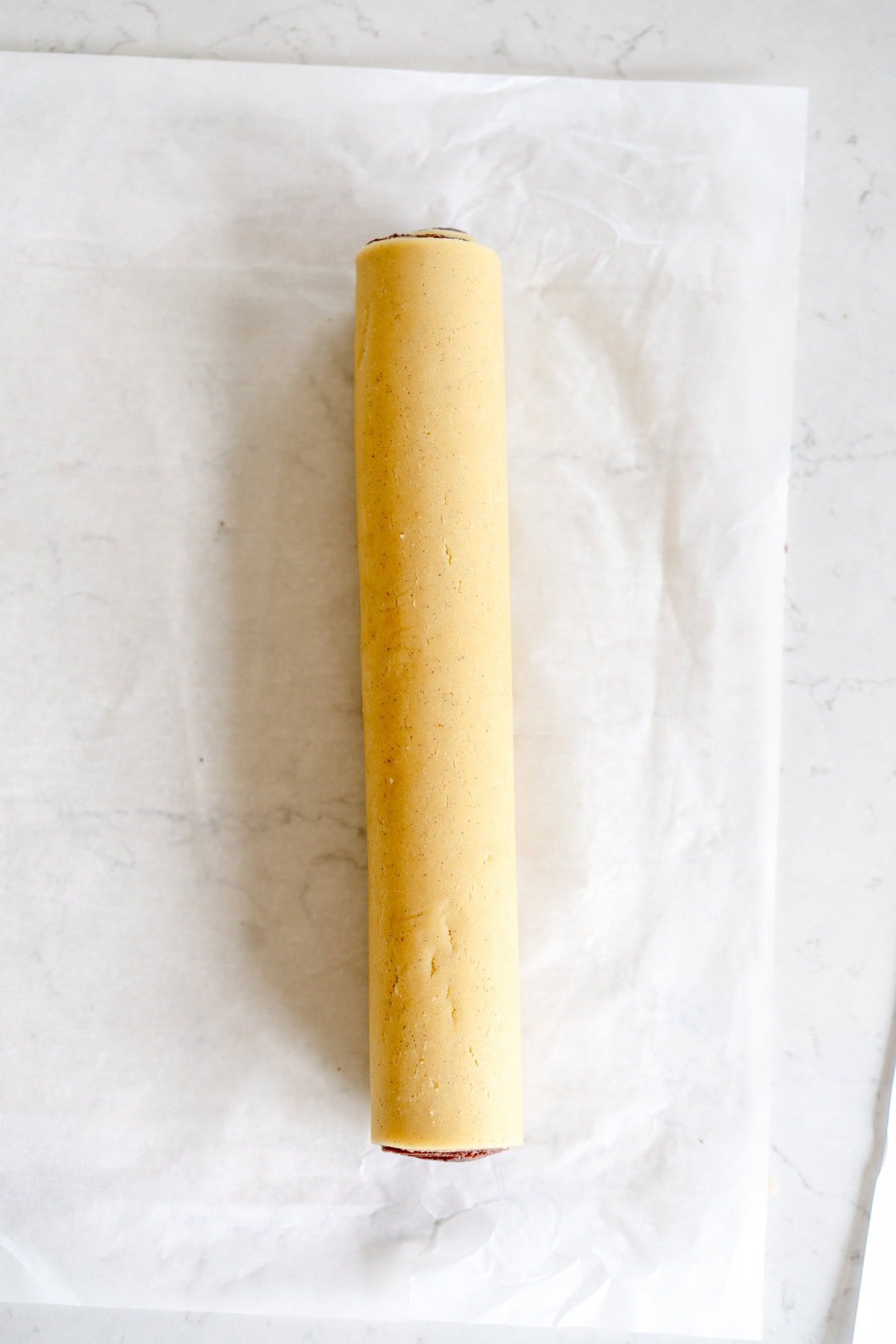
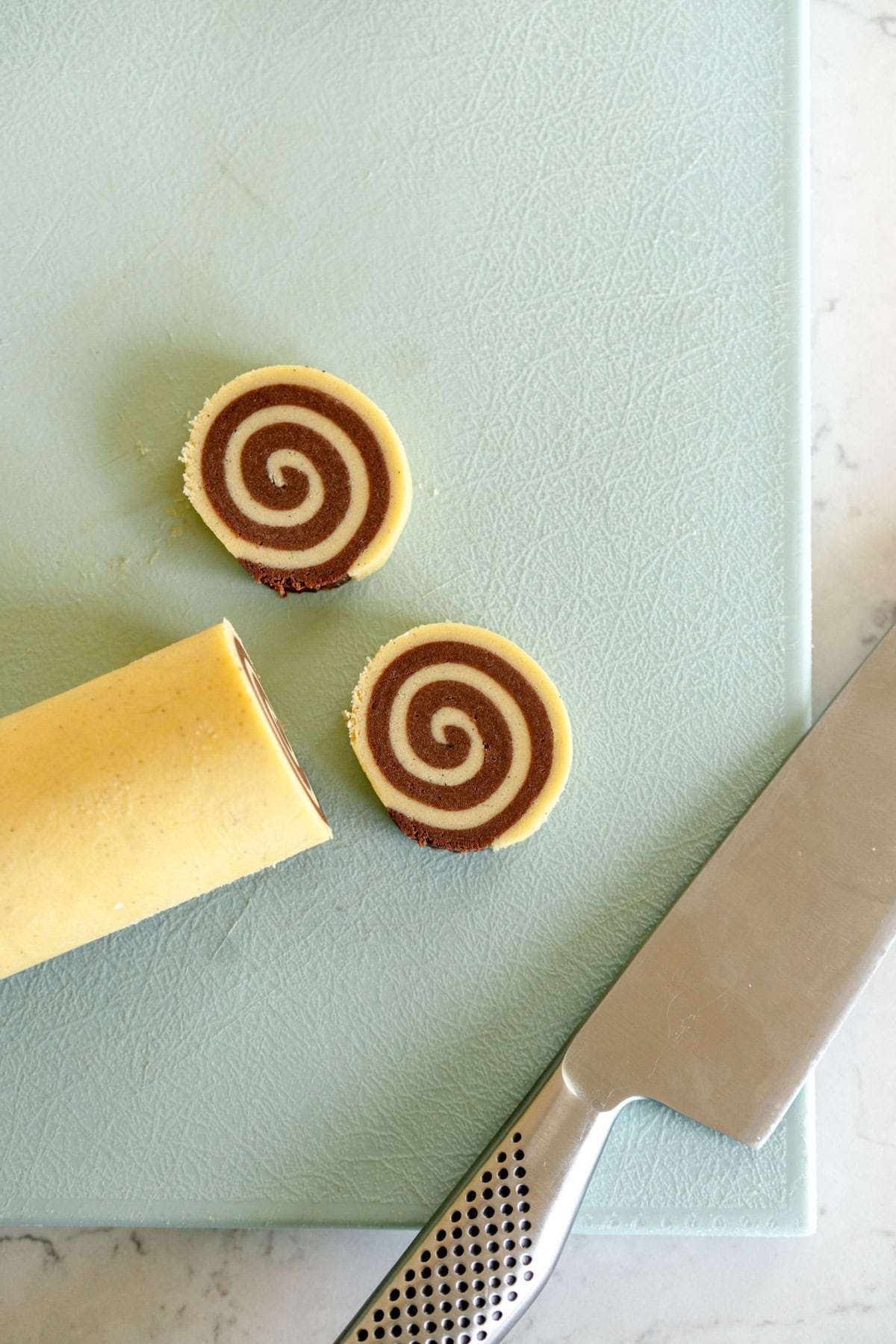
    You make the doughs, roll them out, then stack them up and roll them up into a log. When you slice into them you reveal the spiral inside.

    These look a little intimidating but I have tried to break down the steps as much as possible in order to set you up for success!

    This recipe makes about 24 cookies but it would be very easy to double and make extra cookies while you are doing the process - the sliced unbaked cookies can be stored in the freezer for months before needing to be baked, giving you fancy cookies. on hand at all times!

    I have left mine plain on the outside, but feel free to roll them in sprinkles or crunchy sugar, or dip in chocolate when they are baked.

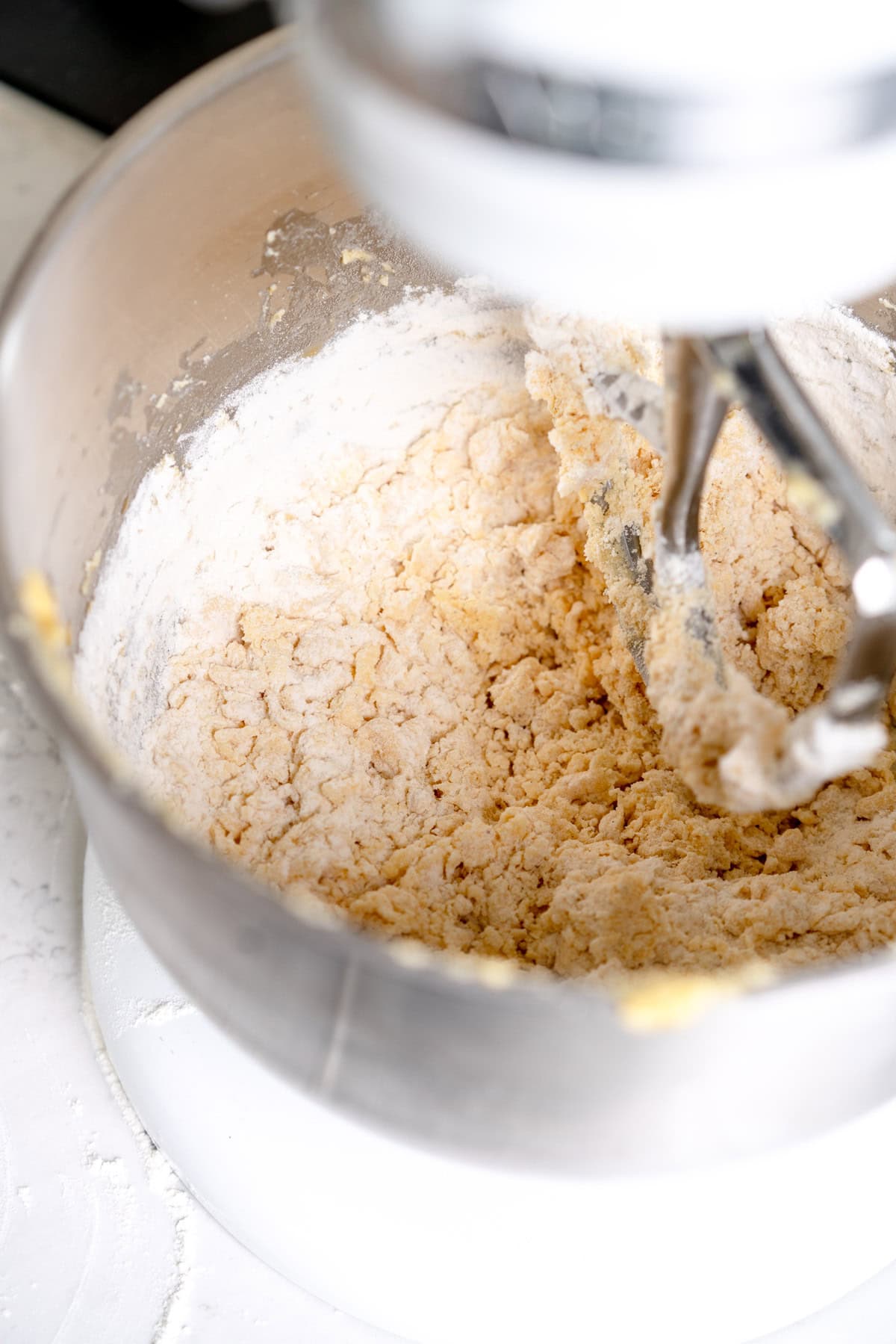
    vanilla cookie dough
    Making base dough
    chocolate cookie dough
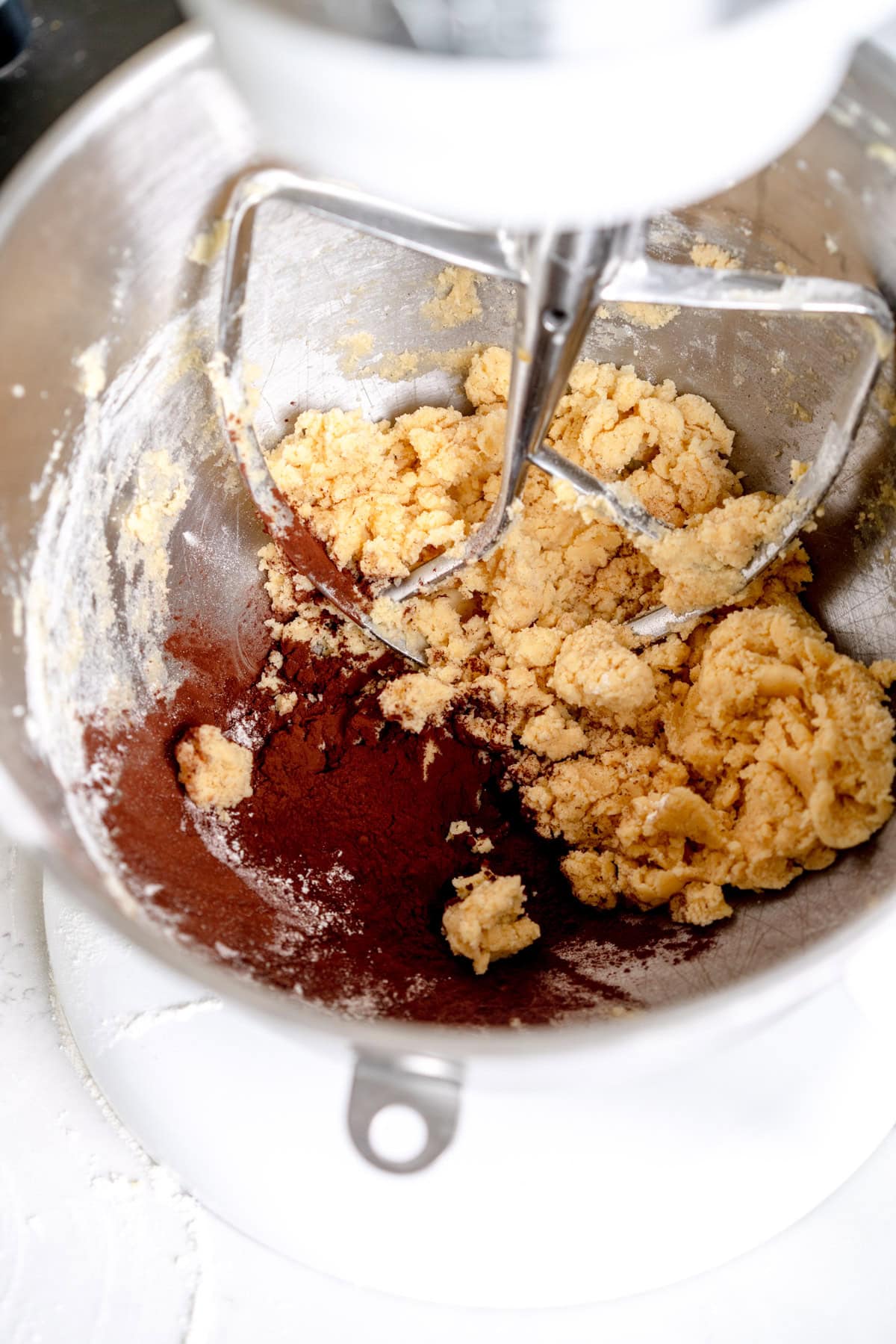
    Remove half and add cocoa

    How to make two cookie doughs from one batch

    This is a super easy method - you mix up the vanilla sugar cookie dough, then remove half and set aside. Cocoa powder is then added to the remainder of the dough and mixed to give a chocolate dough.

    This is where a scale is especially important - you can just weigh out half of the dough directly into a bowl and then add the cocoa powder to the remainder of the dough.

    I do this step in my stand mixer, but you can also do it in a bowl with an electric hand mixer.

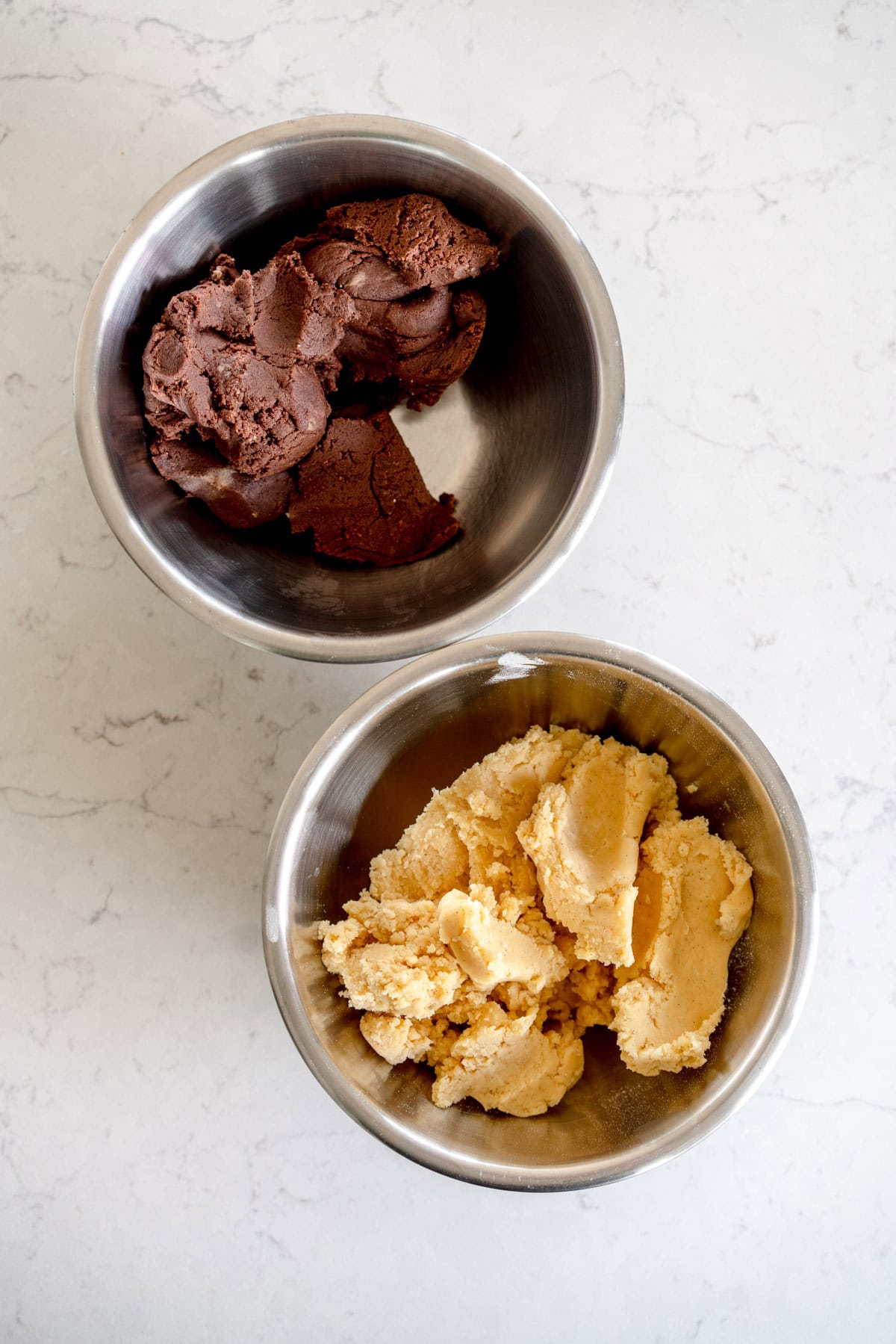
    two flavours of cookie dough
    Two mixed doughs ready for rolling out

    Step by step guide to pinwheel cookies

    I promise this isn't as hard as it looks. Rolling out cookie dough can be super easy with a few little sneaky tricks - I'm gonna share all of them with you.

    How to roll out dough evenly

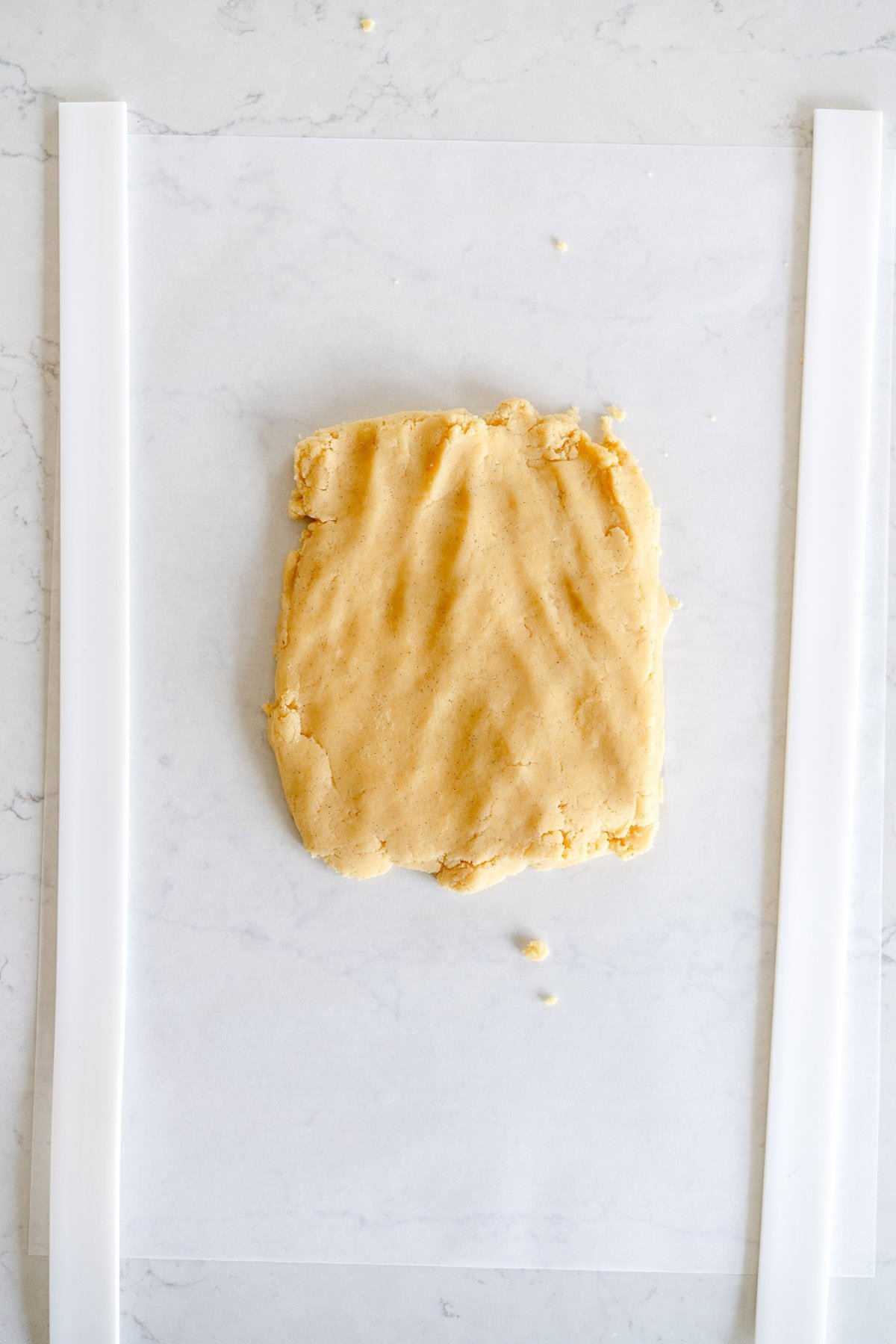
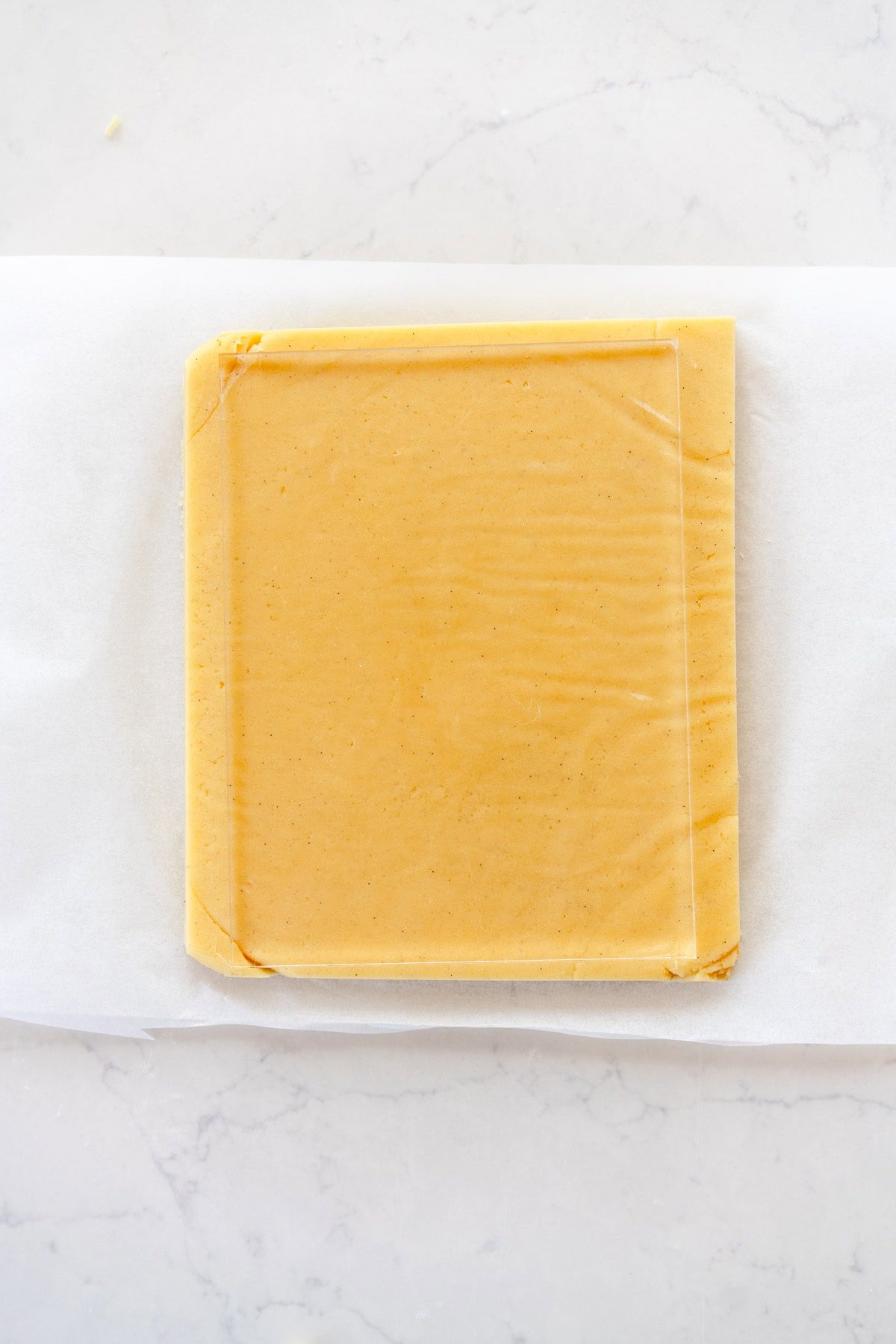
    The best way to roll out dough nice and evenly is to do it between two pieces of parchment paper before it is chilled. This means that it is super easy to roll out, and you don't have the issue of trying to roll out chilled dough which will crack on you at any given opportunity.

    I like to use rolling pin guides to roll out my dough - alternatively you can use knitting needles or dowel of the right diameter. I use 4mm / 0.16" guides for this recipe. If you don't have guides that is fine as we are using a template to know exactly how big to roll the dough.

    vanilla dough on parchment paper
    Shape into a rectangle ish shape
    patching cookie dough
    Remove and add pieces where needed

    How to get it the right size - use a template!

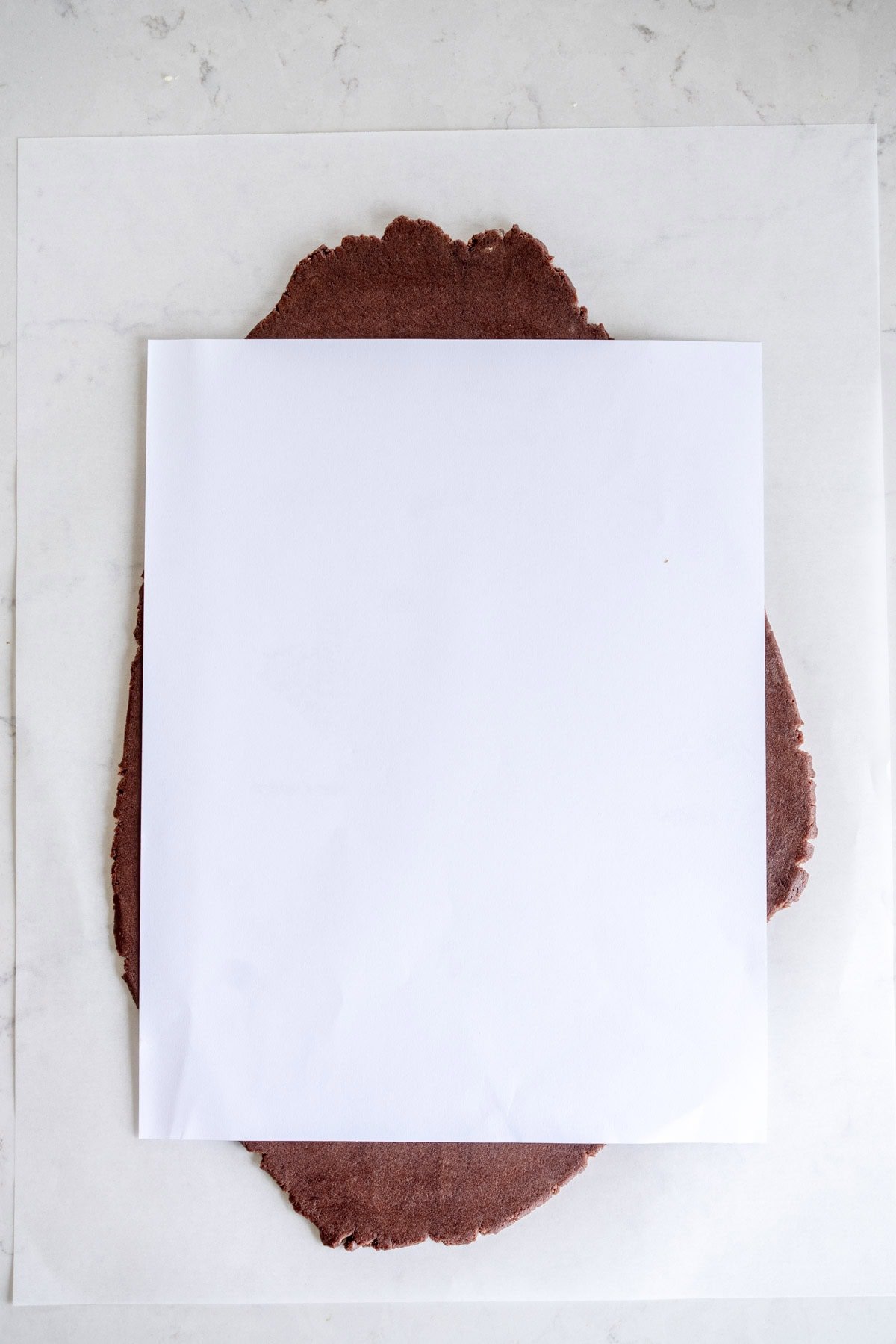
    I made these a ton of times during testing, trying all kinds of different options for the dimensions of the dough to give the easiest way to roll out the dough. I was going to make a template then realised that I could just use a simple thing most of us have in our house - a piece of A4 / Printer paper!

    Use the paper as a guide to know how big to roll out your dough - you want just a little extending around the edge as once it has been frozen you will use the paper to cut the dough to size.

    I like to do an initial roll-out, then use the paper as a guide, removing pieces where the dough is wonky and placing them where needed to get it to the right size. You can just place the piece where it needs to go and cover with the parchment and re-roll, and it will patch itself on.

    dough to paper template
    Use your paper as a guide
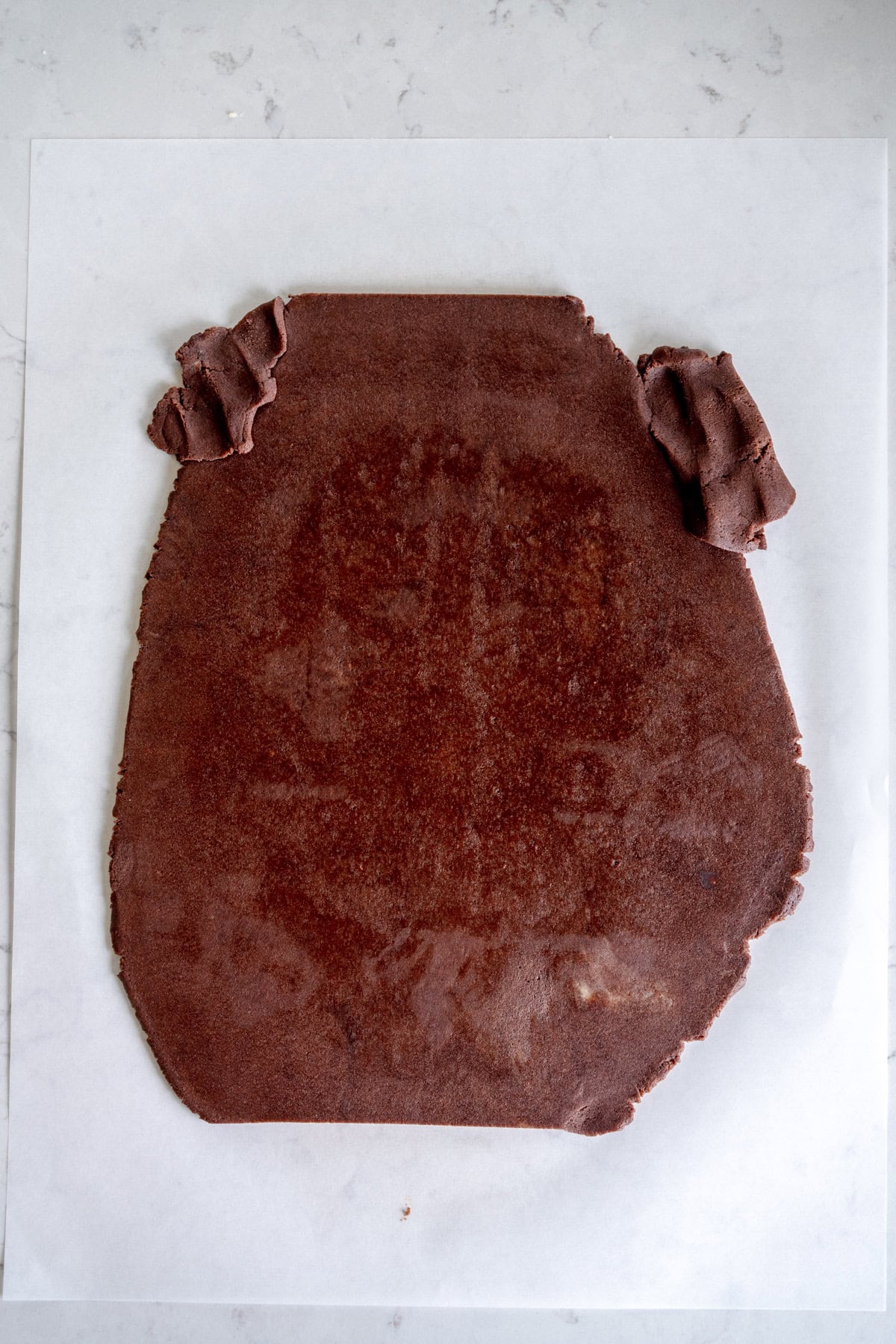
    roll chocolate dough to size
    Repeat the process with both doughs

    Freeze your dough for 20 minutes then trim to the correct size

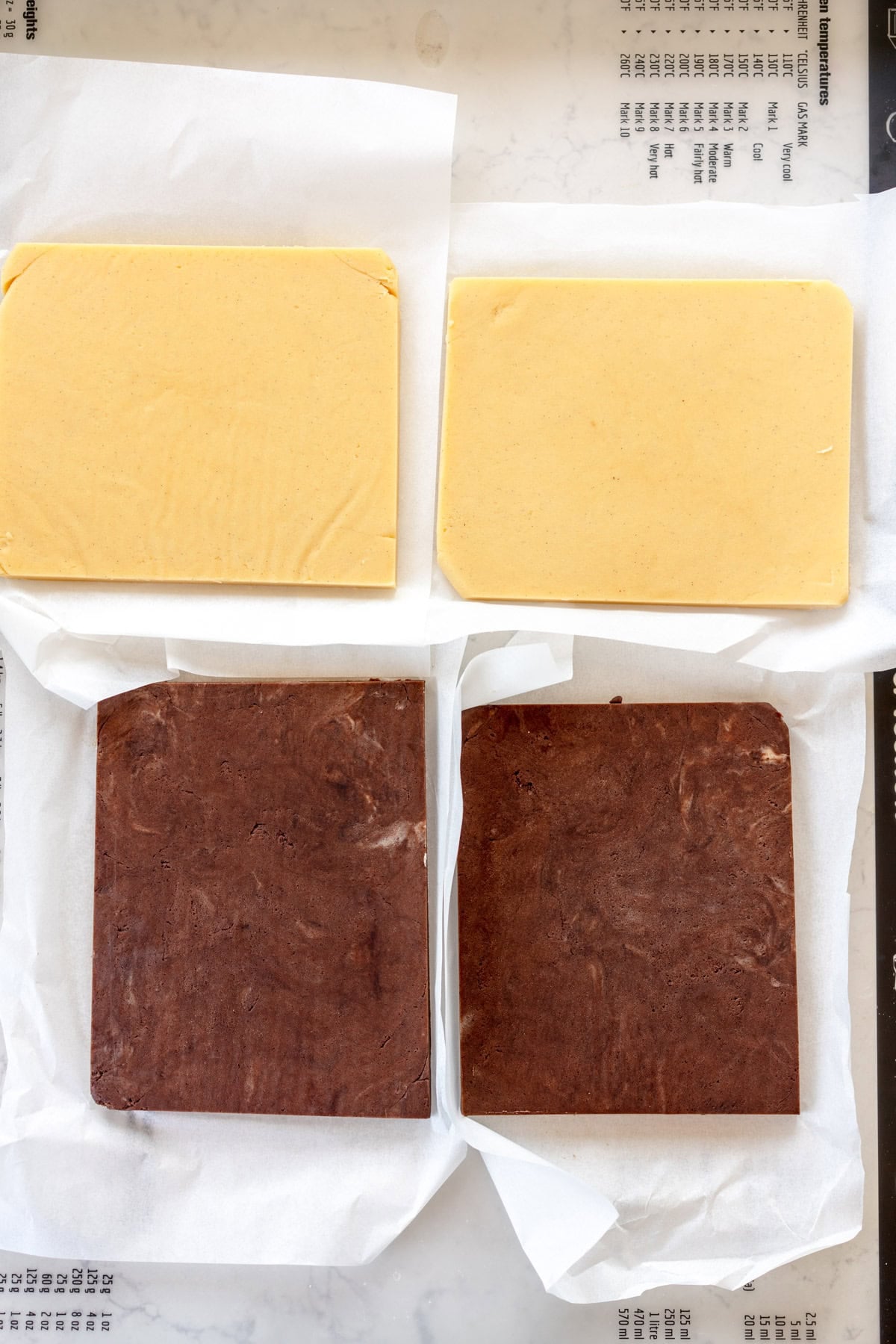
    Once you have rolled the dough out, transfer it between the parchment paper to the freezer. When I was testing this recipe I found that trying to flop a piece of dough onto another piece and make sure that they aligned properly was hard and stressful. We don't do hard and stressful here, so freezing the dough makes it solid and super easy to work with and get nice clean cuts.

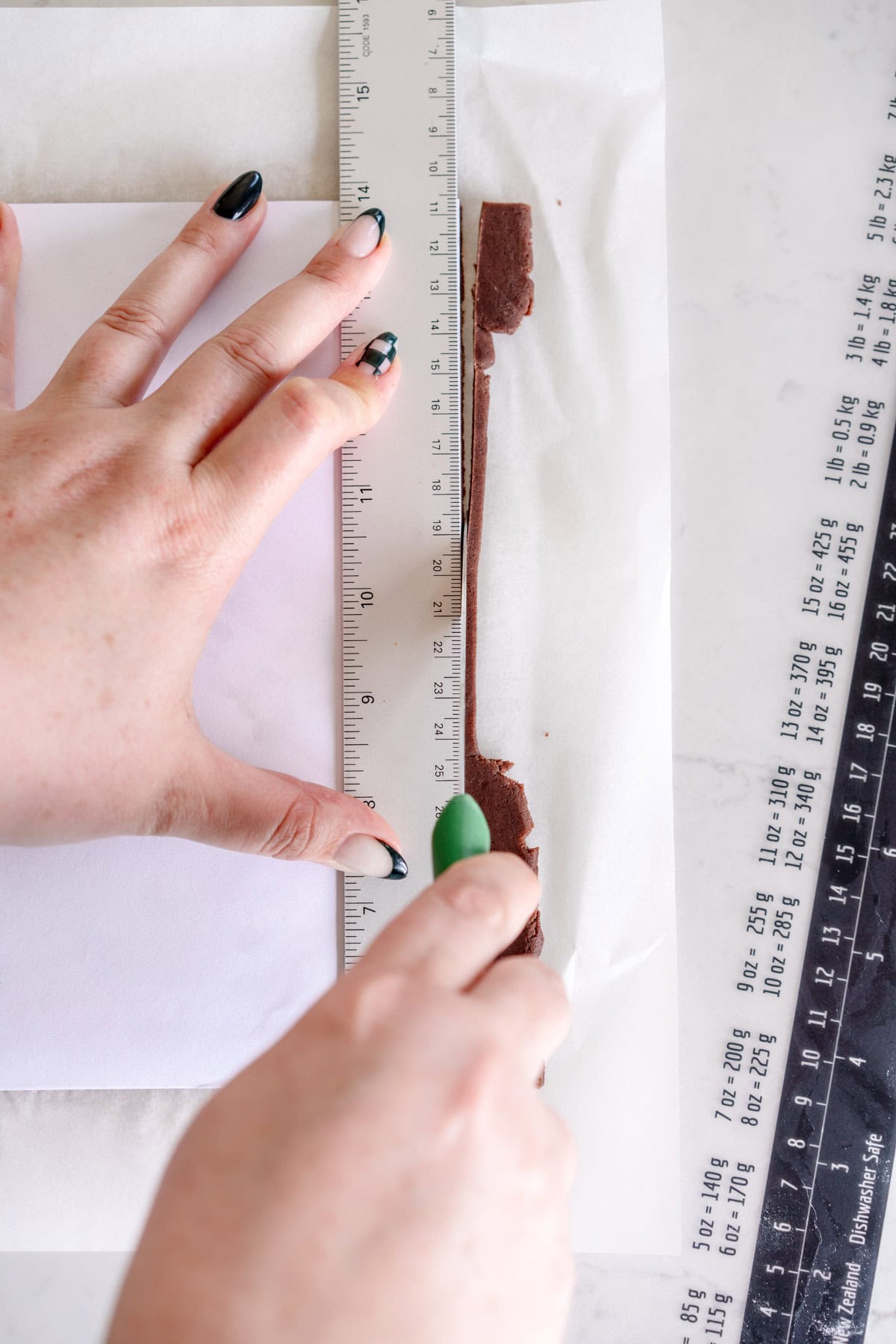
    Remove the top piece of parchment, then use a ruler and your piece of printer paper as a guide and cut the dough into a nice neat rectangle the same size as the piece of paper. Repeat this with both pieces of dough - if at any point they are getting too warm, just pop them back into the freezer.

    trim dough using knife
    Use paper and ruler to cut dough
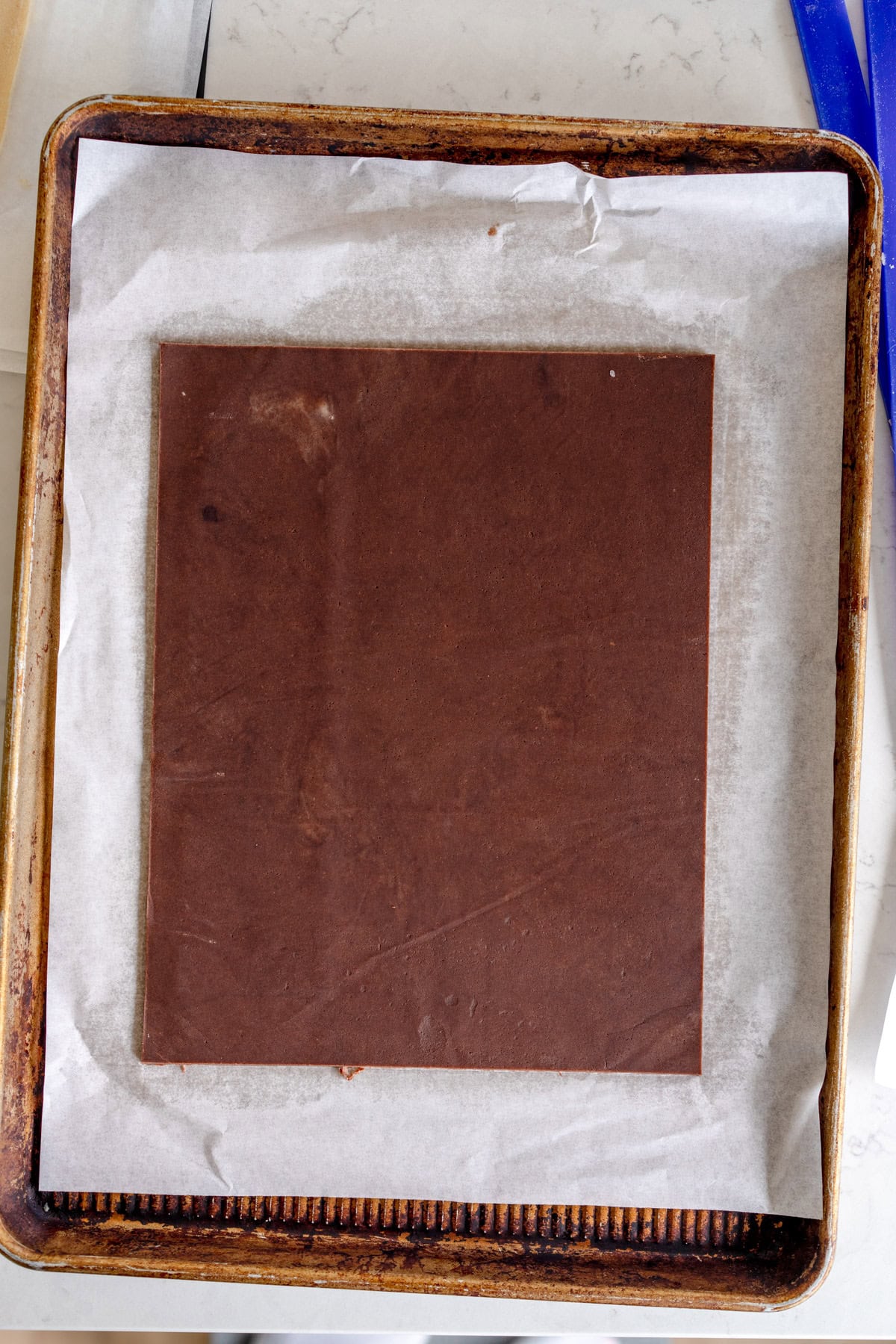
    dough cut to size
    Gives you a perfect rectangle!

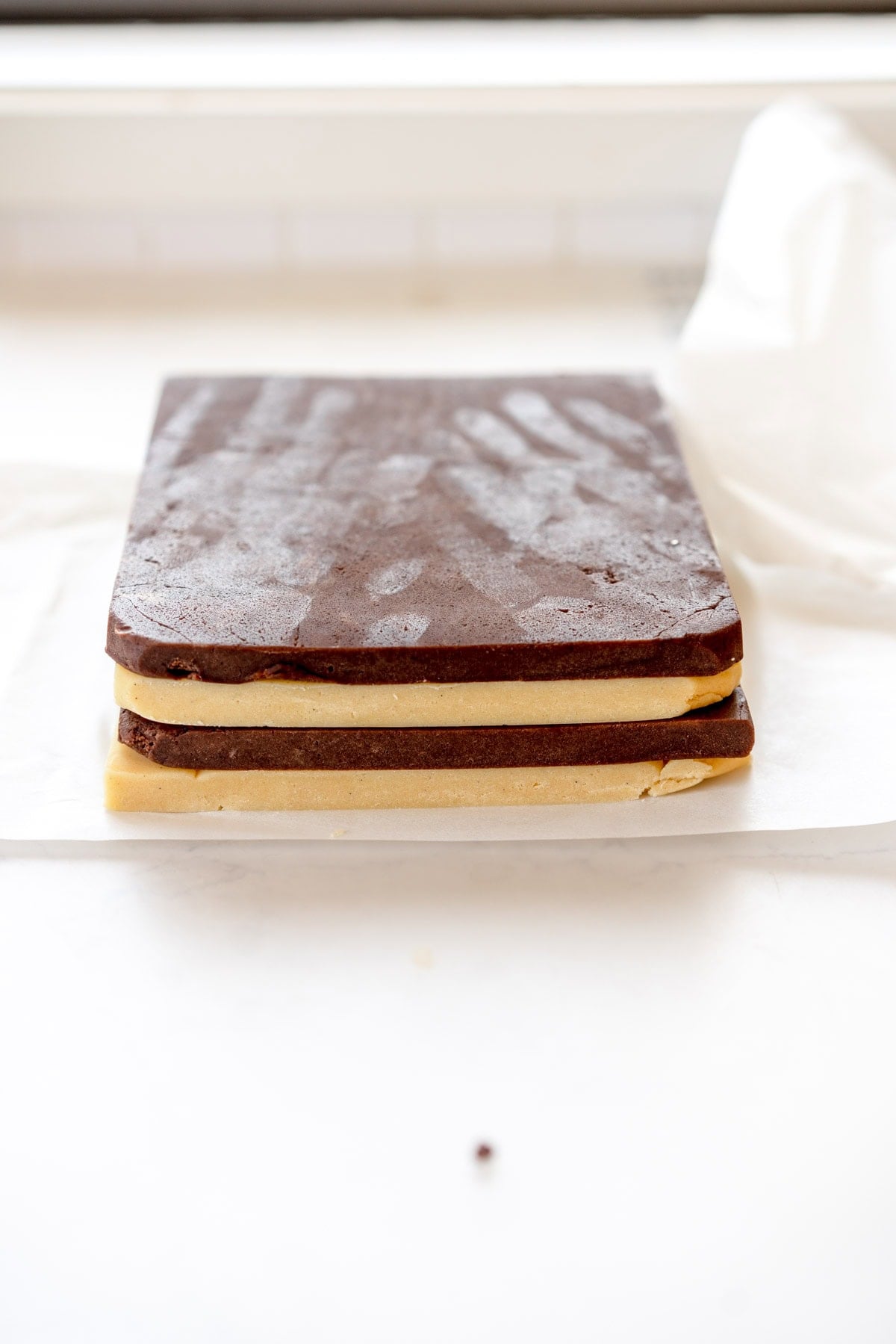
    Stack up doughs

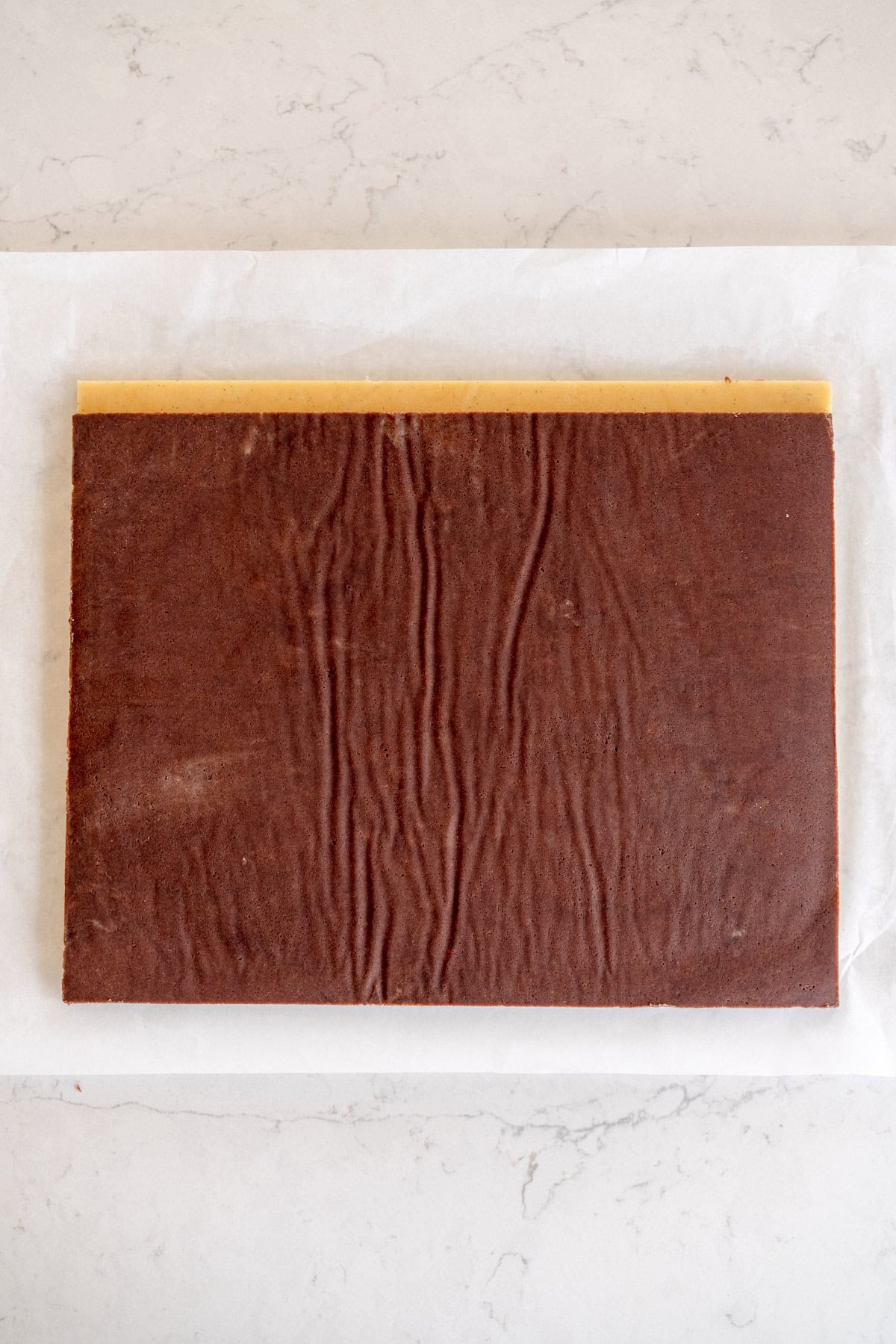
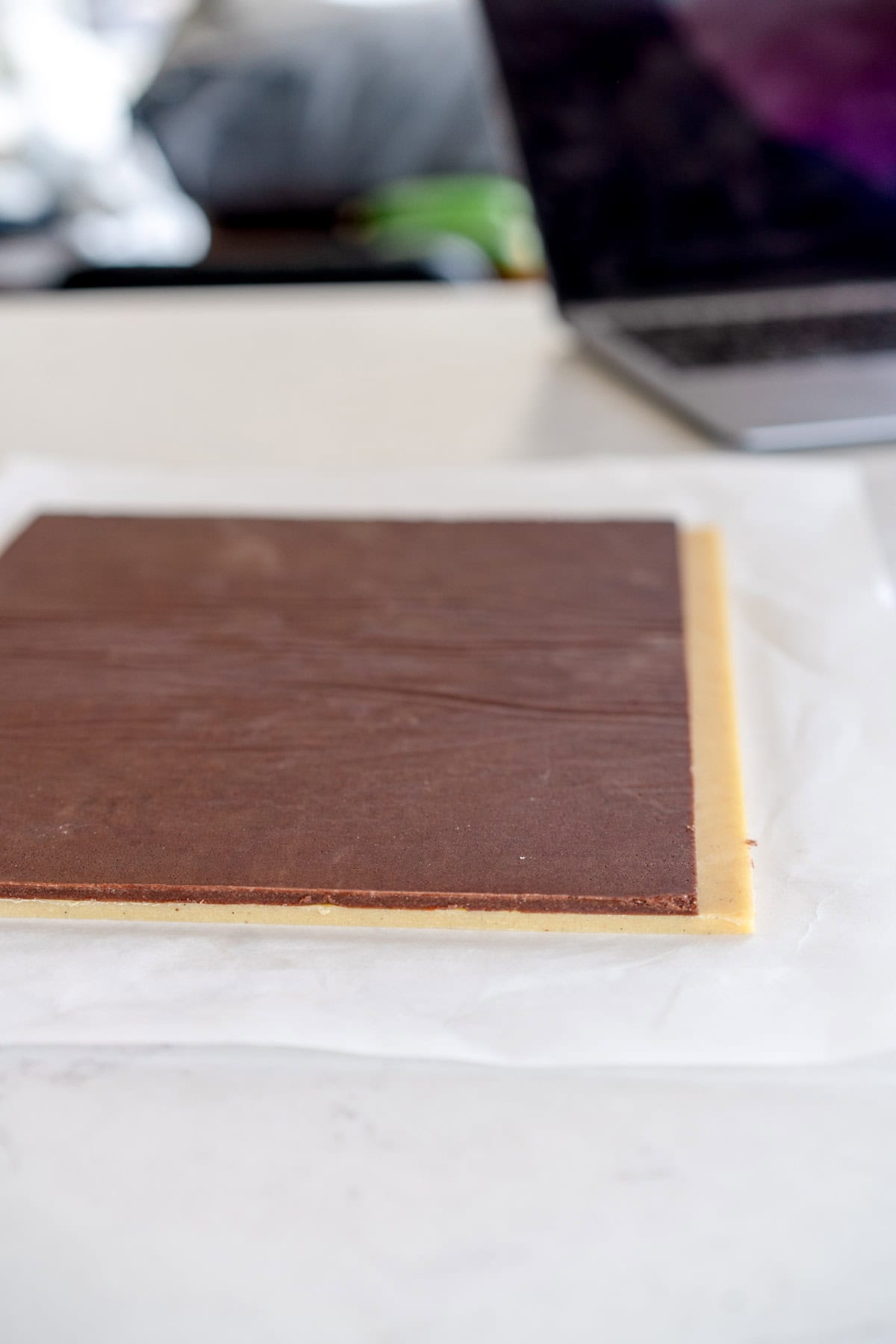
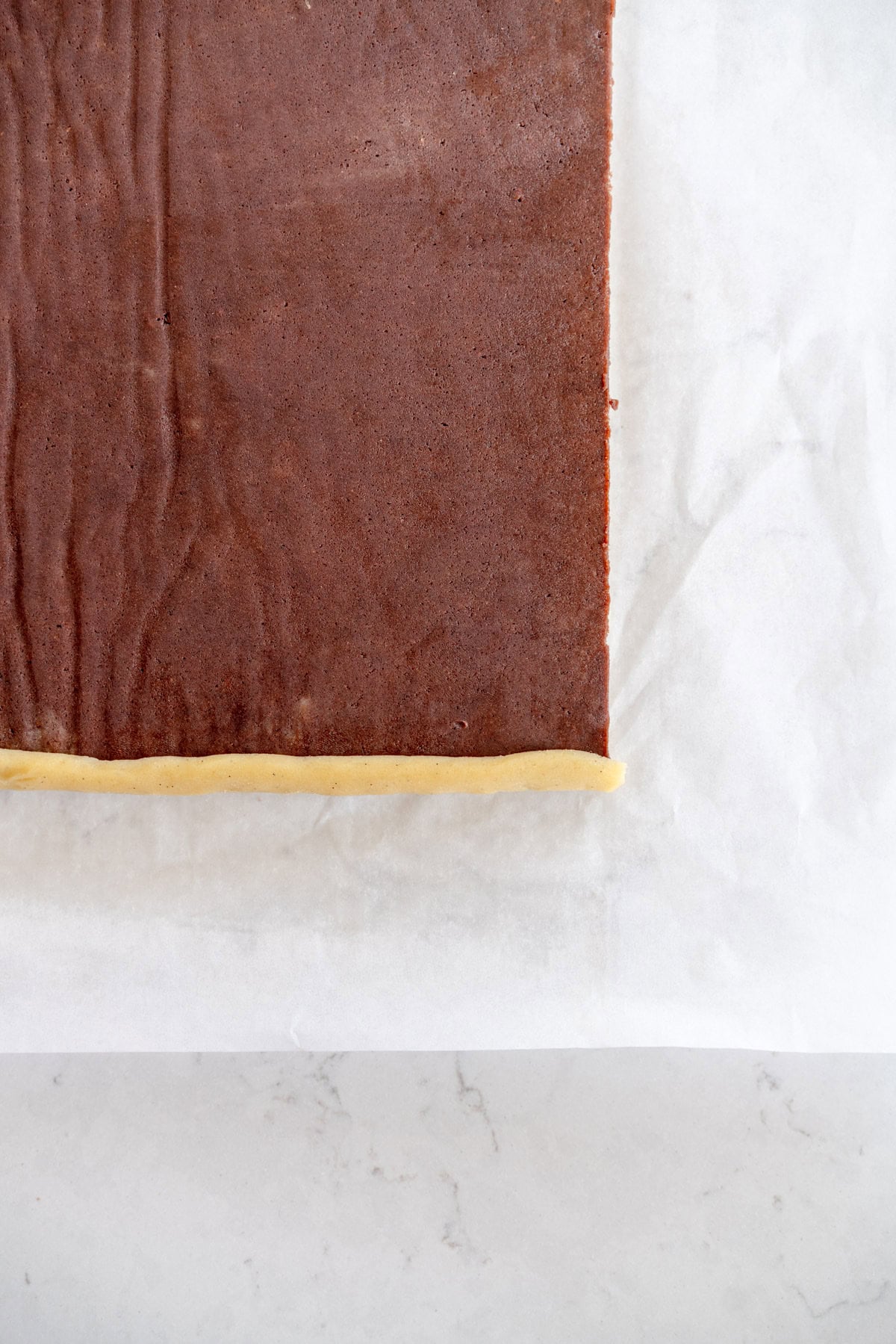
    This is where having frozen dough really helps - remove the parchment from both sides of the chocolate dough, and place it on top of the vanilla dough, leaving about a 1cm gap along the long side - this is to help start the spiral to get a nice neat pinwheel.

    Leave the dough to stand here for 5-10 minutes until it is nice and pliable. Do not try and roll it if the dough is too cold as you end up with a huge hole in the middle of your roll of dough and it is so sad.

    stacked up dough
    Stack with an overhang
    stacked dough
    You want about 1cm overhang

    Roll up your log of dough

    Starting with the vanilla overhanging dough, carefully fold it over the edge of the chocolate dough, as shown in the image below. You can use the parchment paper to help get things started if needed.

    Then, carefully roll up the log of dough into a tight sausage. I find to get started, working my way along the length of the dough to get the roll started is the best way. Make sure you are not rolling up any big air bubbles and the roll is nice and tight.

    If the dough starts to crack, just patch it back together carefully with your fingers. Gently roll the log of dough on your surface to help seal the edge, then wrap tightly in plastic wrap. Chill for at least 2 hours but up to a few days.

    folded over vanilla edge
    Fold the overlap over first
    roll of cookie dough
    Roll up into a tight log
    slicing cookie dough
    Slice cookies with a sharp knife
    sliced cookie dough on sheet pan
    Freeze before baking

    Alternative Patterns

    The best thing about this dough is that it can be made into a bunch of different configurations. Here are some I have tried, the notes for all of these are in the recipe notes in the recipe card.

    Checkerboard Cookies:

    This recipe uses the same dough, but I found that it was easier to double the recipe so you get three logs of dough. You will have some offcuts (I figured it was better to have offcuts than to not have enough dough), which you can press together, roll out, chill, and cut out super cute marble look cookies.

    I tried making checkerboard cookies both ways - cutting strips and pressing them together and then making slabs of dough that you cut into slices and arrange, and found that the second method worked much better as the individual logs gave cracks on the tops of the cookies.

    vanilla dough rolled out
    rolled out doughs
    stacked up doughs
    trimmed down doughs
    sliced dough
    stacked dough
    sliced cookies

    Zigzag cookies using a crinkle cutter:

    crinkle cutter with cookies
    crinkle cut doughs
    cut out cookies
    cookies ready to bake

    ❤️ Made this recipe and love it? ❤️

    I would LOVE for you to leave me a review and star rating below to let me know how you liked it! Also, please make sure to tag me on Instagram!

    Answers to your baking questions

    Over the years, many of you have asked me questions about:

    • baking in grams
    • adjusting oven temperatures
    • what kind of salt to use
    • and many more!

    I've curated and answered them all for your easy reference in this frequently asked questions post!
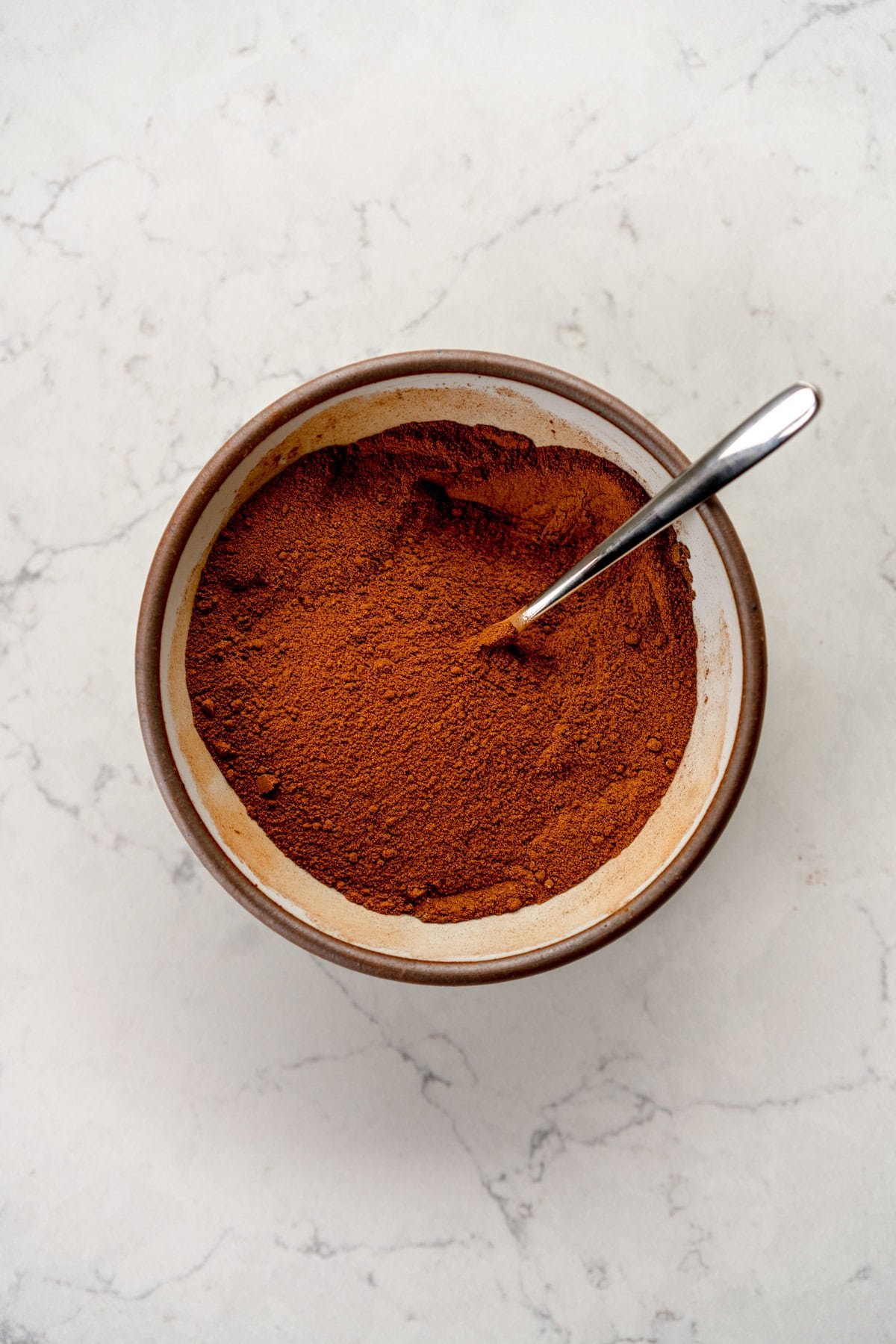
    Filed Under: Cookies, Holiday Cookies, Other Cookies

    Easier than they look Linzer Cookies (foolproof recipe)

    linzer cookies with cut out tops

    These Linzer Cookies are super pretty, but also super easy to make - much easier than they look, I promise! They have a buttery almond shortbread, and you can fill them with whatever you like. Linzer cookies are the perfect holiday cookie addition to your lineup!

    Hi hi! I am just popping in to share this Linzer Cookie recipe with you! Sometimes called linzer tart cookies, these are a classic Austrian cookie made up of a nut-based shortbread, sandwiched with Jam or another filling - I filled with my easy silky lemon curd.

    Linzers are a classic holiday cookie recipe, and so I knew I had to get my version on my site!

    These are super simple to make, but 100% worth the effort - they are absolute showstoppers, and look so, so pretty, but aren't that much more complicated than a regular sugar cookie recipe.

    I will walk you step-by-step through how to make these beauties, along with all my tips and tricks along the way. The recipe is super easy to scale - my recipe makes 14 sandwich cookies but is really easy to double.

    These Linzer Cookies do contain nuts - if you would like a nut free version, there are instructions in my shortbread recipe to make them into roll-out cookies!

    filled linzer cookies
    linzer cookie cut outs

    What Cookie Cutter did you use for Linzer cookies?

    I have a linzer cookie cutter, but I have made these in the past with just a fluted cutter and a smaller shape for the middle. Have a play with what you have. My cutter is 2" / 5cm in diameter, which I find makes a nice sized cookie, but you can go larger or smaller if you like, you will just get a different yield and maybe have to adjust the baking time.

    If you don't have a linzer cookie cutter or a fluted cutter you can use a regular round cutter and then just something simple to punch out the middle - I tried it with the end of a metal piping tip and it worked great. You could also just cut shapes with a sharp knife if you wanted to.

    butter mixture for linzer cookies
    creamed butter and sugar linzer cookies

    Cutting linzers does take a few wee tricks

    Linzers are super easy to make, but I do have a few tips and tricks that make them easy to get nice and perfect, with a super sharp edge on the cookie which is important if you are cutting out the middle for the filling to show.

    • Work with cold dough. This is the most important step - you want things to be nice and cold. Chill the dough between the parchment paper sheets for two hours (and up to 3 days), then transfer to the freezer. This makes it nice and easy to cut out the shapes.
    • Keep it cold. If at any point when you are cutting out your cookies it starts to get hard to get a nice clean cut, just pop the leftover dough back into the freezer.
    • Freeze before baking. You get it now right? Keep everything cold. Freezing the cut out cookies before baking means that they also don't spread too much and hold their shape nicely.

    Keeping things nice and cold is the sneaky wee trick to make your linzers super detailed and pretty!

    Dry ingredients Linzer Cookies
    linzer cookie dough
    linzer dough on parchment paper
    rolled out linzer cookie dough

    How do you roll out linzer dough evenly?

    Whenever I make any sort of roll-out cookie, I always roll the dough out between two sheets of parchment paper before chilling.

    This makes things super easy - the dough is very easy to get nice and even when you roll it out before it is chilled, and doing it between two pieces of parchment paper means that you don't have to worry about flouring the surface.

    I use rolling pin guides when I am rolling out the dough which help to get it nice and even. If you don't have those, knitting needles or pieces of dowel the thickness you want the dough to be work well. I roll these cookies out to 6mm / 0.25" thickness which works well.

    baked linzer cookies
    stacked up Linzer Cookies
    linzer cookie with bite taken out
    linzer cookies on pan

    ❤️ Made this recipe and love it? ❤️

    I would LOVE for you to leave me a review and star rating below to let me know how you liked it! Also, please make sure to tag me on Instagram!

    Answers to your baking questions

    Over the years, many of you have asked me questions about:

    • baking in grams
    • adjusting oven temperatures
    • what kind of salt to use
    • and many more!

    I've curated and answered them all for your easy reference in this frequently asked questions post!
    Filed Under: Cookies, Holiday Cookies, Sandwich Cookies Tagged With: Egg Free

    Throw Together Rocky Road (5 ingredients!)

    close up shot of rocky road

    This easy rocky road has 5 ingredients and takes about 15 minutes to come together. It is a choose your own adventure no-bake treat - use the same mix-ins that I have (marshmallows, peanuts, and turkish delight), or mix it up based on your taste and what you have in the pantry - the options are endless!

    close up shot of rocky road

    Hi hi! I am just popping in to share this super easy Rocky Road recipe with you! I grew up eating this around the holidays as a kid, and love it perhaps even more as an adult now I know about playing around with ingredients and mix-ins!

    If you haven't had rocky road before it is a super easy no-bake dessert that is perfect for making for a crowd or for gifting. It is basically made up of all the delicious things that you can find in your pantry, chopped up, and then covered with melted chocolate and mixed together and set into a pan. It does take a wee while to set (about 2 hours), but putting it together only takes about 15 minutes.

    When you chop it open you reveal the most amazing looking inside. One batch makes loads (about 20-30 servings depending on how big or small you cut your pieces), and the best part about it is that it is meant to be messy. It's not called smooth asphalt road! It's chunky, salty, sweet, and just the best.

    I make mine with marshmallows, peanuts, Turkish delight and sometimes pretzels, but you can really mix and match here with what you like in your own rocky road!

    rocky road ingredients
    chopped up rocky road

    Important Ingredients in Rocky Road

    To me, this is what I personally use for the perfect Rocky Road recipe, but like I said, you really can mix and match here - I will pop a bunch of suggestions underneath!

    • Marshmallows. In NZ our marshmallows come in a bag that has both white and pink so I used both. You can use whatever you like - if you have big marshmallows then chop them, or you can use mini ones.
    • Peanuts. I use roasted, salted peanuts. Any other nut will work well here, I like the roasted salted as it gives amazing flavour to the rocky road along with a delicious crunch. I also added in some pretzels for one of my batches in place of half of the peanuts as I ran out and it was a very, very good decision.
    • Turkish Delight. I use Fry's Turkish delight which comes in wrapped bars (this recipe uses 4), but there are lots of other options for something gummy in your Rocky Road if you would like!
    • Chocolate. Obviously needed to hold everything together.
    • Neutral Oil. This is the sneaky ingredient to make it nice and easy to cut. Just a little makes a big difference.
    close up of rocky road ingredients

    What is the best chocolate to use in Rocky Road?

    I like to use a good quality chocolate that you would eat by itself. In NZ we are really lucky and have amazing chocolate - I use Whittaker's creamy milk, which is a milk chocolate.

    You need 500g of chocolate for this recipe, so feel free to mix and match with a milk and a dark, or use a semi-sweet for the whole thing. You really can't go wrong here (although I think that white chocolate would be too sweet), just 500g of the good stuff!

    turkish delight on board

    Mix-ins for Rocky Road - choose your own adventure

    The options really truly are endless here - you can mix and match all you like. Here are a few suggestions, if you are having a play with options I suggest subbing things out - for example sub the same weight of salted peanuts for another salted nut of your choice, or for something else salty. I like to make sure that there is something squishy (marshmallow), something gummy (Turkish delight), something salty and crunchy (peanuts and / or pretzels) and you can mix and match as you like.

    Here are some more suggestions, but you really can just throw whatever you want at it and if you find that you need more chocolate, just melt some more up! This is not an exhaustive list, feel free to go nuts here.

    Note that if you do add in a lot more mix-ins or ones that are a little more bulky, you may have to upgrade to a 9" (23cm) pan, so that the rocky road doesn't set up too thick.

    • Brownie Bits - either homemade brownies or store bought, you choose here.
    • Caramel. My homemade chewy caramels would be absolutely delicious in this rocky road.
    • Leftover cookies. These would be great crumbled into the rocky road - I have done this with my vanilla cookies and chocolate cookies before and it was delicious, it would be amazing done with gingersnaps.
    • Go Nuts. Any nut would work well in this rocky road recipe - I like using ones that are already roasted and salted as the salt content is perfect. Pecans, pistachio, almonds, macadamia, you choose here. Honey roasted peanuts would also be amazing.
    • Chopped up potato chips. I love that salty sweet combo so that would work amazingly with this recipe.
    • Gummy lollies (candy) of your choice: If you don't like Turkish delight but still want that gummy flavour, other gummy candy such as gummy snakes (the natural confectionary ones are epic) or raspberry liquorice would be good.
    • Malteasers. Mannnnn I love malteasers.
    • Other candy of your choice. Really just throw whatever you like at this. It would be amazing with chopped up peanut butter cups, m&ms, whatever you like.
    • Coconut. You can either gently toast the coconut or just pop it in untoasted - threaded coconut or desiccated coconut would be good, I would use unsweetened.
    • Freeze dried fruit. This would be delicious with some freeze dried raspberries stirred through or sprinkled on the top.
    • Dried fruit. Cranberries would work particularly well here, but as always, choose whatever you like / have on hand.
    • Sprinkles. I finish my Rocky Road with flaky sea salt, but sprinkles would look super cute here too.
    chopped chocolate
    melted chocolate

    How do you stop rocky road from cracking?

    I pop a tiny bit of neutral oil into the chocolate when I am melting it. This softens it just a little bit, and makes the rocky road easier to cut without cracking. I find that also chopping up my marshmallows into slightly smaller pieces (not my fave job but worth it) means they do cut a little more cleanly too.

    Neutral oil means anything with a neutral taste - rice bran, vegetable, canola, grapeseed, etc etc.

    What is the best way to cut rocky road?

    I find that the best way to cut rocky road cleanly is with a super sharp, large knife. I don't heat it up as this will cause the chocolate to melt, but making sure the rocky road is properly chilled and then using a big knife helps. Remember that it is meant to be rustic so don't worry if it chops up a bit messy!

    If you find that the chocolate is melting on you as you are chopping it up it may not be chilled enough - throw it quickly into the freezer and then keep chopping.

    rocky road mixed up
    rocky road pressed into pan

    How do you store rocky road?

    Keep Rocky Road in an airtight container. I keep mine at room temperature but it is not super hot where I live - if it is where you are, pop it into the fridge.

    Can Rocky Road be made ahead of time?

    Yes - this is perfect to make ahead of time. I haven't fully tested it as it really never lasts long around here, but it should keep at least a week in an airtight container, longer if you keep it in the fridge.

    rocky road on sheet pan

    I have left it too late - do I have to wait that whole time for it to chill?

    I've been there. Ideally chilling it in the fridge is best, but I won't tell anyone if you throw it into the freezer once it is in the pan to speed things up.

    Can this recipe be scaled?

    Yes - when I was testing this recipe I made half batches. It fits perfectly in a 1.25lb (medium sized) loaf pan and makes a really great amount if you just want a little, or you can split up the mix-ins if you wanted to make a few smaller batches of different flavours.

    Alternatively you can double it for a 9x13" (20x30cm) pan.

    side shot of rocky road

    Frequently Asked Questions

    What tools and equipment do you use?
    You can find a full list of the tools and equipment I use on my products page

    Which pan did you use?
    I used an 8" non-stick pan (mine is from USA pan) which I lined with parchment paper to extend over the sides of the pan to form a sling which made for super easy removal.

    ❤️ Made this recipe and love it? ❤️

    I would LOVE for you to leave me a review and star rating below to let me know how you liked it! Also, please make sure to tag me on Instagram!

    Answers to your baking questions

    Over the years, many of you have asked me questions about:

    • baking in grams
    • adjusting oven temperatures
    • what kind of salt to use
    • and many more!

    I've curated and answered them all for your easy reference in this frequently asked questions post!
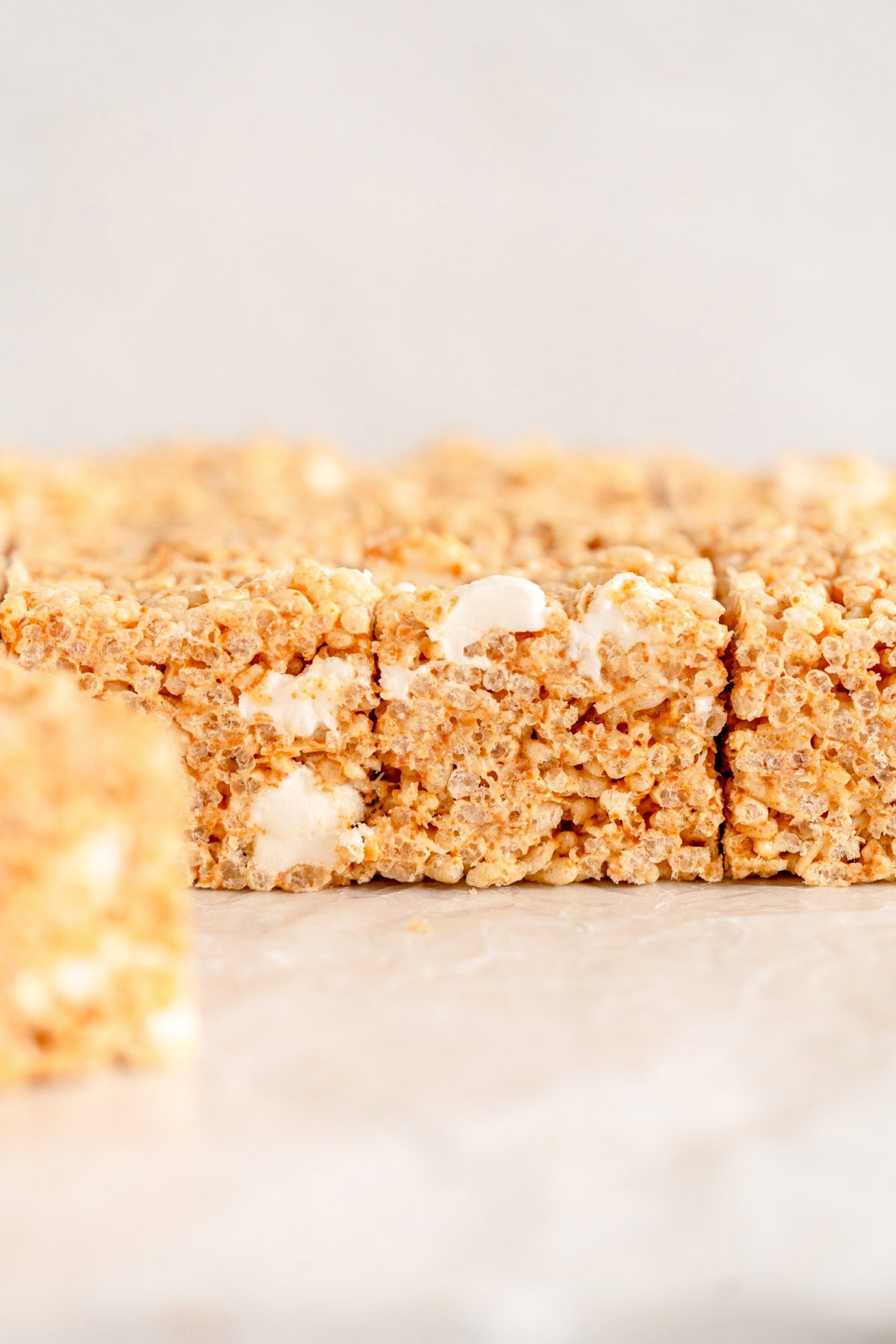
    Filed Under: Bars and Slices, Holiday Cookies, New Zealand Recipes, No-bake Bars, Other Sweets Tagged With: Egg Free, Gluten Free

    Gooey Pecan Pie Bars with a Shortbread Crust

    side on shot of pecan pie bars

    Gooey Pecan Pie Bars have a buttery shortbread crust and a super easy pecan topping. These dessert bars have mega pecan pie vibes but are much easier to make! While there are a few steps, I promise the work is worth it - these pecan pie bars are the perfect twist on the classic pie!

    cut pecan pie bars

    Hi hi! I am just popping in to share this recipe for Pecan Pie Bars with you! I love a baked dessert bar, and this one truly ticks all of the boxes.

    We have a buttery shortbread base, which bakes by itself first, and is then topped with a super simple but very delicious pecan pie filling, and baked again until perfectly gooey.

    These pecan pie bars have mega pecan pie vibes (obviously) but the recipe makes 20 servings, is great to make ahead, and perfect for feeding a crowd, so a little lower lift than the classic pecan pie recipe.

    These got the mega stamp of approval from my family and friends when I was testing them - I hope that you love them as much as we do!

    side on shot of pecan pie bars
    corner shot of baked pecan pie bars

    Components of a Pecan Pie Bar

    There are only two components to this pecan pie bars recipe but they both play very important roles!

    Shortbread Crust.

    Look, I LOVE shortbread anything. I love how buttery and tender it is, and it is the perfect base for these pecan pie bars.

    The dough comes together super quickly just in a bowl with an electric mixer (you could also make it by hand if you wanted) and is then pressed into the pan.

    The shortbread base gets baked by itself first before the pecan pie filling is added, as the base is quite buttery and the topping is quite wet. I like to do it at a lower temperature (150°c / 300°f) to make sure that it is set through but not too golden. I bake my shortbread cookies at the same temperature for this reason.

    When you are baking the shortbread you want it to look set in the middle and only just starting to go golden brown around the edges - remember that it is getting another 25 minutes in the oven again after it has been baked by itself.

    Pecan Pie filling.

    This is your typical pecan pie filling - I took it straight from my pecan pie recipe, but skipped the step where I brown the butter.

    Pecan pie filling is essentially a super loose custard situation (bound by eggs). I like to finely chop the nuts rather than leave them coarse, as the layer is a little thinner so they sit nicer if they are finely chopped.

    When baked the filling almost separates out a little as the nuts float which I love, so you get a nutty layer at the top and then a nice gooey filling layer on top of the shortbread.

    dough for shortbread base
    Shortbread dough for the base
    dough in pan for shortbread base
    I like to crumble it in then press

    No corn syrup in the recipe?! What is Golden Syrup?

    You will notice that my recipe does not use corn syrup - instead I have use golden syrup, which is a similar product, but In my opinion, tastes a zillion times better.

    If you do not have access to golden syrup (I used to get mine online when I lived in the US or some stores also stock it), you can use corn syrup or liquid glucose. I think that treacle or molasses will be too rich.

    If you do get some golden syrup and are looking for other recipes to use it up, check these out: Recipes using Golden Syrup

    baked shortbread base
    Baked shortbread crust
    chopped nuts for pecan pie bars
    Chopped toasted pecans

    Can Pecan Pie Bars be made ahead of time?

    This is a great make ahead recipe - the pecan pie bars can be kept at room temperature in an airtight container for up to a week.

    If you want them to keep longer or if you are in a hot climate you can also store them in the fridge. I haven't tried freezing them sorry!

    pecan pie filling
    Filling ready to go onto the base
    pecan pie bars ready for the oven
    Spread the filling out gently

    Why you should be toasting your nuts

    If I am using nuts in a recipe, I almost always toast them. Toasting nuts gives them an amazing depth of flavour, and means you start out the recipe with that flavour already there - the nuts get suspended in the filling when they are baked, so they have less opportunity to get lovely and toasty, so I always do it separately first.

    If you really don't want to then that is fine, but it doesn't take long and can quickly be done while you prepare the shortbread base for the pecan pie bars.

    Can I use something else instead of Pecans?

    I haven't tested it for this recipe specifically, but walnuts are generally a good sub for pecans. They are slightly more oily but I think that that should be fine for this recipe! Use the same amount by weight.

    How to know when Pecan Pie Bars are baked

    This can be a tiny bit tricky as the filling is already brown, but it will start to go golden around the edges. The main thing that you want to look for is that the centre of the bar is set and not liquidy any more. It may puff up a little in the oven - don't worry, it sinks back down once you take it out.

    I like to let these pecan pie bars cool fully in the pan as they are on the thinner side so they are easier to remove from the pan when totally cooled. You can also store them in the fridge before cutting if you would like.

    baked pecan pie bars
    Fully baked pecan pie bars

    Setting you up for success - line your pan properly!

    The key to getting your pecan pie bars cleanly out of the pan is to line your pan properly. You want to have some parchment paper sticking out past the bars a little to give you something to grab onto.

    I like to use a pre-cut piece of parchment paper the size of a half sheet pan to line the pan, but if you are worried, use two pieces the come over the edges of the pan - you can clip them down with binder clips to help keep them on the edges of the pan too.

    I like to grease my pan before I line it with parchment paper as I find that when you are spreading something like a shortbread base, you want to make sure that the paper is nicely stuck down.

    sliced pecan pie bars

    What is the best way to get a clean cut on pecan pie bars?

    I am a bit type A when it comes to cutting things (only for the internet though, if I'm just making something at home I just wing it and it's wonky).

    I find that the best way to cut these cleanly is to make sure that your knife is super sharp. I don't warm it but if you want to, run it under some hot water then wipe it so that it is warm but not wet.

    Make sure that you wipe the knife between cuts to keep the blade clean. I cut my pecan pie bars into rectangles, but you do you here.

    close up side on shot of pecan pie bars

    Frequently Asked Questions

    What tools and equipment do you use?
    You can find a full list of the tools and equipment I use on my products page

    Which pan did you use?
    I made these in a 9x13" (20x30cm) rectangular pan - my favourite comes from USA pan.

    ❤️ Made this recipe and love it? ❤️

    I would LOVE for you to leave me a review and star rating below to let me know how you liked it! Also, please make sure to tag me on Instagram!

    Answers to your baking questions

    Over the years, many of you have asked me questions about:

    • baking in grams
    • adjusting oven temperatures
    • what kind of salt to use
    • and many more!

    I've curated and answered them all for your easy reference in this frequently asked questions post!
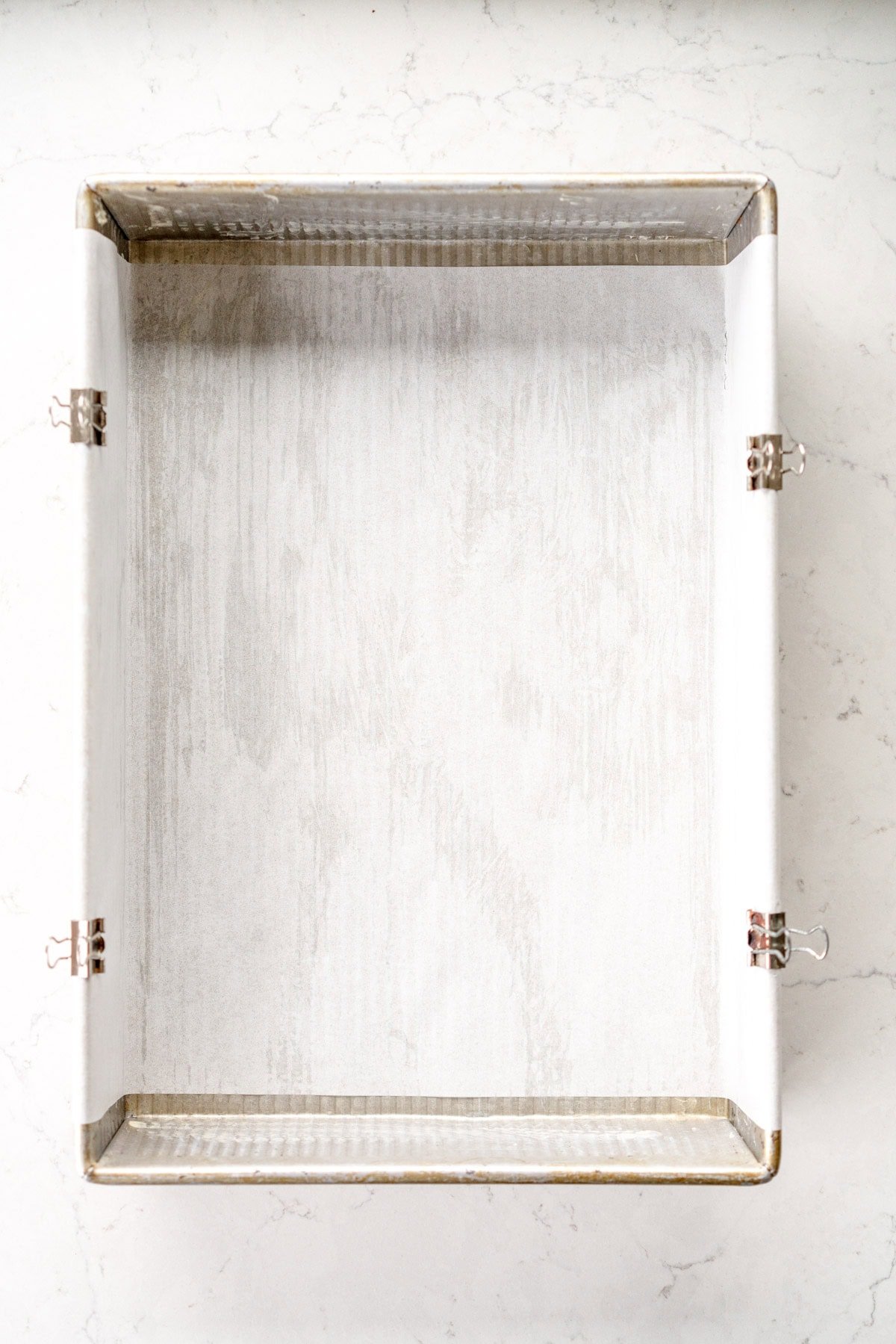
    Filed Under: Bars and Slices, Desserts

    Chewy Iced Oatmeal Cookies with Brown Butter

    cookies on rack

    These soft and chewy Iced Oatmeal Cookies are filled with brown butter, cozy spices, and lots of oats for the most amazing texture. They bake up into perfect craggy cookies, which are then dipped into a quick icing glaze for a picture perfect iced oatmeal cookie!

    iced oatmeal cookie on baking rack
    The perfect craggy iced oatmeal cookie

    Hi hi! I am just popping in to share this super delicious chewy Iced oatmeal cookie with you!

    I am really excited to share this one with you because it has put me through my paces. Every now and then a recipe totally throws me for a loop and it's always when I'm least expecting it. I tested this Iced Oatmeal Cookie recipe more than 20 times to get it just right for you. Turns out getting a cookie the right texture to hold icing nicely is way harder than it looks, but we got there!

    These are a fairly basic oatmeal cookie - we have the usual suspects, along with some brown butter and toasted oats for amazing chew. I added some cozy warm spices. The cookies come together quickly and bake up into beautiful craggly cookies which we then dip into a super simple icing for that classic iced oatmeal cookie look.

    The sneaky step here is to pulse the oats to give the perfect texture for dipping - more on that further down the post!

    ball of cookie dough
    side on shot of iced oatmeal cookies

    Important Ingredients in Iced Oatmeal Cookies and why I used them

    These Iced Oatmeal Cookies don't use anything too special, but it is the ratio of ingredients that make a difference!

    • Butter. I browned the butter for these cookies - brown butter makes everything taste better in my opinion.
    • Sugar. I use granulated and brown sugar - I went with more brown than white in these cookies to give them a toasty flavour and to stop them spreading as much (white sugar = spread, brown sugar = less spread)
    • Oats. I use old fashioned (sometimes called wholegrain) oats, which get toasted and then blitzed in the food processor.
    • Molasses. Just a little to help with flavour and spread of the cookie - molasses gives an amazing richness to cookies which pairs super well with the brown butter and spices. If you don't have any, you can use treacle or golden syrup (I haven't tested with these but it should be fine)
    • Spices. I used cinnamon and cardamom here - if you wanted to also add in a little ginger or nutmeg that would be nice too.
    • Leavener. I used both baking powder and soda - as we are using brown sugar and molasses in the recipe, which are both acidic, baking soda is a good choice as it reacts with them but also helps with spread.
    baked oatmeal cookies on rack
    Baked cookies - scooting them helps with texture for dipping later.

    Lots of notes on oats - we are going to toast them, and then whizz them up.

    There are lots of notes on the oats in this recipe. The main thing is that in order to hold icing nicely, the cookie has to be nice and craggy on the top, and fairly uniform in thickness (this is where the cookie scoot comes in).

    I did a ton of research and read almost every iced oatmeal cookie I could find on the internet and almost all of them did the same thing - pulsed the oats in a food process or or blender.

    10 pulses is the sweet spot here. You want some to still be whole, and some to be ground up - see the image for reference.

    I go one step further here and also toast my oats in the oven before using them. This makes for a mega chewy cookie - toasting the oats dries them out slightly, and I love the texture that it gives. If that is one step too far for you and you can't be bothered then that is fine - just skip that step and use regular old fashioned oats.

    pulsed oats in blender
    Texture of oats once they have been pulsed 10 times

    This recipe took me SO many tests.

    As I said earlier, it is not that often that a recipe sends me down this deep of a rabbit hole, but this one absolutely did. I only was making small changes to the recipe in order to get the right texture for the cookies to hold icing, but here are the things that I was adjusting:

    Milk Powder in the recipe

    Often when I brown butter I add in milk powder to the butter (I do this in my oatmeal raisin cookies). What this does is basically make a double strength brown butter - when you brown butter you are toasting the milk solids so adding in more milk solids makes for a mega brown butter.

    Sometimes this doesn't work as well though and I found it gave inconsistent results for the cookie texture, so I ditched the milk powder and just used regular brown butter.

    Flour quantity.

    The final tests I was alternating by 15 grams of flour across the entire batch and it made a big difference in how the final cookie turned out. Use a scale.

    Ball size.

    Turns out, the size of your balls does matter. Smaller balls of cookie dough will sink down less, giving a more humpy (I can't think of a better word sorry) cookie, whereas a larger ball of cookie dough will spread out slightly more. I played around with adjusting the dough balls anywhere between 35-60g and found that a larger dough ball of 55g works best. I use a #24 cookie scoop.

    Ratio of brown to white sugar.

    This is usually one of the first things I will change if I only want a small change in the spread of a recipe (if I want a larger difference or a big change in moisture and texture then I play with the butter quantity).

    Brown sugar causes less spread in a cookie whereas white sugar causes more and causes the cookie to be chewier (melted butter helps with chew too). A slightly higher ratio of brown to white sugar was the sweet spot for this recipe.

    Oven temperature.

    Changing the oven temperature by as little as 15°c / 20°f has a big impact on the spread of the cookie. This is why using an oven thermometer is important to make sure that your oven is properly calibrated.

    I found that the cookies spread slightly less when baked at 350°f / 180°c which made them the perfect texture for dipping in icing.

    wet ingredients for iced oatmeal cookies
    Butter, sugar, egg, molasses
    add dry ingredients iced oatmeal cookies
    Add dry ingredients
    iced oatmeal cookie batter
    Leave batter to stand 5 minutes
    ball of iced oatmeal cookie dough
    Scoop batter then roll out.

    How to get the icing just perfect

    There is a little bit of an art form to dipping these iced oatmeal cookies. You want to be more light handed than you think that you need to be - they really just need to be touched onto the surface of the icing. There are a few things that are important here:

    The scoot.

    I know that I often suggest that you can round the cookies off when they come out of the oven as an optional step.

    Scooting the cookies really helps here. I used a 3 ¾" (95mm) cookie cutter, but anything slightly larger than the cookie will work. Use it to scoot the cookie into a round shape when it is hot from the oven. This brings the edges in and makes it a nice craggy cookie to dip in the icing.

    Make sure that your icing is the right consistency.

    This isn't the time or the place to eyeball your glaze ratios. I tried a few different ones, and turns out that it is quite important that the icing is the right consistency - too thin and it runs everywhere, and too thick and it won't stick to the cookies.

    I know that the recipe makes a little more than you need but it is important to have enough to ensure that you have adequate depth for dipping. If you want, you can store leftover icing in an airtight container with plastic wrap on the surface of it - you could paint it over sugar cookies or something similar or use it as a drizzle or glaze.

    dipping cookies in icing
    Leave excess icing to drip off the cookie

    Dip carefully.

    When you dip the cookie into the icing, you want to make sure that you go straight up and down, and just lightly touch the cookie to the surface of the icing - you don't want to do a big dip. It might take one or two to get the hang of.

    Once you have dipped, hold the cookie upside down over the bowl for a little bit to allow any excess to drip off, then carefully turn over and leave to set.

    Leave the cookies to set completely before storing. Store in an airtight container at room temperature for up to a week.

    cookie glaze
    Use a shallow bowl for dipping
    cookie with glaze on
    The icing sticks then settles

    ❤️ Made this recipe and love it? ❤️

    I would LOVE for you to leave me a review and star rating below to let me know how you liked it! Also, please make sure to tag me on Instagram!

    Answers to your baking questions

    Over the years, many of you have asked me questions about:

    • baking in grams
    • adjusting oven temperatures
    • what kind of salt to use
    • and many more!

    I've curated and answered them all for your easy reference in this frequently asked questions post!

    Filed Under: Cookies, Holiday Cookies, Other Cookies

    30 Minute Soft-Baked Vanilla Cream Cheese Cookies

    cream cheese cookies on sheet pan

    These easy soft cream cheese cookies have a sneaky ingredient - cream cheese, which gives them the most delightful tang! They come together quickly using staple ingredients, and are a great twist on a classic vanilla cookie. I roll mine in granulated sugar but they would be perfect rolled in sprinkles for a festive variation!

    cream cheese cookies on sheet pan

    Hi hi! I am just popping in to share this super easy vanilla cream cheese cookie recipe! These are a really easy twist on my classic vanilla cookie recipe which is one of the top performing recipes on my site, with just a few tweaks!

    If you haven't put cream cheese into cookie dough before, you gotta try it.

    Cream cheese cookies have the most amazing flavour - the cream cheese adds a slight tang, along with an incredible softness to the cookies.

    These cookies can be made in about 30 minutes, and the recipe will give you 24 delicious soft and chewy cream cheese cookies!

    If you're after a non cream cheese cookie, check out my Classic Vanilla Cookie recipe!

    side shot of balls of cookie dough
    bitten cream cheese cookie

    Important Ingredients in Cream Cheese Cookies and why I used them

    The ingredients list here is pretty typical - most things you will see in a vanilla cookie recipe, with the addition of cream cheese. Please note this is not an exhaustive list, I am just calling out some of the ingredients that I use!

    • Butter. I usually use unsalted butter in my recipes, but if you only have salted butter on hand, then that works great too - just reduce the amount of salt you use in the recipe.
    • Sugar. I use granulated sugar (I often use caster sugar in NZ as it is the closest to the regular sugar in the US) but because we are measuring by weight, sugar is sugar here. I like to use a little extra to roll the cookies in before baking.
    • Vanilla. I always use a high quality vanilla bean paste, but if you want to use extract you can use the same amount.
    • Egg. Just one, at room temperature, to help hold everything together.
    • Cream Cheese. Full fat please, and at room temperature!
    • Flour. I use all-purpose (also sometimes called plain flour) for my cookies - the lower protein in it (as opposed to bread flour / high grade flour) helps to give a nice tender texture to the cookies.
    Wet ingredients for cookies
    Mix the cream cheese in with the sugar
    creamed butter and sugar for cookie batter
    Creamed butter and sugar mix

    What does cream cheese do in the recipe?

    Cream Cheese works in a similar way to how adding cream cheese into baking does - it provides an amazing tang and tenderness to the cookie, without adding a ton of extra moisture.

    Cream cheese in the cookies makes them soft and chewy, with a really nice texture. They are a bit puffier than something like my vanilla cookies, which are more of a thin and chewy situation. I love them both, and I love having options!

    dry ingredients in for cream cheese cookies
    Add in the dry ingredients
    cream cheese batter ready for scooping
    Dough ready to scoop

    What kind of cream cheese did you use?

    This is kind of an important one - not as much as if you were making a cheesecake or something heavily cream cheese based, but you want to use cream cheese that comes in a block.

    I know that's annoyingly specific but it is the firmest kind - don't get a 'spreadable' kind or anything like that as they can behave quite differently.

    I used Philadelphia cream cheese for these cookies. You want to make sure that it is nice and room temperature along with your butter so that it incorporates nicely into the mix.

    scooped out cream cheese cookie dough
    Scoop out dough, then roll into balls with your hands.

    How to manipulate a recipe to get soft and thick cookies

    I always get a ton of interest about how I recipe test, and this recipe is the perfect example of how I incorporate an ingredient such as cream cheese into an existing cookie, in this case my vanilla cookie.

    To get to this point I kept the majority of the ingredients the same, added in some cream cheese, and dropped the butter quantity slightly to account for the cream cheese in the recipe.

    I then played around with the baking temperature and if the recipe needed a chill time or if I could get it to work baked straight away (which is usually my preference because I'm impatient).

    I then found they were baking up just a touch puffy for my liking, so dropped the baking powder in the recipe and used only baking soda, and found what I consider the perfect cream cheese cookie!

    cream cheese cookies in sugar
    I like to roll mine in sugar
    balls of cookie dough on sheet pan
    Ensure adequate cookie spacing

    Can Cream Cheese Cookies be made ahead of time?

    Yes, these are a great cookie to make ahead of time - I tested both freezing the dough and chilling it, and both work. Usually when I freeze cookie dough I drop the temperature slightly when I am working with frozen dough but I found because these cookies are baked at a slightly lower temperature, you will just need to add on a few minutes to the bake time.

    To chill cookie dough:

    Scoop out the dough as directed, and roll in the sugar. Place on a parchment paper lined pan or in a lined airtight container and store in the fridge for up to 3 days before baking.

    To freeze cookie dough:

    Scoop the dough as directed and roll into balls but do not roll in the sugar. Place onto a parchment lined baking sheet (they can be fairly close together), then freeze for about 30 minutes until solid, then transfer into an airtight container and freeze for up to 3 months. When you are ready to bake them, leave them to stand at room temperature for about 10 minutes to get a little sweaty (I can't think of a better word sorry!) and then roll them in sugar and bake - you will need to add 2-3 minutes onto the bake time.

    For all my tips and tricks on freezing cookie dough, check out my post: How to freeze cookie dough and bake from frozen

    cut open shot of cream cheese cookies

    Ideas for finishing cream cheese cookies

    I roll these cookies in regular granulated sugar just to give them a slightly sparkly finish but the options are endless here.

    You can roll them in sprinkles (super quick and easy way to make a 'festive' cookie), chocolate sprinkles, or a sparkly sanding sugar which would be super yum.

    You could also roll them in a cinnamon sugar mixture for a bit of a snickerdoodle cookie vibe too. You do you here!

    Why are these cookies baked at a lower temperature?

    This is something that I play around with a lot when I am baking cookies - if I want to control the spread of them, I often drop the oven temperature slightly to give them more of a chance to spread.

    When a cookie bakes, the outside sets at a certain point and the cookie will stop spreading. There are obviously other factors at play here too such as how much butter is in the recipe, if the dough is cold or warm etc, what kind of sugar you have used, but in this case, I found that I got the optimal spread at a slightly lower temperature (165°c / 330°f) than the 'regular' 180°c / 350°f.

    close up shot of cream cheese cookies

    Frequently Asked Questions

    What tools and equipment do you use?
    You can find a full list of the tools and equipment I use on my products page

    Which cookie scoop did you use?
    I use a #40 cookie scoop (fun fact, the number is to do with how many scoops are in a pint). I think it holds about 1.5 Tbsp. Alternatively you can weigh out the cookie dough balls - shoot for about 35g per ball.

    How do you store cream cheese cookies?
    Store these cookies at room temperature in an airtight container for up to a week.

    ❤️ Made this recipe and love it? ❤️

    I would LOVE for you to leave me a review and star rating below to let me know how you liked it! Also, please make sure to tag me on Instagram!

    Answers to your baking questions

    Over the years, many of you have asked me questions about:

    • baking in grams
    • adjusting oven temperatures
    • what kind of salt to use
    • and many more!

    I've curated and answered them all for your easy reference in this frequently asked questions post!
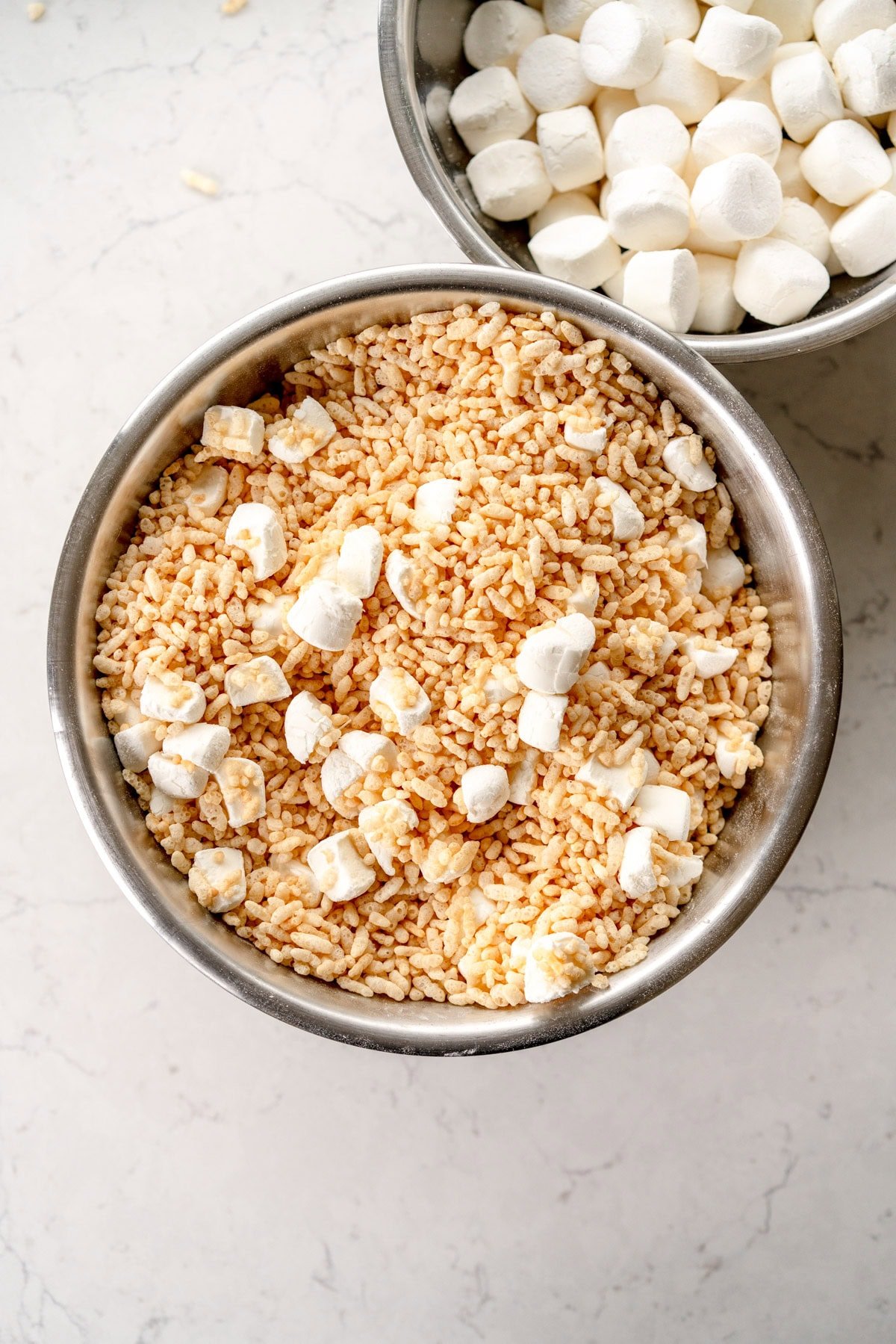
    Filed Under: Cookies, Holiday Cookies, Other Cookies, Sugar Cookies

    Absolutely Massive Monster Cookies

    baked monster cookies

    These Monster Cookies are absolutely huge! Packed with toasted oats, peanut butter, M&Ms, chocolate chunks, and brown butter, these super easy but delightful cookies will be an absolute favorite. There is no chill time in the recipe so you can bang them straight into the oven! These can be made with a bowl and a whisk - no fancy equipment needed!

    baked monster cookies

    Hi hi - I am just popping in to share this Monster Cookie recipe! These massive cookies are quick and easy to make, and filled with toasted oats, peanut butter, brown butter, chocolate chunks, and loads of m&ms. Allll the good things. This recipe makes 9 huge Monster Cookies.

    I went down a bit of a Peanut Butter Cookie rabbit hole when I was developing the recipe for my Peanut Butter Cookies and decided to adapt my Peanut Butter Oatmeal Cookies to be even bigger, and filled with lots of bits and pieces.

    This monster cookie recipe took a bit more developing than I was expecting but don't worry - I've done all the work for you and tested the recipe inside out to make sure that it is another foolproof cookie recipe for you to whip out whenever you need!

    I don't know about you but I am impatient when it comes to baking cookies and always want them in the oven ASAP so I came up with a sneaky work around to get around having to chill this slightly sticky dough.

    side on image of scooped monster cookies
    Cookie dough ready for the oven!
    bitten open shot of monster cookies
    Huge, soft and chewy monster cookies

    Ingredients in Monster Cookies and why I used them

    These monster cookies are made with regular pantry staples, which is why I love them - they are super easy to make, but the ingredients you use do make a difference:

    • Brown butter. If I can, I almost always brown the butter in recipes. It adds an amazing toasty flavour to recipes and is a super simple step that makes a huge difference. Salted or unsalted butter works - if you are using salted butter you will need to adjust the salt in the recipe (make sure you also read the note on salt in peanut butter)
    • Brown and white sugar. I play around with the ratio of white and brown sugar in recipes to change how much a cookie spreads or not and also for flavour - white sugar for spread, and brown for chew and a cookie that spreads a little less.
    • Peanut Butter. I use smooth / creamy peanut butter for my cookies - I haven't tested this with crunchy sorry!
    • Oats - Old Fashioned, not quick oats. I toast the oats in this recipe, and make them using old fashioned / whole grain oats. I haven't tested it with quick oats and I would say it definitely won't work as well.
    • Mix-ins of your choice. I used mini M&Ms with this recipe, but you can use whatever you like. I also added in some chopped chocolate too - I went with dark chocolate to offset the sweetness of the cookie.
    wet ingredients for monster cookies
    whipped peanut butter and brown butter

    The secret to great texture in a cookie - toasted oats.

    I do this with almost all of my oatmeal cookie recipes - I briefly toast the oats. Oats give an amazing chewy texture to cookies, and toasting them really amps this up, making them super chewy.

    The oats do toast down slightly, so if you don't want to toast them, use 110g untoasted oats.

    recipe testing notes
    A few of my recipe testing notes for these monster cookies

    My recipe testing process for monster cookies - some things went wrong!

    I made these a bunch of times, and was playing around with different things, trying to get them to taste as peanut buttery as possible while also still having a nice soft and chewy texture.

    As you can see in my notes above, I tried increasing the peanut butter by 50g to see if that helped, and decided to (wrongly) decrease the butter in the recipe to account for the peanut butter in the recipe.

    Wrong move. You can see - they came out like absolute rocks. I then went the opposite way in the final recipe, increasing the butter quantity by 50g which was enough to get them to bake up nicely and not like flavourful river stones.

    You will see that I used milk powder in the brown butter for this test which I also ditched as I felt it was taking away from the peanut butter taste.

    failed recipe test
    Second test - these were super high straight out of the oven

    A note on Brown Butter

    You will notice that there are two quantities of butter in the recipe - the initial quantity called for in the recipe (195g), and then a weighed out quantity in the method (150g). This is intentional and is not a typo.

    When you brown butter, you are cooking off the water in the butter, and cooking the milk solids, which is what gives you the brown part of brown butter. Due to the loss of moisture, the overall volume of the butter when it goes from solid or melted butter to brown butter will decrease.

    The recipe accounts for this which is why I have given you two quantities of butter. Butter varies internationally in how much fat / water it contains, so some butter will cook down to a lower yield than others depending on how much water you cook out, hence the need to re-weigh your butter once you have browned it.

    Science for the win. Use a scale, my friends.

    I know that making brown butter can be intimidating. Don't be scared, I will hold your hand the whole way through in my post and you'll be nailing it in no time: Brown Butter 101: The Ultimate Guide

    dry ingredients added
    Add dry ingredients
    mixed dough for monster cookies
    At this stage, add mix-ins

    How to avoid over working the dough when working with mix-ins

    I find that it can be quite easy to over mix cookies like these monster cookies when you are trying to incorporate mix-ins like candy and chocolate.

    I find that the best way to do this is to almost mix in the dry ingredients then add the mix-ins and continue to incorporate them while you finish mixing in the dries.

    This prevents over mixing, which can lead to gluten development within the batter and can cause the cookie to be tough.

    monster cookie dough
    Dough straight after mixing - letting it stand helps it to be less sticky

    My sneaky little tip for helping dough to be less sticky

    I often try quite hard to avoid a chill time in a recipe - I know that it helps the flavour to develop (and this recipe can be chilled if you want, I tested it and there are notes further down the post), but honestly I often just can't be bothered.

    This monster cookie recipe however does mix up to be quite a sticky dough, so I found that leaving the dough to stand for 10 minutes just at room temperature once you have mixed it up helps a lot with making it a little less sticky so that it is easier to shape into balls.

    This is a totally optional step and I tested it both ways, it is just easier to get into balls if you leave it to stand for a wee bit!

    scooped out cookie dough with candies on top
    Press extra candy and chocolate onto the tops of the dough balls if you like

    Can Monster Cookies be made ahead of time?

    Yes - I tested this extensively. I do love having a stash of cookie dough in the freezer, and so I often double a recipe that I know freezes well and have some sitting in the freezer to bake off.

    I know that sometimes people want to prep the dough 1-2 days ahead too, so if you wanted to do that, I would chill the dough rather than freezing it.

    My general rule of thumb is to drop the oven temperature slightly when baking a cookie from frozen or chilled, however I found that this was not necessary in this recipe and the cookies are fine to be baked off at 330°f / 165°c. I found this with my peanut butter cookies too so it could be something to do with the peanut butter in the recipe making the dough a bit more resilient.

    For all my tips and tricks on freezing cookie dough check out my post: How to freeze cookie dough and bake from frozen

    comparing chill and freeze time for monster cookies

    ❤️ Made this recipe and love it? ❤️

    I would LOVE for you to leave me a review and star rating below to let me know how you liked it! Also, please make sure to tag me on Instagram!

    Answers to your baking questions

    Over the years, many of you have asked me questions about:

    • baking in grams
    • adjusting oven temperatures
    • what kind of salt to use
    • and many more!

    I've curated and answered them all for your easy reference in this frequently asked questions post!
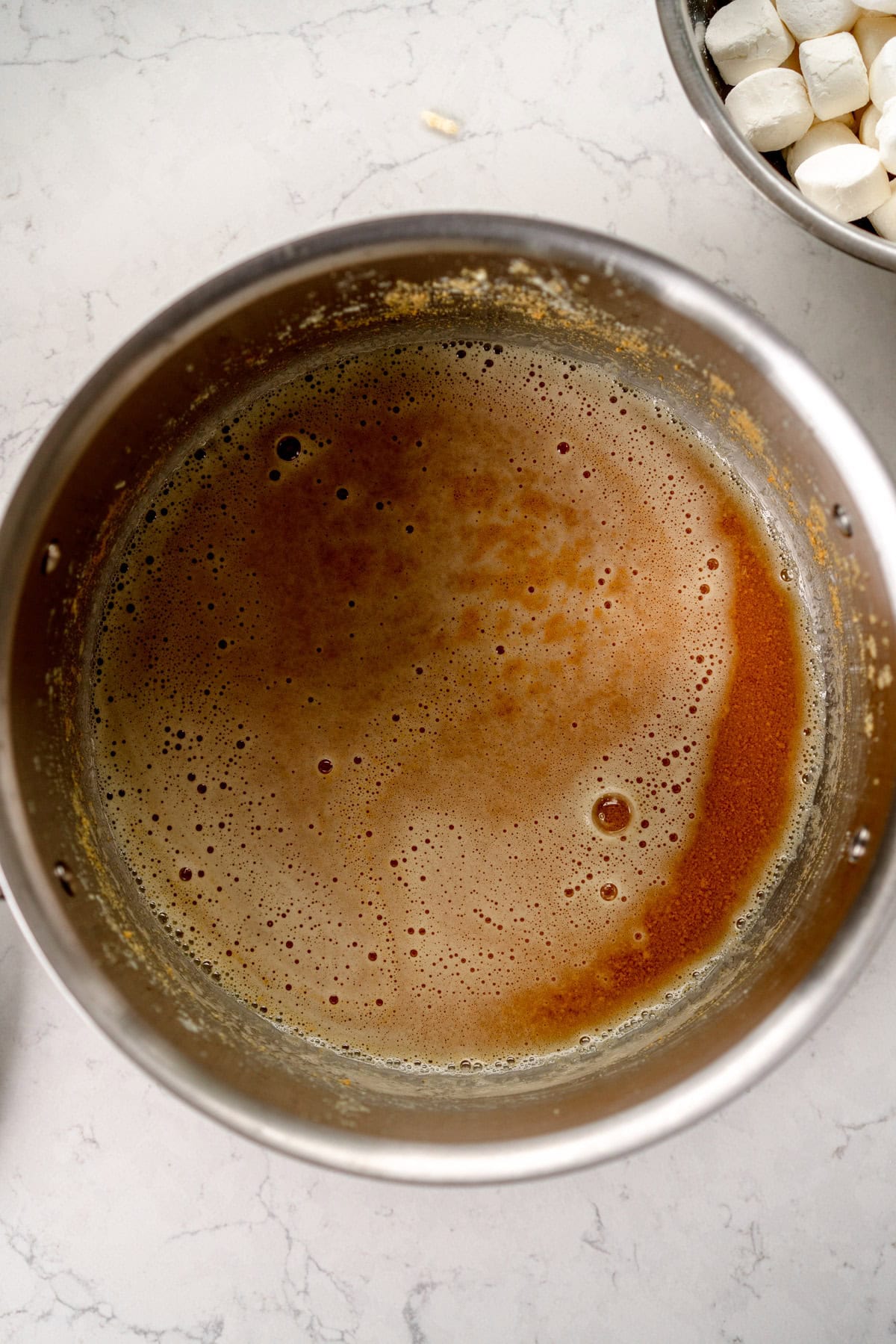
    Filed Under: Chocolate Chip Cookies, Cookies, Holiday Cookies

    Soft and Chewy Double Peanut Butter Blossom Cookies

    These super easy soft and chewy peanut butter blossom cookies are fun to make and come together quickly (or the dough stores well for making ahead) I top mine with Peanut Butter Cups, but chocolate kisses work great too! Roll your peanut butter blossoms in sugar for a crunch, or sprinkles for a cute festive twist.

    peanut butter blossoms on wire rack
    Peanut Butter Blossoms - mix and match with sparkly sugar and sprinkles to finish however you like!

    Hi hi! I am just popping in to share this super easy peanut butter blossom cookie recipe with you! I LOVE the combo of Peanut Butter and chocolate, and so the mix of a salty-sweet peanut butter cookie topped with a peanut butter cup?! Yes please. While these are typically a christmas / holiday cookie, I absolutely make them year round.

    These peanut butter blossoms use a really simple dough (we do brown the butter because why not), which doesn't require chilling, so you can have these baked in about 30 minutes.

    Alternatively the dough both chills and freezes super well, so they are a great make ahead cookie too!

    I use the same dough to make my Peanut Butter Cookies so if you are looking for an easy double up make sure to check out that post too.

    side on shot of peanut butter blossoms
    bite shot peanut butter blossoms

    Important Ingredients in Peanut Butter Blossoms

    This recipe uses only a few ingredients which are likely already in your pantry!

    • Brown Butter. I love love brown butter in everything. Browning the butter in these Peanut Butter Blossoms is a super easy step which adds a delicious toasty depth of flavour to the cookie dough.
    • Brown and Granulated (white) sugar: Brown sugar adds flavour and makes the cookie soft and thicker, and white sugar helps with spread and chewiness. Together they create the perfect cookie.
    • Peanut Butter. It is quite important to use the right kind of peanut butter when making these cookies. I use a smooth (creamy) peanut butter.
    • Sprinkles, raw sugar, etc for rolling: The fun part about these peanut butter blossoms is that you can finish them any way that you want! Roll them in crunchy sugar, sprinkles of your choice, mix and match with whatever you like.
    • Peanut Butter Cups. I use peanut butter cups instead of a chocolate kiss but you can use whatever you like here.

    I know that making brown butter can be intimidating. Don't be scared, I will hold your hand the whole way through in my post and you'll be nailing it in no time: Brown Butter 101: The Ultimate Guide

    adding peanut butter cups to cookies
    Press the PB cup into the cookie after 2-3 minutes from the oven.

    What makes this a blossom cookie?

    A blossom cookie is one that is baked as a ball of cookie dough, and when fresh from the oven, you press something into the top of it. It's a super fun way to jazz up a recipe and adding the candy fresh from the oven is super fun.

    Kisses vs Peanut Butter Cups

    Look, i'm going to say it - I don't really like Hershey's chocolate kisses. They often aren't good quality chocolate and just don't taste that good to me.

    So, I switched them out with a mini peanut butter cup. These ones come unwrapped in a bag, but whatever kind of mini peanut butter cup you can get will work.

    If you do like chocolate kisses, by all means feel free to use them! They just aren't personally for me but I tested the recipe with them and they work super well and look really cute too.

    close up of peanut butter blossoms

    How do you stop the chocolate from melting?

    Adding chocolate to a cookie fresh out of the oven is somewhat of a recipe for disaster but there are two workarounds:

    1. Leave the cookies to stand for a little bit. Once you pull the blossoms from the oven you want to let them stand for 1-2 minutes so they are still soft but not ripping hot. This should help prevent too much meltage.
    2. Freeze the chocolate. Starting with cold chocolate will mean that the chocolate is less likely to melt - just pop them into the freezer before you start the baking process.

    Make sure that you leave the blossoms to cool completely - this may take a wee bit more time than other cookies to let the chocolate properly set.

    wet ingredients for peanut butter cookies
    Wet ingredients including PB
    beaten brown butter and sugar
    Whipped together wet ingredients
    peanut butter cookie dough
    Dough should come together easily with a spatula
    I use a #60 cookie scoop to portion - or scoop 20g balls

    Can I make Peanut Butter Blossoms ahead of time?

    Yes. I tested this extensively with my Peanut Butter Cookie Recipe and this dough is a STABLE girlie. Which means that it is super easy to make these peanut butter blossoms ahead. You can see below that I tested a few ways and they all baked up basically identical.

    Often you need to reduce the oven temperature slightly when baking from chilled and frozen but for this particular recipe I found that it was not needed and the cookies baked up just fine at the temperature written in the recipe.

    • Chilling the dough: I chilled the dough for up to two days - roll it out and shape into balls, then chill in an airtight container. If you are making a few hours ahead you can roll in the sprinkles / sugar and chill otherwise I like to leave them plain and leave the dough to stand for 5 minutes or so while the oven preheats and then roll the cookies. This is mainly if i'm rolling them in sugar as the sugar can attract moisture and go a little soggy. This is just how I prefer to do it so if you want to coat them and then store them chilled by all means go ahead.
    • Freezing the dough. Same concept here - I like to space the dough balls slightly on a parchment paper lined sheet pan and freeze until solid (about 30 minutes) then transfer to an airtight container. Again, I prefer to freeze them plain then leave the dough to sit for 5 minutes or so to thaw just slightly before rolling in sugar / sprinkles and baking.

    For all my tips and tricks on freezing other cookie dough check out my post: how to freeze cookie dough and bake from frozen

    frozen and chilled cookie dough

    One Dough, Two recipes - a batch baking win!

    You know I love a recipe that can do double or triple duty and this is another of those - I used the exact same dough to make these peanut butter blossoms and my Peanut Butter Cookies. They also bake at the same temperature so you can either make a bunch all at once or double the recipe and freeze some for later. Batch baking for the win.

    FYI if you are after other recipes that you can also do this with - my raspberry thumbprint cookies and my 6 ingredient snowball cookies also use the same dough!

    Peanut Butter and Jelly Thumbprints

    I used this same recipe to make a PB and J style Thumbprint cookie. To do this, made and portioned the dough as directed using the same sized scoop, then made them in the style of my thumbprint cookies - I rolled the outside in chopped roasted salted peanuts, flattened slightly, then used a teaspoon measure to make an indent in the cookies (there are detailed instructions in my thumbprint cookie post). I then filled the indentation with raspberry jam and baked the cookies as directed in this peanut butter blossom recipe. They are super delicious, the nuts on the outside are such a good touch and you really can't go wrong with peanut butter and jam!

      ❤️ Made this recipe and love it? ❤️

      I would LOVE for you to leave me a review and star rating below to let me know how you liked it! Also, please make sure to tag me on Instagram!

      Answers to your baking questions

      Over the years, many of you have asked me questions about:

      • baking in grams
      • adjusting oven temperatures
      • what kind of salt to use
      • and many more!

      I've curated and answered them all for your easy reference in this frequently asked questions post!
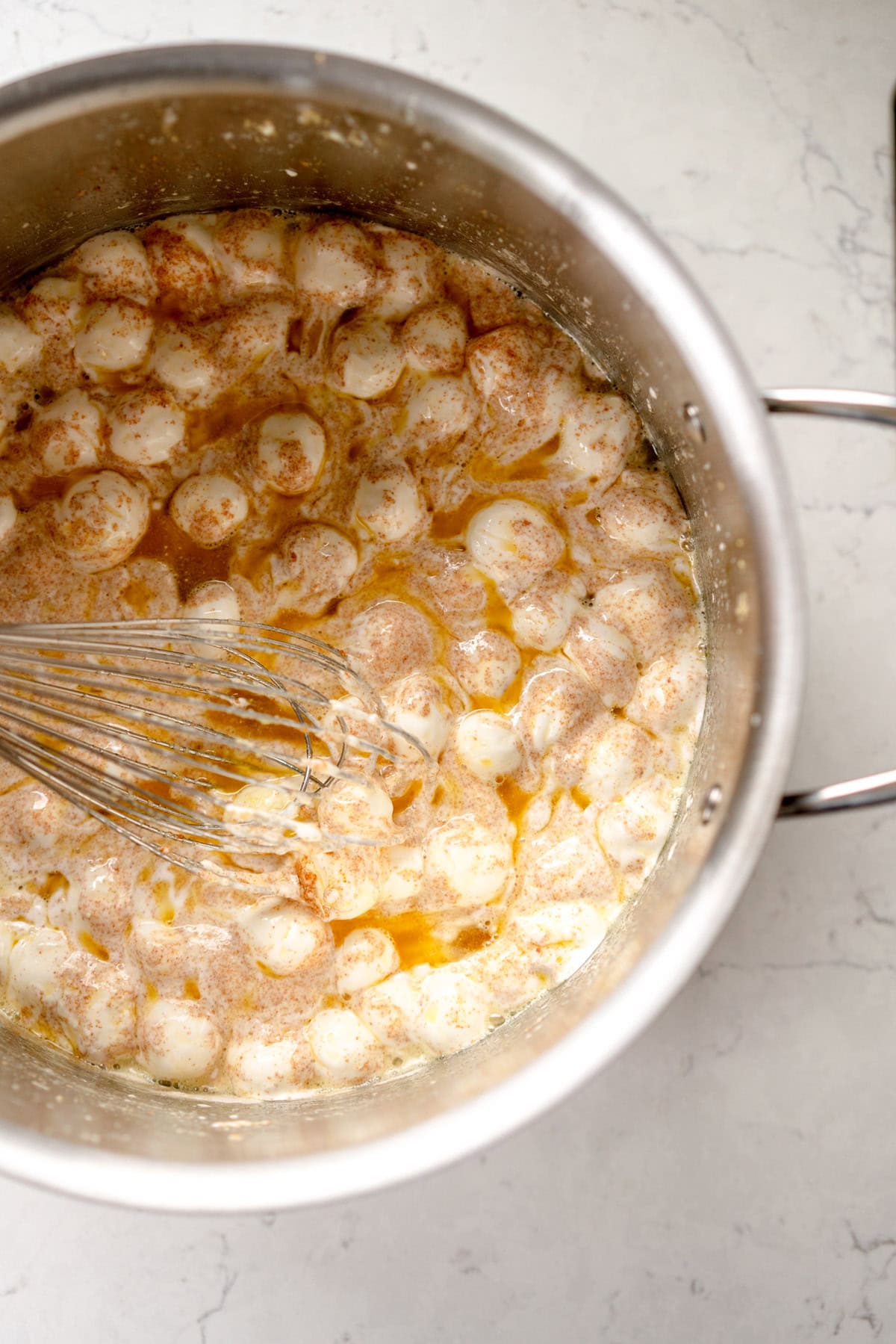
      Filed Under: Cookies, Holiday Cookies, Other Cookies

      Seriously, the Best Damn Peanut Butter Cookies

      I hate calling things 'the best' - but these easy peanut butter cookies really are the best (to me). Made with a no-chill brown butter peanut butter cookie dough, these cookies are quick to make, and the dough bakes amazingly from frozen, making them a great make-ahead option!

      peanut butter cookies on a pan with wax paper

      Hi hi! I am just popping in to share this new recipe with you - super easy Peanut Butter Cookies!

      I played around a bunch when I was developing this Peanut Butter Cookie recipe - using my Peanut Butter Oatmeal Cookie as a base. What I came up with is, to me, the best Peanut Butter Cookie. It is deliciously toasty from the brown butter, has no chill time so can be ready in about 30 minutes, and best of all, this dough is STABLE. I tested chilling and freezing and baking at different temperatures, and it performed so, so well.

      The kind of Peanut Butter you use to make Peanut Butter Cookies does matter, so make sure to check out the ingredients section.

      I also developed my Peanut Butter Blossom recipe using this same dough, so if you wanted to double it and make both, I highly recommend!

      stacked up peanut butter cookies
      sheet pan of peanut butter cookies

      Important Ingredients and why I used them

      There are a few ingredients in these Peanut Butter Cookies where it does matter what you use / they play an important role.

      • Brown Butter. I love brown butter anything - if a recipe has melted butter in it, chances are I'm going to try and brown it. Brown butter gives these peanut butter cookies a super delicious depth of flavour. Both salted and unsalted work here- if you use salted you can either adjust the salt content or leave it as is if you like things a little saltier.
      • Brown and Granulated (white) sugar. These both play a role - brown sugar helps with softness and thickness, while granulated sugar helps the cookie to spread and helps with chewiness.
      • Peanut Butter. I use creamy (smooth) peanut butter for these cookies. I haven't tried it with crunchy peanut butter sorry!
      • Crunchy Sugar. I love rolling cookies in crunchy sugar to finish them off - it gives amazing texture and makes them look a little bit sparkly. I use what we call 'raw' sugar, which is also called turbinado or demerara sugar in other places!
      wet ingredients for peanut butter cookies
      Wet ingredients in mixing bowl
      beaten brown butter and sugar
      Whipped wet ingredients

      What is the best kind of Peanut Butter to use in Peanut Butter Cookies?

      This is an important one - you want to use creamy / smooth peanut butter that is not natural peanut butter - so the one which stays totally homogenised in the jar. Natural peanut butter tends to separate when it sits, which can give uneven results.

      It is important to also check if your peanut butter is salted or has no added salt as this can make a difference to the overall taste of the cookie (salting your baking is more important than you think!). I developed these with salted peanut butter, so if yours is no salt added you may want to adjust the salt content in the cookie.

      dry ingredients for peanut butter cookies
      Add your dry ingredients
      peanut butter cookie dough
      Bring together dough with spatula

      A Quick Note on Brown Butter:

      You will notice that there are two quantities of butter in the recipe - the initial quantity called for in the recipe (130g), and then a weighed out quantity in the method (100g). This is intentional and is not a typo.

      When you brown butter, you are cooking off the water in the butter, and cooking the milk solids, which is what gives you the brown part of brown butter. Due to the loss of moisture, the overall volume of the butter when it goes from solid or melted butter to brown butter will decrease.

      The recipe accounts for this which is why I have given you two quantities of butter. Butter varies internationally in how much fat / water it contains, so some butter will cook down to a lower yield than others depending on how much water you cook out, hence the need to re-weigh your butter once you have browned it.

      Science for the win. Use a scale, my friends.

      I know that making brown butter can be intimidating. Don't be scared, I will hold your hand the whole way through in my post and you'll be nailing it in no time: Brown Butter 101: The Ultimate Guide

      disc of peanut butter cookie batter ready for the oven
      balls of peanut butter dough

      Do Peanut Butter Cookies have to have the fork marks?

      I didn't grow up eating Peanut Butter Cookies, but from the research I have done, the double fork criss-cross is a classic on a peanut butter cookie.

      For this particular recipe it is also needed in order to help press the cookie down before baking. If you bake them in balls like a regular cookie recipe they will still sink down slightly but they come out like peanut butter blossoms so are a different shape.

      pressing down on cookies with fork

      What kind of fork do you use for Peanut Butter Cookies?

      Look - I have ADHD and I can tell you right now that not all forks are created equal. This applies to the kind that you use for pressing down your cookies too - you want one with quite long tines so that you get good coverage when pressing down on your cookie.

      The fork on the left is my perfect squishing fork! It is nice and long and you get good criss cross coverage.

      Fork on the left: a great shape for cookie squishing!

      The pre-bake scoot

      In the recipe you will see me mention squishing the cookies slightly into a disc shape after pressing down on them with the fork. What this does is just re-shape them nicely if they have changed shape when you press down on them.

      It's a totally optional step but I like to 'scoot' them with a cookie cutter slightly larger than the disc of dough. It gives super nice even sides and means the cookies bake up really nice and evenly.

      If you don't want to do this that's totally fine - I tested doing it and not doing it and there isn't a huge difference in the outcome

      Do I have to roll Peanut Butter Cookies in sugar?

      I love rolling anything that I can in crunchy sugar or sprinkles or something similar to give it texture and sometimes colour, but if you want your peanut butter cookies to stay plain then by all means go ahead!

      Sometimes not rolling cookies in sugar if the recipe is developed to have it can change how they spread but this cookie is a very versatile girlie and as you can see by the image below, comes out exactly the same regardless of if you roll it or not.

      I use what we call 'raw' sugar here but it is also sometimes called turbinado or demerara depending on where you live! I also tested rolling these in sprinkles (chocolate and rainbow) and they came out great.

      Can Peanut Butter Cookies be made ahead of time?

      I tested this every which way and can tell you - this cookie can stand up to a lot. I tested baking fresh, chilling the dough, and freezing the dough, and then baking at different temperatures to see how it held up, including defrosting the dough from frozen and baking it.

      Usually when you are baking a cookie from frozen I suggest dropping the oven temperature, but as you can see from the test I did, baking at the same temperature as specified in the recipe (for this specific recipe) works fine!

      So I am happy to report that you can make these cookies ahead of time a number of different ways. I also tested rolling them in sugar both before and after chilling / freezing and there wasn't a big difference.

      Freeze the cookies once you have rolled into balls and pressed down with the fork, so you can bake them straight from frozen.

      For all my tips and tricks on how to freeze other kinds of cookie dough, check out my post: How to freeze cookie dough and bake from frozen

      One Dough, two recipes

      When I was developing this peanut butter cookie recipe it occurred to me that it would make a perfect peanut butter blossom cookie - and I was correct. If you are the sort of person who likes to knock out two cookie recipes with one dough then this is the recipe for you! The dough is the exact same, just how you roll and bake them differs slightly.

      Just an FYI that you can also do this with my raspberry thumbprint cookies and my snowball cookie recipe if that floats your boat!

      How do you store Peanut Butter Cookies?

      Store Peanut Butter Cookies in an airtight container at room temperature for up to a week - they will last fine but because they are quite soft to start with they may start to go a little soft.

      one dough two recipes - peanut butter and pb blossoms

      Frequently Asked Questions

      What tools and equipment do you use?
      You can find a full list of the tools and equipment I use on my products page

      Do I have to brown the butter?

      I haven't tested this but it should be fine - just use 100g melted butter in the place of the 100g of brown butter.

      Can I make these with other nut butters?

      I haven't tested it sorry! You are welcome to try but I do not know what the outcome will be. If you're allergic to peanuts, a peanut butter cookie recipe might not be the one for you.

      ❤️ Made this recipe and love it? ❤️

      I would LOVE for you to leave me a review and star rating below to let me know how you liked it! Also, please make sure to tag me on Instagram!

      Answers to your baking questions

      Over the years, many of you have asked me questions about:

      • baking in grams
      • adjusting oven temperatures
      • what kind of salt to use
      • and many more!

      I've curated and answered them all for your easy reference in this frequently asked questions post!

      Filed Under: Cookies, Holiday Cookies, Other Cookies

      My Dream Kitchen Renovation Reveal!

      It's finally here - the reveal of my dream kitchen renovation! When we first moved into our home we knew we wanted to do a full renovation - here is the full breakdown of the process and how it turned out!

      Hi hi! The reveal for our kitchen and living space renovation is FINALLY here. I am so sorry that it has taken so long to reveal - life well and truly has gotten in the way recently, but here we are now, and it has also given me some time to live in the space so I really can tell you all the things about it!

      I have broken down the whole process - I know that it is a lot of information so feel free flick around the post, and if there is something that I have missed out, please let me know!

      We were extremely lucky and got to work with some amazing companies throughout the process. I don't work with companies often at all, and when I do, they really have to be ones that I will very happily stand behind. Thank you so much to Sage Doors, Blum, ABI Interiors, and Hideaway Bins for providing products for our kitchen! All of which were ones that I was planning on using in our kitchen anyway. It is truly a dream to live in and having the most amazing high quality products in there makes the most incredible difference.

      The Back Story - How we got the house

      We kind of went about buying our first home a very backwards way. In 2020 we were living in our teeny NYC apartment where I was running my blog and my husband Rich (aka Adventure Dad) was running his design studio. I had been there for 7 years and Rich for 9 - we figured we would eventually move home, but it wasn't really on the cards, until the great 2020 shit show happened, and we realised that we really should think about moving home.

      Both being from New Zealand the country choice was easy - we settled on Wellington as it would be a good place for Rich's business (Auckland would have likely been better but we were much more keen on Wellington). I am from Nelson and Rich is from Hawkes Bay, so Wellington is a great easy in between location. We both went to University here, but neither of us had lived here as adults, so it took a bit of working out what suited us best in terms of where to live and what we were looking for.

      Rich had a separate design studio in NYC and we were originally looking for a place to live and then a separate commercial space to rent, then quickly realised that was a super dumb idea and we might as well just go for a place with the space for both of us to work from home, so we only had to focus on paying off our own mortgage.

      So we started looking. At first I was just 'looking to see what is around', but I have zero chill so it didn't take long before my poor Dad was off to Wellington to go to open homes and auctions. We missed out on a few, which we were initially pretty sad about, until this magical house popped up online.

      The house was a super weird layout, looked like it had been built by someone with their eyes closed and just going off good vibes, and had some definite quirks, but had the most amazing view overlooking an inlet, a house that could be fairly easily renovated (or so we thought), and a huge three car garage that Rich could use to set up his studio in.

      We purchased the house in 2020 without seeing it in person ourselves (a bunch of family had seen it though and tbh I trust my Dad more than me to choose a good house), and then tenanted it until we moved home in June of 2021. We stayed with family until the start of September, when we moved in when our container arrived.

      Once the novelty of our VERY OWN HOUSE wore off (to be honest I still think it hasn't), we started looking at renovating, thinking that we would start the process fairly quickly and get it done soon after moving in.

      Lolz. We were so Naive. I love it so much now, but we learnt so, so much along the way - and I think it could be really helpful to share these things too, as we were pretty lost when it came to knowing what the process of renovating was! If you want to see more footage, videos etc that I took in real time, I have a renovation highlight on my Instagram page.

      The Before - an incredibly dysfunctional space

      While our house has an epic view, whoever built the original did not have structural integrity as their main priority. It was originally built in the 1950's, and went through two badly done renovations in the 1960s and again in the 1980s, so it was a bit of a mish mash, and nothing really made sense. The living space was really closed off, with a big wall closing off a pretty small and incredibly badly laid out kitchen.

      The kitchen itself was a super strange situation - it had three pantrys / cupboards which was super weird, and none of them really made any sense. There were two smaller ones then one larger one which was the original house's bathroom. We then have a room which we call 'the cave' off the kitchen which used to be an old store room. It is exactly what it sounds like - really low ceiling, and a whole bunch of different textures on the walls. It was marketed as a bedroom but it's pretty yuck to have as a bedroom if you ask me.

      I have added the images from the real estate listing so you can really see what we were dealing with. New Zealand houses are notoriously badly insulated and this house was no exception, so we certainly had our work cut out for us. The house had no under floor insulation (or where it did it wasn't good), and single glazed windows which would get quite wet from condensation in the winter and were super cold.

      TV Room
      Living Room
      Living Room
      Dinning Room
      Kitchen
      Living Room
      The Kitchen was super small in relation to the rest of the house and incredibly closed off
      We opened up the wall and had it like this for about 2 years

      What we needed from our space

      Our needs were slightly different when it came to our kitchen renovation. The kitchen is my work space, and I have a ton more kitchen 'stuff' than most people, and also use the space super heavily, so I needed a workspace that can keep up with a really hard testing day. Here's what I needed from my space:

      • A large open workspace with no sinks, stove tops etc on so that I can spread out and work and also have testing space and shooting space.
      • A bench top which isn't reflective to film and shoot on, but is also low maintenance
      • Well organised kitchen drawers / cabinets where it is easy to see everything and grab what I need.
      • A large sink which can fit a whole sheet pan in for washing and is nice and deep
      • Space for two ovens (one wall oven, one range with stovetop) and a large fridge
      • Lots of pantry storage space
      • A light and bright workspace that is nice to work in, but also works great for entertaining.

      In order to do this, we basically needed to rip everything out and start over. We decided to do a total kitchen remodel, and re-worked the whole thing.

      Existing plans. You can see all the pantrys and closed in space.
      Screenshot of initial plans
      Full model of the house Rich made - you can see it is many levels and a bit of a mish mash.

      Once we started looking inside walls, under the floorboards and in the ceiling we also noticed the house had some serious structural surprises for us. We knew we wanted take out some load bearing walls (the ones which hold up the house) and to do that we had to put in some beams but each time we started working on a new area we found more and more stuff that needed fixing, from cracked foundations to rot and lumpy floors. Renovating is one of those things where you think you will just change one thing but once you have walls off and floors exposed, it makes sense to go ahead and do all of it while you are there.

      The Process of a Huge Gut Renovation

      When we first started I looked all over the place for resources which actually broke down the process and it was really hard to find any. Here is the process that we went through and our personal timeline:

      Design - Because our house was a little wonky, we had to go through a full consent process which involved getting plans drawn up by an architect so that an Engineer could work on them, so that the builder could give us a ballpark cost estimate. For us, this took from about Jan 2022 - March 2023 by the time we finalised what we wanted and waited for things - we could have definitely expedited things if we needed to but we weren't in any huge rush. We got the main plans done first, and ended up making a few changes along the way as we worked out what was going on once the walls were off.

      Demo - This was by far the quickest part. This involved ripping down walls and putting in structural support. This part only took 1-2 weeks out of the five months of renovation. We had electrician and plumber come in to cap off things and make it safe for renovating.

      The Re-build - This was the part that took a while - building a house takes a lot of bits and pieces! The builders had to put in a bunch of beams to ensure that the house was structurally sound, along with fully re-building and re-lining a bunch of walls. We probably added on about 6 weeks here as we realised that the floors were in terrible shape, so needed to be almost fully re-done, which felt like a setback at the time but we wanted to put down a click-together floating laminate floor and in order for that to be done, the floor had to be flat and level. This also gave us the opportunity to properly insulate underneath the floors which has made a huge difference.

      Window installation - whole front of the house had to be removed and re-done
      We raised the top of windows up only about 150mm but it made such a huge difference

      Wait for Windows - We had an unplanned pause while we were building - we decided mid way through to fully replace all the windows in the new renovated part of the house, including changing the layout of the huge windows across the front of the house. We had initially decided not to because of cost but found some rot in the wall around the windows so it made sense to just remove everything and get new windows and doors. While it was expensive I am so so glad that we did - raising up the height of the windows and door along the front of the house made such a huge huge difference. Turns out you can't just get windows from the window shop!

      We also added in a window in our kitchen that was a sliding window, which we call the 'pizza window'. It means that we can set up our pizza oven on a shelf outside and launch straight into the oven from the kitchen. It's the best.

      Pizza window installation

      Finishing - The builders got us to the point where there were walls on and everything on their end was done, then it was up to us to get all the finishing things done - install of the kitchen, having the flooring put in, finishing off the lighting, SO much painting, having the counter installed, rangehood put in, the backsplash tiled, the fireplace installed etc. This part took quite a long time but we were able to move in before it was fully finished - we still aren't fully done with some parts today but we will get there!

      How did you live for five months without a kitchen?!

      This was probably the most challenging part of the renovation - living for 5 months without a proper kitchen, especially when NZ houses are badly insulated and you develop recipes for a living.

      We are really lucky and have a large garage that Rich uses for his Design Studio, so we were able to set up a makeshift kitchen up there. The stove that we purchased for the new kitchen is electricity powered so we moved it up, and set up a stove, shelf and work bench situation - we were even able to move the dishwasher up there! We took our laundry sink and were able to rig it up with a hose through the window.

      While it was super cold in there and not really ideal for working in, it was great to at least have some semblance of a kitchen up there - I probably had more work space than when I lived in my tiny NYC apartment!

      The Outcome - My Dream Space!

      Every tiny little hard thing was 1000 times worth it now that we have the most amazing Kitchen and living space that I could have ever asked for.

      The kitchen itself is my actual dream - I have a huge uninterrupted countertop so I have more work space than I could ever ask for, which is so so perfect for working in. We worked really hard to make the kitchen extremely functional so two people could easily work in there but there was also a good work flow.

      We kept things super open by not having any upper cabinets - the whole kitchen except for the cupboard under the sink is drawers, and we designed them super carefully so that everything has a place, and it all lives in spots that make sense.

      We are super lucky to have a ton of storage - we kept one of the pantrys and turned it into a walk in pantry - we were able to raise the ceiling a little so it is super tall and has loads of shelving, a countertop for appliances, and a bunch of drawers for things like dried fruit and nuts, pasta, rice, snacks, and root vegetables. We went for shallow shelves so that it is easy to see everything - it is incredibly functional and I love going in there so much.

      We also have a strange little room off of the kitchen that we call the cave which we have turned into storage for extra ingredients, cake pans etc that I don't need full access to all the time in the kitchen, appliances, a fridge and freezer (which are pink and I love!), and a laundry area. This room is super low in terms of the ceiling height (it used to be a shed!) but works perfectly for what we need it for.

      Our living space we managed to fully open up and I love it so much. We ended up with a wall which we call the 'fat wall' which is instead of having to put a huge (expensive) beam across the house, and it turned out amazingly - we utilised the framing within the wall to turn it into cupboards (using fronts from Sage Doors and hardware from Blum) so we have a bunch of storage space in there, and even a little hole for the cats to use to go into a little room behind the fireplace for them to have their litter boxes so that we don't have them out in the open.

      We did a bunch of work opening up the living space and I am so glad that we did - now the flow from one end of the house to the other is just amazing and it feels so huge and open while still having little separate areas within. One splurge we made was on a really lovely fire - we got a super tall beautiful one and it does the most amazing job heating up the whole house.

      We decided to go with hard flooring throughout the entire house. I love the colour so much, and it is so much easier to clean - between three cats and my job there is a lot of vacuuming. It is so much quieter than I was expecting and feels really nice to walk on.

      Things that we love

      The renovation turned out so much better than I could have ever imagined that it would - we knew that it would be amazing, but not quite this amazing. I am still blown away every morning when I come downstairs and realise that I get to call this home.

      Again, we were super lucky to have been asked to work with some companies for the kitchen - these are all companies that I would have worked with anyway, but I am super super grateful that we were able to receive product in exchange for coverage on my blog and social media. Thank you so much to Sage Doors, Blum Hardware, ABI interiors and Hideaway bins!

      I truly believe that if it is within your budget, making really smart functional decisions in a kitchen makes the absolute world of difference.

      A huge kitchen area that is super functional.

      Every time I recipe test, film, or shoot in my kitchen I still cannot believe that this is my work space - we worked so hard to make it incredibly functional and I love it so much. I have two ovens in there - both a larger range and a smaller wall oven, which makes recipe testing a bunch of things at once just so easy.

      The large workspace and super well organised drawers also make my life easy - everything has a spot to go and the kitchen can hold a ton of stuff while not being cluttered, and it is easy to clean away everything at the end of the day.

      I also managed to have space for a speed rack which is one of those mobile racks that you see in bakeries etc and holds a ton of things - It is perfect for sliding sheet pans into to cool. I've wanted one in my kitchen for the longest time and it makes me so happy. I know that if a full sized one won't fit in your space you can get half sized ones too!

      We raised the ceiling in the pantry and it has a huge amount of both shelf and drawer storage now, along with space for toaster, microwave etc

      The most beautiful drawers and joinery.

      We were super lucky to be able to work with Sage Doors on our kitchen. Sage Doors is a family run New Zealand business who make the most amazing drawer and cupboard fronts. I didn't realise what a huge difference having great quality drawer and cupboard fronts would make but it is low key life changing - they are so smooth to touch and really easy to keep clean, and they use a special technology to laser edge their panels so the edges of the drawers and cupboards are seamless, which means there's no glue and they look more like a lacquered door. I'm obsessed, and can tell they are going to absolutely last the test of time, which is so important for someone like me who works the kitchen so hard.

      We went with their Baikal colour for the drawer fronts in the kitchen, which is a very light, cool toned grey, and warm white for the pantry area and the fat wall and doors behind the fire to match the walls. We wanted to add a little bit of colour without going too nuts, so for the area around the fridge we did a custom built storage situation in the colour bullet. I keep a bunch of cake pans and baking sheets up there and it's super functional, but also ties everything in in the kitchen perfectly.

      I love all things Sage Doors but the thing that I think that I love the most is the Optidoor panels that we put around our island and on the end panel of the kitchen. I wanted a light and bright kitchen with a pop of darkness but was worried keeping it plain might have made it look a teeny bit boring. Sage Doors make the most amazing textured panels which come in a ton of finishes and patterns which was the perfect solution - we went with the Missouri in the colour Bullet which is like a really dark charcoal colour, but they make so many variations and patterns. Our panel wraps around the kitchen island and looks great and provides a wee bit of interesting for your eyes. I love it so much.

      Sage Doors also makes a few other amazing products that we didn't have space for in our kitchen, including the most beautiful roller doors I have ever seen.

      A workhorse kitchen counter

      Being both a food blogger and a geologist who knows a thing or two about how rocks work, I had a ton of specifications for my counter top. While I would have loved to go with a natural stone like granite or quartz, the price for the size that we needed was prohibitive, so we went for an engineered stone instead.

      While marble countertops are beautiful, I would never personally put one in my kitchen - they are super high maintenance, scratch and stain easily, are hard to look after, and etch really badly if they get acid on them. If you're fine with that then by all means go ahead but it just wasn't what I wanted in my kitchen - I shot my videos on a piece of honed marble for years and even being super careful with it it was really banged up.

      I also needed something with a matte or semi matte finish that wouldn't stain and was easy to shoot on while not being too reflective. We went with a Silestone countertop in the colour Jasmine Pearl, in a suede finish, which is manufactured like that rather than being honed after which can make them prone to staining. It has a sort of marble vibe to it, I love how subtle it is and how well it pairs with everything in the kitchen.

      silestone countertop

      We were super careful when designing the countertop to ensure that what we wanted all fitted onto one piece - you purchase stone by the slab, so we did a little re-jigging to make sure that everything all fit onto one piece, then got some offcuts from the manufacturer to use in the pantry and the cave to save us having to buy a full new slab. It all looks great and was by far the most cost effective way to to it.

      Drawers that slide like butter.

      Again, I truly didn't know how life changing it was having good quality hardware on your drawers, especially when you are like me and are opening and closing them hundreds of times a day between emptying the dishwasher, cooking, recipe testing, etc.

      For our drawer hardware, we worked with with Blum, who are a super lovely company and manufacture the most amazing hardware for almost anything that opens and closes. We were super lucky and and got to use their amazing products - they recommended the MERVIOBOX system for our drawers, which has been a gamechanger. These incredibly functional and minimalist drawers are the smoothest ever to pull out when you need something, and are incredibly stable and long lasting - I have a few drawers which have about 40kg worth of plates or pots and cast iron in them and the hardware takes it like a champ - you would have no idea that the drawer was so heavy. We went for the Orion Grey sides which look so good with the light grey drawer fronts.

      drawers being opened
      baking needs drawer

      We also installed Blum's AMBIA-LINE systems as our drawer dividers and let me tell you I have never enjoyed opening drawers and putting things away so much in my life. The AMBIA-LINE system is a modular system so you can arrange the interior of the drawer to suit you - the little divider sections can be moved around to create your ideal layout. For all the high sided pull outs, the system magnets to the side of the drawer so everything sits super nicely and doesn't slide around. My favourite of the AMBIA-LINE is the knife holder that we have in one of the drawers - I like having my knives all safely tucked away and being able to see them and grab exactly what I need is so great. I love it all so much - I never thought I would be the sort of person to rave to guests about how much I love to open my drawers, but I am, and I'm totally fine with it.

      blum servo drive

      An absolute unicorn in my kitchen is the push-to-open rubbish bin that we designed using Blum's SERVO-DRIVE. You push the front of the drawer and it has a motorised mechanism that smoothly pops the drawer out. You can close it by gently pushing it and it closes the rest of the way for you. This is a total game changer when you have dirty or wet hands and want to throw something out - being able to just push the drawer with my knee and not have to wipe or disinfect the drawer every time brings me joy so many times each day.

      Blum also makes a ton of other amazing products, so if you're putting any sort of cupboard, drawer, or storage systems in your home, make sure that you check them out - there are a huge range of things for everyone. Their team is super supportive and willing to help guide you through every step of the way which I loved so much, as it can get quite overwhelming making decisions when it comes to things like drawer hardware.

      blum drawers

      A huge kitchen sink.

      This one was super important to me too - the sink in the previous kitchen was really small, shallow, and made it extremely hard to properly wash things. We took along a half sized sheet pan to the store to measure to make sure I could put it flat into the sink to clean, and I wanted to make sure that it was deep enough to hold a ton of dishes.

      We went with the Mercer Derby Single Bowl, and I love it so much - it is the perfect size, super easy to clean and does all the things that a sink should do (including being the perfect depth for acting as a makeshift bath for my niece). We under mounted the sink, which means that the sink is installed underneath the countertop rather than on top, which makes wiping mess off the bench into the sink super clean and easy.

      We also installed an instant hot and cold water tap that we got off marketplace but it is an older version of the Zenith Hydrotap. Ours also does sparkling, but we are huge fizzy water drinkers and we don't find that the fizz is enough for us even after adjusting it a lot. We got a super good deal on it though but if I were to get one from new I would only install the hot and cold. The instant hot water is low key life changing and I use it all the time - not just for hot drinks but it's amazing for all sorts of things.

      abi elyssian tap

      A beautiful kitchen tap.

      If you have a great sink, then you have to make sure that you have a great tap to go with it. We ended up with the Elyssian Sensor Commercial Pull-Out Mixer from ABI, who we were super lucky to collaborate on this project with. I know I've said it a bunch, but, life changing. It is not only super beautiful but the pull-out function isn't the slightest bit clunky (this is key for a pull-out tap IMO) and has a rain shower function which I use all the time for doing the dishes and cleaning the sink. I probably do more dishes than the average human and so I have very high expectations when it comes to a kitchen tap and this one ticks all the boxes on my imaginary 'what I need from a kitchen tap' list.

      A slightly extra little secret function that the tap has (but well worth it as far as I am concerned) is the sensor on the side. As someone who does a little washy washy of my hands about 50 times a day, if my hands are super dirty I am able to just turn on the tap by waving my hand to the side of the sensor rather than having to turn on the tap itself. I love this function so much and use it a ton.

      abi elyssian tap
      ABI drawer pulls

      Drawer pulls you don't bang your legs on.

      We went with the brushed brass which is super beautiful and also matches the ABI Rappana drawer pulls that we installed. They are super subtle and go perfectly with the drawer fronts both in the kitchen and the pantry, but are substantial enough that you're not fumbling to open the drawer. They sit super politely and don't poke out past the countertop which is essential when you're a bit clumsy like me and tend to bang your legs on things. The edges are perfectly rounded, not sharp. Again, they are one of those things that you don't realise make such a huge difference until you have a good quality set of them installed.

      A super efficient waste system.

      I'm going to say it again - life changing. Before we renovated we had a few large stand-alone bins in the pantry and they were honestly just annoying. They were too big, so by the time that they got full they smelt gross and were hard to empty, and I hated cleaning the outside of them and around them.

      When we did the renovation we designed in two larger drawers that house the rubbish bins - we went with a 4x 15 litre bucket setup from the Concelo line by Hideaway bins which were very kindly gifted to us. We have them set up for rubbish and cleaning products in the top set and recycling down below. They come with little inserts to colour code the bins if you want, and they hold a rubbish bag in super well. The thing that I love the most about them is that they have a lid that comes down when you close them, keeping in any yuckies that might be in the bin. The whole thing basically comes apart to clean, so I can live my best disinfecting life and fully clean the entire bin setup super easily which I really love.

      Two Ovens.

      This is definitely a niche need, but having two ovens has totally transformed my workflow. Often waiting for oven space is the thing that holds up the recipe development process, and I like to often test things at two temperatures. Two ovens means I can be far more efficient when I do work.

      We purchased the ovens before we started the renovation as the existing oven in the kitchen wasn't what I needed for work. We went with a wall oven and a large range, both electric (which is the norm for ovens in Nz, gas ovens are super rare, however lots of people have a gas stovetop or range paired with an electric oven)

      For the wall oven I chose the Smeg Pyrolytic Oven, which is my absolute workhorse. I needed something with a digital control (rather than an analog dial), and it heats up super quickly and holds heat amazingly.

      For the range I wanted something a bit larger so that I could have a nice large stovetop, and we went with the Smeg Portofino which is 900mm wide. Our house isn't fitted for a gas top and I wanted something where I could easily know that I hadn't left the stove on (ADHD life), so we spent a little extra and went with an induction top. It took some getting used to (it is FAST), but I love it, and our pots and pans were already induction capable.

      One other thing that we wanted to make sure was good quality in the kitchen was the rangehood above the stove. We lived with truly the worst extraction system (if you can even call it that) in NYC and it was always on our list. We went with the Falmec Siena - I especially love how easy it is to take apart and wash the parts in the dishwasher. Just the best.

      Things that we would have changed / what we learnt

      On the whole, there wasn't really many things that we would have changed. We definitely learnt a whole lot, and absolutely spent more than we were planning to, but every change and decision that we made has been 100% worth it.

      The main one is that we were a bit Naive going into it in terms of how long things would take, which is 100% on us. The builders and tradies did the most amazing job. We definitely came across a few hurdles - mainly needing to add additional time and money into fixing the floor in order to be able to lay the laminate, and having an unexpected pause when we waited for the windows, but in the grand scheme of things, aside from accounting for time for those things and maybe deciding to do the windows right from the get go, I wouldn't have changed anything.

      Make sure you're prepared for it to get a bit hectic - renovations definitely aren't for the faint hearted but it is so so worth it!

      Budgeting - What was the cost breakdown?!

      I always find this sort of thing super super interesting, and Rich is a numbers guy, so he tracked all of our costs and put together a spreadsheet so we could see the budget breakdown within the project.

      Obviously this won't be the same for every project - we had a ton of structural work to do on the house, so a huge chunk of our budget went toward the builders, which makes sense. Each project will be different but here is our specific breakdown. I feel weird talking about specific budget because everyone is going to be different so I have just included the percentages on what we spent below!

      We did end up going over our initial budget by quite a bit, but this is our forever home so they were changes that we were comfortable making.

      Timeline of our Project

      Here is the general timeline of our specific project - others may go much faster or slower depending on builder availability, how many builders you have (we had two most of the time), the scope of the overall job, materials, how wonky your house is etc but this is what happened for us. Remember that we did an entire downstairs renovation comprising of both the kitchen and two living spaces, so this timing reflects that.

      Sept 2021: Move into the house, have initial meeting with builder and engineer, establish that we need plans and engineering done for consent and builder plans before anything goes ahead

      Jan 2022: Start process for making plans (we were in no rush), get architect to draw up plans, plan consent, consult with engineer, etc. Get in touch with builder to lock in a rough ballpark of what needs to be done and when we can start.

      Late 2022: Work on generalised kitchen design, work on ideas for layout of the house etc.

      March 2023: Begin Demo. Electrician and plumber cap off so that demolition can start. Builders remove walls and lining, along with any walls that are being deleted in the living space.

      March - Early June 2023: Builders on site working on re-framing out the walls, adding in structural beams to account for deleted load bearing walls, fixing foundations of the house, repairing floors, etc etc.

      Early June - Mid July 2023: Stop to wait for new windows and doors to be ordered and manufactured after we found rot in the framing and decided to fully replace the windows and door with new ones.

      Mid July - Mid August 2023: Building was finished - installation of windows and doors, flooring finished etc.

      August - Sept 2023: Builders finished, plastering and painting done, installation of flooring, kitchen and pantry cabinets and drawers, countertop and sink / tap, installation of rangehood and backsplash.

      Sept 2023: Move back in! We still had a ton to finish off but we were SO ready to be in our new space.

      List of Appliances / other products used in the house

      • Paint Colour - we went with 'Rice Cake' by Resene in the entire downstairs area, including on the ceiling. We painted ourselves which saved us a ton of money.
      • Fridge brand - Samsung French Door - I read a bunch of stuff about issues with the plumbed in version so we went for a non plumbed one and haven't had any issues
      • Countertop brand - Silestone in the finish 'Pearl Jasmine' which we got in a 'suede' finish. We went through Trethewey Stone in Lower Hutt but I know that a lot of countertop manufacturers work with Silestone and other engineered stone.
      • Lighting - Flos Zero Track for the track lighting in the kitchen and the living space. This was definitely a splurge, but we are super happy with what we ended up with. We installed three Flos Shadow 4 lights on the sink side of the kitchen to help provide downward lighting onto that area.
      • Furniture - Both our couches are from Freedom Furniture, the coffee table was from Marketplace, and the Eames Lounger we purchased before we left NYC and brought it back with us.
      • Fireplace - Spatherm Freestander fire place. This was a splurge but we love how it looks in the space and it is incredibly efficient.
      • Cushions - Most of them are from Citta.
      • Boucle Chair - we got this on sale from Farmers and we love it - it swivels which makes it super versatile.
      • Flooring - we used the Pergo Flooring 'Drammen' in Sandwave Oak, which is a laminate veneer. It looks incredibly realistic, and is really hard wearing and quiet to walk on. We are planning on putting it throughout the entire house.
      • Art in the kitchen - the beautiful ceramic 'macaroni' was made by the super clever Felicity from Wundaire. I love how it adds an amazing pop of colour to everything.

      Let me know if you have any questions and as always, thank you so much for following along! I have loved sharing my space with you and will continue to update as we renovate more!

      Erin xx

      Filed Under: Uncategorized

      Super Fudgy Tahini Brownies (Done in 40 minutes!)

      square of tahini brownies

      Super rich and fudgy chocolate brownies are topped with a swirl of tahini. These quck and easy brownies are a great twist on a classic fudgy brownie recipe. These brownies are especially delicious eaten cold from the fridge!

      square of tahini brownies
      Perfect Crinkly Brownie top and tahini swirl = match made in heaven

      Hi hi! I am just popping in today to share this super easy fudgy tahini brownie recipe with you! This recipe is just a super simple twist on my peanut butter chunk brownies, but with a quick and easy tahini swirl on the top of the brownie rather than the peanut butter chunks. Tahini is essentially ground sesame paste and while it is mostly used in savoury applications it goes super well in sweet recipes too, especially paired with chocolate.

      These tahini brownies are a super fun variation if you're looking to twist things up a little. I got fancy with my tahini swirl - read on and i'll show you how I did it!

      Just want something plain? Go for my classic fudgy brownie recipe. You can't go wrong. I also include alllll my tips and tricks and best practices there for how to make perfect brownies at home.

      pan of baked tahini brownies
      close up shot of sliced tahini brownies

      Important ingredients in Tahini brownies and why I used them

      There are a few brownie ingredients where the quality really does make a difference, unlike other baking recipes. Here's the important ones:

      • Cocoa. I use Dutch process cocoa in most of my brownie recipes, but for these tahini brownies I switched it up and used black cocoa instead to give them a super dark and fudgy taste. Whatever you have on hand works great.
      • Good quality chocolate. The quality of the chocolate in a brownie really makes a huge difference as it is the main flavour in the brownie. Use something that you would be happy to eat on its own. I like to use a 72% cocoa solids chocolate.
      • Room temperature eggs. This is super important too - the key to getting that perfectly crinkly, crackly brownie top comes from whipping the sugar and eggs together until the sugar dissolves, and if you start with cold eggs this process will be much harder / won't work as well.
      • Sugar. My brownie recipe uses both brown sugar and white sugar and the kind of white sugar that you use is important. I use caster sugar as our sugar in NZ is a lot grainer than what I used when I lived in the US. If your sugar isn't very finely grained and you want that crinkly top, use caster sugar. Because we are working by weight, the quantity of sugar doesn't change, 200g of sugar = 200g of sugar!
      • Tahini. This recipe has a tahini swirl on the top - use a good quality tahini if you can! Make sure that if it has been sitting for a while that you give it a good stir.
      sliced tahini brownie side on shot on parchment paper
      These brownies are on the thinner side to get a good balance of tahini and brownie!

      The trick to a crinkly top brownie

      The key to a crinkly brownie top is making sure that you whip your eggs and sugar together properly so that the sugar dissolves well. Make sure you give it enough time and use the correct ingredients.

      I go heavily into depth on this if you would like to read more in my fudgy homemade brownie recipe

      close up image of brownies with swirly top

      How to add a tahini swirl to brownies

      As you can see in the images, these brownies have a perfect wee tahini swirl on the top of them. Because Tahini is quite an intense flavour I didn't think that it needed to also have chunks of it within the brownie - just a little swirl on top was perfect.

      When I was testing the recipe I initially tried it with just a plain tahini swirl however I found that it was cracking quite badly and separating out from the batter and didn't look that great.

      A simple solution - thicken the tahini slightly. I added in just a little powdered sugar, which thickened the tahini enough that it was able to make a beautiful swirl on top of the brownie. The tahini gives a subtle nuttiness to the brownie which is so delicious.

      How did you make the pattern on top of the brownies?

      Making the pattern that I used on the brownies is super easy - it is a basic feathered pattern. To do this, I popped my tahini into a piping bag and piped lines across the brownie, then took a sharp pointed knife (a cake tester or skewer also works) and dragged it across the lines, making a feathered pattern. You alternate the way that you drag the knife (up, then down, then up etc) and you get this super easy pattern.

      If making a fancy pattern isn't for you then you can also just go for a super easy swirl on the brownie! Do whatever you like here.

      tahini piped onto brownies
      Pipe horizontal lines of tahini
      feathered piping on tahini brownies
      Use something sharp to feather the lines

      How to tell when brownies are baked

      You are much better off underbaking a brownie slightly than over baking. Over baked brownies can be sad and dry, and quite hard around the edges.

      You want to look for the edges of the brownie to be fully set, and the middle of the brownie to look set. If you insert a skewer into the middle you want it to come out with just a few fudgy crumbs attached.

      How to get a clean cut on brownies

      I have a bunch of tips and tricks on this, and wrote basically a whole novel on it if you're after more information on how to get those perfect clean cuts on your brownies!

      My Top Brownie Tips

      • Get all my tips and tricks on how to get the perfect crinkly brownie top in my fudgy homemade brownie recipe.
      • Plus, follow this easy Instagram video tutorial to cleanly cut homemade brownies!
      stacked up fudgy brownies

      Frequently Asked Questions

      What tools and equipment do you use?
      You can find a full list of the tools and equipment I use on my products page

      Which pan did you use?

      I use a 9" square non-stick pan for making my brownies that I line well with parchment so that they are easy to remove once baked.

      How do you store tahini brownies?

      Store your tahini brownies in an airtight container at room temperature for up to 5 days, or for up to a week in the fridge in an airtight container. You can also freeze them, well wrapped or tightly sealed, for up to 3 months.

      Can I use a different shaped pan?

      Yes- I have made this same recipe in a 10" round cake pan and it worked great. The baking time is about the same - just make sure that you use a piece of parchment extending over the sides to remove the brownie once baked.

      ❤️ Made this recipe and love it? ❤️

      I would LOVE for you to leave me a review and star rating below to let me know how you liked it! Also, please make sure to tag me on Instagram!

      Answers to your baking questions

      Over the years, many of you have asked me questions about:

      • baking in grams
      • adjusting oven temperatures
      • what kind of salt to use
      • and many more!

      I've curated and answered them all for your easy reference in this frequently asked questions post!
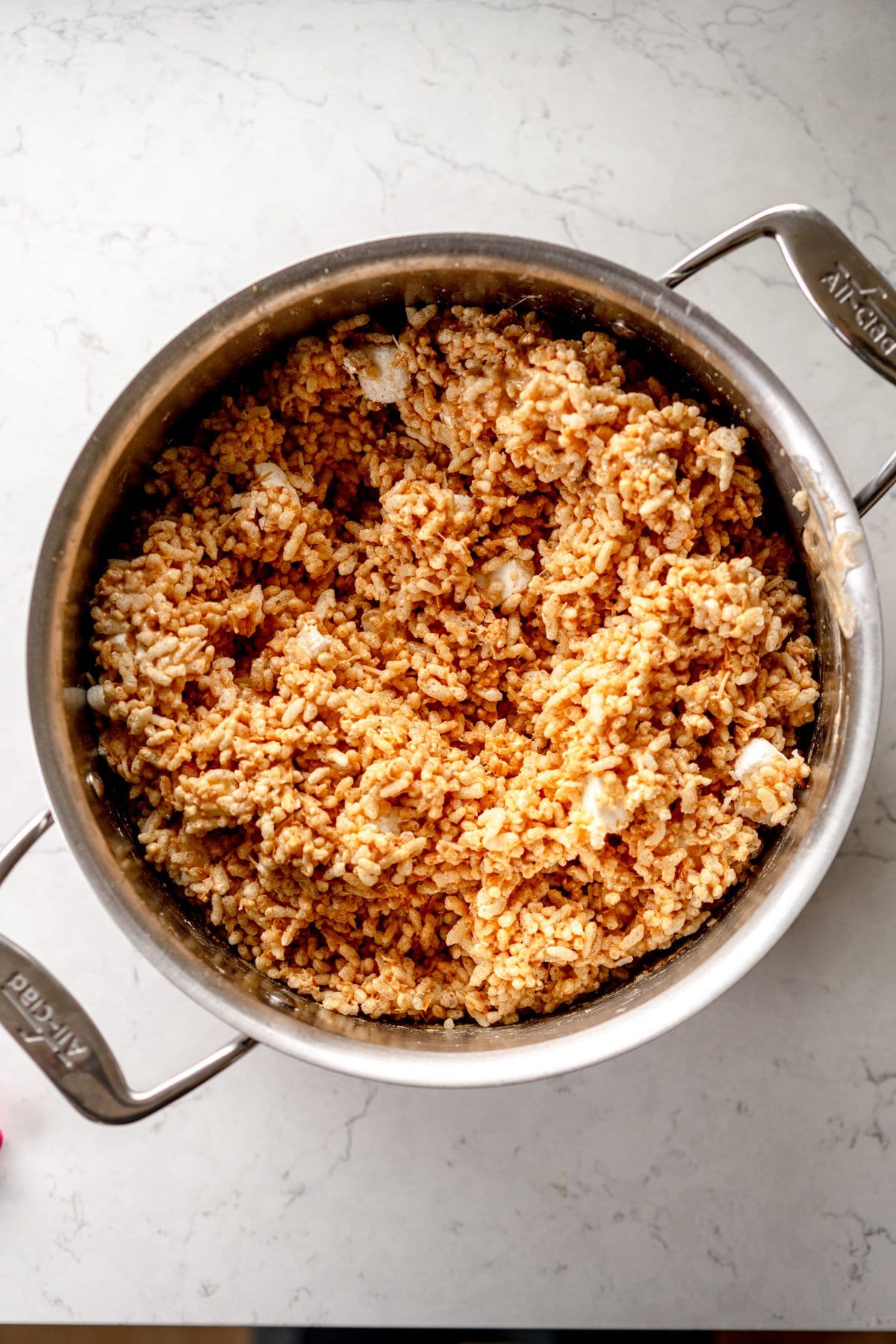
      Filed Under: Brownies

      30 Minute Lemon Crinkle Cookies with Fresh Lemon

      lemon crinkle cookie on parchment paper

      Lemon Crinkle Cookies are a zesty lemon take on a classic crinkle cookie. These one bowl cookies use fresh lemon juice and zest for a super lemony cookie that melts in your mouth. No chilling required!

      lemon crinkle cookies on parchment paper
      Thick and Chewy Lemon Crinkle Cookies

      Hi hi - I am just popping in to share this super easy lemon crinkle cookie recipe with you! Made with fresh lemon (both zest and juice), these cookies come together in one bowl in about 30 minutes. They don't require any chilling, and are soft and chewy, and super flavourful.

      I have a few crinkle cookie recipes on my site - my classic chocolate crinkle cookies and also my red velvet crinkle cookie recipe, but a lot of people asked for a lemon crinkle cookie version, so here we are!

      These lemon crinkle cookies are slightly thicker and chewier than their chocolate counterparts. I love them a lot and I hope that you do too! I love making recipes with fresh lemon so these are great to add into rotation.

      Baked Crinkle Cookie
      This recipe makes 12 lemon crinkle cookies
      Inside shot of a baked crinkle cookie
      These cookies are thick and chewy and perfect for lemon lovers.

      Ingredients in Lemon Crinkle Cookies

      These lemon crinkle cookies come together with ingredients you probably already have in your kitchen. Here's what I used and why:

      • Granulated sugar. I used just regular granulated sugar - if you have caster sugar that will work too. Using white sugar helps with spread in cookies and gives a really nice chew.
      • Lemon Zest. This recipe uses 10g lemon zest - about two lemons worth but weigh it just to make sure as lemons can be different sizes.
      • Melted butter and oil. This recipe uses both melted butter and oil - more on that in a bit. I use unsalted butter and a neutral oil which just means anything neutral tasting - canola, vegetable, rice bran, grapeseed etc
      • Fresh lemon juice. Some recipes use lemon extract but I much prefer these with fresh lemon. Make sure you zest the lemon before juicing - if you do it the other way around it's a pain!
      • Vanilla - I use vanilla bean paste but if you have vanilla extract that will work fine too.
      • Flour. I use all-purpose flour, which is also called plain flour depending on where you live.
      • Salt. Essential for balancing out the sweetness in baking.
      • Baking Powder. In my chocolate and red velvet crinkles I use baking soda, but because of the lemon juice in the recipe I didn't want them to react before the oven and not give any rise, so I switched to baking powder.
      • Granulated sugar and powdered sugar for rolling. It is important to use both to get a nice even coverage on your cookies.
      dry ingredients for cookies
      Dry ingredients going into wet
      lemon crinkle cookie batter
      The batter will be quite sticky.

      Oil vs Butter for Cookies

      I wrote extensively in my chocolate crinkle cookie recipe about using oil vs butter in crinkle cookies because of how it reacted with the powdered sugar on the outside.

      When I tested the recipe with only butter, the powdered sugar went super gooey from the water in the butter. When I switched to oil which is only fat and no water to evaporate, this fixed the problem.

      However when I made this lemon crinkle cookie recipe I ran into an issue - it was really missing the butter flavour. The cookies I tested with only oil weren't super flavourful and really just needed something else.

      To get around this I went for half oil and half butter which seemed to do the trick and not give gooey soggy cookies while still benefitting from the butter in the recipe.

      If you wanted to keep these totally dairy free you could - just use 75g neutral oil instead of the oil and butter mix.

      The trick to super lemony baking - rubbing the zest into sugar

      This is a trick I use whenever I am making anything using lemon zest and sugar. Rubbing the fresh lemon zest into the sugar helps to release the oil in the zest and flavour the sugar, meaning that you get as much flavour into your lemon crinkle cookies as possible.

      lemon zest rubbed into sugar
      Rub the zest into the sugar first to add extra flavour.
      wet ingredients for lemon crinkle cookies
      Then add the remaining dry ingredients for the recipe.

      How to get a good coating on Crinkle Cookies - Granulated Sugar then Powdered Sugar

      One thing with crinkle cookies is that it can be quite hard to keep the powdered sugar on the outside of the cookie. This is what is essential to give it the signature crinkle look.

      The best trick that I have found to make sure you get a good coating is to do two coatings of sugar - the first in granulated sugar and the second in powdered sugar.

      Because the dough is quite soft, I find it best to plop the lemon cookie dough directly into the granulated sugar and coat it so that it is easy to handle. I find it best to work with one ball of dough at a time as they can get a little mis-shapen and be hard to shape if you do them all at once.

      crinkle cookies ready for the oven
      Lemon Crinkle Cookies ready to go into the oven.

      How do you store Crinkle Cookies?

      Store lemon crinkle cookies in an airtight container at room temperature. They should keep for up to 5 days. Make sure that, if possible, you don't shake the container around too much as it messes up the powdered sugar on the outside of the cookie.

      Can Lemon Crinkle Cookies be made ahead of time?

      Because of how sticky the dough is to work with and how quickly they come together, I don't think that these would be good to make ahead of time. For some recipes it works, this is one of those where you are best to just make the dough while the oven preheats.

      Can I freeze Lemon Crinkle Cookies?

      Again - I don't think it will work sorry, things will get super weird super fast, as the dough is just too sticky to work with so making ahead and freezing would be a nightmare.

      For all my notes on cookies that are great to make ahead of time check out my post - how to freeze cookie dough and bake from frozen.

      side on shot lemon crinkle cookies
      The cookies will sink down into little mounds in the oven.

      Oven Temperature for Lemon Crinkle Cookies

      You will notice that the oven temperature on these cookies is slightly lower than a 'regular' recipe - I bake them at 325°f / 160°c instead of the more common 350°f / 180°c.

      This is to do with how the cookie sets up in the oven. Playing around with the oven temperature can affect the spread of the cookie a lot - in this case, baking at a slightly lower temperature means that the cookie sinks down in the oven slightly slower, giving it time to bake up nice and thick. Because it is thicker and a slightly wetter dough from the lemon juice in the recipe, it is also good to give it a lower and slower baking time so that the inside has a chance to fully bake before the outside dries out.

      How to tell when Lemon Crinkle Cookies are baked

      This can be slightly trickier for this recipe than it is for others - you want the cookies to be fully baked on the inside, as if you underbake them they are super cakey and not at all in a good way. (This happened when I was testing them and it definitely isn't the same as a gooey chocolate chip cookie).

      Look for the outside of the cookies to be fully set, and if you press one with your finger you are looking for them to not feel too wet in the middle. For me, the baking time was 15-16 minutes, but make sure that you keep an eye on them.

      rolling cookie dough in granulated sugar
      Scooping the dough straight into the sugar makes the dough easy to work with.

      Frequently Asked Questions

      What tools and equipment do you use?
      You can find a full list of the tools and equipment I use on my products page

      Can I make these with bottled Lemon Juice?

      I wouldn't. Bottled lemon juice can have an artificial taste to it (even if it is real lemon), so I much prefer to use fresh lemon for this recipe - you also need the zest for the recipe.

      Help - is the dough meant to be sticky?!

      Yes, it is a sticky dough. The dough won't be able to be rolled into a ball - it sort of just forms a blob when you scoop it out. Scooping it directly into the granulated sugar helps this a lot.

      For more Holiday Cookie recipes, check out:

      • piped butter cookies on rack
        One Bowl 30 Minute Butter Cookies
      • wire rack with snickerdoodles
        25 minute Snickerdoodle Cookies
      • thumbprint cookies on rack
        Soft and Buttery Raspberry Thumbprint Cookies
      • baked gingerbread cookies
        Easy Gingerbread Cookies

      ❤️ Made this recipe and love it? ❤️

      I would LOVE for you to leave me a review and star rating below to let me know how you liked it! Also, please make sure to tag me on Instagram!

      Answers to your baking questions

      Over the years, many of you have asked me questions about:

      • baking in grams
      • adjusting oven temperatures
      • what kind of salt to use
      • and many more!

      I've curated and answered them all for your easy reference in this frequently asked questions post!
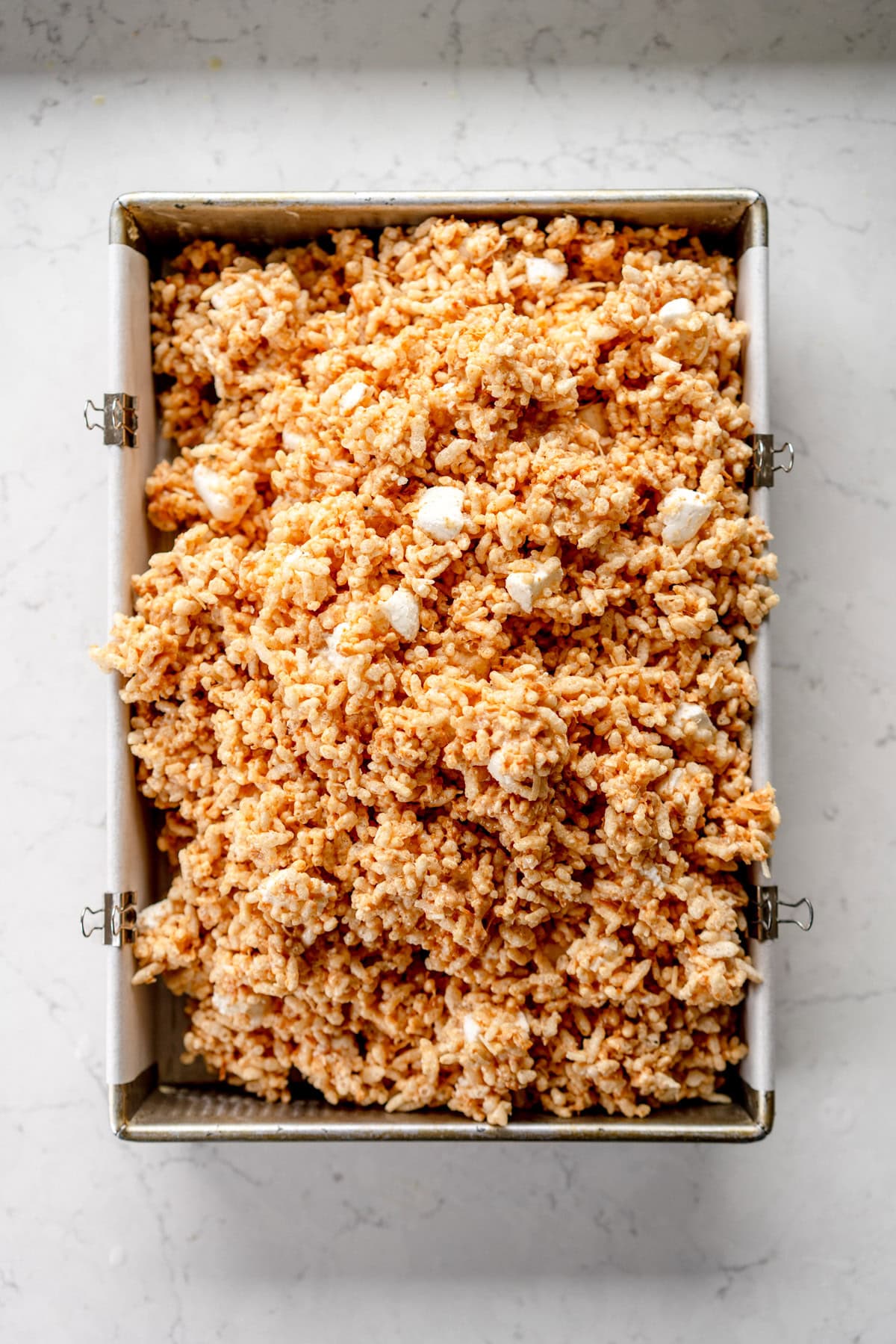
      Filed Under: Chocolate Chip Cookies, Cookies, Other Cookies

      One Bowl 20 Minute Red Velvet Crinkle Cookies

      red velvet with bite taken out

      Chewy and Fudgy red velvet crinkle cookies are the perfect easy cookie recipe. Made in one bowl and ready in just 20 minutes, these crinkle cookies are made with simple ingredients and also happen to be sneakily dairy free! They are a twist on my chocolate crinkle cookies with a red velvet twist!

      red velvet with bite taken out
      Super easy red velvet crinkle cookies - one bowl, no chilling needed!

      Hi hi! I am just popping in to share the recipe for these super easy red velvet crinkle cookies.

      These cookies are a super easy twist on my classic chocolate crinkle cookie, which is one of the most popular holiday cookies on my website. They have a lot of similar features - they come together in one bowl, and are soft and fudgy, and don't require a chill time, so you can make the cookie batter in the time that it takes the oven to preheat.

      These are a dairy free cookie recipe but I have also played around with using brown butter - see the notes in the post for options! If you are looking for a non crinkle cookie that still is red velvet, check out my red velvet sugar cookies and if you're after a non chocolate crinkle, my lemon crinkle cookies are amazing too.

      This easy recipe makes 12 cookies, but is super simple to double if you are needing more!

      inside shot of red velvet crinkle cookies
      The fudgy interior comes from the oil in the mixture.

      Red Velvet Crinkle Cookies

      While the coating of powdered sugar on the outside is totally optional, it is what makes this recipe a 'crinkle cookie'.

      The dough ball gets rolled in both regular granulated sugar and then powdered sugar, and as the ball of dough bakes up in the oven it expands, making little cracks all over the cookie - hence the name 'crinkle cookies'.

      What makes these cookies Red Velvet?

      Red Velvet flavour is best described as 'chill chocolate with red food colouring added'. It originally came from the classic red velvet cake, where the buttermilk in the recipe reacted with the cocoa powder, giving the cakes a slightly red tinge. Now it is more common to use a food colouring to make red velvet, which is what I have done here in my red velvet crinkle cookies.

      wet ingredients red velvet cookies
      Wet ingredients get combined together
      wet ingredients for red velvet cookies
      You only need a small amount of colouring!

      What is the best food colouring to use for Red Velvet?

      I use a good quality Gel food colouring when I am making things red velvet. If you use a liquid it will add too much water into the dough and do strange things with it. Gel food colouring is a little thicker so doesn't water down the dough as much.

      You are only using 5g of the food colouring which may not seem like a lot but this isn't a huge batch of cookies so it is definitely enough to add some red colour! I tried with double the amount and we all had very red mouths.

      I know artificial food colouring isn't for everyone - if that applies to you, you don't have to make these! Make my chocolate crinkle cookies instead.

      dry ingredients for red velvet cookies
      I use regular cocoa powder as it is more traditional in red velvet recipes.
      rolling crinkle cookies in sugar
      The dough may feel sticky but scooping it straight into the sugar works well.

      Recipe testing from Chocolate Crinkle Cookies to Red Velvet Crinkle Cookies

      Like I have said, I based the recipe for these Red Velvet Crinkle Cookies on my chocolate crinkle cookie recipe. The process was essentially the same, except I made just a few tweaks:

      • Added red food colouring. The most obvious change!
      • Reduced the cocoa powder slightly. Red velvet is typically a slightly lighter chocolate flavour than a classic chocolate cookie, so I pulled back a little on the cocoa powder.
      • Changed the type of cocoa powder used. I almost exclusively bake with dutch process cocoa powder which has gone through an alkalising (The 'dutching') process to make it more intense in flavour. Red velvet is traditionally made with regular cocoa powder for the colour, so I switched over to regular unsweetened cocoa powder. Either kind should work interchangeably in this recipe though! These cookies do come out slightly puffier than the chocolate ones as traditional cocoa powder is more acidic than Dutch cocoa powder so reacts more with the baking soda in the recipe.
      • Increased the flour quantity slightly. Because I reduced the cocoa powder slightly in the recipe and also added in a little liquid in the form of the food colouring, I increased the flour quantity slightly to account for this. The first test that I did they spread a little too much in the oven because I hadn't adjusted the flour and I wanted them to be a little more fudgy.

      Can I make these red velvet crinkle cookies with butter?

      When I was testing my chocolate crinkle cookie recipe I played around a lot with oil vs butter in the recipe to see what worked best. I found that if I added butter to the recipe, when the cookie baked, the powdered sugar would get super goopy in the oven.

      I switched to using oil for this reason, as oil is pure fat while butter has some water in it. This meant that there wasn't any water to cook out of the butter, so the powdered sugar on the outside didn't absorb it and go goopy.

      I did however test making them with brown butter, which is essentially butter with the water cooked out. This worked great and gave me a cookie with amazing depth of flavour from the brown butter but with a nice crackle on the outside. That method would work great for this red velvet crinkle cookie too.

      For notes on how to make these red velvet cookies with brown butter, refer to the notes in the body of the blog post of my chocolate crinkle cookie recipe.

      red velvet cookie batter
      Red velvet cookie batter ready to scoop
      red velvet cookies ready for the oven
      Cookies all ready for the oven

      The secret to a well coated crinkle cookie - the double sugar roll

      This was another thing that I came across in testing - the secret to a great crinkle cookie that has an aggressive amount of powdered sugar on it is to roll it twice in sugar.

      The first roll is in granulated sugar, then the second is in powdered sugar. I have found that this trick really helps to adhere the powdered sugar to the cookie, but also stops it from dissolving in the oven.

      Because the mixture for these red velvet cookies is quite sticky, I prefer to scoop it directly into the bowl of granulated sugar so that you can get a good coating and it doesn't stick to your hands too much.

      powdered sugar on red velvet cookies
      Pick up the ball of cookie dough and really press the powdered sugar onto the outside to help it stick well.

      Why are these cookies baked at a lower temperature?

      You will notice that I bake this red velvet crinkle cookie recipe at 325°f / 160°c instead of the more traditional 350°f / 180°c. This is to do with how it bakes - for some recipes, baking at a lower temperature means that the cookie sinks down more slowly, giving it more time to get structure.

      I always play around with baking and chilling time when I am developing a cookie and it is really surprising to see the difference that even a small change in temperature makes. For this reason it is also really important to have an oven thermometer so that you can be sure that your oven is baking at the correct temperature!

      Can I make the dough ahead of time and freeze?

      No - for this recipe, I don't think that it will work that well. As it is an oil based recipe and you need to bake it straight away, I don't think it would freeze that well. It is super quick to make so you are best just making them when you need them! If you did want to make cookies that you can freeze ahead of time check out my post on how to freeze cookie dough and bake from frozen for some suggestions on cookie recipes to use for this purpose.

      What is the best way to store cookies?

      Store these red velvet crinkle cookies in an airtight container at room temperature - they will keep for up to 5 days. Try not to wiggle them around too much as it can disturb the powdered sugar on the outside and make them look a little messy - they will still taste the same but might just be a little dusty looking!

      baked red velvet cookies on pan
      Perfect crinkles on lovely round cookies!

      Frequently Asked Questions

      What tools and equipment do you use?
      You can find a full list of the tools and equipment I use on my products page

      What if I don't want to use red food colouring?
      I wouldn't make these. Make my chocolate crinkle cookies instead.

      Can I add chocolate chips?

      I haven't tried personally but I think that it should work - it may affect how they sink down in the oven but it is definitely worth giving it a try!

      What is light or dark brown sugar?
      In some places you can get both light and dark brown sugar which is why I often specify which kind I use. If you're in a place which only uses one kind, 'regular' brown sugar is fine.

      For more quick cookie recipes, check out:

      • piped butter cookies on rack
        One Bowl 30 Minute Butter Cookies
      • brownie cookies with salt topping
        25 Minute Brownie Cookies
      • baked funfetti and plain sugar cookies
        How to make Easy Sugar Cookies
      • chocolate cookies on pan
        30 minute Chewy Chocolate Cookies

      ❤️ Made this recipe and love it? ❤️

      I would LOVE for you to leave me a review and star rating below to let me know how you liked it! Also, please make sure to tag me on Instagram!

      Answers to your baking questions

      Over the years, many of you have asked me questions about:

      • baking in grams
      • adjusting oven temperatures
      • what kind of salt to use
      • and many more!

      I've curated and answered them all for your easy reference in this frequently asked questions post!
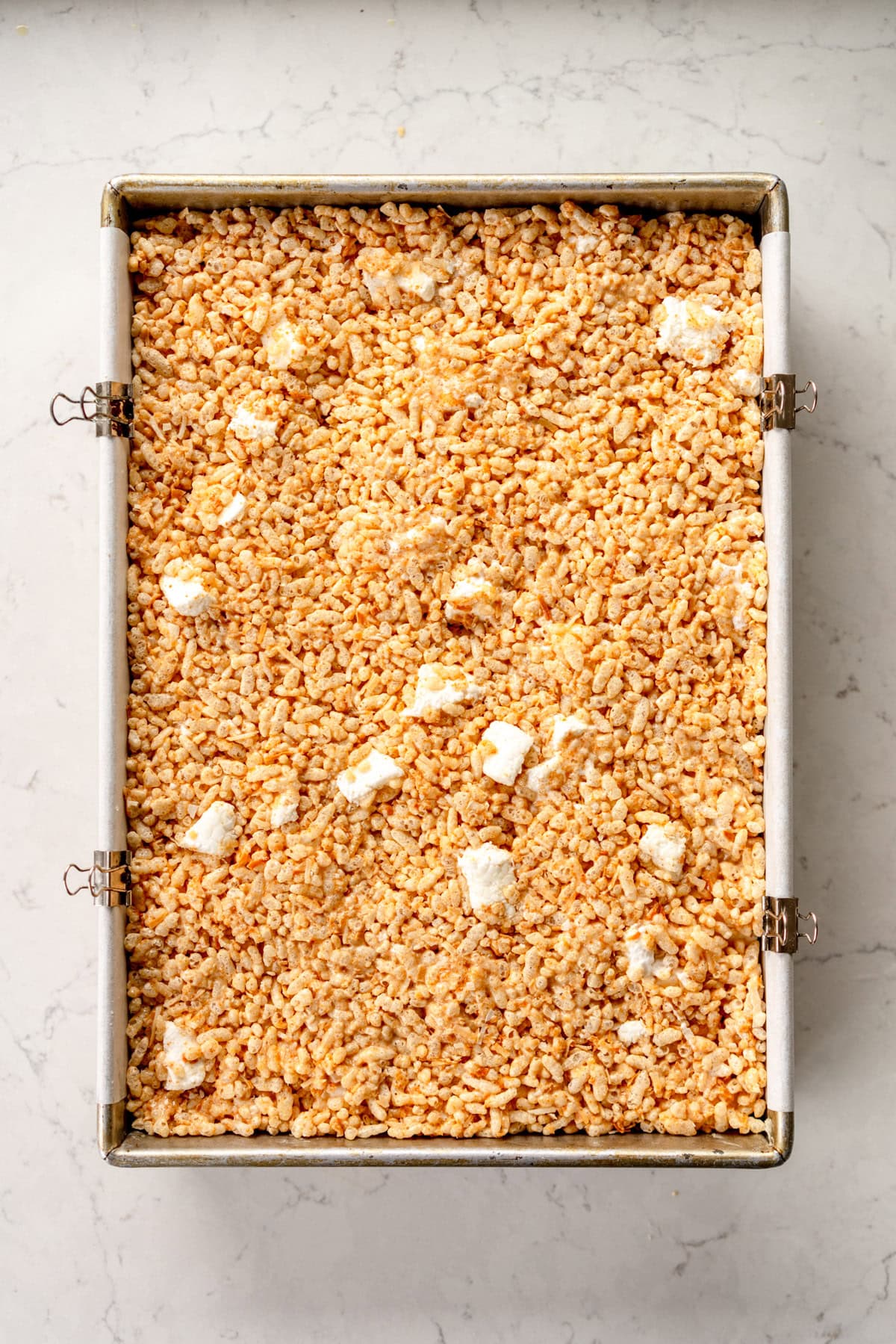
      Filed Under: Cookies, Holiday Cookies, Other Cookies Tagged With: Dairy Free

      No-Fuss One Bowl Lactation Cookies

      side shot of lactation cookies

      These hearty lactation cookies come together quickly using just one bowl! They feature old-fashioned oats, malted milk powder, ground flaxseed, and coarsely chopped dark chocolate. Craving a bar instead? The dough can easily be transformed into cookie bars!

      stacked lactation cookies

      Hi hi! I am just popping in to share the recipe for these super easy lactation cookies!

      I never thought I would be posting a lactation cookie recipe on my website as I don't have kids of my own, but my little Sister recently gave birth to my new best friend, and when your big sister is a baking blogger, you get a custom made lactation cookie recipe just for you.

      I wanted something super super easy, a one bowl situation which is something that new parents can easily make, but also something that is a great thing to take to new parents if you're looking to do some baking. These lactation cookies are based on my Oatmeal Chocolate Chip Cookie Recipe, and I have adapted the recipe so it can be made either as lactation cookie bars, or as individual cookies.

      Please note that I am NOT a medical professional and am just sharing a recipe that I have created. If you do have supply issues, please make sure you consult with your doctor or a lactation consultant.

      This post has been medically reviewed by Sarah Remmer, RD. 

      I am super lucky and have had Sarah Remmer, RD medically review this post for me. Sarah does incredible work as a Pediatric Dietitian and Child Nutrition Expert, and has the most amazing anti-diet outlook, which if you’ve been here for a while, you know I am all about! It is so important that littles have a great relationship with food right from the get go, and Sarah is a super valuable resource for that.

      close up lactation cookie bars
      lactation cookies on pan

      What are Lactation Cookies?

      From my research I found that there are two camps of people - those in the know about lactation cookies, and those who have absolutely no idea what they are and ask 'will they make me lactate?' (If you are not a person who lactates, these will not induce it!)

      Lactation cookies are essentially a super-powered oatmeal cookie. Although they won’t “make you lactate” they ARE chock full of nourishing ingredients that will provide a new parent many essential nutrients to help with energy, satisfaction, healing and potentially even breastmilk production. Oh, and you can’t beat an easy, yummy snack that you can hold with one hand as you feed baby.

      These lactation cookies may support healthy milk supply, however there is some recent evidence out there that this may not be the case.

      In fact, many breastfeeding parents turn to various foods, herbal supplements, tinctures, and teas to increase milk supply, despite the lack of regulations or solid research in this area. Most resources have mixed reports and recommendations which can make an already overwhelmed new parent feel even more confused.

      What we do know - Oats play a main character!

      What we DO know is that there are some foods and herbs that are considered “galactagogues”, which are said to increase or stimulate breastmilk production. One of the most common galactagogues is oats, which just happen to be the star ingredient in this recipe! They contain a special type of fibre called beta-glucan, which can help increase prolactin–also known as the breastfeeding hormone. More research is needed to determine the amount of oats that a breastfeeding mom would need to consume to notice a change in breastmilk production, but this is still pretty cool!

      For me, I was just looking to make my sister a cookie that she loved, that keeps super well and is filled with things to keep satisfied, nourished, and full of energy.

      I know not every new parent is able to breastfeed too - these are a great option to take to any new parent, regardless of where they are on their feeding journey as they are the perfect snack to have around when they are time poor.

      batter for lactation cookies

      Cookie Ingredients

      These lactation cookies are super similar to my Oatmeal chocolate chip cookie recipe, which I used as a base. I did add in a few extra bits and pieces. Here are the main ingredients:

      • Butter. These are butter based - if you are after a dairy free situation, my dairy free Oatmeal chocolate chip cookies are a great place to start.
      • Sugar. I used both brown and white sugar, adjusting the recipe to give the spread and thickness that I like.
      • Old fashioned Oats. These are a staple in most lactation cookies - oats provide loads of fibre and also lots of energy to help keep new parents going.
      • Flour. I haven't tried making these Gluten Free sorry, I just used regular All-purpose flour
      • (Optional) Malted Milk Powder. I use Horlicks in New Zealand, or you can use any malted milk powder that you can find online. Malted milk powder is just a flavour enhancer - you can leave it out with no textural difference if you do not have it on hand.
      • LSA or ground Flaxseed (Linseed). LSA is Linseed, Sunflower seed, and Almond meal, and provides amazing protein and fibre. I tested with both LSA and straight ground Linseed (also called flax seed) and they worked out the same both times. Use ground flaxseed only if there is a nut allergy.
      • Chocolate. I used dark chocolate for my lactation cookies, however I did play around with a few flavour combinations using dried fruit and nuts etc, so just use whatever you like in these lactation cookies and make to taste.

      lactation cookie batter in pan
      scooped balls of cookie dough

      Cookie Bars vs Individual Cookies

      I made this lactation cookie recipe so that it could be made two ways - either as a cookie bar, or as individual cookies. The recipe is essentially identical except for cookies they have ¼ teaspoon extra baking soda to help them to puff up in the oven.

      Make them however you like - they are both delicious! The individual cookies are great to freeze the dough for whereas if you wanted to freeze the actual baked bars, then the cookie bars are the way to go.

      There are notes underneath the recipe on how to turn this recipe into individual cookie bars!

      How do you store lactation cookies?

      Store lactation cookies in an airtight container at room temperature. They last up to a week stored like this, or potentially longer. I often like to refresh cookies in the microwave for 10 or so seconds just to make the chocolate in them nice and gooey and warm.

      ball of cookie dough on parchment paper

      Can Lactation Cookies be frozen?

      Yes - this recipe freezes like a dream. I have frozen them in every form - the raw dough balls, the baked cookie bars, and the baked individual cookies. Freeze the cookies, dough, or bars in an airtight container for up to three months then defrost as directed:

      • For cookie dough: You can bake directly from frozen - reduce the oven temperature to 325°f / 165°c and add a few more minutes onto the baking. You can read more about how I freeze cookie dough in my post - how to freeze cookie dough and bake from frozen.
      • Cookie bars and baked cookies - Defrost at room temperature. I like eating cookies that have been pre frozen slightly warmed up, although my sister would like me to share that they are also delicious eaten straight from the freezer. You do you here.

      Recipe Development for one bowl lactation cookies

      I initially started this cookie recipe as individual cookies, then tweaked it slightly to fit into a pan, as I wanted something super easy. I have a friend who has a baby and was chatting to her about a cookie recipe and her two conditions were:

      • No Fancy Stuff. No browning butter, no waiting for things to cool, no chill time for the recipe, has to be able to be made while holding a baby.
      • Has to last the night. This is a delightfully specific condition she wanted - she wanted it to be able to stay on a plate by her bed so that she could eat it when she woke up first thing or in the night. I plate tested this recipe and can confirm, it passes the test.

      With this in mind, I tweaked my oatmeal chocolate chip cookie recipe a bit, switching the butter from brown butter just to regular melted butter, removing the step where you toast the oats, and making it so that they can either be made as a bar or individual cookies.

      If you would like to take the extra step to brown the butter, you can follow the instructions in my oatmeal chocolate chip cookie recipe and use 100g brown butter in the lactation cookie recipe (or 120g if you choose to add in the additional milk powder).

      dry ingredients for lactation cookies

      Flavour variations for Lactation Cookies

      I ended up making these probably 20 times over the course of a few months as I have a ton of new parents in my life (I am a super super lucky Aunty), and so played around with a few flavour variations by switching out some of the chocolate for dried fruit or nuts. Here are a few options if you would like, use these quantities instead of the amount of chocolate in the recipe (this works for both individual cookies and cookie bars)

      • Apricot and chocolate: Add in 130g chopped dried apricots, and 120g chopped chocolate of your choice
      • Chocolate and Macadamia: Add in 120g chopped toasted macadamia nuts, and 100g chopped chocolate (I used caramelised white chocolate)
      • Salted Caramel: Add in 200g chopped soft and chewy caramel (I used my foolproof caramel recipe), and 120g chopped chocolate of your choice.
      chopped chocolate for cookies

      Frequently Asked Questions

      What tools and equipment do you use?
      You can find a full list of the tools and equipment I use on my products page

      How big do I scoop the cookies?

      I used a #24 cookie scoop, which gives 75g balls of dough. Feel free to adjust as needed, a scoop this size makes 10 large cookies.

      Can I use rolled oats or quick cooking oatmeal?

      I haven't tried it with either sorry - I have only used Old fashioned oats which give a really nice texture.

      side on shot of lactation cookie bars
      pan of lactation cookies

      For more related cookie recipes, check out:

      • peanut butter oatmeal cookie
        Soft and Chewy 30 Minute Peanut Butter Oatmeal Cookies
      • oatmeal raisin cookie on parchment paper
        Brown Butter Oatmeal Raisin Cookies
      • white chocolate chip cookies on tray
        30 Minute White Chocolate Chip Cookies
      • chocolate cookies on pan
        30 minute Chewy Chocolate Cookies

      ❤️ Made this recipe and love it? ❤️

      I would LOVE for you to leave me a review and star rating below to let me know how you liked it! Also, please make sure to tag me on Instagram!

      Answers to your baking questions

      Over the years, many of you have asked me questions about:

      • baking in grams
      • adjusting oven temperatures
      • what kind of salt to use
      • and many more!

      I've curated and answered them all for your easy reference in this frequently asked questions post!
      Filed Under: Bars and Slices, Chocolate Chip Cookies, Cookies, Other Cookies

      One Bowl 30 Minute Butter Cookies

      piped butter cookies on rack

      These super easy butter cookies use one bowl, six ingredients, and make a tender and buttery butter cookie with a melt in your mouth texture. These butter cookies can be piped out and baked fresh, so ready in just under 30 minutes, or they can be prepared ahead and chilled or frozen until you are ready to bake them. Finish them with granulated sugar, dip half in chocolate, or add your favourite glaze or icing.

      Butter Cookies close up

      Hi hi! I am just popping in to share this super easy butter cookie recipe! This came about when I accidentally went on a deep dive finishing of the testing for my Thumbprint Cookies and Snowball Cookies, which got me wondering if the dough can be used for butter cookies too.

      Turns out, it cannot - it somehow was too hard to pipe and also super melty in the oven at the same time, but once I had started I was determined to get them sorted. And Eight tests later, we got there!

      These are the super delicious cookies that originally came in the tins everyone's grandma's used for sewing - but more buttery. The recipe only uses one bowl, and is essentially a whipped shortbread recipe, which is super fun to pipe out into little rosettes. The finished cookie is super tender and just a little crunchy (or you can bake it more to make them more crunchy). They are just so, so good.

      These butter cookies are super easy to make - the mix comes together in one bowl, and takes less than 10 minutes to make. This recipe makes 15 cookies, but is super easy to double (or triple), if you like. It would be super easy to triple the recipe, pipe them all out, then freeze them unbaked and store in a container to bake off as you need. The butter cookies can also be chilled and baked off a few hours later.

      These butter cookies make the perfect holiday cookie recipe, but I will definitely also be making them year round. If you're looking for a great recipe to mail - this would work perfectly!

      sugared butter cookies
      Finish butter cookies with sugar or leave plain.
      piped out butter cookies
      If adding sugar, add it both before and after baking.

      The importance of Room temperature ingredients

      These are a shortbread based cookie, so they don't have a leavening in them (baking soda or powder, or sometimes egg is used to get lift and provide texture but this is an egg free recipe).

      For this reason it is super important that your butter is properly room temperature. 'Standard' Room temperature is 22°c but you just want to make sure that if you press on your butter it leaves an indent of your finger. Using nice soft butter means that the butter and sugar mix will get nice and light and fluffy, giving a nicely textured cookie.

      If it's super hot where you live make sure that your butter doesn't get too hot either, as it can get a bit sloppy if it is too warm when you go to make your cookies.

      inside shot of butter cookies
      Interior texture of butter cookies - super tender and buttery.
      whipped butter and sugar
      Make sure to fully whip butter and sugar.
      dry ingredients for butter cookies
      Add dry ingredients and mix to incorporate.

      How do you tell when Butter Cookies are baked?

      This can depend a little on how you like your butter cookies. If you want something a little softer, bake them for 13-14 minutes until they are set on the outside and just barely going golden.

      If you like your butter cookies to be a bit more crunchy and snappy, increase the baking time until they are your desired level of doneness. I love the flavour of them both ways - the more baked ones get a bit more depth of flavour from the browning, but you do you here.

      Remember that my baking times are a guide - every oven varies in temperature so make sure that you look for when the cookies are starting to go golden brown for when you pull them from the oven.

      butter cookies on wire rack

      Piping Bag Tips and Tricks for making Piped Cookies

      There are a few tips and tricks when it comes to piping out these butter cookies. The first time I did it, I had a total piping bag blowout - which came from the batter being too thick, but also from my piping bag not being sturdy enough.

      I was using a compostable piping bag, which didn't work super well, so switched to a more sturdy one. I know you can get the canvas piping bags but I find they always smell weird so I don't use them - I do however wash out my plastic piping bags and re use as many times as I can.

      I get my piping bags from a catering supply store - they come in a big roll.

      Do NOT use a ziploc bag to pipe out these butter cookies. It will not hold up, and you will have a disaster on your hands.

      piping tip for piping cookies
      Ateco #827 piping tip
      piping bag with cookie batter
      Open piping bag over edges of a jar.

      How to fill a Piping Bag

      Make sure you use a super sturdy piping bag for piping out these butter cookies. The easiest way to fill a piping bag is to add the piping tip, then place the bag inside a jar or container, and open the bag over the sides. This gives you a nice hole to add the batter too - I find this much easier than trying to hold it with one hand and fill it with the other.

      Once the butter cookie dough is in the piping bag, I like to clip the end of the bag with something like a chip clip or a rubber band. This stops the dough from falling out the end of the bag and gives you one less thing to worry about when you are piping out the cookies.

      piping bag filled with cookie batter
      Fill the bag then remove piping bag from the side of the container.
      filled piping bag
      Use a plastic bench scraper to push the dough down to the bottom

      How to Pipe butter Cookies

      These butter cookies are pretty easy to pipe out - but you will need to use two hands to pipe them and squeeze pretty hard on the piping bag.

      I piped three rows of five cookies - to pipe a rosette, hold the piping bag straight up and down over the surface and pipe a round of the butter cookie dough, finishing when it overlaps on itself. I prefer not to leave a hole in the middle - my rosettes came out at about 4.5cm in diameter. If you have a different sized piping tip or want to pipe them in a different shape you may end up with more or less cookies - make sure that you adjust the baking time if this is the case.

      If you are finding the cookies hard to pipe out:

      It can be a little hard to manage the piping bag when it is filled with the butter cookie dough. If you are finding this, it is easier to manage when there is less mixture in the piping bag, so start with about half the mix in the bag, pipe out your cookies, then add the rest. This is particularly helpful if you have smaller hands or struggle with holding things.

      Troubleshooting hard to pipe cookies:

      There are a few issues that can come up when you are piping these - the first is that if your butter is too cool, then the mixture will be hard to pipe out. Using less batter in your piping bag will help this.

      piping out butter cookies
      Pipe rosettes of cookie dough

      Make sure that the liquid you add is room temperature. Adding cream or milk makes the batter slightly softer and easier to pipe - make sure that it is room temperature or it will chill the butter and still be hard to pipe.

      I did play around with adding more cream to the recipe to see if it would make them easier to pipe out - I went all the way up to 40g of cream and also tested chilling and freezing the dough before baking to check if that made a difference to the shape and texture of the cookies.

      The mixture made with 20g cream was still my favourite (I find them not too hard to pipe) - if you do find that you are having a hard time and need to add a little more cream make sure that it is room temperature or slightly warm. You can see the results in the image below!

      The butter cookies with more liquid took a little longer to bake and needed a little longer in the oven to fully dry them out so that they were nice and crispy so just keep that in mind! They were definitely a little softer in texture and didn't last as long as the ones with less liquid.

      If you aren't happy with how a rosette comes out, just scrape it off the parchment paper and pop it back into the piping bag. It will incorporate back in with the dough and you can try again.

      However if you are really having issues, you can increase the liquid up to 40g without any big changes to the outcome.

      baked butter cookies with varying quantities of cream

      Recipe Testing for Butter Cookies

      These butter cookies weren't even on my lineup when I made my list of cookies I was making, but when I started making my Thumbprint cookies and my snowball cookies I just wanted to see if the recipe can be used for a piped cookie too. It can't, but I was determined to crack it and I'm so glad I did because these are just so good. Here is my recipe testing process. I was testing these as half batches (grams for the win), and am thankfully married to a human compost bin, so had no issues with them not being eaten.

      First test: Use base dough.

      I started with the base dough that I used for my Raspberry Thumbprint Cookies and my Snowball cookies. The dough uses 20g corn starch / custard powder.

      The dough was super hard to pipe out - I had more than one piping bag blowout. It held its shape ok in the oven, but I wasn't super happy with it. I wanted a dough that was easier to pipe, and so figured increasing the butter was the way to go.

      Test Two

      I wanted the dough to be easier to pipe, so I increased the butter in the recipe by 30g. These cookies didn't work at all - the dough was easier to pipe, but they all spread like crazy in the oven, regardless of how I tested baking them (freezing, chilling the dough, dropping the oven temperature etc). They were also a little too greasy.

      I had two options from here - either add an egg into the recipe, or play around with something which will still let me keep the buttery texture but not have them spread too far in the oven.

      butter cookie recipe tests
      Various recipe tests testing chilling and freezing the dough and baking at different temperatures

      Test Three.

      I wasn't keen on adding an egg if I could get away with it - I like being able to offer egg free recipes and I didn't want it to take away from the taste of the butter and still keep the butter cookie as more of a shortbread base.

      To get around this, I doubled the custard powder in the recipe, as a way to help soak up some of the butter in the recipe and provide structure.

      This worked great, as you can see in the image down below. The recipe is exactly the same, but all I did was double the starch in the recipe.

      I did however go a little too far - the custard powder flavour was super prominent and I wasn't a fan of it.

      Test four.

      Same as the previous test, but, I switched from custard powder to corn starch. It was still a little too much, and gave the butter cookie a texture that was a little too crunchy and also kind of turned to glue / dried your mouth out when you ate it, so I decreased the corn starch in the recipe to 1.5 times the initial quantity.

      Test Five.

      I decreased the starch in the recipe and baked the butter cookies straight away, and was super happy with them. The texture was perfect - nice and buttery but still stable from the corn starch, but not tooooo stable. However the dough was still a little harder to pipe so I tried adding in a little heavy cream to the mixture (I used cream rather than milk as it is higher in fat), just to help thin the dough out a teeny bit. It made it easier to pipe without making too much of a difference to spread. Both work if you don't have cream or milk on hand!

      Test Six / Seven / Eight

      Once I have a recipe down I usually make one or two more batches just to make sure that I have it totally nailed, and also to test the storage / freezeablility of the recipe / if chilling helps or makes a difference etc.

      comparing corn starch in cookies
      Recipes are identical except for the quantity of cornstarch in the recipe

      Can Butter Cookies be made ahead of time?

      Yes! They can! These butter cookies are Perfect for making ahead of time - I tested them a bunch of different ways and photographed the results for you.

      Baked Fresh.

      My final recipe has you bake the cookies off straight away. I am impatient when it comes to chill time (but will happily spend hours latticing individual pies, don't ask me why, spicy brain life) and often find workarounds for chilling cookie dough etc if it doesn't need it. If you see me call for a chill time in a recipe, just know I've probably tried five times to avoid it before giving in.

      Baking these cookies from fresh works great - if you want cookies in 30 minutes, use this option. It's the option I'll probably use the most often unless i'm preparing a bunch of stuff ahead of time.

      Chilled before baking.

      However. If you chill these butter cookies for 30 minutes after piping them out and before baking, they will hold their shape better. Texturally it does not make a difference, but as you can see from the images below, the cookies that were chilled before baking don't sink down quite as much, and are a little more detailed in their design from the piping tip. The baking time and temperature are the same.

      Frozen before baking.

      I tested freezing the cookies before baking, and this also worked super well - the cookies hold their shape with minimal spread. I was super stoked that this worked as well as it did because it means that you can easily make a big batch of this butter cookie recipe, pipe them all out, freeze, then store in the freezer in a container and just bake off as you need.

      If you do freeze the cookies before baking, you will need to add a minute or two onto the baking time. I didn't drop the oven temperature when baking from frozen so they do end up a little more golden brown, if you are wanting to avoid this I recommend baking them from frozen at 300°f / 150°c and increasing the baking time slightly.

      baked vs chilled vs frozen cookies
      I bake my cookies from fresh.
      baked, chilled and frozen cookies
      Huge difference between chilled and frozen.

      ❤️ Made this recipe and love it? ❤️

      I would LOVE for you to leave me a review and star rating below to let me know how you liked it! Also, please make sure to tag me on Instagram!

      Answers to your baking questions

      Over the years, many of you have asked me questions about:

      • baking in grams
      • adjusting oven temperatures
      • what kind of salt to use
      • and many more!

      I've curated and answered them all for your easy reference in this frequently asked questions post!
      Filed Under: Cookies, Holiday Cookies Tagged With: Egg Free

      6 Ingredient Snowball Cookies

      pan of snowball cookies with one broken open

      These super easy bite-sized snowball cookies can be made and baked in 30 minutes! Made with only 6 ingredients, these snowball cookies are tender and buttery, and are the perfect holiday baking recipe to make with kids! The key to a good coating of 'snow' is rolling the cookies twice in powdered sugar - once when warm and once again when cool.

      pan of snowball cookies with one broken open

      Hi hi! I am just popping in to share this recipe for snowball cookies with you! These cookies are also sometimes called Russian Tea Cakes or Mexican Wedding cookies - whatever you choose to call them, they are so, so good.

      This Snowball cookie recipe uses one bowl, and takes about 10 minutes to put together, and another 20 to bake, meaning they are super quick and easy to make. They are melt in your mouth and super buttery, and are a great option to make with kids if you're looking for a really easy holiday recipe. It makes 24 cookies (so can be done all on one tray), and they store super well. I just love them so much.

      I was so excited when I was testing these - I managed to make one dough that can truly do a double duty - this snowball cookie dough can also be used to make my Raspberry Thumbprint cookies.

      The trick to getting lots of 'snow' on these snowballs is a double coating of powdered sugar, which happens after the baking.

      balls of cookie dough on sheet pan
      I use a 1 tablespoon scoop to make 18g dough balls
      close up of snowball cookies with powdered sugar
      Two coatings of powdered sugar = extra snow on the cookies!

      What are Snowball Cookies?

      Snowball cookies are essentially a super buttery shortbread dough, which is scooped into balls and then baked, and then rolled twice in powdered sugar.

      They are so good for so many reasons. Not only are they really easy to make (I was able to get them into the oven in 12 minutes including filming my process and stopping to take photos), but the cookies are tender and buttery, and the coating of powdered sugar on the outside makes them extra melt in your mouth.

      I originally developed this recipe to use for my thumbprint cookie recipe, but realised it's just a super good base dough - I think it would be great for a whole bunch of stuff!

      How do snowball cookies differ from a regular shortbread recipe?

      I used my shortbread cookie recipe as a kicking off point when I started testing this recipe - that recipe is more of a classic shortbread that can be either pressed into a pan or made as a slice and bake cookie.

      For this recipe I wanted something that can go into the oven as balls of dough and sink down slightly, so I played around with the butter and flour quantities in the recipe.

      inside shot of snowball cookie
      The inside texture of a snowball cookie is soft and tender and super buttery.

      Ingredients in Snowball Cookies

      The ingredients list in these Snowball cookies is super simple, and is likely already all things that you have in your kitchen already! This is an Egg Free recipe too if that is important to you - if you are looking for Egg Free recipes I have a bunch!

      • Butter. This is the main flavour in these snowball cookies, so this is one of the times where if you have access to good quality butter, it would be a great time to use it. It really does make such a big difference to the final outcome.
      • Powdered Sugar. Also called icing sugar depending on where you are. I say sifted in the recipe, but if you beat it hard enough with the butter, you can skip sifting if you want. I won't tell anyone.
      • Vanilla. I use Vanilla bean paste, but vanilla extract will work too. I like to add it in with the butter and powdered sugar to really get the flavour in there.
      • Flour. All-purpose / plain flour is the way to go here. You don't want to use a high grade or bread flour as the cookie relies on the lower protein for its super tender texture.
      • Custard Powder. I use custard powder in my recipe as it gives it a super subtle but delicious taste. Corn starch works just the same. It helps to stabilise the cookie and also give a nice texture that is signature to a shortbread based cookie.
      • Salt. If you use salted butter (if you know your salted butter is good these are delicious made with it), omit the salt in the recipe. I call for unsalted butter in my recipes as I have an international audience and I know that not all butter is the same amount of salty worldwide. You do you here though and use what you have

      What is Custard Powder and what can I use instead?

      Custard Powder is to me, a super nostalgic ingredient. It is corn starch (cornflour if you're from outside the US) based, and also has some flavours and colours in it. It is what we use to make 'instant' custard, although now I choose to use it in the place of corn starch for some recipes as it gives just a hint of nostalgic flavour.

      If you can't find custard powder in your supermarket I also tested this recipe with cornstarch / cornflour and it works just great, it is just an option if you do have it! Please do not use instant pudding powder - they are not the same thing.

      For more recipes using custard powder, check out my Custard Square, Chelsea Buns and Squiggle Slice. Nanaimo Bars are also a classic dessert that uses custard powder to flavour!

      butter and sugar mixture for snowball cookies
      Cream the butter and sugar together super well to help with texture
      prepared dough for snowball cookies
      The dough will seem super soft when you mix it - this is fine.

      Room temperature ingredients are important!

      For this recipe, it is really important to make sure that your butter is at room temperature. 'Standard' room temperature is 22°c / 72°f, and because weather and kitchen temperatures can vary, room temperature butter can also vary in consistency.

      This recipe does not have any leavening in it (baking soda or powder), so relies on the creaming of the powdered sugar and butter to give proper aeration to the dough. Make sure that your butter isn't too firm, and that you do really whip the butter and powdered sugar together well until they are light and fluffy - make sure that you scrape down the sides of the bowl in case there is some butter there that has not incorporated.

      scooped out cookie dough
      Scoop out your balls of dough
      balls of cookie dough on sheet pan
      Then roll into balls to smooth the outside

      Scooping and shaping Snowball Cookies

      This snowball cookie dough is super simple - you just scoop it out and roll it into balls, and then bake. There is no need to press the dough down - we want them to remain fairly upright when they bake. They will sink down in the oven a little, but we want to have little mounds of shortbread to coat in the powdered sugar.

      I use a 1 tablespoon cookie scoop to make my cookies, but you can also weigh them out if you need - each dough ball weighs 18g.

      How to tell when snowball cookies are baked

      The best way to tell when snowball cookies are baked is by giving one a little poke - you want them to be very lightly golden brown, and feel set around the edges and just set on the tops. For me, this takes 15-16 minutes in a conventional (no fan) oven.

      If you peek into the oven halfway through baking it may look like some of the butter has leaked out - this catches me out every time. Don't worry - it all soaks in and they come out of the oven looking amazing!

      baked cookies rolled in powdered sugar
      First coating of powdered sugar when the cookies are warm from the oven
      rolling cookies in powdered sugar
      I like to use a shallow bowl so I can coat a few at a time

      The key to a good coating of 'snow' for snowball cookies - roll twice in powdered sugar.

      If you've never made snowball cookies before, this part feels kind of weird - you put them into the oven in the nude, and the 'snow' part doesn't happen until after they come out of the oven. If you coated them before, the butter in the recipe would cause the powdered sugar on the outside to go super clumpy - this happened when I was testing my chocolate crinkle cookies.

      The key to getting a good coating of powdered sugar on snowball cookies is to roll them twice. Because powdered sugar has a starch in it, when you roll the warm cookies in the powdered sugar, some of the moisture that is released as they cool helps it to stick and form a layer on the outside that is still slightly wet (that sounds gross I promise it is not). This means that when you roll the cookies in powdered sugar a second time when they are totally cooled, you get a super thick coating of 'snow' on your snowballs.

      If you coated them once cool, the sugar would not stick well.

      snowballs on pan with powdered sugar
      Bottom cookies have had one coating of powdered sugar when warm, the top cookies have had their second coating once cooled.

      One Dough, two cookies

      I was super excited when I was developing this recipe - you can use the exact same dough to make these snowball cookies and my raspberry thumbprint cookies. They use the same sized ball of dough, and bake at the same temperature. This means you can make one big batch of dough and make half into snowballs and half into thumbprints.

      The recipe scales super well because grams for the win, but also because the recipe does not contain any egg, so you can easily adjust as needed. This recipe makes 24 cookies so scale as you like.

      snowball cookies and thumbprint cookies
      You can use the same dough to make my Raspberry Thumbprint Cookies as well as these snowballs - they bake at the same temperature and use the same sized piece of dough

      Flavour variations for snowball cookies

      If you wanted to mix things up a little you could add some flavouring to these snowball cookies. I haven't tested it yet but you could probably include some chopped toasted pecans or nuts into the dough, or you could rub some lemon or orange zest into the powdered sugar before starting the recipe for some citrus vibes.

      I did try to incorporate sprinkles to try for a funfetti snowball cookie vibe and things got a bit weird - they took forever to bake and the sprinkles melted, giving weird crunchy pockets within the cookies. I wouldn't recommend.

      snowball cookies on pan

      Can Snowball cookies be made ahead of time?

      Snowball cookies store in an airtight container for up to a week - make sure that it is super airtight so that the powdered sugar doesn't go soggy. I was able to bake these from frozen so I am sure that they would do just fine if you wanted to make the dough ahead and chill for a few hours before baking.

      frozen snowball cookies
      Freeze dough in an airtight container
      baked snowball cookies
      It is fine to bake from frozen

      Can you freeze snowball cookies?

      Yes they can! I tested this and it works just great. Scoop the dough out, roll into balls, then place onto a parchment paper lined baking sheet and place into the fridge or freezer until solid (just so they don't get all squished up in the freezer). Once they are hard, transfer them to an airtight container.

      You can bake the cookies directly from frozen - they may need an extra minute or two of bake time but I baked at the same temperature and it worked fine - alternatively you can drop the oven temperature a little bit too if you like.

      For all my tips and tricks on how to freeze cookies and bake from frozen, check out my blog post: How to freeze cookie dough

      side on shot of snowball cookies

      Frequently Asked Questions

      What tools and equipment do you use?
      You can find a full list of the tools and equipment I use on my products page

      Can I make this recipe without a mixer?

      Yes - I use an electric hand mixer for this recipe, but if you wanted to make it by hand you definitely could with a little elbow grease - just make sure that the butter and sugar mix is super well mixed. You could either use a whisk or a wooden spoon or spatula. A little electric hand mixer is a great investment though - I probably use mine more than my stand mixer!

      What cookie scoop did you use?

      I used a 1 tablespoon cookie scoop to scoop out these cookies. However if you don't have one, you can make them by weighing out 18g balls of dough.

      snowball cookies on pan with thumbprints
      corner shot of pan of snowball cookies

      For more Holiday Cookie recipes, check out:

      • baked gingerbread cookies
        Easy Gingerbread Cookies
      • wire rack with snickerdoodles
        25 minute Snickerdoodle Cookies
      • ginger cookie on parchment paper
        30 Minute Thin and Crispy Gingersnap Cookies
      • Stacked Chocolate Sandwich Cookies
        Hot Chocolate Sandwich Cookies

      ❤️ Made this recipe and love it? ❤️

      I would LOVE for you to leave me a review and star rating below to let me know how you liked it! Also, please make sure to tag me on Instagram!

      Answers to your baking questions

      Over the years, many of you have asked me questions about:

      • baking in grams
      • adjusting oven temperatures
      • what kind of salt to use
      • and many more!

      I've curated and answered them all for your easy reference in this frequently asked questions post!
      Filed Under: Cookies, Holiday Cookies Tagged With: Egg Free

      Soft and Buttery Raspberry Thumbprint Cookies

      thumbprint cookies on rack

      These quick-baked thumbprint cookies can be made in about 30 minutes. They have a soft and buttery dough, are rolled in a sparkly sugar, and then filled with your choice of jam. Thumbprint cookies can be made fresh, or the dough can be prepared and frozen ahead of time.

      thumbprint cookies on a rack

      Hi hi! I am just popping in to share this Thumbprint Cookie recipe! These little guys are soft and buttery, and are super easy to make - with no chill time, you can have them in the oven in about 15 minutes.

      Thumbprints are a classic holiday cookie, but I truly think that they are perfect year round. I made mine as raspberry thumbprint cookies, but you can absolutely mix it up and use whatever jam you like in the middles.

      The great thing about this dough recipe is that not only is it super easy, but you can use the exact same dough to make my snowball cookie recipe if you're after a double duty recipe!

      These raspberry thumbprints are great baked fresh, but the dough can also be frozen ahead of time if you like.

      side on picture of thumbprint cookies
      Thumbprints filled with jam ready for the oven
      baked thumbprint cookies on wire rack
      The cookie sinks down slightly when it bakes and the jam thickens a little

      Raspberry Jam Thumbprint Cookies

      These Raspberry Jam Thumbprint cookies (in some countries they are also called Jam Drops) fall in the category of 'super easy but look really fancy', which is one of my favourites. They have a delicious buttery dough, are rolled in granulated sugar after scooping for a nice crunchy finish, and then are filled with raspberry jam.

      When they are baked, they sink down in the oven to give a super delicate but delicious shortbread based cookie, and the jam gets deliciously gooey. I made them a ton of times when I was recipe testing and they went down a treat every time.

      This thumbprint cookie recipe makes 24 cookies, which all fit on one baking sheet (which is to me, super handy), and is the perfect amount to keep some for yourself or share with friends. The recipe also doubles or scales super well as needed.

      Thumbprint Cookies ready for the oven
      I used raspberry jam, but you can use whatever you have on hand to make your thumbprint cookies.

      Ingredients in Raspberry Thumbprint Cookies

      The dough I used for these Raspberry Thumbprint cookies is quite similar to my super easy shortbread cookie dough, but just with a few tweaks made to make it softer and easier to shape into balls that will sink down in the oven.

      It is really important to make sure that your butter is properly room temperature. This thumbprint cookie recipe does not have any leavening (baking powder or soda), so relies on the aeration from creaming together the butter and sugar for lift.

      • Butter. This is the main flavour in the cookie, so if you can, this is the time to use a good quality butter.
      • Powdered Sugar. Also called icing sugar or 10x depending on where you live. You can sift it if you like but you're beating the butter and sugar together for so long, if you hate sifting it like me, you can just add it in straight from the container.
      • Vanilla. Either vanilla bean paste or vanilla extract works. I like to add it in with the butter and sugar to really help get the flavour well incorporated into the shortbread dough.
      • Flour. All-purpose is good, also called plain flour some places. You want to avoid using high grade / bread flour as the protein content is too high.
      • Custard Powder. As with most shortbread recipes, I use a starch in these raspberry thumbprint cookies to help give a super soft, tender dough. I use Custard powder in mine, but you can also use corn starch.
      • Salt. If you use salted butter, you can omit the salt. The reason I call for unsalted butter in my recipes is because I have an international audience and the saltiness of butter varies a lot!
      • Granulated Sugar. This is for rolling the cookies in. You can use whatever you like here - sprinkles, sanding sugar, coarse sugar, have a play around.
      • Jam. I used raspberry jam to make these raspberry thumbprint cookies.

      This is an egg free recipe too if that is something that is important to you, so great if you are making egg free holiday cookie recipes.

      What is the best Jam to use for Jam thumbprint cookies?

      I used a raspberry jam, but you can use whatever jam you like! They would be delicious as a jam thumbprint with apricot jam, strawberry, rhubarb (would be super good to balance out the sweetness), anything works! They are a great way to use up any bits and pieces of jam you may have that needs using up.

      dry ingredients for thumbprint cookies
      Make sure to whip the butter and sugar together super well
      mixed thumbprint cookie dough
      The dough will be soft but still easy to work with.

      What is Custard Powder and what can I use instead?

      Custard Powder is to me, a super nostalgic ingredient. It is corn starch (cornflour if you're from outside the US) based, and also has some flavours and colours in it. It is what we use to make 'instant' custard, although now I choose to use it in the place of corn starch for some recipes as it gives just a hint of nostalgic flavour.

      If you can't find custard powder in your supermarket I also tested this recipe with cornstarch / cornflour and it works just great, it is just an option if you do have it! Please do not use instant pudding powder - they are not the same thing.

      For more recipes using custard powder, check out my Custard Square, Chelsea Buns and Squiggle Slice. Nanaimo Bars are also a classic dessert that uses custard powder to flavour!

      How to do you store Thumbprint Cookies?

      Thumbprint cookies can be stored in an airtight container for up to a week. I have not tried freezing the baked cookie but I would worry that it would go weird and soggy from the jam. There are notes further down the post on how to freeze thumbprint cookies!

      How to shape Thumbprint Cookies

      These thumbprint cookies are super easy to make - there are a few steps in shaping them but once you get going with them they don't take too long to make. They are a great cookie for kids to help make!

      • Scoop dough. I use a 1 tablespoon / #60 cookie scoop, or you can weigh out 18g balls of dough. Scoop out and place on the prepared tray.
      • Roll. I like to roll each ball of the cookie dough between my hands to just give a smooth outside of the cookie. At this stage, you could bake half the dough balls into snowball cookies if you want - just follow the instructions on the snowballs post.
      Scooped out cookie dough
      Scoop dough into balls
      dough rolled into balls
      Then roll to give a smooth outside
      • Roll in sugar. I like to roll my cookies in granulated sugar and usually use a slightly bigger bowl than the one pictured so that I can roll a few at a time in the sugar. You can use whatever kind of sugar you like here - I prefer a slightly coarser granulated sugar.
      • Flatten. Place each ball of dough onto the baking sheet and flatten gently with your fingers - you are looking to make a fat hockey puck shape. If you want, at this point you can use a cookie cutter slightly larger than the piece of dough to 'scoot' it into a perfectly round shape but this is very much optional.
      cookie dough balls rolled in sugar
      flattened dough balls
      • Add the indentation. I use a teaspoon sized measuring spoon that has a rounded bottom on it to form the indentation in my thumbprint cookies. You can use your finger if you like, but I found that using something rounded helped to stop the jam from leaking out if it was nice and even. A melon baller or something else round like the end of a handle of a rolling pin or something similar would work well too. Press gently to make the indentation. If it is sticking, dip it in the sugar.
      • Add the jam. I find that the easiest way to do this is to just use a teaspoon, however if you are making loads of these then a piping bag may be easier, especially if your jam is nice and smooth and the seeds won't get stuck in the piping bag. Fill up to the edges of the indentation. Some people add the jam after baking - I haven't tried it that way.
      cookies ready for jam
      side on picture of thumbprint cookies

      How to tell when Thumbprint Cookies are baked.

      A great thing about this thumbprint cookie recipe is that it can be ready super quickly - the dough is soft but not so soft that it needs to be chilled before baking.

      When you bake the cookies they will spread slightly and the jam will become a thin puddle and thicken up. You don't want to bake them until they are super golden (Unless you like them like that), you want to bake them until they are just starting to get some colour on them.

      For me, this takes 13-14 minutes in a 325°f / 165°c oven - conventional, not fan.

      The thumbprint cookies are done when they are set around the edges and the jam looks as if it has spread out and thickened. They will just be starting to turn golden. They will continue to finish baking once you remove them from the oven too - they can be a little delicate until they are set so I like to leave them to cool fully on the pan.

      Butter leaking from cookies partway through cooking!?

      If you have a little peek in the oven halfway through cooking it may look as if the butter is all leaking out of the cookies. This catches me out almost every time and don't worry - just leave them to continue baking and the cookies absorb the butter again.

      baked thumbprint cookies
      snowballs and thumbprint cookies

      Recipe testing for Thumbprint Cookies

      The dough for these raspberry thumbprint cookies is based off of my shortbread cookies, however I played around with it to get a softer, more buttery dough that can easily be shaped into balls - it works great for these and also makes amazing snowball cookies.

      When I was testing this recipe, I thought I had it fully nailed, then made it just one more time to quadruple check. I noticed that the dough was cracking slightly when I pressed the cookie down to make the indentation for the jam.

      Some people don't mind this, but I prefer them to be nice and smooth, so I played around a little with butter ratios etc until I got it right - the difference between the top and bottom cookie in the image below is only 10 grams of butter. It is just enough to make the dough ever so slightly more soft, which means that it doesn't crack when pressed down.

      Butter temperature makes a difference here too - if you have made the recipe by weight and you find that it is cracking a little, your butter may have been a little cold when starting the recipe. They will still taste amazing!

      cracked vs non cracked thumbprint cookies
      Top cookie - 170g butter, cracked a little. Bottom cookie - 180g butter, much less cracking.

      Can Thumbprint Cookies be made ahead of time?

      Thumbprint cookies store super well - I keep mine in an airtight container for up to a week, however they are definitely a little better the first few days that you make them.

      I have not tried making the dough a few hours ahead and chilling it but seeing as I tested making it and freezing it and baking from frozen, chilling it shouldn't be an issue. If you wanted to make these ahead of time, shape the cookies up to the step where you add the indentation, then store in the fridge for a few hours or until you are ready to bake. When you are ready to bake, add the jam and bake as directed.

      Can Thumbprint Cookies be frozen?

      Yes, they can! I tested this and while they don't freeze quite as well as the snowball cookies (where you can't really tell that they have been frozen), it does work. I would recommend making these fresh if you can, however I did not test freezing the dough in balls then defrosting and shaping and baking, so that might also be an option (I will update if / when I test this). Please do know though that if you choose to do this, they may not come out looking like they have been baked fresh.

      The best way to freeze thumbprint cookies is to freeze them unfilled. Shape the dough into cookies, then place onto a parchment lined sheet pan and either chill or freeze until solid. Once they are solid you can transfer them to an airtight container and store in the fridge until you are ready to bake.

      I tested both rolling in sugar before freezing and afterward, and both work. I did find that with both these versions the sugar gets a little more crackly in the oven and the jam does tend to spread a little more.

      To bake thumbprint cookies from frozen, arrange the frozen cookies on a sheet pan. If you have not yet rolled them in sugar, do so now - it should stick fine.

      Add the jam and bake as directed. I did find that I needed to add 1-2 minutes extra onto the baking time for the cookies.

      For more tips and tricks on how to prepare cookie dough and which cookies are best for freezing and making ahead check out my post: how to freeze cookie dough and bake from frozen

      frozen thumbprint cookies
      Frozen Thumbprints ready to fill
      frozen thumbprint cookies filled with jam
      Fill frozen cookies with jam then bake

      Can I scale this recipe?

      One of the great things about a shortbread based recipe is that you can scale it however you like, because you aren't working around scaling an egg in the recipe.

      You can scale this recipe however you like - the recipe makes 24 cookies, so feel free to scale by 1.5 etc to yield as many as you like.

      Grams make this extra easy. As always, grams for the win.

      thumbprint cookies baked from frozen
      Baking from frozen dough gives you a crackly exterior to the cookies from the sugar. The top two cookies were rolled in sugar prior to freezing, and the bottom four were rolled in sugar just before baking and filling.

      One Dough, two cookie recipes

      The main thing I was super excited about when developing this raspberry thumbprint recipe is that you can use the same dough, scooped out to the same sized balls, to make my super easy snowball cookies.

      The dough is super buttery, so when rolled into balls and bakes it sinks down slightly into perfect mounds, which you then roll in powdered sugar for super delicious snowball cookies.

      The cookies both bake at the same temperature, so you can easily double the recipe to make one dough that makes two cookies that are both super special in their own way, but quite different.

      snowball cookies and thumbprint cookies
      Use one cookie dough to make snowball cookies and jam thumbprint cookies.

      Frequently Asked Questions

      What tools and equipment do you use?
      You can find a full list of the tools and equipment I use on my products page

      Can I add an icing to my Thumbprint Cookies?

      Yes - my 2 ingredient sugar cookie icing would work perfectly here! Just mix it up and drizzle it over the cookies.

      Can these be made gluten free / dairy free?

      I haven't tested it sorry so I don't know. They are naturally egg free though!

      What cookie scoop did you use?

      I used a 1 tablespoon cookie scoop to scoop out these cookies. However if you don't have one, you can make them by weighing out 18g balls of dough.

      side on shot of baked thumbprint cookies
      thumbprint cookies before baking

      For more Holiday Cookie recipes, check out:

      • baked funfetti and plain sugar cookies
        How to make Easy Sugar Cookies
      • chocolate cookies on pan
        30 minute Chewy Chocolate Cookies
      • shortbread on pan
        30 Minute Shortbread Cookies
      • chocolate crinkle cookies
        20 minute Chocolate Crinkle Cookies

      ❤️ Made this recipe and love it? ❤️

      I would LOVE for you to leave me a review and star rating below to let me know how you liked it! Also, please make sure to tag me on Instagram!

      Answers to your baking questions

      Over the years, many of you have asked me questions about:

      • baking in grams
      • adjusting oven temperatures
      • what kind of salt to use
      • and many more!

      I've curated and answered them all for your easy reference in this frequently asked questions post!
      Filed Under: Cookies, Holiday Cookies Tagged With: Egg Free

      Quick Baked Homemade Key Lime Pie

      side shot of key lime pie with graham cracker crust

      This Key Lime Pie bakes up in under 45 minutes, and has a buttery graham cracker crust and a super smooth key lime pie filling which only uses four ingredients. This key lime pie can be made up to three days in advance, making it a super easy make ahead dessert.

      side shot of key lime pie with graham cracker crust

      Hi hi! Just popping in to share this key lime pie recipe with you! I can't believe it has taken me this long to get a key lime pie up on my site - they are one of my favourite things to eat, and they are just so, so easy to make.

      This is a super easy version - we start with a homemade graham cracker crust, made with brown butter for extra toastiness and depth of flavour, then fill it with a super simple four ingredient key lime pie filling.

      The whole thing bakes in about 45 minutes, and then you just need to leave it to chill, then finish it off however you like and you are good to go!

      The amazing thing about Key Lime pie is how well it holds up in the fridge - this can be made up to three days in advance, and keeps for a week in the fridge.

      If you want to add a meringue topping to this too to help use up egg whites my fluffy meringue recipe would be perfect for this!

      baked key lime pie
      side shot of key lime pie with whipped cream
      key lime juice
      Fresh Key Lime Juice
      fresh key limes
      Tiny fresh Key Limes

      What even are Key Limes?

      I had never heard of Key Limes until I moved to the US and tried them. They are a variety of lime, which are smaller and less acidic than a regular variety of lime. They still have an amazing tart flavour, but a pie made with Key Limes has a super distinctive flavour to it - slightly more mellow, but very limey.

      I tested this key lime pie recipe with both regular limes and key limes, and can confirm both are very delicious, so feel free to use whatever you have on hand here! Either bottled or fresh key lime juice will work - key limes are tiny and juicing them kind of sucks, so if you have access to the bottled stuff, I would use that.

      key lime pie with whipped cream topping

      How to tell when Key lime pie is baked - the jiggle test!

      Key lime pie filling will be fairly thick when you mix it up, which makes it really easy to transfer to the baked graham cracker crust. The pie only needs 20-22 minutes in the oven, and the best way to tell when it is done is to give it a jiggle - only the middle should be a little jiggly. Remember that it will set up as it cools.

      If you do over bake your pie you will be able to tell as the top of the filling will crack slightly due to the proteins in the eggs overcooking and causing fissures. Don't worry if this happens though - whipped cream is there for a reason, and sometimes that reason is to cover up cracked pie!

      key lime pie with whipped cream on top

      How to get a clean cut on Key Lime Pie

      Getting a crumb crust pie out of the pie pan cleanly can be a bit of a mission, but here are my tips for doing the best you can:

      • Start with a cold pie. Having a nicely chilled pie will give the crust adequate time to fully set up and the filling will be nice and firm, so easy to cut through.
      • Use a sharp knife. This one is important - a nice sharp knife will give you clean cuts. Wipe the blade between cuts.
      • Take a sacrificial slice. The first slice always comes out a little wonky. You can make this a little snack sized slice if you like, or just know that the first one might break a little. Once you have cut one slice out and gotten a little wiggle room in your pan, cutting the next slice will be easier.
      • Use a spatula. Especially with a crumb crust and a ceramic pie dish - an offset spatula is particularly handy as you can use it to go between the crust and the pan to help release your pie.
      key lime pie filling in bowl
      key lime pie filling in graham cracker crust

      ❤️ Made this recipe and love it? ❤️

      I would LOVE for you to leave me a review and star rating below to let me know how you liked it! Also, please make sure to tag me on Instagram!

      Answers to your baking questions

      Over the years, many of you have asked me questions about:

      • baking in grams
      • adjusting oven temperatures
      • what kind of salt to use
      • and many more!

      I've curated and answered them all for your easy reference in this frequently asked questions post!
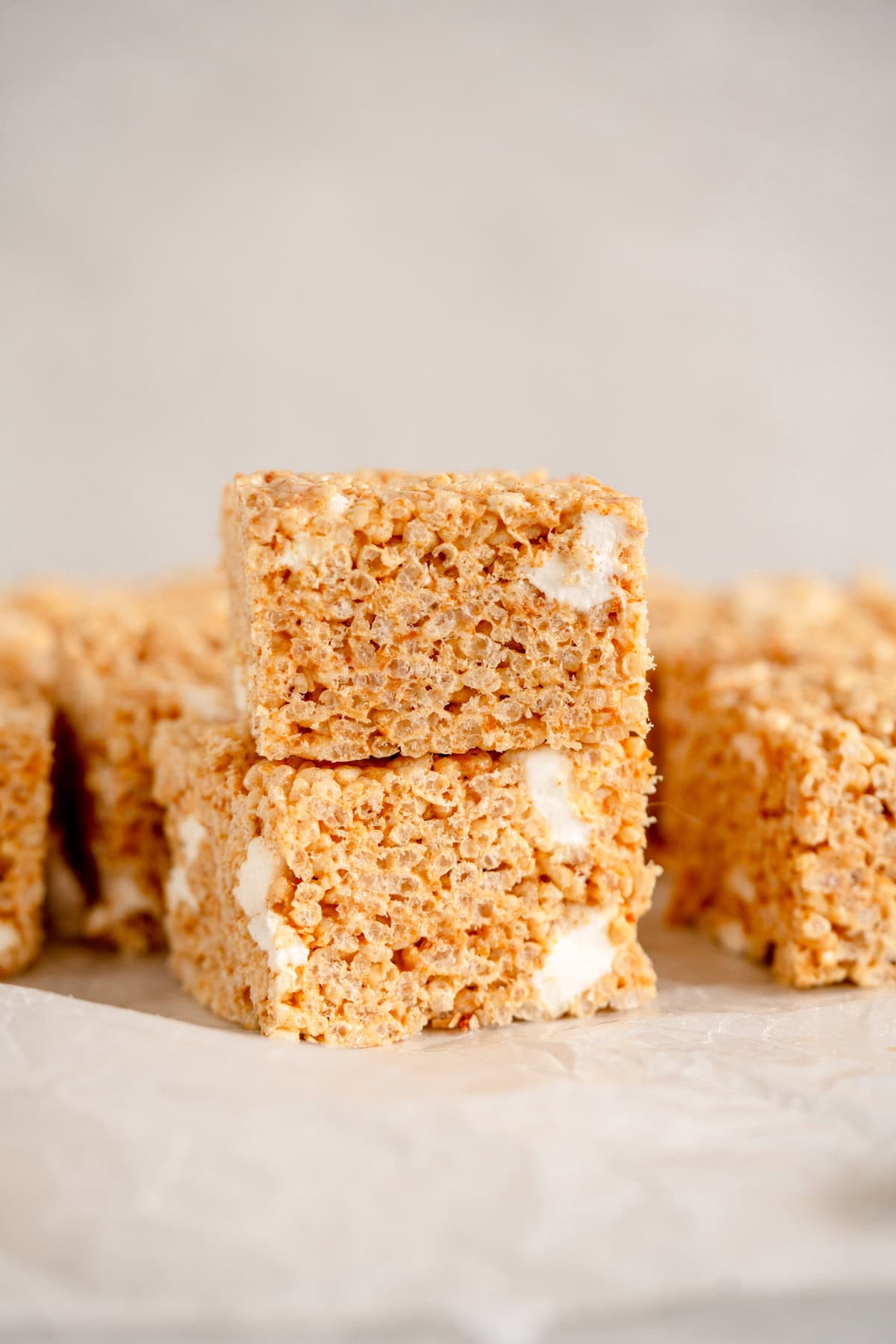
      Filed Under: Pies, Single-crust pies

      Lemon Pie with 3 Ingredient Filling

      lemon pie with graham cracker crust

      This easy lemon pie is the perfect make ahead lemon dessert. Made with a brown butter graham cracker crust and a super creamy 3 ingredient lemon pie filling, it really couldn't be more simple. Keep it plain or dress it up to serve - you choose!

      lemon pie with graham cracker crust

      Hi hi! I am just popping in to share the recipe for this super easy lemon pie with you! I love making lemon desserts, and my lemon meringue pie is super popular on my website, but I wanted something that was a little bit simpler but still delivered with that super punchy lemon flavour.

      Enter: My lemon pie with 3 ingredient lemon pie filling.

      The recipe for this pie is almost identical to my Key Lime Pie recipe except that it is made with lemon (wild concept right?! haha) - they both have a super easy brown butter graham cracker crust, and a filling that is almost too easy to make.

      This lemon pie sets up impossibly smooth and it cuts like a dream. It's a real showstopper, and is one of those desserts where the final outcome is hugely impressive relative to the time that it takes to make, which is 20 minutes for the crust and then another 25-30 minutes in the oven.

      This lemon pie recipe is also an amazing way to use up excess egg yolks!

      lemon pie with graham cracker crust
      slice of lemon pie on plate

      Components of super easy lemon pie

      This lemon pie is almost too easy to make - it has two components.

      • Graham cracker crust. I used my go-to brown butter graham cracker crust for this lemon pie recipe. I love how the brown butter gives an amazing depth of flavour, and it is super easy to make. There's notes in the post on graham cracker alternatives too!
      • 3 ingredient lemon pie filling. The first time I made this, I went back and double checked the ingredients because it seemed too simple that combining only three ingredients - fresh lemon juice, egg yolks, and condensed milk, could give the most amazing creamy filling. It sets up a little in the oven, but still stays super soft and creamy. It's just SO good and pairs so well with the graham cracker crust.
      lemon pie being eaten with fork

      What pan did you use for the recipe?

      While I am calling this a lemon pie filling, I was a bit sneaky and made it in a tart pan with a removable bottom. I love making pie recipes in tart pans, as you get a super crisp side and they are really easy to take out of the pan - I turn a small bowl over and place the tart pan onto it, so I can release the edge of the pan and remove it from the pie.

      If you do not want to use a tart pan, this recipe will also work in a 9-inch or 10-inch pie pan - I prefer to use ceramic for a pie with a crumb crust. I wrote more about this on my post on how to make the perfect graham cracker crust.

      lemon pie filling ingredients
      mixed lemon pie filling

      How to tell when lemon pie is baked

      The lemon pie filling whisks up to be fairly thick, so you want to give the pie the jiggle test to make sure that it is baked. For me, this takes about 20 minutes in the oven to bake the lemon pie filling. It may take slightly longer if you start with an already cooled graham cracker crust.

      The best way to check is to jiggle the pie pan slightly - you want the very middle to still be wiggling like jelly (jello) a little bit. Remember that it will continue to set up as it cools and then as it chills down in the fridge, but you want it mainly set when it comes out of the oven.

      It is possible to overbake an egg based filling - if you have overbaked you will see the surface of the pie start to crack which is caused by the egg proteins contracting and causing cracking.

      If this happens don't worry it will still taste absolutely fine - there are few things a good covering of whipped cream can't fix.

      side angle of lemon pie with graham cracker crust
      baked lemon pie

      How to get a clean cut on lemon pie

      I manage to cut this lemon pie super cleanly, which was so amazingly satisfying.

      I didn't really do anything fancy - I just used a long, sharp knife, and so I was able to cut all the way across the pie in one go, which gave super clean lines.

      Make sure that your pie is super super cold before slicing, as this will also help to give you a really nice clean cut. I also always have a tea towel or paper towel on hand to wipe the blade between cuts.

      I didn't warm the blade for cutting this pie but you are welcome to if you think that will help - I run it under hot water then dry it off before using.

      For tips on how to get a crumb crusted pie out of a pie pan, check out my key lime pie post.

      sliced lemon pie

      ❤️ Made this recipe and love it? ❤️

      I would LOVE for you to leave me a review and star rating below to let me know how you liked it! Also, please make sure to tag me on Instagram!

      Answers to your baking questions

      Over the years, many of you have asked me questions about:

      • baking in grams
      • adjusting oven temperatures
      • what kind of salt to use
      • and many more!

      I've curated and answered them all for your easy reference in this frequently asked questions post!
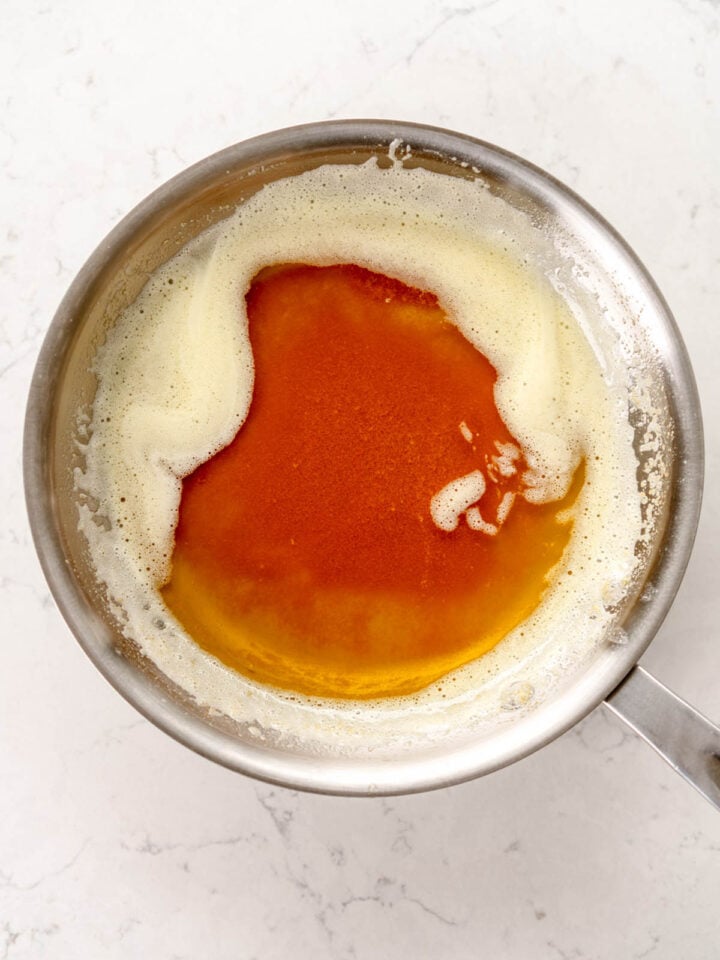
      Filed Under: Pies, Single-crust pies

      20 Minute Brown Butter Graham Cracker Crust

      smoothing graham cracker crust

      This is the perfect recipe for a super easy homemade graham cracker crust. Made with graham cracker crumbs and toasty brown butter, This post walks you through a step by step method of how to make a quick graham cracker crust, and all the tips and tricks for a perfectly shaped crumb crust that holds its shape when used for a pie. This post also includes alternatives to graham crackers!

      Hi hi! I am just popping in to share this super easy graham cracker pie crust recipe with you!

      I love making a crumb crust for pies, and this homemade graham cracker crust is particularly good. It utilises brown butter for a super toasty finish, which gives amazing depth of flavour to whatever recipe you are using it for.

      I use this graham cracker crust as the base of my Key Lime Pie and my Lemon pie, but it can be used in a bunch of different formats - it works great as the base of a bar or a cheesecake too.

      I have made a bunch of crumb crusts in my time as a baking blogger, and have picked up a couple of tips and tricks along the way on how to get a perfect graham cracker crust that holds its shape that I will share with you!

      graham cracker ingredients
      graham Cracker crust in bowl
      side shot of a lemon pie

      Choose your pan carefully - non stick is not the way to go!

      I am a metal pie pan girl when it comes to making a pie with a classic pastry crust, but for a crumb crust like this graham cracker crust or my oreo pie crust, I highly recommend a ceramic pan or a fluted tart pan. Metal pans can be a little too slippery and the crust can slip down the sides. This crust works great in a metal tart pan with a removable bottom, but tart pans have much straighter sides than a sloped pie pan.

      I tested this recipe in my go-to non stick pan and the crust fully slumped down to the bottom of the pan. I have had the best success using this crust either in a ceramic pan or a tart pan (or it works great in a square pan too).

      Don't use a very non stick pan when making a graham cracker crust - they do their job very well and everything falls down.

      How to shape a graham cracker crust - a game changing tip.

      I have made many graham cracker crusts before, and have found that the easiest way to get a nice even crust is to start with the sides. You can either dump all the crust in at once and go for it, or I find it much easier to weigh out some of the crust and then form the sides first, before adding the rest of the crust to form the bottom.

      Depending on the pan that you use the crust will be thicker or thinner, so adjust the amount you use for the sides if needed.

      The great thing about making a graham cracker crust is that you can work at it as much as you like - if you find that you aren't happy with how it is coming out, just transfer the crumbs back into the bowl and start again.

      graham crackers in pie pan
      Weigh out the quantity to use for the sides
      edges of graham cracker crust done
      Compact down the sides of the crust first

      Flatten things down.

      Another good little tip when making a graham cracker crust is to use something nice and flat. I like to use either a flat bottomed measuring cup (my good friend the ⅓ cup, if you've been here a while you will know she is my favourite for a crumb crust), or you can use a drinking glass or something similar. Make sure that the crust is nice and compacted in the pan to reduce crumbling. I also have a wooden tamper which is helpful to use.

      I like to use the thumb or finger on my opposite hand to help shape the top edge of the crust - I push down lightly to stop it from rising too much up the sides of the pan and to keep everything nice and flat and tidy.

      smoothing graham cracker crust
      Use your thumb of your other hand to help flatten the top edge of the crust to keep things nice and clean.

      The ideal consistency for a sturdy graham cracker crust - wet sand.

      Not all graham crackers have the same level of absorbency, so you may need to adjust the amount of butter that you use in the recipe.

      The amount I call for in the recipe generally works, but as I haven't been able to test with every brand of graham cracker out there, you may need to just keep an eye on things.

      You are aiming for the consistency to be like wet sand - if you see in the image below, when you squeeze some of the crust mixture together, it should hold its shape.

      Consistency of graham cracker crust

      Browning butter - don't be scared!

      If you haven't made brown butter before you're in for a treat - it is absolutely magical. Brown butter is butter that has been cooked until the water evaporates and the milk solids brown. It elevates the taste of this graham cracker crust by giving it an amazing depth of flavour - during recipe testing I found I much preferred the brown butter crust to a regular graham cracker crust. My top tip is to go slowly.

      I know that making brown butter can be intimidating. Don't be scared, I will hold your hand the whole way through in my post and you'll be nailing it in no time: Brown Butter 101: The Ultimate Guide

      graham cracker crust in a tart pan
      graham cracker crust

      Scaling a graham cracker crust

      This graham cracker crust works great in a range of formats - the recipe as written will do one 9" pie dish or a fluted tart pan with a removable bottom. If you want to use it for other formats or to scale the recipe, there are notes within the recipe card on how to do that - I double it for a 9" pan, and do a 1.5 the recipe if I want more crust or my pie pan is slightly larger.

      graham cracker crust for pumpkin pie bars

      ❤️ Made this recipe and love it? ❤️

      I would LOVE for you to leave me a review and star rating below to let me know how you liked it! Also, please make sure to tag me on Instagram!

      Answers to your baking questions

      Over the years, many of you have asked me questions about:

      • baking in grams
      • adjusting oven temperatures
      • what kind of salt to use
      • and many more!

      I've curated and answered them all for your easy reference in this frequently asked questions post!
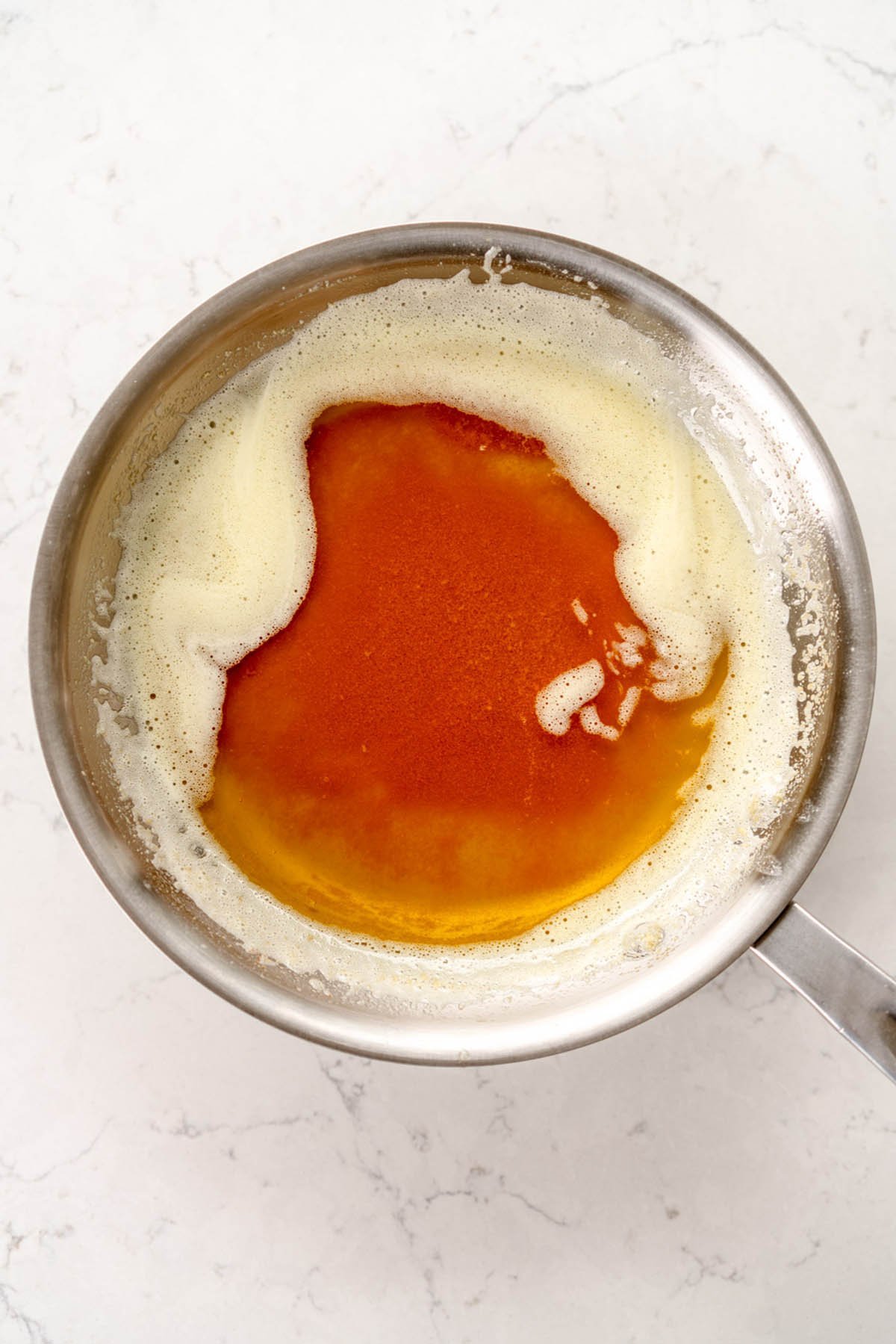
      Filed Under: Base Recipes, Pies, Single-crust pies Tagged With: Egg Free

      Foolproof French Silk Pie (No Raw Eggs!)

      slice of French Silk Pie with Oreo Crust

      French Silk Pie is a super silky chocolate pie, made with an Oreo Crust (with an option for a classic pie crust), a creamy rich chocolate filling, and topped with fresh whipped cream. This is the perfect make-ahead dessert, and contains no raw eggs, unlike other French Silk Pie recipes!

      slice of French Silk Pie with Oreo Crust

      Hi hi! I am just popping in to share this French Silk Pie recipe with you! This recipe is a slightly updated version of my Nutella French Silk Pie that has been on my site for years - I have added another crust option for you with this super easy homemade oreo crust, and tweaked it to be a classic French Silk Pie. There are options in the post to make the Nutella version too.

      This French Silk Pie is everything that I want in a chocolate dessert. The crust is perfectly crumbly while still holding its shape, and the filling is silky smooth and just the right balance of rich while also having a really delicious chocolate mousse texture. The whole thing is topped off with loads of freshly whipped cream just to really bring it all home.

      This French Silk Pie recipe is slightly more involved than other pie recipes as it takes a few steps to make the crust and filling, but I promise you that it is so, so worth it. I made this a few times during testing and the reviews from friends and family were amazing. I love it so much, and I hope that you do too!

      Oreo Pie Crust
      whipped cream topping for french silk pie
      sliced french silk pie

      Two measures of cream in the filling?

      There are two measures of cream in the French Silk Pie filling - the first larger measure gets whipped to stiff peaks and is used as the base of the filling. The second measure is there to help smooth out the filling mixture. I found that when I was recipe testing this pie that the mixture would often sieze when the chocolate went into the egg mixture, and incorporating some liquid cream helped a lot with this.

      You will notice that there is water in the egg yolk and sugar mixture - that is there for a reason. When I was testing this recipe I found that it was quite hard to dissolve the sugar fully without cooking the egg yolks too much. A little bit of water fixed this issue - just enough to dissolve the sugar. I know it seems weird but it does work - trust me.

      Once the egg yolk mixture has been made, you remove it from the heat and whip until it has cooled and thickened significantly. Then the melted chocolate gets added along with the liquid measure of cream. The chocolate mixture is added to the whipped cream and incorporated.

      Do not worry if the filling looks like it is runny. This pie needs at least four hours to fully chill in the fridge, ideally more if possible. It will set up in the fridge!

      melted chocolate
      Melt your chocolate first and leave to cool while you prepare the rest of the filling.
      whipped egg yolks for french silk pie
      Egg yolk mixture after being whipped until room temperature and thickened.

      How do you slice pie cleanly?

      This can be a bit of a mission, especially when the topping is thick whipped cream. There are a few things that I do to get a nice slice of pie:

      • Make sure the pie is super cold. A nice chilled pie will give you a nice clean slice.
      • Use a sharp knife. This is one of the benefits of making this pie in a ceramic pan - you don't have to worry about scratching it with the knife like you would a non stick pan. Use a nice sharp knife and cut right down to the pan when slicing the pie. If you like, you can heat the knife under boiling water and dry off before slicing.
      • Wipe the knife between slices. Cutting with a clean knife gives you a much better chance of having nice cuts.
      • Use a spatula. I like to use a small offset spatula to remove my slices of pie from the pan - it has a flexible metal blade so is easy to pop down between the crust and the pan to help lift the slice out.
      french silk pie topped with whipped cream
      sliced French Silk Pie with cream

      To Whip or not to Whip?

      I top my French Silk Pie with loads of freshly whipped cream. You can either blob it on and just smooth it out with a spatula or a spoon, or if you would like to pipe it, I used an ateco #825 tip and piped on swirls.

      When you are making whipped cream for piping you want to make sure that you do not over whip it - you want it to just hold stiff peaks. I prefer to do it by hand to make sure that I do not over whip it, but an electric hand mixer on low works well too. Just go slow.

      French Silk Pie with bite taken out

      ❤️ Made this recipe and love it? ❤️

      I would LOVE for you to leave me a review and star rating below to let me know how you liked it! Also, please make sure to tag me on Instagram!

      Answers to your baking questions

      Over the years, many of you have asked me questions about:

      • baking in grams
      • adjusting oven temperatures
      • what kind of salt to use
      • and many more!

      I've curated and answered them all for your easy reference in this frequently asked questions post!
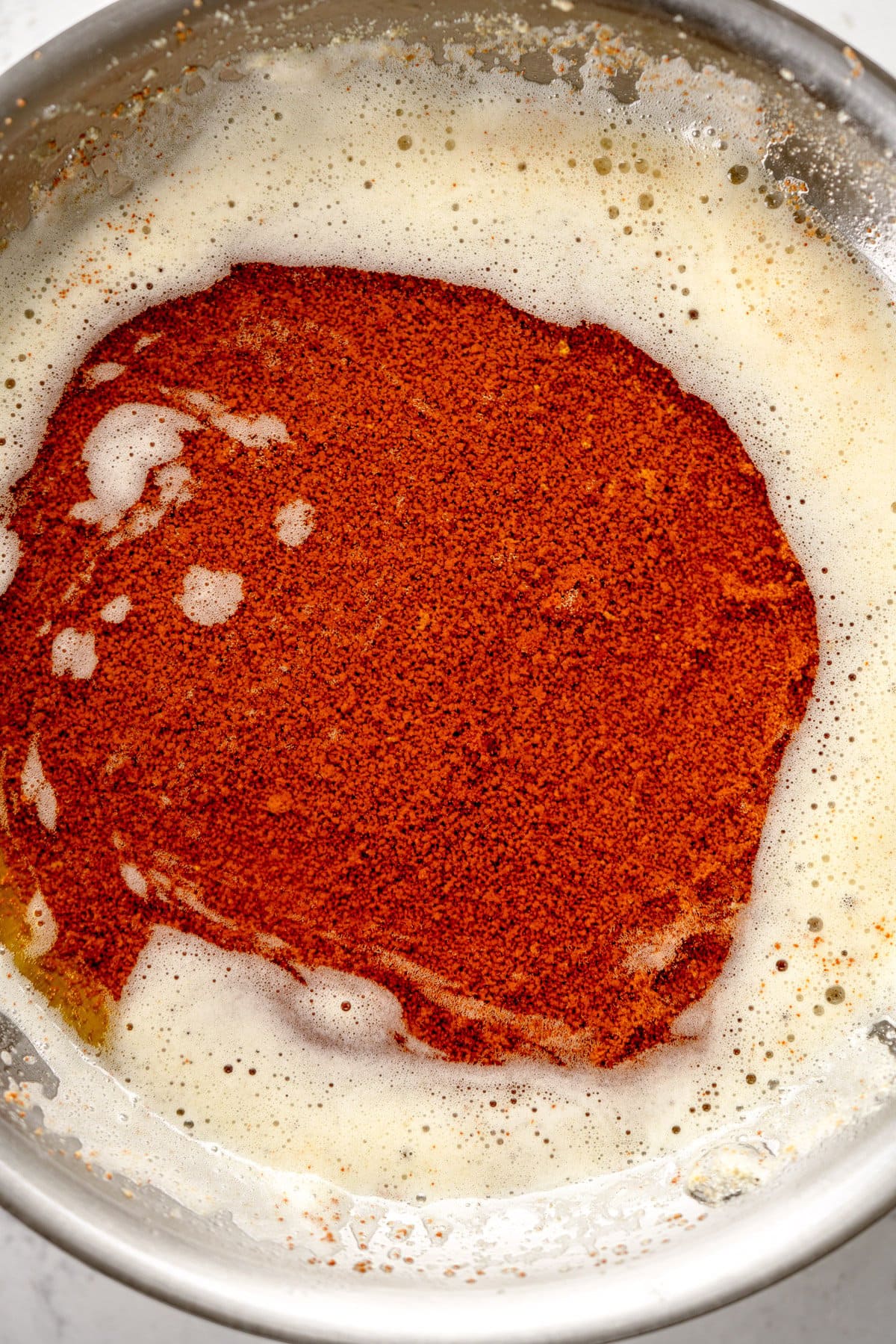
      Filed Under: Pies, Single-crust pies

      2 Ingredient Oreo Crust

      Oreo Pie Crust

      This super easy Oreo Pie Crust only has two ingredients - Oreos and butter! This cookie crust can be made in less than 20 minutes. It is the perfect base for a pie or no bake bar recipe. This homemade Oreo crust holds its shape well and can easily be made ahead of time. Read my post for all my tips and tricks on the perfect Oreo Cookie crust!

      Oreo Pie Crust

      Hi hi! I am just popping in to share the recipe for this super easy 2 ingredient Oreo Cookie pie crust! Making a crumb crust for a pie is a super fun and really simple option if you don't want to go use a regular blind baked pie crust for a single crust pie, and they are super, super delicious.

      I used this Oreo Crust as the base of my new French Silk Pie recipe, but it is perfect for all kinds of things - you can use it as the base of a bar, or for a cheesecake, or for Oreo Brownies. I have never used a store bought crumb crust myself, but I can guarantee you this will be 100 times tastier and a lot fresher (and it is so satisfying to make!).

      This Oreo Crust takes about 10 minutes to make and then has another 10 minutes in the oven, and it is is good to go! You can easily make it up to a day ahead of time so that you can add your filling whenever you are ready.

      oreos in food processor
      two ingredient oreo crust
      oreo crumbs in food processor
      Pulse oreos until they are fine crumbs - remove any big lumps or keep processing until they are gone.

      What is the best pan to use for an Oreo Crust?

      I tested this Oreo pie crust in a few different pans, and I have some notes. If you have made any of my pie recipes before you will know that I am a big fan of using a metal pie pan over ceramic or glass for pies that use a classic pie crust recipe.

      However. You do not want to do this for a crust like this Oreo crust, or a graham cracker crust. I tested them in a non stick pan, and the pan did exactly what it is made to do - it didn't stick. The crumb crust slumped down into the bottom of the pan and didn't stick to the sides.

      So for a crust like this oreo crust, you can use a ceramic or glass pie dish - it makes enough for a thick crust for a 9" pan or a thinner crust for a slightly larger pan that is a bit deeper, like the one I used for my French Silk Pie. The quantity of crust would also work great for a 9" springform pan, or make enough crust for a 9" square pan.

      oreo crust pressed into pan
      Oreo crust used as the base of my Oreo Brownies

      The right ratio of butter to oreos

      I had a few pie slumps with this recipe test, which is funny seeing as it is so simple - but I quickly learnt that too much butter causes the crust to slump down the pie plate in the oven too.

      The quantity of butter may seem small, but because of the cream filling being left in the oreo cookies, you need less than you think. Make sure that the amount of butter is 45g melted butter - you may need to re-weigh after melting just to check that you have enough.

      slumped oreo crust
      Too much butter = a very sad crust. It was delicious crushed up over ice cream!

      How to make a super even Oreo Crust

      I LOVE making homemade crumb crusts because I find the process of smoothing them into the pan really satisfying, and there is a way to make sure that you have a nice even crust on the sides and the bottom of the pan: Do the sides first.

      I like to fully compact the crust onto the edges of the pie pan first, and the easiest way to do this is to divide up the crust and add the part you are using for the sides first, and then add the rest when you are ready to form the bottom.

      I usually add 160g of the crust to the pan first (just pop the pan onto the scale and weigh out the right amount of crust).

      Using either a straight sided measuring cup or flat bottomed drinking glass, evenly arrange the crumbs around the pie pan, then press them up against the edges of the crust. If your crust is coming close to the top edge of your pan, you can use the thumb or finger of your opposite hand to press down slightly to give you a nice top edge.

      Once the edge of the pie crust is done, add the remainder of the crust mixture and smooth down, making sure that you have full contact with the side crust - you do not want to leave a gap or you will have structural failure when you slice your pie.

      add crust to the edges of the pan first
      Work on the edges of the crust first
      Finished Oreo Crust
      Then add the rest to form the bottom.
      slice of French Silk Pie with Oreo Crust
      sliced french silk pie

      ❤️ Made this recipe and love it? ❤️

      I would LOVE for you to leave me a review and star rating below to let me know how you liked it! Also, please make sure to tag me on Instagram!

      Answers to your baking questions

      Over the years, many of you have asked me questions about:

      • baking in grams
      • adjusting oven temperatures
      • what kind of salt to use
      • and many more!

      I've curated and answered them all for your easy reference in this frequently asked questions post!
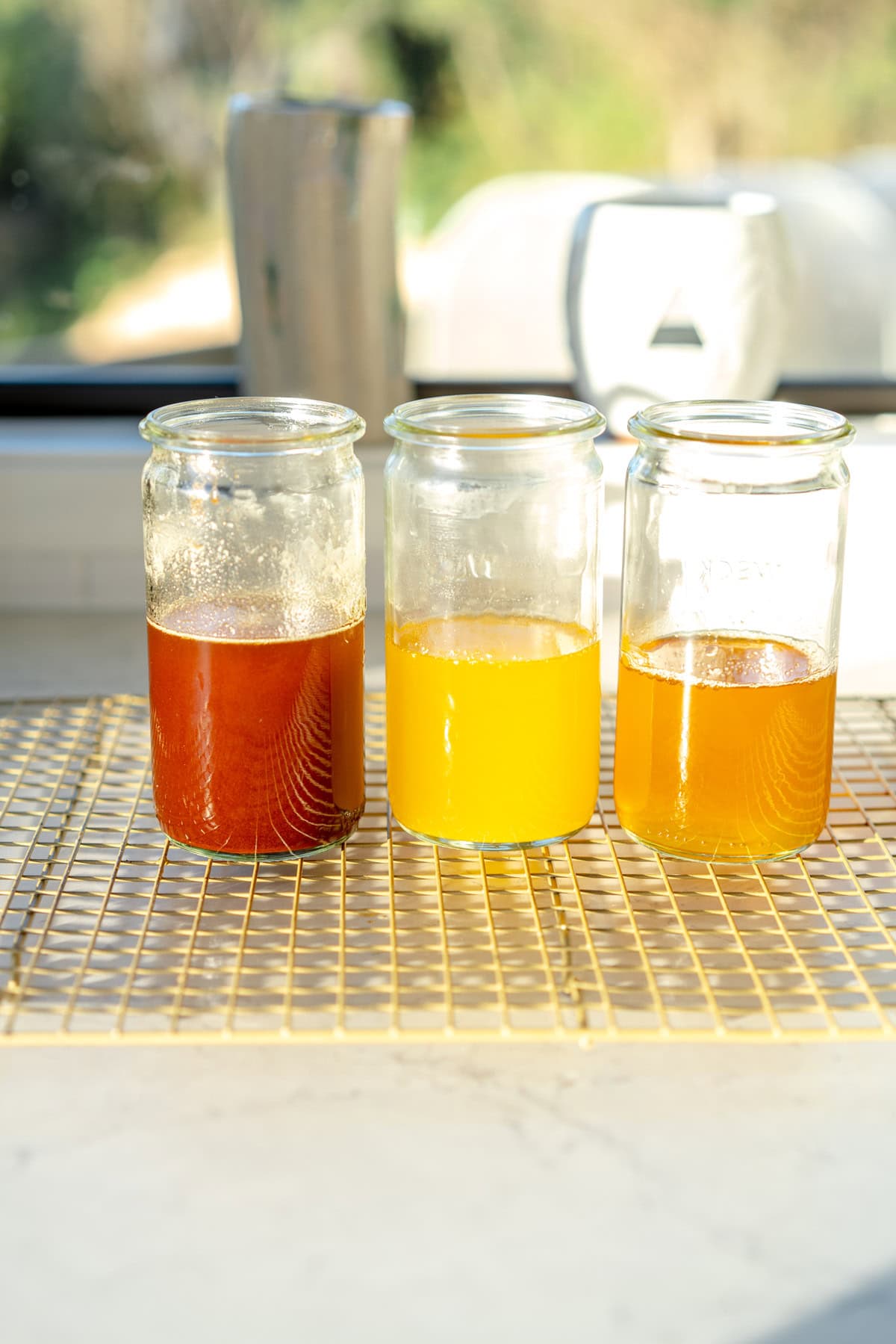
      Filed Under: Base Recipes, Pies, Single-crust pies Tagged With: Egg Free

      Soft and Buttery Parker House Rolls

      Baked Parker House Rolls

      Soft and Buttery Homemade Parker House Rolls are a super fun shaped dinner rolls. Made with an easy white bread dough recipe, they are fun to make and perfectly soft. Shape these as the traditional parker house rolls, or divide the dough up and shape into classic round rolls - they are perfect either way. These rolls can be made all in one day, or you can work ahead and give the dough an overnight rise.

      Baked Parker House Rolls
      The more traditional folded over Parker House Roll shape

      Hi hi! I am just popping in to share this super easy Parker House Roll recipe with you! I love making homemade bread recipes, and I truly think that bread rolls are one of my most favourite things to make. The process is so fun, and the final product is so satisfying.

      These Parker House Rolls are a recipe that I am super proud of and so excited to share with you. They use my base white bread dough recipe, and are soft, fluffy, and just so buttery.

      There are a few ways to make them - I explain both in the post. You can either make 12 regular round rolls, or divide the dough into 18 to shape them into more of the signature Parker House Roll shape, which is super fun to make and very easy!

      This Parker House Roll recipe is a great option if you are just learning how to bake bread, or if you're a seasoned baker. To me, this is the perfect bread roll, and the options to finish them however you like are endless! I hope you enjoy them as much as we have!

      baked bread rolls in pan
      baked parker house rolls in pan

      What are Parker House Rolls?

      Parker House Rolls are a kind of dinner roll - they typically have a folded over shape, although they can be made as a regular roll too. The name apparantely came from the Parker House hotel in Boston in the 1870s where a frustrated baker threw a half finished batch of rolls into the oven (Honestly, I get it).

      Parker house rolls are a kind of dinner roll, but not all dinner rolls are Parker House Rolls, if that makes sense! I wanted to play around with the traditional shape, which is super easy to do and also gives an amazing textured roll - slightly crusty on the outside, perfectly golden brown, then super buttery on the inside from brushing the dough with butter before you fold up the roll.

      My version are soft, fluffy, and super buttery. They get baked until perfectly golden brown, then get a good old bath in butter when they come out of the oven. Just the best, truly. I'll be making them year round.

      two shapes of parker house rolls
      One batch of dough, two formats - round rolls up the top and folded Parker House Rolls down the bottom.

      One Dough, Two Formats

      I made this Parker House Roll recipe two ways - as 12 round rolls, or as 18 folded Parker House Rolls.

      Both formats work great, I just love having options and I know that you do too! The white bread dough recipe is definitely going to be a staple in my house - I just love how easy these rolls are to make.

      The dough recipe can also be used to make white bread loaf - so if you like you can split up the dough recipe to make half into rolls and the other half into a loaf of bread, or I often double it and make both bread rolls and loaves so I can pop some into the freezer.

      For all the tips and tricks on how to make perfect white bread dough, along with ingredient questions and information on the first rise, please check out my White Bread Dough recipe! This recipe requires you to make the dough first following the instructions on the post.

      risen dinner rolls
      inside texture of a bread roll

      Tips and Tricks for making Parker House Rolls

      I have probably made bread hundreds of times now in my career as a baking blogger (I mean I have made these about 20 times in the last few months, I think Adventure dad is about 80% bread roll at this point), and here are the tips and tricks I have picked up along the way to make sure that things go as well as they can.

      Remember that it does take a little practice to get the hang of working with dough, but this one is nice and soft but not too sticky so it is fairly easy to work with.

      Make sure your dough is properly proofed.

      This is a super crucial step - make sure that the dough is risen before you shape your Parker House Rolls. I cover this in huge detail in my white bread dough recipe - you can either do the first rise overnight in the fridge, or at room temperature. I find room temperature dough slightly easier to work with when it comes to shaping the dough into round rolls and getting a nice smooth surface, but it also will work just fine if you want to do that first rise overnight. For the folded over Parker House Rolls, chilled dough is nice and easy to roll out. Just make sure that you leave the dough at room temperature for 30 minutes or so before shaping, and remember that it will take longer to do the second rise as you are starting with slightly cooler dough. Either works great, just do what suits your schedule.

      Use enough flour but not too much.

      When you are shaping rolls, you want a little flour on your counter top but not too much, especially if you are shaping into round rolls. Just use enough to help the dough not stick - dust a little down before rolling out the folded version of the rolls.

      Use a scale to weigh things out.

      If you have been here for any amount of time you know I am FIERCELY team scale - it is so so helpful for making Parker House Rolls and other bread recipes. You have to divide the dough into either 12 or 18 pieces here, and there is just no way that you can eyeball that accurately. Things are going to get super wonky. Use a scale. This is actually one of my favourite parts of making bread - trying to get the perfect weight of each piece of dough each time is so much fun (maybe it's just me but it's the best when you nail the size of the dough ball first time).

      Give yourself enough time.

      I always tend to underestimate how long bread will take me (I never remember to account for the time that they are actually in the oven!) - by the time you get all the bits and pieces together, it can take a while and you can't really rush the rising of bread too much, so make sure you do account for enough time. Here is how long the process usually takes me:

      • Make the dough - 15 to 20 minutes, by the time I get it all done and in the bowl to rise.
      • Bulk Rising - anywhere from 60 minutes to 1 ½ hours depending on the temperature of the dough. If I want this to take longer I often start with cold milk (which is fine if you are using instant yeast as it does not have to be activated), and this will buy me a little more time. Alternatively the first rise can be done overnight - see my white bread dough post for information on this.
      • Shaping - 20 minutes. I like to divide the dough up and shape it into balls then give it 10 minutes to rest on the counter to relax slightly before rolling out and shaping into folded rolls or re rolling for round rolls.
      • Second Rise. This usually takes an hour for this recipe if the first rise was at room temperature, but again, this will depend on how warm your kitchen is and how warm your dough was to begin with.
      • Baking. Allow 30 minutes for this. The rolls usually bake in about 25 minutes. I love to serve them super warm from the oven, but you do you here - they are also perfect baked earlier in the day (or even the night before) and then re warmed.

      Remember that if you are worried the rolls will overproof before they get to the oven (if there are other things baking and the rolls have to wait their turn etc), that you can always pop them into the fridge to slow down the rising process. Don't do the whole rising process in the fridge (they overproof big time and it is so sad, see further down the post), but if you need to buy yourself 10-15 minutes and don't want them to overproof, the fridge is your friend.

      Don't worry if they come out a bit wonky.

      Making bread is practice. Sometimes I find it really hard to get a nice smooth surface on the rolls, or you end up with a few bubbles or one busts out in the oven. They will still taste good regardless! Homemade bread always does.

      parker house rolls ready to rise
      baked parker house rolls

      How to shape Parker House Rolls two ways

      I have included two ways to shape these Parker House Rolls - we will call them the 'round rolls' and the 'folded over' rolls. There are detailed pictures below on how to shape each type.

      I love both formats - the round rolls are great for making sliders or sandwiches, but there is just something so special about the folded over version. The inside gets this amazing texture, and there is a little pocket of butter in the middle of each one which makes that part of the dough super soft. You also get the maximum amount of area where the rolls touch which is my very favourite part of bread.

      As the traditional folded over shape:

      Step 1: DIVIDE. We are dividing the dough into 18 here - the rolls will sit in three rows of six. Plop your dough out onto a lightly floured work surface, and divide into 18 pieces - each should weigh about 45g each but weigh your overall dough first to double check this.

      Shape each into a ball, and then leave to rest for 10 minutes or so to let them relax a little (if you are in a hurry you can skip this step).

      Divided balls of dough
      Divide into 18 pieces.
      dough shaped into balls
      Ball each up and leave to rest.

      Step 2: FLATTEN. Work with one dough ball at a time. Lightly flour the surface if needed. Remember you are rolling it out and you don't want the dough to stick, so a little bit of flour is your friend here. Flatten the dough ball out with your hand.

      ball of dough
      Work with one piece of dough at a time.
      flattened out ball of dough
      Flatten with your hand.

      Step 3: ROLL. Using a rolling pin, roll the dough out into a long oval shape. Aim for approximately 16 cm / 6 inches long.

      Step 4: BUTTER. Brush the oval of dough with butter.

      Rolled out dough ready to brush with butter
      Roll out the dough into an oval.
      brush with butter
      Brush with melted butter.

      Step 5: FOLD. Fold the dough over to form a clamshell shape of folded dough. Arrange in the pan - I do 3 rows of 6 rolls. I like to work in vertical lines so that I can make sure that they all line up nicely. Make sure there is enough room for them to fit. I use a 9"x13" (20x30cm) pan.

      Folded up Roll
      Fold up to form a clamshell
      parker house rolls ready to rise
      Arrange in the pan.

      As a round 'regular' roll:

      Step 1: DIVIDE. I shape this format of dough into 12, so turn your dough out onto a lightly floured surface and divide into 12 pieces, they should each weigh about 70g.

      Step 2: SHAPE. Shape each one into a tight ball. Working with one piece at a time, flatten the dough and tuck the edges of the roll together to form a ball, then put the dough ball tucked side down and roll into a tight ball by cupping your hand into a 'claw' shape and using it to roll the dough ball. Use the tension from the counter to help with this - don't use too much flour here or you won't be able to get a good grip.

      white bread dough ready to be shaped
      Dough ready to be divided
      bread rolls ready to be shaped
      Balls of dough after their first shape

      Step 3: REST. Cover the dough balls with a clean tea towel or plastic wrap and leave to rest for 10 minutes or so to relax a little.

      Step 4: RE-ROLL. This step really helps give nicely shaped rolls. Once the rolls have rested, give them a quick re-roll (don't re-shape them, just repeat the claw hand shaping). This just makes sure that they are extra tightly rolled and will give nice fluffy bouncy rolls.

      rising bread rolls in pan
      risen bread rolls

      How to tell when Parker House Rolls are risen

      The second rise (if the first rise has been done at room temperature) for these Parker House Rolls usually takes about an hour, depending on the temperature of your kitchen. If it is warmer it will go quicker, cooler then it will go slower. If you started with doing the bulk fermentation overnight, then it will take about 2-3 hours for the shaped dough to warm up and rise again.

      It is important to go by how the dough looks, not a specific time. The best way to tell if bread is risen is by giving it the finger poke test - lightly flour a finger and then gently poke the surface of a roll. If it is not fully risen then the dough will spring back. If it is ready, it will leave an indentation that slowly springs back.

      risen parker house rolls ready to bake

      How to bake Parker House Rolls: Egg wash and then butter

      I like to give my Parker House Rolls a coating of Egg wash before baking, then finish with butter after they come out of the oven.

      Egg wash helps with browning - giving the dough a lovely golden brown and slightly shiny finish. If you do not have an extra egg on hand, I cover lots of alternatives in my egg wash post!

      Once the rolls are baked, I like to give them a good coating of melted butter just to finish them off. I usually just use regular salted butter for this (or Unsalted with salt added), but you can do a garlic butter, a herb butter, a honey butter, whatever takes your fancy here.

      If you are making the round rolls rather than the folded rolls, you can also give the rolls a butter bath half way through the baking process. About 15 minutes after they have started baking, remove from the oven, and brush all over with melted butter. Return them to the oven to finish baking, then add butter again.

      How to tell when bread rolls are done baking

      You can tell the rolls are done baking when they are pulling away from the sides of the pan and are evenly golden brown. This usually takes about 25 minutes in my oven.

      If you want to double check this, you can use a digital thermometer - a lightly enriched dough like this one will temp at 190°f / 88°c when fully baked.

      bread rolls getting egg wash
      tray of baked parker house rolls brushed with butter and finished with salt

      How do you store Parker House Rolls?

      Parker House Rolls are best eaten fresh on the day that they are made but store super well in an airtight container at room temperature. Refresh in the oven or microwave, or lightly toast if you are eating them after the day that they are made. They should keep for 3-4 days.

      Can Parker House Rolls be made ahead of time?

      Yes - there are a few options here.

      Make ahead and reheat.

      The rolls can be fully finished ahead of time and then reheated to serve. If you do this, I like to leave off the final butter coating until just before I serve them. I often add a sprinkle of flaky sea salt to the tops of the rolls too, and make sure to only do this just before serving as the salt can make them go a bit weird and soggy.

      To reheat the Parker house rolls, cover the pan with foil and place into a 350°f / 180°c oven for 10-15 minutes to re-warm, then remove the foil and warm for a further 2 minutes or so with the foil off to make sure there isn't any moisture hiding on the rolls, then finish with the melted butter.

      Make ahead and freeze.

      The great thing about this bread recipe is that it freezes super well. I haven't tested freezing the unbaked dough ahead of time, but I freeze baked bread all the time.

      To freeze baked rolls, bake as directed but do not brush with the melted butter. Leave to cool then place into a ziploc or wrap well with plastic wrap. Store for up to 3 months. To serve, defrost at room temperature then re warm following the instructions above.

      brushing bread rolls with butter

      Can I do one or both rises in the fridge?

      I wasn't initially planning on this, but I ended up going on a deep dive to test this. I made a double batch of my white bread dough, and ran a few tests just so I could show you what works best and what doesn't.

      I often get asked if people can do the second rise in the fridge, and my answer is no. It leads to overproofing the rolls as they spend too long in the fridge, and the dough totally deflates when you go to bake it.

      Overproofing is when the yeast in the recipe runs out of energy, and has no more to give in the oven, leading to dense, flat rolls rather than the nice soft fluffy rolls that we want. Overproofed rolls are still edible, they just won't be as nice and fluffy.

      Here is what I tested and the results:

      Room temperature first rise and fridge second rise.

      I rose the dough as directed at room temperature, then shaped into 6 rolls and a loaf, and did the second rise in the fridge. They had 15 hours in the fridge for the second rise, and already looked overproofed when I took them out. I left them at room temperature for 2 hours so they could warm up slightly before baking, and then baked them off.

      Result: Overproofed rolls. I do not recommend this method.

      Fridge first rise and room temperature second rise.

      If you are going to do a component of these rolls ahead of time, doing the first rise in the fridge is the way to go. I made the dough and shaped it, then gave it overnight in the fridge (from experience you can do up to 24 hours) then shaped the rolls as directed and rose and baked. They turned out basically the same as the rolls which had had both their first and second rise at room temperature, and baked up nice and fluffy as the yeast still had energy to give in the oven.

      Result: Properly proofed rolls. I recommend this method - just make sure that you allow time for the dough to warm up slightly before shaping and allow for more time for them to rise before baking.

      testing dinner roll rise times
      Testing all the different methods of fridge rising and room temperature rising.

      The results.

      The images below show the results - you can see that the top rolls, which had a fridge first rise and a room temperature second rise, were much nicer - they baked up super fluffy and round as they should.

      The bottom pan of rolls which had their second rise in the fridge overnight were already looking quite sad when I took them out of the fridge to warm up. There was just no way that they were going to perk up.

      If your dough overproofs on the first rise it is possible to save it by just punching it down and shaping and proceeding, however if it happens on the second rise, the rolls will bake up much flatter.

      To me, it is just not worth doing the second rise overnight. You do not save any more time, and the risk of overproofing the dough is too high.

      over proofed vs proofed buns
      Top pan: fridge first rise, room temp second
      baked proofed vs overproofed
      Bottom pan: room temp first rise, fridge second.

      This is the image which is the craziest to me - these were the EXACT same batch of dough, but the ones on the left had a fridge first rise and a room temperature second rise, and the ones on the right had a room temperature first rise and a fridge second rise. They totally overproofed, and were nowhere near as fluffy - if you didn't know, you would have thought it was a totally different recipe.

      proofed vs overproofed buns
      Huge difference in height of the rolls
      interior of proofed vs overproofed
      Very different interior texture

      ❤️ Made this recipe and love it? ❤️

      I would LOVE for you to leave me a review and star rating below to let me know how you liked it! Also, please make sure to tag me on Instagram!

      Answers to your baking questions

      Over the years, many of you have asked me questions about:

      • baking in grams
      • adjusting oven temperatures
      • what kind of salt to use
      • and many more!

      I've curated and answered them all for your easy reference in this frequently asked questions post!
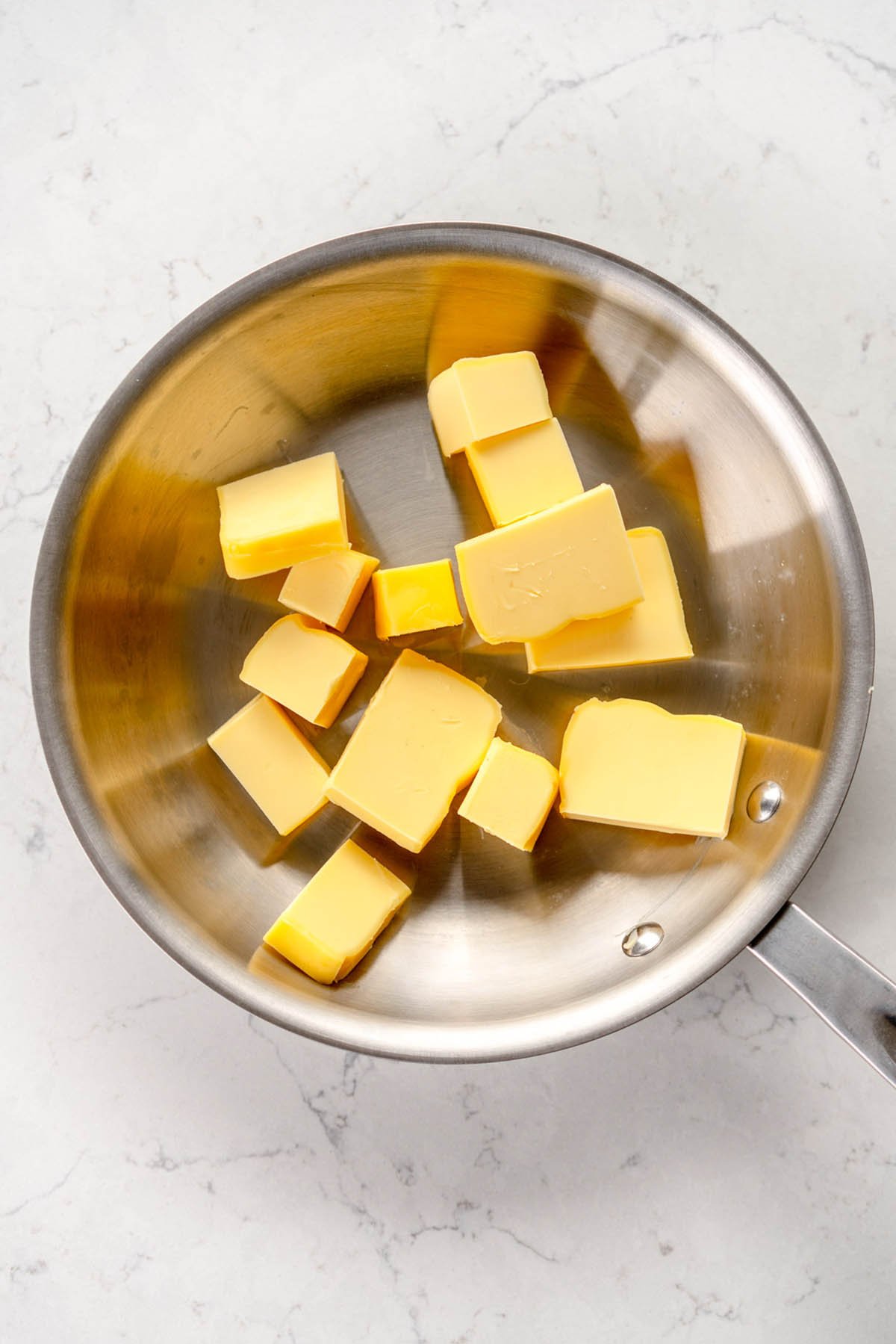
      Filed Under: Breads, Savoury Breads

      Soft and Fluffy White Bread Loaf

      slice of white bread on rack

      Soft and fluffy white bread recipe - made with a simple white bread dough, this easy bread recipe makes two perfect loaves of white bread. The recipe uses simple ingredients and gives a light, soft bread that is perfect for slicing. Follow my step-by-step recipe and comprehensive guide to make the most amazing loaf of homemade bread.

      slice of white bread on rack
      The perfect white bread loaf - great for sandwiches or toast!

      Hi hi! I am just popping in with this super easy white bread recipe! This recipe makes two loaves of white bread, and uses my base white bread dough recipe. It is super easy to make, and is a great way to learn to bake bread if you are just getting started.

      I love everything about this bread recipe - it is soft and fluffy, but the dough is still really easy to work with. The bread keeps for a few days and makes the most amazing toast, and the leftovers make the most amazing garlic bread. I often bake one loaf and then pop the other one in the freezer for another time.

      I wanted something that wasn't too fussy to make and used ingredients I already had in the house. We usually eat this fresh, but it does make the most amazing toast too - we often eat it with egg salad, or my Husband loves it toasted with Nutella.

      I played around with multiple variations of this recipe, so check out the post for all my tips and tricks on how to make the best white bread loaf!

      end shot of sliced bread
      baked loaf of bread in a pan
      baked loaf of white bread
      Egg wash gives you the most amazing golden crust

      Two Perfect Loaves of Bread

      This white bread recipe makes two loaves of bread - I often throw one in the freezer or gift one. I figure that if you are going to go to the effort to make your own homemade bread, then you might as well get two loaves out of it - it isn't really any extra effort.

      I have two of the same loaf pans that I use for this white bread loaf recipe, but you can really shape it to fit as you like - alternatively the dough recipe is identical to the one that I use for my Parker House Roll recipe, so you could divide the dough into two and shape half into a loaf and half into bread rolls to use for something else.

      end shot of a loaf of bread
      slices of white bread
      loaf of bread ready to bake
      Perfectly risen - see how the dough surface is nice and smooth and hasn't collapsed in on itself at all which can be a sign of overproofing.

      How to shape a loaf of bread for a loaf pan my way

      This can definitely take a bit of practice, but once you get it sorted, you will be fine. Don't be afraid of dough shaping - worst case scenario your dough comes out a bit wonky and you know what to fix next time.

      This works for any pan size - just make the initial rectangle about the same length as the pan is. Remember that it is ok for the dough to not be as long as the pan is when you just put it in after shaping - you can see by the pictures that it fills the pan.

      Here is a step by step guide on how to shape dough into a loaf pan. This is just how I do it. If you have a way to shape a loaf of bread that works better for you, then go for it and use that instead!

      balls of bread dough
      Flattened out bread dough

      Step One: DIVIDE. My white bread dough recipe makes enough for two loaves of white bread (or one loaf of white bread and a small batch of something else). You want to work with one piece of dough at a time, so divide the dough into two pieces.

      This is where it can be helpful to know the weight of the mixing bowl that you were rising the bread dough in, so that you can weigh the whole thing and subtract the weight of the bowl to work out how big each piece needs to be. My recipe makes 850g dough, so you want to divide the dough into two pieces, each weighing 425g each. Remember if you have adjusted any ingredients or your eggs are heavier or lighter than mine etc this may differ but just make sure that they are approximately the right size.

      Divide the dough into two pieces, and then shape each into a tight ball using a bench scraper. Use a lightly floured surface if you need to but try not to use too much additional flour so it doesn't get rolled up in the dough.

      Rest the dough balls under a clean tea towel or turn a bowl upside down on them and leave for 10 minutes just to let the gluten relax a little.

      Step Two: FLATTEN. Work with one piece of dough at a time. Lightly flour the dough ball, and then turn it over. Dough balls have two sides - the 'good' side and then the butt of the dough ball, which will not be as smooth from shaping it into a ball. You want the 'good' side on the bottom as this is going to be the outward facing side and you want the smooth side out.

      If there are any big bubbles in the dough, pop them (see that one on the left of the dough that I should have popped with my fingers)

      Flatten the dough into a rectangle using your hands - you want it to be about the width that your bread pan is long.

      shaping bread dough into a loaf shape
      rolled up loaf of bread

      Step Three: FOLD. Fold the edges in - this gives you a nice clean end on the log of dough, rather than having to deal with little dough tails you have to tuck in afterward. I like to fold the sides in just a little bit and make sure that they are nicely sealed with my fingers.

      Step Four: ROLL. This is where you shape the actual log of dough. I need to get another photo, but you can either work toward you or away from you - whatever feels best. I like to work away from myself. You are going to roll the dough up into a nice tight sausage shaped package here, and you want to make it nice and tight and make sure that there isn't any air trapped in the loaf so that you don't get weird bubbles (but it's not the end of the world if you do). The rolling stage is sort of a two step - you do an initial little roll to get started and make sure that it is well sealed, then roll the whole thing up.

      Fold the bottom edge of the dough up about a third, and press it down with your fingertips to make sure that you have a good seal. Then continue rolling up the log of dough until you have a nice tight roll. Remember the dough is going to rise again here so don't be too worried about knocking out air.

      Use the countertop to pull the log of dough toward you to create tension underneath to help seal the seam and to help smooth off the top of the dough. Tuck in any loose ends. The dough will look a bit shorter than the length of the pan.

      Repeat with the other piece of dough. They are now ready to rise in a warm spot until you bake them - for me this usually takes about an hour but can be a little more or less time depending on the weather.

      bread dough in loaf pans
      white bread loaves ready to bake

      How to rise white bread loaves.

      The rise on bread dough is a crucial step, particularly the second rise. You want to rise the dough so that the yeast still has enough energy in it to work in the oven to give you a nice, light, fluffy loaf of white bread.

      Lightly cover the loaf pans with plastic wrap - do not make it too tight as you don't want the dough to rise up and get trapped in the plastic wrap. For a 1lb loaf pan which is what I used, a properly risen loaf will just peek over the edge of the pan, as you can see in the image below - this one was perfectly risen and ready to go into the oven.

      How long does the second rise take?

      This really depends on how warm your weather / kitchen is. If it is warmer, this may go a little quicker, as the dough will rise faster and you are also starting the second rise with warmer dough. Whereas if it is a bit cooler, then it may take a little longer.

      The rise time is fully dependent on this, which is why it is important to keep an eye on your dough, and not just go by the time in the recipe. I use a dough proofer when I make bread now so that I can give you super accurate rising times, and I have it set to 22°c / 71°f.

      At this temperature, the second rise on my bread loaves takes about an hour. I start to check them at the 50 minute mark to see how they are going. Remember that ovens can take a while to warm up properly too, so aim to preheat your oven about 20 minutes before you think the loaves will be ready to go into the oven.

      If it is cold in your kitchen, you can do a few things to make a nice warm spot to proof your bread - either in the oven with a bowl of warm water or boiling water in the oven alongside or underneath it to make it nice and warm and steamy, or you can place it in the microwave alongside a mug of boiling water to do the same thing. Just make sure you do NOT PREHEAT YOUR OVEN with bread dough in there. I have done it and it is so, so sad.

      risen bread ready for the oven

      How to tell when dough is risen - the poke test!

      The best way to tell if your dough is properly risen is to give it a finger poke test. Once you have made a few loaves / worked with bread a bit, you get better at telling when it is ready to go into the oven - this step can be difficult to learn but you will get there!

      Lightly flour your finger, and give the dough a gentle poke. If it is not ready to bake yet, the dough will spring back completely. If it is risen adequately, then your finger will leave an indentation that slowly springs back.

      How do I know if my bread is overproofed?

      Overproofed bread happens to the best of us, and it is sad when it happens! What happens when bread overproofs is that the yeast basically runs out of food before the bread gets into the oven, so it does not have any more energy to give, and the bread will collapse.

      You can see in the images below - the loaf on the left is overproofed. In this case it was from testing the second rise in the fridge, but it can also happen if the dough is left too long at room temperature to rise.

      When you do the finger poke test with over proofed dough it will collapse under your fingertips, and then it will not rise in the oven very much, and be flat and a bit more dense.

      overproofed loaf of bread
      Second rise in fridge overnight = overproofed
      properly proofed loaf
      Properly proofed dough ready for the oven - much fluffier

      What happens if I over proof my dough?

      Remember it is not the end of the world and it happens to everyone. The bread will still be edible, it might just not have the nicest texture. If I overproof bread I usually turn it into garlic bread or slice and toast to have alongside soup.

      If you have over proofed the dough on the first rise, it is often possible to just deflate the dough and shape the loaves and then give them a second rise and see how it goes. However if you overproof on the second rise, there isn't as much you can do and you will just need to bake it and have slightly dense bread. It will still taste good and you know what to look for next time!

      You can see in the pictures below the difference between an overproofed loaf (on the left) and a properly proofed on the right - these were made with the same quantity of dough, one was light and fluffy, and the other super dense.

      Can I do the second rise in the fridge?

      I get asked this all the time about if people can do the second rise in the fridge then bake, and I don't recommend it for a few reasons. However, I tested it just so I could really show you how I don't really recommend it. A long slow rise works best for bulk fermentation (where the dough is in one lump), rather than for the second rise.

      It is far too easy to over proof dough on the second rise in the fridge, which is why I do not recommend it. Here is a breakdown of why:

      • Way too easy to over proof. As I was saying, a cold rise in the fridge is too long for this recipe. It works great with a sourdough recipe, but for this recipe made with commercial yeast, it does not work.
      • Ends up taking even longer to make. I know that working ahead of time is what a lot of people prefer, but if you do a room temperature first rise and then try and do the second rise in the fridge, you then still have to bring the loaf out and leave it to come to room temperature to be ok to bake, and this can take 2-3 hours, which is the same amount of time that it takes to rise dough that has had a cold first rise.

      I do however recommend doing the first rise in the fridge if you would like, then shaping the dough and doing the second rise at room temperature. Remember if you start with cold dough it will still take about 2 - 2 ½ hours to rise depending on the temperature of your kitchen, but your risk of overproofing the dough is far less. If you want to make this dough ahead of time, do a cold rise first and a room temperature rise second. I break this down fully in my white bread dough post.

      inside shot overproofed bread loaf
      Overproofed - still edible but very short!
      Exact same recipe but properly proofed.

      Don't get this far and then under bake your bread!

      This white bread recipe takes about 25 minutes in the oven to bake. I like to bake mine until it is nice and golden brown, but if you want yours a little more on the pale side, you can cover the pan with foil partway through the baking process.

      There are a few ways to make sure that your bread is totally baked through before removing it from the oven -

      • The tap test - give the bread a little tap. It should sound slightly hollow.
      • Rise - The bread will be evenly risen in the pan. This loaf bakes up fairly even on the top, so it should be nicely risen in the pan and will bounce back if you give it a little poke. It will also be pulling away from the edges slightly.
      • Temperature. I often use this method when baking bread just to double check my internal temperature of my bread. If you measure bread with a digital thermometer, it will register at 190°f / 88°c when baked. This is an especially good way to check for doneness if you are new to baking bread - this is the sweet spot where the bread is baked but won't be too dry.

      Make sure that you use these cues when testing if bread is baked. If your oven is running hot, it can make the exterior of the loaf look done before the inside is fully baked.

      Because the dough is super soft, the edges of the loaf might collapse in a tiny bit - you can see this in photos. This is just from a lovely soft dough!

      Does egg wash make a difference?

      I like to finish my white bread loaves with egg wash before they go into the oven. This helps to give them a nice golden brown finish. However if you don't have a spare egg on hand, you can use milk or cream to brush on the bread - it just may not be as deeply golden brown!

      I made this bread in New Zealand, and we have super yellow butter, eggs, etc. So when I bake, my bread comes out much more golden brown and yellow looking on the inside than if I had baked it in a country which didn't have the same quality of ingredients. If yours looks a little less yellow or golden than mine, that is all good!

      Sliced bread
      If your edges collapse in a little when you take the bread out of the pan don't worry - it's just from it being a super soft dough!

      ❤️ Made this recipe and love it? ❤️

      I would LOVE for you to leave me a review and star rating below to let me know how you liked it! Also, please make sure to tag me on Instagram!

      Answers to your baking questions

      Over the years, many of you have asked me questions about:

      • baking in grams
      • adjusting oven temperatures
      • what kind of salt to use
      • and many more!

      I've curated and answered them all for your easy reference in this frequently asked questions post!
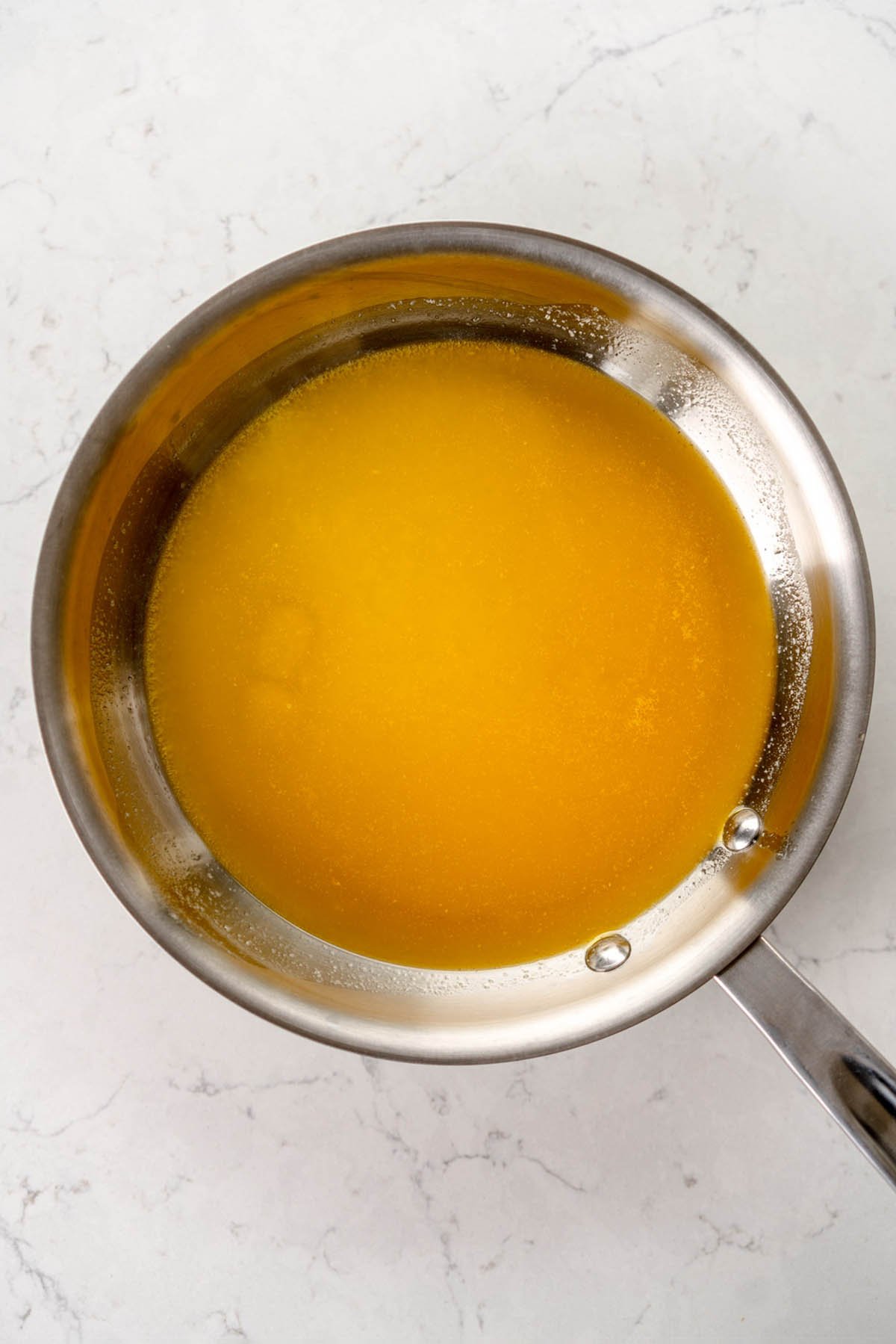
      Filed Under: Base Recipes, Breads, Savoury Breads

      Super Soft White Bread Dough

      risen white bread dough in a bowl

      This super easy White bread dough is the perfect versatile bread dough. It is easy to work with, and a great place to start if you are new to making homemade bread. It can be used for a wide range of recipes, from a basic white bread loaf recipe to parker house rolls. Follow my detailed step by step guide for all the tips and tricks on how to make your own white bread dough! This dough makes enough for two loaves of bread, or 12 bread rolls.

      risen white bread dough in a bowl
      Perfectly risen white bread dough - if you put the plastic wrap on super tight it gives a lovely smooth top to the dough!

      Hi hi! I am just popping in to share this white bread dough recipe with you! This is one of the new base doughs that we will be working with and using as a base recipe for upcoming bread recipes.

      This is a super simple, basic white bread dough that is enriched with a little egg and butter. It is an incredibly versatile base, and gives a soft and fluffy dough that is really easy to work with.

      This white bread dough recipe makes enough dough for two loaves of white bread, or 12-18 parker house rolls, depending on how you size them. I am so excited to keep developing recipes using this base dough!

      Read this post for all the tips and tricks on how to make a super easy white bread dough, then please refer to the specific recipe for shaping and baking instructions on how to adapt this bread dough recipe for different uses.

      risen bread rolls
      This dough makes amazing parker house rolls which can be done in this format
      Baked Parker House Rolls
      Or you can shape them in the more traditional parker house roll format!

      A base dough - white bread dough

      To me, this is the perfect white bread dough recipe - it is super verstaile, and really easy to make. It does not use a Tangzhong method like my milk bread recipe, and instead just relies on the milk and butter in the dough to help keep it supple. This dough is slightly easier to work with in my opinion, while still giving a really fluffy result.

      This recipe makes enough dough for two loaves of white bread, or 12 to 18 Parker house rolls. Because it makes such a good base it will be great for uses in all kinds of recipes, whether you want to do something fancy with it, or just make a great loaf of bread.

      white bread loaves
      Recipe makes enough for two loaves of white bread.

      Ingredients in White Bread Dough

      The ingredients list for this white bread dough is pretty simple, but they all have a dedicated purpose:

      • Milk and water. I use a mixture of milk and water - milk provides amazing moisture. You can use all milk if you like, but I like to use a little water so that I can add boiling water into the milk to quickly bring it to just under room temperature so I don't have to take the milk out before I start making the bread. Make sure that if you do this, you do it before adding the yeast so the hot liquid does not kill the yeast.
      • Sugar. I use granulated sugar. There is only a little in this recipe and it is there to help feed the yeast. A little sugar also helps with browning.
      • Yeast. I use instant yeast for my recipes as it is super easy and doesn't require activating, and the liquids don't necessarily have to be warm (it will just take longer to rise).
      • Milk powder. Instant milk powder makes bread dough super soft and fluffy and also helps to give it a good rise. It also contributes to the dough staying nice and soft after baking for a little longer than a recipe that does not use milk powder. I use full fat milk powder but if you can only find non-fat or skim that works too.
      • Egg. Egg helps to bind the dough and give it structure. I haven't tried making this recipe egg free - you could probably replace the egg with about 30g milk if you wanted to but I haven't tested this myself.
      • Salt. Essential for any bread recipe.
      • Bread Flour. I use a high protein flour for this dough recipe, as it helps to give the dough strength and texture.
      • Butter. This isn't a super enriched dough, but adding a little butter at the end of the mixing process gives a super soft dough and the butter adds a really nice flavour.
      Divided balls of dough
      Dough shouldn't need too much flour when you are working with it on the bench.

      Common Ingredient Questions

      Can I use Active Dry Yeast?
      You can use active dry (the same quantity) if that is all you have - just make sure that your liquids are lukewarm and mix them with the sugar and yeast and leave to sit for 5-10 minutes until foamy to activate the yeast.

      I do not have milk powder - can I still make these?
      It is not essential - if you do not have it, you can leave it out, but I use it in a ton of my recipes and it keeps super well so it is great to have on hand.

      What is Bread Flour?
      Bread Flour is flour that is higher in protein due to it being made from a 'harder' variety of wheat. A high protein flour will give a nice strong dough that is great for a white bread dough recipe like this which uses a soft dough - the strong flour allows the dough to be super soft while still being easy to work with. Bread flour is sometimes called 'high grade' or 'Strong' flour in other countries. I have not tested this recipe with All-purpose flour sorry! It might work but I haven't tried it.

      Can I add gluten to the mixture?
      This is something that I have been playing around with recently. Since moving to New Zealand from the US I have noticed that the flour here is a little lower in protein so makes a slightly stickier, slightly harder to work with dough - this is due to the lower protein content developing less gluten within the dough.

      A way around this is to add some gluten flour to the dough. I have been playing around with adding 2-3% of the flour weight in the gluten flour, so in this case the recipe has 430g of flour so I add in 9g of gluten flour. It does seem to help with the dough extensibility and makes it a little easier to work with / gives a better rise and texture. I just got mine at my local supermarket. This definitely isn't necessary but if you have found that recipes that call for bread flour maybe don't work as well as you were expecting, this could be a good thing to give a try.

      baked loaf of bread in a pan

      How to make white bread dough

      This dough is super easy to make. I use a stand mixer to make mine, fitted with the dough hook. Here are the steps:

      Step 1: MEASURE. Measure out all the ingredients except for the softened butter, which goes in after the dough has developed. I usually use cold milk from the fridge and mix it with the measure of water which I have boiling, which gives me 'cold ish' milk. This means the dough often takes a little longer to rise than written in the recipe so if you need to buy yourself some time you can do this - it only works if you are using instant yeast as active dry needs to be activated before using.

      As always, use a scale here. If you convert the ingredient quantities to cups, you are on your own and I cannot guarantee that your bread dough will work.

      If you use cold ingredients, it will slow down the rising of your dough. I often play around with this / I have made bread so many times that I know by the feel of the dough when it is risen. If you are new, make sure that you have everything at room temperature just so you can follow the recipe as accurately as possible.

      wet ingredients for white bread dough
      See notes in the post for active dry yeast!
      dry ingredients for white bread dough
      Milk powder adds softness to bread.

      Step 2: MIX. The dough goes through a few phases here as you can see in the images below. First it will come together but only just, and look super sticky and shaggy. As you continue mixing, the dough will come together and smooth out, and start to pull away from the edges of the bowl. It may seem like it will not come together but give it some time.

      If your dough is really not coming together, you can add flour a teaspoon at a time until it clears the sides of the bowl. Sometimes this happens - different brands of flour are more or less absorbent, or if it is humid, then the flour may have already taken on some moisture so will be unable to absorb as much. Go by how the dough feels - it is not the end of the world if you have to add a little more flour.

      You will know the dough is developed when it passes the windowpane test which is a test for gluten strength. You want to break off a piece of dough and stretch it between your fingers. If it stretches without breaking and you can see light through the dough, this means that it is developed enough and you can add the butter. Seeing the dough pull away from the sides of the bowl is the best visual cue though.

      shaggy bread dough after mixing
      About 2 minutes of mixing in
      mixed bread dough
      Developed dough after 8 minutes

      Step 3: BUTTER. There is a reason that the butter does not go in at the start of the recipe with all the other ingredients.

      We want to give the dough a chance to develop first before we introduce the fat to the dough. Fat coats the flour particles, and so will prevent the formation of gluten and the dough won't be as easy to work with. By adding it once the dough is developed, it helps significantly with dough strength.

      Once the dough is done, turn it out onto a work surface and shape into a ball. I usually don't need any extra flour, but if you do that is fine too.

      bread dough with butter added
      Dough once butter has been added - it is much more glossy.
      bread dough ready to be risen
      Shape the dough into a tight ball before placing in the prepared bowl.

      Step 4: RISE. This first step is called 'bulk fermentation' - when the dough is all together in a bulk. There are two ways to rise your dough - either a room temperature rise, which is much quicker, or if you want to work ahead, you can do the first rise in the fridge overnight or for a couple of hours.

      The fridge rise is a great way to get a little ahead of yourself. The cold temperature of the fridge slows down the rising process of the dough, which means that it gets a longer, slow rise rather than a fast room temperature one. For a dough like this it does not matter which one you do in terms of flavour, it is more about convenience.

      I often prefer to do a room temperature rise as I am often making bread on the same day that I need it, however it is super helpful to know that a fridge rise works too. I have tested it and it works great - you just need to leave the white bread dough out for about 10 minutes before you put it into the fridge to give it a good chance to kick start.

      Once you are ready to use the dough, let it stand for about 30 minutes to come to room temperature so that it is easy to work with.

      parker house rolls ready to rise

      How do you tell when dough is risen?

      When your white bread dough is risen, it will have doubled in size and will be super puffy. I like to test this with the finger poke test - lightly flour your finger and poke the dough. If it is ready to be used, it will leave an indent that slowly springs back. This is harder to gauge with a fridge rise but if it has been in the fridge overnight it will be fine to use.

      If you are having a hard time seeing what doubled in size is, place the dough into a clear rectangle or square container and mark on the side where it comes up to, so you can see how much the dough changes as it rises.

      bread dough out of the fridge
      This is what the bread dough looks like after 15 hours in the fridge. It isn't as smooth as a room temperature rise but do not worry - it still baked up fine.

      How long can bread dough stay in the fridge?

      I usually try to not leave an enriched dough like this which has a higher proportion of yeast in it in the fridge for longer than 24 hours.

      For a higher hydration dough like my ciabatta dough or my focaccia dough I have left it in the fridge for up to three days, however the dough has a lower ratio of yeast to flour than this white bread dough.

      If you do leave the dough in the fridge for too long it may still be ok, but just know that your bread probably won't be as light and fluffy as a properly risen dough.

      dough in bowl ready to rise
      Dough ready to rise - at this stage it can have a room temp or fridge rise.
      risen white bread dough in a bowl
      Fully risen dough, ready to be used for your project.

      Can I freeze bread dough?

      I haven't tried it sorry. I haven't had much luck in the past with freezing bread dough, I may give it a go in the future but I prefer to freeze the baked bread rather than the dough. It is soft enough that the frozen bread thaws and reheats super well!

      Can this recipe be doubled?

      Yes - I have doubled it a ton when I was testing it and all the different variations! I use my stand mixer and it works just fine - the first mixing step may take a few minutes longer so just keep that in mind

      Do I need a stand mixer to make this recipe?

      I haven't tested making this by hand yet and will update this post when I do, but it may work, it will just be a workout. If you are worried about the dough being too sticky, then you can hold back about 20g of the milk so the dough is a tiny bit less hydrated. I have tested my small batch dinner roll recipe by hand though and it works great!

      two shapes of parker house rolls
      Parker House Rolls two ways - each made with one batch of white bread dough.

      Frequently Asked Questions

      What tools and equipment do you use?
      You can find a full list of the tools and equipment I use on my products page

      Can I make this recipe Gluten / Dairy / Egg free?
      I don't know sorry - I have not tested it. I doubt gluten free would work though as this dough heavily relies on the gluten formation. I would look for a specialised gf recipe.

      white bread dough ready to be shaped
      Dough ready to be divided
      end shot of sliced bread
      Super fluffy, perfect white bread!

      ❤️ Made this recipe and love it? ❤️

      I would LOVE for you to leave me a review and star rating below to let me know how you liked it! Also, please make sure to tag me on Instagram!

      Answers to your baking questions

      Over the years, many of you have asked me questions about:

      • baking in grams
      • adjusting oven temperatures
      • what kind of salt to use
      • and many more!

      I've curated and answered them all for your easy reference in this frequently asked questions post!

      Filed Under: Base Doughs, Base Recipes, Breads

      Soft and Chewy Foolproof Caramel Candy

      pieces of caramel with salt on top

      If you've never made candy at home before - this recipe for easy homemade caramels is the perfect place to start. These caramels are soft and chewy, and finished with the perfect amount of salt. Use them to stuff into a cookie or a brownie, or wrap to give as homemade gifts. This post is packed full of tips and tricks to walk you through making your own homemade caramel candies.

      caramel candies on parchment paper
      I love sprinkling my caramel with flaky sea salt before eating.

      Hi hi! I am just popping in to share this easy homemade caramel recipe with you! If you haven't made homemade candy before, these easy caramels are a great place to start.

      These caramels are soft and chewy, and are perfect as-is, or you can use them in baking - I use them to stuff inside my caramel stuffed chocolate cookies, or to dot over brownie batter for the most amazing caramel brownies.

      Homemade caramel lasts super well, so they are great to make ahead and keep in the fridge, or to wrap in wax paper for a more traditional caramel candy and give as gifts.

      caramel with bite taken out of it
      Caramels are super chewy and the most amazing texture!

      Homemade Caramels

      These caramels are super soft and chewy. I have used this base recipe a ton of times but never actually made it into a stand alone recipe.

      This recipe makes a soft caramel as opposed to a hard caramel like the one that I use in my salted caramel cookies which is made from using melted sugar. The softness comes from the ratios of ingredients - condensed milk and butter help to soften the mix to give perfectly chewy, delicious caramels.

      Ingredients in homemade caramels

      The ingredients list for these caramels is super simple, and likely things that you already have at home:

      • Butter. You can use either salted or unsalted here depending on what you have on hand. If you use salted, you can either drop back the salt quantity in the recipe slightly or leave as is - salty caramel is delicious.
      • Condensed milk. Condensed milk gives texture to the caramel - it helps to make it super smooth and keep the chew when it reaches a high temperature.
      • Brown sugar. We are going for as many toasty flavours as we can here, which is why I use brown sugar instead of white for my homemade caramels.
      • Golden Syrup. This is one of my favourite ingredients because of how delicious it is and the amazing flavour it gives to things. It's very easy to get in New Zealand and some other countries, when I lived in the US I used to get it online. It helps to stop crystallisation in the caramel.
      • Salt. Essential to offset all the sugary components of the caramel. Make sure you salt well and if you find the caramels are not as salty as you like you can sprinkle them with a little flaky sea salt after cutting.
      • Vanilla. I like to use vanilla bean paste but vanilla extract works well too. It adds the most amazing flavour to the caramels.

      What is golden syrup?

      Golden syrup is an invert sugar syrup that is a by-product of the sugar making process. It is thick and smooth, and has a delicious toasty flavour. I highly recommend getting some to use if you haven't before, but if you can't get hold of some, you can use corn syrup or liquid glucose in the place of it.

      If you do get golden syrup and you are looking for ways to use it up, I have a whole lot of golden syrup recipes for you to browse!

      Ingredients for homemade caramel
      Ingredients for homemade caramels - brown sugar, butter, golden syrup, condensed milk. Salt and vanilla go in after the caramel is cooked.

      Do I need to use a Thermometer?

      Yes - a thermometer is essential when you are making homemade caramel candies. I use a digital thermometer (I have a thermapen but there are loads of others available online!) which I find works best as it gives a super quick result. Cooking the caramel either under or over the correct temperature will result in it either not setting enough, or being too hard, so using a thermometer to ensure that you get the right result is necessary.

      If you don't have a thermometer, I haven't tested any other alternatives sorry. They are a great thing to own!

      Important - when you are measuring the temperature of your cooking caramel - make sure that the probe of the thermometer is in the middle of the caramel. If it is accidentally touching the bottom of the pot, it will give a falsely high reading and your caramel may not set.

      How do you store caramels?

      The great thing about making homemade caramel is that it stores super well for a long time. Keep it in an airtight container and store in the fridge for up to a month. If I am not wrapping it in wax paper I store it with pieces of wax paper between each layer to prevent sticking.

      set caramel in a pan
      Binder clips keep everything held down
      close up of sliced caramel with salt
      Super sharp knife = nice clean cuts

      What is the best way to wrap caramels?

      If you want to wrap your homemade caramels in the traditional candy style, you can use squares of wax paper. I purchased mine pre-cut, but you can also just cut squares of paper if you like. Mine are 6" squares, but play around with sizing depending on what you think looks best.

      How to get clean cuts on caramel

      I cut my caramel into little pieces - I did an 8x4 grid in the pan. You can cut them into any shape that you like - I use squares for my caramel stuffed cookies, or smaller pieces for my caramel brownies.

      The best way to cut the caramels is when they are cold from the fridge. Use a super sharp knife, and mark out your cuts before you make them. I find it easiest to cut the whole pan into strips first with vertical cuts, then make the four horizontal cuts.

      corner shot of cut caramels

      Homemade Caramels Troubleshooting

      Your caramel is too hard

      It is likely that you took the mixture past the 240° / 120°c stage, which is called the firm ball stage in candy making. You want to make sure that you very carefully measure the temperature of your caramel when you are cooking it. This is still usable although it will be more like a toffee texture than a caramel - cut it into tiny bits and add to cookies or ice cream.

      Your caramel is too soft

      The opposite happened here and you didn't bring it to temperature. Read the notes on the recipe to make sure you are using your thermometer correctly.

      You are starting to get little brown bits in the caramel as it cooks

      This is ok - it is just little bits of the caramel that are cooking faster than the rest. Turn the heat down and take it slow if you need to - slide the pan off the heat and stir well and make sure you're scraping the bottom well. I like to use a rubber spatula for this reason.

      My Caramel is taking FOREVER to reach temperature

      This happens. The caramel will get to a certain point, then it feels like it takes forever to get to temperature. Just be patient here - it is really important that you take it up to the correct temperature in order for it to set.

      caramel wrapped in paper
      wrapped caramels in a jar

      Frequently Asked Questions

      What tools and equipment do you use?
      You can find a full list of the tools and equipment I use on my products page

      Which pan did you use?

      I set these in an 8" square pan, with parchment extending over the sides to make sure that I could easily remove the caramel once set.

      Can this recipe be doubled?

      Yes, but make sure that you watch it carefully. As the caramel is cooking if you feel like it is going too fast, move it off the heat for a bit. Make sure you use a thermometer and watch carefully. You can either set the mixture in two 8" pans or use the pan size of your choice - just be aware that if you use a different pan your caramels may be a different thickness.

      What can I use this caramel for?

      Giving it as gifts as is is amazing but I have also incorporated it into a few recipes - caramel stuffed cookies, caramel chunk brownies, or it is amazing stirred into my rocky road recipe.

      pieces of caramel with salt on top

      For more recipes using homemade caramel, check out:

      • broken open cookie with caramel
        Easy Caramel-Stuffed Chocolate Cookies
      • pieces of caramel brownie on a wire rack
        Caramel Brownies
      • Brown Butter Salted Caramel Tart
      • top down shot of brownie caramel slice
        Caramel Brownie Bars

      ❤️ Made this recipe and love it? ❤️

      I would LOVE for you to leave me a review and star rating below to let me know how you liked it! Also, please make sure to tag me on Instagram!

      Answers to your baking questions

      Over the years, many of you have asked me questions about:

      • baking in grams
      • adjusting oven temperatures
      • what kind of salt to use
      • and many more!

      I've curated and answered them all for your easy reference in this frequently asked questions post!
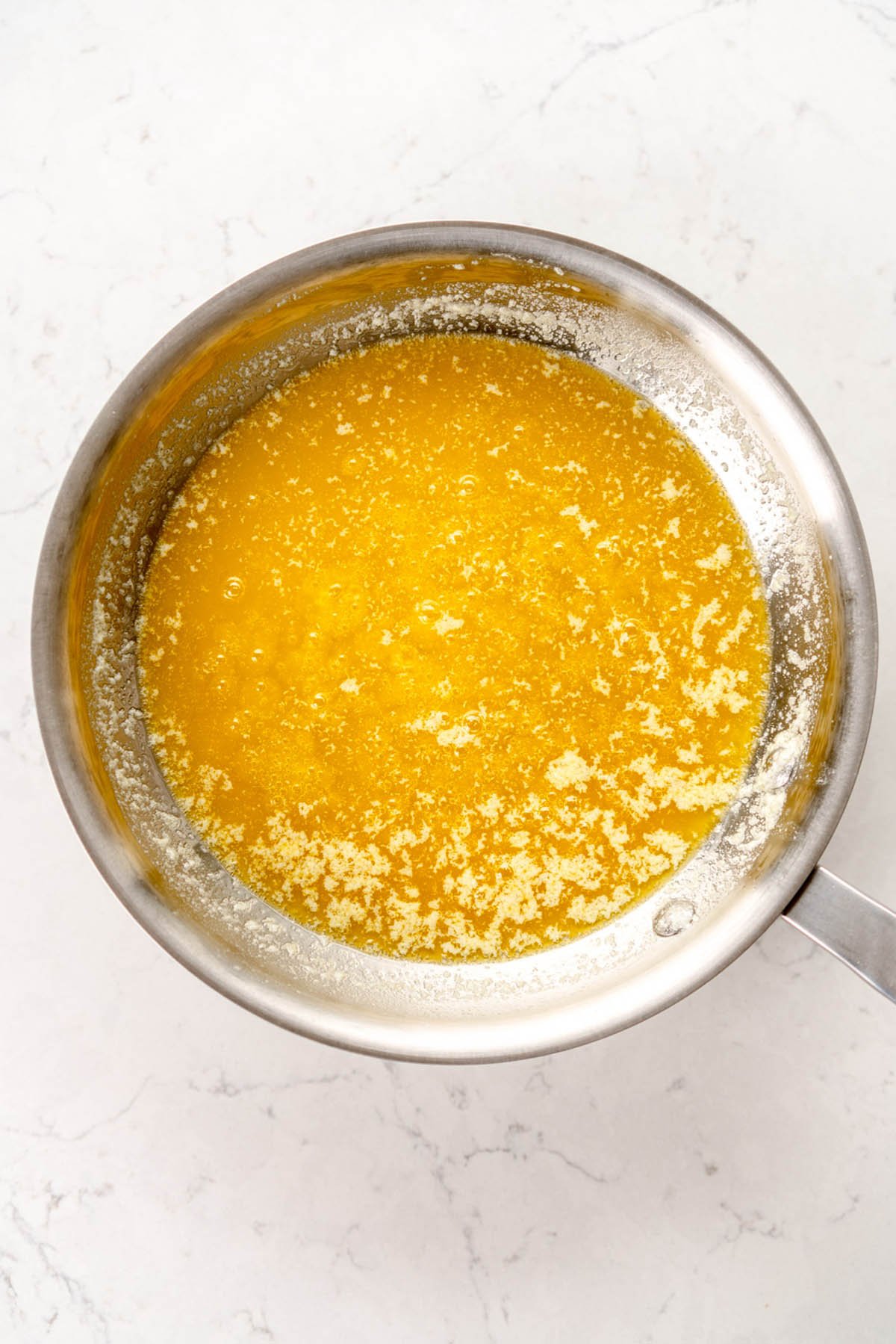
      Filed Under: Other Sweets

      Chewy Brown Butter Blondies

      sliced up blondie with white chocolate on top

      My easy homemade brown butter blondies can be made in about 45 minutes. These chewy blondies are full of brown butter flavour and white chocolate chips, and have a classic crinkly top. They are the perfect versatile recipe!

      blondie with bite taken out
      I make my blondies with caramelised white chocolate, but use whatever you like!

      Hi hi! I am just popping in here to share this easy blondie recipe with you! I have a ton of brownie recipes on my site, but haven't gotten around to sharing a blondie recipe with you yet, so here we are!

      These blondies are super easy to make. I riffed off of my white chocolate chip cookie recipe, and then adjusted from there to get the texture and finish that I wanted. I had to go through a few recipe tweaks to get them just where I wanted them, but we got there in the end - a perfectly buttery blondie, filled with brown butter flavour and packed full of white chocolate chips. It's slightly fudgy in the middle, and just so delicous.

      Wet ingredients for blondie recipe
      Brown butter, sugars, and egg
      Dry ingredients for Blondie Recipe
      Add dry ingredients and only just mix

      What are Blondies?

      A blondie is a 'blond brownie', so instead of having a chocolate flavour, it is more of a brown sugar, vanilla, butter forward situation.

      To me, a blondie is honestly super similar to a cookie bar in that they have the same method. It's a six of one, half a dozen of the other kind of a thing as far as I'm concerned. If you look at my chocolate chip cookie bars recipe you'll see that they are super similar. I'm always down for more delicious bar recipes though, especially when they are this easy, so I'm certainly not complaining.

      For these blondies I wanted to really drive home the taste of brown butter and brown sugar which gives almost a butterscotch kind of taste. You get a bit of a crackly top from whipping the sugar and eggs together, and only just baking them gives the most amazing dense and fudgy inside. Just try them. It's worth it.

      side on shot of blondie with chocolate chips
      Make sure to only just bake your blondies for that perfect interior texture

      Tips and tricks for the best blondies

      While these blondies are super easy to make, there are a few tips and tricks for the best outcome possible.

      • Brown the butter. When possible, I almost always brown the butter, especially in situations like these blondies where you're not adding cocoa powder or melted chocolate, so you really want a great depth of flavour. I tried adding milk powder the brown butter to really amp up the flavour like I did in my oatmeal chocolate chip cookies, but found it affected the texture quite a lot.
      • Don't over mix. When you are mixing up your blondie batter, make sure you don't over mix it. Mix in the dry ingredients until they are just combined, then add your chocolate and finish off mixing to combine. Mixing too much will start to develop gluten, which can make them a little tough.
      • Use good chocolate. Good quality is the aim of the game here. Use a chocolate that you would be happy eating. I used a caramelised white chocolate (I used Whittaker's blondie), but chopped white chocolate of your choosing would be great.
      • Don't overbake. This is crucial for a nice fudgy, dense, blondie. You want to make sure that you don't overbake them. If anything, slightly underbaking them is best. You want to pull them from the oven when the top of the blondie is set and the edges are just starting to firm up.

      I know that making brown butter can be intimidating. Don't be scared, I will hold your hand the whole way through in my post and you'll be nailing it in no time: Brown Butter 101: The Ultimate Guide

      How do you get the crinkly top on blondies?

      The crinkly top that comes on a lot of brownie recipes can be achieved here too. I go in depth on this in my homemade brownies post but it comes down to really whipping together the butter and sugar and egg mixture so that the sugar starts to dissolve.

      In the blondies in the pictures I didn't quite get the crinkly top that I was after because it was the middle of winter and I was baking them in my garage while we were renovating, so in the time I stopped to take a few pictures my butter had cooled a bit. But if you want that nice crinkly top, make sure that you really whip the butter, egg, and sugar together in the first step of the recipe. I usually do it by hand with a whisk but if you would like to use an electric hand mixer that's fine too.

      chocolate chips in blondie batter
      Add chocolate while you still have a little dry ingredients to be mixed in
      blondie batter ready to bake
      This avoids over mixing, which can lead to tough blondies.
      brownie batter in pan
      Parchment paper for easy removal
      baked blondies in pan
      Add additional chocolate on after baking.

      5 Star Reader Review

      “I used chunked up leftover white chocolate Kit Kats from Halloween and that worked out well. Soft and chewy and a big hit. I will make these again and again.”

      —Marji
      Read more reviews »
      blondie recipe test
      Initial test where I left out the chocolate - result was super cakey and not what I was after at all.

      Can these blondies be made without chocolate?

      In my initial test I made this recipe without chocolate in it - I used my white chocolate chip cookie recipe as a base and turned it into a blondie recipe by reducing the leavening and pressing the batter into a pan.

      It turned out super cakey, and even with increasing the butter in the recipe, I found that It was hard to fix this issue.

      I tried it again with the chocolate added in and it made a huge difference - the moisture from the chocolate makes much more of a difference than you think. You can see in the image below the difference in texture. The main change between this recipe test and the final version was adding chocolate.

      sliced brown butter blondie
      Sharp Knife = nice clean cut on the blondies.

      How to get a nice clean cut on blondies

      I get asked this all the time - how I get a nice clean cut on my baked goods, especially my brownies.

      The main trick is to make sure the blondies are fully cooled - if I'm taking photos for the internet I will put them into the fridge (I know, the scandal), so that they are nice and solid to cut up. I don't usually do this if I'm just making them to have at home because I prefer a blondie at room temperature rather than chilled like I do a brownie (IYKYK).

      The second trick is to use a super sharp knife. Be decisive with your cuts, and wipe the blade in between cuts. I often use a ruler to measure them if I'm shooting them for the internet, you definitely do not need to worry about that if you're not.

      close up shot of blondies
      Chopped chocolate gives a super delicious range in sizes of chocolate pieces.

      ❤️ Made this recipe and love it? ❤️

      I would LOVE for you to leave me a review and star rating below to let me know how you liked it! Also, please make sure to tag me on Instagram!

      Answers to your baking questions

      Over the years, many of you have asked me questions about:

      • baking in grams
      • adjusting oven temperatures
      • what kind of salt to use
      • and many more!

      I've curated and answered them all for your easy reference in this frequently asked questions post!
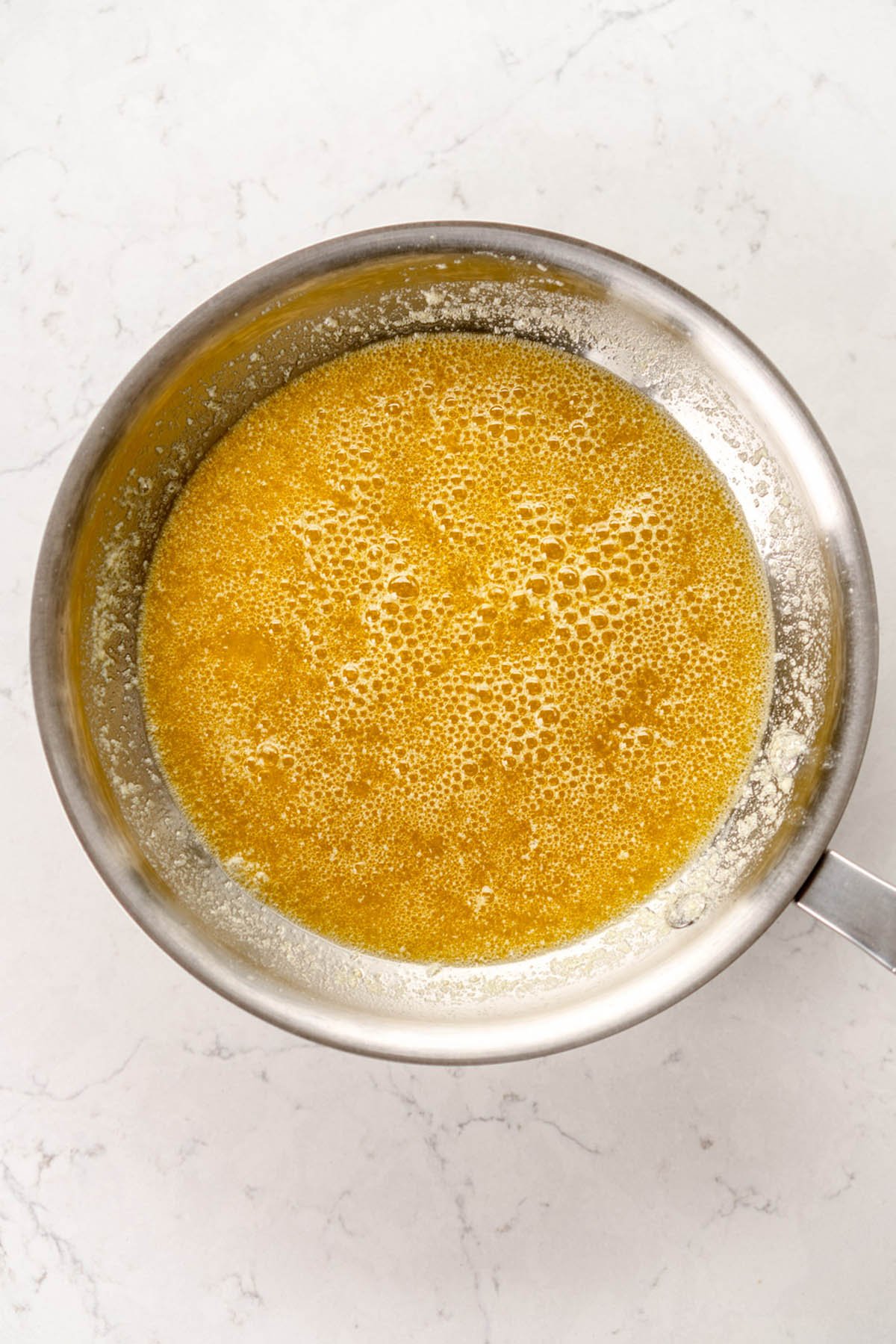
      Filed Under: Bars and Slices, Brownies, Holiday Cookies, Other Cookies, Other Sweets

      Brown Butter Oatmeal Raisin Cookies

      oatmeal raisin cookie on parchment paper

      My Soft and Chewy Oatmeal Raisin Cookies are super simple to make and come together in about 30 minutes. Packed full of raisins and toasted oats along with plenty of brown butter, these cookies store for up to a week and are great for gifting or mailing!

      oatmeal raisin cookie on parchment paper

      Hi hi! Just popping in to share this Oatmeal Raisin Cookie recipe with you! These came about when I went down an Oatmeal Cookie rabbithole and decided I needed to make all the versions because we love options! I started with my Oatmeal Chocolate Chip Cookie recipe, moved onto my super easy Peanut Butter Oatmeal Cookies, and now we are here with an Oatmeal Raisin Cookie recipe!

      These oatmeal raisin cookies are a bit more chunky than their cookie siblings - I wanted a cookie that was a bit more substantial. They bake up nice and thick, and are filled with flavour from super brown butter, and texture from toasted oats and lots of raisins.

      They are a really easy cookie to make - no mixer needed, and store really well - I have eaten them up to a week after making them and they are still just as good. We love.

      ball of cookie dough
      oatmeal raisin cookie batter

      What makes these Oatmeal Raisin Cookies Special

      I think that Oatmeal Raisin cookies can get a bit of a bad reputation, and that is because people think that raisins aren't that exciting. If you actively don't like them then that's fine, but I think properly dressed up, raisins are epic. Here's how I did it:

      • Brown Butter. I used the same method that I did in my Oatmeal Chocolate Chip cookies where I added in milk powder when I browned the butter. I go super in depth on the method on that post if you want to read more about it!
      • Toasted Oats. Crucial for texture. This is an optional step but it only takes 10 minutes and toasting the oats gives an amazing chewy texture to the cookie which goes so well with the raisins.
      • Cinnamon. Just a little bit. Just to give some depth, and cinnamon and brown butter are besties.
      • Large Cookies. These Oatmeal Raisin Cookies are large and chunky - the recipe makes about 10 large cookies. This gives a slightly crispy edge and a nice soft middle - they are thick and chewy and just how I like them.

      I know that making brown butter can be intimidating. Don't be scared, I will hold your hand the whole way through in my post and you'll be nailing it in no time: Brown Butter 101: The Ultimate Guide

      What are the best oats to use for Oatmeal Raisin Cookies?

      I like Old fashioned oats for making oatmeal cookies as they provide the best texture. They are the kind where you can see the whole oat but it is just squished flat - sometimes they are called 'whole grain oats' or 'traditional' oats depending on where you are.

      I haven't tested this recipe with rolled oats or quick cooking oats sorry. It might work ok with rolled oats but I think that quick cooking oats would make things too gluggy.

      I like to toast my oats briefly in the oven before using them for cookies. It gives them a toasty flavor and an extra chewy texture, which goes so well in cookies.

      I like to do this step while I am browning the butter so that the oats are cooled by the time I am ready to use them, however if you are making cookies a lot that use toasted oats, you can do a whole bunch at once and store them in an airtight container.

      toasted oats
      baked oatmeal raisin cookie on sheet pan

      Recipe Development for Oatmeal Raisin Cookies

      Like my other oatmeal cookie recipes, I started with my Oatmeal Chocolate Chip Cookie as a base when I was developing this recipe.

      I didn't make that many changes - I found that because raisins don't melt like chocolate does, the cookie had a lot more substance and baked up a little thicker, and I just increased the flour a touch and decreased the butter used in the recipe to make them bake up just a little bit thicker than the oatmeal chocolate chip.

      I also left out the malted milk powder - while it goes great with chocolate, I was worried it might get a bit weird with raisins. If you wanted to add it, you can add in 45g worth without making any other changes to the recipe.

      ingredients for oatmeal raisin cookies
      raisins in oatmeal raisin cookie batter

      Can I freeze the dough for Oatmeal Raisin Cookies?

      I tried freezing the dough for these oatmeal raisin cookies, and it didn't work that well. When it came to baking the dough from frozen, even though I dropped the oven temperature (I write a lot about this in my how to freeze cookie dough post), they baked up like little boulders.

      I need to try again and maybe defrost the cookie dough before baking, but for now your best bet would be to freeze the baked cookie itself - place in an airtight container for up to 3 months then defrost at room temperature. I like to warm briefly before eating if I have defrosted a cookie.

      side on shot of oatmeal raisin cookies

      ❤️ Made this recipe and love it? ❤️

      I would LOVE for you to leave me a review and star rating below to let me know how you liked it! Also, please make sure to tag me on Instagram!

      Answers to your baking questions

      Over the years, many of you have asked me questions about:

      • baking in grams
      • adjusting oven temperatures
      • what kind of salt to use
      • and many more!

      I've curated and answered them all for your easy reference in this frequently asked questions post!
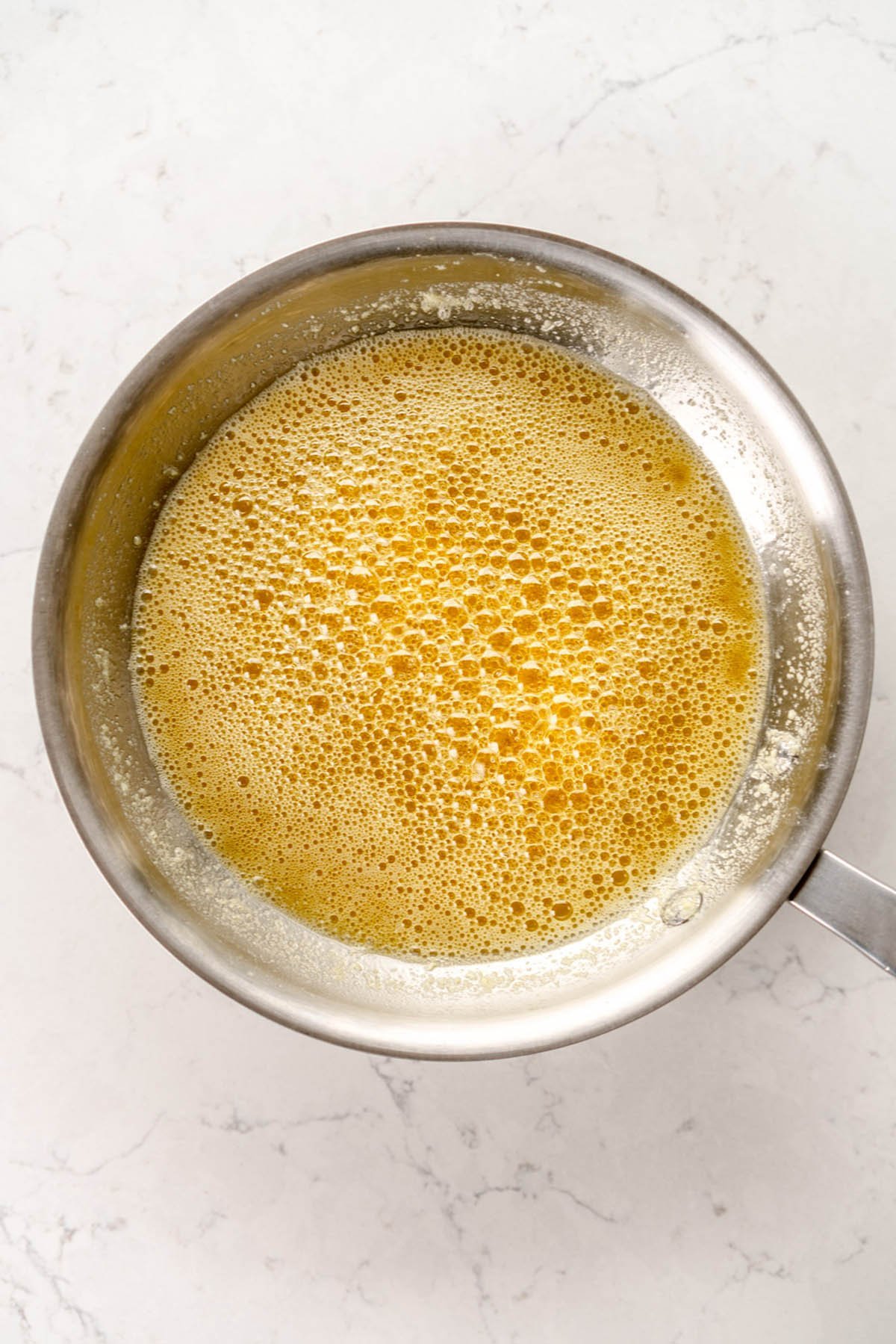
      Filed Under: Cookies, Holiday Cookies, Other Cookies

      Soft and Chewy 30 Minute Peanut Butter Oatmeal Cookies

      peanut butter oatmeal cookie

      These Peanut Butter Oatmeal Cookies are super soft and chewy, and filled full of toasted oats and peanut butter. There is no chill time in the recipe, so you can have these ready to go in about 30 minutes!

      peanut butter oatmeal cookie with bite taken out

      Hi hi! I am just popping in to share this Peanut Butter Oatmeal Cookie recipe with you! I developed these when I went down an Oatmeal Cookie recipe rabbithole, which started with my Oatmeal Chocolate Chip Cookie recipe. It was such a good base recipe that I couldn't help myself and had to add in some peanut butter, which was a very good idea.

      These peanut butter oatmeal cookies are soft, chewy, and packed full of flavour. They start with a brown butter base, then we add toasted oats, loads of peanut butter, and malted milk powder. There is zero chill time so you can have them ready to go in about 30 minutes!

      I love a large cookie so I made them huge, but you can easily scale back if you need! They keep for up to a week in an airtight container. Promise you'll love them. If you're after a raisin situation, check out my Oatmeal Raisin Cookies too which were also part of the oatmeal cookie rabbithole!

      ball of scooped cookie dough
      baked oatmeal cookies on a rack

      My Best Peanut Butter Oatmeal Cookies

      There are a few things that make these, to me, the ultimate peanut butter oatmeal cookie:

      • Soft and Chewy. I wanted a cookie that was on the thicker side, but super soft and chewy. We got there by playing around with the sugar ratios, and adding enough butter so that they spread nicely without getting too thin.
      • Brown Butter. I put brown butter in so many things. It's just the best, it gives the most amazing flavour to recipes, especially cookies. If you want more recipes using it, I have lots of brown butter recipes for you!
      • Toasted Oats. I used this technique in my Oatmeal Chocolate chip cookie recipe and loved how it gave the cookies texture, so I used it again for the peanut butter oatmeal. You don't have to toast them, but it's worth it, promise.
      • Malted Milk. Malted milk is best friends with peanut butter and brown butter. This is an optional ingredient and if you don't have it you can leave it out as it is a flavour enhancer rather than a thickener, but it's so good!

      I know that making brown butter can be intimidating. Don't be scared, I will hold your hand the whole way through in my post and you'll be nailing it in no time: Brown Butter 101: The Ultimate Guide

      toasted oats
      ingredients for peanut butter oatmeal cookies
      batter for peanut butter oatmeal cookies

      Cookies with malted milk powder

      Malted milk powder is a milk powder based product with a few other ingredients added too - it was originally formulated to help babies with digestion. It works particularly well in this recipe as it goes so well with the peanut butter.

      You can get malted milk powder online - in NZ I use Horlicks from the supermarket. It tastes slightly different but you get the same outcome - very delicious cookies.

      If you do not have malted milk powder on hand you can just omit it from the recipe - it is a flavour enhancer and doesn't change the texture of the recipe so you can just leave it out.

      Toasted Oats

      This is another optional step - toasting the oats. This just gives them a bit more of a toasty flavour, adding amazing depth into the peanut butter oatmeal cookie. It only takes about 10 minutes - I like to do it while I brown the butter so that they can cool while I do the first part of making the peanut butter oatmeal cookie batter.

      If you are wondering what the best sort of oats are to use in Oatmeal cookies - I like Old Fashioned Oats. These are the ones that are just squished regular oats - so not a quick cooking oat or a rolled oat. They provide the best texture in my opinion.

      I haven't tried them with quick oats or rolled oats sorry - I would stay away from quick cooking if I were you. They will get really gluggy.

      stacked peanut butter oatmeal cookies

      How to freeze Peanut Butter Oatmeal Cookies

      There are two ways of going about this:

      • Freeze the baked cookies. Once the cookies are totally cool, freeze in an airtight container for up to a few months. Defrost at room temperature - they will benefit from a little refresh in the microwave before you eat them.
      • Freeze the cookie dough (my preferred method). Place the dough on a parchment paper lined baking sheet and freeze until solid, then transfer to an airtight container. When you bake from frozen, drop the oven temperature to 325°f / 160°c and add a few minutes onto the bake time.

      For all my tips and tricks on freezing cookie dough and cookies, check out my post: How to freeze cookie dough and bake from frozen

      baked peanut butter cookie on pan
      rack of peanut butter oatmeal cookies

      Recipe Development for Peanut Butter Oatmeal Cookies

      The recipe development for this oatmeal cookie series wasn't too tricky once I nailed down my oatmeal chocolate chip cookie. I started with that recipe as the base and made a few changes:

      • Removed the chocolate. Obvious step.
      • Kept the brown butter. However, I removed adding in the milk powder like you do in the chocolate chip cookies. Because of the peanut butter, the brown butter, toasted oats, and malted milk powder already do a ton of flavour work.
      • Played around with sugar ratios. Initially when I made these, I used the same ratios as the chocolate chip oatmeal recipe, but changed to have a higher ratio of white sugar to give spread and chew.
      • Spread. The initial test didn't spread as much as I would have liked - they baked up as rocks. They were still delicious but I knew something needed to change, so I reduced the amount of peanut butter (the original test had 200g), dropped the amount of flour I was using, and increased the oats in the recipe. This, combined with changing the ratio of white to brown sugar, sorted it out straight away and gave me perfect, soft and chewy peanut butter oatmeal cookies.
      ball of cookie dough

      ❤️ Made this recipe and love it? ❤️

      I would LOVE for you to leave me a review and star rating below to let me know how you liked it! Also, please make sure to tag me on Instagram!

      Answers to your baking questions

      Over the years, many of you have asked me questions about:

      • baking in grams
      • adjusting oven temperatures
      • what kind of salt to use
      • and many more!

      I've curated and answered them all for your easy reference in this frequently asked questions post!

      Filed Under: Cookies, Holiday Cookies, Other Cookies

      30 Minute Oatmeal Chocolate Chip Cookies

      These well-tested soft and chewy Oatmeal Chocolate Chip Cookies are quick and easy to make and come together in about 30 minutes! Packed full of toasted old fashioned oats, brown butter and milk powder (a magical single ingredient that amps up the flavor of brown butter!), these are my go-to oatmeal chocolate chip cookies! This post is packed with helpful tips and tricks to help you bake these cookie beauties at home.

      finished baked oatmeal chocolate chip cookies

      Hi hi! I am just popping in to share this oatmeal chocolate chip cookie recipe with you! These took a ton of tests and tweaking to develop, but I am so happy with the final product.

      I wanted a super easy oatmeal chocolate chip cookie recipe that packed a punch, but didn't need a chill time or any fancy equipment. Enter this recipe - it is a soft and chewy oatmeal cookie, with slightly crispy edges. They are super toasty thanks to the brown butter and malted milk powder, and are stuffed with chocolate chunks. These oatmeal chocolate chip cookies keep for up to a week in a container, making them the perfect cookie to have on hand.

      If you love Oatmeal Cookies try these too:

      • For a dairy free version: Try my Oatmeal Chocolate Chip Cookies made with oil! Readers have also made these GF and egg free and left really helpful reviews.
      • Peanut Butter Lover? My Peanut Butter Oatmeal Cookie recipe is SO GOOD.
      • A Classic Oatmeal Raisin but better: I am hooked on these Oatmeal Raisin Cookies. They are chonky, full of raisins, and just so good.
      • Iced Oatmeal Cookies: These took me over 20 recipe tests to get right, but I am so happy with my Iced Oatmeal Cookie recipe!

      scooped cookie dough
      I use a #24 scoop to scoop my cookies, which gives 12 large cookies.

      Flavour packed Oatmeal Chocolate Chip Cookies

      I played around loads with this oatmeal chocolate chip cookie recipe during the recipe testing process - they are great and a super easy recipe, but I knew I could pack them full of flavour and texture to make a really good oatmeal cookie. Here's what I ended up with, there are notes in each section on if you don't have these ingredients / don't want to bother with these steps (but I think they are all very worth it. I wouldn't waste your time for no reason.)

      • Brown butter with added milk powder. Brown butter is amazing. Adding milk powder to the brown butter makes it mega toasty and mega delicious. More on this further down the post because it's a game changer of a technique.
      • Toasted Oats. This is an optional step, but toasting the oats adds another level of flavour, but also gives them a slight crunch and chew in the cookie dough which is so delicious.
      • Malted Milk Powder. Again - optional, but malted milk powder adds an amazing dimension to these oatmeal chocolate chip cookies.
      • Espresso Powder. If you don't have espresso powder, fine instant coffee works great too, or you can leave it out completely. Adding espresso powder adds dimension to chocolate flavour in recipes.
      melted butter with milk powder
      Add the milk powder to the melted butter
      browned butter with milk powder
      The result - amazingly toasty butter!

      Brown Butter Oatmeal Cookies - adding milk powder to butter?

      I LOVE brown butter. It is my go to for almost everything - you can see in my little brown butter recipes collection that I have. I love that it adds deep flavour to a recipe without needing any extra ingredients.

      There is however, a way to amp up the flavour of brown butter - adding milk powder. The process of browning butter involves cooking the milk solids in the butter until they brown - hence the name brown butter.

      Adding milk powder means that you increase the amount of milk solids in the butter mixture, meaning more browned milk solids = even more toasty brown butter flavour. You add it in just after the butter is melted, and then brown butter the regular way. Make sure you stir frequently as the milk solids have a tendency to clump.

      I used whole milk powder, if you can only find non-fat that should work ok too! I use it in a lot of recipes - it adds amazing softness to bread recipes, and it lasts a really long time stored in an airtight container. It's a great ingredient to have on hand.

      If you do not have milk powder you can leave it out - but please note that you will only need to measure out 100g of brown butter for the recipe, as the extra 20g in the 120g called for in the recipe comes from the added milk powder.

      Toasted oats
      Toasted Oats = flavour and texture. This is an optional but worth it step.
      Dry ingredients for Oatmeal Chocolate Chip cookies
      Dry ingredients for cookies - I usually mix these by hand.

      Toasted Oats for texture

      Oatmeal chocolate chip cookies are great. Oatmeal chocolate chip cookies with toasted oats are AMAZING. Toasting the oats for just 10 minutes in the oven before you use them in the recipe dries them out slightly and turns them lightly golden brown, which adds an amazing nutty flavour and great texture to the cookie.

      This is a totally optional step, if you don't want to toast the oats you can just use 100g Old fashioned oats in the recipe. Make sure that if you do toast them, you weigh them after toasting as they can lose some moisture in the oven - top back up to 100g worth of oats if needed.

      If you wanted to bulk toast oats to have on hand if you bake a lot, just do a bunch at once on a large pan, then store in an airtight container.

      mixed brown butter ingredients
      Whip together sugar and butter until thick and lightened in colour
      Mixed oatmeal cookie dough
      Add the mix-ins when there is still flour remaining to avoid over mixing

      How to freeze Oatmeal Chocolate Chip Cookies

      There are two options here for freezing your oatmeal chocolate chip cookies:

      • Freeze the baked cookies. I often do this when I am recipe testing and have too many on hand - I pop the baked cookies into an airtight container or ziploc bag and then freeze. To defrost frozen cookies just leave them at room temperature. I find slightly warming defrosted cookies helps a lot with texture before eating them too.
      • Freeze the dough. This works great too - scoop the cookie dough out and then place onto a lined sheet pan and freeze. Store in a ziploc bag. To bake from frozen, reduce the oven temperature to 325°f / 160°c and add a few minutes to the baking time.

      For all my tips and tricks on freezing cookie dough and cookies, check out my post: How to freeze cookie dough and bake from frozen

      oatmeal cookie dough
      Combined Oatmeal Chocolate chip cookie dough ready to scoop - I almost always make these by hand, no need for a mixer.

      Recipe Development for Oatmeal Chocolate Chip Cookies

      These Oatmeal chocolate chip cookies definitely went through a few rounds of testing, playing with variables to yield what is, in my opinion, the perfect oatmeal chocolate chip cookie recipe.

      I started with my dairy free oatmeal chocolate chip cookies as a kicking off point, and changed the recipe to use butter (you usually need to add more butter in the place of oil when making this change in recipes as oil is straight fat and butter has some water in it and behaves a bit differently).

      From there it was pretty straightforward, I just played around with scoop size of the cookie (I went big), and adding in malted milk powder, milk powder to the brown butter mix, and toasting the oats.

      I also played around with baking temperature and chilling the dough. In this instance I found that chilling the dough didn't make a big change in the spread or texture of the cookie. Dropping the baking temperature made them spread a little too much for my liking (baking at a lower temperature gives the cookie more time to spread before it sets), so I found scooping and baking straight away at 350°f / 180°c was the sweet spot.

      balls of cookie dough
      If you like, you can press the cookie dough ball into additional chopped chocolate to give you amazing puddles on your cookies.

      The best chocolate to use for cookies

      I prefer to use chopped chocolate rather than chocolate chips in cookies:

      • A range of sizes. Chopping the chocolate gives you a mixture of chunks, smaller pieces, and then little shards of chocolate, so you get a lovely distribution of chocolate through the cookie
      • Chocolate puddles. Often stabilisers are added to chocolate chips so that they don't melt (which is great for things like muffins where you want them to stay whole), whereas a bar of chocolate melts in the cookie, giving you delicious pockets of chocolate.
      • Quality. Use a chocolate that you are happy to eat on its own. I use a 72% cocoa solids chocolate for these oatmeal chocolate chip cookies, but have also made them with whatever chocolate bar is in the cupboard - mix and match!
      cookie dough with and without chocolate
      Puddles vs no puddles on dough balls
      cookies with chocolate and without
      Top cookie has no added chocolate on top

      ❤️ Made this recipe and love it? ❤️

      I would LOVE for you to leave me a review and star rating below to let me know how you liked it! Also, please make sure to tag me on Instagram!

      Answers to your baking questions

      Over the years, many of you have asked me questions about:

      • baking in grams
      • adjusting oven temperatures
      • what kind of salt to use
      • and many more!

      I've curated and answered them all for your easy reference in this frequently asked questions post!
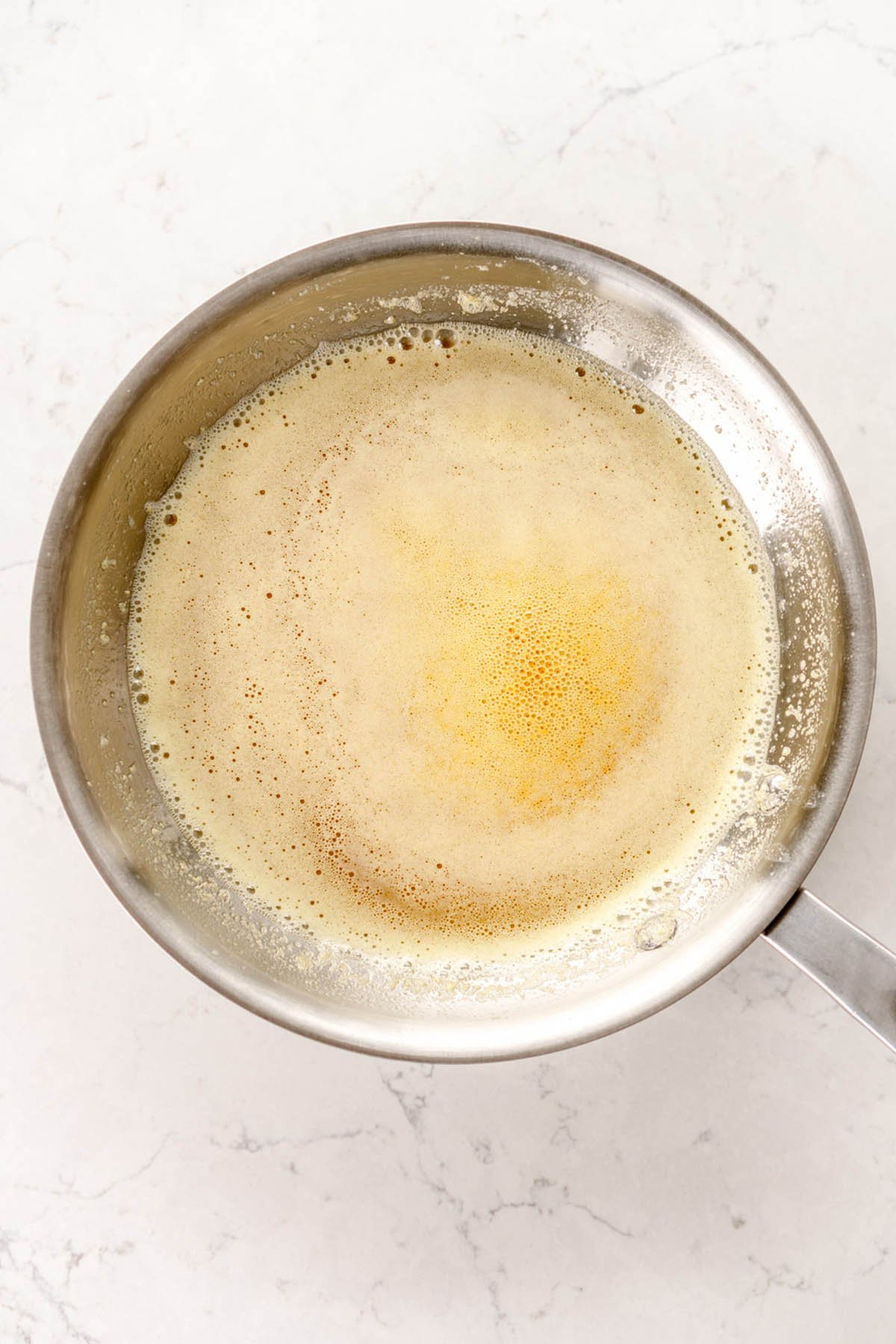
      Filed Under: Chocolate Chip Cookies, Cookies, Holiday Cookies

      • « Previous Page
      • 1
      • 2
      • 3
      • 4
      • …
      • 12
      • Next Page »
      Erin Clarkson Cloudy Kitchen

      HI, I'M ERIN

      My recipes range from quick & easy all the way to complex & impressive. I love the science and process of recipe development almost as much as baking itself. I specialize in rigorously tested recipes that are fun, reliable, and accurate.

      More about me →

      • https://www.instagram.com/cloudykitchen/
      • Facebook
      • Pinterest
      • TikTok

      Popular

      • Christmas Macaron Box
      • close up of roll with cream cheese frosting
        10 Minute Cream Cheese Frosting for Cinnamon Rolls
      • cookie on sheet pan with parchment paper
        Brown Butter Chocolate Chip Cookies
      • burger bun on wire rack
        Homemade Burger Buns

      Footer

      Cloudy Kitchen Classics

      • Chocolate chip cookies
      • Brownie cookies
      • Chocolate cookies
      • Vanilla cookies
      • Cheesecake brownies
      • Focaccia bread
      • Ciabatta recipe

      Popular Cookie Recipes

      • Oatmeal raisin cookies
      • Peanut butter oatmeal cookies
      • White chocolate chip cookies
      • Gingersnap cookies
      • Shortbread cookies
      • Snickerdoodles cookies
      • Anzac biscuits

      Easy Breads & Buns

      • Hot cross buns
      • Sticky buns
      • Burger buns
      • Dinner rolls
      • Soft pretzels
      • Pretzel buns
      • Garlic knots

      Links

      • About
      • Contact
      • Web Stories

      Newsletter

      • Sign Up! for emails and updates
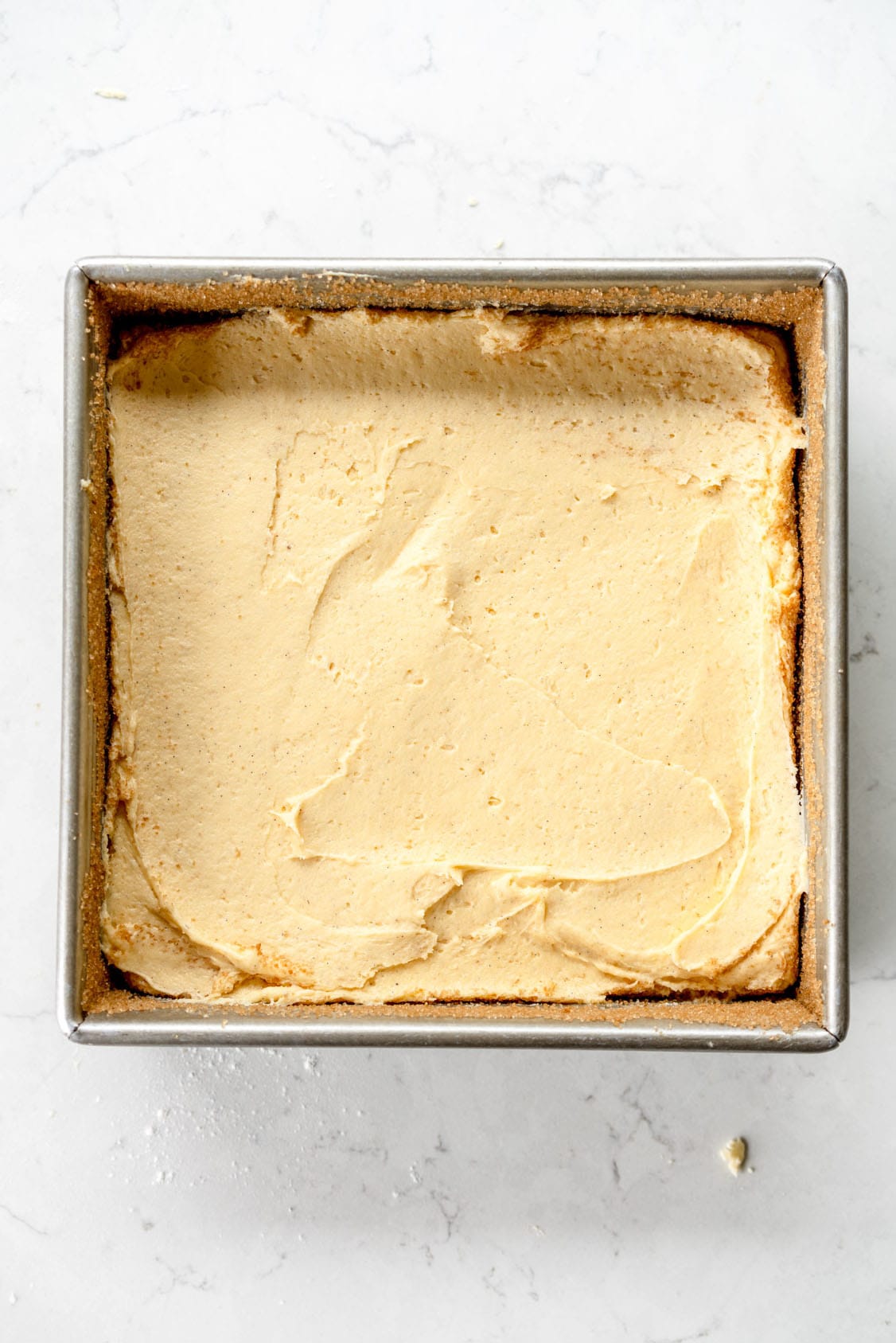
      Resources

      • FAQ
      • Policies
      • All recipes at once

      Copyright © 2026 Cloudy Kitchen

      Support by Foodie Digital